audiobriefs
9:23in productionCh. 1 · Not an Amplified Acoustic/ 9:23 · ceiling 15 min
Guitars & amps

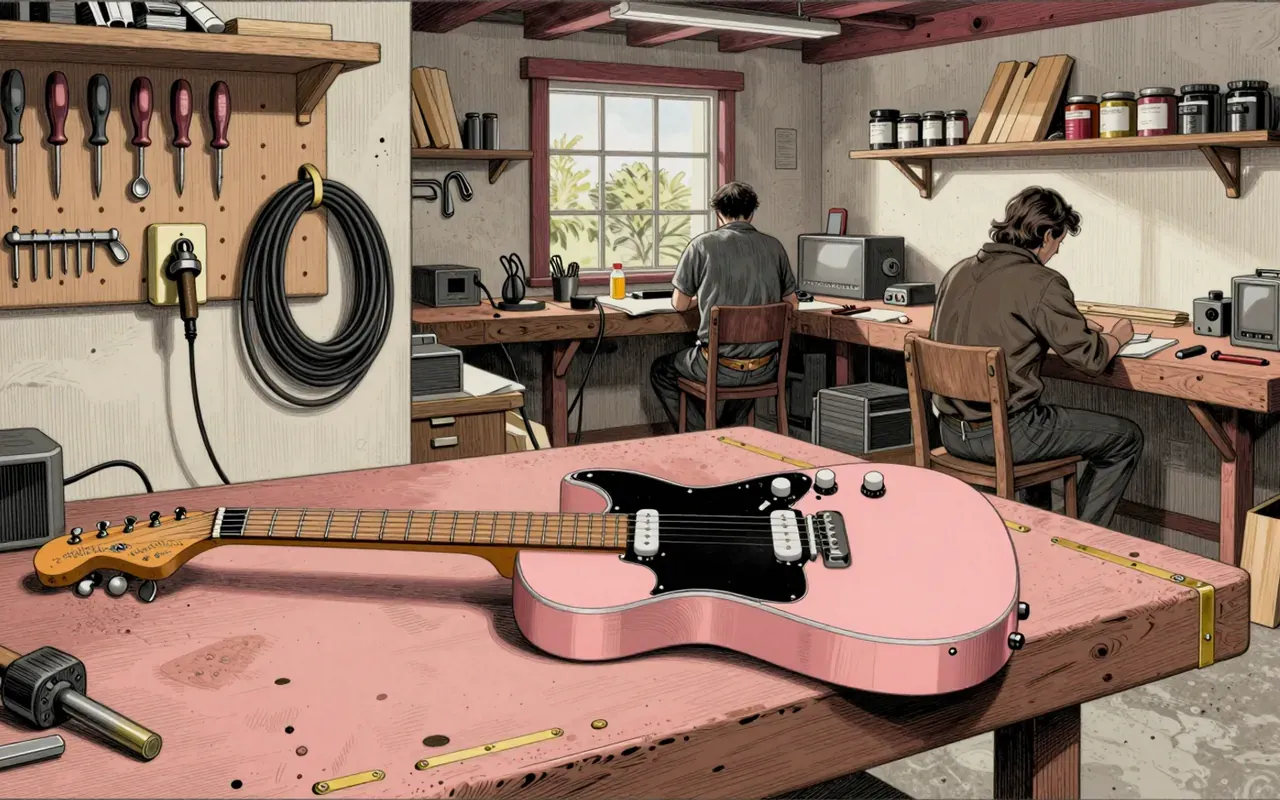
Fender Esquire

The Esquire isn’t simpler—it’s more honest: one pickup, no acoustic compromise, no way to hide.

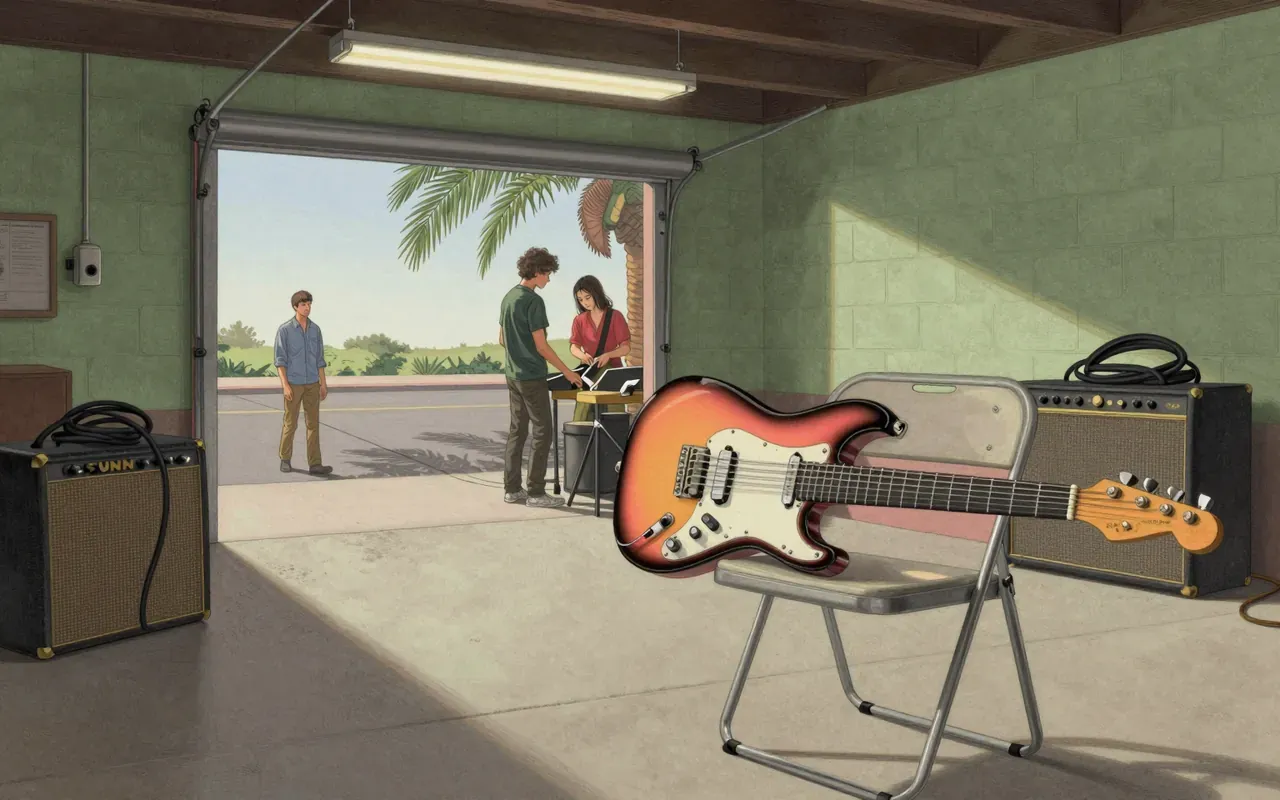
The Fender Esquire is the first commercially marketed solid-body electric guitar. It was designed as an electronic instrument with no acoustic tone manipulation. It introduced the square-edged dreadnought shape with cutaway. It featured a combined bridge-pickup assembly derived from the Champion lap steel. The first 1950 production run had a one-piece maple neck without fretboard or truss rod. The single-pickup version debuted in the RTEC Spring 1950 catalogue.

Chapters & takeaways4
  1. 0:54
    Not an Amplified Acoustic

    It is the first solid-body electric guitar Fender sold—and the first to treat the guitar as purely electronic.

  2. 2:34
    Hardware That Invented Its Own Rules

    Its square dreadnought body and cutaway were new. So was the Champion lap steel–derived bridge-pickup with slanted poles and paired intonation.

  3. 4:12
    A Neck With No Adjustments

    The 1950 neck is one piece of maple—no fretboard, no truss rod—so relief and playability are fixed at manufacture.

  4. 5:45
    Commercial From Day One

    It debuted in March 1950 in the RTEC Spring catalogue—not as a prototype, but as a product ready for sale.

Worth your time?

Yes. Use the whole thing.

3.5/ 5
What works
  • raw electric signal
  • zero acoustic interference
  • direct engagement with tone and attack
What does not
  • whatPeopleMadeWith
Use it if
  • players who value immediacy over adjustability
  • those who work within tight sonic constraints
  • those who prefer fixed-geometry response
Skip it if
  • players needing consistent intonation across all strings
  • players needing frequent neck relief changes
The written brief1 min read

What it is and what it was built for

It is Fender’s first commercially marketed solid-body electric guitar. It was built to be an electronic instrument, not an amplified acoustic one.

How it works, in terms a player would use

It has one pickup, a combined bridge-pickup assembly with slanted pole pieces and three saddles. String height adjusts individually. Intonation adjusts only in pairs. The neck is one piece of maple, no fretboard, no truss rod.

What it does better than anything else

It delivers raw, unfiltered electric signal with zero acoustic interference—more purely electronic than any guitar before it.

What it does badly

It offers no acoustic resonance or tone shaping. Intonation cannot be set per string. The neck lacks a truss rod, so relief is fixed. Upper-fret access is limited by the cutaway’s reach and the neck’s rigidity.

What people made with it

The document does not state what people made with it.

Who should use it, and who should not

Players who value immediacy over adjustability. Those who work within tight sonic constraints and prefer fixed-geometry response. Not for players needing consistent intonation across all strings or frequent neck relief changes.

Is it worth your time

Yes—if you want a stripped-down, electric-only instrument that forces direct engagement with tone, attack, and string control. No if you need tuning stability, upper-fret comfort, or tonal flexibility.
Same bench · Guitars & amps4 of 23
9:28
Rickenbacker 330RickenbackerA semi-acoustic twelve-string electric guitar in the Capri series, introduced in 1958 and designed by Roger Rossmeisl. Built for clarity, projection, and rhythmic definition in ensemble playing.
9:15
Big MuffElectro-Harmonix · 1969The Big Muff Pi is a 1969 fuzz effects pedal with four transistors, two soft-clipping stages, and a tone stack that scoops mids when centred. It delivers smooth, saturated, bass-heavy sustain at any volume—making small amps sound bigger. It was intended to mimic Hendrix but became heavier and more distinctive. It does not offer gain staging, midrange recovery, or dynamic clean-up.
9:22
Fender CoronadoFenderThe Fender Coronado is a true hollow-body electric guitar with no central block, designed in 1965 by Roger Rossmeisl to capitalise on the rising popularity of semi-acoustic guitars. It delivers natural resonance and a bright-and-deep tone, but feeds back at high volumes and failed to win over jazz guitarists due to its bolt-on neck. It found belated favour for what it does sonically—not what it was meant to be.
9:11
Epiphone CoronetEpiphoneThe Epiphone Coronet is an Epiphone-exclusive, entry-level solidbody electric guitar with a single P-90 pickup, one volume and one tone control. First introduced as an amplified archtop in 1939, it was reclassified as a solidbody by 1961. It has been manufactured across multiple eras — 1959 US production, 1960s Dwight-branded variants, discontinuation in the 1970s after Epiphone moved overseas, a late-1990s Korean reissue, and a 2020 reissue. It offers no pickup switching, no neck pickup, and minimal control options. Its design prioritises simplicity and direct tone over versatility or refinement.
Up next in Audio

Fairlight CMI

Fairlight · 1979 · 10:47

It didn’t make music — it made the word 'sampling'.

10:47