What it is and what it was built for
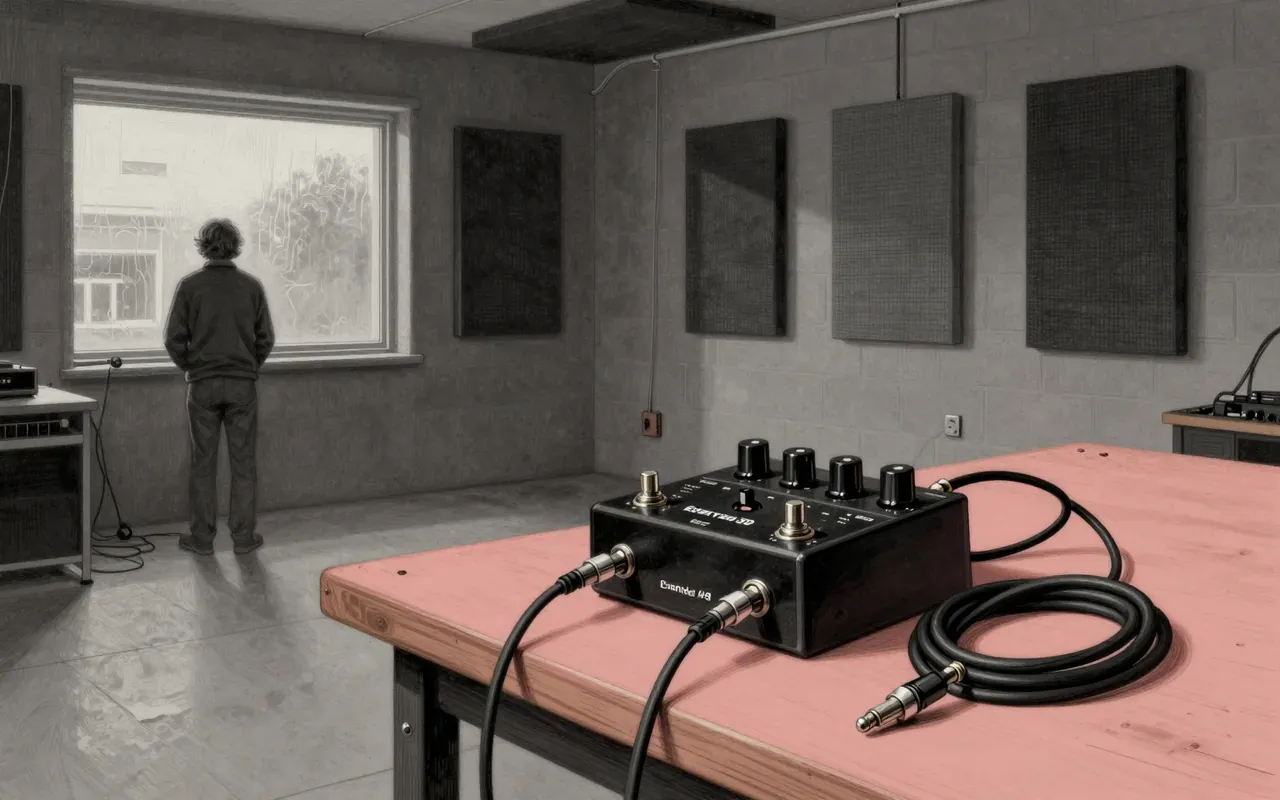
The Eventide TimeFactor is a stompbox-format digital delay/echo/phrase sampler for guitar, introduced in 2011 as part of Eventide’s Factor series.
How it works, in terms a player would use
It runs two independent 3-second delays side by side. You switch between 10 delay types using a rotary encoder. Each type has dedicated controls for time, feedback, mix, and modulation depth. The 12-second looper records, overdubs, and plays back in real time. Stereo I/O lets you route left and right signals separately, with level switches for guitar or line sources. MIDI, expression pedal, and auxiliary footswitch map to parameters like delay time or looper start/stop.
What it does better than anything else
It delivers 10 distinct delay algorithms—including Tape, Vintage, Filter Pong, and Ducked—in a single rugged stompbox. No other pedal from 2011 offered this range of studio-calibre time-based effects with stereo I/O, MIDI control, and a built-in looper in cast metal housing.
What it does badly
It does not offer true analogue signal path or valve colouration. It cannot self-oscillate into feedback shriek. It gives no access to internal DSP parameters—no tweakable filter resonance, no LFO shape selection, no tap tempo subdivision options beyond what the presets allow. The looper is fixed at 12 seconds and lacks undo/redo or track layering.
What people made with it
Players used it to layer rhythmic echoes under live solos, build ambient beds with Mod and Reverse delays, and capture full-band phrases in the 12-second looper during rehearsals and small gigs.
Who should use it, and who should not
Guitarists who need one pedal to cover tape wobble, multitap precision, ducked rhythm parts, and loop-based composition should use it. Players who require analogue circuitry, infinite feedback, or deep sound-design editing should not.
Is it worth your time
Yes—if you need one pedal that handles studio-grade delay textures, stereo routing, and phrase sampling without patching multiple units. No—if you want granular control over filter slope, oscillator sync, or sample rate, or if you rely on analogue warmth or self-oscillation beyond its digital architecture.