What it is and what it was built for
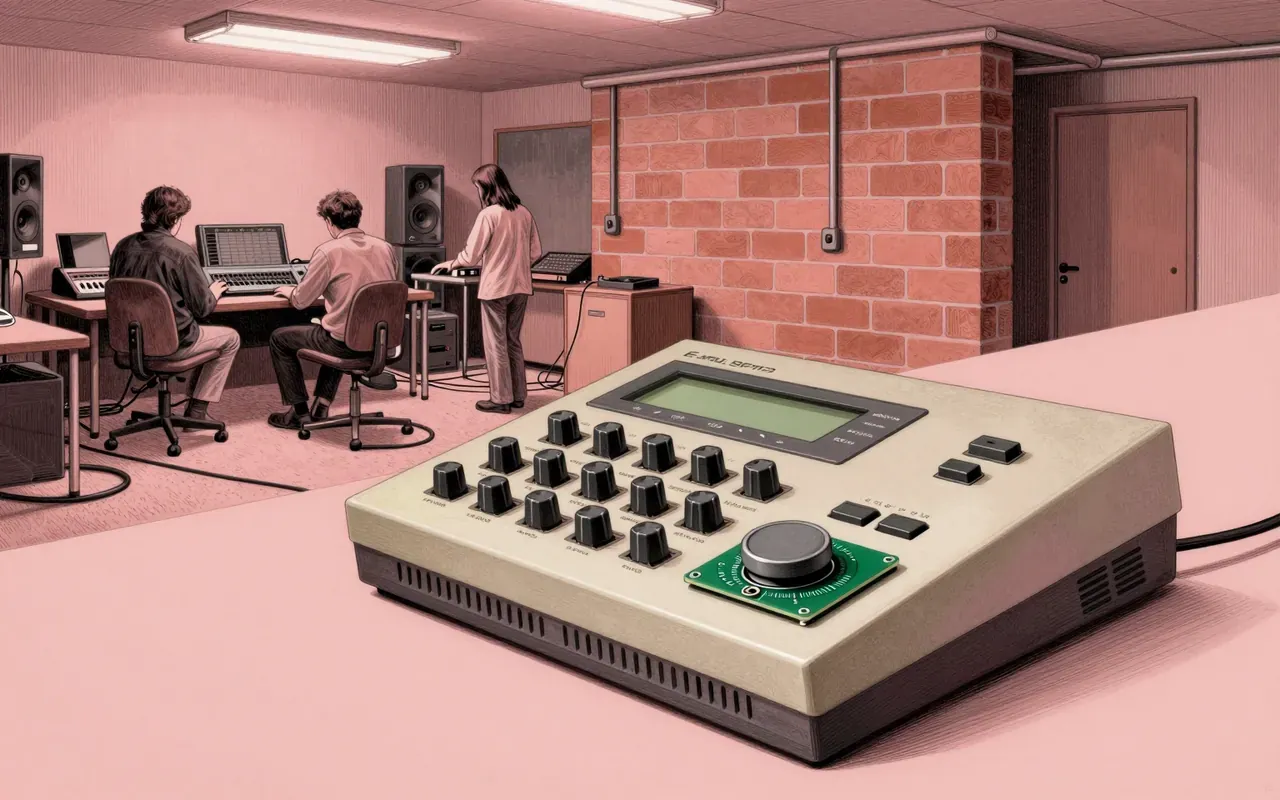
The Drumulator is a sample-based drum machine released in 1983. E-mu built it to rival the Linn LM-1 — cheaper and more accessible, but rooted in the same sample-playback philosophy as their earlier Emulator samplers.
How it works, in terms a player would use
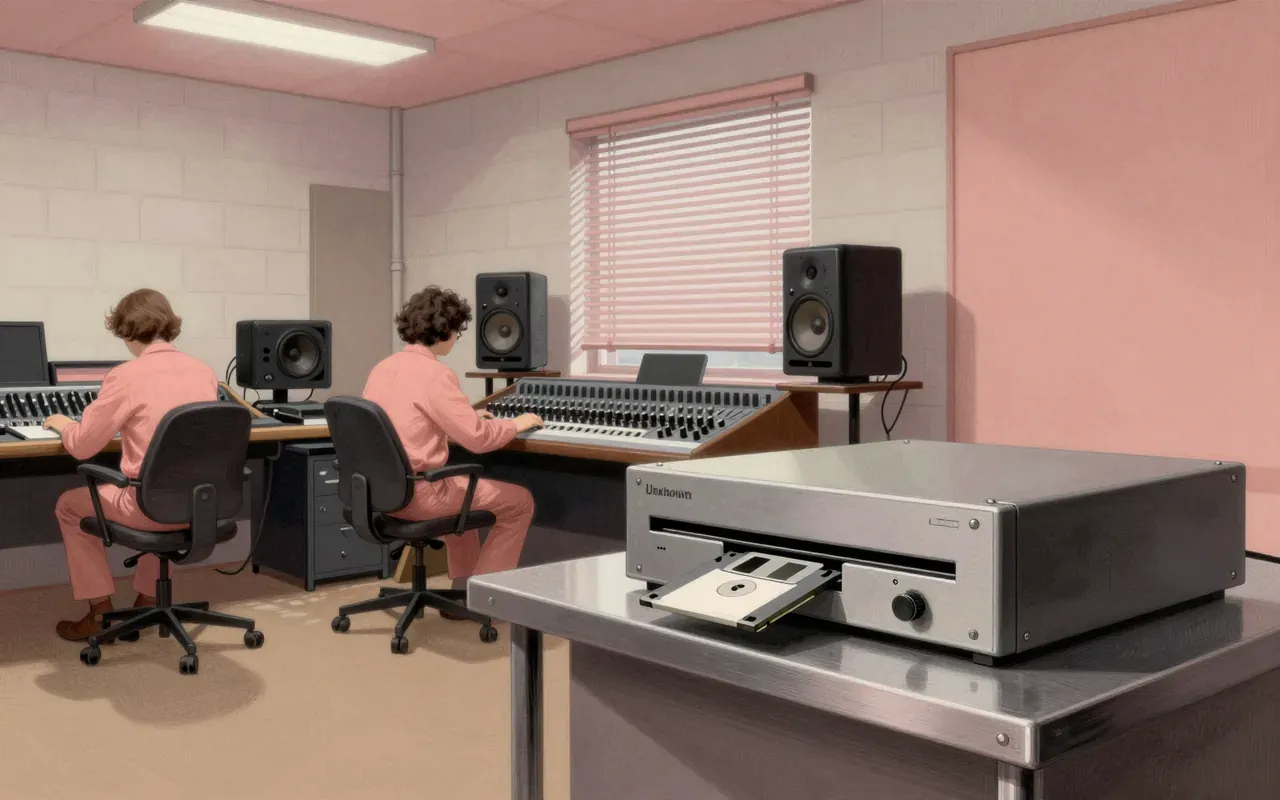
Four touch pads trigger eight 12-bit ROM drum samples. Sequencing uses real-time or step-entry modes. Patterns and songs are stored in internal memory — up to 36 patterns and 8 songs. Floppy diskettes hold sequences and sample data. An Apple II connects for visual editing.
What it does better than anything else
It delivers gritty, immediate 12-bit drum hits at lower cost than the Linn LM-1. Its floppy storage and Apple II integration gave early adopters unprecedented pattern management and editing depth for 1983.
What it does badly
It offers no sample editing or replacement. All sounds are hardwired in ROM. There is no velocity sensitivity on the pads. The sequencer lacks swing, shuffle, or per-step parameter automation.
What people made with it
Producers used its punchy, lo-fi snare, kick, and clap across early 80s electro, synth-pop, and underground dance tracks. Its affordability and floppy support made it a studio staple outside high-end commercial facilities.
Who should use it, and who should not
A hardware-focused producer who values tactile sequencing, ROM-based consistency, and floppy-era workflow. Not for anyone needing sound design flexibility, MIDI sync precision, or expandable libraries.
Is it worth your time
Yes, if you want a tactile, lo-fi drum machine with floppy-based workflow and computer-aided editing. No, if you need more than eight fixed sounds, polyphonic layering, or modern connectivity.