audiobriefs
Topic

The seventies

Oil shocks, bad economics and an extraordinary run of records.

14
in audio
8:58
average
125 min
in total
58
across the network
The seventies across the network →
All briefs14
8:47

Pianet T

Hohner

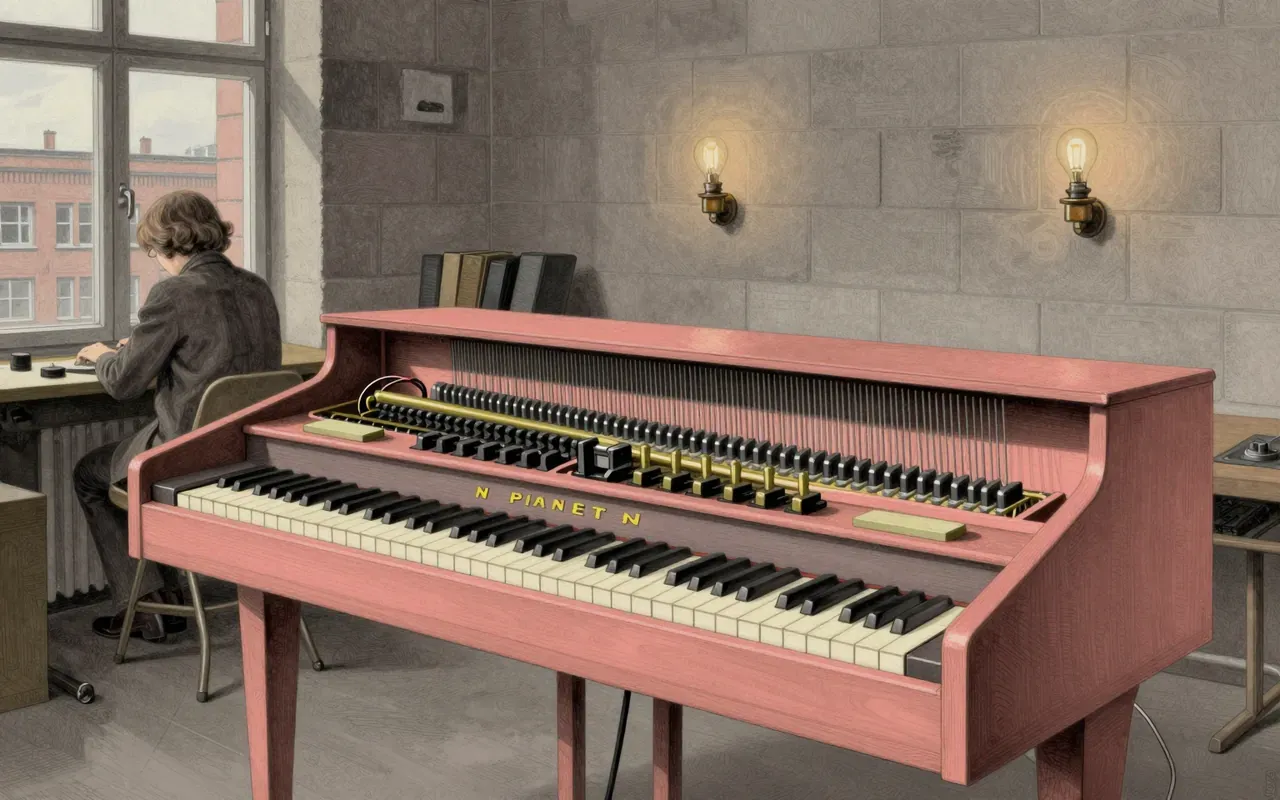
The Pianet T was made from 1977 to about 1983 and headed Hohner's second group of Pianets. Plastic suction pads pluck its reeds, an electro-magnetic pick-up like the one in a Rhodes converts the vibration, and the instrument needs no electrical power of its own. Vinyl-covered, with a hinged lid, it was built for live use but has no built-in amplifier.

8:45

Boss BF-1 Flanger

Boss

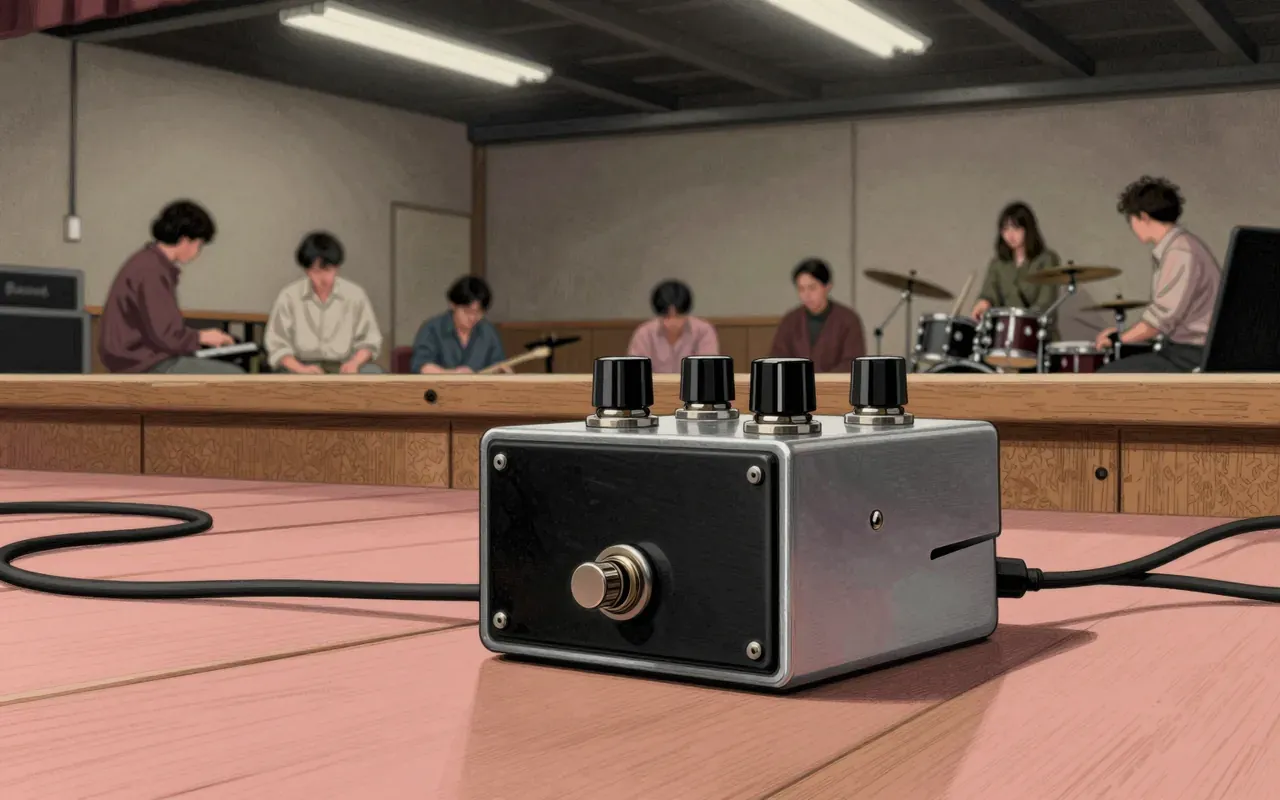
The Boss BF-1 Flanger is a 1979 analog foot pedal designed for electric guitar. It uses four knobs — manual, depth, rate, resonance — to control a simple, unstable flange sweep. It has no bypass, no presets, no expression input, and no stereo output. It was discontinued and replaced by the BF-3.

7:15

Boss PH-1 Phaser

Boss

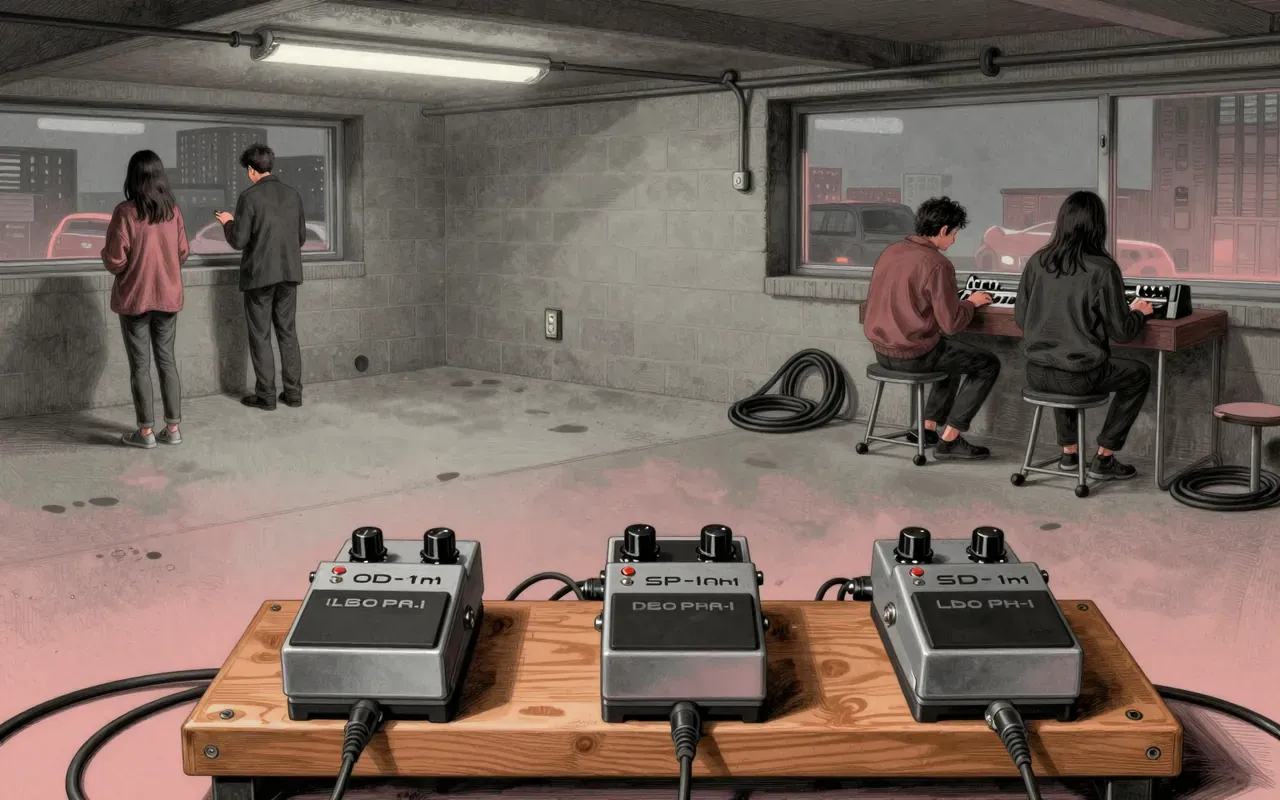
The Boss PH-1 is a compact phaser pedal released by Boss in 1977 as one of its first three pedals. It emulates Leslie speaker phasing with greater versatility. It has only two controls: Rate (speed) and Depth (dry/wet mix). Production ran from 1977 to 1981.

9:26

Yamaha CS-60

Yamaha

The Yamaha CS-60 is a polyphonic analog synthesizer released in 1977. It is smaller and cheaper than the CS-80. It lacks polyphonic aftertouch.

10:35

Gibson RD Artist

Gibson

The Gibson RD Artist is a 1978 solid-body electric guitar with active Moog electronics, all-maple construction, a 25.5-inch scale, two humbuckers, and no vibrato. Its controls enable compressor (bridge), expander (neck), bright mode, or neutral, plus bass/treble boost/cut. Stock humbuckers are weak for rock. It was built for precise, processed tone — not vintage warmth or expressive pitch play.

9:51

Yamaha YC-45D

Yamaha

The Yamaha YC-45D is a 1976–1980 hybrid organ-synthesizer. It combines drawbar organ, transistor organ, piano, harpsichord, distortion and a 3-octave ribbon synth. Its lateral per-note vibrato/bend is unmatched for its time. Its preset system is rudimentary. Its ribbon lacks visual pitch reference. Its emulations are shallow. It belongs in a room where articulation matters more than fidelity.

7:57

Multimoog

Moog · 1978

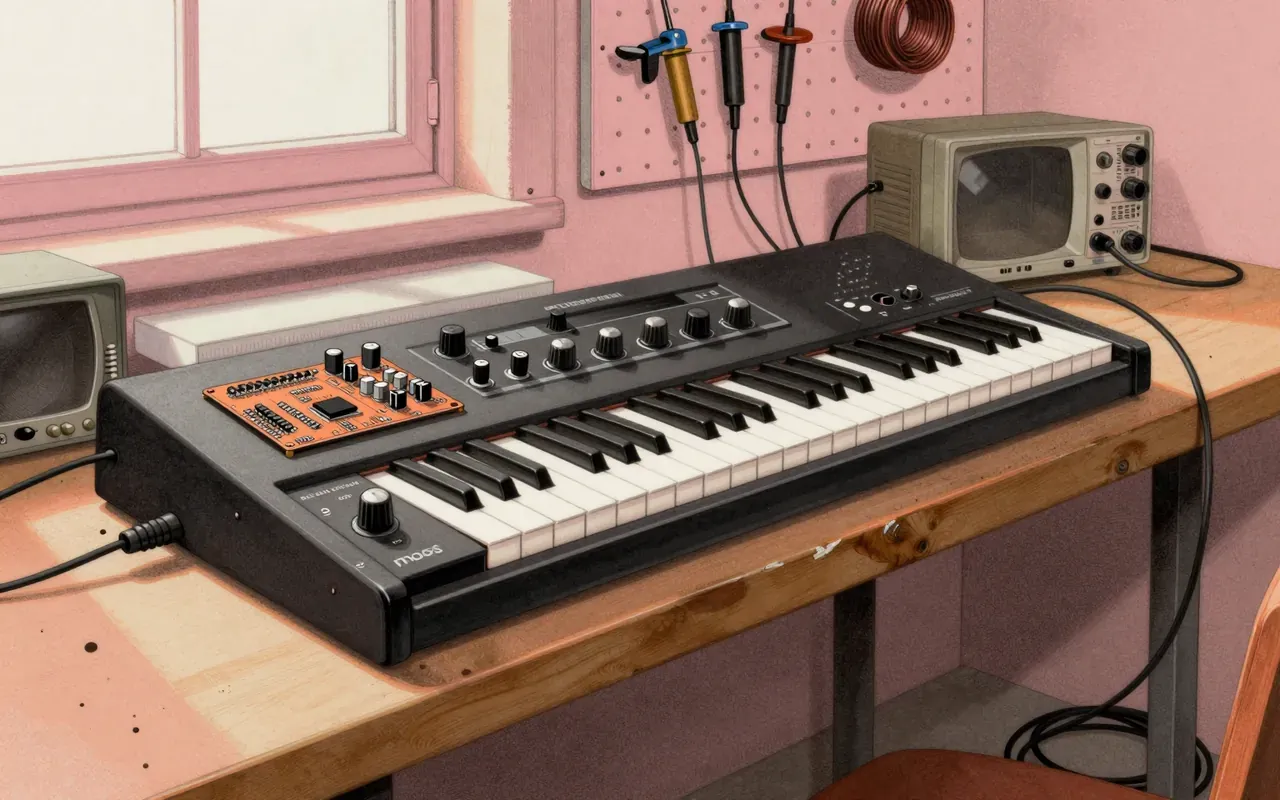
The Multimoog is a monophonic analog synthesizer built by Moog Music from 1978 to 1981. Derived from the Micromoog, it adds a second circuit board to deliver aftertouch and expanded modulation routing—features missing from the Minimoog. It was intended as a less expensive alternative to that flagship instrument. It does not store patches. It drifts. It demands attention. But it gives aftertouch control over filter, pitch and amplitude in real time—rare in 1978.

8:55

Music Man StingRay

Music Man · 1976

The Music Man StingRay is a 1976 electric bass co-designed by Leo Fender as a modern update to the Precision Bass. It introduced active electronics to bass design — a 9-volt-powered preamp with 2-band EQ, an oversized humbucker wired in parallel, and epoxy-sealed circuitry. It delivers a uniquely bright, scooped-mid, deep-low tone with high output and rigidity. It lacks passive tone shaping, midrange control in early models, and serviceable electronics. It became essential for slap bass, studio clarity, and cutting through dense mixes.

8:56

Gibson Grabber

Gibson

The Gibson Grabber is a bass guitar introduced in 1973. It features a bolt-on 34½-inch neck, an adjustable pickup that slides to simulate neck or bridge positions, brighter output than traditional Gibson humbuckers, simple controls (one volume, one tone), and a removable bridge cover. Its body changed from maple to alder in 1975 — the year it peaked in sales at 2,637 units, largely due to Gene Simmons’s use with Kiss. It was discontinued in 1982, with limited production until 1984.

8:55

Micromoog

Moog · 1975

The Micromoog is a monophonic analog synthesizer produced by Moog Music from 1975 to 1979. Designed as a scaled-down, lower-priced alternative to the Minimoog, it was intended for musicians new to synthesis who could not afford the $1,500 Minimoog. Priced at $650–$800, it features a single VCO with variable waveshape from sawtooth to pulse, sub-octave generation one or two octaves below the fundamental, a −24dB per octave low-pass filter with its own envelope generator and VCO frequency modulation capability, a voltage-controlled amplifier with its own envelope generator, and two A(S)R envelope generators with switchable sustain — a design choice that distinguishes it from most budget synths of the era which used a single ADSR. It includes Moog Open System control inputs, an audio input for external signal processing, and uses 0.95V/oct CV scaling. It was designed by Moog engineer Jim Scott in consultation with Tom Rhea, with electronic refinement input from David Luce and Robert Moog.

9:32

Oberheim OB-1

Oberheim

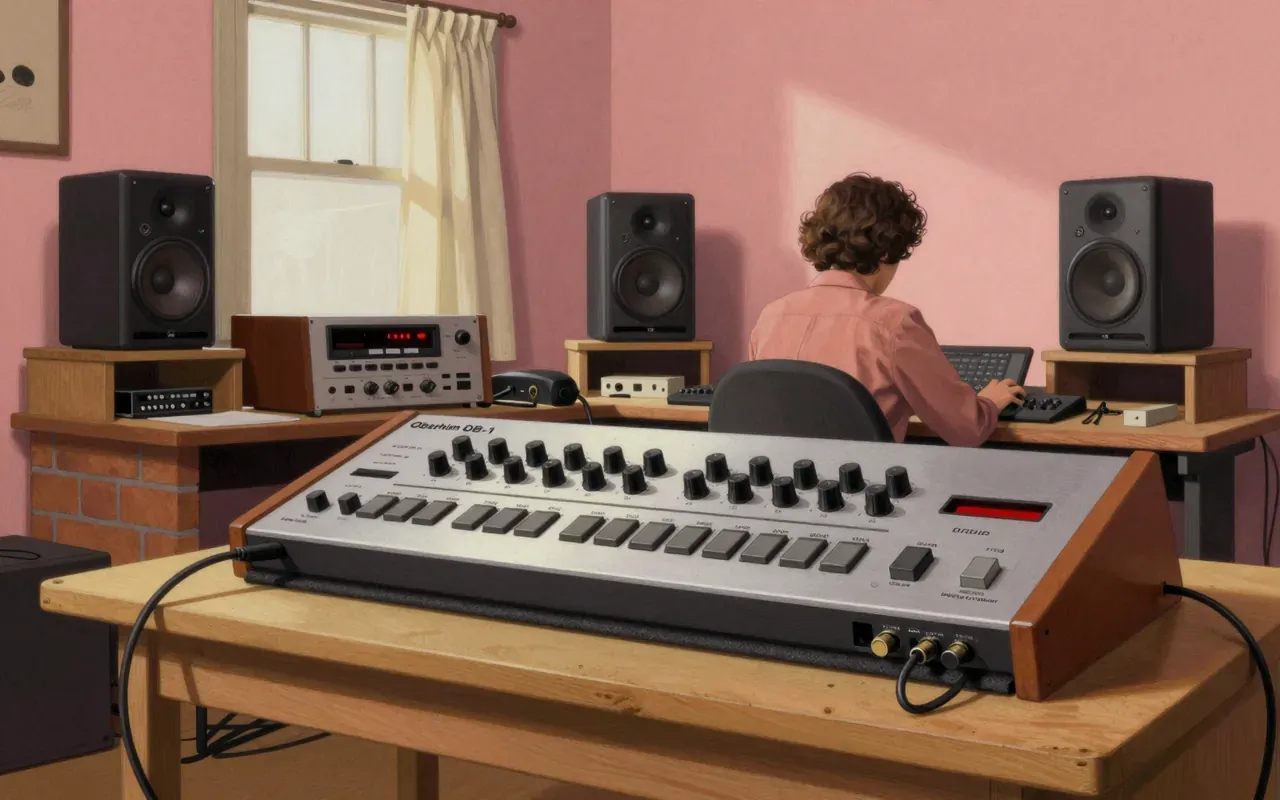
The Oberheim OB-1 is a monophonic analog synthesizer introduced in late 1977. It was the world's first completely programmable synthesizer, offering eight preset memories. It features two VCOs with selectable and continuously-variable waveforms, a switchable 2- or 4-pole VCF, and two ADSR envelopes—one for the filter and one for the VCA. Its design built upon technology from the Polyphonic Synthesizer Programmer.

9:00

Roland System 700

Roland · 1976

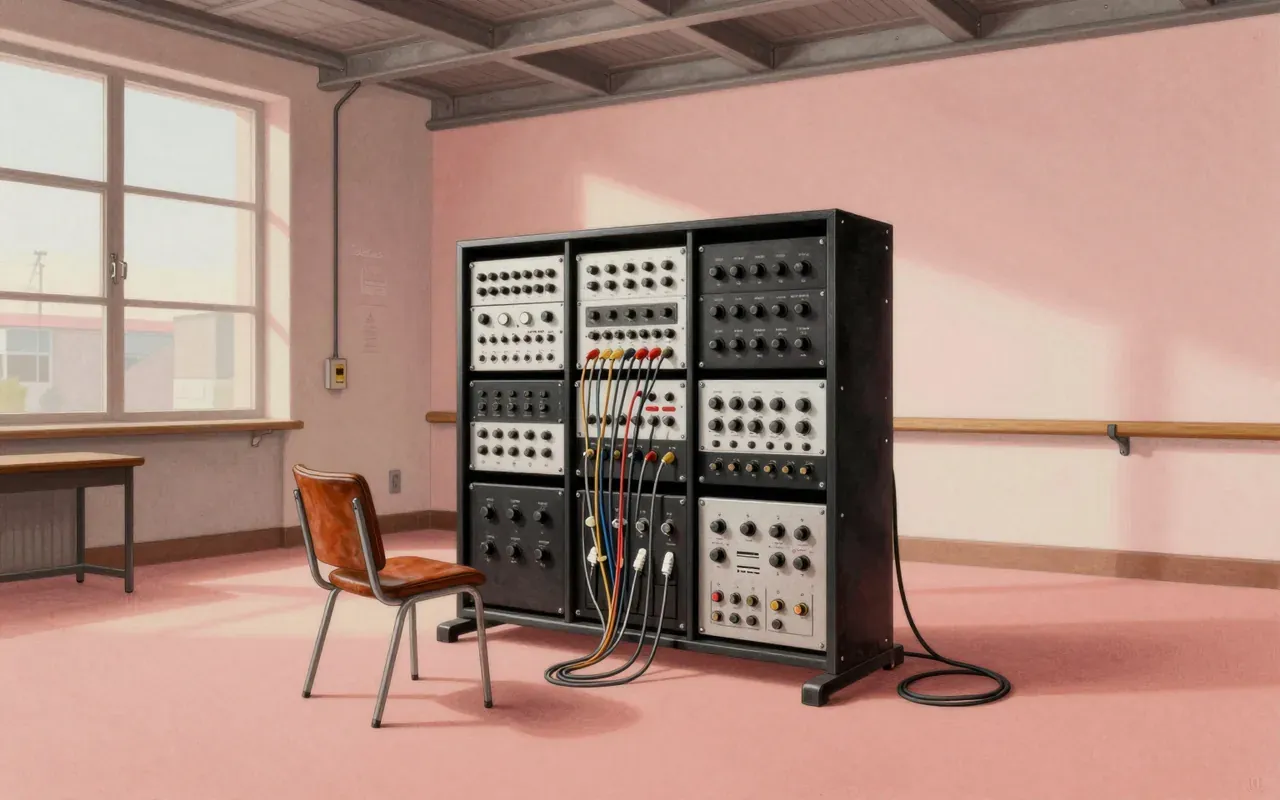
The Roland System 700 is a professional monophonic modular synthesizer released in 1976 by Roland Corporation.

8:49

Polymoog

Moog · 1975

The Polymoog is a 1975 Moog keyboard that gives unlimited polyphony through divide-down oscillator architecture — but sacrifices per-voice synthesis, programmability, and filter control entirely.

8:46

Prophet-5

Sequential Circuits

The Prophet-5 is an analog synthesizer manufactured by Sequential Circuits. It was designed by Dave Smith and John Bowen in 1977. It was the first polyphonic synthesizer with fully programmable memory. Before the Prophet-5, synthesizers required users to adjust controls to change sounds, with no guarantee of exactly recreating a sound. Sequential used microprocessors to allow users to recall sounds instantly rather than having to recreate them manually. The Prophet-5 facilitated a move from synthesizers creating unpredictable sounds to producing "a standard package of familiar sounds". Initially, Smith and Bowen developed the Prophet-10, a synthesizer with ten voices of polyphony, meaning it could play up to ten notes simultaneously. Smith and Bowen removed half the electronics, reducing the voices to five and creating the Prophet-5. In 1978, Sequential released the Prophet-5, the first programmable polyphonic synthesizer, which was widely used in the music industry. Whereas previous synthesizers required users to adjust cables and knobs to change sounds, with no guarantee of exactly recreating a sound, the Prophet-5 used microprocessors to store sounds in patch memory.