What it is and what it was built for
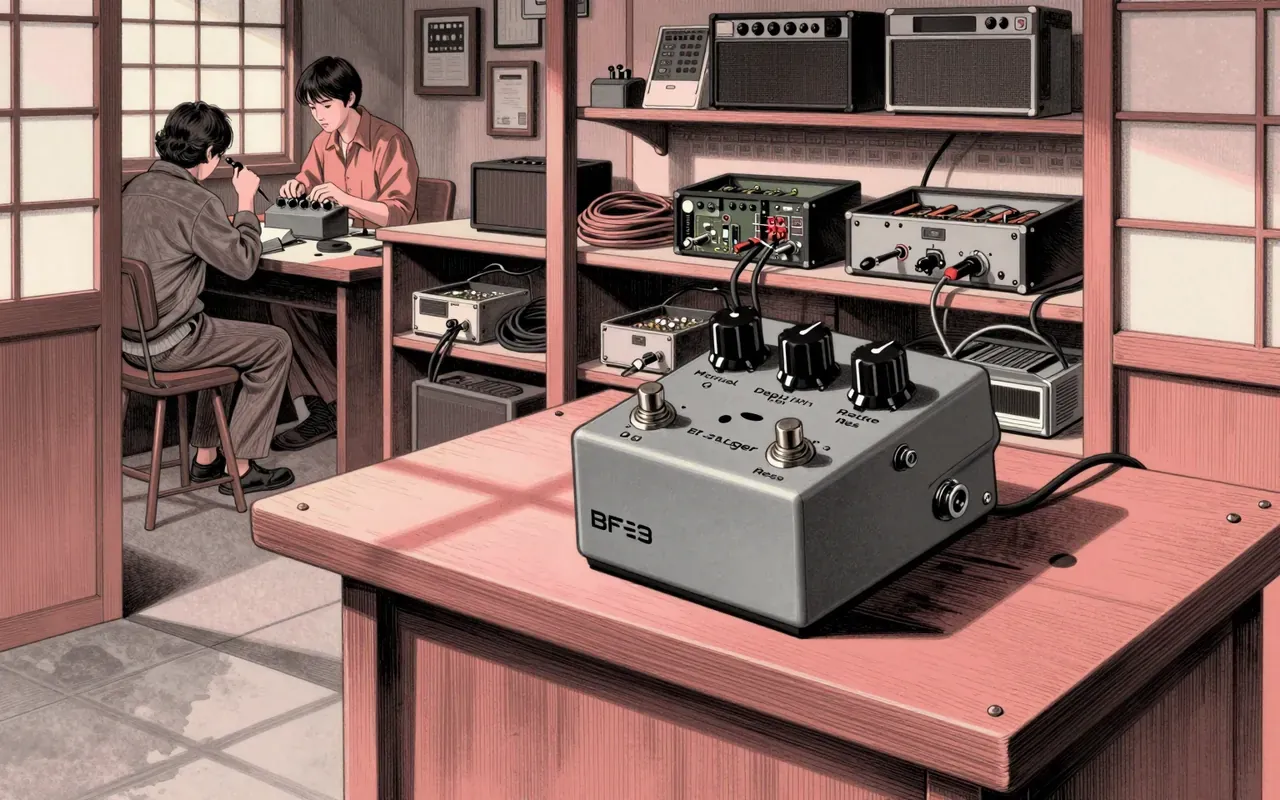
It is a discontinued analog foot-pedal flanger from 1979, built for electric guitar but usable with other electronic instruments.
How it works, in terms a player would use
It works by mixing a delayed copy of the input signal with the original, using analog circuitry. The manual knob sets the base delay time. Depth controls how far that delay sweeps. Rate sets how fast it sweeps. Resonance boosts the feedback around the delay line.
What it does better than anything else
It delivers a raw, immediate flange sweep with pronounced pitch wobble and a slightly unstable, organic feel — especially at high resonance and slow rate settings.
What it does badly
It offers no expression pedal input, no tap tempo, no stereo output, no true bypass, and no way to save or recall settings.
What people made with it
People made swirling, jet-like flange textures on guitar leads and rhythm parts — particularly in late-1970s rock and funk contexts where flanging was used as a tonal effect rather than a subtle modulation.
Who should use it, and who should not
Players who value hands-on, real-time control over a single flange voice should use it. Players who need reliability, recall, stereo, or integration with modern rigs should not.
Is it worth your time
It is worth your time only if you want the specific flange character of an early analog pedal with minimal controls and no presets — and are prepared to hunt for a working unit.