audiobriefs
8:09in productionCh. 1 · DJ-first design/ 8:09 · ceiling 15 min
DJ gear · Effects & pedals

Korg Kaoss Pad KP1

A touchpad that trades control for charisma — six effects, zero memory, all attitude.

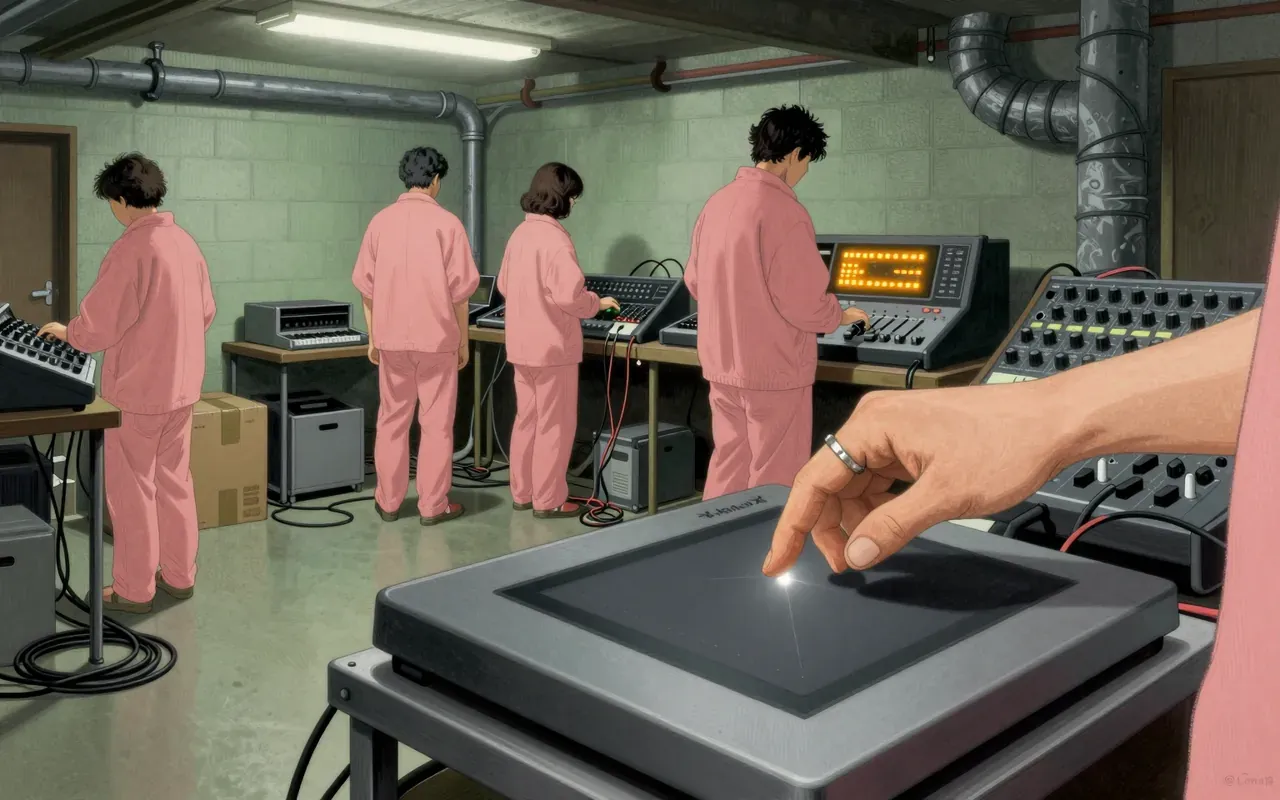
The KP1 is a 1999 touch-driven effects box for DJs. It runs six effects at once. It has no sampling. It has no synthesis. It has no presets. It has no deep editing. It has a pad, four buttons, and a fader. It rewards gesture over precision. It belongs on a deck, not in a DAW.

Chapters & takeaways4
  1. 1:00
    DJ-first design

    It was built for DJs who needed to twist effects while keeping their eyes on the crowd.

  2. 2:28
    No hidden layers

    Six simultaneous effects. No sampling. No synthesis. No compromises on simplicity.

  3. 3:18
    Two dimensions, one gesture

    Touch replaces knobs: X and Y axes map directly to two effect parameters in real time.

  4. 5:00
    No presets, no recall

    It does not remember anything — every set starts from scratch.

Worth your time?

Yes. Use the whole thing.

4/ 5
What works
  • real-time effect morphing
  • stereo line-level processing
  • MIDI control of external gear
  • instant tactile response
What does not
  • sampling
  • synthesis
  • preset storage
  • parameter fine-tuning
Use it if
  • live DJs
  • performers needing tactile feedback
Skip it if
  • producers needing recall or automation
  • studio engineers needing routing flexibility
The written brief1 min read

What it is and what it was built for

The Korg Kaoss Pad KP1 is a 1999 DJ-oriented real-time effects processor and MIDI controller. It has no sampling or synthesis capabilities.

How it works, in terms a player would use

You touch the X/Y pad to control two effect parameters at once — one axis for rate, the other for depth, or similar pairings. Six effects are active simultaneously. No knobs, no menus, no sampling, no synthesis — just the pad, four buttons, and a level fader.

What it does better than anything else

It delivers instant, expressive, two-dimensional effect modulation more intuitively than any knob-per-parameter interface of its time — especially for DJs cutting between tracks while twisting reverb decay and pitch shift in real time.

What it does badly

It cannot store or recall settings. It offers no parameter fine-tuning beyond the pad’s resolution. It has no audio inputs beyond stereo line-level, no MIDI out, and no way to chain or sync effects beyond basic tempo tap.

What people made with it

DJs used it to warp vinyl loops, smear transitions, and add stutter, delay, and filter sweeps mid-set. Producers used it as an external effect for vocals and synths in live remixing.

Who should use it, and who should not

Live DJs who value physical immediacy over precision. Performers who want to trigger and morph effects without looking at a screen or turning knobs. It is not for producers needing recall, automation, or multi-effect routing.

Is it worth your time

Yes, if you need tactile, immediate effects manipulation in live DJ sets or on-stage performance. No, if you need editing, layering, recall, or sound generation.
Same bench · DJ gear4 of 29
Up next in Audio

Neumann KM 184

Neumann · 9:08

A ruthlessly clear, unyielding small-diaphragm condenser — brilliant on everything except what it won’t let you shape.

9:08