What it is and what it was built for
A 1974 distortion pedal built for guitarists who needed a simple, loud, cutting edge without tone controls or complexity.
How it works, in terms a player would use
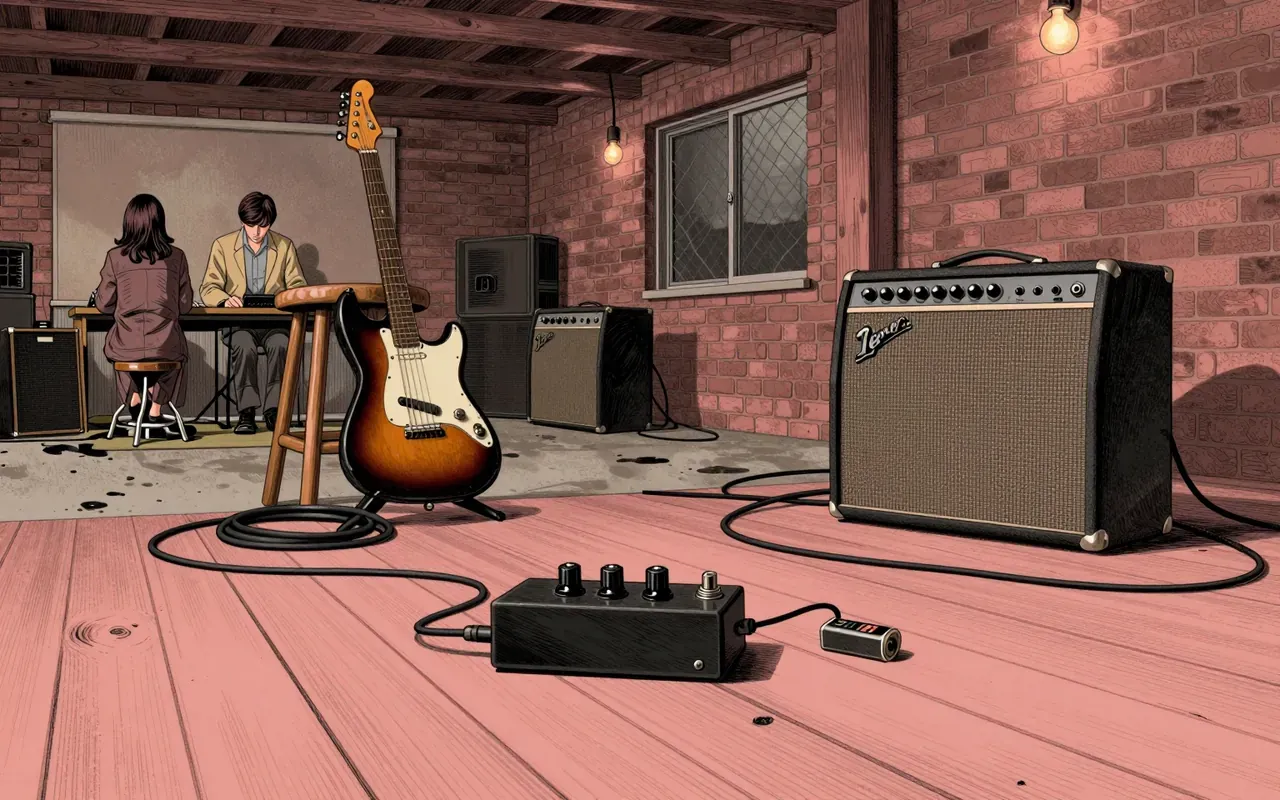
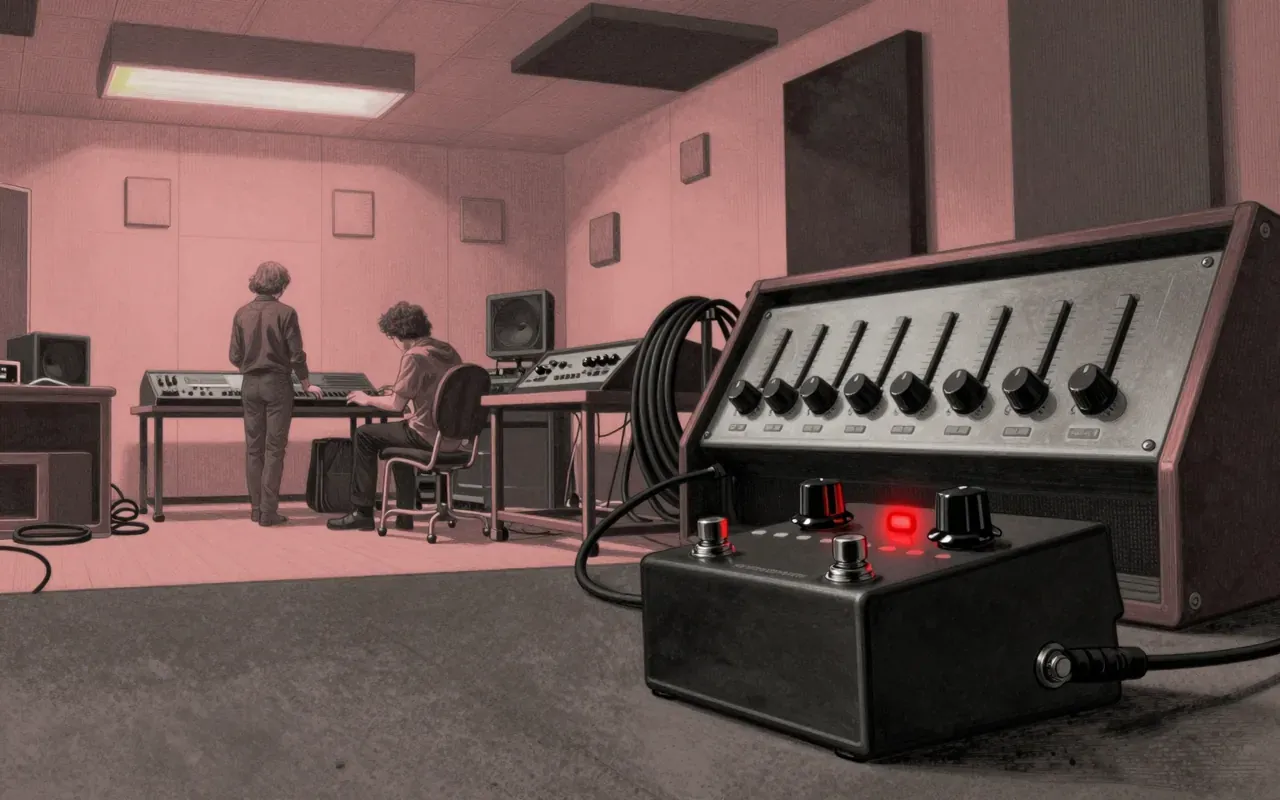
It has two knobs: Output and Distortion. Turning up Distortion increases clipping and treble together. There is no tone control. It clips with a single op-amp and two germanium diodes to ground.
What it does better than anything else
It delivers immediate, aggressive, high-treble distortion with minimal circuitry—faster onset, less compression, and more pick attack than later op-amp-based distortions.
What it does badly
It does not shape tone. It cannot reduce treble while increasing distortion. It offers no bass response adjustment, no clean blend, no bypass tail, and no signal buffering.
What people made with it
It was used by players seeking a sharp, searing lead tone in early 1970s rock and hard rock contexts, alongside MXR’s Phase 90 and Dyna Comp.
Who should use it, and who should not
Players who value immediacy, high treble bite, and vintage germanium clipping character—and who accept its fixed EQ curve. Not for players needing versatility, noise reduction, or modern pedalboard integration.
Is it worth your time
Yes—if you want a raw, treble-forward distortion that cuts through a mix without colouring the midrange or offering tonal flexibility. No—if you need shaping, consistency, or low-end control.