audiobriefs
8:29in productionCh. 1 · Analog only/ 8:29 · ceiling 15 min
Effects & pedals · Guitars & amps

Fulltone OCD

It’s not warm. It’s not smooth. It’s bass-heavy and bright—and that’s the point.

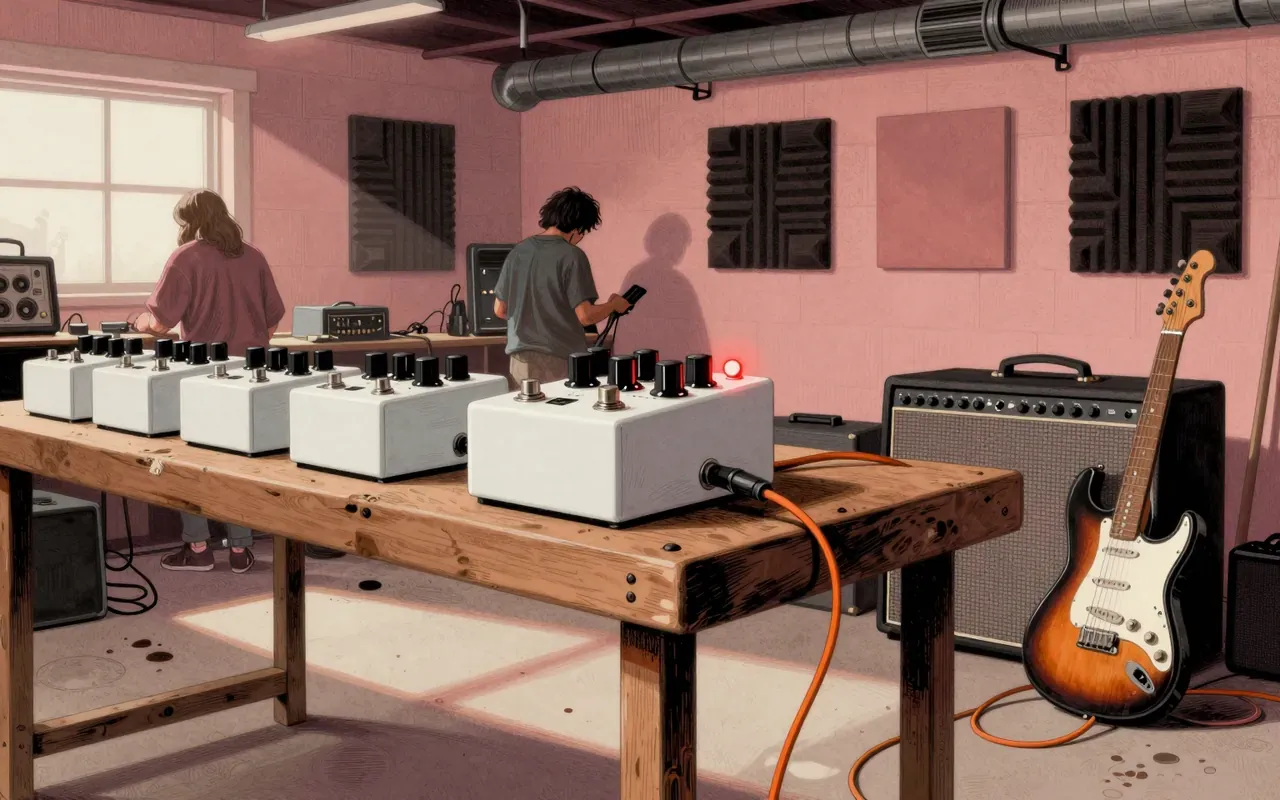
The Fulltone OCD V1.1 is an analog overdrive pedal. It has volume, drive, and tone controls. It has a high-pass/low-pass switch. It uses true bypass. It is white with black knobs and a red LED.

Chapters & takeaways4
  1. 0:55
    Analog only

    It is analog—no digital conversion, no modelling, no presets.

  2. 1:56
    Three knobs, one switch

    Volume, drive, and tone knobs plus a high-pass/low-pass switch give direct, physical control over output level, saturation, and spectral balance.

  3. 3:25
    True bypass switching

    True bypass means your dry signal stays uncoloured when the pedal is off.

  4. 5:07
    White, black, red

    White enclosure, black knobs, red LED—no branding visible on the front panel.

Worth your time?

Yes. Use the whole thing.

4/ 5
What works
  • delivers simultaneous bass extension and high-end clarity
  • responds dynamically to picking force and guitar volume
  • accepts up to 18 volts for increased headroom
What does not
  • deliver midrange presence
  • function as a clean boost
  • suit players needing transparent dynamics
Use it if
  • players who want bass-heavy saturation
  • players who value high-end articulation
  • players who prefer hands-on analog control
Skip it if
  • players relying on mid-forward voicing
  • players needing low-noise clean blends
  • players seeking subtle breakup
The written brief1 min read

What it is and what it was built for

The Fulltone OCD V1.1 is an analog overdrive pedal built for guitarists who want wide-ranging, high-headroom distortion with immediate tactile control and no digital processing.

How it works, in terms a player would use

It takes a guitar signal, runs it through analog circuitry, and outputs an overdriven version. Players adjust volume, drive, and tone. A switch toggles between high-pass and low-pass filtering. It accepts 9–18 volts DC. True bypass routes the dry signal cleanly when off.

What it does better than anything else

It delivers more bass and more high end than most overdrive pedals—simultaneously. That dual extremity gives chords weight and single-note lines bite, especially at higher drive settings.

What it does badly

It does not deliver balanced midrange response. Its sound leans heavily into bass and high end, leaving a dip in the mids that makes it hard to cut through dense mixes without EQ help.

What people made with it

Players used it to shape lead tones with extended low-end thump and fizzy high-end articulation—especially in rock and alternative contexts where rawness and frequency extremes were assets.

Who should use it, and who should not

Guitarists who prioritise dynamic responsiveness, amp-like saturation, and extreme frequency extension should use it. Those who rely on mid-forward voicing, studio-grade transparency, or low-noise clean blending should not.

Is it worth your time

Yes—if you want aggressive, bass-heavy overdrive with sharp top-end clarity and hands-on tonal control. No—if you need subtlety, midrange focus, or clean boost without colouration.
Same bench · Effects & pedals4 of 121
Up next in Audio

Eventide Omnipressor 2830

Eventide · 8:20

A studio compressor with no specs is a locked box — you hear the output, but never know what’s inside.

8:20