audiobriefs
8:17in productionCh. 1 · What it is not/ 8:17 · ceiling 15 min
Effects & pedals

Z.Vex Super Hard On

It doesn’t shape tone—it reveals it. And it won’t forgive a muddy signal chain.

A transparent boost pedal built for signal integrity, not tonal manipulation.

Chapters & takeaways4
  1. 0:52
    What it is not

    It is not an overdrive or EQ pedal—it is a single-purpose, ultra-transparent boost circuit.

  2. 2:10
    How much gain it gives

    Gain ranges from unity to 60×—enough to drive an amp hard, but only if the signal stays clean.

  3. 3:30
    Why it sounds bright

    Its 5 million ohm input impedance adds high-end clarity by reducing pickup loading.

  4. 5:04
    Where it came from

    Z.Vex Effects was founded in 1995 by Zachary Vex in Minneapolis—this pedal arrived the same year.

Worth your time?

Yes. Use the whole thing.

4/ 5
What works
  • preserves high-end clarity
  • delivers unity-to-60× gain cleanly
  • loads pickups minimally
What does not
  • add distortion
  • shape midrange
  • include tone control
  • offer multiple gain stages
Use it if
  • players using buffered pedalboards
  • guitarists seeking top-end preservation
  • engineers tracking direct signals
Skip it if
  • players needing compression
  • bassists requiring low-end reinforcement
  • anyone wanting overdrive texture
The written brief1 min read

What it is and what it was built for

A hand-painted guitar effects pedal built since 1995. Designed as a pure, ultra-transparent boost—not an overdrive, not a clean boost with tone control, just gain and clarity.

How it works, in terms a player would use

It is a single-knob boost pedal. Turn the knob to add gain from unity up to 60×. Its 5 million ohm input impedance loads the guitar’s pickups lightly, preserving high-end clarity.

What it does better than anything else

It delivers ultra-transparent gain better than most fixed-impedance boosts. The 5 MΩ input impedance preserves string attack and harmonic detail where lower-impedance boosts dull or compress.

What it does badly

It does nothing with tone beyond adding high-end clarity. It has no EQ, no clipping, no voicing options. It cannot clean up an amp, tighten a bass, or push a tube stage into saturation without affecting transparency.

What people made with it

The sources do not state what people made with it. No recordings, artists, genres, or applications are named.

Who should use it, and who should not

Guitarists who run buffered pedals before their amp and need to restore signal integrity and top-end sparkle. Not for players who rely on pedalboard tone stacking or want dynamic response changes.

Is it worth your time

Yes—if you need a transparent, high-headroom boost that does not colour the signal. No—if you want tone shaping, compression, or overdrive.
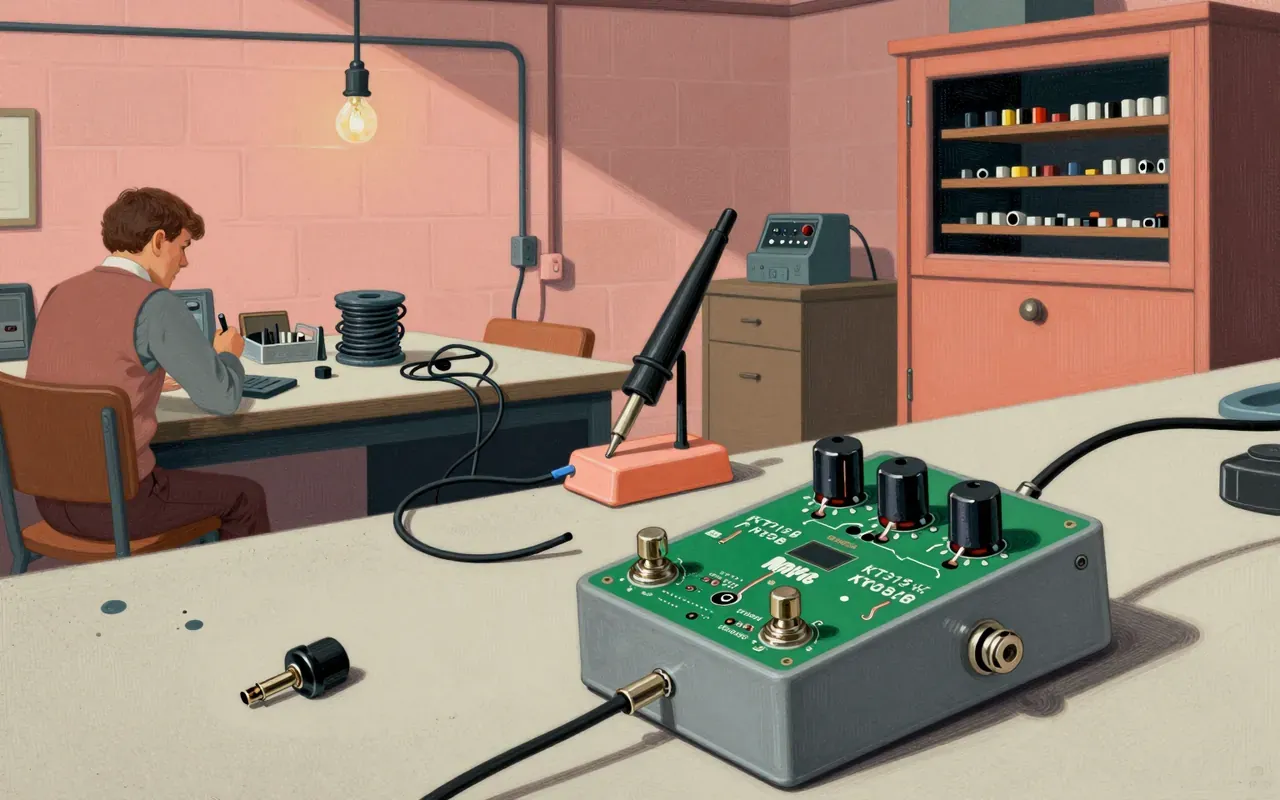
Same bench · Effects & pedals4 of 13
9:46
Eventide EclipseEventideA professional-grade digital effects processor with dual independent effects blocks, nearly 100 algorithms—including 11 reverbs—and 24-bit/96kHz conversion. Supports true stereo reverb I/O and extensive looping (up to 20 seconds per block). Firmware updates require Compact Flash and strict version dependencies; bootloader corruption requires factory reprogramming.
8:54
Electro-Harmonix Memory ManElectro-HarmonixThe Electro-Harmonix Deluxe Memory Man is an analog delay pedal introduced in 2008, offering up to 550ms of delay, selectable chorus or vibrato modulation, true bypass switching, and mono audio I/O.
9:51
Eventide SpaceEventideThe Eventide Space is a reverb-and-delay pedal offering 12 algorithmic spatial effects—including Hall, Plate, Blackhole®, and Shimmer—controlled via 10 knobs, MIDI, expression pedal, or HotSwitch. It features 100 presets (some artist-designed), true analog bypass, tap tempo/MIDI clock sync, and mono/stereo I/O in a rugged metal pedal format. Software tools FactorLib and H9 Control manage presets; the SpaceTime algorithm combines modulation, two delays, and reverb.
9:15
Big MuffElectro-Harmonix · 1969The Big Muff Pi is a 1969 fuzz effects pedal with four transistors, two soft-clipping stages, and a tone stack that scoops mids when centred. It delivers smooth, saturated, bass-heavy sustain at any volume—making small amps sound bigger. It was intended to mimic Hendrix but became heavier and more distinctive. It does not offer gain staging, midrange recovery, or dynamic clean-up.
Up next in Audio

Gretsch Tennessean

Gretsch · 9:30

A hollow-body guitar that sings like a room—but won’t stay quiet when you crank it.

9:30