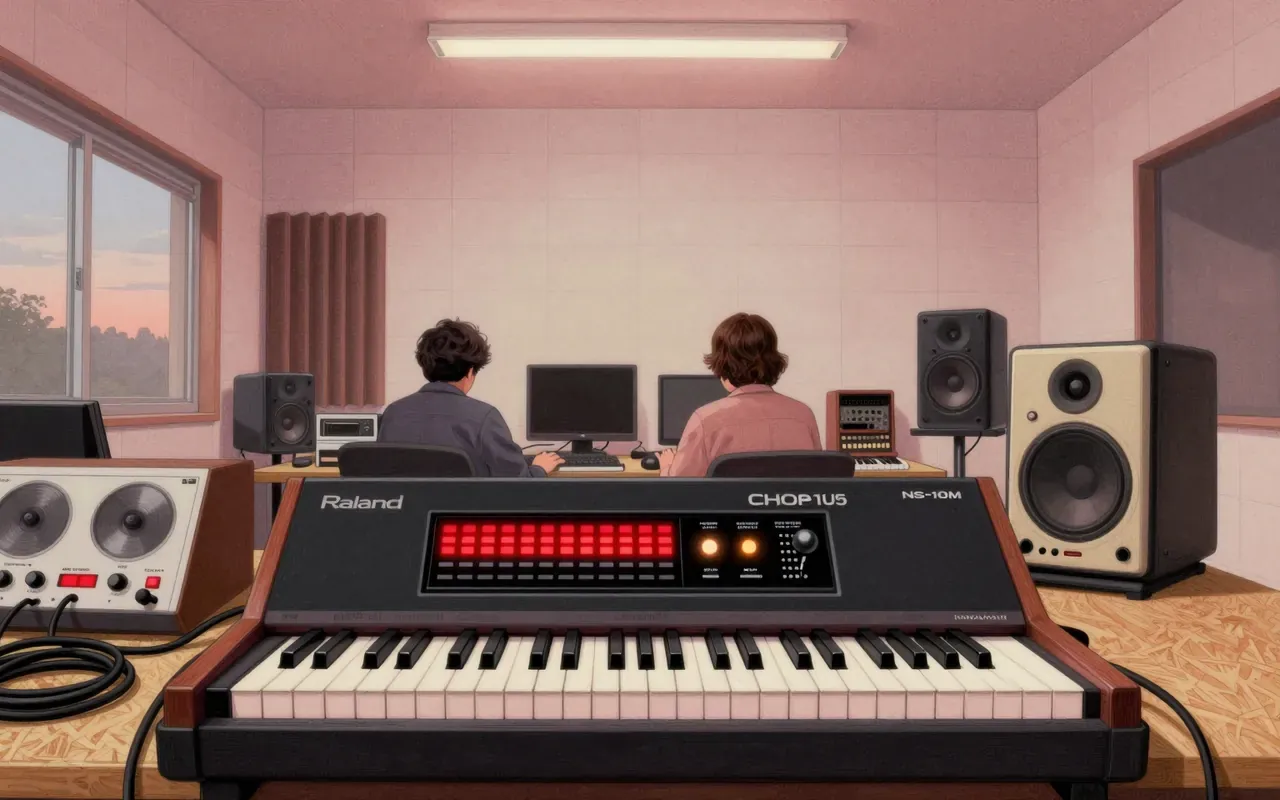
The JP-8000 doesn’t sound like an analog synth—it sounds like the moment trance broke into the mainstream.
The Roland JP-8000 is an analog modeling synthesizer released in early 1997. It sought to digitally reproduce the analog tonalities and power of its analog predecessors. Although it lacked somewhat in analog warmth due to its early digital architecture, it added many new features, such as RPS (Realtime Phrase Sequencing), which allowed short sequenced phrases to be assigned to keys, and such as motion control. It also featured the unique Supersaw oscillators and analog-style controllers such as an arpeggiator and an assignable touch response ribbon control. The Supersaw in particular was the reason why the JP-8000 was particularly successful as a main keyboard (along with the Virus) in the dance music market, especially for trance music.
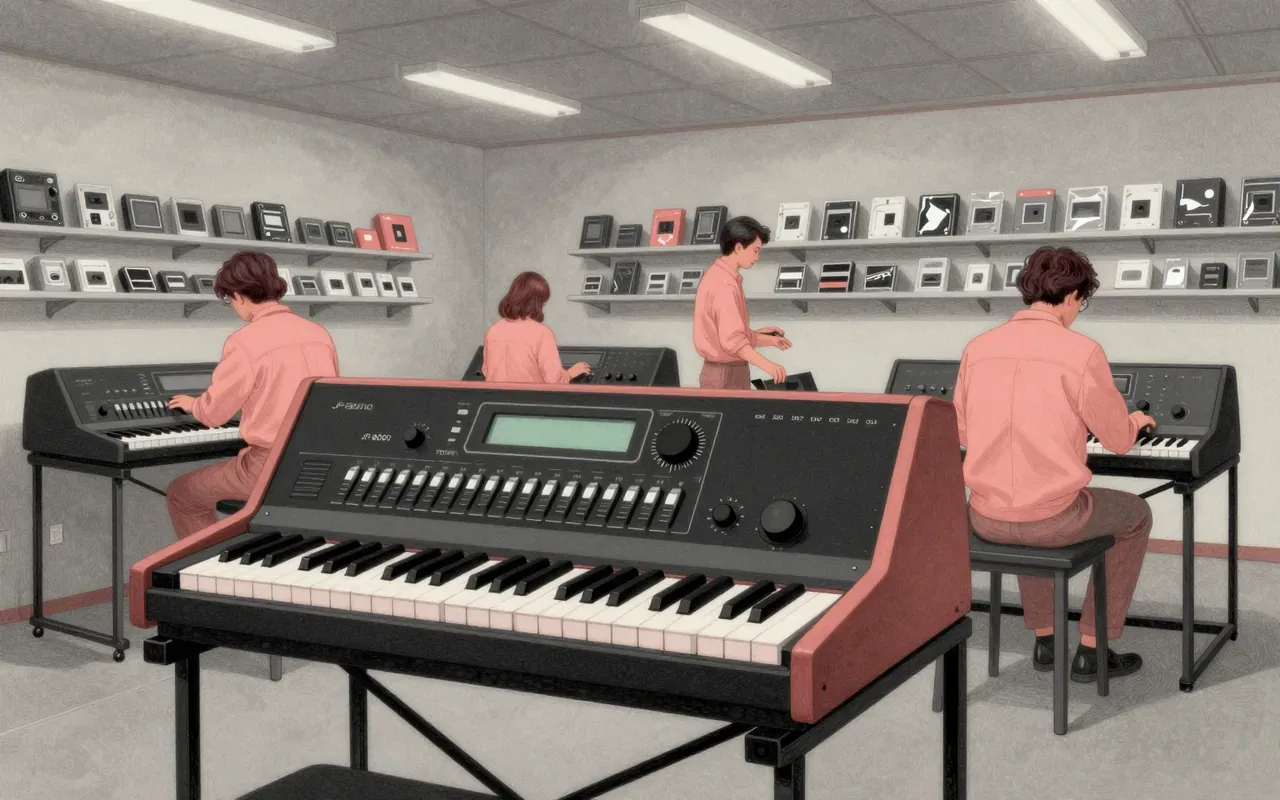
It was among the first virtual analog synths—and it arrived with a mission: mimic analogs, but faster and cheaper.
2:58
Analog feel, digital core
Sliders, ribbon, RPS and motion control gave players real-time performance tools—but no analog warmth.
4:26
The Supersaw engine
Supersaw wasn’t just a waveform—it was a production weapon that defined an entire genre’s top end.
6:33
What it gives up
It succeeded at interface and immediacy—but failed where analogs excelled: organic tonal depth and saturation.
Worth your time?
Yes. Use the whole thing.
3.5/ 5
What works
Delivers the Supersaw waveform more accessibly and aggressively than any VA synth before it.
Its Supersaw cuts through mixes and drives trance leads with unmatched immediacy.
Sliders, ribbon, RPS and motion control give players real-time performance tools.
It succeeded at interface and immediacy.
What does not
It does not sound like an analog synth.
It does not offer full analog warmth.
It does not have a true analog signal path.
It does not provide deep modulation routing.
Use it if
Trance producers who want fast, physical control over supersaw-heavy leads.
Anyone seeking authentic analog character or deep sound design flexibility should not.
Skip it if
Anyone seeking authentic analog character or deep sound design flexibility should not.
The written brief1 min read
What it is and what it was built for
It is an analog modeling synthesizer released in early 1997. It was built to digitally recreate the sound, functionality and user interface of classic analog synths—especially the Jupiter-8 and Jupiter-6.
How it works, in terms a player would use
It uses digital oscillators, filters and envelopes to model analog behaviour. Sliders control parameters in real time. RPS assigns short sequenced phrases to keys. Motion control records knob movements for playback. The ribbon responds to touch. The arpeggiator triggers patterns. Supersaw stacks multiple detuned sawtooth waves.
What it does better than anything else
It delivers the Supersaw waveform more accessibly and aggressively than any VA synth before it. That sound cuts through mixes and drives trance leads with unmatched immediacy.
What it does badly
It lacks analog warmth due to its early digital architecture. It offers no true analog signal path. Its slider-based interface limits simultaneous parameter adjustments beyond the front panel layout.
What people made with it
Producers used it to make trance leads, pads and basslines. Its Supersaw became genre-defining in dance music, especially trance.
Who should use it, and who should not
Trance producers who want fast, physical control over supersaw-heavy leads should use it. Anyone seeking authentic analog character or deep sound design flexibility should not.
Is it worth your time
Yes—if you need a fast, tactile trance lead engine with immediate hands-on control. No—if you require analog warmth, deep modulation routing, or modern polyphony and effects.