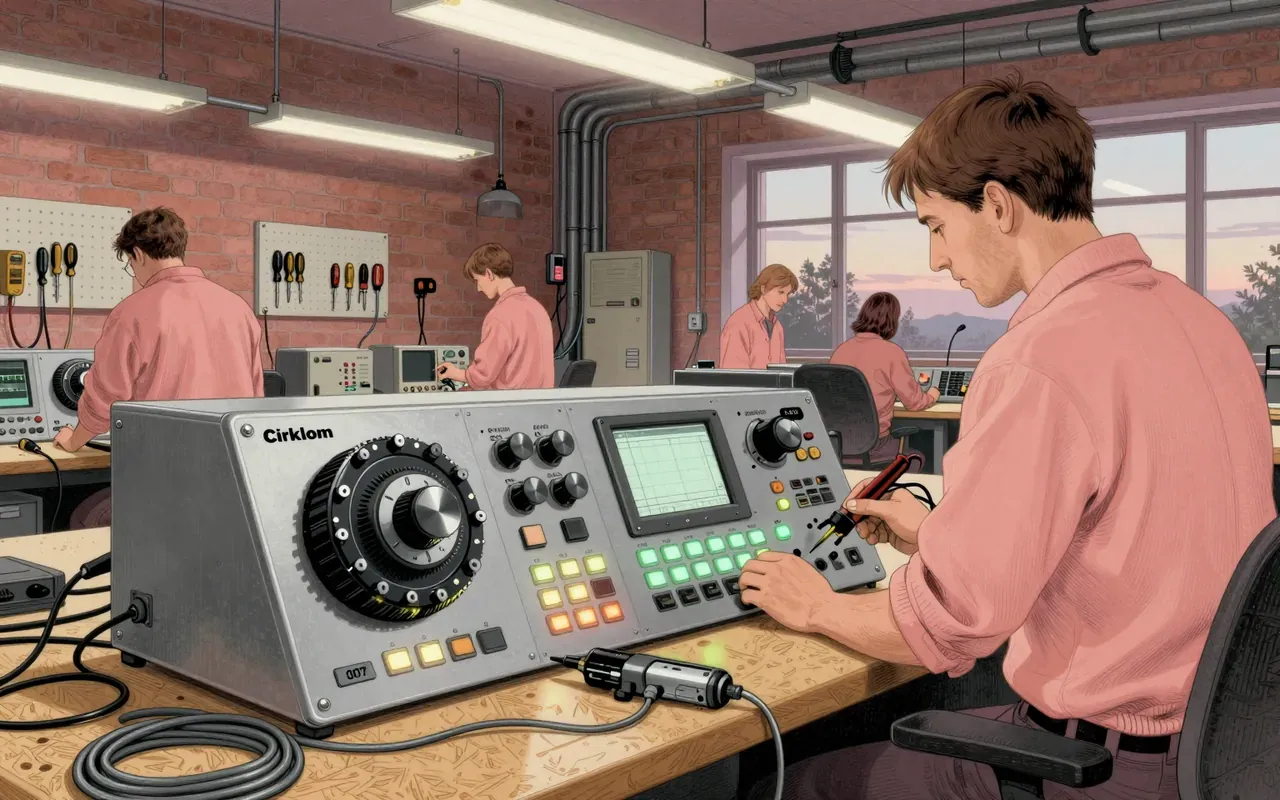
What it is and what it was built for
The Cirklon is a hardware sequencer built to control external instruments. It outputs MIDI (via USB or ports), audio (HP), and optionally CV/Gate. It was built for hardware-centric studios where timing, reliability and tactile control are non-negotiable.
How it works, in terms a player would use
It organises music into SONGs containing SCENES, with patterns per track. It runs in step mode and real-time mode. You record and edit sequences hands-on, using physical controls to set timing, triggers and routing.
What it does better than anything else
Its clock accuracy and track synchronisation are unmatched among hardware sequencers. Every sequence restarts from the exact point of interruption after power loss, thanks to flash memory state saving.
What it does badly
It produces no sound. It offers no internal instruments, no audio processing, no visual feedback beyond LED indicators, and no integration with DAWs beyond MIDI and CV/Gate outputs.
What people made with it
People made full live performances and studio productions using it to sequence synths, drum machines and modular systems—relying on its SONG/SCENE structure and dual recording modes to build complex, repeatable arrangements.
Who should use it, and who should not
Use it if you own hardware synths, drum machines or modular gear and want a dedicated, bulletproof sequencer. Do not use it if you rely on audio playback, software integration, or standalone composition without external sound sources.
Is it worth your time
Yes—if you need a hardware sequencer that survives power loss, locks external gear with surgical clock precision, and gives deep control without sound generation. No—if you expect built-in synthesis, audio playback, or software-style editing.