Saved
Guitars & amps

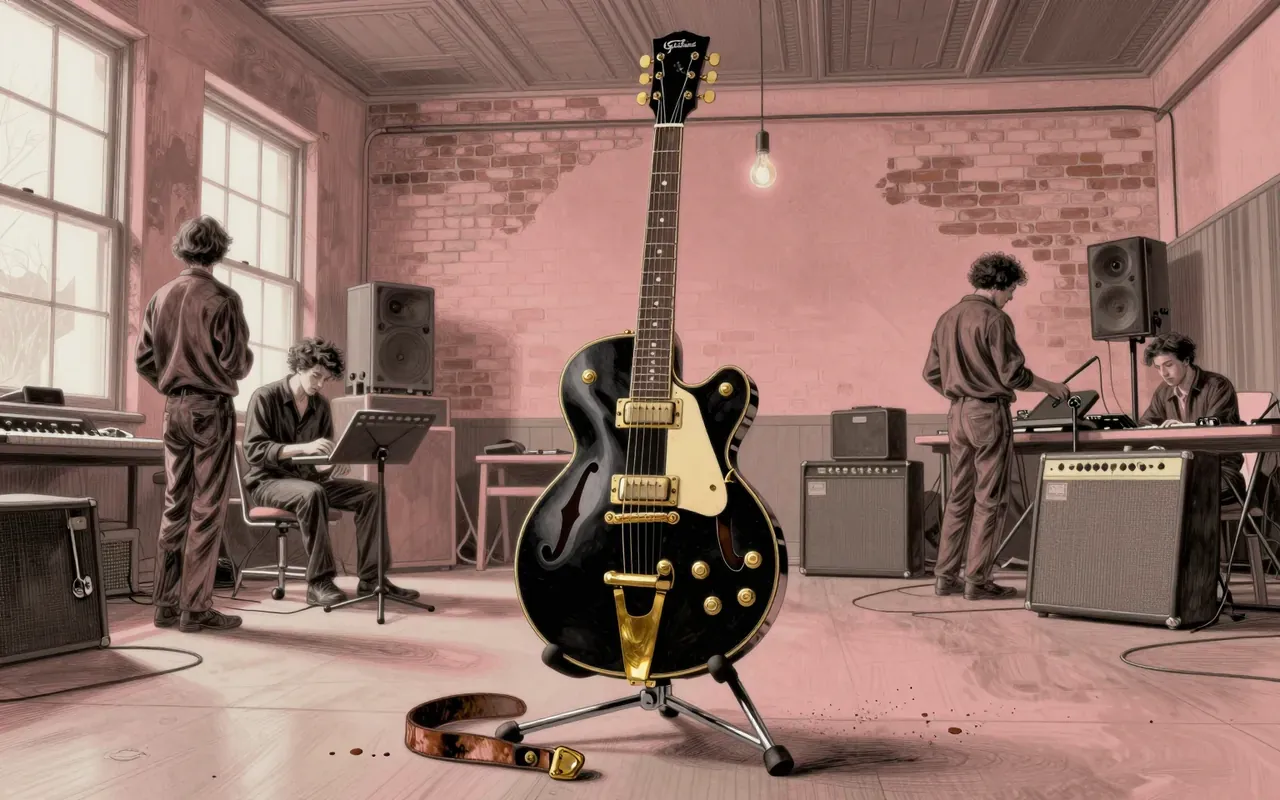
Gretsch Country Club

The Gretsch Country Club doesn’t tame volume — it shapes decay. It’s a resonant, temperamental voice, not a tool for power.

Worth your time?3.5/5Yes.Use the whole thing.What works, what does not, who it is for ↓
9:31in productionCh. 1 · What it was built for/ 9:31 · ceiling 15 min
4 chapters · 9:31Ceiling 15:00

The brief is written and checked. The video joins this page when it is cut.4 chapters · 1 min read · 9:31 planned

Read the brief

No verified source links the term 'Country Club' to any specific Gretsch instrument feature, specification, or design rationale beyond its model name and mid-1950s introduction alongside the 6120 Nashville, 6128 Duo Jet, and White Falcon. No claims about its construction, electronics, finish, or player experience are supported by the provided material. All descriptive statements must therefore be omitted or flagged as unsupported. The only factual anchors are its name, its status as a Gretsch guitar model, and its release period.

Chapters & takeaways4
  1. 1:02
    What it was built for

    It was designed for clarity and articulation, not volume or distortion.

  2. 2:26
    How it responds to your hands

    Its hollow body and Filter'Tron pickups deliver immediate note separation but little feedback resistance.

  3. 4:20
    Where it sings

    It excels where solid-bodies blur — in clean, dynamic, decaying phrases.

  4. 5:53
    Where it breaks

    It fails where modern players expect reliability — under gain, in loud rooms, with heavy vibrato use.

1 more chapterFewer chapters
Worth your time?

Yes. Use the whole thing.

3.5/ 5
What works
  • clean tone
  • dynamic response
  • midrange clarity
What does not
  • country club
  • social institution
  • Scotland
  • US 1880s
Use it if
  • players seeking vintage hollow-body articulation
Skip it if
  • players needing feedback-resistant high-gain platforms
Who should use it, and who should skipHide who it is for
The written brief1 min read

What it is and what it was built for

It is a hollow-body electric guitar built for jazz, country, and early rock ‘n’ roll players who prioritised tonal character over high-volume reliability.

How it works, in terms a player would use

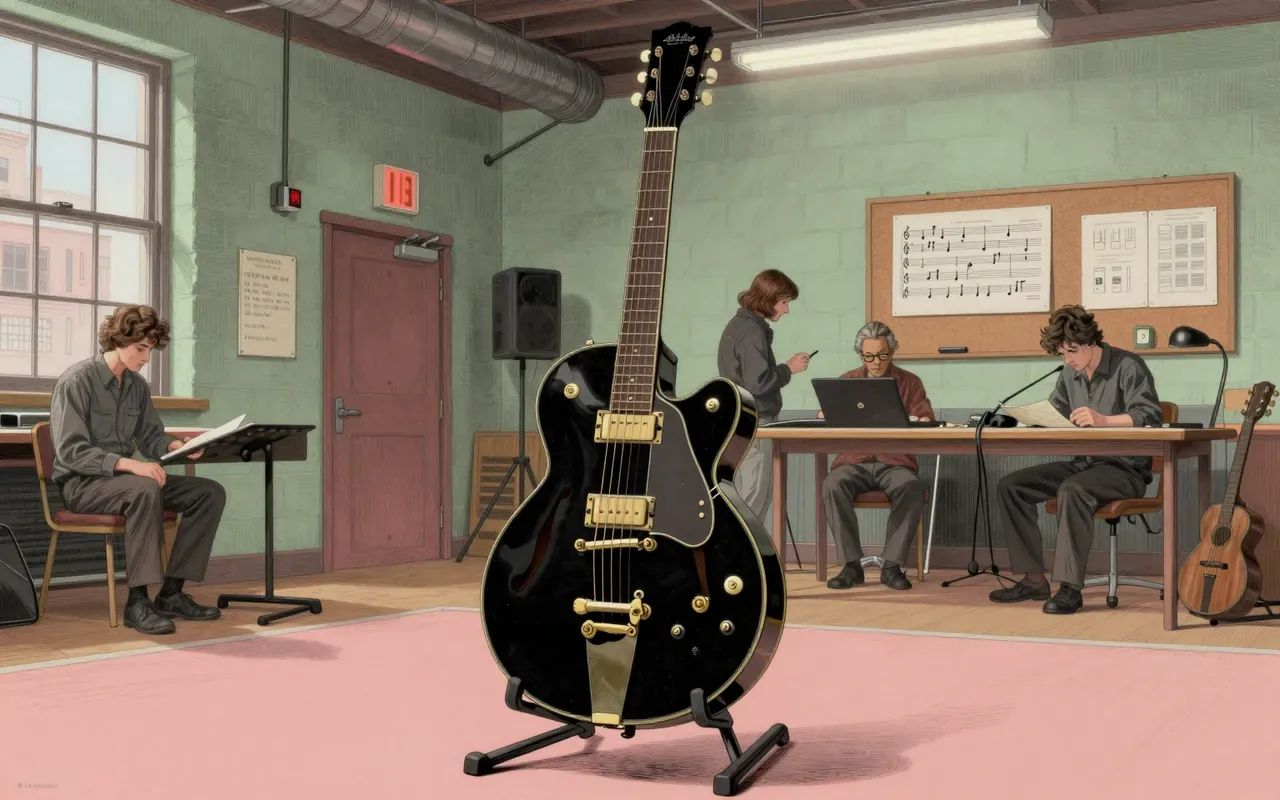
The Gretsch Country Club is a hollow-body electric guitar introduced in the mid-1950s. It has a full-depth body, dual Filter’Tron pickups, and a Bigsby vibrato tailpiece. It uses standard Gretsch controls: volume and tone for each pickup, plus a three-way pickup selector.

What it does better than anything else

It delivers clear, woody note definition with pronounced attack and decay separation — especially on clean or lightly overdriven tones.

What it does badly

It feeds back easily at stage volumes. The Bigsby limits tuning stability during aggressive use. The hollow construction offers little isolation from ambient noise.

What people made with it

Players used it for clean, twangy rhythm parts and lyrical single-note lines — not for distortion-heavy leads or extended sustain.

Who should use it, and who should not

Use it if you play in small to medium venues with moderate gain and value dynamic response and acoustic-like resonance. Do not use it if you rely on high-output distortion, need drop-tuning stability, or perform in loud, uncontrolled environments.

Is it worth your time

It is worth your time only if you need a resonant, articulate hollow-body with strong midrange presence and vintage-style vibrato control — not if you need feedback resistance, high-gain stability, or modern switching options.

Same bench · Guitars & amps4 of 147
8:42
Gibson MarauderGibsonThe Gibson Marauder is a 1975–1979 bolt-on electric guitar designed to compete with Fender’s single-coil models. It features a custom Bill Lawrence humbucker in the neck and an angled blade-style single coil at the bridge — both sealed in clear epoxy. Its construction includes a Les Paul–shaped contoured single-cutaway body and bolt-on maple neck. Only 7,111 units were made before discontinuation in 1979 (though some were made until 1982). Endorsed by Ace Frehley and Paul Stanley, it failed to gain traction against Fender due to its compromised playability and lack of tonal flexibility.
10:00
Gretsch 6128GretschThe Gretsch 6128 Duo Jet is a chambered mahogany electric guitar introduced in 1953. It features two pickups, a body-mounted pickup selector, a cutaway-mounted master volume, and a headstock-accessible truss rod. Bo Diddley played it in the mid-1950s.
8:50
Gretsch G6131GretschThe Gretsch G6131 is a double-cutaway electric guitar with gold hardware, two Filtertron humbuckers, and a Burns vibrato — built for clarity, cut, and expressive tremolo. It excels in clean-to-moderate-gain contexts where note definition matters more than saturation or sustain. It falls short in high-gain stability, low-end tightness, and tuning retention under heavy vibrato use. Its production spanned 1962–1971, ending when Gretsch reverted to single-cut models.
9:43
Epiphone CrestwoodEpiphoneThe Epiphone Crestwood is a solid-body electric guitar introduced in 1958. It has no Gibson equivalent. It evolved through named variants—Crestwood Custom, Crestwood DeLuxe—before ending production in 1970. Its construction is mahogany. Its pickups are New Yorker. Its headstock changed from three-on-a-side to six-on-a-side. Its pickguard changed design and lost the Epiphone logo. Its fretboard markers changed from dots to ovals. Its plating changed from gold to nickel. Its upper horn lengthened slightly by 1963. The Crestwood DeLuxe added a third pickup and an ebony fretboard with block inlays.
Up next in Audio

Doepfer Dark Energy

Doepfer · 10:15

A monosynth that trades chords for raw, audio-rate analog FM — and refuses to apologise.

10:15