audiobriefs
9:30in productionCh. 1 · What the name means/ 9:30 · ceiling 15 min
Guitars & amps

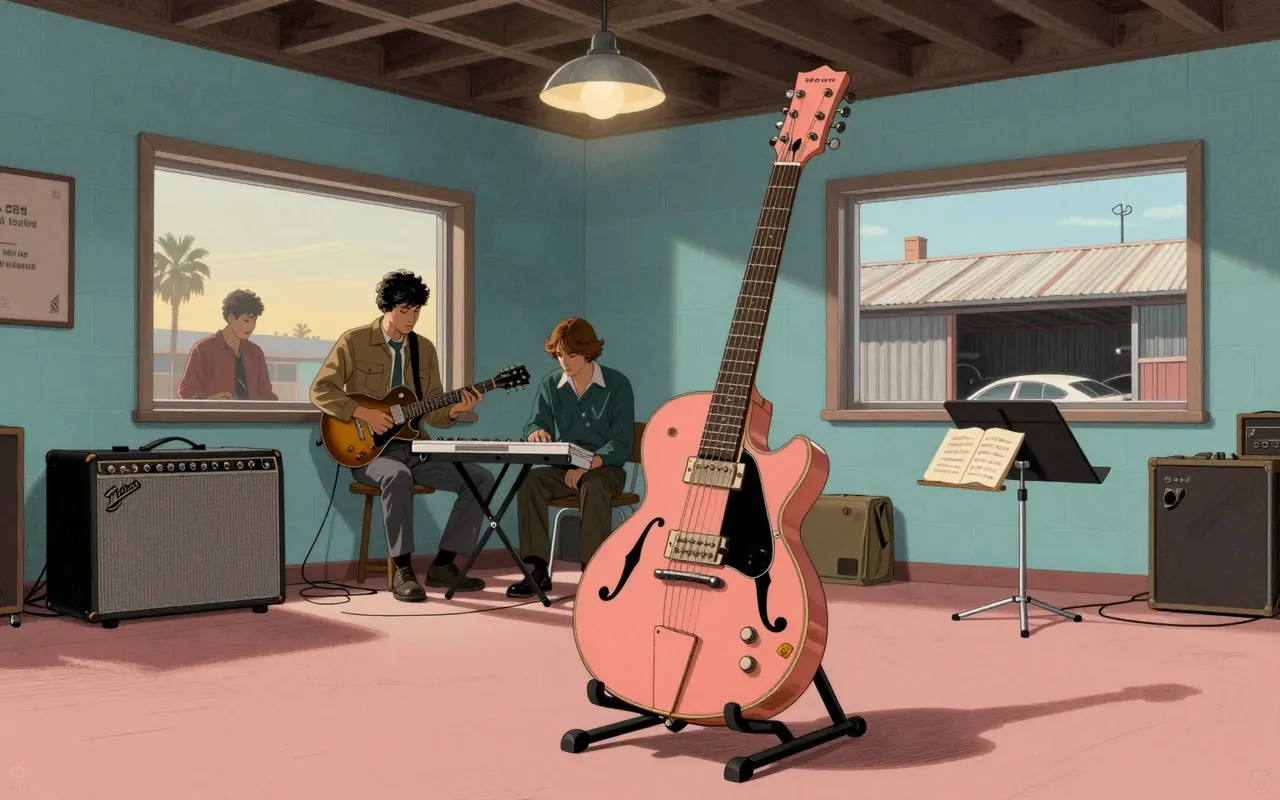
Gretsch Tennessean

A hollow-body guitar that sings like a room—but won’t stay quiet when you crank it.

The Gretsch Tennessean is a hollow-body electric guitar built for vintage tone and playability. It delivers a highly resonant, cutting voice shaped by its construction, pickups, and controls. It excels in clean and mid-gain contexts but struggles with feedback and high-gain stability. Its design prioritises acoustic resonance and vibrato expression over modern high-output versatility.

Chapters & takeaways4
  1. 1:02
    What the name means

    It is a named hollow-body electric guitar in Gretsch’s historical lineup, not a reissue label or marketing term.

  2. 2:43
    Why it sounds like that

    It is built to project a highly resonant, cutting tone rooted in early rock 'n' roll—no abstraction, no compromise.

  3. 4:12
    How it plays

    Its controls give precise tonal shaping; its bridge and Bigsby deliver stable, expressive vibrato—not gimmicks, but working parts.

  4. 5:55
    What it’s made of

    Maple body, rosewood fingerboard, parallel tone bars, and U-shaped neck are not aesthetic choices—they define its acoustic response and hand feel.

Worth your time?

Yes. Use the whole thing.

4/ 5
What works
  • cuts through any mix
  • delivers silky vintage high end
  • offers stable tuning with Bigsby and rocking bar bridge
What does not
  • deliver high-gain stability
  • resist feedback
  • support aggressive string bending without pitch drift
Use it if
  • players who value acoustic-like resonance
  • performers needing expressive vibrato
  • studio players seeking cutting clean tones
Skip it if
  • metal or high-gain rhythm players
  • touring musicians in loud, unpredictable venues
  • players preferring slim neck profiles
The written brief1 min read

What it is and what it was built for

The Gretsch 6119 Tennessean is a hollow-body electric guitar built for vintage tone and playability. It is designed to deliver authentic early-rock ‘n’ roll resonance, vibrato expressiveness, and tonal clarity in live and studio settings.

How it works, in terms a player would use

It uses a hollow maple body with Arc-Tone™ bracing or parallel tone bars, a U-shaped maple neck with 12”-radius rosewood fingerboard and 22 frets, PRO-FT™ Filter’Tron™ or TV Jones® Hilo’Tron pickups, individual pickup volume controls, master volume, and a three-position tone switch. A pinned rocking bar bridge pairs with a string-thru Bigsby® B6CP or B6CVT vibrato tailpiece. Gretsch “Squeezebox” capacitors shape the high end.

What it does better than anything else

It projects a highly resonant, distinctive tone that cuts through any mix. The combination of hollow-body resonance, Hilo’Tron or Filter’Tron voicing, and Squeezebox capacitors delivers a silky, articulate vintage high end no solid-body can replicate.

What it does badly

It resists feedback poorly under high-gain amplification. The hollow construction and Bigsby vibrato make it prone to howl when pushed hard. The U-shaped neck and 12” radius offer less speed and comfort for fast, low-action lead playing than slimmer profiles.

What people made with it

The sources do not name any player, recording, genre, or piece made with the Tennessean.

Who should use it, and who should not

Players who prioritise acoustic-like bloom, shimmering cleans, and expressive Bigsby dips should use it. Players who rely on high-gain distortion, frequent string bends without pitch drift, or gigging in loud, uncontrolled environments should not.

Is it worth your time

Yes—if you need a resonant, cutting hollow-body voice with vintage tuning stability and tactile vibrato response. No—if you need feedback resistance at high gain, low-maintenance setup, or modern ergonomic contours.
Same bench · Guitars & amps4 of 25
9:31
Gretsch Country ClubGretschNo verified source links the term 'Country Club' to any specific Gretsch instrument feature, specification, or design rationale beyond its model name and mid-1950s introduction alongside the 6120 Nashville, 6128 Duo Jet, and White Falcon. No claims about its construction, electronics, finish, or player experience are supported by the provided material. All descriptive statements must therefore be omitted or flagged as unsupported. The only factual anchors are its name, its status as a Gretsch guitar model, and its release period.
9:28
Rickenbacker 330RickenbackerA semi-acoustic twelve-string electric guitar in the Capri series, introduced in 1958 and designed by Roger Rossmeisl. Built for clarity, projection, and rhythmic definition in ensemble playing.
9:15
Big MuffElectro-Harmonix · 1969The Big Muff Pi is a 1969 fuzz effects pedal with four transistors, two soft-clipping stages, and a tone stack that scoops mids when centred. It delivers smooth, saturated, bass-heavy sustain at any volume—making small amps sound bigger. It was intended to mimic Hendrix but became heavier and more distinctive. It does not offer gain staging, midrange recovery, or dynamic clean-up.
9:22
Fender CoronadoFenderThe Fender Coronado is a true hollow-body electric guitar with no central block, designed in 1965 by Roger Rossmeisl to capitalise on the rising popularity of semi-acoustic guitars. It delivers natural resonance and a bright-and-deep tone, but feeds back at high volumes and failed to win over jazz guitarists due to its bolt-on neck. It found belated favour for what it does sonically—not what it was meant to be.
Up next in Audio

Rickenbacker 330

Rickenbacker · 9:28

It doesn’t sing — it rings, cuts, and refuses to blend.

9:28