What it is and what it was built for
A hollow body electric guitar built for Chet Atkins in 1954, refined for production in 1955. It was made for players who needed projection, clarity, and dynamic responsiveness in live country and early rock ‘n’ roll settings.
How it works, in terms a player would use
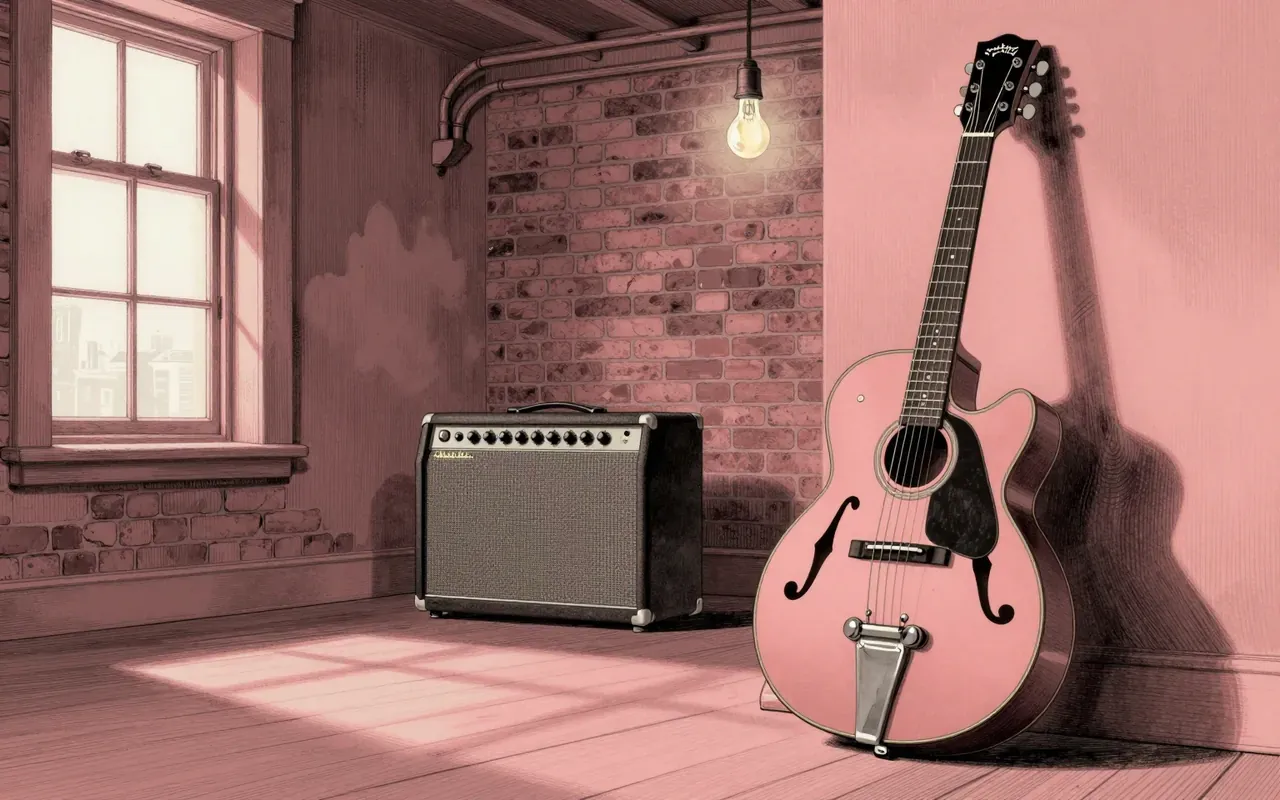
It is a hollowbody electric guitar with f-holes. It uses Filter’Tron humbuckers, not the earlier DeArmond pickups. The headstock is bound on production models. Players engage its acoustic resonance and electric clarity through direct string-to-bridge coupling and hollow-chamber feedback response.
What it does better than anything else
It delivers a snappy, glassy attack with clear note separation and vocal midrange presence—ideal for twang, country lead lines, and clean jazz comping. Nothing else from its era balances acoustic airiness and electric cut so distinctly.
What it does badly
It feeds back easily under high stage volume. Its hollow construction limits low-end tightness and sustain compared to semi-hollow or solid-body designs. It offers no onboard tone shaping beyond pickup selection and basic volume/tone controls.
What people made with it
Chet Atkins used it to define the Nashville sound. Players shaped clean, articulate lead lines and rhythmic chord work that relied on its bright attack and open resonance—not distortion, not compression, not effects.
Who should use it, and who should not
Players who prioritise articulation, dynamic nuance, and vintage tonal character over gain headroom or feedback resistance. Not for metal rhythm players, bedroom producers seeking tight DI tones, or anyone needing modern passive EQ or active circuitry.
Is it worth your time
Yes—if you need a bright, cutting, articulate hollowbody that projects cleanly at stage volume without runaway feedback. No—if you need tight low-end control, high-gain saturation, or resistance to feedback in loud settings.