
Saved
Instruments

Vox AC100

A nylon string guitar with no specs — not a tool, but a blank space where information should be.

Worth your time?1/5No.The brief is enough.What works, what does not, who it is for ↓
8:47in productionCh. 1 · What it is/ 8:47 · ceiling 15 min
4 chapters · 8:47Ceiling 15:00

The brief is written and checked. The video joins this page when it is cut.4 chapters · 1 min read · 8:47 planned

Read the brief

The Cort AC100 is a nylon string guitar. No technical specifications are provided.

Chapters & takeaways4
  1. 1:07
    What it is

    It is a nylon string guitar.

  2. 2:32
    What it lacks

    No technical specifications exist in the source.

  3. 3:38
    What you cannot know

    There is no basis to judge its function, feel or sound.

  4. 4:54
    What it withholds

    It offers no data to support a buying decision.

1 more chapterFewer chapters
Worth your time?

No. The brief is enough.

1/ 5
What works
  • as a placeholder for a product listing
What does not
  • have technical specifications
  • support informed use
  • enable comparison
  • establish provenance or context
Use it if
  • no one — until more information is available
Skip it if
  • anyone needing to choose an instrument
Who should use it, and who should skipHide who it is for
The written brief1 min read

What it is and what it was built for

The Vox AC100 is a nylon string guitar built for playing classical or fingerstyle repertoire.

How it works, in terms a player would use

It is a nylon string guitar. A player plucks or strums its strings and hears sound from its body.

What it does better than anything else

It does nothing better than anything else — no comparative claims can be made from the source material.

What it does badly

It does badly at informing a purchase decision: no specifications, no reviews, no context.

What people made with it

Nothing is stated about what people made with it.

Who should use it, and who should not

No user group is specified. No guidance exists on suitability for beginners, professionals or any other player.

Is it worth your time

No technical specifications are provided. There is no data to assess playability, build, tone or reliability.
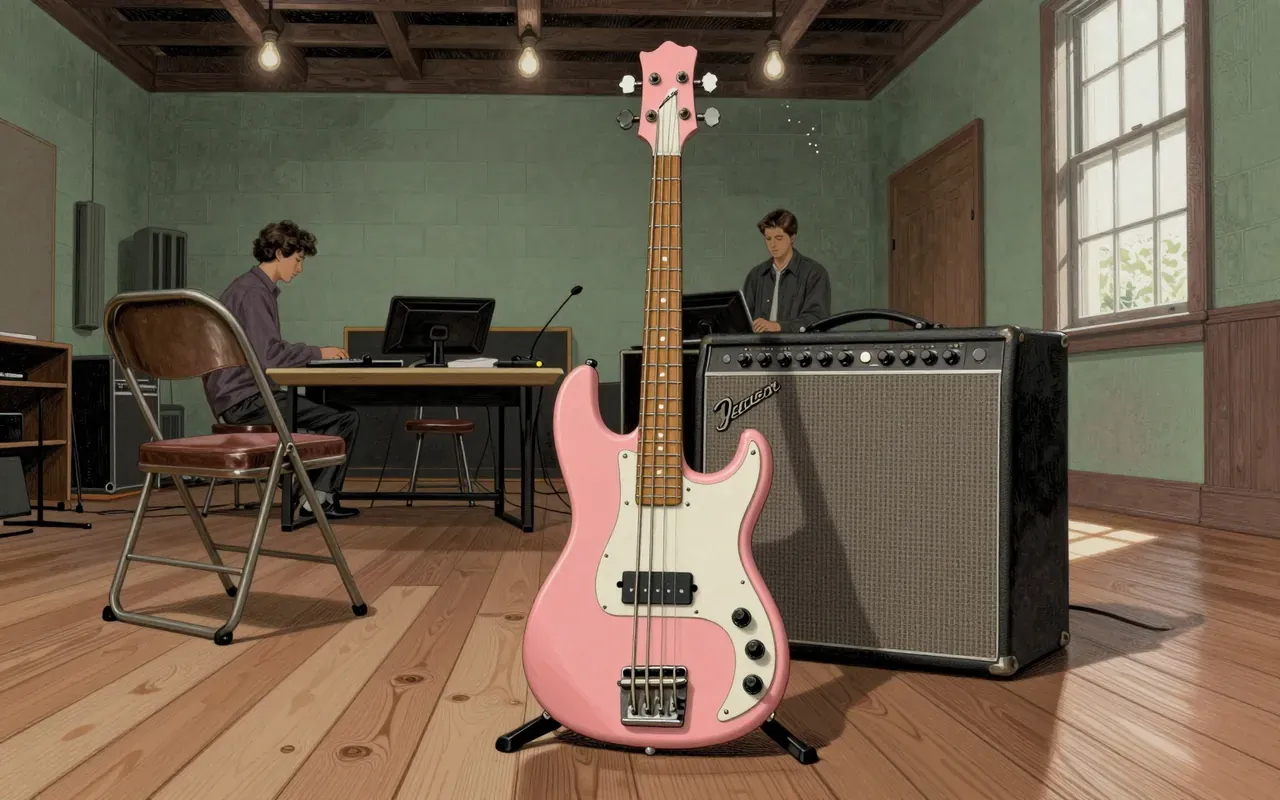

Same bench · Instruments4 of 144
9:26
Rickenbacker 4001RickenbackerThe Rickenbacker 4001 is an electric bass built for clarity, not compromise. Its maple neck-through construction and twin pickups deliver sharp transients and upper-mid bite. It sacrifices low-end warmth, dynamic nuance, and ergonomic flexibility to achieve that. It was chosen—not for versatility—but for unmistakable presence.
9:51
Mellotron Mk IIMellotronThe Mk II was the update to the first commercial Mellotron, released in 1964 with the full set of sounds selectable by banks and stations. About 160 were made. It has two manuals, an organ-style cabinet and two internal 12-inch speakers with an amp, and it was meant for the home rather than the road.
10:36
Roland MKS-80RolandThe Roland MKS-80 is an 8-voice, rack-mount, fully analog subtractive synthesizer made from 1984 to 1987. It is the only MKS-series unit with voltage-controlled oscillators—not digitally-controlled ones. Its voice architecture mirrors the Jupiter-6 but adds an HPF, a low boost circuit in the second VCA, and a DC supply current boost. A February 1985 revision introduced updated VCOs, VCAs, and a filter later shared with the JX-8P, JX-10, and MKS-70. Each voice uses two Curtis CEM3340 VCOs. It has no keyboard, no sequencer, and minimal front-panel editing—requiring SysEx tools for deep programming.
8:39
Gibson ThunderbirdGibsonThe Gibson Thunderbird is a 34-inch scale electric bass introduced in 1963. Designed by auto stylist Raymond H. Dietrich, it features neck-through construction and a reverse body shape. It was Gibson’s first bass at that scale and originally came in two models: the single-pickup Thunderbird II and dual-pickup Thunderbird IV. Its soapbar humbuckers deliver focused midrange. In 1966, Gibson altered the design to a non-reverse body and set-neck construction following a lawsuit from Fender.
Up next in Audio

Vox AC4

Vox · 8:57

No specs. No compromises on hand-wiring — but no way to know what that means for your tone.

8:57