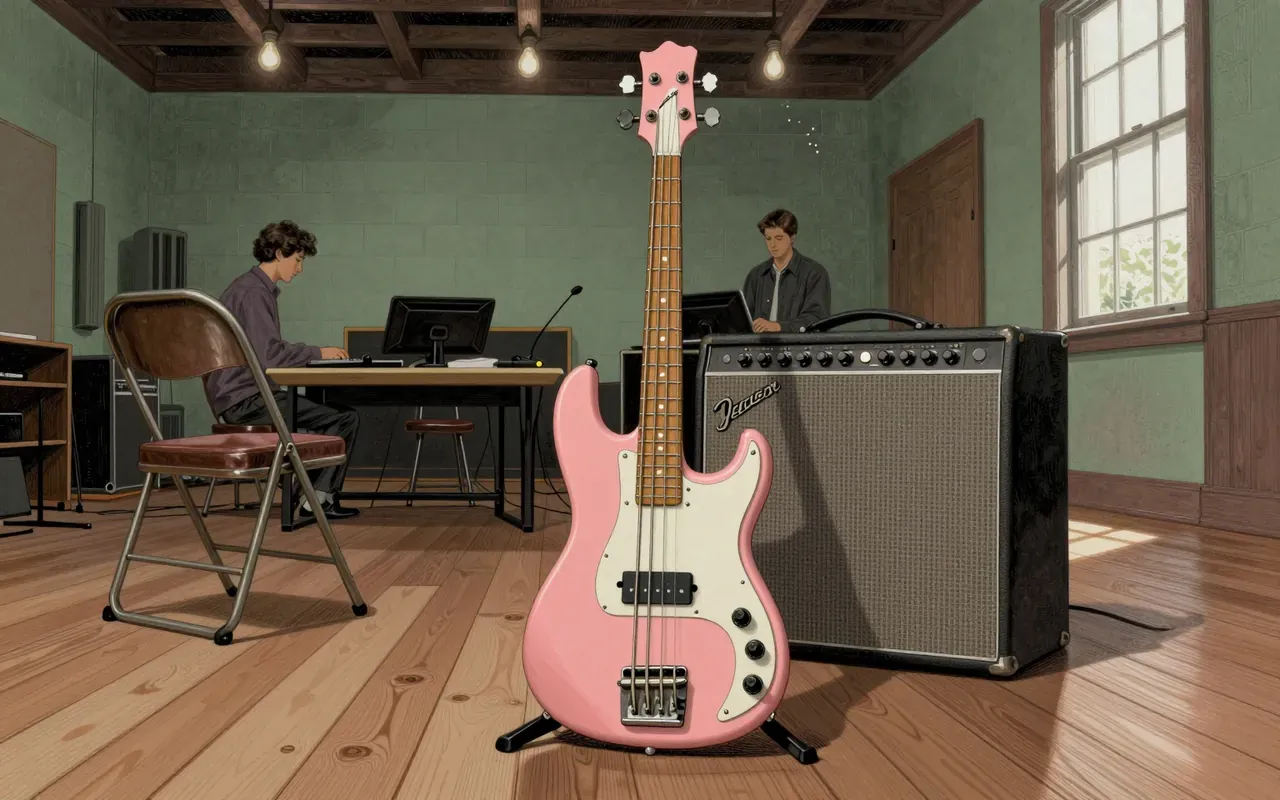
What it is and what it was built for
The Rickenbacker 4001 is an electric bass guitar introduced in 1961 as a deluxe two-pickup evolution of the single-pickup 4000. It was built for players needing projection, clarity, and tonal distinction in live and studio settings where bass had to compete with loud guitars and drums.
How it works, in terms a player would use
It has neck-through maple construction with glued-on maple wings. Two pickups: a ‘toaster top’ in the neck position and another at the bridge. A three-position switch selects neck, both, or bridge pickup. Separate volume and tone controls for each pickup. No active electronics. The strings anchor through the body.
What it does better than anything else
It delivers a uniquely aggressive, glassy, harmonically rich tone that cuts through dense mixes without distortion. Its neck-through rigidity gives exceptional note definition and transient clarity, especially on upper-register lines.
What it does badly
It lacks low-end warmth and sustain compared to bolt-on or semi-hollow designs. Its stiff neck-through construction resists bending, limiting expressive vibrato and pitch manipulation. The high string tension and narrow neck make fast legato or complex fingerstyle awkward.
What people made with it
Paul McCartney used a left-handed 1964 4001S FG from 1965 onward, anchoring the Beatles’ mid-to-late period bass sound—melodic, trebly, and rhythmically incisive. Others used it for punchy, hook-driven pop and rock lines where clarity trumped warmth.
Who should use it, and who should not
Players who prioritise articulation over warmth, play with pick-driven attack, and need a bass that sits sharply in a mix. Not for players seeking deep sub-bass, smooth legato, or ergonomic comfort during long sessions.
Is it worth your time
Yes—if you want a bright, cutting, articulate bass tone with strong upper-mid presence and immediate attack, and are willing to accept its narrow dynamic range and physical idiosyncrasies.