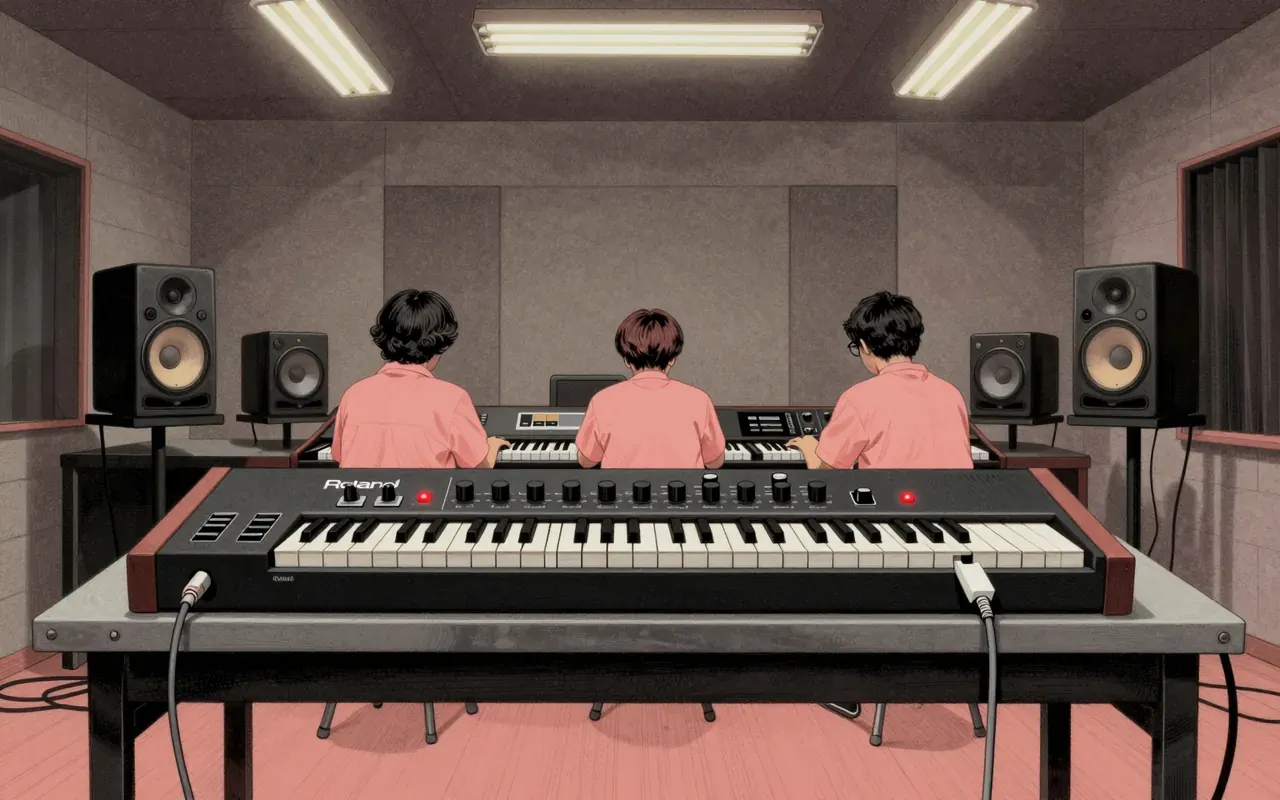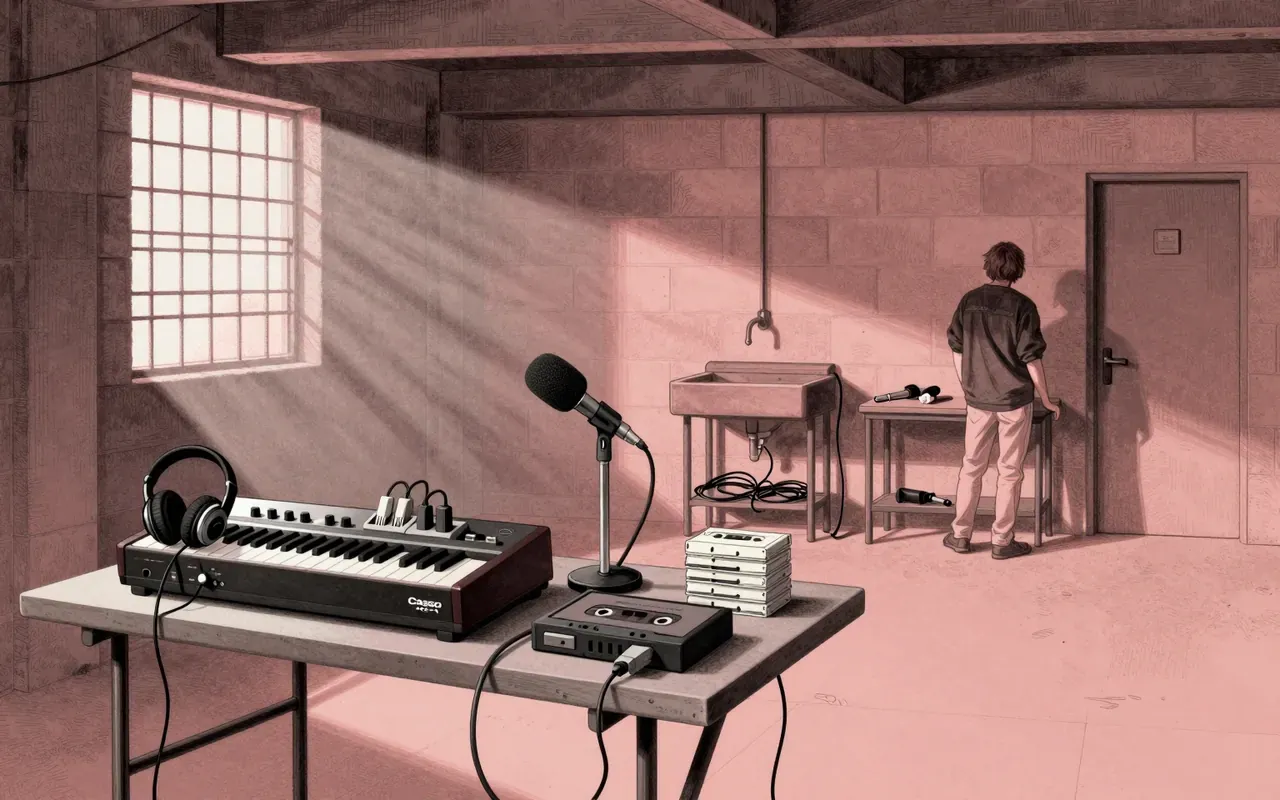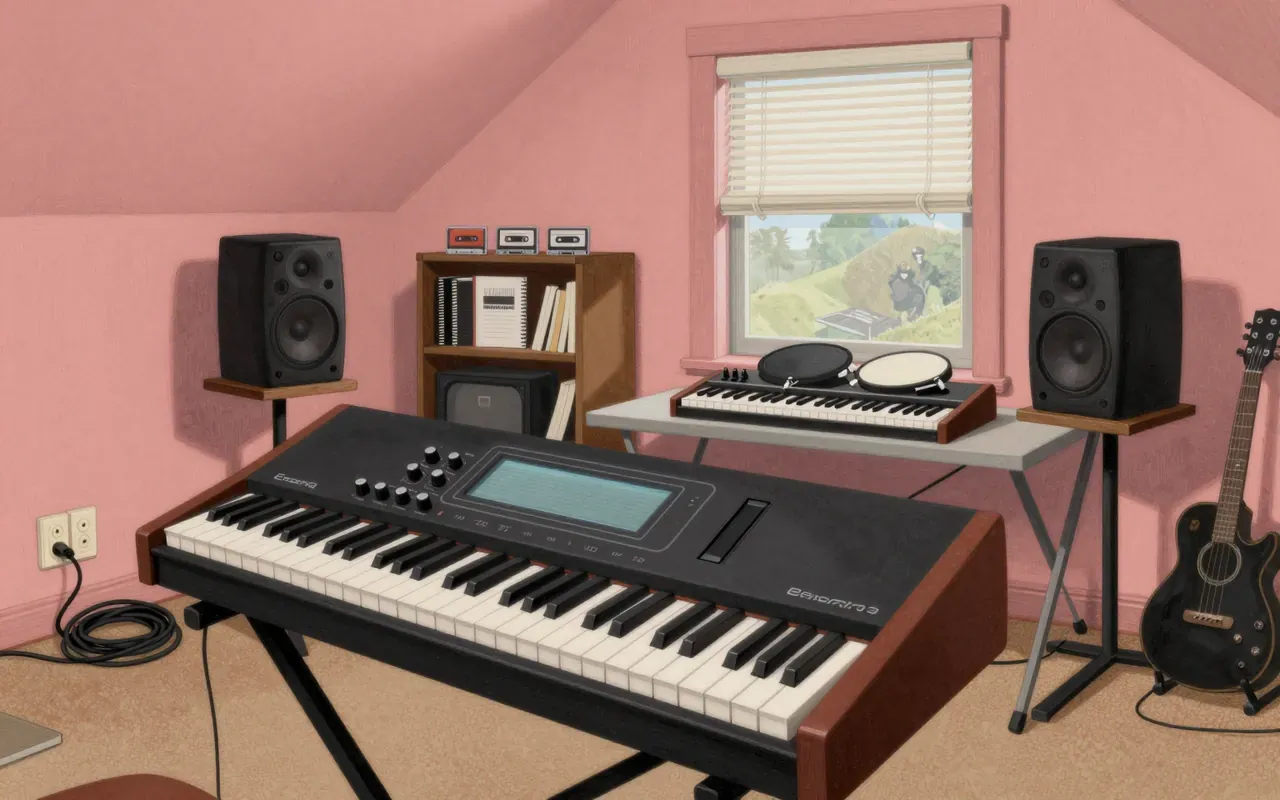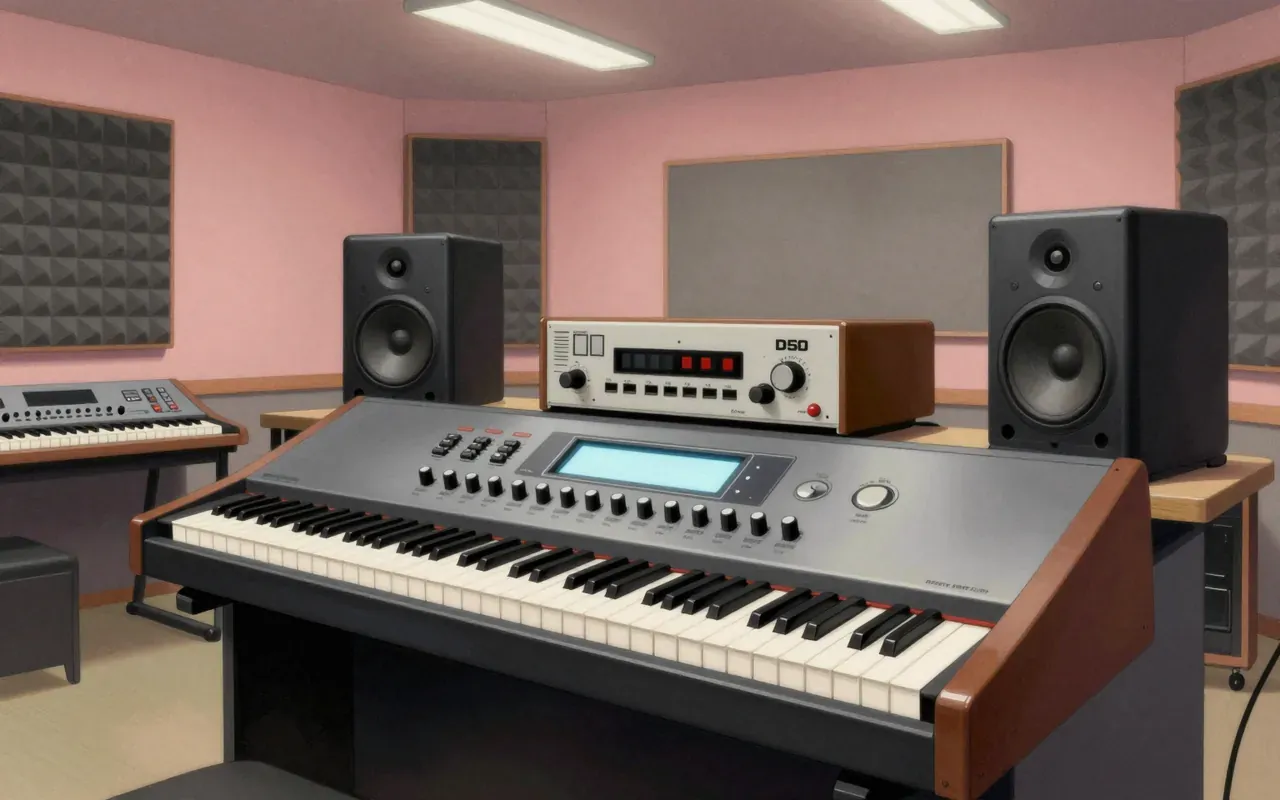
What it is and what it was built for
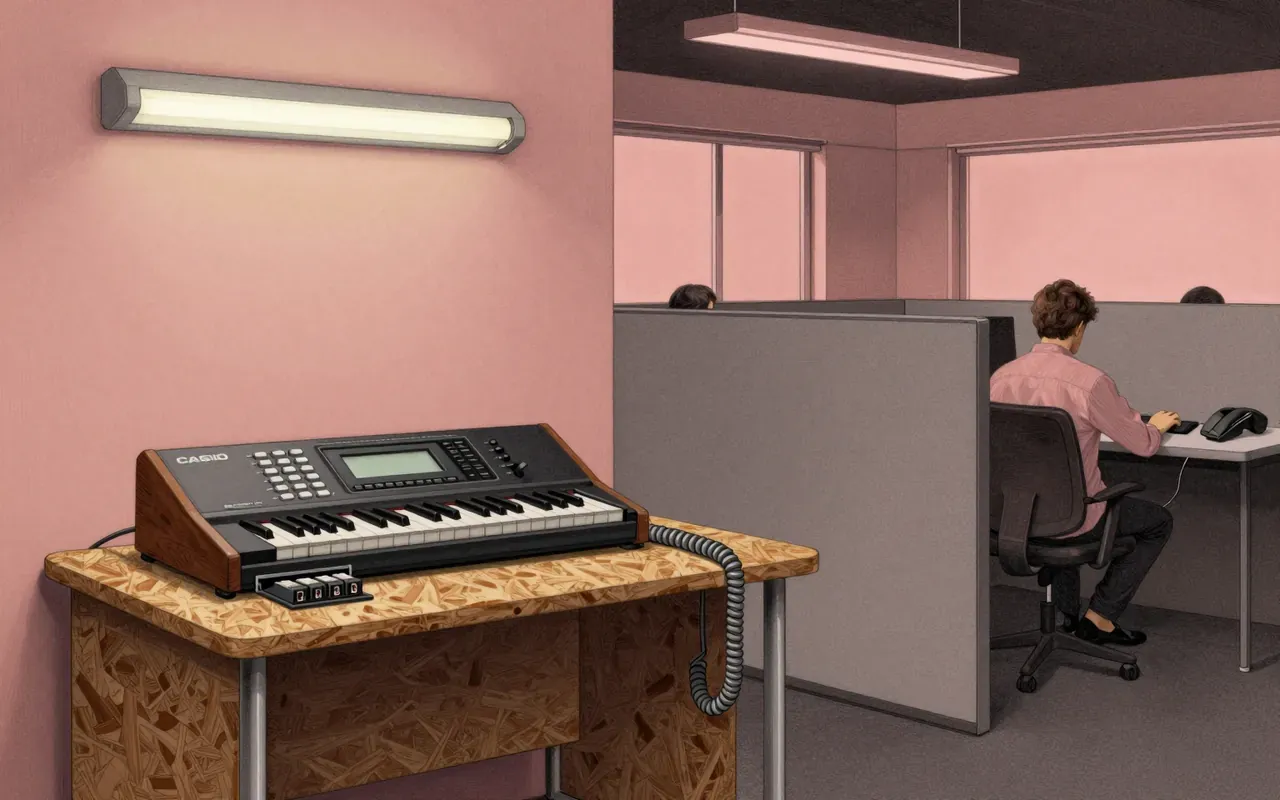
A line of low-cost, digitally implemented phase distortion synthesizers introduced by Casio in 1984. Built for amateur musicians. Designed to simulate analog filter behaviour without physical filters. Keyboard-format devices, some battery-powered.
How it works, in terms a player would use
Each voice uses one or two digital oscillators. Oscillators play waveforms in series—first one, then the other—not mixed in parallel. You choose waveform pairs from a fixed set: two non-resonant, or one resonant plus one non-resonant. Two resonant waveforms cannot be paired. A pitch envelope shapes each oscillator independently. No physical filter exists; phase distortion simulates filter behaviour.
What it does better than anything else
It generates sub-harmonics reliably through series waveform alternation—a trick few synths replicate without aliasing or CPU cost. It delivers eight-note polyphony at low price and battery power. Its phase distortion gives sharp, glassy tones that cut through mixes without EQ.
What it does badly
It cannot layer resonant waveforms. It offers no true filter resonance control. Its polyphony halves when using two oscillators per voice. There is no velocity or aftertouch response. The keyboard feel is shallow and unweighted.
What people made with it
People made early digital pop, synth-pop, and home-studio demos with them—especially in Japan and Europe. Their bright, narrow timbres appear on mid-80s TV jingles, budget video game music, and bedroom recordings where affordability and portability mattered more than sonic flexibility.
Who should use it, and who should not
A hardware tinkerer who values constraint as a creative tool. A collector seeking functional, compact 80s digital gear. A composer needing brittle, high-frequency textures. Not a performer needing expressive dynamics. Not a sound designer requiring deep modulation or organic evolution.
Is it worth your time
Yes—if you want cheap, portable digital synthesis with sub-harmonic depth and a distinct, brittle brightness. No—if you need real-time filter sweeps, rich analog warmth, or flexible modulation routing.