audiobriefs
9:14in productionCh. 1 · Weighted Keys/ 9:14 · ceiling 15 min
Synths & drum machines

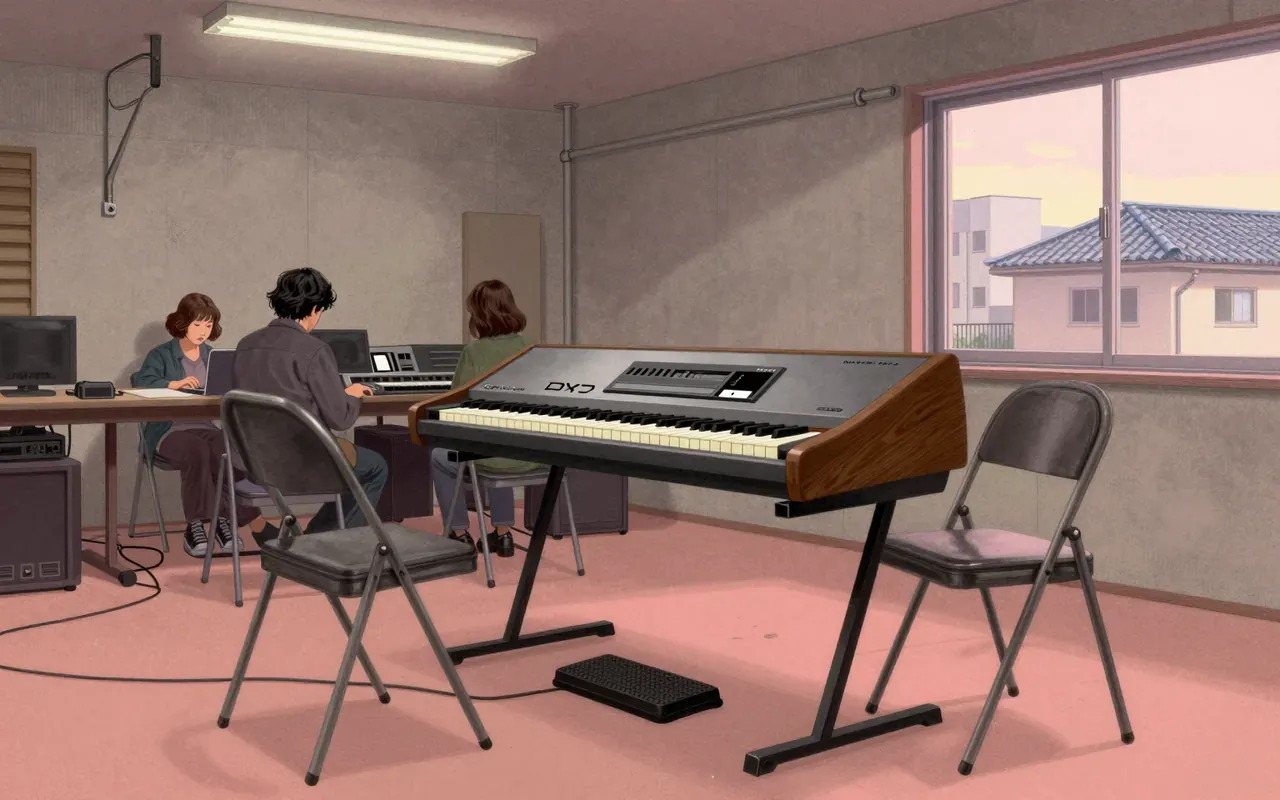
Yamaha DX7II

A fully-weighted FM synth that gives you sequencing and arpeggiation — but locks every sound behind a single LCD and six unlabelled buttons.

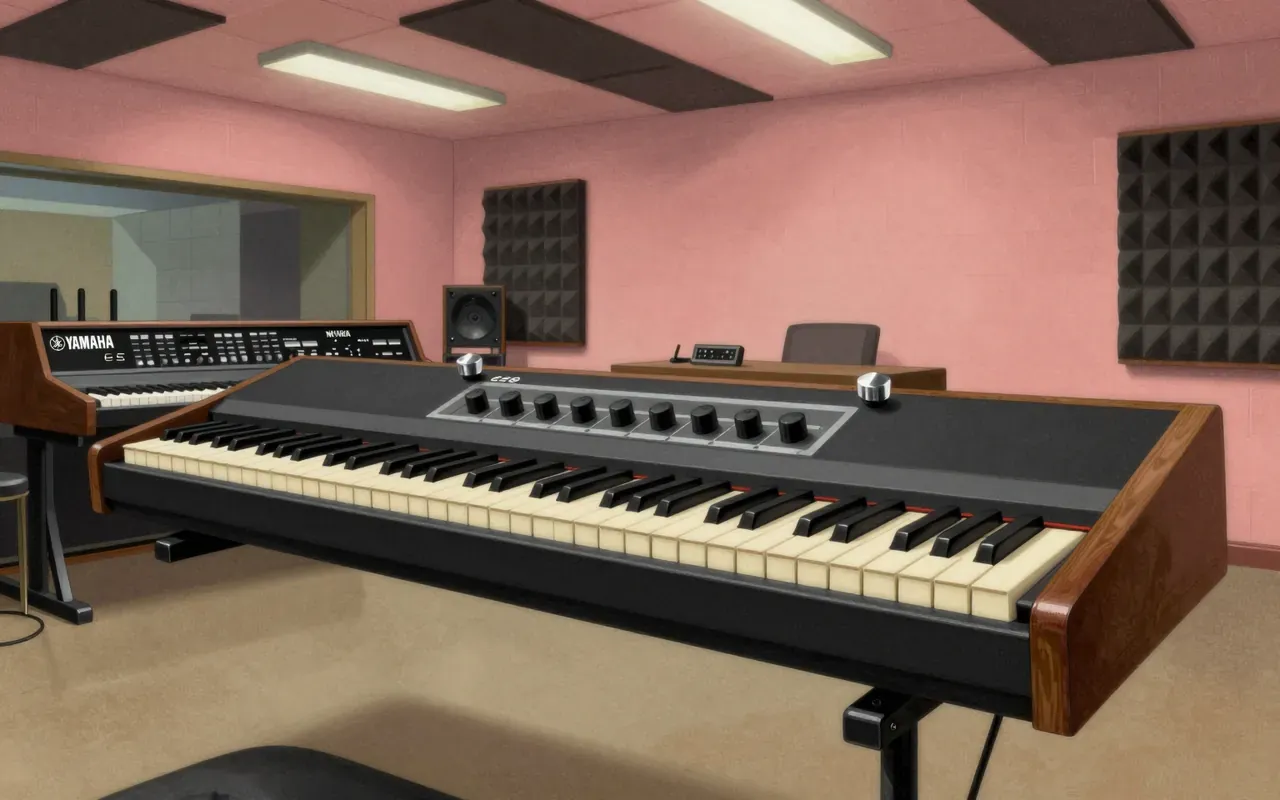
The Yamaha DX7 II FD Centennial is a 76-key, fully-weighted FM synthesizer released in 1987. It delivers 16-voice polyphony, a built-in sequencer and arpeggiator, and 64 user presets. Its interface is menu-driven and lacks real-time controls. It serves players who prioritise weighted-action playability and integrated sequencing over flexible sound design.

Chapters & takeaways5
  1. 1:07
    Weighted Keys

    It has a fully-weighted keybed — rare among FM synths of its time.

  2. 2:30
    FM Only

    It uses FM synthesis — no samples, no filters, no wavetables.

  3. 3:26
    16-Voice Polyphony

    It delivers 16 voices — enough for chords and layered parts, but no more.

  4. 5:13
    Built-In Sequencing

    It includes both a sequencer and an arpeggiator — self-contained composition tools.

  5. 6:19
    64 Presets, Fixed

    It holds just 64 user presets — no cartridge slots, no memory expansion.

Worth your time?

Yes. Use the whole thing.

3/ 5
What works
  • as a self-contained 1987 FM performance instrument
  • with its 16-voice polyphony and arpeggiator
  • via its fully-weighted keybed
What does not
  • support expansion
  • allow real-time parameter adjustment
  • offer more than 64 user presets
Use it if
  • players needing weighted FM keyboards with sequencing
Skip it if
  • sound designers requiring tactile control
  • users needing preset flexibility
The written brief1 min read

What it is and what it was built for

The Yamaha DX7 II FD Centennial is a 76-key, fully-weighted FM synthesizer released in 1987. It was built for professional keyboard players needing polyphonic FM tones with integrated sequencing and arpeggiation in a stage-ready form.

How it works, in terms a player would use

It uses FM synthesis with six operators per voice. Players edit sounds by adjusting ratios, feedback, and envelope parameters on a single LCD screen. Navigation is menu-driven, with no dedicated knobs or sliders for real-time control.

What it does better than anything else

It does better than most FM synths of its era at delivering a consistent, weighted-key performance feel while retaining full 16-voice polyphony and built-in sequencing in one unit.

What it does badly

It does badly at expressive real-time sound shaping. The interface forces deep menu diving for every parameter change. There are no aftertouch or velocity-sensitive controls beyond the keybed itself. The 64-user preset limit offers no expansion path.

What people made with it

People made music with it using its 64 user presets, built-in sequencer, and arpeggiator — but no source states what specific music, artists, or recordings were made with it.

Who should use it, and who should not

A player who needs a 1987-era FM synth with a piano-weighted action and wants sequencer and arpeggiator functions should use it. Anyone who relies on tactile, immediate sound editing or requires more than 64 user patches should not.

Is it worth your time

It is worth your time only if you need a fully-weighted FM keyboard from 1987 with sequencer and arpeggiator functions — and are prepared to work within its rigid interface and fixed preset count.
Same bench · Synths & drum machines4 of 243
8:36
Yamaha CS-80Yamaha · 1976The Yamaha CS-80 is an analog synthesizer introduced in 1977. It supports true 8-voice polyphony, with two independent synthesizer layers per voice each with its own set of front panel controls. It has a layered keyboard that is both velocity-sensitive and pressure-sensitive, with polyphonic aftertouch and a ribbon controller for polyphonic pitch-bends and glissandos. Production of the instrument ceased in 1980.
10:52
Yamaha FS1RYamahaThe FS1R is a rare hybrid: a formant-driven FM module that expanded what FM synthesis could model — but collapsed under its own complexity. It delivered new waveforms, deeper operator mapping, and vocal resonance no DX7 could match. Yet its interface, manual, and lack of tactile feedback made it a lab tool, not a stage instrument. Its legacy lives in Montage — but not its formants.
8:16
Yamaha DX100 (synthesizer)YamahaThe Yamaha DX100 is a 1986 FM synthesiser with 49 mini-keys, eight-voice polyphony, four operators per voice, eight algorithms, 192 presets, 24 RAM-storable user sounds, cassette-based patch storage, and the YM2164 chip. It was the cheapest user-programmable FM synthesiser of the 1980s.
9:32
Yamaha TX816YamahaThe Yamaha TX816 is a 1984 rack-mount FM digital synthesizer system composed of up to eight TF1 modules. Each TF1 is a 16-voice, 6-operator FM engine. Together they provide up to 128 voices and 48 operators, with 8-part multitimbrality. It has independent audio and MIDI I/O per module. It has no built-in stereo mix output. It was designed for live performance requiring portability, high polyphony, and multiple discrete outputs. It is fully compatible with other DX synthesizers and the FM7 software plug-in.
Up next in Audio

Fostex E16

Fostex · 8:18

It’s an analog multitrack recorder — and that’s all we know.

8:18