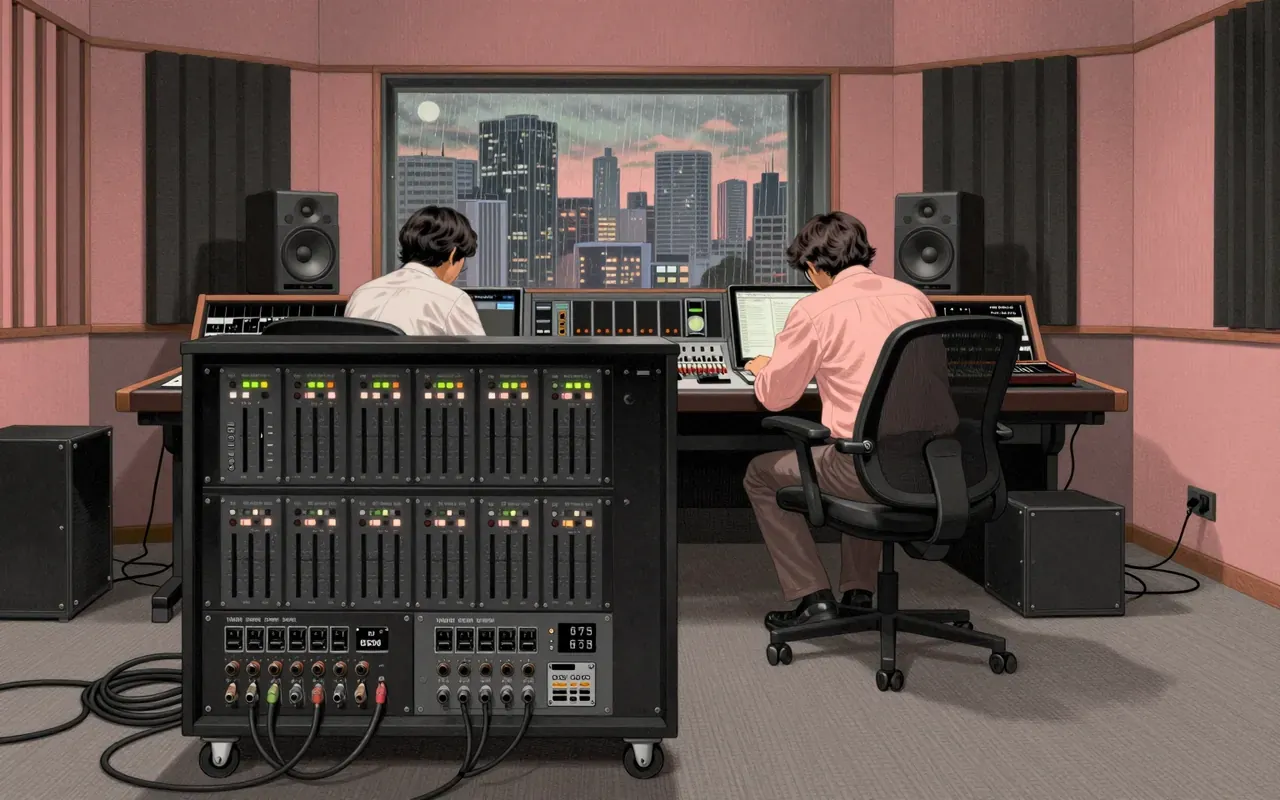
It is not a synth — it is a voice farm with no front door.
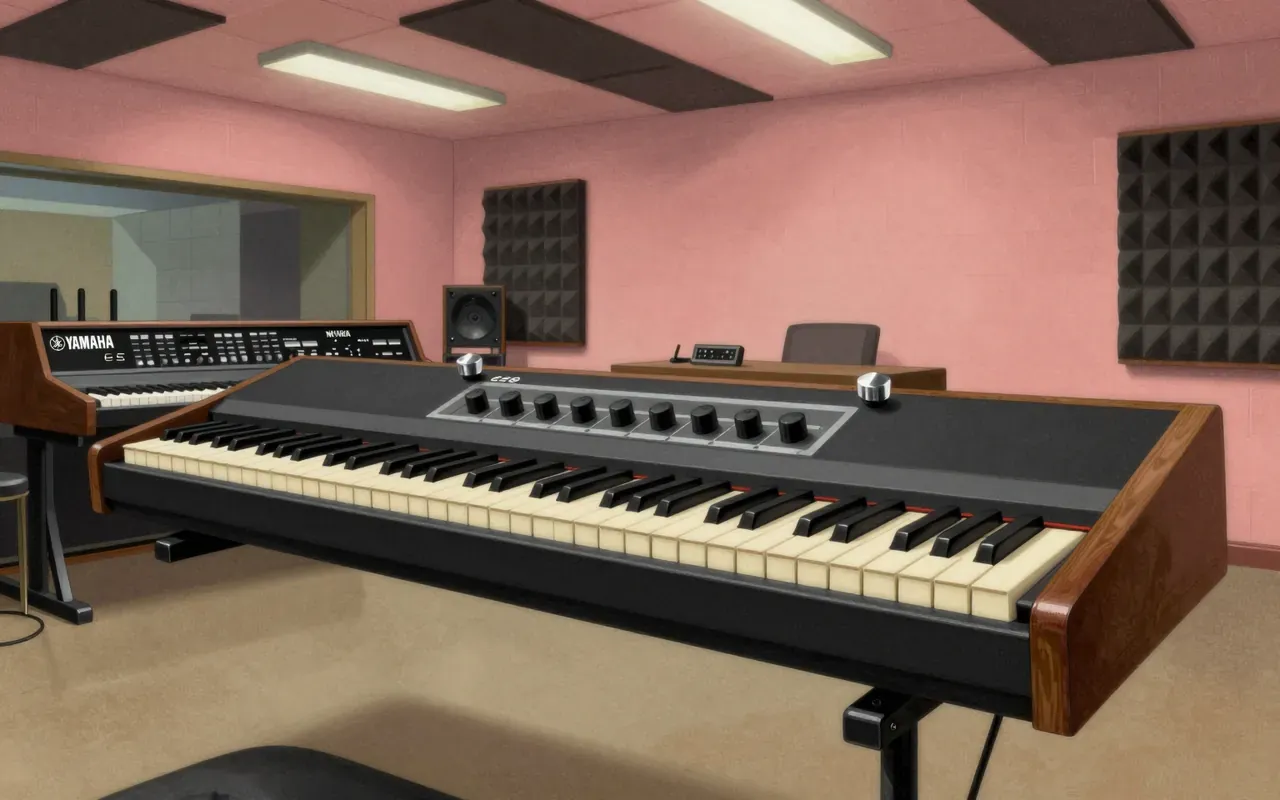
The Yamaha TX816 is a 1984 rack-mount FM digital synthesizer system composed of up to eight TF1 modules. Each TF1 is a 16-voice, 6-operator FM engine. Together they provide up to 128 voices and 48 operators, with 8-part multitimbrality. It has independent audio and MIDI I/O per module. It has no built-in stereo mix output. It was designed for live performance requiring portability, high polyphony, and multiple discrete outputs. It is fully compatible with other DX synthesizers and the FM7 software plug-in.
Built for stage-ready portability and routing, not for sitting down and playing.
2:50
Voice density
Eight TF1s deliver 128 voices — the highest voice count of any Yamaha FM system in 1984.
4:22
Multitimbral, not multimixed
One MIDI port controls eight parts — but each part must be routed separately.
5:54
DX-family fidelity
FM synthesis identical to DX synths — and compatible with FM7 software.
Worth your time?
Yes. Use the whole thing.
3.5/ 5
What works
as a voice-dense FM source
as a live-compatible multi-output system
as a DX-family extension
What does not
deliver hands-on control
include a mixer
provide a master output
Use it if
studio engineers needing discrete FM routing
live performers requiring high voice counts and output separation
Skip it if
performers wanting real-time sound shaping
producers seeking an all-in-one instrument
The written brief1 min read
What it is and what it was built for
The Yamaha TX816 is a rack-mount FM digital synthesizer system from 1984, built for live performance requiring portability, high polyphony, and multiple discrete outputs.
How it works, in terms a player would use
It runs eight TF1 modules, each a 16-voice, 6-operator FM engine. Each module has its own audio and MIDI I/O. There is no built-in stereo mix output. A single global MIDI port handles 8-part multitimbral operation.
What it does better than anything else
It delivers more simultaneous FM voices than any other 1984 Yamaha system: up to 128 voices and 48 operators when fully populated.
What it does badly
It does badly as a standalone synth: no front-panel controls, no mixer, no master output, no patch memory interface. You cannot tweak sound in real time without external gear or software.
What people made with it
The sources do not state what people made with it.
Who should use it, and who should not
A studio engineer routing eight independent FM parts to separate channels should use it. A solo performer wanting hands-on control or a compact all-in-one synth should not.
Is it worth your time
It is worth your time only if you need discrete multi-output FM voices for live or studio routing — not as a self-contained instrument.