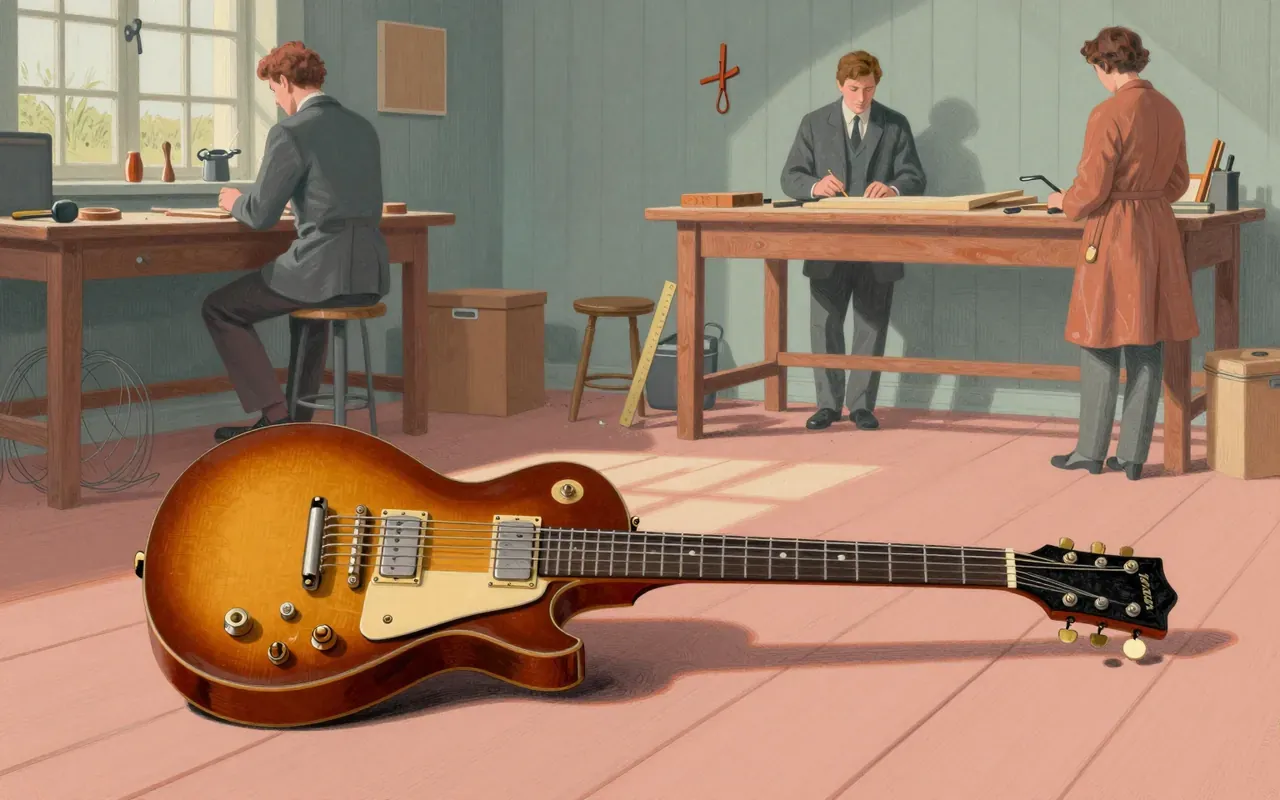
What it is and what it was built for
The Gibson L-5 is a hollow body guitar introduced in 1923. It was built for acoustic projection in pre-amplification ensembles, using violin-family construction methods.
How it works, in terms a player would use
It projects string vibration acoustically through carved and tuned woods, using F-holes as projection points. The body is hollow. It was originally acoustic. Later versions added P-90 pickups in 1951, then humbuckers from 1958.
What it does better than anything else
It projects acoustic string energy with greater resonance and complexity than flat-top or laminated archtops—thanks to cello-style carving, bracing, and tap-tuning.
What it does badly
It feeds back easily when amplified at high volume. Its 17” lower bout makes it unwieldy for seated playing or tight stages. It offers no onboard tone shaping beyond basic volume and tone controls.
What people made with it
Jazz musicians used it for ensemble work where acoustic presence and tonal warmth mattered more than isolation or gain headroom.
Who should use it, and who should not
A player who values hand-carved acoustic response and wants a historically grounded jazz archtop. Not for players who gig with high-gain amps, travel frequently, or need compact size.
Is it worth your time
Yes—if you need a large-bodied, hand-carved hollow guitar built for acoustic projection and later adapted for amplified jazz. No—if you need feedback resistance, portability, or modern pickup versatility.