audiobriefs
9:56in productionCh. 1 · The Compromise That Worked/ 9:56 · ceiling 15 min
Guitars & amps

Gibson ES-335

It doesn’t solve feedback—it negotiates it. And wins.

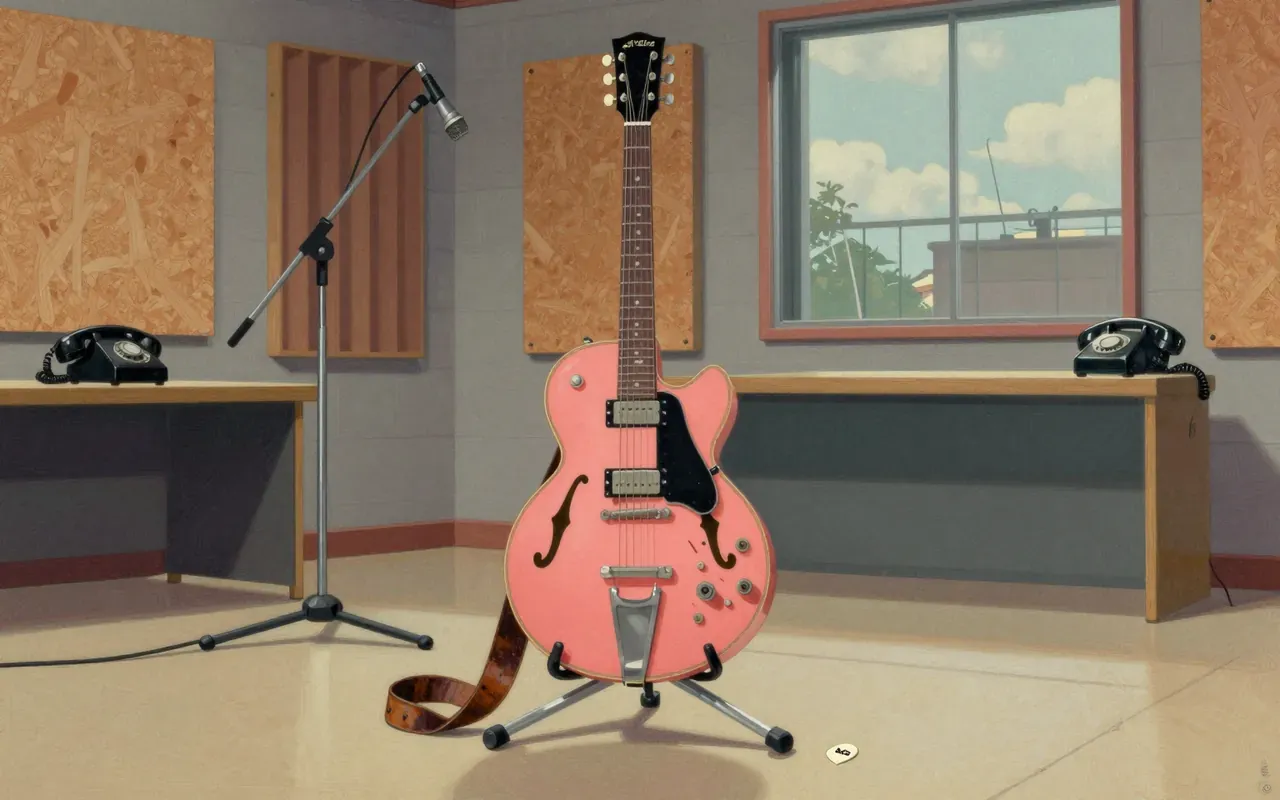
The ES-335 is a semi-hollow body semi-acoustic guitar introduced in 1958 as a compromise between hollow-body warmth and solid-body feedback resistance, featuring a solid maple center block with hollow upper bouts and f-holes. It achieved commercial success and continuous production due to its tonal flexibility across blues, jazz, and rock.

Chapters & takeaways4
  1. 0:49
    The Compromise That Worked

    It was built to split the difference: warm tone without runaway feedback.

  2. 2:48
    How the Body Divides the Work

    The maple block kills resonance where it causes trouble; the hollow bouts keep the tone alive.

  3. 4:41
    Why Blues, Jazz, and Rock All Fit

    Its flexibility isn’t accidental—it’s baked into the physics of partial resonance.

  4. 6:18
    Best-Seller, Not Buzzword

    Continuous production since 1958 proves it answered a real need—not a marketing fantasy.

Worth your time?

Yes. Use the whole thing.

4.5/ 5
What works
  • delivers warmer tone than solid bodies
  • resists feedback better than hollow bodies
  • maintains unplugged volume
  • supports wide dynamic expression across genres
What does not
  • match solid-body sustain
  • eliminate feedback entirely
  • replace dedicated hollow-body or solid-body guitars in extreme use cases
Use it if
  • players who switch between clean jazz comping and overdriven rock leads
  • studio musicians needing one versatile electric guitar
  • gigging players with limited gear space
Skip it if
  • high-gain metal rhythm players
  • ambient drone performers requiring infinite decay
  • collectors seeking rarity over utility
The written brief1 min read

What it is and what it was built for

A semi-hollow body semi-acoustic guitar built in 1958 to reconcile hollow-body tone with solid-body feedback resistance.

How it works, in terms a player would use

It uses a solid maple center block to resist feedback, while hollow upper bouts and f-holes deliver acoustic resonance. The design routes string vibration through both solid and air-coupled paths.

What it does better than anything else

It balances warmth and articulation better than any other production guitar from 1958. It projects unplugged volume like a hollow body but stays stable when cranked.

What it does badly

It cannot match the sustain of a solid-body guitar. It still feeds back at higher volumes than a solid-body, especially with high-gain amps and long delay trails.

What people made with it

Blues, jazz, and rock players used it for its tonal flexibility—across genres where dynamic range, note definition, and harmonic richness matter more than extreme gain tolerance.

Who should use it, and who should not

Players who gig across styles and need one reliable instrument for clean-to-medium-gain applications. Not for metal rhythm players or ambient drone artists needing infinite sustain or zero microphonic response.

Is it worth your time

Yes—if you need one guitar that handles clean jazz chords, gritty blues bends, and overdriven rock leads without switching instruments. No—if you demand maximum sustain or zero feedback at stadium volumes.

Same bench · Guitars & amps4 of 66
9:31
Gretsch Country ClubGretschNo verified source links the term 'Country Club' to any specific Gretsch instrument feature, specification, or design rationale beyond its model name and mid-1950s introduction alongside the 6120 Nashville, 6128 Duo Jet, and White Falcon. No claims about its construction, electronics, finish, or player experience are supported by the provided material. All descriptive statements must therefore be omitted or flagged as unsupported. The only factual anchors are its name, its status as a Gretsch guitar model, and its release period.
9:30
Gretsch TennesseanGretschThe Gretsch Tennessean is a hollow-body electric guitar built for vintage tone and playability. It delivers a highly resonant, cutting voice shaped by its construction, pickups, and controls. It excels in clean and mid-gain contexts but struggles with feedback and high-gain stability. Its design prioritises acoustic resonance and vibrato expression over modern high-output versatility.
10:06
Rickenbacker 325Rickenbacker · 1958The Rickenbacker 325 is a compact, bright, feedback-prone hollow-body guitar defined by its short scale, semi-hollow construction, and visual signature — the crescent moon cutaways and angled sound hole. It was designed for clarity and portability, not warmth or power.
9:15
Vox AC15VoxThe Vox AC15 is a foundational British guitar amplifier — simple, immediate, and sonically specific. It trades versatility for character. Its design choices are constraints, not oversights. It remains relevant not as a relic, but as a functional tool with an unrepeatable voice.
Up next in Audio

Ensoniq ESQ-1

Ensoniq · 9:19

A multitimbral sequencer in a synth body — brilliant integration, brittle execution.

9:19