What it is and what it was built for
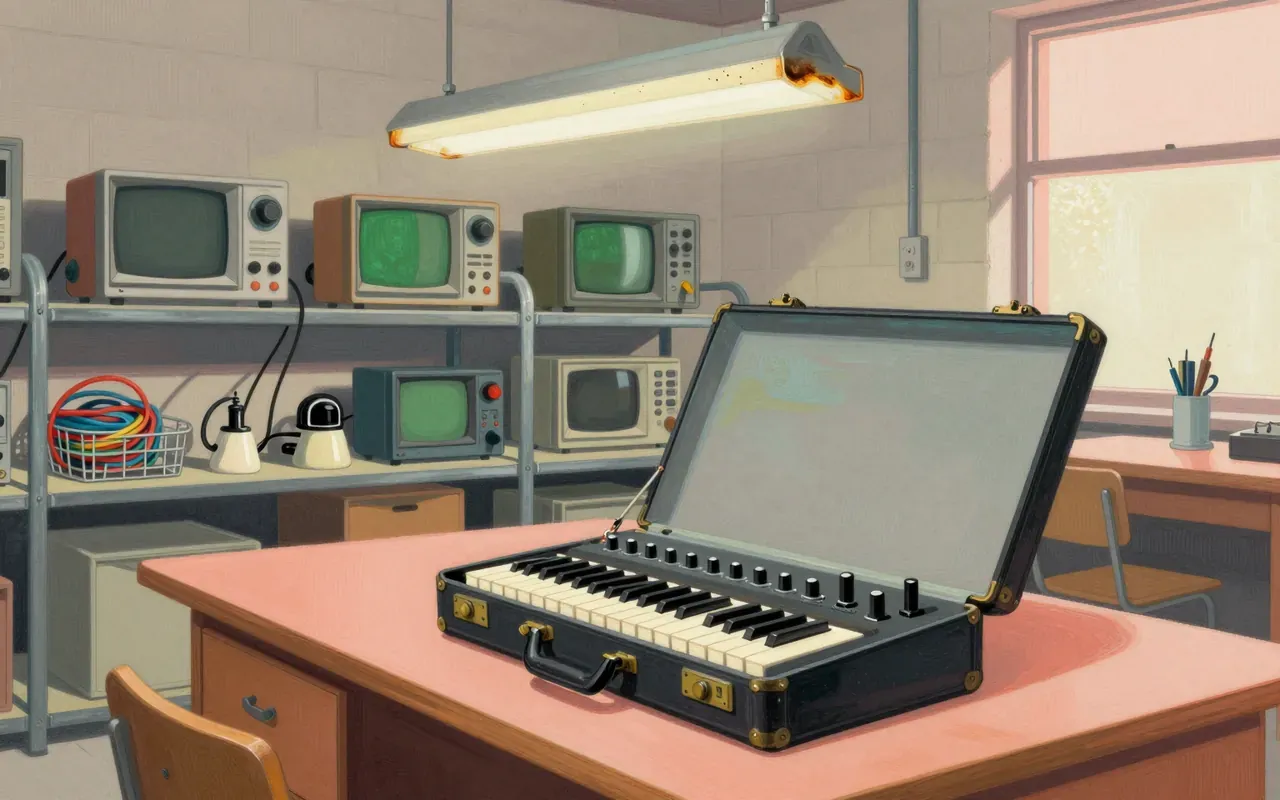
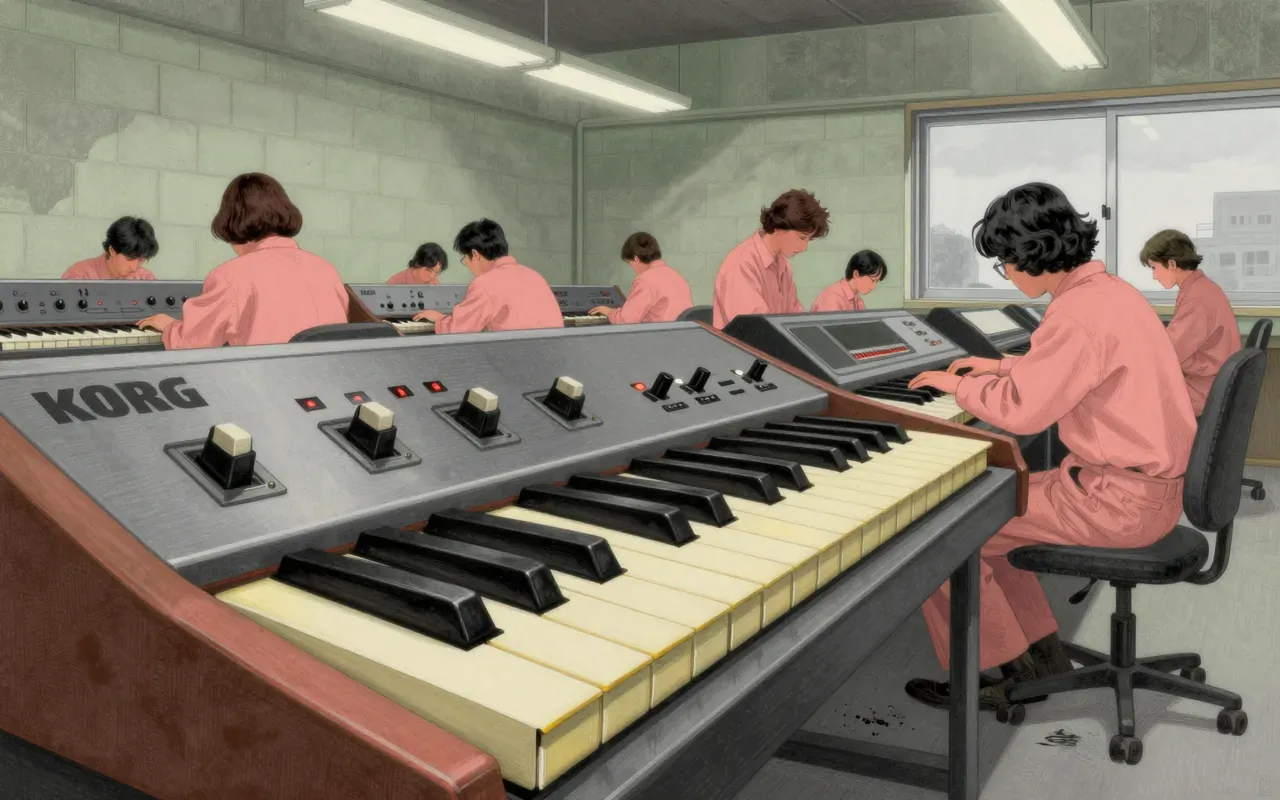
A 1981 analog synthesizer built to bridge monophonic and polyphonic synthesis. It was positioned as a complementary instrument to the Polysix — monophonic in focus but paraphonic in capability.
How it works, in terms a player would use
Four VCOs feed a single 4-pole resonant lowpass filter. Each VCO offers triangle, sawtooth, pulse, and pulse width modulation waveforms. You tune each VCO to its own octave, volume, and detune relative to VCO 1 — which has Master Tuning. Pulse width and PWM amount are shared across all VCOs. Two LFOs: one with four waveforms routed via the modulation wheel; the other is triangle-only, dedicated to PWM and arpeggiator tempo. ADSR envelopes control both VCF and VCA. Key assignment modes include Unison, Poly, Chord Memory, and Unison/Share.
What it does better than anything else
It delivers monophonic weight unmatched by any other 1981 synth: four oscillators feeding one aggressive 4-pole filter, with full per-VCO tuning and waveform control. No other monophonic synth then offered integrated quad-VCO design.
What it does badly
It cannot play chords with independent articulation per note. The paraphonic architecture means one filter and one amplifier shape all voices at once. Chord Memory stores only one chord. There is no velocity or aftertouch. The arpeggiator lacks rhythm variation or sync options beyond its internal triangle LFO.
What people made with it
The sources do not specify what people made with it.
Who should use it, and who should not
A player who values hands-on, immediate tone sculpting and wants monophonic thickness or lo-fi paraphonic texture. Not for anyone who needs stable tuning, patch recall, or integration into a modern DAW workflow.
Is it worth your time
Yes — if you need thick monophonic bass or gritty paraphonic leads that cut through a mix without digital polish. No — if you need true polyphony, independent voice filtering, or modern reliability. It demands hands-on adjustment and tolerates no automation.