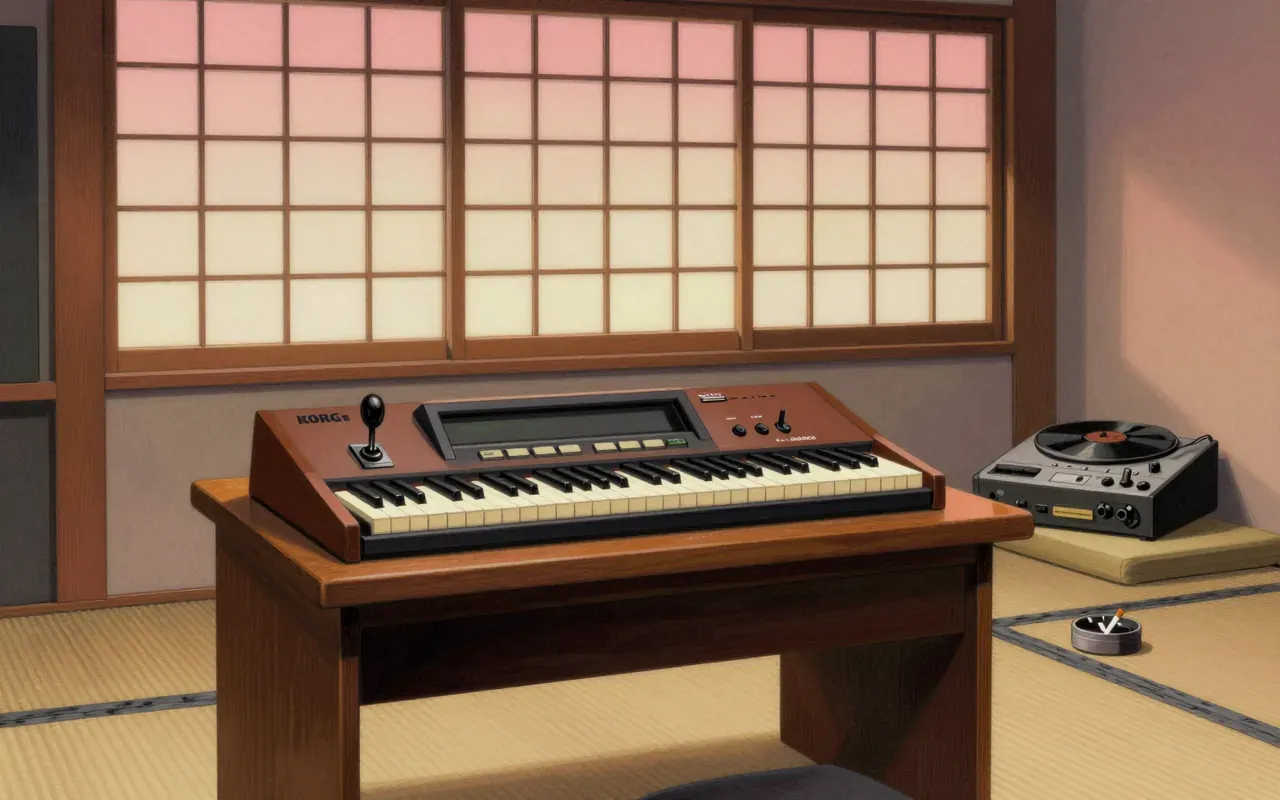
What it is and what it was built for
A 1980 subtractive synthesizer built to deliver layered, section-based textures live — not to emulate orchestras or replace pianos.
How it works, in terms a player would use
It gives you three independent sound engines — polyphonic, string, and brass — each with its own controls, filters, and envelopes. You assign them to two keyboard zones. The joystick bends pitch and adds modulation. The flanger effect is always in the signal path. The MkII adds memory, blank presets, and separate ADSR envelopes for filter and VCA.
What it does better than anything else
It integrates string ensemble, brass, and polysynth voices with dedicated signal paths and effects in one instrument — before any other synth did that.
What it does badly
It cannot store sounds on the MkI. The shared ADSR on the MkI forces compromises between filter and amplitude shaping. Keyboard zoning is limited to two regions. There is no velocity sensitivity or aftertouch.
What people made with it
The sources do not state what people made with it.
Who should use it, and who should not
Players who value tactile, real-time section switching and are comfortable with manual sound building. Not for users who rely on preset libraries, DAW integration, or stable tuning across long sessions.
Is it worth your time
Yes — if you want a hands-on, section-switching workflow that predates modern layering conventions. No — if you need recallable patches, consistent tuning, or deep per-voice editing.