What it is and what it was built for
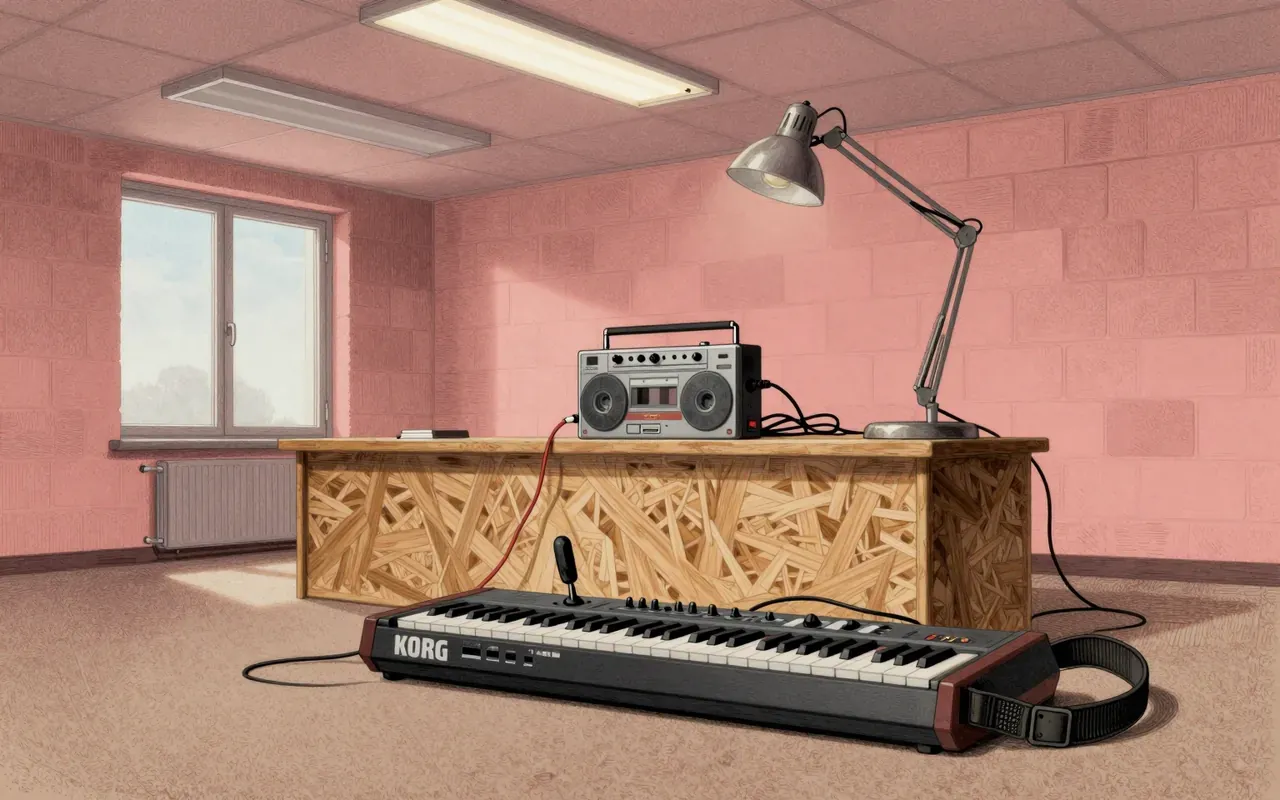
An 8-voice analog synthesizer released by Korg in 1983. Built for portability: battery-powered, lightweight, designed to be played strapped around the neck as a keytar.
How it works, in terms a player would use
It uses eight digitally controlled oscillators, each offering sawtooth and square waveforms mixed with white noise before a single shared voltage-controlled filter. You choose between Whole mode (eight voices, one DCO per voice) or Double mode (four voices, two DCOs per voice). The filter triggers in Single mode — once per chord — or Multi mode — once per key press. The keyboard is non-velocity-sensitive. A joystick controls pitch bend and modulation. Early units retain patch memory only with batteries; patches back up to cassette.
What it does better than anything else
It delivers eight-voice analog synthesis in a lightweight, battery-powered keytar form — unmatched for mobility and strap-on playability in 1983. Its joystick, Double mode, and filter trigger options give immediate, physical control over paraphonic texture.
What it does badly
It cannot articulate multiple notes independently through the filter. Chords choke the envelope in Single mode. The non-velocity keyboard gives no dynamic control. Battery-dependent memory fails without maintenance. Cassette backup is slow and unreliable.
What people made with it
The sources do not specify what people made with it.
Who should use it, and who should not
Players who value physical portability, hands-on paraphonic layering, and mod-friendly hardware should use it. Players who rely on velocity expression, stable patch recall, or independent voice filtering should not.
Is it worth your time
Yes — if you want a portable, tactile, paraphonic analog synth that rewards hands-on tweaking and modification. No — if you need true polyphony, velocity response, or stable memory without batteries.