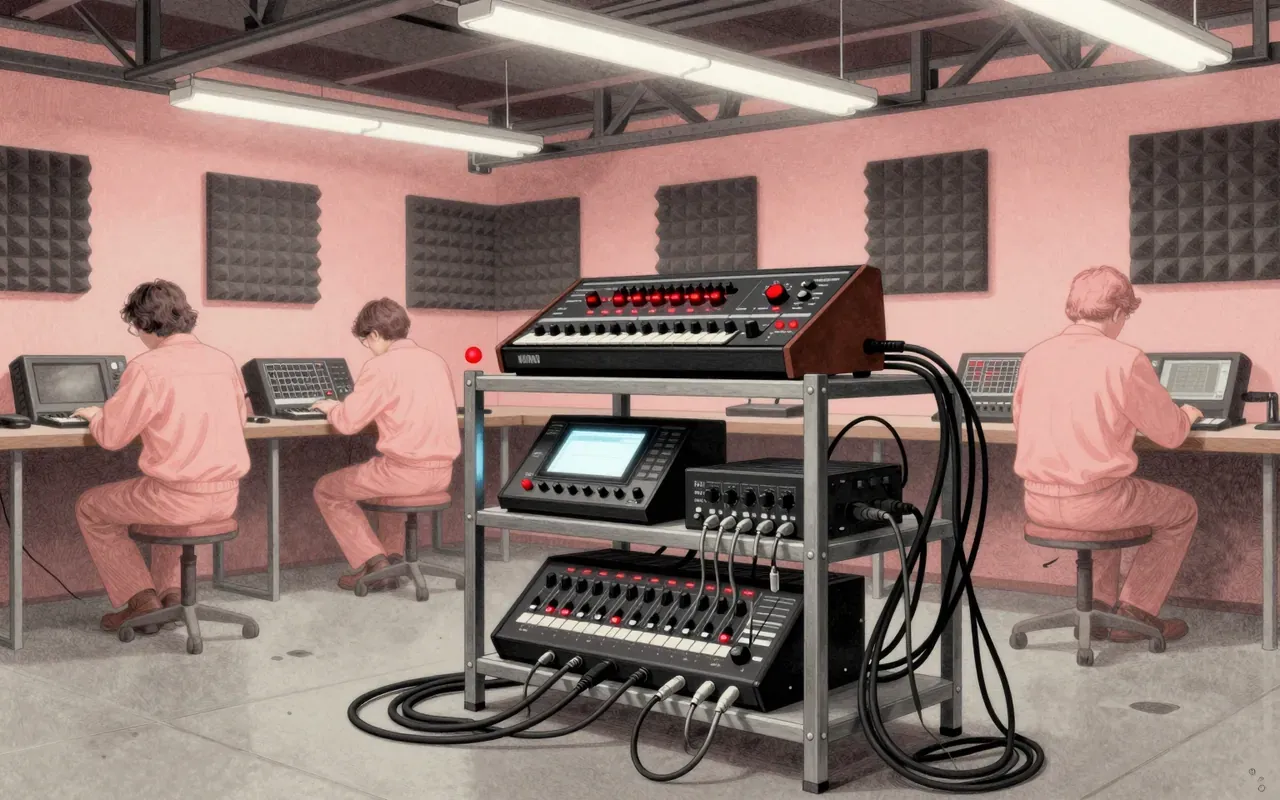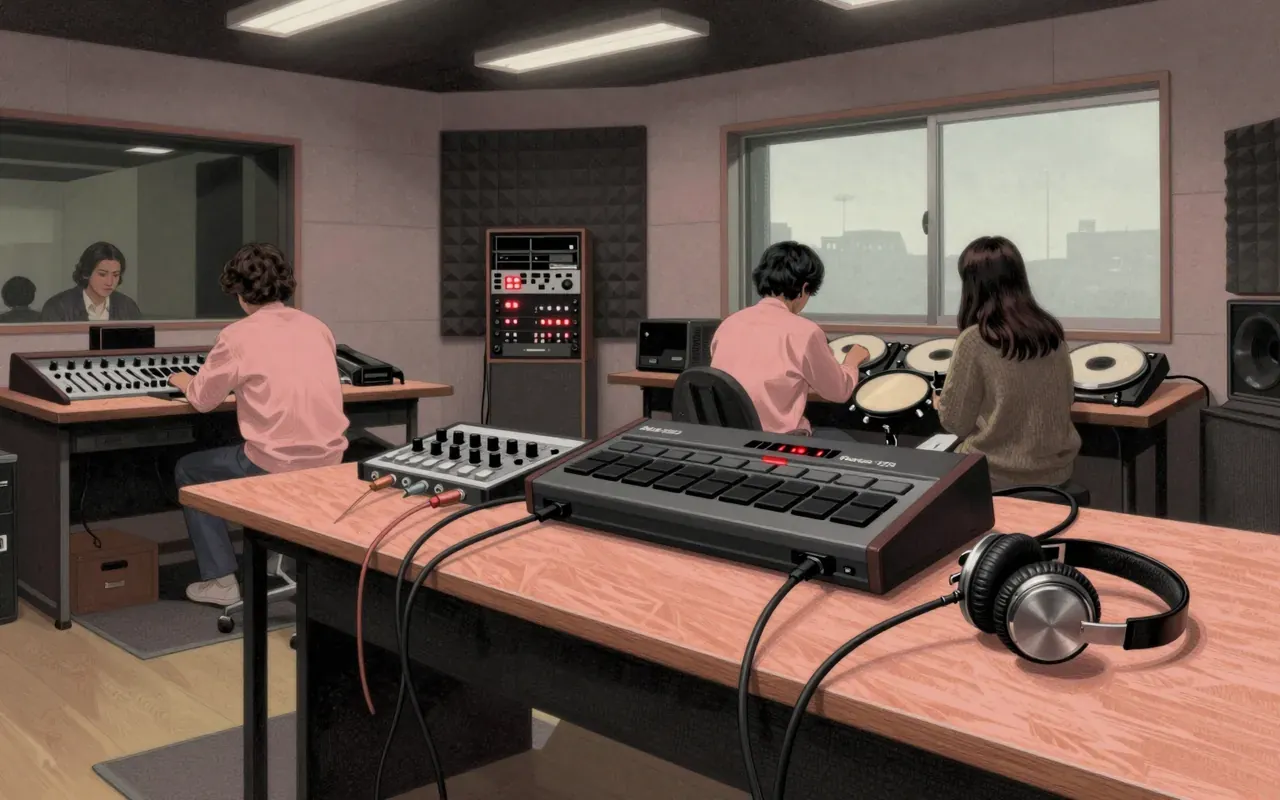
What it is and what it was built for
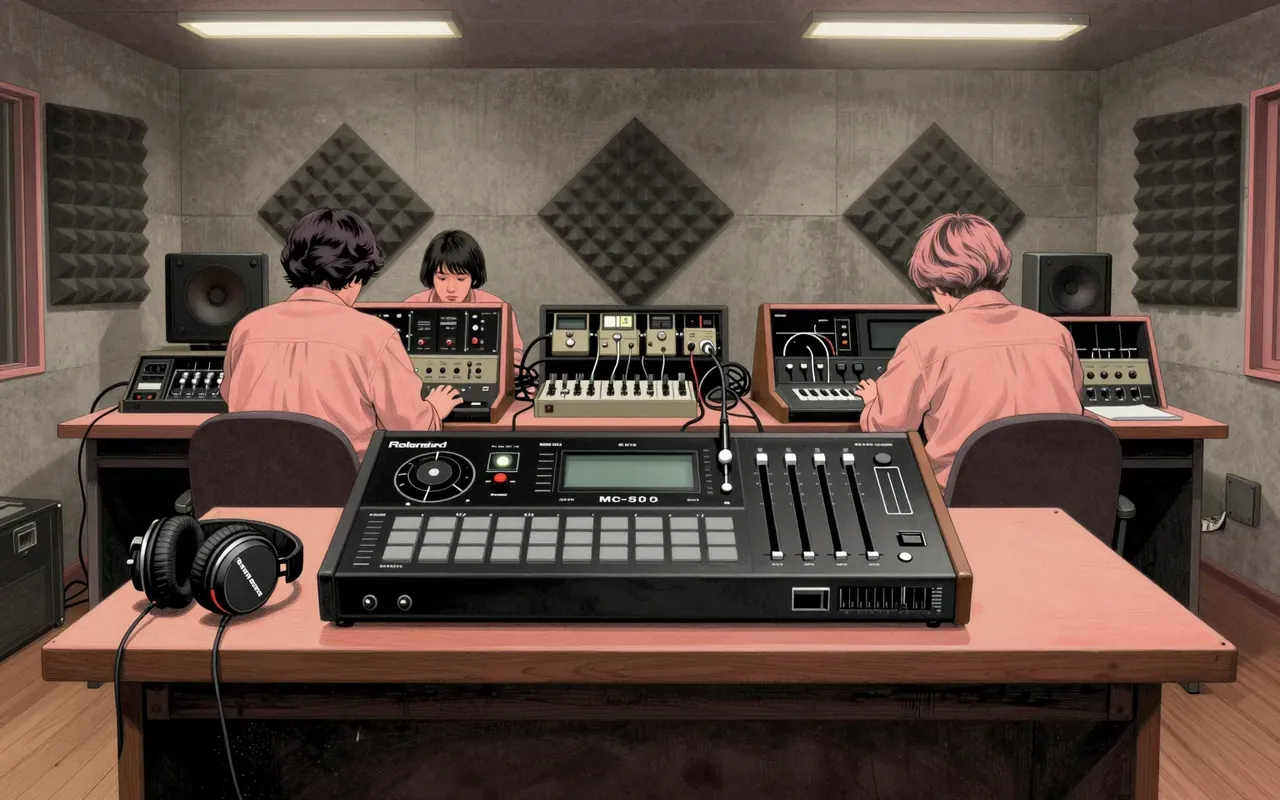
A programmable analog drum machine built for composing complete, evolving percussion tracks—not just looping presets. Roland launched it in 1980 to compete in the emerging electronic rhythm market.
How it works, in terms a player would use
It uses analog synthesis—not samples—to generate drum sounds. You program rhythms with a step sequencer. You build up to 32 patterns. You chain them into sequences of up to 768 measures. You place accents on individual beats. You trigger breaks and rolls by editing the pattern flow.
What it does better than anything else
It gives total control over an entire percussion track—breaks, rolls, accents, long chains—all from one hardware interface. Nothing else in 1980 offered that scope with analog tone generation.
What it does badly
It fails at mimicking real drums. Its bass drum is sub-heavy and synthetic. Its snare lacks transient bite. Its hi-hats lack decay nuance. It offers no velocity sensitivity or real-time performance shaping beyond accent and pattern start/stop.
What people made with it
Underground producers used it after its commercial failure. It defined genre-defining music in contexts where realism was irrelevant and timbral character was paramount.
Who should use it, and who should not
You should use it if you work with analog signal flow, value hands-on pattern building, and want tonal character that cannot be replicated digitally without emulation artefacts. You should not use it if you rely on DAW sync, MIDI CC mapping, sample replacement, or realistic acoustic textures.
Is it worth your time
Yes—if you want full-track analog percussion programming with idiosyncratic, non-realistic tones. No—if you need acoustic realism or modern workflow integrations.