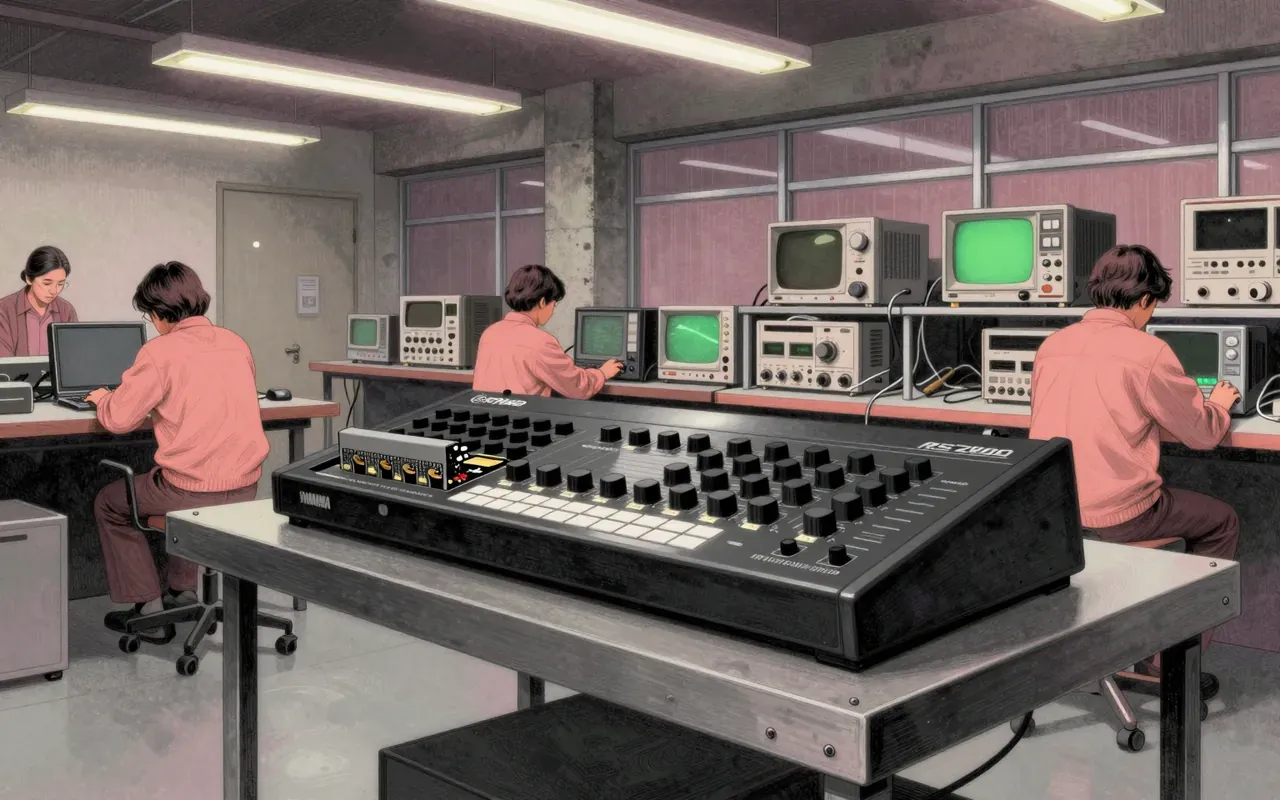
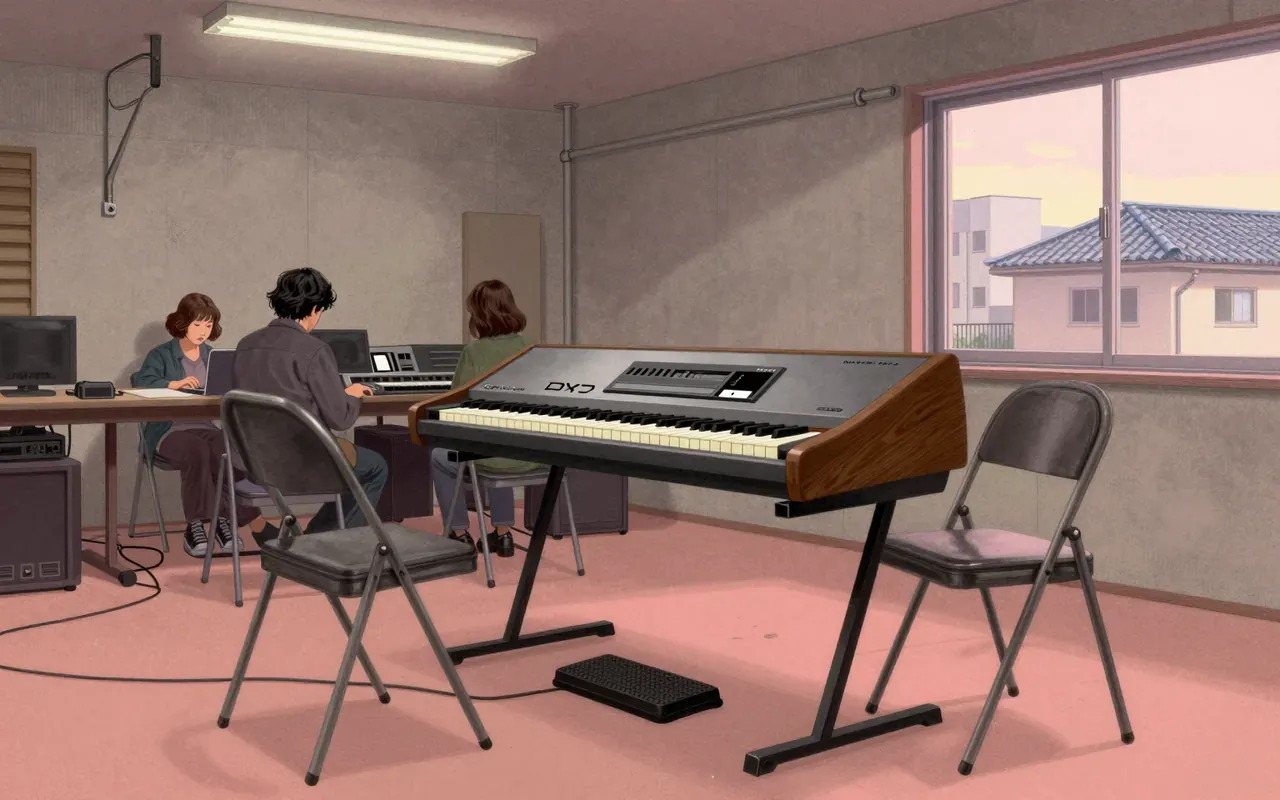
The DX200 is not a DX7 replacement — it’s a DJ’s FM groove-box with a filter the originals refused to give you.
The Yamaha DX200 is a 2001 desktop sequencer built for DJs and musicians who need FM synthesis and sample playback in one tight hardware unit. It runs a simplified 6-operator FM engine compatible with DX7 patches. It adds a real-time 16-step sequencer with four tracks, a resonant multi-mode filter — absent in all classic DX synths — and bundled software editing tools. It does not offer deep FM programming, internal effects, or flexible voice sharing between FM and AWM2 engines.
It is a real-time 16-step sequencer first, a synth second.
2:38
DX7 Sounds, Not DX7 Control
It runs a simplified 6-operator FM engine that accepts DX7 patches but gives up algorithmic depth for speed.
4:40
Two Engines, One Filter That Changes Everything
It pairs 16-voice FM with 32-voice AWM2 samples — and adds a multi-mode filter no classic DX ever had.
6:35
One Envelope, Two Destinations
The filter has its own envelope, and the main ADSR shapes both filter and amp — a rare convergence of control.
Worth your time?
Yes. Use the whole thing.
3.5/ 5
What works
as a compact FM/sampling groove-box
as a bridge between DX7 legacy and modern sequencing workflows
as a filter-equipped alternative to classic DX-series limitations
What does not
offer deep FM programming
share voices flexibly between FM and AWM2
include internal effects
Use it if
producers needing quick DX7-style tones with sample playback
performers valuing real-time sequencing and filter control
Skip it if
composers requiring full FM architecture control
engineers relying on internal effects or high-voice-count layering
The written brief2 min read
What it is and what it was built for
The DX200 is a 2001 programmable desktop sequencer built for musicians and DJs who want FM synthesis and sample playback in one hardware unit. It was built to deliver DX7-compatible sounds with added sequencing, filtering, and scene-based morphing — not as a studio workstation, but as a groove-box for live sketching and on-the-fly arrangement.
How it works, in terms a player would use
The DX200 is a desktop sequencer with a 16-step real-time grid. One track handles FM synthesis; three handle AWM2 sample playback. It uses a simplified 6-operator FM engine compatible with DX7 patches. A multi-mode filter — lowpass, highpass, bandpass, band reject — has variable slopes (12, 18 or 24 dB/oct) and a dedicated lowpass envelope. The ADSR envelope controls both filter and amp.
What it does better than anything else
It integrates FM synthesis and sample playback into a single real-time 16-step sequencer more tightly than any contemporaneous Yamaha product. Its resonant multi-mode filter is unique among classic DX-series instruments — absent in the DX7, DX1 and DX5 — and offers immediate timbral shaping unavailable elsewhere in the line.
What it does badly
It simplifies FM synthesis to the point of withholding operator routing flexibility and algorithm depth found in the DX7. The 16-voice FM and 32-voice AWM2 sections cannot be freely mixed in voice allocation — they operate as separate sound generators. There is no built-in effects processing beyond filtering.
What people made with it
The sources do not state what people made with it.
Who should use it, and who should not
A producer or performer who needs quick access to DX7-style FM tones alongside drum/percussion/bass samples, and who values real-time step sequencing and filter manipulation over deep sound design. It is not for composers needing full FM architecture control, or for engineers relying on internal effects or high-voice-count layering.
Is it worth your time
It is worth your time if you need a compact, patch-compatible FM/sampling hybrid with hands-on sequencing and real-time filter control. It is not worth your time if you require deep FM programming, full polyphony across both engines simultaneously, or standalone performance without MIDI integration.