audiobriefs
9:00in productionCh. 1 · Origin & Electronics/ 9:00 · ceiling 15 min
Instruments

Yamaha BB2000

It doesn’t do neutrality—it does growl and sweetness, and nothing else comes close.

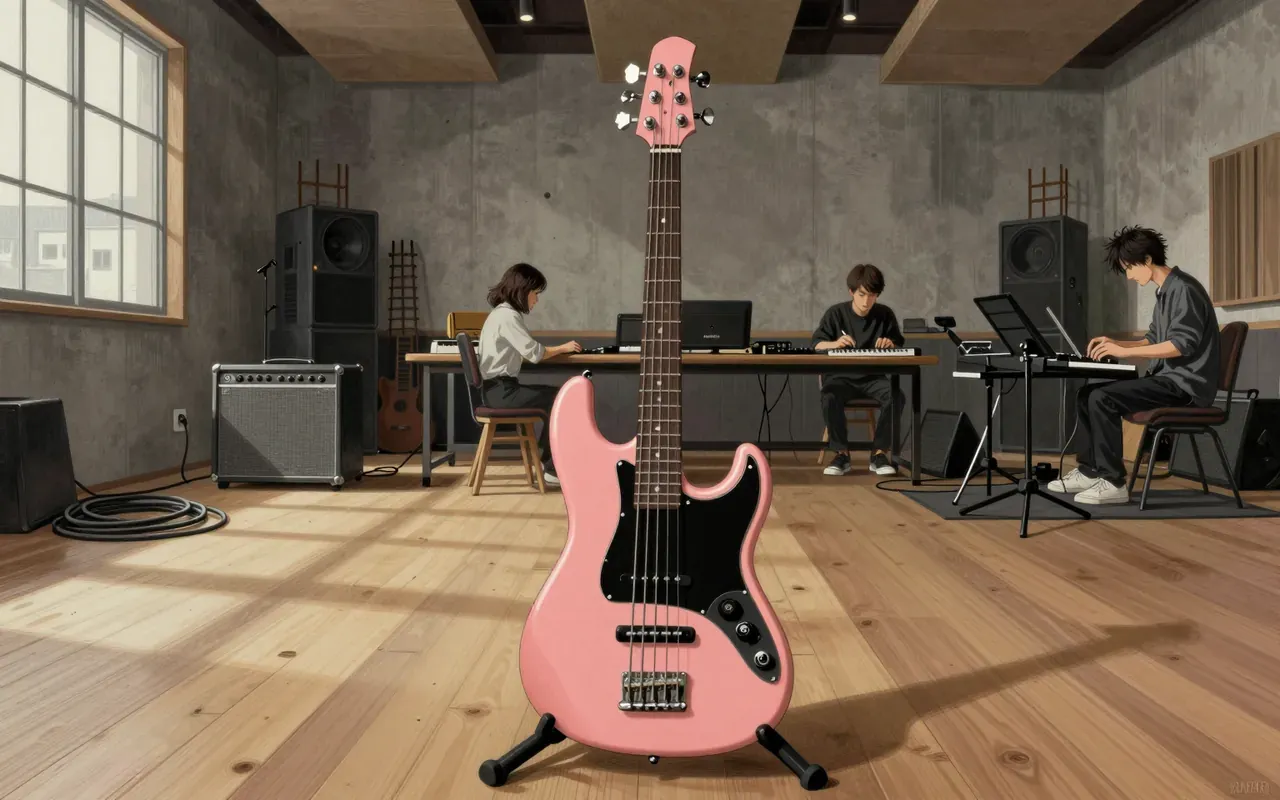
The Yamaha BB2000 is a Japanese-made 4-string bass from the early 1980s. It uses passive electronics, two pickups (JB and PB), and simple bass/treble tone controls. Its voice is defined by low-mid growl and high-mid harmonic sweetness—unmatched by Fender, Music Man, or Sadowsky. It excels in funk, pop, fusion, and jazz. It lacks modern flexibility: no active circuitry, no mid-sweep, no blend control. One player replaced their 2012 Fender Jazz Bass with it after five years of regular use—and called it superior in all aspects.

Chapters & takeaways5
  1. 1:00
    Origin & Electronics

    Made in Japan in the early 1980s, with original passive electronics and no circuit modifications.

  2. 1:54
    Signal Path & Controls

    JB and PB pickups, three-position manual switch, volume knob, bass/treble tone controls—no blend, no sweep, no active boost.

  3. 2:25
    The Voice No Other Bass Matches

    Low-mid growl and high-mid harmonic sweetness—not found in Fender, Music Man, or Sadowsky.

  4. 3:32
    Genre Versatility, Not Compromise

    Funk, pop, fusion, and jazz—its tonal focus makes it work across rhythmically and harmonically demanding styles.

  5. 5:11
    A Working Player’s Final Word

    One player replaced a 2012 Fender Jazz Bass after five years of gigging—calling the BB2000 superior in all aspects.

Worth your time?

Yes. Use the whole thing.

4.5/ 5
What works
  • low-mid growl
  • high-mid harmonic sweetness
  • genre versatility across funk, pop, fusion, and jazz
What does not
  • deliver tight, scooped, or ultra-clean low-end
  • offer active EQ, mid-sweep, or coil-splitting
  • suit players needing silent stage operation
Use it if
  • players who want expressive midrange character
  • players prioritising ergonomic reliability over technical versatility
Skip it if
  • players needing surgical EQ
  • players requiring extended low-end extension
The written brief1 min read

What it is and what it was built for

A Japanese-made 4-string bass guitar built in the early 1980s for players who prioritise expressive midrange character and ergonomic reliability over technical versatility.

How it works, in terms a player would use

It has two pickups: a Jazz Bass–style pickup and a Precision Bass–style pickup. A manual switch selects PB alone, PB + JB, or JB alone. Volume is controlled by one knob. Tone is shaped by separate bass and treble knobs. All electronics are passive.

What it does better than anything else

It delivers unmatched low-mid growl and high-mid harmonic sweetness—distinct from Fender, Music Man, and Sadowsky—across funk, pop, fusion, and jazz.

What it does badly

It does not deliver tight, scooped, or ultra-clean low-end. It offers no active EQ, no blend control, no mid-sweep, and no pickup coil-splitting.

What people made with it

Players used it for funk, pop, fusion, and jazz—genres demanding dynamic articulation, punchy syncopation, and harmonic definition.

Who should use it, and who should not

Players who want a single, highly voiced passive bass that cuts through dense mixes and rewards fingerstyle nuance. Not for players needing surgical EQ, extended low-end extension, or silent stage operation.

Is it worth your time

Yes—if you need a versatile, responsive, mid-forward bass with immediate low-mid growl and high-mid harmonic sweetness, and you accept its lack of modern tonal flexibility.
Same bench · Instruments4 of 145
Up next in Audio

Yamaha DM2000

Yamaha · 9:07

A tactile digital mixer that delivers hands-on control — then locks you into a dead-end ecosystem.

9:07