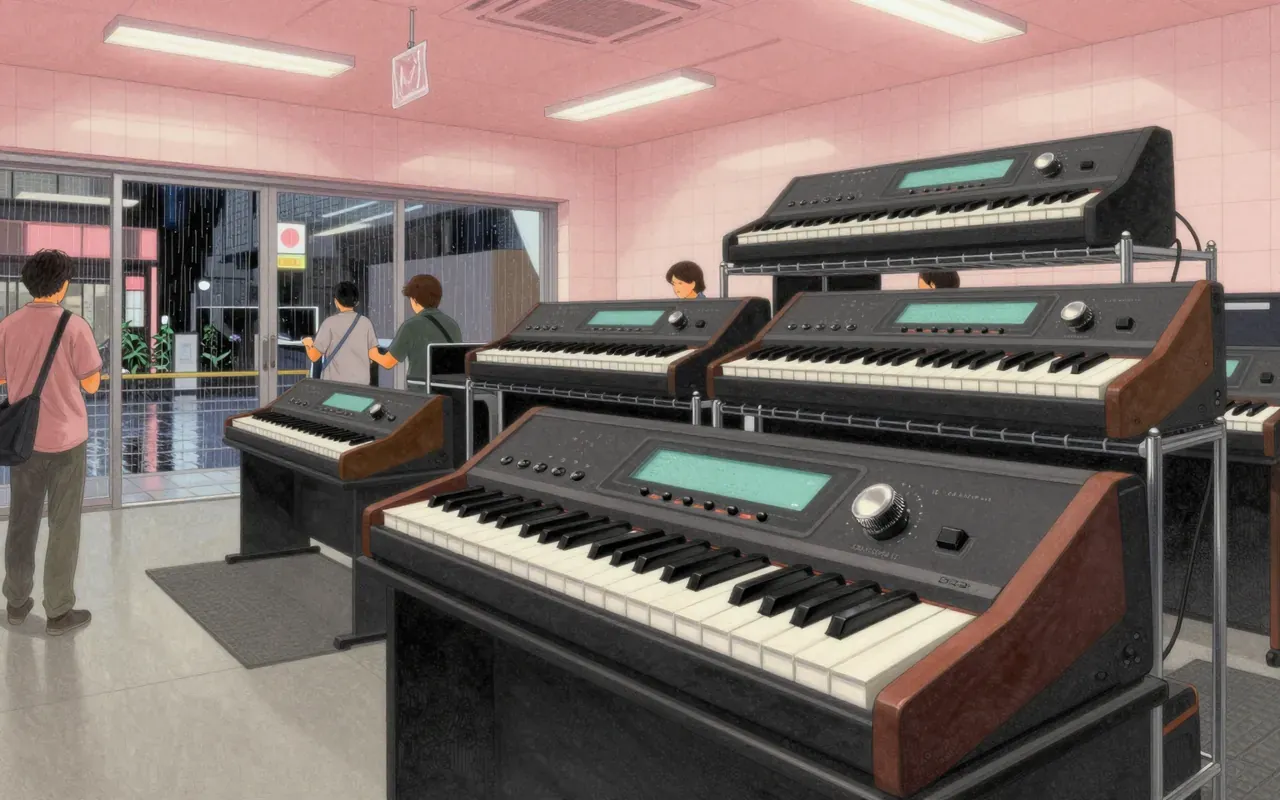
What it is and what it was built for
The DX1 is Yamaha’s flagship 1985 FM synthesizer. It was built for professional studios and performers who needed expanded FM capability — not just more voices, but parallel, assignable synthesis paths — in a premium hardware package.
How it works, in terms a player would use
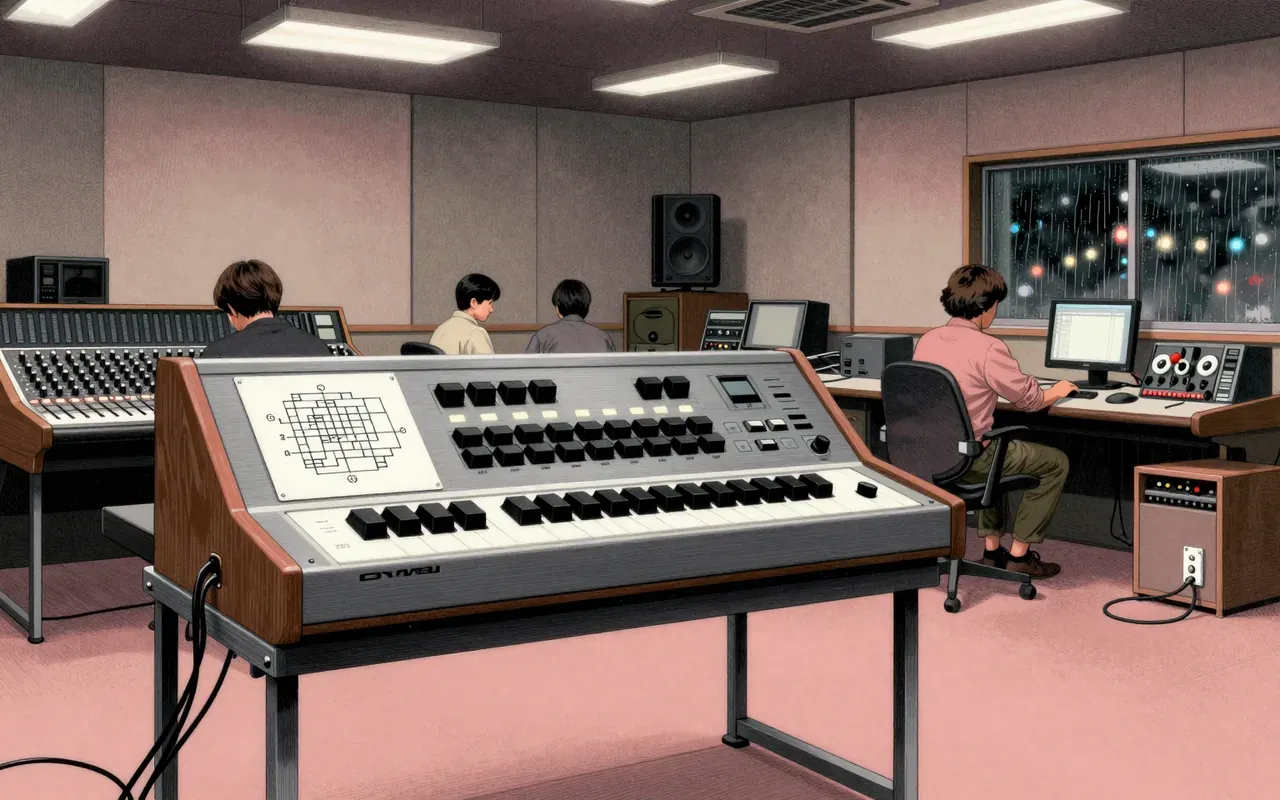
Two independent sound engines let you layer, split, or double polyphony. Each engine has its own voice bank. You assign voices to performance combinations — one from channel A, one from channel B, or a single voice. The front-panel algorithm chart shows all 32 structures at a glance. Solid push-buttons with status LEDs replace membrane switches.
What it does better than anything else
It delivers the only real-time, hands-on FM experience with dual-engine flexibility: simultaneous layered brass and bass, split piano and pad, or doubled polyphony up to 32 notes — all with tactile buttons, clear LED status, and a responsive wooden keyboard with polyphonic aftertouch.
What it does badly
It offers no visual feedback for operator levels or envelope shapes. Programming remains menu-diving and numeric. There is no sequencer, no effects, no sampling, no MIDI sync beyond basic implementation, and no patch storage beyond its internal banks.
What people made with it
The material does not state what people made with it.
Who should use it, and who should not
A working studio composer who owns or seeks authentic DX-series FM and needs dual-layered or split-voice control without software abstraction. Not for beginners, live laptop performers, or anyone reliant on visual editing, sequencing, or modern integration.
Is it worth your time
Only if you need dual-engine FM control in hardware and can accommodate its size, weight, and lack of modern connectivity. It does not simplify FM programming — it expands its scope without changing its core constraints.