What it is and what it was built for
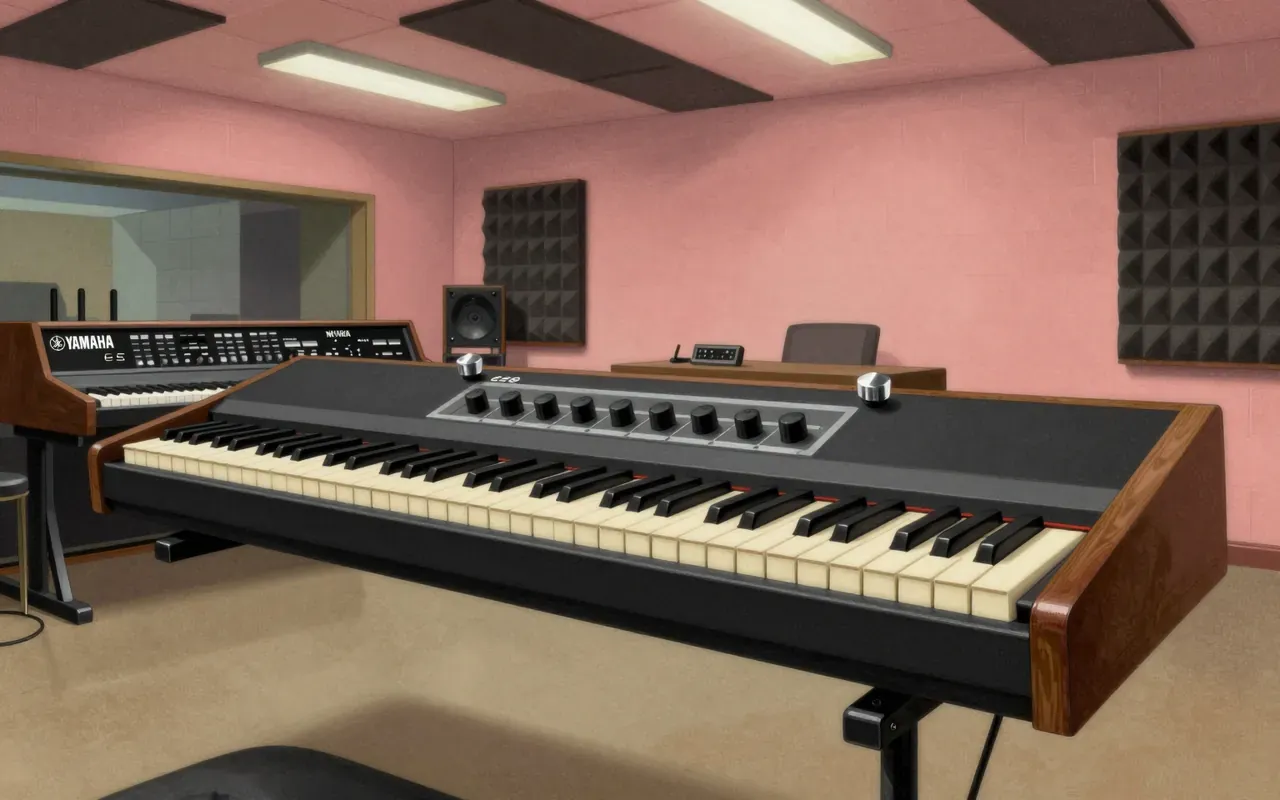
A keyboard-format FM synthesizer introduced in 1983. Built to deliver stable, affordable digital synthesis using custom VLSI chips — not to emulate analogue warmth or offer expressive playability.
How it works, in terms a player would use
It uses FM synthesis routed through six operators per voice, controlled via a membrane keypad and data slider. Players edit sounds by navigating algorithm menus and adjusting ratios, levels and envelopes — no real-time knobs or visual feedback.
What it does better than anything else
It delivers sharp, precise, harmonically rich tones at high polyphony — 16 notes — with consistent tuning and zero drift. Its ‘brilliant’ sound cuts through mixes without EQ or compression.
What it does badly
It cannot produce smooth, evolving pads or organic textures. Its interface makes sound design slow and opaque. There is no aftertouch, no velocity-layered samples, no analogue-style filter sweep or saturation.
What people made with it
Pop hits, TV themes, and film scores of the early-to-mid 1980s — from electric pianos and basses to bell-like leads and metallic percussion — all drawn from its 128 factory presets.
Who should use it, and who should not
Producers and composers who value sonic distinctness over flexibility. Not for beginners, live performers needing real-time control, or anyone allergic to menu diving.
Is it worth your time
Yes — if you want to work within its rigid architecture to sculpt bright, glassy, percussive tones that cut through dense mixes. No — if you need warmth, immediacy, or tactile control over timbre.