What it is and what it was built for
A solid-body electric guitar introduced in 1963. Built for players who prioritised structural integrity and tuning precision over conventional ergonomics or pickup visibility.
How it works, in terms a player would use
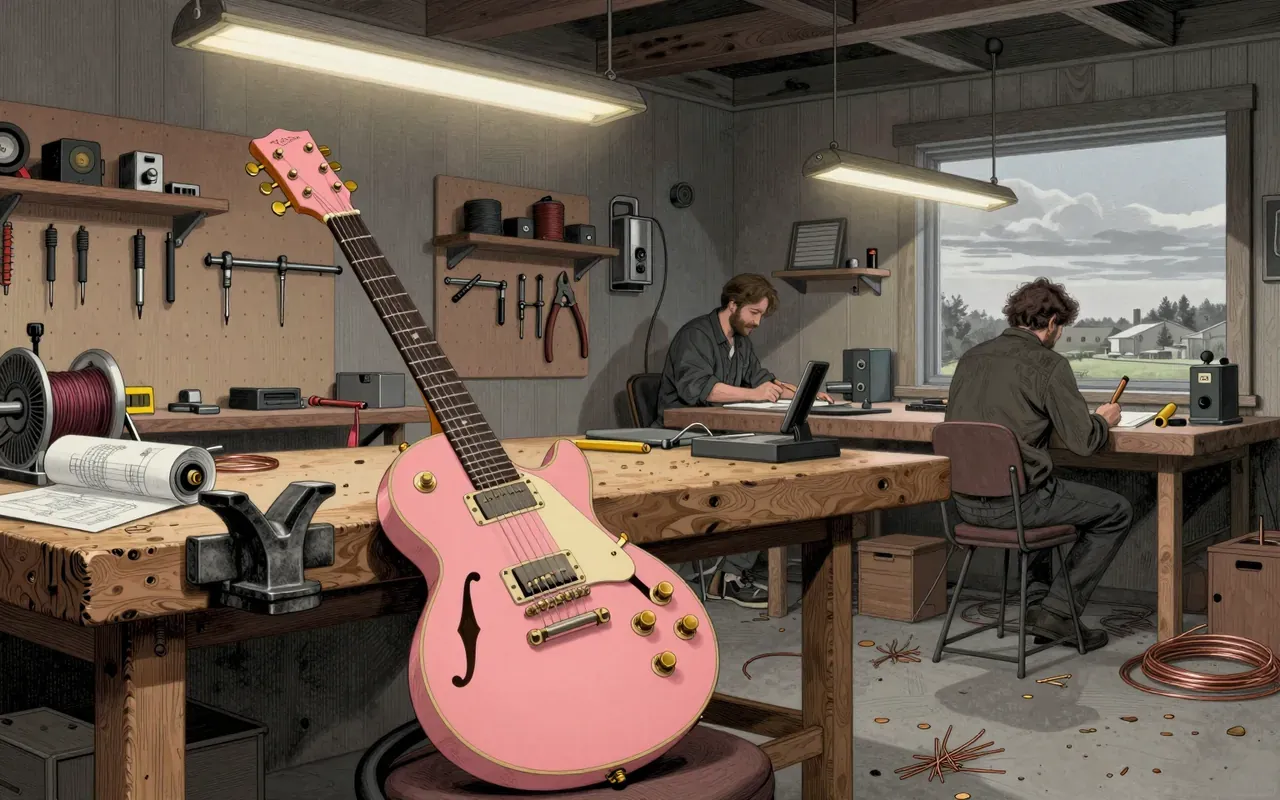
The neck runs the full length of the body, glued to wings that form the outer body shape. The stepped neck sits higher than the body surface. Tuners sit on the treble side of a reverse headstock and use planetary gears. Pickups are mini-humbuckers, fully covered, with metal surrounds.
What it does better than anything else
It delivers consistent sustain and rigidity from its neck-through construction—more than any other Gibson solid-body at launch. The five-ply mahogany and walnut neck resists warping better than standard set-necks.
What it does badly
The stepped neck creates a height discontinuity between neck and body, limiting smooth hand movement across the fretboard. The reverse headstock adds string angle and tension but complicates restringing and may affect tuning stability under aggressive bending.
What people made with it
The document does not specify what people made with it.
Who should use it, and who should not
Players who value neck-through stability, tolerate a stepped playing surface, and want banjo-style tuning precision. Not for players who rely on upper-fret access, dislike reverse headstocks, or expect traditional Gibson pickup aesthetics or response.
Is it worth your time
Yes—if you want a neck-through Gibson with a distinct physical profile and tuning stability from banjo-style gears. No—if you need quick access to upper frets or prefer exposed pickups for visual or tonal familiarity.