What it is and what it was built for
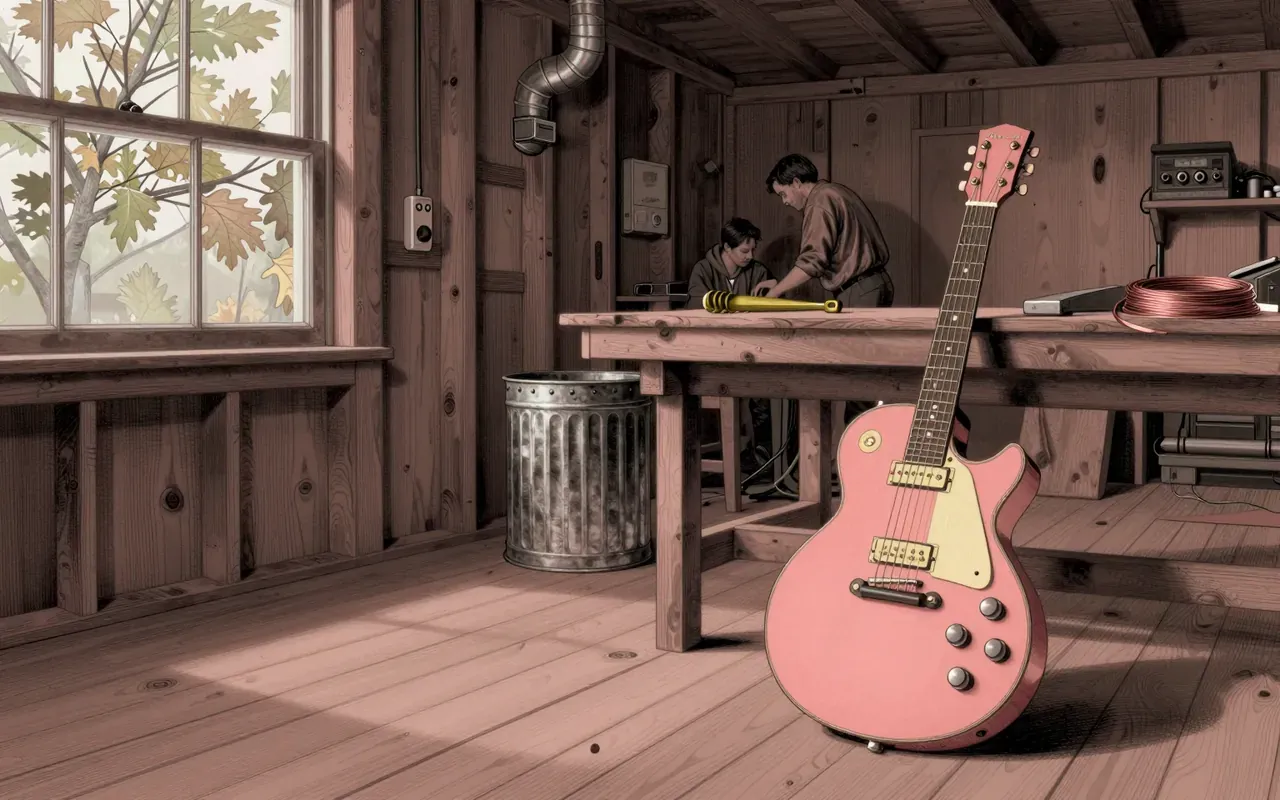
It is a solid-body electric guitar built for Gibson in 1958, intended as a forward-looking alternative to the Les Paul and ES-335. It was built to stand out—not sonically, but structurally and visually.
How it works, in terms a player would use
It is a solid-body electric guitar with passive magnetic pickups, a fixed bridge, and standard volume/tone controls. Players adjust tone and output via physical knobs and switch between pickups using a toggle. The long drooping headstock places all six tuners on one side, altering string tension and tuning stability.
What it does better than anything else
It projects uncompromising visual identity before a single note is played. Its silhouette declares intent more forcefully than any other 1958 Gibson model. It occupies space as an object first, an instrument second.
What it does badly
It resists easy handling. The radical body shape digs into the player’s ribs and thigh. The early headstock designs compromise tuning stability: the ‘split’ headstock lacks mass, the ‘hockey-stick’ headstock increases string angle and friction at the nut.
What people made with it
Players used it to anchor aggressive, high-contrast rock and metal tones—especially from the 1970s onward—leveraging its bright, cutting upper-midrange response and sustain from korina wood construction.
Who should use it, and who should not
Players who value symbolic weight and physical distinctness over comfort or convention. Not for beginners, studio generalists, or anyone who needs reliable tuning across long sessions.
Is it worth your time
Yes—if you need a physically distinctive, historically sparse instrument that prioritises visual rupture over ergonomic consensus. No—if you require immediate playability, consistent tuning, or broad tonal versatility out of the case.