What it is and what it was built for
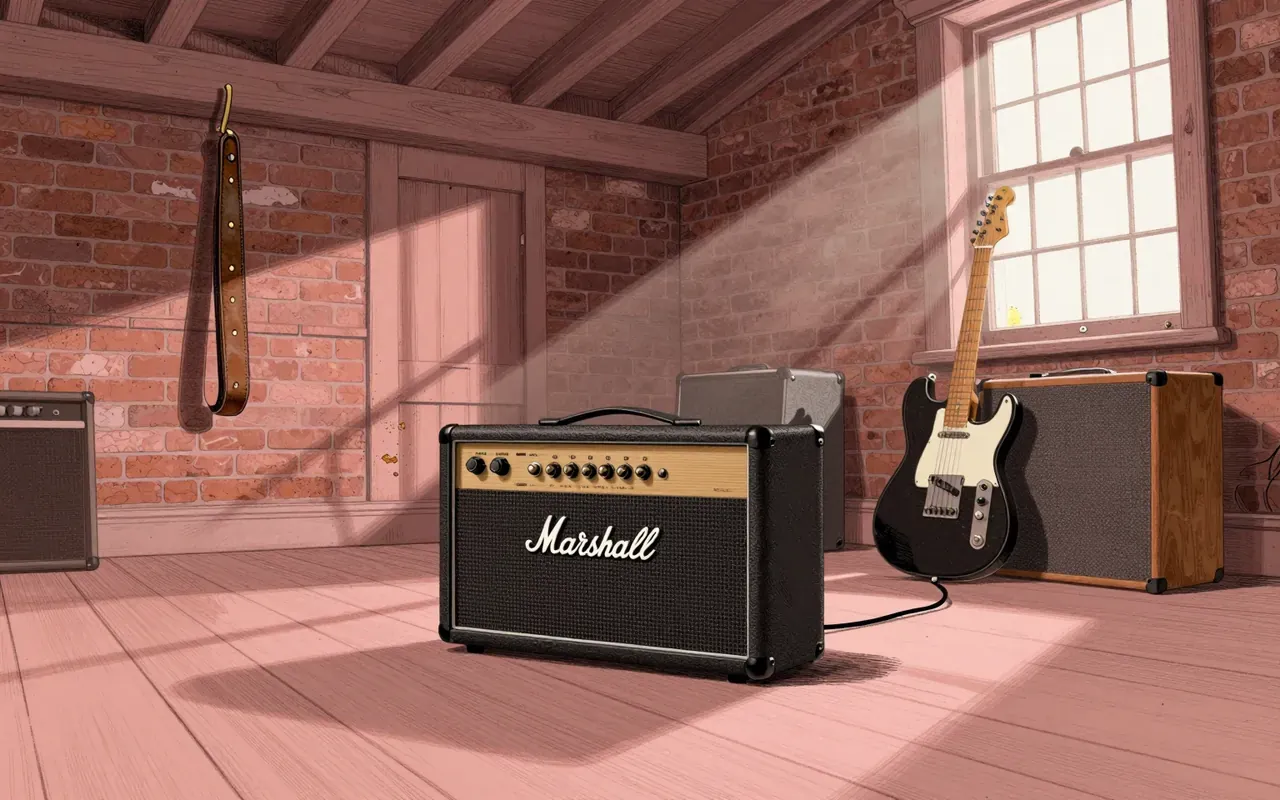
It is Marshall’s first guitar amplifier. It was built in 1963 to give UK guitarists an alternative to American Fender amps. It was designed as a head-and-cabinet system for live performance.
How it works, in terms a player would use
It uses a 12AX7 preamp valve instead of the Fender Bassman’s 12AY7. It runs through a modified negative feedback circuit. It drives Celestion speakers in a closed cabinet. It delivers 45 watts RMS as a head paired with a separate 4×12” cabinet.
What it does better than anything else
It produces aggressive, singing harmonic distortion earlier and more consistently than the Fender Bassman it mimics. The closed cabinet and Celestion speakers tighten the low end and push midrange presence forward. The 12AX7 and heavy feedback give immediate saturation with pick attack.
What it does badly
It lacks clean headroom at stage volumes. It offers no master volume. It has no tone stack beyond basic treble and bass controls. Its closed cabinet restricts low-end breath and makes it harder to move air quietly.
What people made with it
Guitarists used it to define early British rock tone—driving rhythm and lead parts with thick, cutting distortion. Its harmonic character became foundational for blues-rock and hard rock amplification.
Who should use it, and who should not
Players who want authentic, unfiltered 1960s British amp response should use it. Players who rely on pedalboards, studio-level gain staging, or silent recording should not.
Is it worth your time
Yes—if you need raw, harmonically saturated British guitar tone from the moment a note is struck. No—if you need clean headroom, modern EQ control, or silent practice options.