audiobriefs
9:44in productionCh. 1 · No Guitars Were Made/ 9:44 · ceiling 15 min
Guitars & amps

Gibson Moderne

A guitar that exists only as a question — not a sound, not a song, not even a confirmed object.

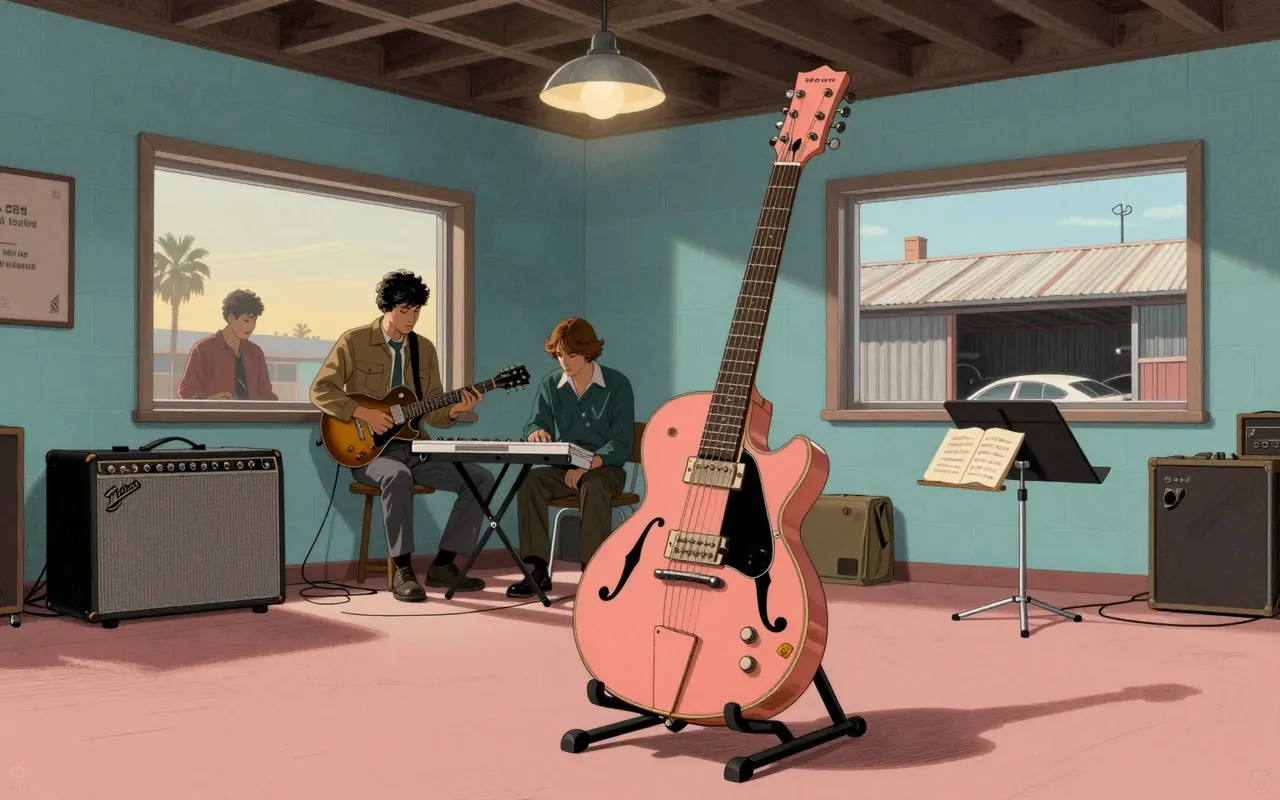
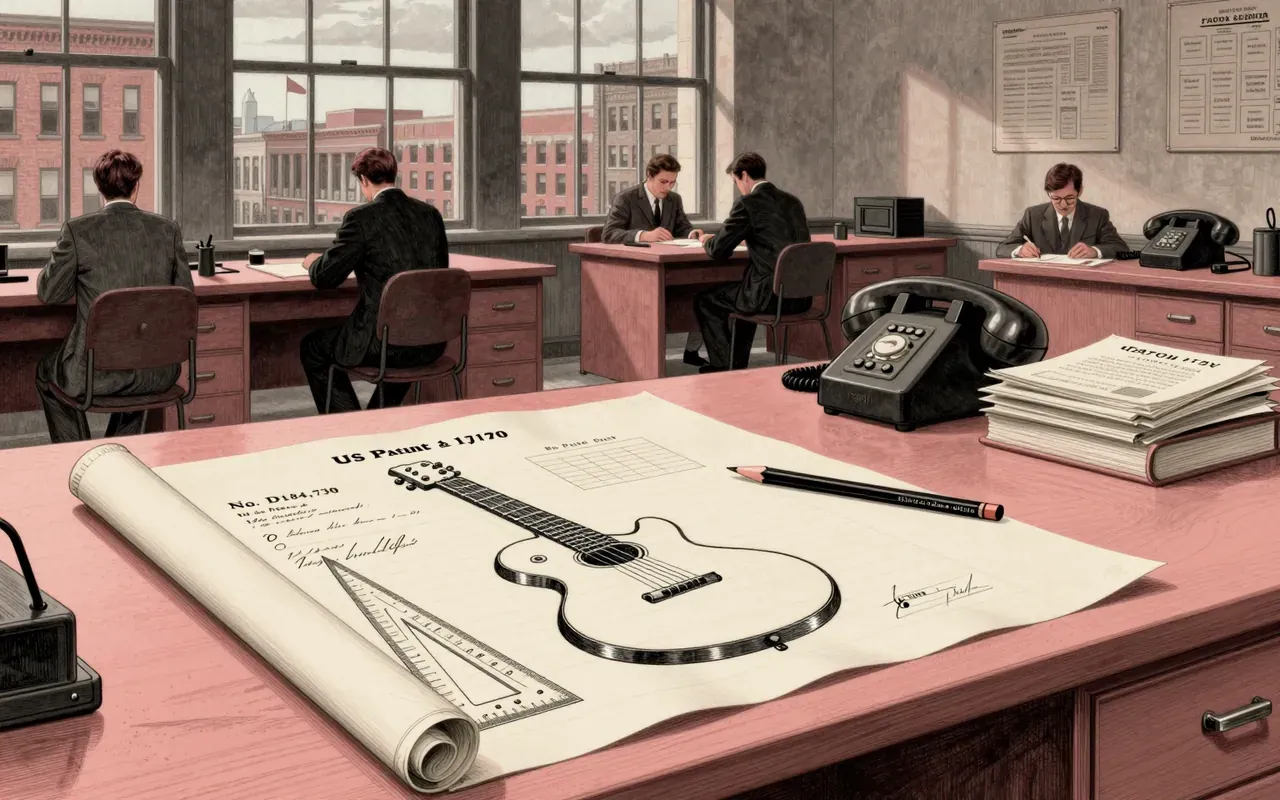
The Gibson Moderne is a non-instrument: a shape conceived in 1957, patented in 1958, rejected at NAMM the same year, and absent from musical use for 25 years. It has no verified sound, no operational history, no confirmed prototype, and no functional distinction from later reissues. Its only property is ambiguity.

Chapters & takeaways4
  1. 1:01
    No Guitars Were Made

    Gibson built exactly zero Moderne guitars for sale in 1957.

  2. 2:46
    Designed, Not Developed

    It was meant to be radical — but only on paper.

  3. 4:31
    Killed at Launch

    The 1957 NAMM Convention killed it before it reached a player’s hands.

  4. 6:01
    Lost in the Factory

    Even Gibson employees disagree on whether it physically existed.

Worth your time?

No. The brief is enough.

1.5/ 5
What works
  • as
  • a
  • concept
What does not
  • do
  • anything
  • musically
Use it if
  • collectors
  • design historians
Skip it if
  • players
  • recording artists
  • sound designers
The written brief1 min read

What it is and what it was built for

It is a 1957 Gibson prototype electric guitar, designed alongside the Flying V and Explorer as part of a stylistically advanced line, never put into production until 1982.

How it works, in terms a player would use

It works like a solid-body electric guitar: strings vibrate over magnetic pickups, sending signal through volume and tone controls to an output jack. No circuitry, synthesis, or polyphony is described in the source material.

What it does better than anything else

It does better than any other guitar at embodying unresolved industrial design — a shape conceived but abandoned, debated but unplayed, patented but unproven.

What it does badly

It does badly at existing as a functional instrument: Gibson rejected it outright after 1957, and no confirmed prototype was ever played, recorded, or documented in use.

What people made with it

No one made anything with it: there is no evidence any prototype was played, recorded, or used by musicians. Conflicting accounts even dispute whether any prototypes existed.

Who should use it, and who should not

Collectors of conceptual artefacts should consider it. Players, writers, or sound designers should not — it has no verified sonic identity, no operational history, and no functional lineage.

Is it worth your time

It is not worth your time as a playing instrument — no verified prototypes were used musically, and its only functional existence is in reissues decades after conception.
Same bench · Guitars & amps4 of 23
9:28
Rickenbacker 330RickenbackerA semi-acoustic twelve-string electric guitar in the Capri series, introduced in 1958 and designed by Roger Rossmeisl. Built for clarity, projection, and rhythmic definition in ensemble playing.
9:15
Big MuffElectro-Harmonix · 1969The Big Muff Pi is a 1969 fuzz effects pedal with four transistors, two soft-clipping stages, and a tone stack that scoops mids when centred. It delivers smooth, saturated, bass-heavy sustain at any volume—making small amps sound bigger. It was intended to mimic Hendrix but became heavier and more distinctive. It does not offer gain staging, midrange recovery, or dynamic clean-up.
9:22
Fender CoronadoFenderThe Fender Coronado is a true hollow-body electric guitar with no central block, designed in 1965 by Roger Rossmeisl to capitalise on the rising popularity of semi-acoustic guitars. It delivers natural resonance and a bright-and-deep tone, but feeds back at high volumes and failed to win over jazz guitarists due to its bolt-on neck. It found belated favour for what it does sonically—not what it was meant to be.
9:11
Epiphone CoronetEpiphoneThe Epiphone Coronet is an Epiphone-exclusive, entry-level solidbody electric guitar with a single P-90 pickup, one volume and one tone control. First introduced as an amplified archtop in 1939, it was reclassified as a solidbody by 1961. It has been manufactured across multiple eras — 1959 US production, 1960s Dwight-branded variants, discontinuation in the 1970s after Epiphone moved overseas, a late-1990s Korean reissue, and a 2020 reissue. It offers no pickup switching, no neck pickup, and minimal control options. Its design prioritises simplicity and direct tone over versatility or refinement.
Up next in Audio

Akai MPC

Akai · 1988 · 9:14

The MPC60 didn’t invent sampling—it weaponised it for rhythm.

9:14