audiobriefs
Topic

Patents

A temporary monopoly granted to encourage disclosure.

1
in audio
9:44
average
10 min
in total
57
across the network
Patents across the network →
All briefs1
9:44

Gibson Moderne

Gibson

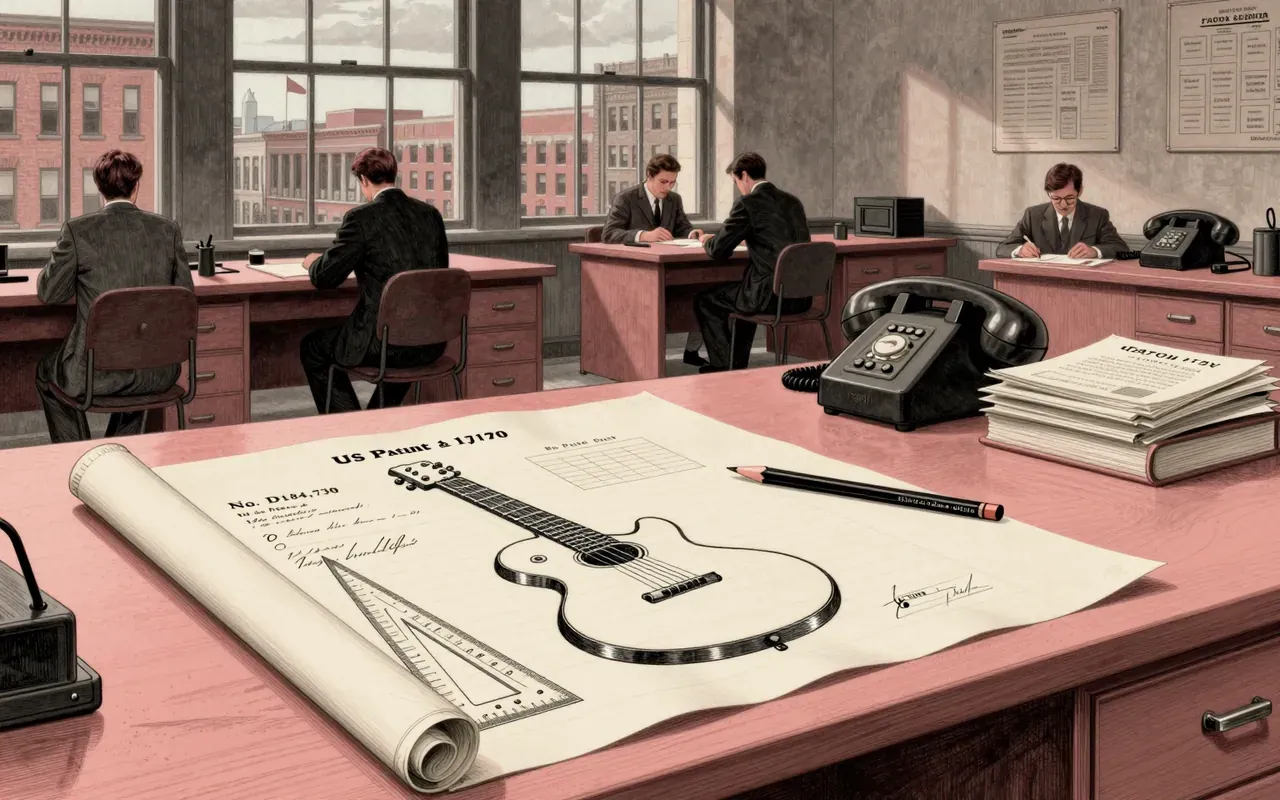
The Gibson Moderne is a non-instrument: a shape conceived in 1957, patented in 1958, rejected at NAMM the same year, and absent from musical use for 25 years. It has no verified sound, no operational history, no confirmed prototype, and no functional distinction from later reissues. Its only property is ambiguity.
More from audio

All briefs →
9:28

Rickenbacker 330

Rickenbacker

A semi-acoustic twelve-string electric guitar in the Capri series, introduced in 1958 and designed by Roger Rossmeisl. Built for clarity, projection, and rhythmic definition in ensemble playing.

8:48

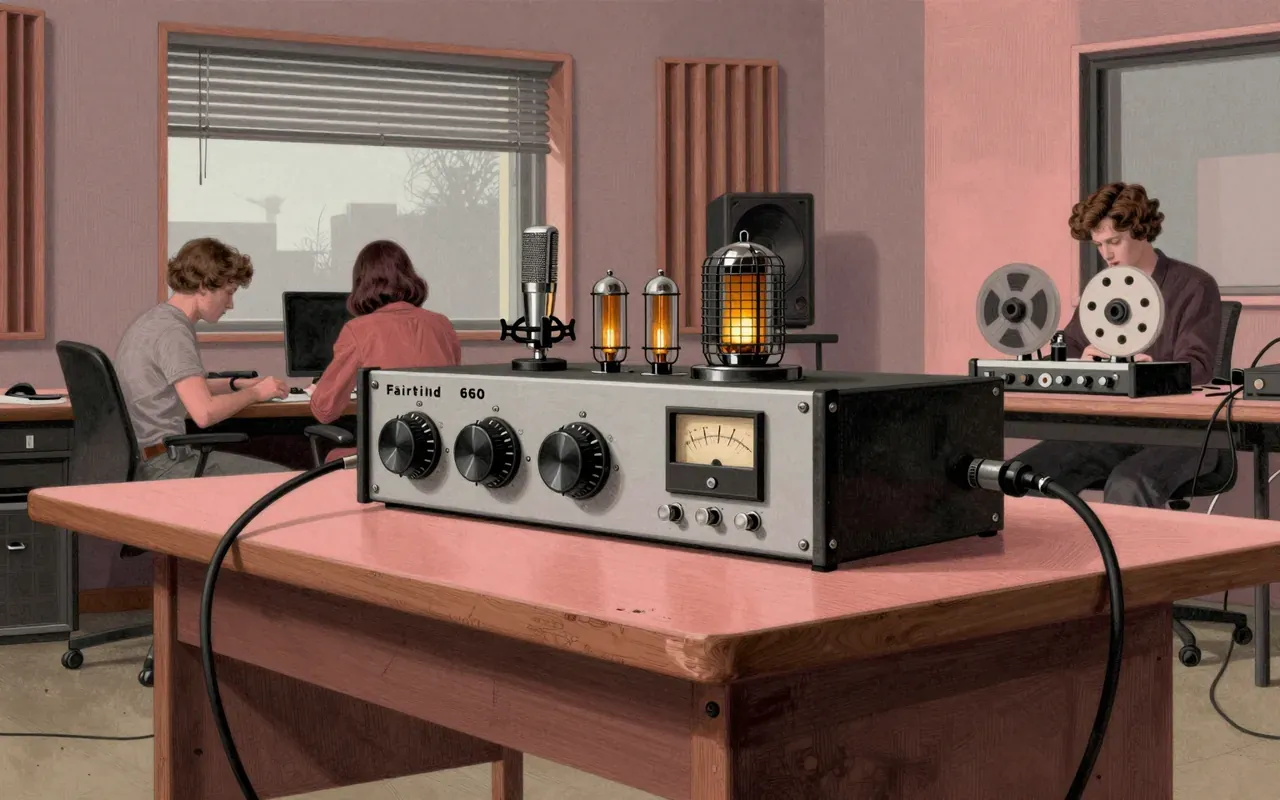
Fairchild 660

Fairchild

The Fairchild 660 is a mono tube compressor introduced in 1959. It was the first intelligent automatic volume control limiter. Designed by Rein Narma, the first ten units were built by him. The first unit went to Rudy Van Gelder, who used it to cut lacquer masters for Blue Note Records and Vox Records. It functions as a compressor (2:1, threshold 5 dB below normal) or peak limiter (30:1, threshold 10 dB above normal), with fixed 1/10,000-second attack and variable release. Its push-pull amplification and high control voltage yield low distortion, low noise, and no audible thumps.

9:00

Neve 80 Series

Neve

The Neve 80 Series is a hand-wired analogue mixing console built from 1968 to 1979. It uses custom preamps, line amps, and compressor/limiters wired point-to-point by hand. The 8048 model features the 1081 preamp and 4-band EQ across 24 or 32 channels. In 1976, Neve launched the in-line-monitor 8058 and 8068. Late-’70s units offered NECAM, the world’s first successful moving-fader automation system. Production was limited; manufacturing ceased in 1979.

9:20

ARP 2600

ARP

The ARP 2600 is a foundational analog synthesizer designed for education. Its semimodular architecture, front-panel signal graphics, and duophonic voice count reflect its classroom purpose—not stage use. Its original filter was replaced after a patent dispute. It teaches synthesis more directly than any contemporaneous instrument, but offers no polyphony, no presets, and unstable tuning.