What it is and what it was built for
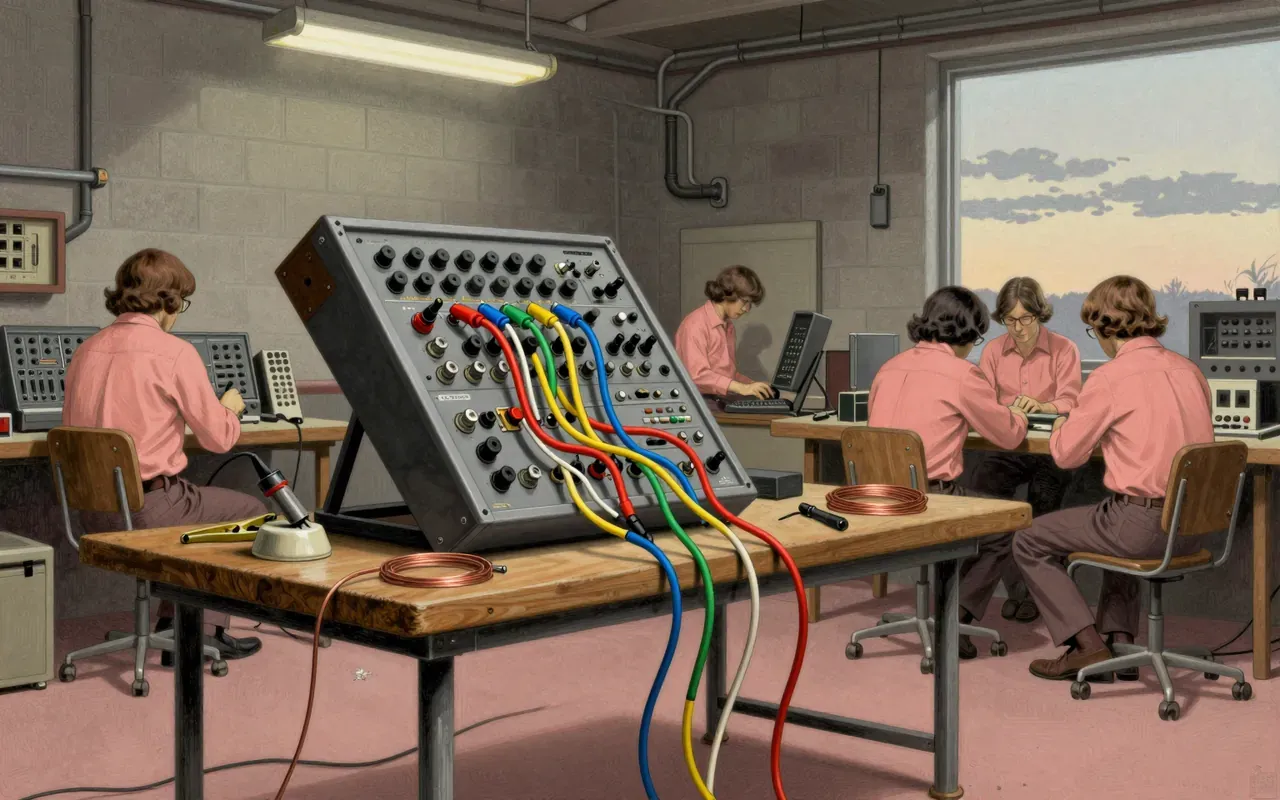
The ARP Odyssey is a duophonic analog synthesizer introduced in 1972. It was built as a portable, performance-oriented alternative to the Moog Minimoog—designed to be more affordable, simpler, and stage-ready.
How it works, in terms a player would use
Two oscillators feed into a static high-pass filter and a voltage-controlled low-pass self-oscillating filter. Waveforms switch between sawtooth, square, and pulse. Pulse-width modulates manually or via LFO or ADSR. Ring modulation is an XOR of the two VCOs’ pulse waves. All parameters control via front-panel sliders and switches.
What it does better than anything else
It delivers raw, immediate duophonic performance with tactile slider-based control—no menus, no layers. Its ring modulator, built from XOR logic on pulse waves, gives a brittle, metallic edge distinct from multiplier-based designs.
What it does badly
It cannot play more than two notes at once. It lacks a dedicated envelope for the filter. The high-pass filter is static—not voltage-controlled. Tuning drifts under temperature change or extended play.
What people made with it
Musicians used it for aggressive basslines, searing leads, and percussive textures—leveraging its duophony for call-and-response lines and its self-oscillating filter for squelchy effects.
Who should use it, and who should not
A player who values hands-on, real-time control over two-note interplay and doesn’t need polyphony or preset memory. Not for anyone reliant on stable intonation, complex modulation, or silent patch recall.
Is it worth your time
Yes—if you need duophonic analog immediacy in a portable format. No—if you require polyphony, stable tuning, or modern modulation routing.