What it is and what it was built for
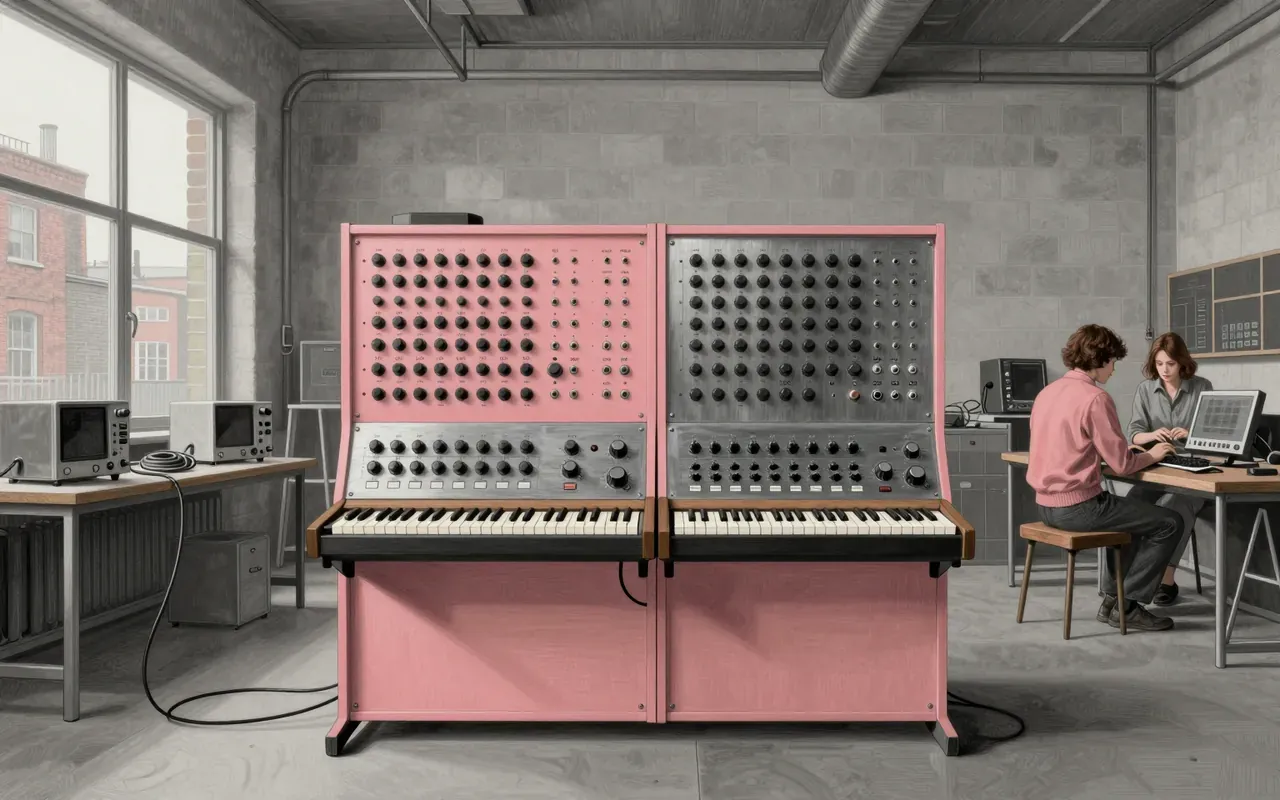
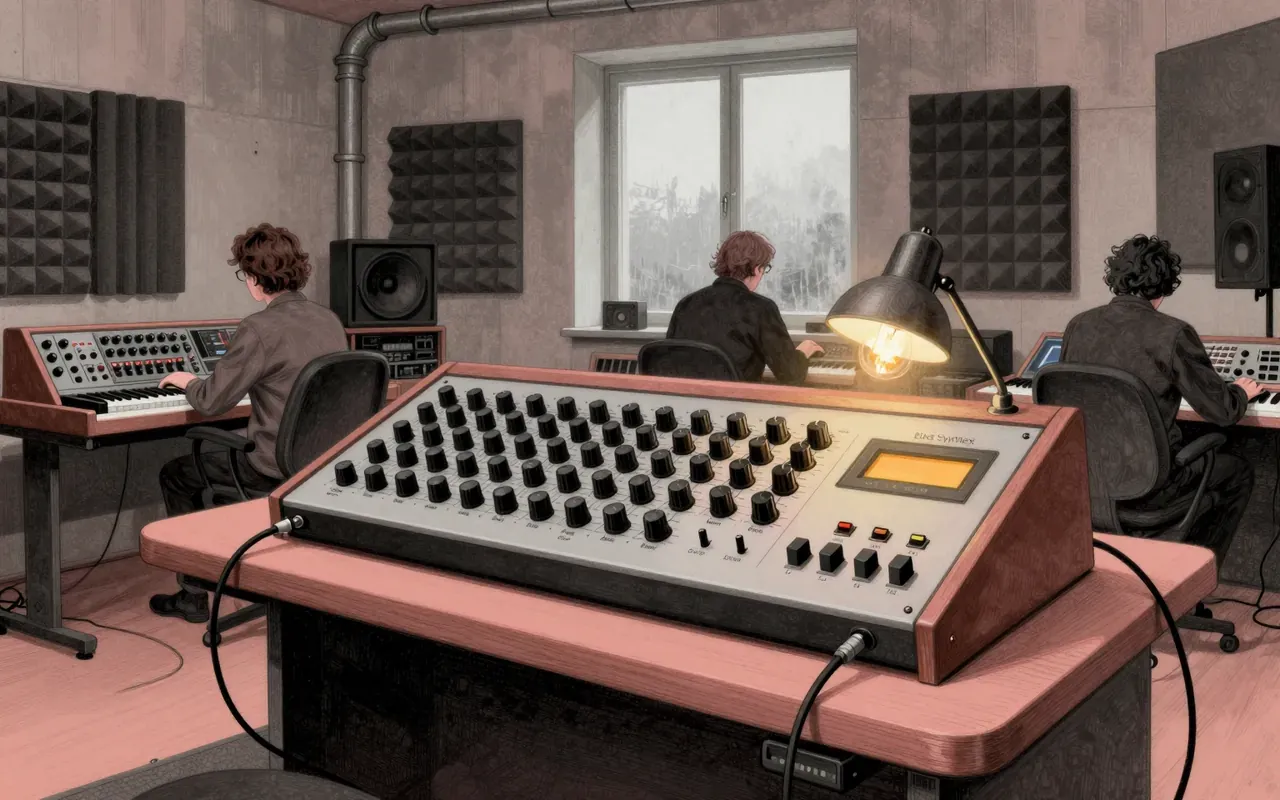
The Elka Synthex is an 8-voice analog keyboard synthesizer built for studio-based composition and layered sequencing. Mario Maggi designed it; Elka manufactured it from 1981 to 1985.
How it works, in terms a player would use
Each voice has two DCOs with selectable waveform. You set pulse width, cross-modulate one oscillator into the other, and route both through a multimode filter. The Rockwell 6502P CPU handles patch storage, sequencing, and real-time transposition. The 4-track monophonic sequencer records step or live, but only one note at a time per track.
What it does better than anything else
It delivers eight-voice polyphony with independent DCOs, cross-modulated pulse width, and a multimode filter—features no other 1981–1985 Italian synth offered in this configuration.
What it does badly
It cannot play chords on the sequencer. Each of the four sequencer tracks is monophonic. It has no velocity sensitivity, no aftertouch, and no built-in effects beyond chorus.
What people made with it
No specific recordings, artists, or releases are named in the source material.
Who should use it, and who should not
Use it if you need stable DCO polyphony with sequenced monophonic lines and chorus texture. Avoid it if you require expressive playing dynamics, multitimbral sequencing, or modern workflow integration.
Is it worth your time
Yes—if you want hands-on analog polyphony with sequenced layering and chorus depth, and can accept its narrow sequencer scope and lack of velocity or aftertouch.