audiobriefs
Oldest

All briefs

747 briefs · 6840 min · 289–384 on page 4 of 8
9:24

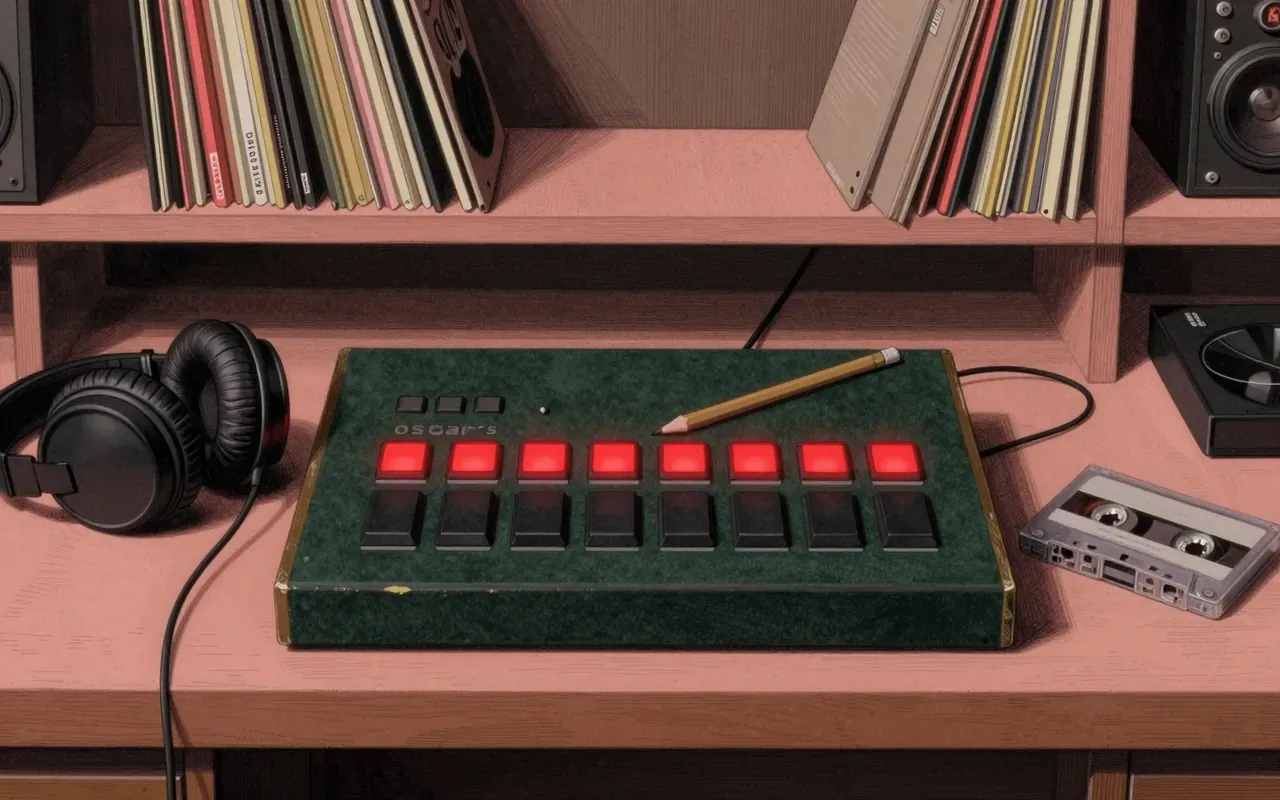
OSC OSCar

Oxford Synthesiser Company

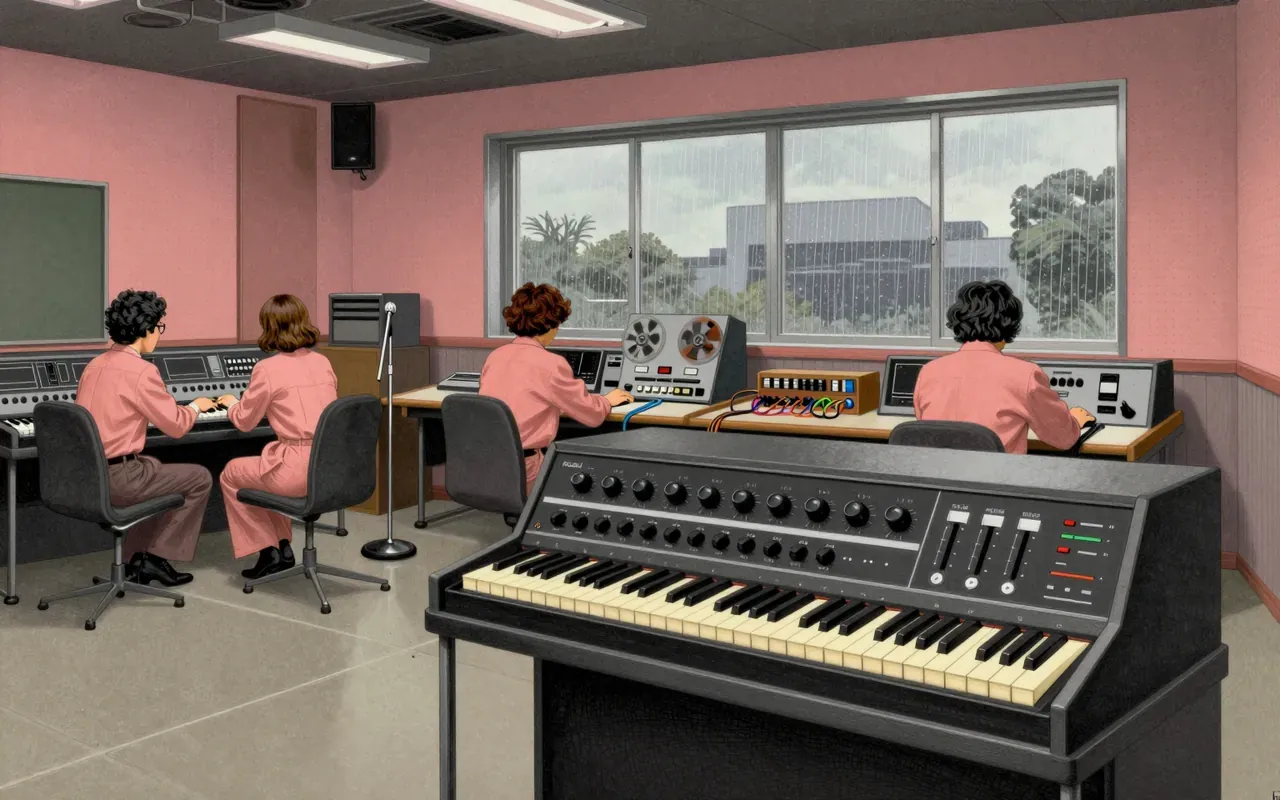
The OSCar is a 1983–1985 subtractive synthesizer with digital oscillators enabling additive synthesis, dual analog filters with independent cutoff, duophonic mode, and a built-in sequencer. Designed by Chris Huggett (electronics) and Anthony Harrison-Griffin (aesthetics and build), around 2000 units were produced.

9:18

Lexicon (company)

Lexicon · 1971

Lexicon is a company, not an instrument. Its first product was a digital delay system released in 1971. It pioneered commercial digital audio processing hardware for professional and live applications — notably digital reverb starting with the Model 224 in 1978. Its hardware is rack-mounted, hardware-controlled, and designed for integration into analog signal paths. It does not run as software, has no built-in synthesis or recording, and offers no modern digital workflow features.

9:10

Prophet '08

Dave Smith Instruments

The Prophet '08 is an eight-voice analog synthesizer released in 2007 by Dave Smith Instruments. It uses analog subtractive synthesis with digitally controlled oscillators, voltage-controlled filter and amplifier, ADSR envelopes, and three playing modes. It was conceived as an affordable eight-voice analog synthesizer.

10:20

Roland R-8

Roland

The Roland R-8 is a 1989 PCM drum machine built for expressive, human-sounding rhythm programming—not raw sound design or live sampling.

10:14

EMI REDD

EMI

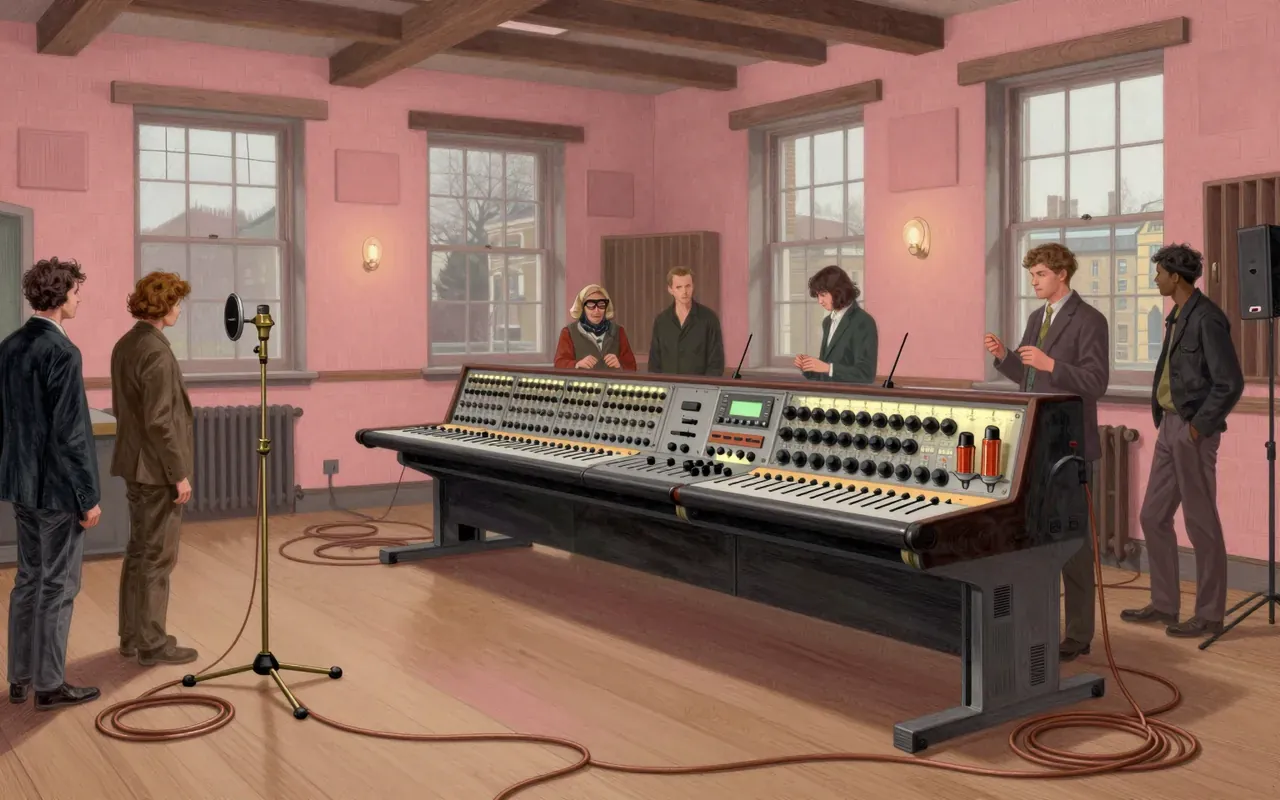
The EMI REDD was not a product. It was Abbey Road’s first custom-built, vacuum-tube-based stereo mixing system — engineered in-house, adapted for four-track tape, and retired when it could not scale beyond four outputs. Its sound came from saturation, not precision. Its limits were physical: fixed routing, no patching, no serviceability. Its legacy is inseparable from the room, the tape machines, and the engineers who worked it daily.

12:36

Roland RS-202

Roland

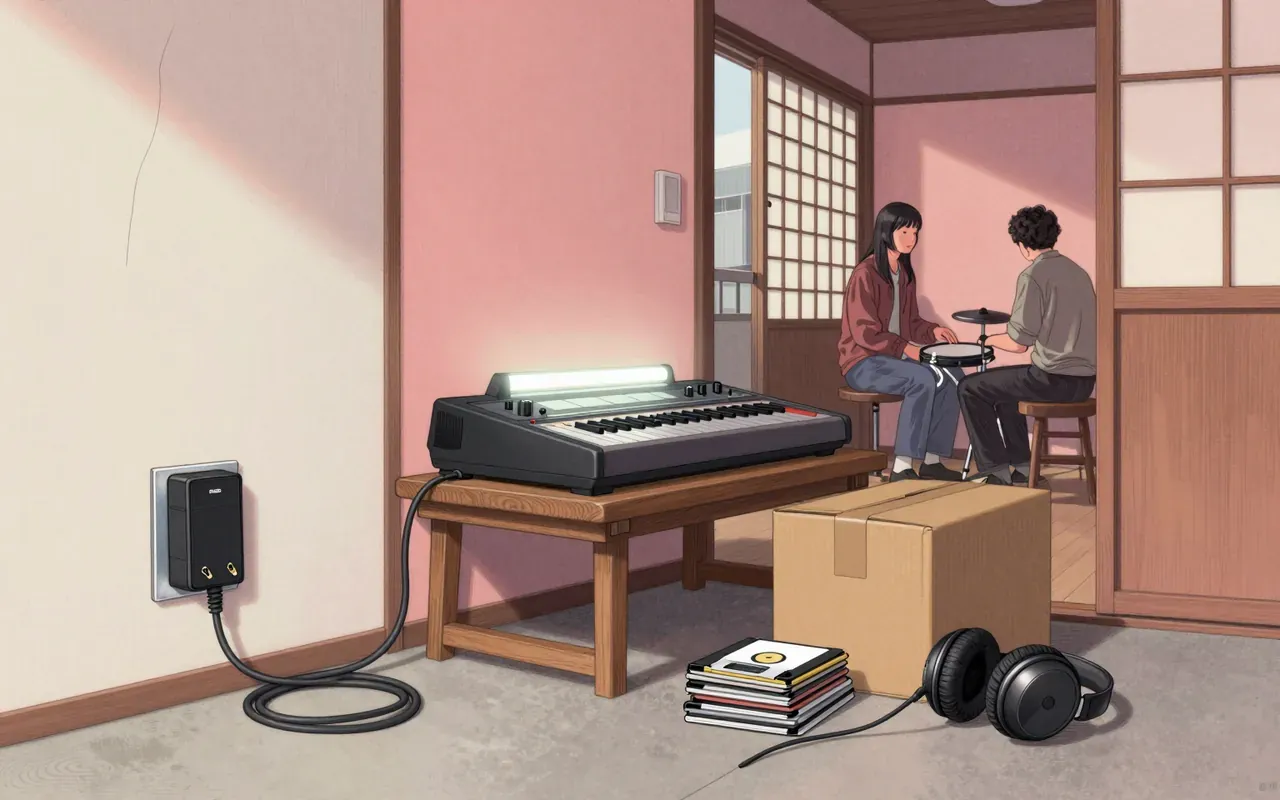
The Roland RS-202 is a 1976 string synthesizer that uses sawtooth oscillators and frequency division for full polyphony. Its paraphonic architecture routes all notes through one envelope shaper—but assigns per-note articulation to prevent attack re-triggering. Split-keyboard controls allow independent top/bottom sounds. An analog chorus with LFO-modulated delay lines creates ensemble realism. It does not offer true polyphonic envelopes, per-voice filters, or digital memory.

12:26

Yamaha RX-5

Yamaha

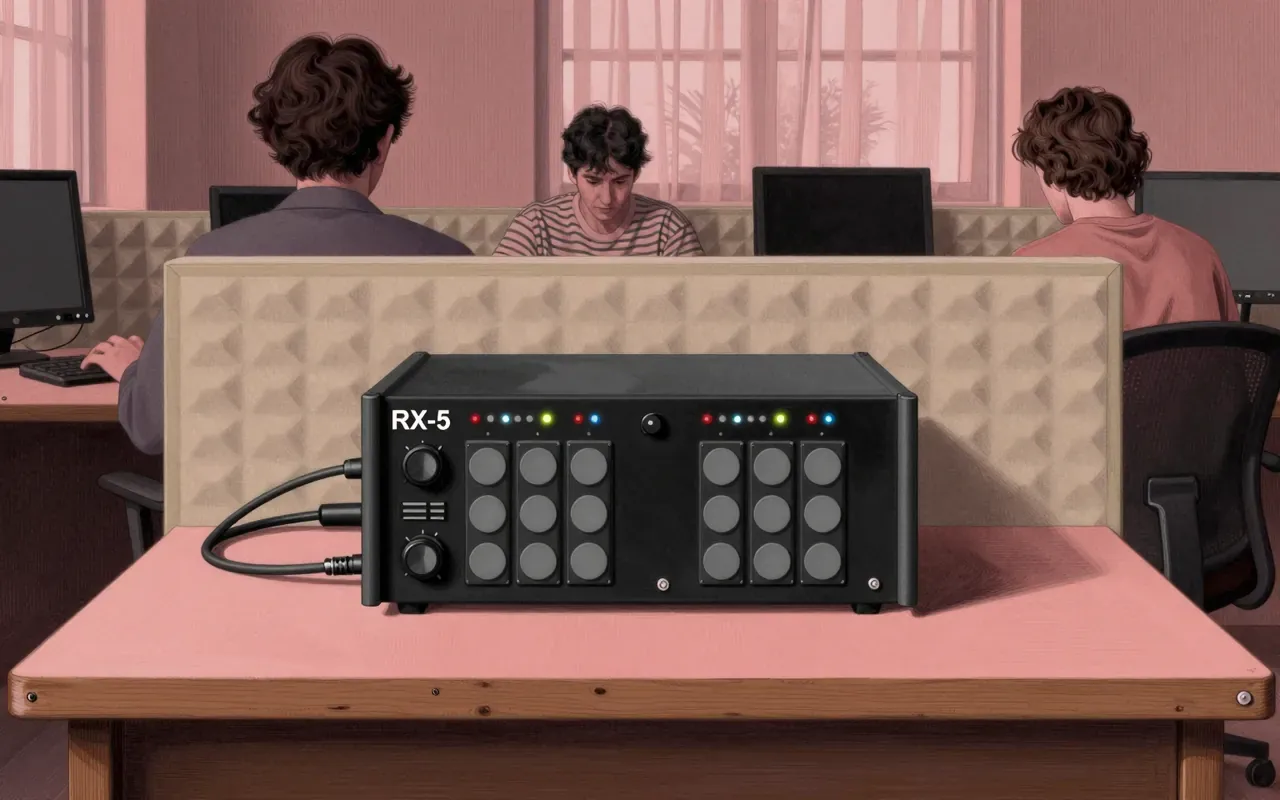
The Yamaha RX-5 is a 1986 programmable digital sample-based drum machine. It delivers 24 built-in and 28 cartridge-based digitally sampled sounds. It has 12 individual outputs—one per vertical drum pad pair. It supports sound editing including chromatic pitch, envelope, reverse, and damp. Its sequencer records up to 100 patterns in Real Time or Step Time, with lengths up to 99 bars.

8:56

Roland S-50

Roland

The Roland S-50 is a 61-key 12-bit sampler keyboard introduced in 1986. It uses variable sampling rates (15–30 kHz), stores samples on a 3.5-inch DSDD floppy disk drive, supports external CRT monitor editing, and holds up to 32 samples. A rack-mounted version with expanded memory was also available.

9:06

Akai S3000XL

Akai · 1995

The Akai S3000XL is a 16-bit sampler released in 1995. It has 32-voice polyphony and 2 MB of built-in RAM. It loads samples via a 3.5" floppy drive or SCSI-connected devices. Its large screen and intuitive interface enable quick and in-depth sample editing. Akai discontinued production and support, but many working units remain in studios worldwide.

9:32

Akai S900

Akai · 1986

The Akai S900 is a 12-bit sampler introduced in 1986. It supports up to six active samples simultaneously. Its firmware became upgradable via floppy disk from version 1.2. It features alternating forward-and-backward looping — a capability absent in the later S1000 series. An expanded variant, the S950, followed in 1988.

9:25

Boss SD-1

Boss · 1981

The Boss SD-1 is a 1981 overdrive pedal. It is the second overdrive made by Boss. It adds a tone control and refines the OD-1’s circuit for more gain and aggression. Its asymmetrical soft-clipping uses two diodes on the positive waveform peak and one on the negative—producing both even and odd harmonics. It is midrange-focused at 800Hz and rolls off less bass than the OD-1. Its circuit has remained unchanged since release.

9:01

Gibson EB-3

Gibson

The Gibson EB-3 is a short-scale bass built for midrange punch, not low-end authority. Its 30.5" scale, slim SG-style body, and asymmetric pickup pair — large humbucker at the neck, mini-humbucker at the bridge — define its physical and sonic identity. The four-way rotary switch offers distinctive tonal options, including two that deliberately roll off low frequencies. It was produced from 1961 to 1979. Exactly 14,167 were made.

9:55

Roland Corporation

Roland · 1972

Roland Corporation is a Japanese instrument manufacturer founded in 1972. It pioneered compact synthesizers, programmable drum machines, guitar synths, and early microprocessor sequencers — shaping electronic music through tactile, genre-defining hardware.

9:45

Roland SH-1000

Roland

The Roland SH-1000 is a compact 1973 synthesizer — the first made in Japan and the first by Roland. It resembles a home organ, with 10 preset voices and a manually editable section. It has no user program memory. Its effects include white noise, portamento, octave transposition, two LFOs and a random note generator. It simulates multiple oscillators using 8 sub-osc keys; a ninth key triggers white or pink noise.

8:04

Roland SH-3A

Roland

The Roland SH-3A is a monophonic analog synthesizer introduced in 1975. It supports both subtractive and additive synthesis. It includes two LFOs and a unique sample-and-hold section. It was Roland’s first non-preset based synth. It uses a transistor ladder-filter to produce Moog-like sounds.

9:48

Six-Trak

Sequential Circuits · 1984

The Six-Trak is a six-voice analogue synthesizer released by Sequential Circuits in January 1984. It was built as an inexpensive, portable 'scratch-pad' for trying out arrangements.

9:08

Small Stone Records

Electro-Harmonix · 1995

The Small Stone is a 4-stage analog phaser pedal introduced by Electro-Harmonix in 1974. Designed by David Cockerell, it became central to Jean-Michel Jarre’s sound and was later reissued in a Nano chassis. Its simplicity — one knob, two modes — gives immediate, expressive motion but no depth control, no buffered bypass, and no digital features.

8:14

Boss SP-202

Boss

The Boss SP-202 is a portable sampling workstation released in 1998. It succeeded Roland's MS-1 Digital Sampler. It has eight pads, four banks, two control knobs, a built-in microphone, six built-in effects, BPM-based looping, user-selectable sampling grade per pad, and sampling capacity of 4 minutes 20 seconds internally or up to 37 minutes with a SmartMedia card. It was built for club DJs, hip-hop and dance music artists.

8:27

Boss SP-303

Boss

The Boss SP-303 is a 2001 digital sampler with eight pads, four soundbanks, three minutes and twelve seconds of sampling, twenty-six internal effects, and a built-in pattern sequencer. It was used by J Dilla, Madlib, Animal Collective, Panda Bear, Four Tet, and Moka Only. Dilla used it with a 45 record player to make 29 of the 31 tracks on Donuts while hospitalized. Madlib used it with a portable turntable and cassette deck to produce most of Madvillainy.

8:55

Music Man StingRay

Music Man · 1976

The Music Man StingRay is a 1976 electric bass co-designed by Leo Fender as a modern update to the Precision Bass. It introduced active electronics to bass design — a 9-volt-powered preamp with 2-band EQ, an oversized humbucker wired in parallel, and epoxy-sealed circuitry. It delivers a uniquely bright, scooped-mid, deep-low tone with high output and rigidity. It lacks passive tone shaping, midrange control in early models, and serviceable electronics. It became essential for slap bass, studio clarity, and cutting through dense mixes.

9:49

ARP String Ensemble

Solina

The ARP String Ensemble is a fixed-architecture string machine. Twelve tone generators feed 49 keys via divide-down. Its triple BBD chorus — driven by two LFOs — defines the sound. No envelopes. No filters. No expression. Just one lush, unchanging texture.
9:10

Marshall Super Lead

Marshall · 1965

The Marshall Super Lead is a 100-watt guitar amplifier head made by Marshall between 1966 and 1981. It was developed in response to player demand for higher output than the earlier JTM45. Its distortion arises solely from overdriving its EL34-based power amp section at high volume. It has two channels and four inputs but no master volume. Its core character is bold, midrange-heavy, and bright — delivering the foundational 'Marshall crunch' sound of 1970s rock.

8:59

Roland System-100M

Roland

The Roland System-100M is a modular analog synthesizer built in the late 1970s. It delivers independent LFOs, envelopes, and patchbay-enabled feedback—not convenience, not recall, not polyphony.

9:15

Yamaha TG77

Yamaha

The Yamaha TG77 is a 1989 rack synth that merges FM and sample-based synthesis with unprecedented routing flexibility—but at the cost of immediacy and tactile control.

8:39

Gibson Thunderbird

Gibson

The Gibson Thunderbird is a 34-inch scale electric bass introduced in 1963. Designed by auto stylist Raymond H. Dietrich, it features neck-through construction and a reverse body shape. It was Gibson’s first bass at that scale and originally came in two models: the single-pickup Thunderbird II and dual-pickup Thunderbird IV. Its soapbar humbuckers deliver focused midrange. In 1966, Gibson altered the design to a non-reverse body and set-neck construction following a lawsuit from Fender.

9:13

Roland TR-606

Roland

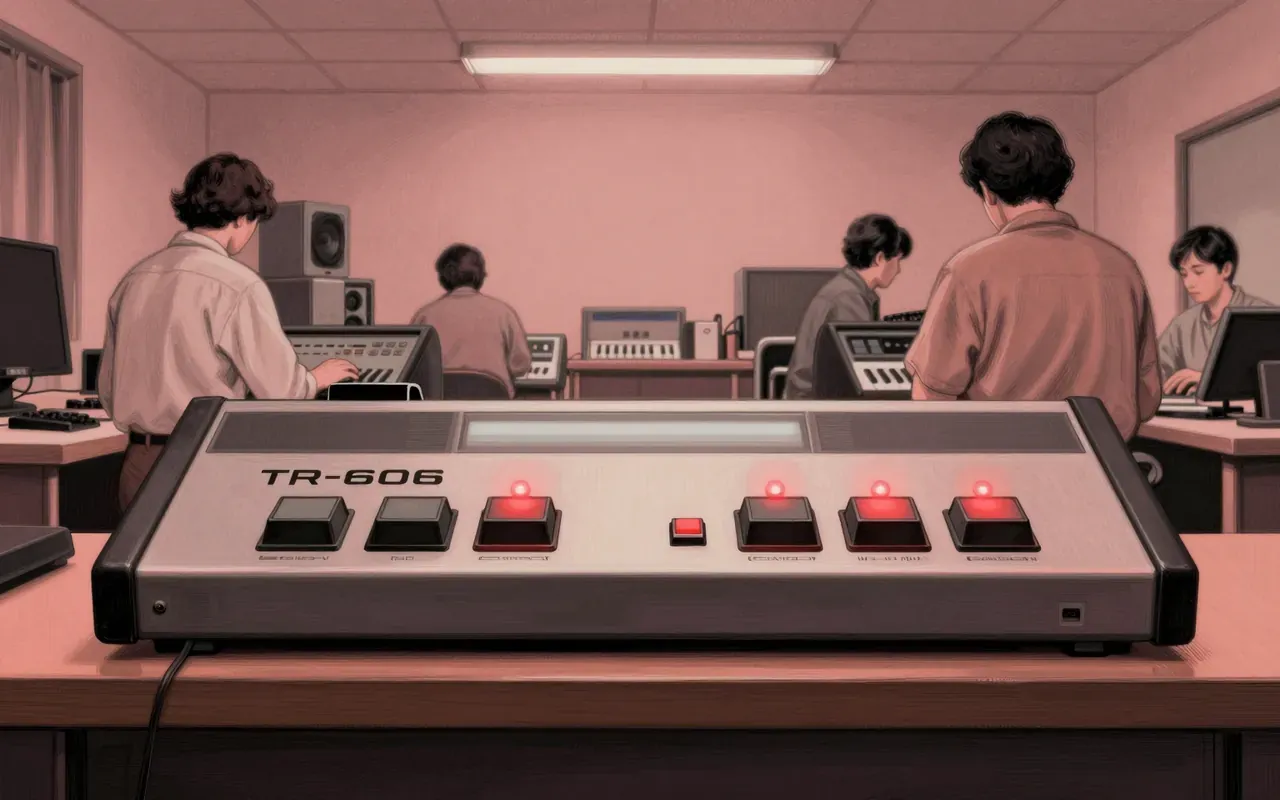
The Roland TR-606 is a fixed-voice analog drum machine built from 1981 to 1984. It generates bass drum, snare, toms, cymbal, and open/closed hi-hat sounds using analog synthesis—not samples—and offers no sound editing. Its 32-pattern sequencer includes accent controls and song chaining. DIN sync enables tight integration with the TB-303. It does one thing decisively: deliver unvarnished, immediate rhythm. It refuses everything else.

8:38

Uni-Vibe

Shin-ei · 1968

The Uni-Vibe is a 1968 Shin-ei footpedal phaser designed by Fumio Mieda. It creates chorus and vibrato simulations using an optical circuit: an incandescent bulb shining on LDRs inside a reflective shield drives staggered phasing filters—without op-amps. Its effect is a throbbing, hypnotic pulse rooted in atmospheric radio modulation, not Leslie emulation. It was modified to improve fuse access and add a speed foot pedal. Players value its lo-fi sweep but contend with bulb burnout, speed instability, and lack of precision.

9:38

Roland V-Synth

Roland · 2003

The Roland V-Synth is a 2003 polyphonic synthesizer combining multiple oscillator technologies and built-in sampling, featuring arpeggiation, COSM filtering, and expandable vocoder/vocal synthesis via VC-2; the XT variant is a rack-mount module.

9:00

Fender Vibrolux Reverb

Fender

The Fender Vibrolux Reverb is a 35-watt blackface/silverface tube amp built around smaller transformers and 10″ speakers. It breaks up earlier and more sweetly than larger 6L6 Fenders. Its tone is scooped, punchy and sparkling—but it sacrifices clean headroom and low-end weight. CBS-era revisions increased clean headroom, but the core character remains defined by responsiveness over restraint.

8:12

Gibson Victory Bass

Gibson

The Gibson Victory Bass is a four-string solid-body electric bass designed by Wayne Charvel for Gibson from 1981 to 1986. It shares its lineage with the Gibson Victory, uses fixed materials (maple body, three-ply maple neck, rosewood fingerboard), and offers a fretless option — but nothing more. It was not a successful model. No evidence confirms distinctive tone, player adoption or recorded use.

8:52

List of vocoders

Roland

The 'List of vocoders' is not an instrument. It is a sparse, unattributed enumeration of models and band counts. It contains no operational detail, no historical context for the devices, and no connection to the Roland Corporation. It is a footnote masquerading as a subject.

10:18

Korg VC-10

Korg

The Korg VC-10 is a 1978 analog vocoder with a built-in 32-note keyboard, 20-band analysis and synthesis, and support for both internal and external signal modulation — including voice, guitar, and pitch control inputs — making it a self-contained, polyphonic vocoding instrument.

8:39

Voyetra-8

Octave-Plateau

The Voyetra-8 is an eight-voice, rack-mountable, analog synthesizer introduced in 1982 by Octave-Plateau Electronics. It features 8 programmable analog voice cards, a sophisticated modulation matrix with four banks per voice, and supports Whole-8, Split, and Layer modes. Its memory stores 100 Programs and 100 Steps, and it dumps presets via MIDI using controller changes rather than SysEx. Each voice includes two VCOs, a 24 dB/octave lowpass VCF, two LFOs, two ADSRs, noise, and VCO sync. Key assignment modes and extended envelope parameters allow deep real-time control over voice behavior and articulation.

10:41

Roland VP-330

Roland

The Roland VP-330 is a 1979 paraphonic vocoder and string machine. It combines ten-band vocoding, electronic strings, and four synthetic choir sounds using seven shared bandpass filters. Its BBD ensemble effect thickens all three sections. Touring musicians adopted it as a lighter, more robust alternative to the Mellotron — despite its choir and strings being less realistic. It offers no patch memory, no MIDI, and no polyphonic independence.

8:27

Streamer bass

Warwick

The Streamer bass is a functional, ergonomic, and legally contested instrument. It does one thing well: deliver focused low-end articulation in a comfortable, German-built package. It does nothing else — no tonal flexibility, no innovation, no independent identity in its first years. Its history is defined by imitation, negotiation, and eventual divergence — not invention.

8:47

Warwick Thumb SC

Warwick

The Warwick Thumb SC is a 2010 single-cut bass born from a fan forum contest. It adapts the Thumb NT shape with new tonewoods and adds coil-splitting via two mini toggles—its sole functional departure from the NT. It has no passive mode, no 6-string option, and no historical lineage beyond its 2009–2010 development cycle.

9:59

ProDigi

Mitsubishi

ProDigi was a professional reel-to-reel digital audio tape format with stationary heads, introduced in the mid-1980s, using linear digital recording with cyclic redundancy check error correction on metal particle tape in 2-, 16-, and 32-track configurations; it was widely adopted in Nashville country music studios but declined by the mid-1990s with the rise of Pro Tools.

8:40

Beyerdynamic DT 770 Pro

Beyerdynamic

The DT 770 PRO is a closed-back, handcrafted-in-Germany studio headphone. It delivers neutral, precise full-range sound with punchy lows and analytical highs. It isolates exceptionally well. It weighs 375 g including cable. All components are replaceable. It is used globally by music producers, sound engineers, and broadcasters.

9:41

Z.Vex Fuzz Factory

Z.Vex

The Z.Vex Fuzz Factory is a 1995 fuzz pedal built around unstable germanium transistors whose biasing is manipulated via five interactive controls; it originated from Zachary Vex’s accidental discovery of extreme sonic behavior when boosting a surplus-transistor circuit, leading him to retain adjustable pots for expressive texture control rather than fixing component values.

7:46

Genelec 1022A

Genelec

The Genelec 1022A is an active monitor in the Genelec 1000 series. Genelec manufactured it. That is all the source material confirms.

8:18

Genelec 1031A

Genelec

The Genelec 1031A is a large, active, self-powered studio monitor built for stationary use in professional recording studios. It delivers full-spectrum sound with strong low-end presence and tight high-end response. It plays loudly without colouration and reveals fine audio detail. Its built-in amplification is highly effective. Its size and sonic neutrality make it unsuitable for small rooms or home studios. Users report it excels in medium-to-large spaces and is trusted for critical mixing and tracking.

8:48

Genelec 1032A

Genelec

The Genelec 1032A is a high-end, individually sold, active two-way near-field studio monitor. It uses a 10-inch woofer and 1-inch tweeter. Its frequency response is 36 Hz to 23 kHz. It delivers a clean sound with tight highs and reportedly accurate mids and lows. It requires no external power amplifier. It is sold singly, not in pairs.

7:28

AMS Neve 1073 DPA

AMS Neve

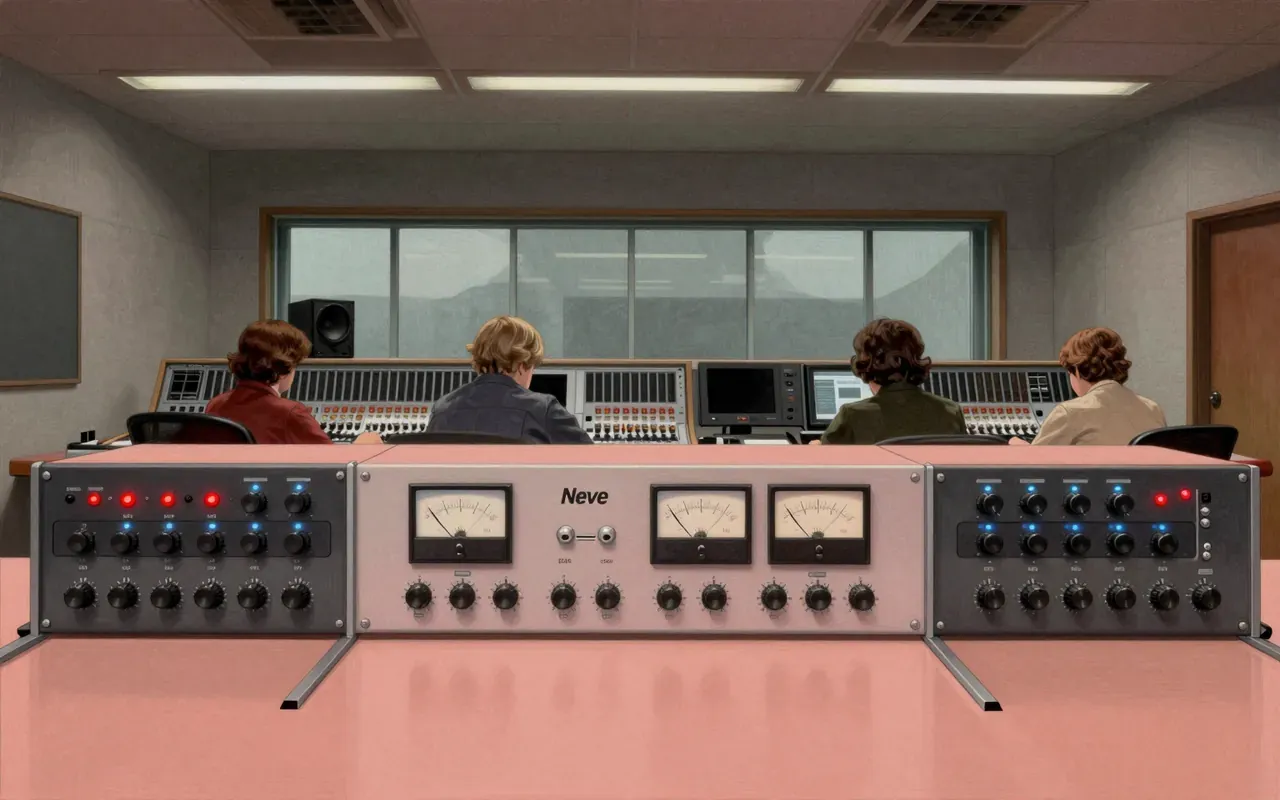
The AMS Neve 1073 DPA is a solid-state, pure class A, 2-channel preamp with DI, variable impedance, phantom power, and phase inversion — but no EQ, no insert, no flexibility beyond its fixed tonal signature. It gives you a clear, present midrange, smooth highs, and round, deep lows. It is not neutral. It is not modular. It is not subtle. It is specific.

8:46

dbx 160X

dbx

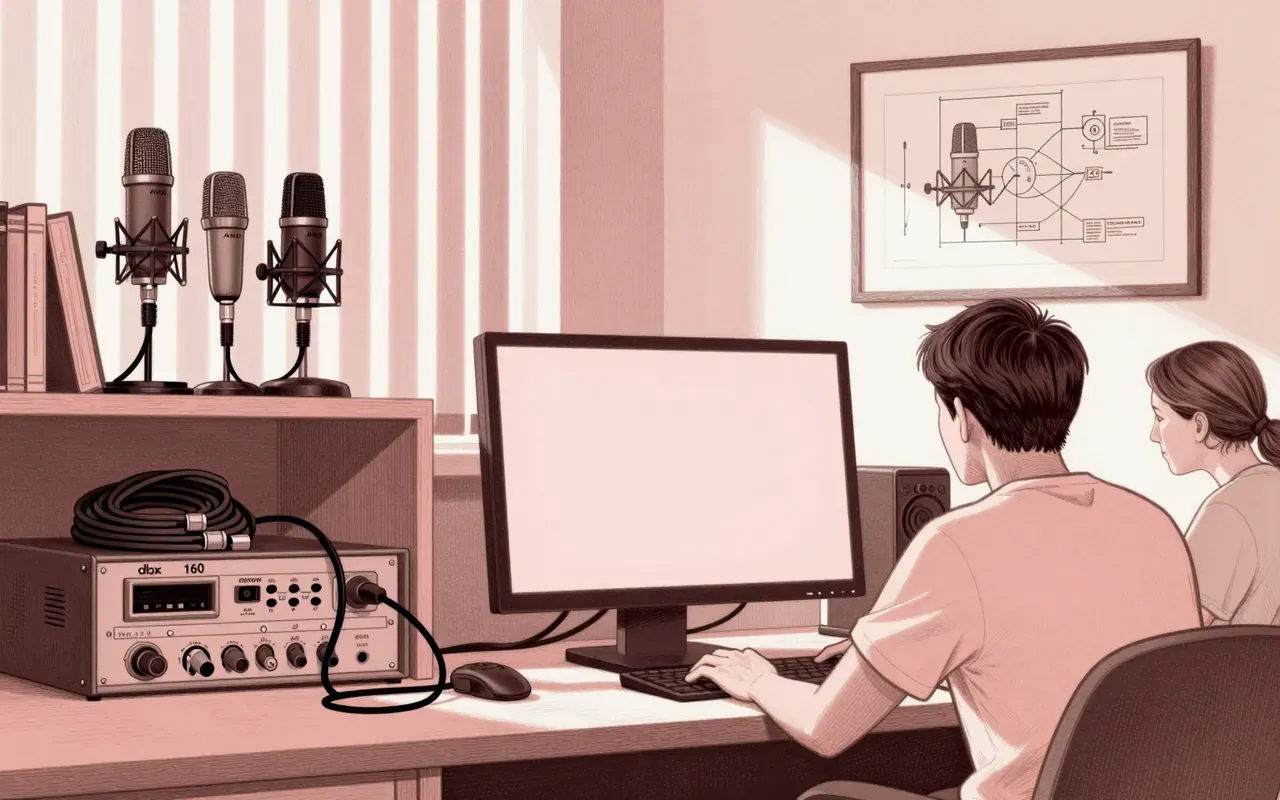
The dbx 160X is a fixed-response analog limiter/compressor built for immediacy, not nuance. It excels when slammed on snare, kick, bass, or guitar — but fails at subtlety, especially on vocals. Its simplicity is functional, not forgiving.

7:54

dbx 160XT

dbx

The dbx 160XT is a studio compressor. No technical specifications are available for it.

8:04

Aphex 204 Aural Exciter

Aphex

The Aphex 204 Aural Exciter is a two-channel hardware processor that enhances bass tone while preserving attack and avoiding speaker damage. It uses optical low-end enhancement and aural excitation to deliver creamy, fat sound with sleek tone and crystal-clear attack. Users report success in loud live contexts with drums and distorted guitars — the bass remains powerful yet clear and defined. It pulls clean, fat low-end from existing bass amplifiers and speakers, eliminating the need for bulky speaker upgrades. It does not address midrange or high-frequency detail beyond attack preservation. Bass players using standard rigs in loud live settings should use it. Studio engineers seeking surgical EQ or harmonic control should not.

9:02

API 205L

API

The API 205L is a DI unit made by API Audio. No technical specifications are available. No retailers or classified ads currently offer it. Its alternate names are '205l' and '205 l'.

7:39

API 215L

API

The API 215L is a 500-series filter module with no published technical specifications. It exists only as a hardware component for users already invested in API’s ecosystem. Its utility is narrow: it adds API’s transformer-coupled colour to filtered signals, but offers no modulation, no bypass, and no documented response curve. It is not a synthesiser filter, not a creative sound-design tool, and not usable outside a compatible rack.

7:18

Neve 2254

Neve

The Neve 2254 is an all-analog compressor/limiter from the late 1960s, revived as the 2254-R with identical circuitry and only a new casing. It delivers thick, heavy compression — especially on vocals — via straightforward controls: ratio, attack, recovery, limit level, gain makeup and mode. Its unique meter and lack of digital elements make it tactile and immediate. It offers no stereo linking, no variable knee, no recall — just weight, simplicity and a singular sonic character.

9:12

Neve 2264A

Neve

The Neve 2264A is a mono limiter/compressor module built for studio use. No technical specifications are published. It weighs 1.3 kg. Its function is defined by category, not data sheet.

9:24

TC Electronic 2290 P Dynamic Digital Delay

TC Electronic

The TC Electronic 2290 P Dynamic Digital Delay is a guitar-focused delay, echo, and phrase sampler. No technical specifications are available. Its package weight is 1.7 kg. Nothing else is verified.

8:19

MOTU 2408

MOTU

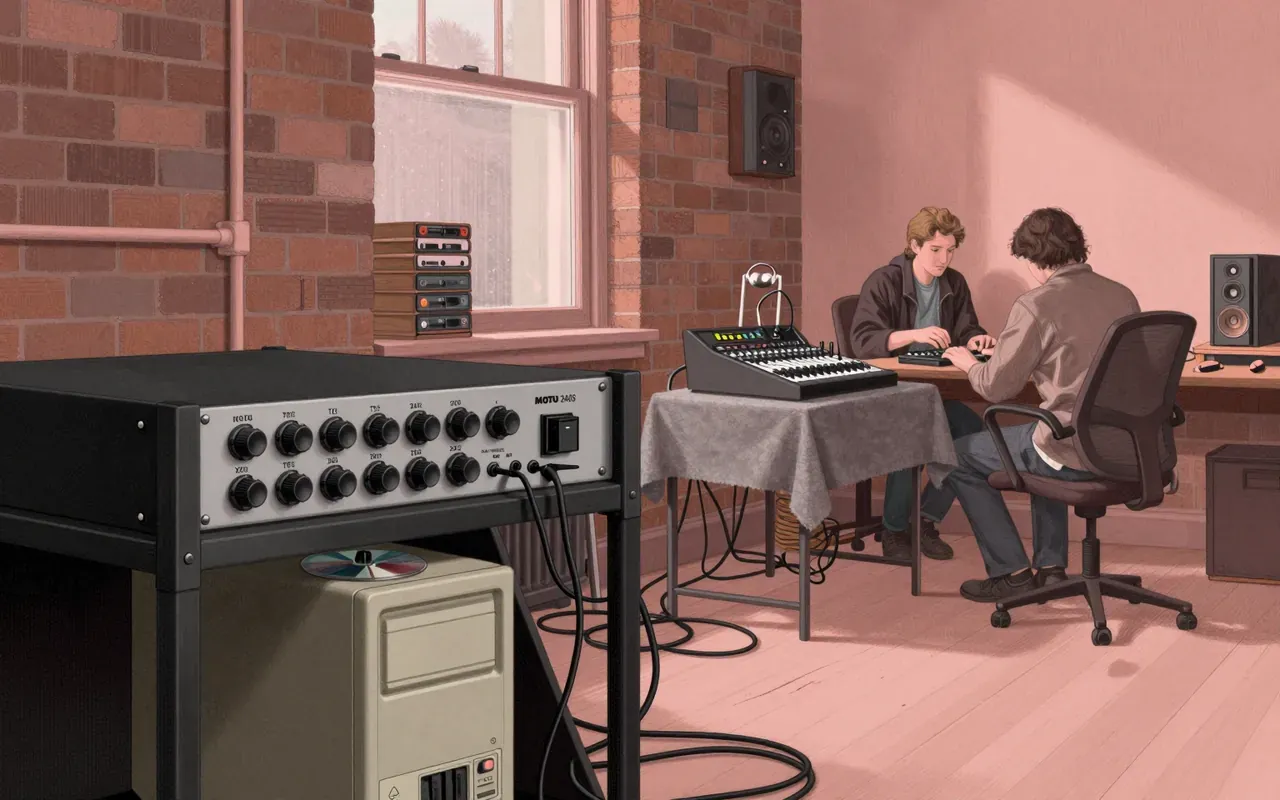
The MOTU 2408 is a discontinued PCI/ISA rack-mount soundcard built for multitrack recording and mixing in home and project studios.

8:26

Neve 31102

Neve

The Neve 31102 is a UAD-exclusive software graphic EQ. It has no published technical specifications. It offers fixed-band EQ only. It requires UAD hardware to run. It makes no claim to model any specific Neve hardware circuit.

9:12

Neve 31105

Neve

The Neve 31105 is a channel strip. No technical specifications are available. Nothing else is confirmed.

8:02

API 3124+

API

The API 3124+ is a 1U, 4-channel analog microphone preamplifier using the 2520 op-amp and classic console circuit. Each channel has gain, polarity, phantom power, 20 dB pad, mic/line selection, and a VU meter. It accepts XLR inputs at the rear and unbalanced 1/4" inputs at the front. It delivers high headroom and consistent colour across all four channels — but offers no impedance control, channel linking, or digital integration.

9:26

Neve 33115

Neve

The Neve 33115 is a compact, broadcast-optimised channel strip built in Cambridge between 1974 and 1975. It uses the same class A preamp and EQ circuitry as the 1081 but drops the fourth EQ band and simplifies the layout. Its 300/1200 Ω input switch supports ribbons. It belongs in small consoles like the Melbourne and broadcast frames like the 5315 and 5316—not in large-format studio rigs.

8:50

TEAC 3340S

TEAC

The TEAC 3340S is an analog multitrack recorder with no available technical specifications. It is identified only by category and alternate name spellings. Nothing is confirmed about its operation, sound, reliability, or creative use.

8:10

Neve 33609

Neve

The Neve 33609 is a dual-channel, all-analog studio compressor and limiter occupying two rack units. Each channel contains independent compressor and limiter sections. The compressor section provides threshold, recovery, gain, ratio, and bypass. The limiter section provides threshold, recovery, fast/slow attack, and bypass. It supports dual-mono or stereo operation with per-channel gain reduction metering.

7:42

SSL 4000 E

SSL

The SSL 4000 E is a channel strip. No technical specifications are available. Nothing else is confirmed.

7:57

SSL 4000 G

SSL

The SSL 4000 G+ is a 48-channel analog mixing console built for professional studios. Each channel has a preamp and parametric EQ. It includes built-in compressors and many other features. Its configuration is complex and demands substantial time to master. Its sound quality is judged among the best attainable — the cleanest the reviewer has ever used. Its preamps are extremely clean and full sounding. Its EQs are super clean with precise cut/boost control. It is qualified to record any and all genres of music. It is extremely famous and highly popular among professionals across popular music genres.

7:26

Rickenbacker 4005

Rickenbacker

The Rickenbacker 4005 is a 4-string bass guitar. That is all the source material confirms.

8:35

JBL 4311

JBL

The JBL 4311 is an active monitor built for accuracy, not appeal. Its adjustable treble and midrange controls let users tailor response without EQ. It delivers neutral, powerful, precise, and dynamic sound — but only when driven with sufficient gain. Its frequency curve avoids bass saturation and flattery, making it reliable for critical listening across playback systems. Users acquired it in Germany in 1979 and in studio trades by 1983. It belongs in rooms where truth matters more than comfort.

8:28

JBL 4312

JBL

The JBL 4312 is a passive three-way studio monitor built for punch, precision, and stereo imaging — not neutrality or refinement.

8:35

JBL 4350

JBL

The JBL 4350 is a passive studio monitor requiring bi-amplification, offering no passive filter adjustments, and demanding extensive room integration and speaker placement. It is physically imposing and highly detailed in sound reproduction. It is not turnkey-ready.

8:19

JBL 4430

JBL

The JBL 4430 is a 2-way active monitor built for studio monitoring. It delivers stable, wide, non-directional dispersion and excellent overall homogeneity. Its horn is more neutral than predecessors like the 4331 and L200 — eliminating long repetitive directional artifacts. It lacks the top-end finesse of the 2405 tweeter. Bi-amplification enables sonic evolution, but mechanical decoupling from the floor is mandatory. It was produced continuously for 20 years with iterative hardware updates: the 1-inch compression driver shifted from aluminum diaphragm and alnico magnets to titanium and ferrite. Each unit supports up to 80 kg.

7:50

JBL 4435

JBL

The JBL 4435 is a passive monitor built for raw output — not finesse. It trades integration for extension.

7:02

Neve 8058

Neve

The Neve 8058 is a 24-channel analog mixer with 31102 preamps (essentially 1084s), semi-parametric EQ per channel, and 16 buses. It has no automation. Its sound is full, deep and low-mid-rich — a deliberate, non-neutral colouration.

8:04

Neve 8068

Neve

The Neve 8068 is a 1970s large-format analog console with 32 fully equipped channel strips—24 on the left, 8 on the right—each featuring a mic preamp, parametric EQ in the standard Neve style, and routing options. Its sound is defined by strong low-mid response and a balance of clarity and warmth. It is exceptionally difficult for beginners but familiar to experienced Neve users.

8:45

Neve 8108

Neve

The Neve 8108 is a 32-channel analog mixing console built in 1979. It delivers warm, full preamps and top-notch parametric EQ on every channel. Its channel strips are laid out for convenient access. Its digital routing system is quirky.

9:21

MOTU 828

MOTU

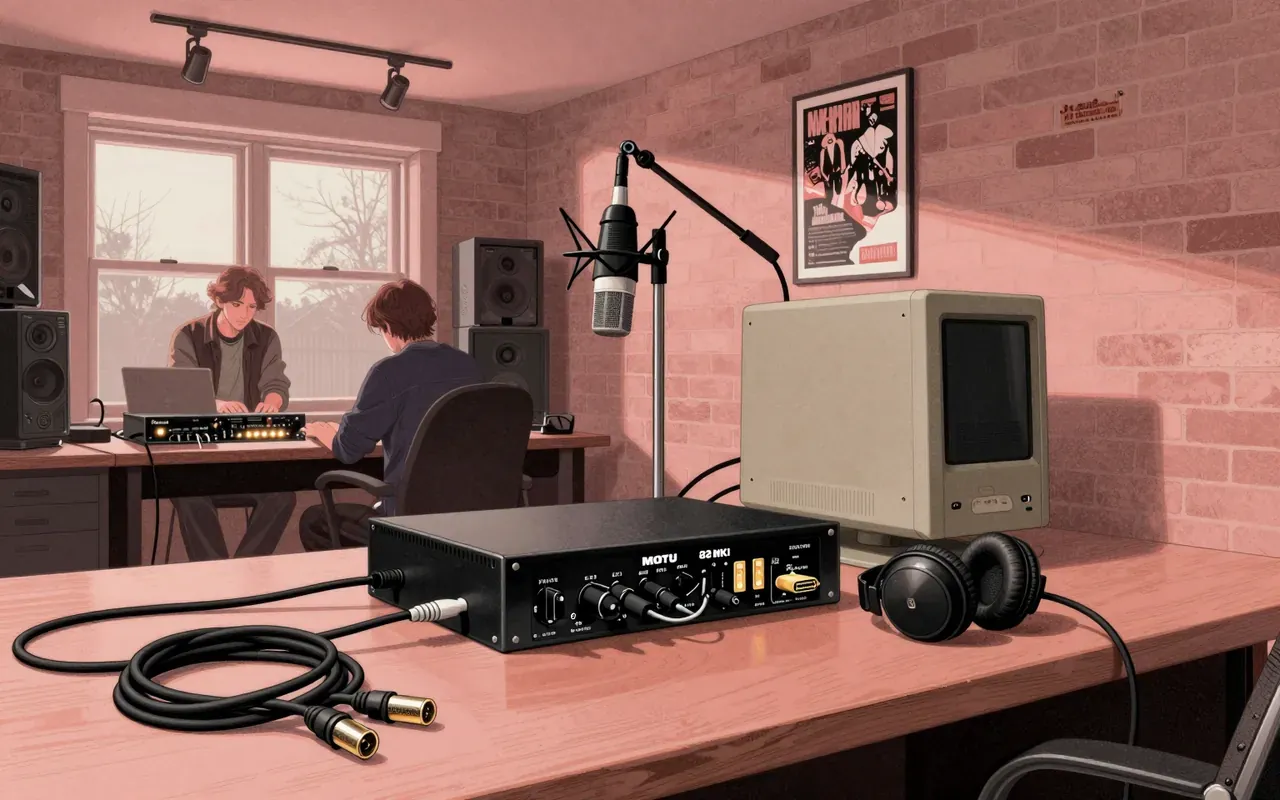
The MOTU 828 MKI is a discontinued FireWire audio interface introduced around 2001–2002. It offered two mic preamps with phantom power and XLR/1/4" inputs, six additional balanced line inputs, eight balanced outputs, ADAT and optical I/O, 24-bit 64x/128x oversampling converters, and front-panel monitoring controls. Priced at $800 at launch, it was considered expensive but highly stable and easy to install. It remains functional for years in typical home studio use but is no longer sold and has been succeeded by newer models including the 828 (2024).

7:57

Digidesign 888 I/O

Digidesign

The Digidesign 888 I/O is a 16-bit analog/digital converter with eight XLR inputs, eight XLR outputs, and digital I/O via AES/EBU and S/PDIF. It was used in home studios, often alongside the 24-bit 888/24. It offers no processing, no preamps, and no variable gain — just fixed-path conversion. Its value lies only in compatibility with legacy Pro Tools TDM systems.

10:06

SSL 9000 J

SSL

The SSL 9000 J is an analog mixer. That is all the source confirms. It belongs to the category of analog mixers. No specifications, features, or use cases beyond that are given. It is not described as rare, expensive, or influential. It is not tied to any record, person, place, or date. It is what it is: a large-format analog mixer for studio use.

9:23

SSL 9000 K

SSL

The SSL 9000 K is an analog mixer. That is all the sources confirm. It belongs to the category of analog mixers. Nothing more is verified.

9:02

dbx 902 De-Esser

dbx

The Lindell Audio 902 De-Esser is a software de-esser. It has no published technical specifications. It belongs to the software de-esser category. That is all that is known.

9:56

Revox A77

Revox

The Revox A77 is an analog multitrack tape recorder. Users deploy it to replay and digitise vintage tape — especially 1980s band mixes. It is robust and simple to operate, more so than the B77 or G36. But it trades mechanical precision and low-noise playback for that durability. It does not record multitrack. It does not edit. It plays — and keeps playing.

8:30

Studer A80

Studer

The Studer A80 is a tape recorder that shapes sound by softening transients and adding organic saturation. It works only when configured precisely: 19/38 or 38/76 cm/s, 1/2-inch tape, GP9-aligned heads. It excels in rock. It fails in dance, house and electro. It is not flexible. It is not neutral. It is a deliberate, physical constraint.

9:58

Studer A800

Studer

The Studer A800 is a UAD-2 plug-in that adds tape-style warmth and drive to digital mixes. It works best post-summing. It uses gang control for unified management. It does not simulate physical tape mechanics.

8:24

Studer A807

Studer

The Studer A807 is an analog multitrack recorder. No technical specifications exist for it. That absence defines it.

8:42

Studer A810

Studer

The Studer A810 is an analog multitrack recorder that functions reliably in steady-state operation. But it fails sharply and obscurely after power interruptions. Troubleshooting those failures is very hard. One user explicitly prefers the A807 over the A810. Nothing is stated about its format, track count, year introduced, or what recordings were made on it.

9:38

Studer A820

Studer

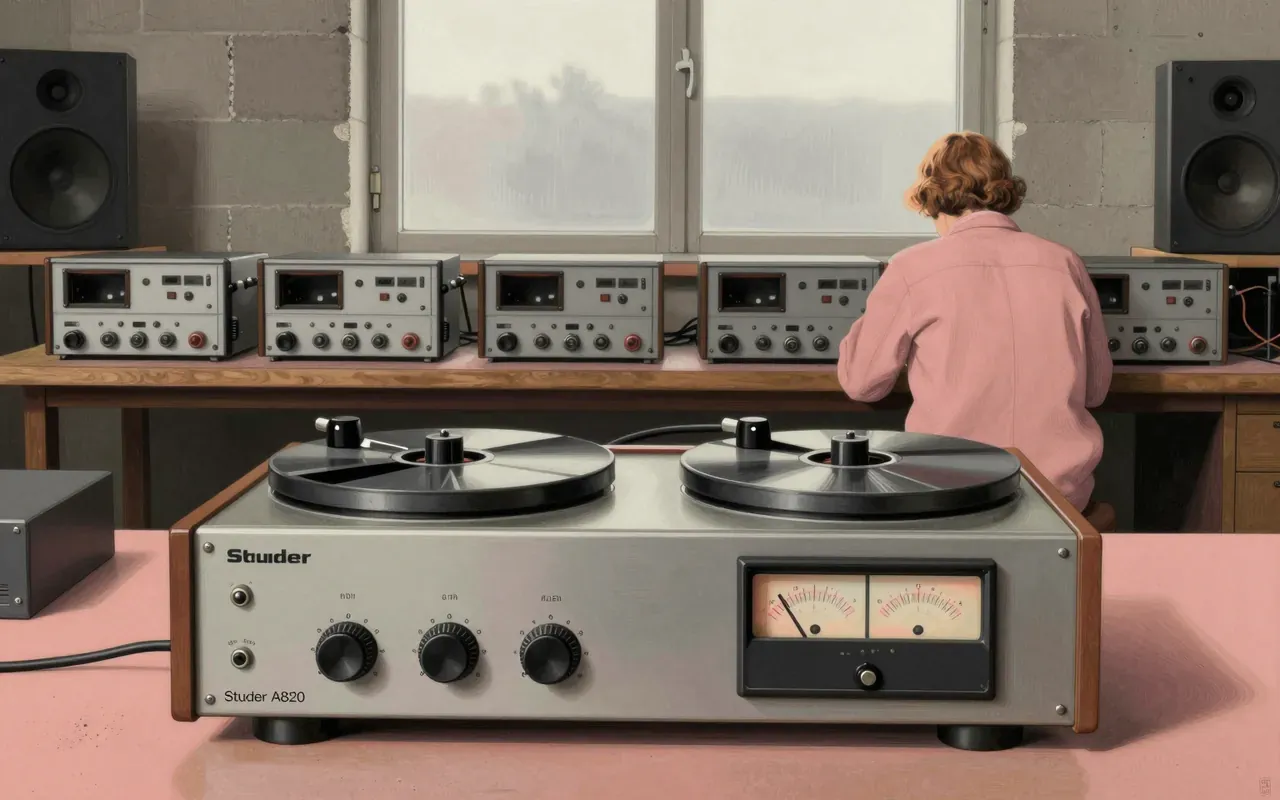
The Studer A820 is a 24-track analog multitrack tape machine with a portable controller. It excels at low-end and drum capture. It was used to record tracks later transferred to Pro Tools. It is user friendly, with familiar, easily located controls. No verified source states a weakness.

6:44

Studer A827

Studer

The Studer A827 is an analog multitrack-studio. No technical specifications are provided. Its function, design, and use remain undocumented in the source.

8:47

Vox AC100

Vox

The Cort AC100 is a nylon string guitar. No technical specifications are provided.

8:57

Vox AC4

Vox

The Vox AC4HWR1 AC4 Hand-Wired is a tube combo guitar amp in Vox’s AC Hand-Wired series. Its full model name includes ‘HWR1’, indicating hand-wired construction. No technical specifications are provided — power, speaker size, valve type, or circuit details are absent from the source material. It offers no documented sonic or functional distinction beyond its build method. It is not verifiable as an upgrade, alternative, or variant — only as a named model in a series.

9:18

Apogee AD-8000

Apogee

The Apogee AD-8000 is an eight-channel analog-to-digital converter built for recording studios. It was introduced circa 1996. It supports 24-bit resolution at up to 48 kHz. It has eight XLR analog inputs and AES/EBU and S/PDIF digital connections. Front-panel level meters and controls let you monitor and adjust all eight channels. It includes a 1/4-inch headphone jack for direct monitoring. Optional cards enable ADAT, TDIF and Pro Tools connectivity.

9:21

Prism Sound ADA-8

Prism Sound

The Prism Sound Dream ADA-8 is a dual-path AD/DA converter built for clean, separated signal routing at up to 96 kHz. It delivers stable internal clocking and user-friendly displays, but lacks built-in sample rate conversion and fails under external sync with Pro Tools HD interfaces. It belongs in studios where path independence matters more than interoperability.

7:34

Ampex AG-440

Ampex

The Ampex AG-440 is an analog multitrack recorder. No technical specifications are available. Its alternate names include ag440, a 440, and a440. Nothing else is verifiable.

8:43

Roland Alpha Juno-1

Roland

The Roland Alpha Juno-1 is a 1986 6-voice analog synth built for techno and rave. It delivers sharp bass and noise, improved MIDI, and chord memory — but sacrifices warmth and hands-on editability.

8:33

Roland Alpha Juno-2

Roland

The Roland Alpha Juno-2 is a 1986 6-voice subtractive synth with velocity and aftertouch, 64 presets, 64 user patches, chord memory, portamento, transpose, and a 24dB analog low-pass filter. It uses membrane buttons and the Alpha Dial for editing. It was built for stage and studio bass and rhythmic work — not for deep, fast sound design.

8:52

AMS AMS RMX16

AMS

The AMS RMX16 is a UAD-only reverb plug-in. It requires UA hardware. It costs $349. It arrived in UA Software 1.7. It gives one sound — nothing more.

9:04

Yamaha AN200

Yamaha

The Yamaha AN200 is a 2001 compact table-top physical modelling analog synthesizer and sequencer built for live pattern-based dance production and quick sound sketching.

8:56

Elektron Analog Four

Elektron

The Elektron Analog Four is a tabletop groove machine with four mono analog synth voices, each with two analog oscillators, a 1-pole analog lowpass ladder filter, and a 2-pole analog multi-mode filter. It includes a 6-track MIDI sequencer and two audio inputs and outputs—but no digital connections.

9:17

Elektron Analog Rytm

Elektron

The Analog Rytm is a true analog drum synth. It gives each voice its own engine, up to six oscillators, and a 16-step sequencer. Its pads are velocity-sensitive but small. It enables radical timbral shifts across voices with minimal changes. It falls short on pad ergonomics, stereo per voice, and external audio input. It belongs in the studio of a sound designer—not a live beatmaker.

9:27

API 2500

API

The API 2500 Bus Compressor is a UAD Plug-In. That is all the sources confirm. No function, no sound, no interface, no history, no use case is stated. It exists only as a named item in a software category.

9:51

API API Vision

API

The API Vision Console Emulation Bundle is a UAD plug-in channel strip made by Universal Audio. It requires UAD hardware to run. It offers no standalone operation, no technical specs in the source material, and no evidence of real-world usage examples. Its value is strictly conditional on existing UAD ownership and desire for API’s sonic signature in digital form.

8:31

Akai ASQ-10

Akai

The ASQ-10 is a sequencer-only instrument. It has no sound generation. It does not sample. It exists solely to trigger, time, and lock external gear. Its design enables rhythmic complexity unplayable by hand — then corrects timing drift across the chain. It is the first MPC-shaped workflow, before the MPC existed.

9:04

Echo AudioFire 12

Echo

The Echo Audiofire 12 is a FireWire audio interface in the Audiofire series. It has 12 line inputs and 12 outputs. It has no mic preamps. It has no headphone output. It supports daisy-chaining up to three units for 36 I/O. It achieves 2.9 ms round-trip latency at 24-bit/96 kHz. Its line inputs are transparent and electrically isolated. Users record 12 tracks simultaneously at up to 192 kHz, firmware permitting.