audiobriefs
Oldest

All briefs

747 briefs · 6840 min · 385–480 on page 5 of 8
8:01

M-Audio Audiophile 2496

M-Audio

The M-Audio Delta Audiophile 24/96 is a PCI/ISA sound card for Windows-based music production and amateur vocal recording. It connects MIDI controllers and turntables. It supports 24-bit/96 kHz audio when host software allows. Latency drops to 4ms with buffer reductions. It runs silently in Cubase VST, Pro Tools, Fruity Loops, and six other DAWs. Recordings are clean. Softsynths sound great. Wave Table Synthesis is absent — but users found it unnecessary. I/O is limited. Modern OS support is not provided.
7:12

Lynx Aurora 16

Lynx

The Lynx Aurora 16 is an Analog/Digital Converter. No technical specifications are available for it. It belongs to the category of Analog/Digital Converters.

8:33

Avalon Design Avalon VT-747sp

Avalon Design

The Kazrog Avalon VT-747SP is a software plugin classified as an 'Other effects bundle or multi-effect'. No technical specifications are available. Its model name references the Avalon VT-747SP hardware unit. Nothing is stated about its sound, controls, workflow, or real-world use.

9:06

Studer B67

Studer

The Studer B67 is an analog multitrack recorder. No technical specifications are available for it.

9:45

Revox B77

Revox

The Revox B77 is an analog multitrack tape recorder built for studio and project recording. It supports 3 3/4, 7 1/2, and 15 ips tape speeds—but the 15 ips setting is obsolete for digital use. Units from 1980 remain fully functional. It is mechanically robust and quieter than UHER models. Its meter is breakable and irreplaceable. It offers no digital functionality. It is worth your time only if you need durable, low-noise analog multitrack operation—and can maintain it yourself.

9:12

RCA BA-6A

RCA

The BA-6A is a software compressor by Antelope Audio. No technical specifications are available. Its controls, behaviour, and sonic role are undocumented. It exists only as a named category and a set of alternate spellings.

8:00

Yamaha BB1200

Yamaha

The Maton BB1200 is a discontinued hollow or semi-hollow electric guitar. No technical specifications are provided. It is not currently available for purchase. Nothing else is confirmed.

8:05

Neve BCM10

Neve

The Neve BCM10/2 Mk2 is an analog mixer made by AMS-Neve. No technical specifications are available. Nothing else is verified.

8:46

Shure Beta 52

Shure

The Shure Beta 52 is a dynamic microphone built for kick drum and bass. It has a supercardioid pattern, 20Hz–10kHz response with 4kHz presence boost, strong proximity effect, and handles 174dB SPL. It was replaced by the Beta 52A.

8:47

Lovetone Big Cheese

Lovetone

The Lovetone Big Cheese is a UK-made, all-analog fuzz pedal for electric guitar. It has four controls: 'Curds' (gain), 'Whey' (volume), a traditional tone knob, and a stepped tone switch with four positions including bypass. It uses 1/4" input/output jacks and a 1/8" 9V power jack. It is not rack-mountable. It produces high-gain, noisy, aggressive fuzz — but can also deliver subtle overdrive. It is expensive and regarded as top-notch.

7:55

Strymon BigSky

Strymon

The Strymon BigSky is a guitar reverb pedal released in 2013. It offers full parameter editing, stores up to 300 presets, and ships with high-quality factory presets. It delivers exceptionally high-quality, easily customisable reverb using both traditional and specific controls. It is regarded as the most complete reverb pedal on the market.

8:09

Dynaudio Acoustics BM15A

Dynaudio Acoustics

The Dynaudio Acoustics BM15A is an active studio monitor designed for nearfield monitoring. It integrates amplification, reproduces down to 45 Hz at 0 dB, and complies with EU and FCC electromagnetic shielding standards. One unit exhibited unintended FM radio reception at 104.1 MHz — isolated to the right channel. Users report no distortion or hum, even at maximum volume. No information is given about music, artists, or recordings made with it.

7:56

SSL Bus Compressor

SSL

The Bus Compressor is a software-only bus compression plugin made by IK Multimedia for the T-Racks series. It is categorised as a software compressor. No technical details, sonic traits, release date, or usage examples appear in the sources. It is not an SSL emulation. It is defined solely by its name, manufacturer, and category.

8:17

AKG C12

AKG

The AKG C12 is a large diaphragm condenser tube microphone designed for studio recording. It requires a dedicated power supply. It captures a wide frequency range. It is exceptionally high-performing but delicate and unsuitable for live use.

10:26

AKG C24

AKG

The AKG C24 is a Pro Tools-specific motorized control surface with 24 bankable channel strips, touch-sensitive motorized faders, 16 mic/line/DI preamps, an 8x2 stereo line submixer, a 5.1 analog monitor section, talkback mic inputs, and illuminated dedicated switches for mute, solo, record, select, EQ, dynamics, sends, and inserts.

7:32

Sony C37A

Sony

The Sony C37A is a large diaphragm condenser tube microphone. It belongs to a narrow class of studio mics defined by harmonic colour rather than flexibility. It has no documented switches, filters or pads. Its alternate names — 'c 37a' and 'c37 a' — appear in official listings but indicate no functional variation.

8:54

AKG C414

AKG

The AKG C414 is a series of large diaphragm condenser microphones. Thirteen variants exist. Two are matched pairs: the XLII and the XLS. All share the same functional category. None are described by frequency response, noise floor, or circuit details in the source.

9:24

AKG C451

AKG

The AKG C451 B is a fixed-cardioid small-diaphragm condenser with -10 dB/-20 dB pads and 75 Hz/150 Hz high-pass filters. Its CK1 capsule cannot be swapped. It delivers precision on acoustic sources but fails under high SPLs due to capsule fragility.

8:41

AKG C452

AKG

The AKG C452 C is a small diaphragm condenser microphone. It has no stated controls, no pattern options, no filters, no pad. Its function is narrow and fixed. Its value lies in consistency, not versatility.

8:44

AKG C460

AKG

The AKG C460B + CK63ULS is a small diaphragm condenser microphone. It delivers accuracy, not attitude. It has no switches, no colour, no compromise — just a fixed cardioid pattern, fixed frequency response, and fixed reliance on external preamp and placement. It excels where definition matters most. It fails where character is required.

8:04

Neve Capricorn

Neve

The AMS-Neve Capricorn is a digital mixer. That is all the source confirms. No specifications. No year. No sound. No interface description. No user reports. No cultural footprint. It exists only as a category entry.

9:23

Pioneer CDJ-1000

Pioneer

The Pioneer CDJ-1000 is a tabletop DJ player. It plays CDs. It does not read MP3 files. It is no longer sold. It was replaced by the CDJ-2000 Nexus.

8:36

Pioneer CDJ-1000MK2

Pioneer

The Pioneer CDJ-1000 MK2 is a discontinued tabletop DJ player built to play CDs with exacting mechanical and operational control. It sets the reference for precision, robustness, and reliability among CD-based DJ players of its era. Loops fire instantly. Hot Cues never lag—even while seeking. Reverse isn’t just functional—it’s musical. It’s a discontinued CD-only player, replaced by the CDJ-2000 Nexus.

9:40

Pioneer CDJ-100S

Pioneer

The Pioneer CDJ-100S is a discontinued tabletop DJ player. It loads CDs reliably. It has pitch control and effects users praise. Its cue point system is obsolete. It is outperformed by the CDJ200, CDJ800, and DNS1000. Users deployed it in live events but declined to repurchase it due to age. Its build quality remains high — but that does not compensate for functional limitations.

9:12

Pioneer CDJ-2000

Pioneer

The Pioneer CDJ-2000 is a discontinued tabletop DJ player. It supports playback from CDs, DVDs, SD cards, USB devices, and wirelessly via WiFi from computers and phones. It has a ~6-inch colour LCD display. Its loop quantisation is automatic and highly accurate. User preferences are saved across power cycles. It was replaced by the CDJ-2000 Nexus.

7:55

Pioneer CDJ-500

Pioneer

The Pioneer CDJ-500 is a tabletop DJ player built to play CDs in live and private DJ sets.

8:09

Fender Champ 5F1

Fender

The Fender Champ 5F1 is a tube combo guitar amplifier made from 1958 to 1964. It has volume and tone controls only. It uses a single 6V6 power tube driving an 8-inch speaker. It breaks up early and stays simple. It does not offer clean headroom, effects, or expandability.

8:24

Sequentix Cirklon

Sequentix

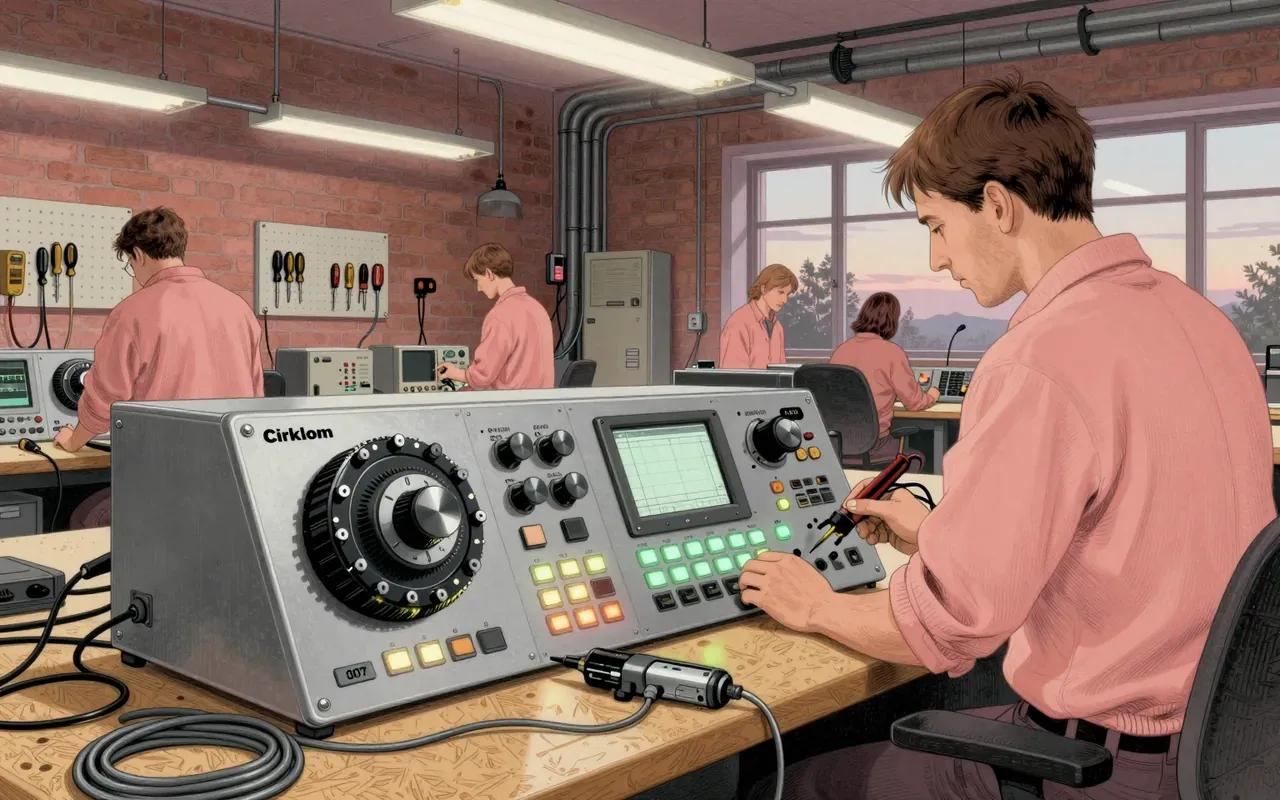
The Cirklon is a hardware sequencer. It outputs MIDI, audio (HP), and optionally CV/Gate. It produces no sound. Its clock accuracy and track synchronisation are exceptional. All data saves to flash memory and survives power failure. It operates in step and real-time modes, organising music into SONGs and SCENES.

8:12

Tube-Tech CL 1B

Tube-Tech

The Tube-Tech CL 1B MKII is a Universal Audio software compressor plugin. Nothing more is verified.

9:18

Farfisa Compact

Farfisa

The JB Systems Compact is a no-nonsense 3-channel DJ mixer from 2008. It delivers reliable talk-over, basic EQ, and straightforward monitoring — all at entry-level cost and fidelity. It does not pretend to be more.

7:56

Farfisa Compact Duo

Farfisa

The Farfisa Compact Duo MK1 is a portable electronic organ with drawbars and vibrato. It delivers a distinctive, aggressive organ tone. No technical specifications are available. Its design prioritises immediacy over documentation or expandability.

10:55

Boss CS-2 Compression Sustainer

Boss

The Boss CS-2 Compression Sustainer is a guitar compressor/sustainer. This unit is a modified version branded 'Fat Old Comp' by MSM Workshop. No technical specifications are provided.
8:32

Yamaha CS-30

Yamaha

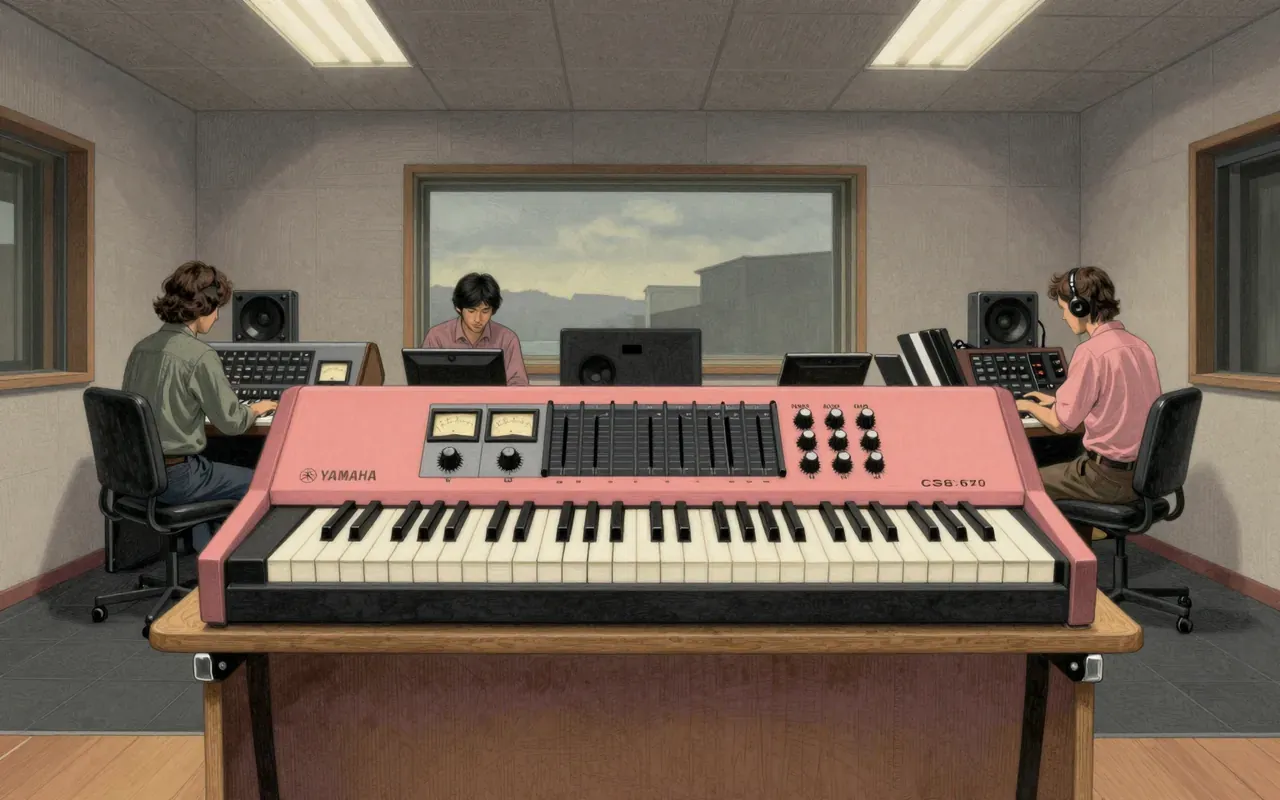
The Yamaha CS-30 is a monophonic analog subtractive synthesizer introduced in 1977. It has two VCOs, two resonant VCFs, two VCAs, three envelopes, a ring modulator, external audio triggering and an 8-step sequencer. It has a 44-key keyboard. It lacks onboard effects, memory and MIDI. It is used by 808 State.

9:01

Yamaha CS-5

Yamaha

The Yamaha CS-5 is a 1978 monophonic analog synth with one oscillator, a multi-mode 12 dB/Oct filter, and an LFO with sample-and-hold. It has no patch storage, no MIDI, no velocity sensitivity. It is built for immediacy — not recall.

8:33

Yamaha CS-50

Yamaha

The Yamaha CS-50 is a 4-voice, 49-key, pressure-sensitive synthesizer released in 1977. It visually resembles a scaled-down CS-80, weighs about 100 pounds, and shares the CS-series sound — but with thin chords (one oscillator per voice, 12 dB/oct filters), no user memory, and unstable tuning.

9:26

Yamaha CS-60

Yamaha

The Yamaha CS-60 is a polyphonic analog synthesizer released in 1977. It is smaller and cheaper than the CS-80. It lacks polyphonic aftertouch.

8:40

Ibanez CS9 Stereo Chorus

Ibanez

The Ibanez CS9 Stereo Chorus is an early-1980s analog chorus pedal using Bucket Brigade Delay chips. It has two knobs (speed and width), one switch, one analog input, and two outputs (L(mono) and R stereo). It operates on 9V battery or AC/DC adapter. Its metal case ensures durability and repairability. The effect is subtle: cranking both knobs yields only gentle thickening—not pronounced modulation. It warms the clean tone rather than applying overt chorus. It does not deliver strong, fast, or wide modulation. It belongs in the rig of players who prioritise warmth, stereo spread, and reliability over dramatic movement.

10:32

Roland Cube 60

Roland

The Roland Cube-60 is a 60-watt solid-state modelling combo guitar amplifier introduced in 2004. It uses COSM processing to deliver eight amp models on the drive channel. It has two channels — clean and drive — each with independent gain and volume, sharing a four-band EQ. Built-in effects and a combined headphone/line-out jack support private practice and simple recording. It offers no footswitching, no per-model EQ recall, and no pre-model effects routing.

8:11

Chandler Limited Curve Bender

Chandler Limited

The Curve Bender is a software parametric EQ made by Softube. It costs $299 including VAT. It does not claim to be hardware. It does not add dynamics, M/S, or analysis. It does one thing: shape tone with four bands, modelled on Chandler’s approach.

8:48

Roland D-10

Roland

The Roland D-10 is a 1988 digital synthesizer using LA Synthesis. It has 61 keys and 32-voice polyphony. It is available as both a keyboard and a rack module. Factory sounds are basic and dated. Editing is required to achieve usable tones. It includes built-in sequencing and nine-part multitimbrality. Onboard effects are limited.
9:20

Roland D-110

Roland

The Roland D-110 is a 1988 rackmount sound module — the upgraded rack version of the D-10 and rack counterpart to the D-20. It delivers Linear Arithmetic synthesis, second-generation D-50 style, using tones, partials, and timbres. It has 32-voice polyphony, on-board drum sounds, reverb, internal/external memory, and six individual outputs. It requires external MIDI control. Programming is tricky but yields characteristic LA textures. Its filter resonates but does not self-oscillate. It is a cheaper alternative to the D-50, offering decent acoustic and synthetic sounds — but no keyboard, no sequencer, and no intuitive interface.
9:56

Roland D-20

Roland

The Roland D-20 is a 1988 digital synthesizer using Linear Arithmetic synthesis. It offers 32-voice polyphony, 8-part multitimbrality, a 61-key velocity-sensitive keyboard, an 8-voice sequencer with rhythm track, a built-in arpeggiator, reverb effects, and internal/external memory storage. LAS programming revolves around tones, partials, and timbres—a method that is difficult to learn but capable of unique results when mastered. It was produced from 1988 to 1992.

9:20

Fostex D-80

Fostex

The Fostex D-80 is a dynamic, cardioid microphone built for singing and trumpet. It handles high sound pressure like an SM58 — but delivers a 'crunchy', 1980s-evoking sound the user found in an attic. It offers no features beyond its fixed polar pattern and raw output. It belongs only where that specific texture is the goal.

8:44

AKG D112

AKG

The AKG D112 MkII is a dynamic microphone built for one purpose: capturing kick drum impact. It is heavier than many mics (778 g), requires no power, and belongs to the same lineage as the original D112 — updated, not reinvented. It excels where low-end punch and SPL tolerance matter most. It fails where clarity, air, or transient fidelity are required. It is not a vocal mic. Not a room mic. Not a hi-hat mic. It is a kick drum mic — and nothing more.

7:30

AKG D19

AKG

The AKG D19 B200 is a dynamic microphone. No technical specifications are available. It cannot be evaluated against alternatives. It offers no documented advantage. It provides no actionable information to a user.

7:07

AKG D202

AKG

The AKG d202 is a dynamic microphone. That is all the material confirms. No specs. No year. No use cases. Just its category and its $299 price.

7:57

Doepfer Dark Time

Doepfer

The Doepfer Dark Time is an analogue sequencer released in 2010. It has no sound module. It controls external gear via CV/Gate, MIDI, and USB. It sequences either 16 steps on one channel or 8 steps across two channels. Real-time knob control covers transposition, note skipping, and playback alternation. Firmware 1.10 resolves bugs present in earlier versions.

9:15

dbx 160

dbx

The Waves dbx 160 is a software compressor plug-in released in 2015. It delivers fast, aggressive compression with minimal setup. It lacks flexibility and colour but excels at tightening drums and bass. It costs $49 on sale. It belongs in the mix bus, not the mastering chain.

9:25

Korg Delta

Korg

The Korg Delta is a 1979 analog semi-polyphonic string machine and synthesizer. It was built as a slimmed-down, budget alternative to the Korg Trident. It splits into two independent sections—Strings and Synth—with dedicated outputs. The String section uses two pitch sliders and tone/ADSR controls. The Synth section uses four pitch sliders, white noise, a multimode 24dB/oct filter, and full ADSR. A joystick provides pitch bend and modulation. It has CV/gate connectivity but no memory, no MIDI, and no presets. Its 'unlimited polyphony' is inaccurate: pressing multiple keys does not apply independent envelopes to each note. It delivers high-quality layered string-and-synth sounds despite limited range. Its build is robust, but its keyboard is fragile and its filter is bland.

8:31

M-Audio Delta 1010

M-Audio

The M-Audio Delta 1010 is a discontinued PCI/ISA + rack-mount soundcard. It delivers 8 analogue I/Os plus SPDIF. It achieves 5ms latency. It runs stably with Cubase and Sonar on legacy desktops. It crashes beyond 24 tracks — due to host computer limits, not the card. It inserts real-time effects during mixdown without issue. It requires a Pentium 4–era PC with a free PCI slot. It has no USB or FireWire support. It is no longer manufactured.

10:25

Electro-Harmonix Deluxe Electric Mistress

Electro-Harmonix

An analog stereo flanger and filter matrix stomp box for electric guitar. It runs on a dedicated 24 V power supply. It has input, effect out, and clean output jacks. It uses three knobs — color, range, and rate — plus a switch for the filter matrix function. It is not rack-mountable.

8:51

Electro-Harmonix Deluxe Memory Man

Electro-Harmonix

The Electro-Harmonix Deluxe Memory Man Mk4 is an all-analog stomp-box delay/echo pedal with built-in chorus and vibrato. It has no MIDI, no computer editing, no rack-mount capability, and requires a 24-volt power supply. It features a 1/4-inch input, a dry output, and a dedicated echo output for routing to a separate amplifier.

7:49

Roland DEP-5

Roland

The Roland DEP-5 is a mid-1980s multi-effects processor. It gives you reverb, delay, chorus, flanger, double, and a three-band parametric EQ. Its interface is direct — one button, one function — but some parameters demand layered adjustment. Program 5 delivers a long, arching reverb. Its midrange tone is distinctive and hard to replicate. It does not do clean, neutral processing. It does not offer recallable presets. It does not suit users who need precision over character.

6:20

Publison DHM 89 B2

Publison

The Publison DHM 89 B2 is an Other Studio Effect made by Publison. No technical specifications exist for it. Nothing else is confirmed.

10:22

Digidesign Digi 001

Digidesign

The Digidesign Digi 001 is the original Pro Tools audio interface. It is a rack-mountable PCI/ISA soundcard with two mic preamps, phantom power, gain knobs, -25 dB pads, front headphone output, MIDI, eight outputs (including monitor outs), and six line inputs. It connects via D-Sub and serial port — not FireWire or USB — so it is incompatible with laptops and newer computers. It is obsolete outside legacy systems.

10:50

Digidesign Digi 002

Digidesign

The Digidesign Digi 002 is a FireWire audio interface built exclusively for Pro Tools LE. It delivers four mic preamps, S/PDIF and MIDI, and autonomous digital mixing — but only within that narrow software ecosystem. It is desktop-formatted and non-rack-mountable. Its limits are defined by Pro Tools LE’s track count and host compatibility. It belongs in a period-correct studio, not a modern one.

9:17

Pioneer DJM-1000

Pioneer

The Pioneer DJM-1000 is a rack-mountable 4+ channel DJ mixer with two master outputs and one booth output sharing a single volume control. It has no built-in effects. Its equalizer is low quality and offers parametric control only on mic channels. Its preamps and potentiometers are poor. Its output level of 2V + 6dB causes distortion across frequency ranges.

7:52

Pioneer DJM-500

Pioneer

The Pioneer DJM-500 is a 4-channel DJ mixer with RCA, 1/4" jack and XLR connectors. Its EQ is adequate. Its effects section is limited but sufficient. It can be rack-mounted—with a modification. Some users doubt its rack-mountability. Its signal path is transparent. Its build invites daily use—but demands maintenance as it ages.

7:20

Pioneer DJM-600

Pioneer

The Pioneer DJM-600 is a 4-channel analog DJ mixer with RCA and XLR I/O, non-parametric EQ, integrated non-automatable effects, no sync capability, and clean, distortion-free sound — though perceived as dated by 2010. It is widely used in clubs and praised for reliability, intuitive layout, and ease of installation.

9:35

Pioneer DJM-800

Pioneer

The Pioneer DJM-800 is a 4-channel, 96 kHz / 24-bit digital mixer designed for live DJ performance. It delivers tight, immediate control over EQ, beat effects (Roll, Reverse Delay, Filter), and harmonic effects (Sweep, Crush). Its 61 assignable MIDI/HID controls integrate hardware and software without abstraction. But it offers no resonance adjustment on its filter effect, and headphone monitoring routing is rigid.

8:21

Pioneer DJM-909

Pioneer

The Pioneer DJM-909 is a 2-channel DJ mixer built for live blending, EQ, and effects. It has no published technical specifications. Pioneer manufactured it. User reviews highlight transparency and effective equalization—but give no data on filter slope, latency, or headroom. It does not integrate with software or offer recallable settings. It belongs in a booth, not a studio rack.

8:44

Ensoniq DP/4

Ensoniq

The Ensoniq DP/4 is a rack-mounted digital multi-effects processor. It uses four 24-bit DSPs to process four signals in parallel. Input gain is adjustable for saturation. Effects are intentionally non-realistic. Transformer noise occurs when idle. Front-panel editing is cumbersome. MIDI control via MIDIQuest is unreliable. The manual is unusable. An internal battery is user-replaceable.

9:22

Make Noise DPO

Make Noise

The Make Noise DPO is a dual-oscillator Eurorack VCO built for FM synthesis and wavefolding. It produces deep, rich FM-type sounds using its dedicated wavefolder section. Its output is clean and cold—not Moog-style warm. It has no built-in LFO, envelope, or quantizer. It is not a full voice module. It is a precision tool for FM texture generation.

8:37

BSS DPR-402

BSS

The Waves BSS DPR-402 is a plugin rendition of a hardware dynamics processor. It is categorised as an 'other effects bundle or multi-effect'. No technical details are given. No usage examples are cited. It exists as software, not circuitry.

9:12

Prism Sound Dream ADA-8XR

Prism Sound

The Prism Sound Dream ADA-8XR is an eight-channel analog/digital converter built for fixed-install mastering and DAW integration. It provides eight balanced XLR I/O at +4 dBu, two RCA monitoring outputs, DB-25 AES I/O, and dual BNC Word-Clock. Its build quality is impeccable—but it runs hot, demanding 1U of rack clearance. It does not offer USB, optical, headphone output, or variable monitor level control.

8:16

E-mu Systems Drumulator

E-mu Systems

The Drumulator is a fixed-sample, floppy-driven drum machine built to undercut the Linn LM-1 — not match it. It gives you eight gritty 12-bit hits, real-time or step sequencing, and Apple II editing. It withholds sound editing, velocity, swing, and any expansion beyond its ROM.

10:18

Eventide DSP4000

Eventide

The Eventide DSP4000 is a discontinued multi-effects processor. It converts at 18 bits. It includes pitch shifting, reverb, and compression. Its effects span from subtle to cataclysmic. Learning it requires time and the manual.

7:20

Beyerdynamic DT 48

Beyerdynamic

The Beyerdynamic DT 48 is the world’s first dynamic headphone, launched in 1939. Its closed, tight-fitting design isolates sound but causes fatigue. Its midrange is superb and revealing—built to monitor voice, sound objects, and mood in reporting, radio, film, and medical audiometry. It is not intended for mastering.

10:06

Fender Dual Showman

Fender

The Fender Dual Showman Reverb is a 100-watt all-tube head built for volume, clarity, and built-in modulation. Two channels—clean and reverb/vibrato—each have full EQ and a Bright switch. No master volume. No channel switching on the fly. Heavy. Loud. Uncompromising.

10:51

Yamaha DX200

Yamaha

The Yamaha DX200 is a 2001 desktop sequencer built for DJs and musicians who need FM synthesis and sample playback in one tight hardware unit. It runs a simplified 6-operator FM engine compatible with DX7 patches. It adds a real-time 16-step sequencer with four tracks, a resonant multi-mode filter — absent in all classic DX synths — and bundled software editing tools. It does not offer deep FM programming, internal effects, or flexible voice sharing between FM and AWM2 engines.

9:14

Yamaha DX7II

Yamaha

The Yamaha DX7 II FD Centennial is a 76-key, fully-weighted FM synthesizer released in 1987. It delivers 16-voice polyphony, a built-in sequencer and arpeggiator, and 64 user presets. Its interface is menu-driven and lacks real-time controls. It serves players who prioritise weighted-action playability and integrated sequencing over flexible sound design.

8:18

Fostex E16

Fostex

The Fostex E-16 is an analog multitrack recorder. No technical specifications are available for it.

9:38

E-mu Systems E4XT Ultra

E-mu Systems

The E-MU E4XT Ultra is a 1999 hardware sampler. It delivers verbatim audio playback, 128-voice polyphony, and studio-grade reliability. It has no onboard effects, shallow editing, and fixed storage. It belongs in a rack—not a laptop bag.

8:40

E-mu Systems E6400

E-mu Systems

The E-mu Systems E6400 is a hardware sampler built for radical sample transformation — not faithful reproduction. Its strength is in routing: the modulation matrix and modular-style processing blocks (quantize, flipflop, diode, lag) let users rewire signal flow in ways few samplers allowed. Its SCSI support exceeds its 9GB spec — users ran 18GB drives. Its DACs are transparent; its ADCs are not. It includes Z-plane, formant, phaser, flanger, Doppler, bitreducer and Convolver tools — and its reverb uses impulse response sampling. It ships with EOS 3.00b and 1MB CPU RAM. It is for sound designers who treat samples as raw material to be corrupted, rerouted and convolved — not archived.

8:11

Audio Electronics EchoCzar

Audio Electronics

The Audio Electronics EchoCzar does not exist in the provided material. The instrument named is the Toneczar Echoczar. Audio Electronics is not mentioned anywhere in the sources.

7:37

Oberheim/Gibson Echoplex Digital Pro

Oberheim/Gibson

The Oberheim/Gibson Echoplex Digital Pro is a 1994 hardware looper built for live performance. It records 16-bit/44.1kHz audio to RAM, ships with 50 seconds of memory (expandable to 200), supports unlimited overdubs per loop, stores up to nine loops, and offers MIDI sync, reverse looping, and multiplay. It has no filtering, time stretching, pitch shifting, stereo effects, or resampling.

10:17

Strymon El Capistan

Strymon

The Strymon El Capistan is a discontinued digital tape echo pedal that emulates the Echoplex and Space Echo through three tape head configurations and three operational modes. It uses five front-panel knobs and hidden footswitch-accessed parameters to shape delay character. Its analog dry path preserves unaffected tone. It does not implement phrase sampling, despite the product title. It runs on 9V and supports both buffered and true bypass.

8:37

Telefunken ELA M 250

Telefunken

The Telefunken ELA M 250 is a large diaphragm condenser tube microphone made by Telefunken Elektroakustik. That is all the source confirms. No specifications, no use cases, no sonic characterisation, no historical context — just category, type, and maker.

9:12

Telefunken ELA M 251

Telefunken

The Telefunken ELA M 251 is a large diaphragm condenser tube microphone made by Telefunken Elektroakustik. It belongs to the category of large diaphragm condenser tube microphones. Nothing else is verified.

9:10

Korg Electribe 2

Korg

The Korg Electribe 2 is a groove machine in the ElecTribe series. It supports up to 250 patterns, each limited to four bars in length. It includes 32 master effects modeled after the Kaos Pad. Each track can have one individual effect selected from 38 available types. It offers 25 groove types that can be applied per track. It includes PCM-based sound sources: 56 kicks, 58 snares, 16 claps, 56 hi-hats/cymbals, 71 percussion/toms, 52 synth hits/FX/instrument hits, 16 voices, and 27 instruments. It uses synth modeling with 55 preset oscillators.

8:49

Korg Electribe EA-1

Korg

The Korg Electribe EA-1 is a compact groove machine built for quick, tactile analog sound design and live pattern-based performance.

9:03

Electribe

Korg

The Electribe is a groovebox. It forces drum, bass and synth into one pattern grid. It launched in 1999. It runs on analogue modelling and sampling. It shares sequencing logic across all sound sources. It has no audio recording. It has no expandable storage on early models. It was Korg’s post-Yamaha statement.

8:43

Korg Electribe ER-1

Korg

The Korg Electribe ER-1 is an affordable analogue beat unit. It gives bangs, buzzes, blips and spacey weird noises via four synth keys and four sampled percussion sounds. It saves up to 256 patterns, each up to 4 measures. Real-time changes — like jungle delayed drums or scratching sounds — save instantly. Its PCM sounds (Hclap, HiHat, Crash) are uninteresting. It connects via MIDI in/out/thru. Its housing is plastic.

8:10

Korg Electribe ES-1

Korg

The Korg Electribe ES-1 is a sampling sequencer built for live beat construction and loop manipulation.

10:42

Korg Electribe MX EMX-1

Korg

The Korg Electribe MX EMX-1 is a 2003 desktop dance production instrument built for live electronic music creation. It combines synthesis, sampling, sequencing, and effects in a single unit aimed at performers and producers who work in patterns and loops.

8:42

Korg Electribe SX ESX-1

Korg

The Korg Electribe SX (ESX-1) is a 2003 sample-based groovebox built for dance music production and live performance. It uses sample-based sound creation to generate 16 assignable parts—including nine one-shot drum parts, two keyboard parts for melodic playback, two stretch parts for tempo-adjusted loops, one slice part for rhythmic phrase division, one audio-in part, and one drum accent part. It ships with 196 preloaded samples, 128 factory patterns, and 3 demo songs. A major upgrade over earlier ElecTribe models, it offers 285 seconds of sample memory at 44.1kHz for up to 384 user samples, slicing at rhythmic peaks, Motion Sequencing for real-time parameter automation, and three stereo effects processors with chaining.

8:13

EMT EMT 250

EMT

The EMT 250 was the first digital reverberation device to create ambience through a purely electronic system. The Universal Audio plug-in models that hardware exactly — including its single reverb program, five additional effects (Delay, Phasing, Chorus, Echo, Space), lever-driven interface and all its limitations: non-linear-phase anti-aliasing filters, system latency, input clipping and limited frequency response. It uses the exact same algorithm as the original, captured from Allen Sides’ unit and re-engineered by Dr. Barry Blesser.

9:01

E-mu Systems Emulator III

E-mu Systems

The E-mu Emulator III is a 1987 digital sound production system. It was E-mu's biggest and most professional sampler-synthesizer before the 1990s. It was the first sampler to offer 16-bit, 44.1 kHz stereo or mono sampling. RAM is 4 MB expandable to 8 MB. It includes extensive sample editing features including looping and rate conversions. Its on-board 16-track sequencer and arpeggiator are superb. It is equipped with MIDI, SMPTE, SCSI, a built-in disk drive, and multiple outputs. A Macintosh can be hooked up for graphical editing because the LED screen is so tiny.

8:48

E-mu Systems ESI-32

E-mu Systems

The E-mu ESI-32 is a 1994 16-bit desktop sampler. It delivers 32-voice polyphony, stereo sampling at 22.05 or 44.1 kHz, and real-time editing including Doppler, exciter, and transform multiply. Base RAM is 2 MB—11 seconds at 44.1 kHz stereo—but expands to 32 MB (six minutes). Auto-looping, auto-truncate, and auto key placement streamline sampling. It requires SCSI peripherals and Turbo Expansion for digital I/O and extra effects. It does not support variable sampling rates, higher bit depths, or modern connectivity out of the box.

8:33

RME Fireface 800

RME

The RME Fireface 800 is a FireWire audio interface built for professional studio routing, synchronization, and digital I/O—not tracking or mixing alone, but glueing hardware together.

8:02

MXR Flanger

MXR

The MXR Flanger is a guitar flanger pedal. No technical specifications are available. It belongs in the category of flangers for guitar. That is all the material confirms.

8:57

MXR Flanger/Doubler

MXR

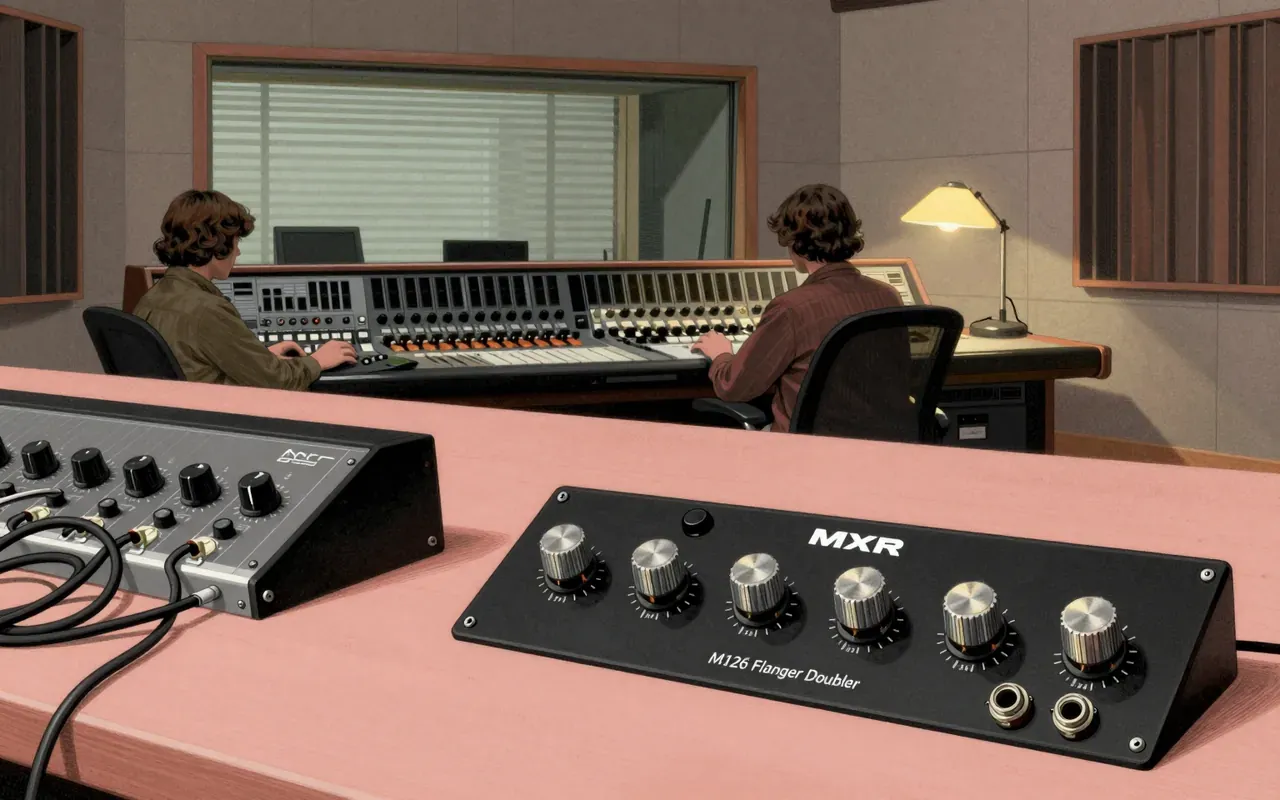
The MXR M126 Flanger/Doubler is a two-space analog rack unit with front-panel 1/4" TRS I/O. It gives players manual, sweep width, sweep speed, mix, and regen knobs plus mode and bypass/invert buttons. It delivers a thick flanging sound and fulfils its synthetic doubling function as advertised. It has no stereo I/O, no expression input, no tap tempo, and no presets. No verified recordings or users are cited. Studio engineers needing fixed, tactile analog flanging or doubling should consider it. Live performers, modular users, and those requiring stereo or foot control should not.

10:08

Fulltone Fulldrive 2

Fulltone

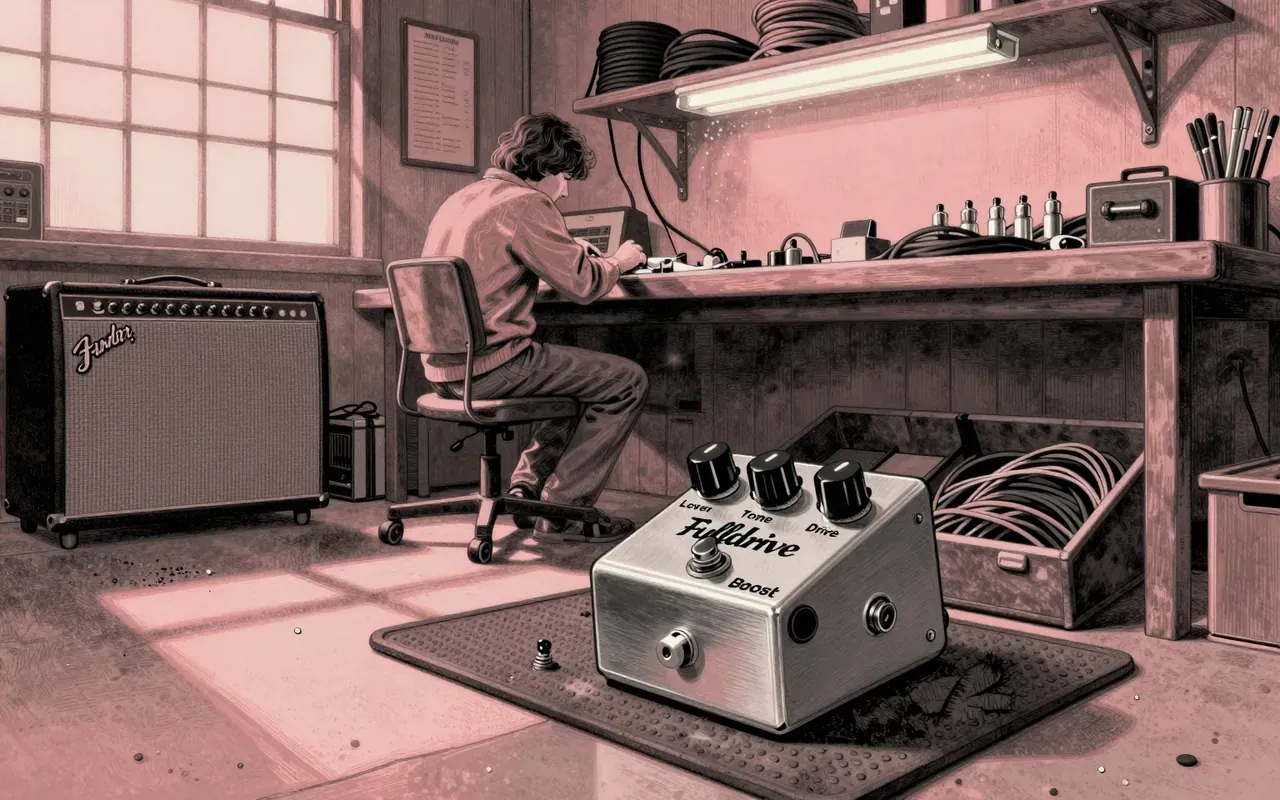
The Fulltone Fulldrive 2 is a hand-wired analog overdrive/booster pedal introduced in 1996. It gives players four knobs, two footswitches, and two 3-way toggles to shape tone, drive, boost, voicing, and clipping. It excels at delivering three distinct tonal identities — clean boost, mid-boosted overdrive, and flat-mid transparency — from one circuit. It falls short where independence and expandability matter: Boost requires overdrive to be active, and it offers no rack option, no buffered bypass, and no external control. It belongs in the hands of guitarists who want tactile, analog tonal switching — not those building a programmable, integrated rig.

12:28

Shin-ei Fuzz-Wah

Shin-ei

The Shin-ei Fuzz-Wah is a 1968 analog pedal that merges wah and fuzz into one foot-controlled unit. Rocking controls wah. Sliding left-right controls fuzz gain. Two switches activate effects independently. A third switch sets order. A knob adjusts fuzz volume. Powered by 9V battery or adapter. It remained in production, in some form, until 1984. Fender reissued it in 2008.

8:24

Chandler Limited Germanium Compressor

Chandler Limited

The Chandler Limited Germanium Compressor is a mono, 1U, all-analog FET compressor using germanium transistors. It offers a ratio range of 1.5:1 to 10:1 and a Clean/Dirty switch that toggles between low-distortion (0.2–0.5%) and higher-distortion (2–5%) modes. It has symmetric XLR I/O, is rack mountable, and linkable for stereo or surround use. It delivers fast, coloured compression — but gives up timing control, metering, and multi-channel operation to do so.

6:48

Marshall Guv'nor

Marshall

The Marshall Guv'nor is a no-compromise analog distortion/overdrive pedal. It gives guitarists direct, unmediated access to Marshall-style grit through five physical controls. It refuses modern conveniences: no USB, no rack ears, no presets. It was discontinued in 2023.