audiobriefs
Highest rated

All briefs

747 briefs · 6840 min · 1–96 on page 1 of 8
8:57

Boss DM-1 Delay Machine

Boss

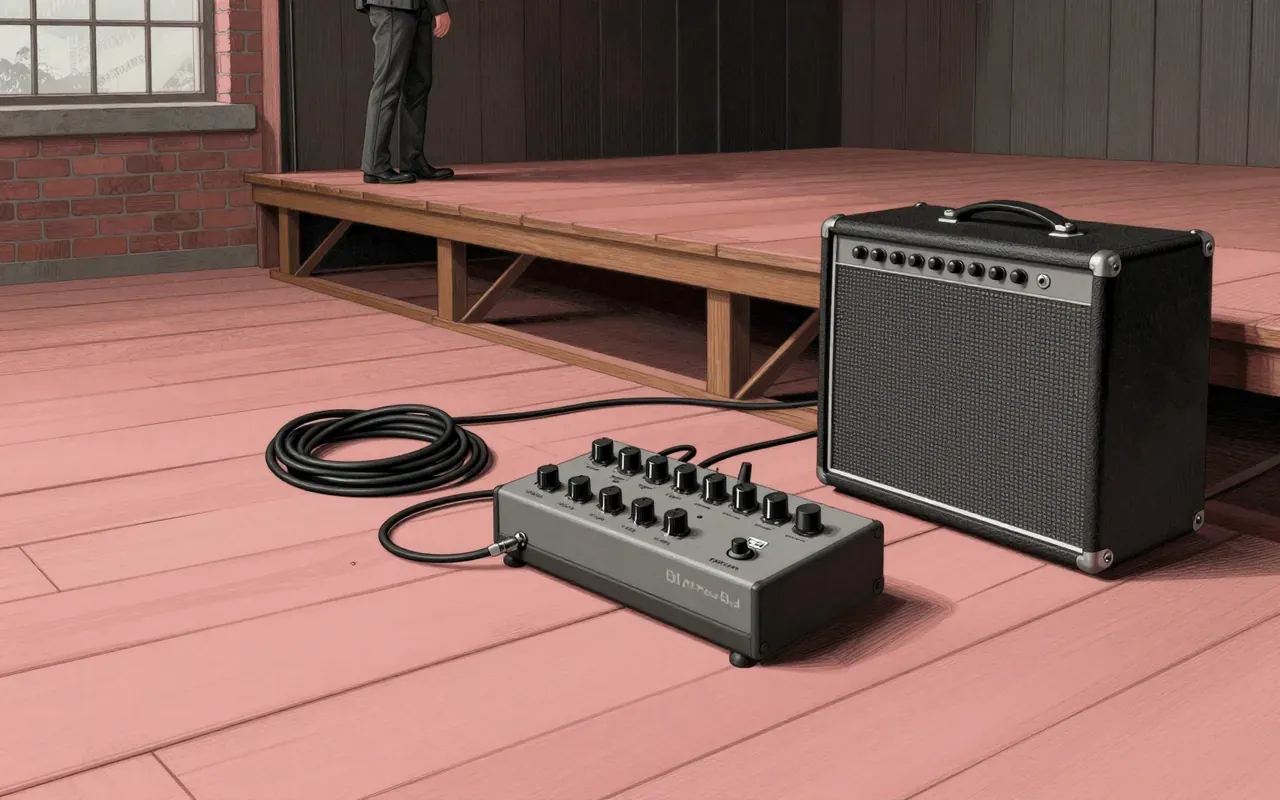
The Boss DM-1 Delay Machine is an analog foot pedal — among the first delay pedals made by Boss — with three knobs (delay time, intensity, balance/mix), an output level switch (0 dB, -15 dB, -35 dB), built-in power cord, and 1/4 inch connections. It is not rack mountable. Its sound is warm, rich, and outstanding. It is considered one of the best delay pedals Boss has made.
8:31

Great River MP-2NV

Great River

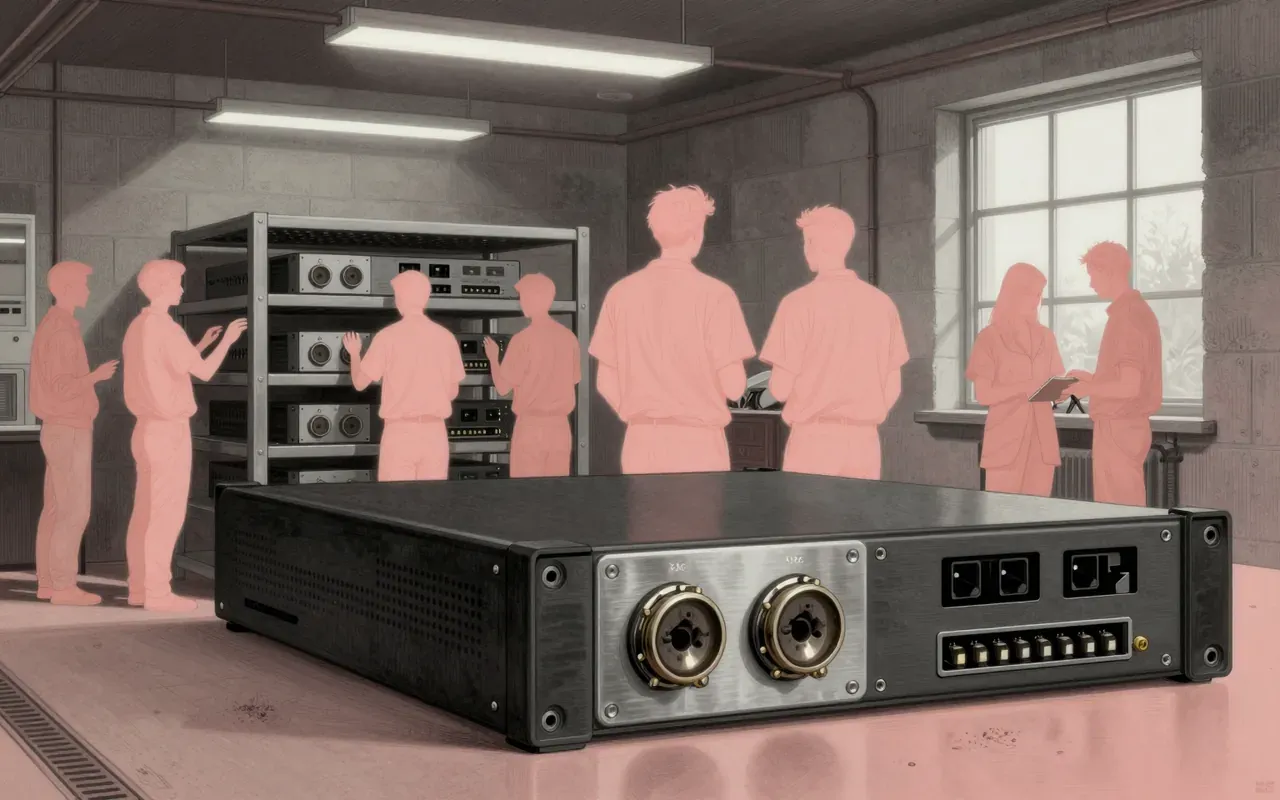
The MP-2NV gives two channels of the ME-1NV’s analog preamp circuit — no more, no less. It does not add features. It does not subtract fidelity. It occupies one rack space. It accepts mic and line-level sources directly. It meters input and output. It sounds warm, clear, and accurate — as verified by users.

7:54

Hiwatt DR103

Hiwatt

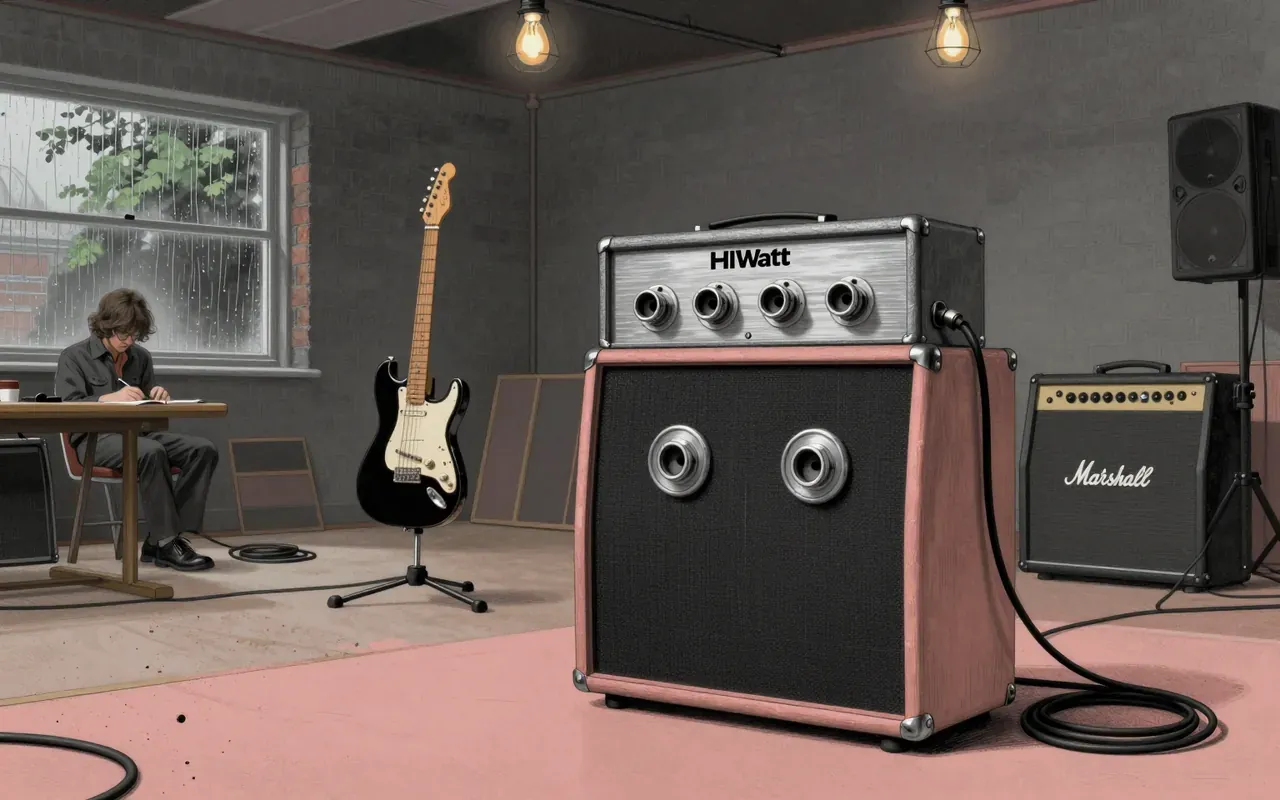
The Hiwatt DR103 is a 100-watt all-tube guitar amplifier head built for clarity, dynamics, and power-tube saturation at high volume. It has four inputs, two speaker outputs, bass/mid/treble/presence/master volume controls, voltage and impedance selectors, and no effects loop or direct output. Its crystalline highs and strong presence suit rock over jazz. Saturation requires driving both channels simultaneously. It is physically heavy and operationally uncompromising.

9:30

JBL 4310

JBL

The JBL 4310 is an active studio monitor built for truth-telling. Its neutral and linear sound reveals flaws. It needs an external amp. Bruce Swedien preferred it over the 4311—so much that he dismissed the latter as 'pure dog-doo'.

9:00

Yamaha BB2000

Yamaha

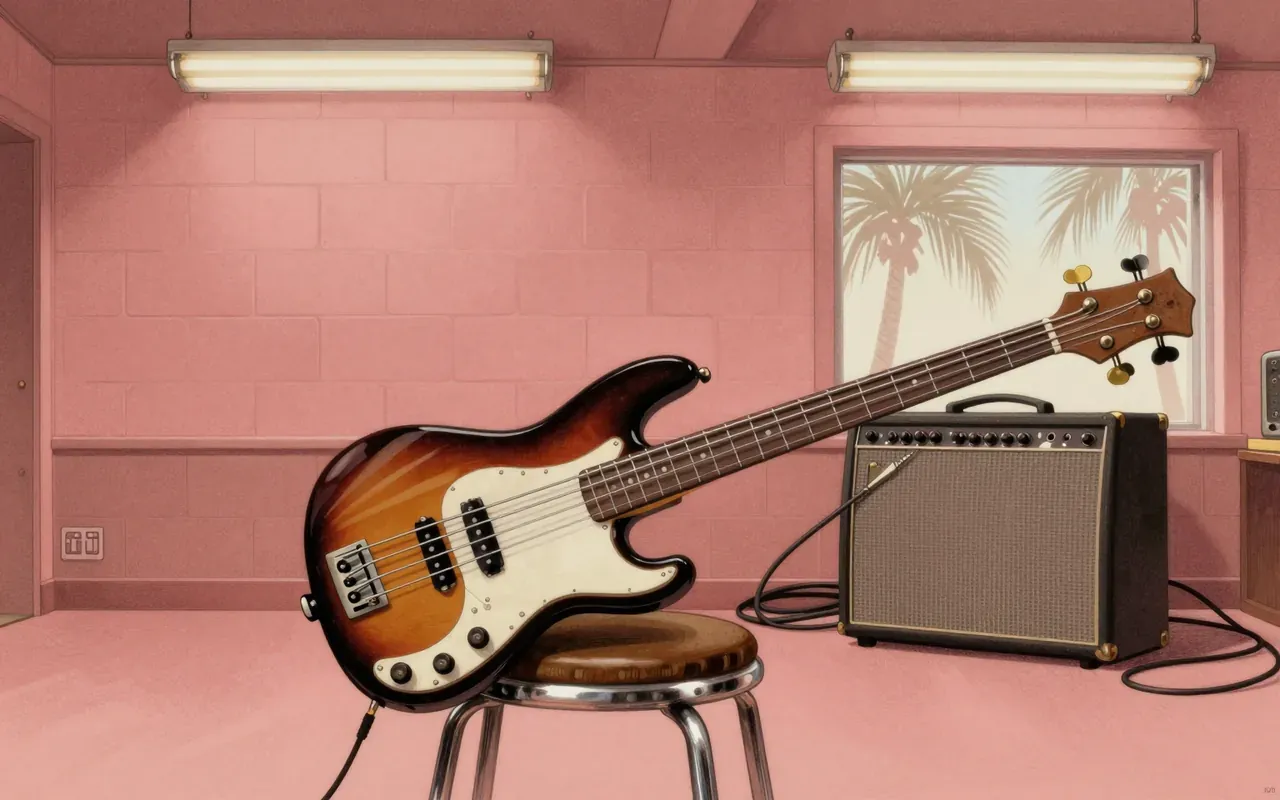
The Yamaha BB2000 is a Japanese-made 4-string bass from the early 1980s. It uses passive electronics, two pickups (JB and PB), and simple bass/treble tone controls. Its voice is defined by low-mid growl and high-mid harmonic sweetness—unmatched by Fender, Music Man, or Sadowsky. It excels in funk, pop, fusion, and jazz. It lacks modern flexibility: no active circuitry, no mid-sweep, no blend control. One player replaced their 2012 Fender Jazz Bass with it after five years of regular use—and called it superior in all aspects.

8:18

Genelec 1031A

Genelec

The Genelec 1031A is a large, active, self-powered studio monitor built for stationary use in professional recording studios. It delivers full-spectrum sound with strong low-end presence and tight high-end response. It plays loudly without colouration and reveals fine audio detail. Its built-in amplification is highly effective. Its size and sonic neutrality make it unsuitable for small rooms or home studios. Users report it excels in medium-to-large spaces and is trusted for critical mixing and tracking.

7:18

Neve 2254

Neve

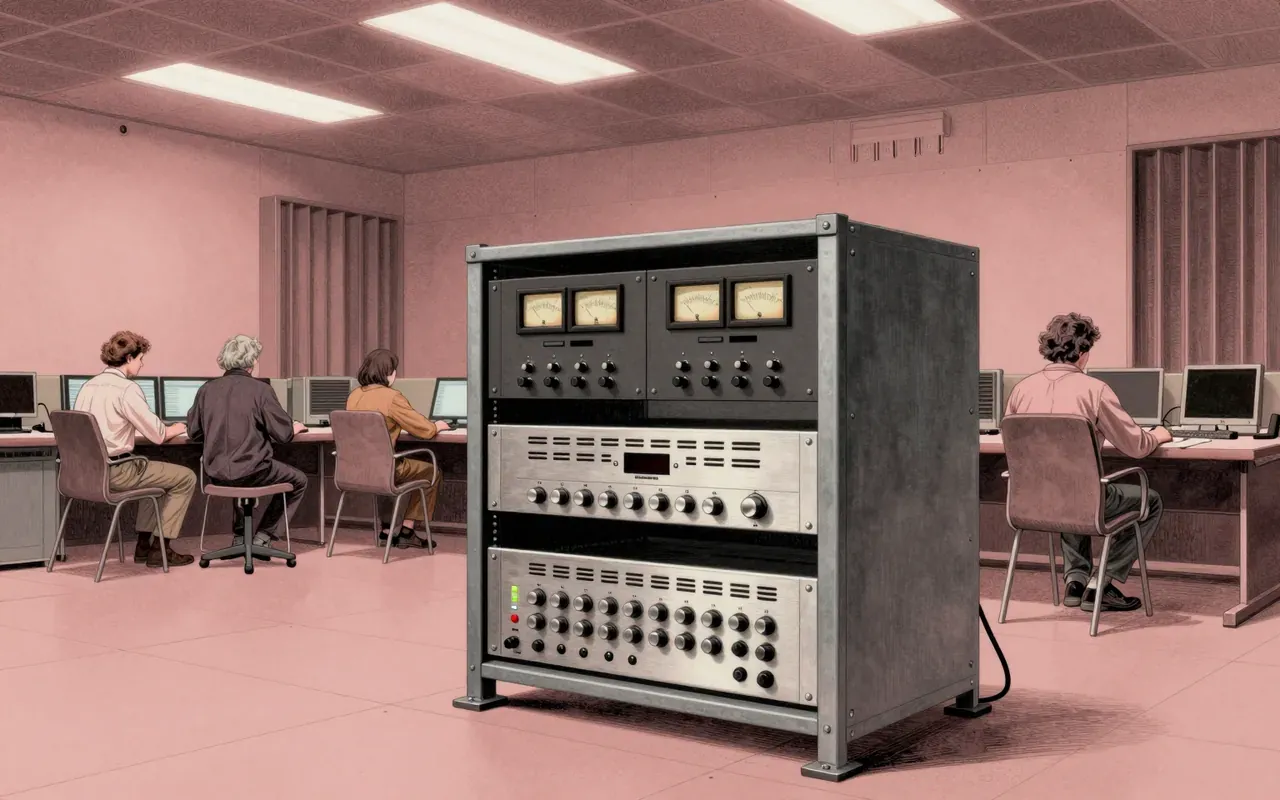
The Neve 2254 is an all-analog compressor/limiter from the late 1960s, revived as the 2254-R with identical circuitry and only a new casing. It delivers thick, heavy compression — especially on vocals — via straightforward controls: ratio, attack, recovery, limit level, gain makeup and mode. Its unique meter and lack of digital elements make it tactile and immediate. It offers no stereo linking, no variable knee, no recall — just weight, simplicity and a singular sonic character.

8:02

API 3124+

API

The API 3124+ is a 1U, 4-channel analog microphone preamplifier using the 2520 op-amp and classic console circuit. Each channel has gain, polarity, phantom power, 20 dB pad, mic/line selection, and a VU meter. It accepts XLR inputs at the rear and unbalanced 1/4" inputs at the front. It delivers high headroom and consistent colour across all four channels — but offers no impedance control, channel linking, or digital integration.

8:10

Neve 33609

Neve

The Neve 33609 is a dual-channel, all-analog studio compressor and limiter occupying two rack units. Each channel contains independent compressor and limiter sections. The compressor section provides threshold, recovery, gain, ratio, and bypass. The limiter section provides threshold, recovery, fast/slow attack, and bypass. It supports dual-mono or stereo operation with per-channel gain reduction metering.

7:57

SSL 4000 G

SSL

The SSL 4000 G+ is a 48-channel analog mixing console built for professional studios. Each channel has a preamp and parametric EQ. It includes built-in compressors and many other features. Its configuration is complex and demands substantial time to master. Its sound quality is judged among the best attainable — the cleanest the reviewer has ever used. Its preamps are extremely clean and full sounding. Its EQs are super clean with precise cut/boost control. It is qualified to record any and all genres of music. It is extremely famous and highly popular among professionals across popular music genres.

8:35

JBL 4311

JBL

The JBL 4311 is an active monitor built for accuracy, not appeal. Its adjustable treble and midrange controls let users tailor response without EQ. It delivers neutral, powerful, precise, and dynamic sound — but only when driven with sufficient gain. Its frequency curve avoids bass saturation and flattery, making it reliable for critical listening across playback systems. Users acquired it in Germany in 1979 and in studio trades by 1983. It belongs in rooms where truth matters more than comfort.

7:02

Neve 8058

Neve

The Neve 8058 is a 24-channel analog mixer with 31102 preamps (essentially 1084s), semi-parametric EQ per channel, and 16 buses. It has no automation. Its sound is full, deep and low-mid-rich — a deliberate, non-neutral colouration.

9:38

Studer A820

Studer

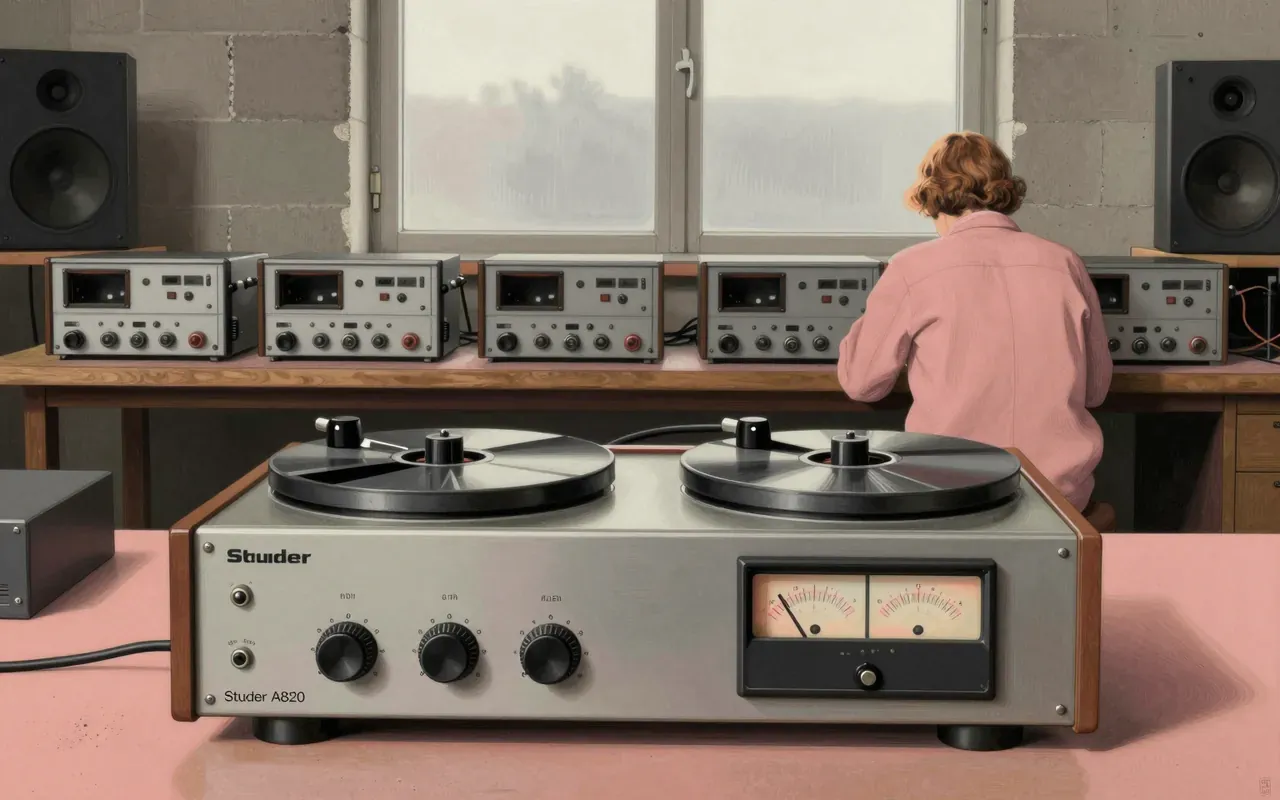
The Studer A820 is a 24-track analog multitrack tape machine with a portable controller. It excels at low-end and drum capture. It was used to record tracks later transferred to Pro Tools. It is user friendly, with familiar, easily located controls. No verified source states a weakness.

9:17

Elektron Analog Rytm

Elektron

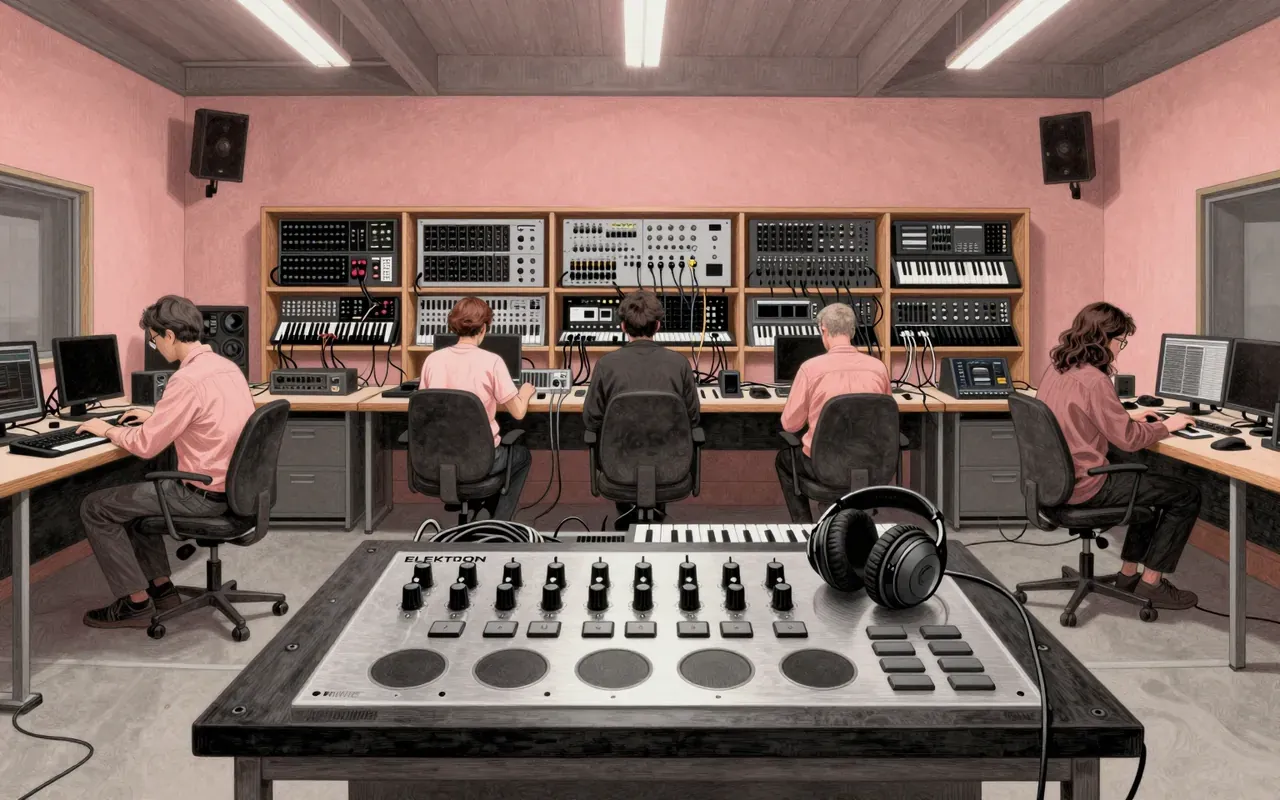
The Analog Rytm is a true analog drum synth. It gives each voice its own engine, up to six oscillators, and a 16-step sequencer. Its pads are velocity-sensitive but small. It enables radical timbral shifts across voices with minimal changes. It falls short on pad ergonomics, stereo per voice, and external audio input. It belongs in the studio of a sound designer—not a live beatmaker.

8:31

Akai ASQ-10

Akai

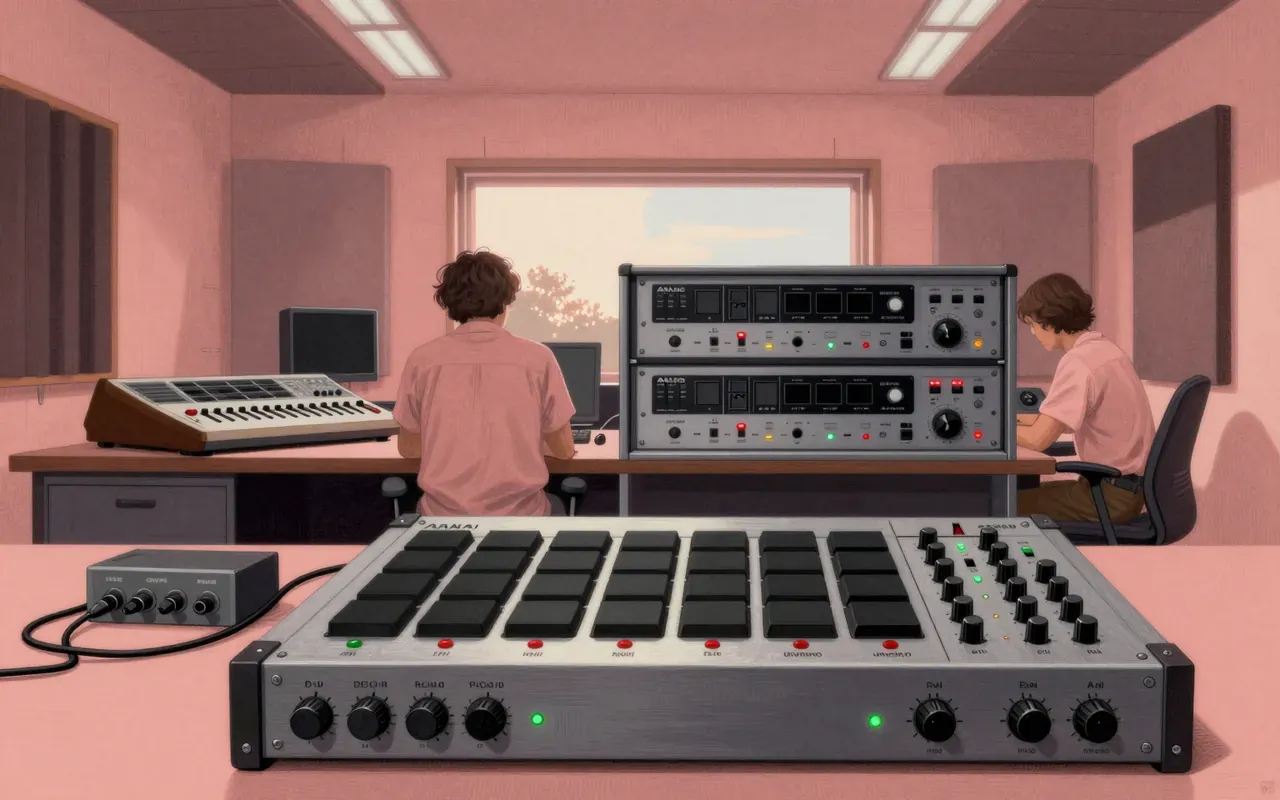
The ASQ-10 is a sequencer-only instrument. It has no sound generation. It does not sample. It exists solely to trigger, time, and lock external gear. Its design enables rhythmic complexity unplayable by hand — then corrects timing drift across the chain. It is the first MPC-shaped workflow, before the MPC existed.

7:55

Strymon BigSky

Strymon

The Strymon BigSky is a guitar reverb pedal released in 2013. It offers full parameter editing, stores up to 300 presets, and ships with high-quality factory presets. It delivers exceptionally high-quality, easily customisable reverb using both traditional and specific controls. It is regarded as the most complete reverb pedal on the market.

8:17

AKG C12

AKG

The AKG C12 is a large diaphragm condenser tube microphone designed for studio recording. It requires a dedicated power supply. It captures a wide frequency range. It is exceptionally high-performing but delicate and unsuitable for live use.

8:36

Pioneer CDJ-1000MK2

Pioneer

The Pioneer CDJ-1000 MK2 is a discontinued tabletop DJ player built to play CDs with exacting mechanical and operational control. It sets the reference for precision, robustness, and reliability among CD-based DJ players of its era. Loops fire instantly. Hot Cues never lag—even while seeking. Reverse isn’t just functional—it’s musical. It’s a discontinued CD-only player, replaced by the CDJ-2000 Nexus.

8:24

Sequentix Cirklon

Sequentix

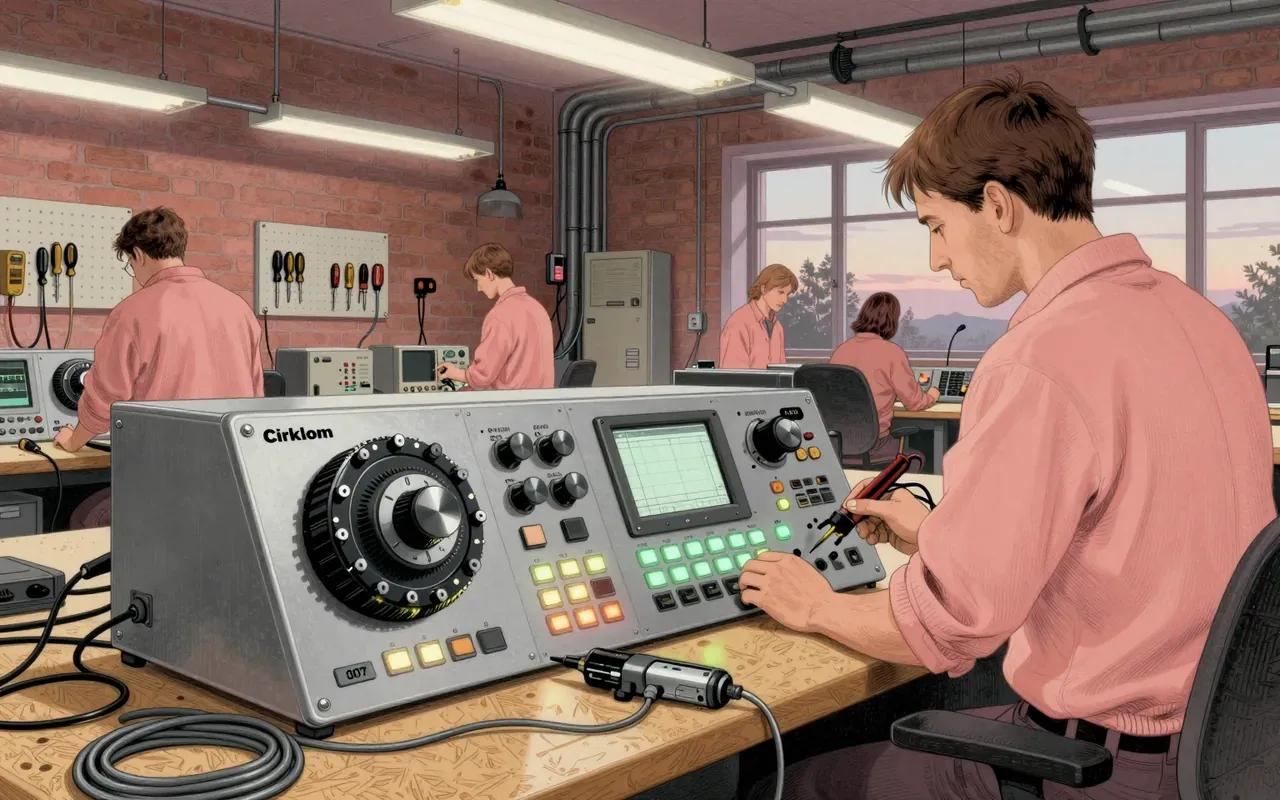
The Cirklon is a hardware sequencer. It outputs MIDI, audio (HP), and optionally CV/Gate. It produces no sound. Its clock accuracy and track synchronisation are exceptional. All data saves to flash memory and survives power failure. It operates in step and real-time modes, organising music into SONGs and SCENES.

10:18

Eventide DSP4000

Eventide

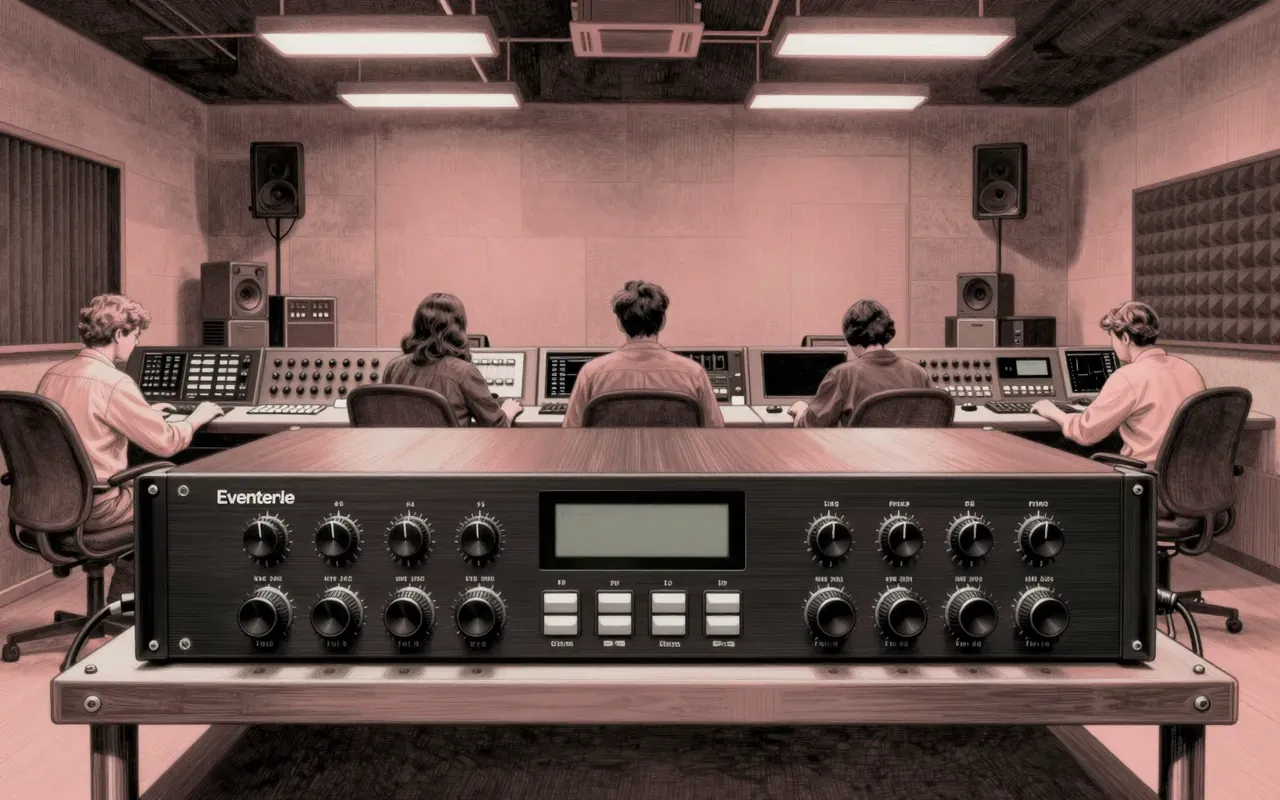
The Eventide DSP4000 is a discontinued multi-effects processor. It converts at 18 bits. It includes pitch shifting, reverb, and compression. Its effects span from subtle to cataclysmic. Learning it requires time and the manual.

8:33

RME Fireface 800

RME

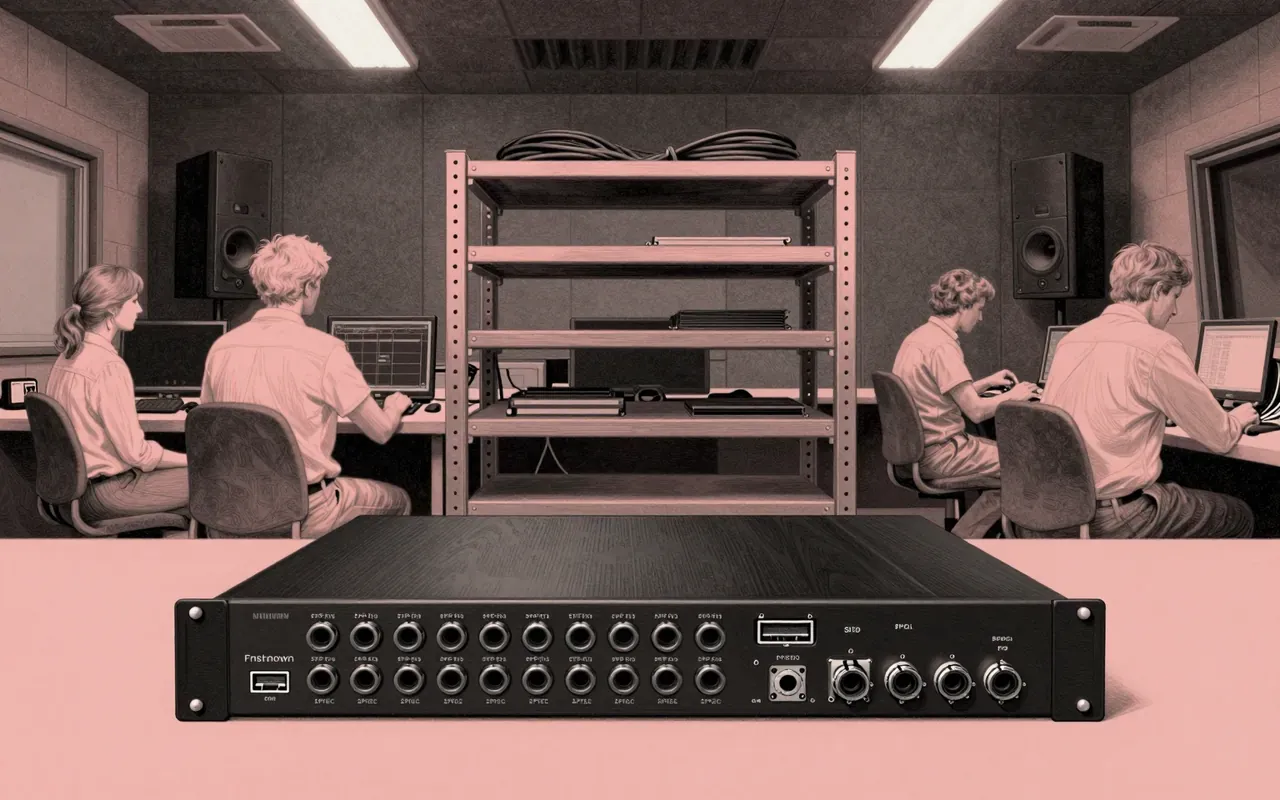
The RME Fireface 800 is a FireWire audio interface built for professional studio routing, synchronization, and digital I/O—not tracking or mixing alone, but glueing hardware together.

7:37

Sennheiser HD 600

Sennheiser

The Sennheiser HD 600 is a studio-grade open-back headphone. It delivers an even frequency response. It renders acoustic instruments realistically across the full spectrum. Its highs are clear and crisp without harshness. Its lows are detailed and clear without overpowering. It was tested against the HD650, HD700, and HD800 using a decent D/A converter and a good headphone amplifier. It is used for mixing and mastering in professional and home studios. It requires capable amplification. It offers no sound isolation.

8:37

Crane Song HEDD 192

Crane Song

The Crane Song HEDD 192 is a two-channel DAC for mixing and mastering. It converts digital audio at up to 192 kHz/24-bit. Its defining feature is three fixed analog circuit emulations — triode, pentode, and tape — each altering harmonic texture and dynamics in distinct ways. It offers no transparency, no bypass, no fine-tuning. It exists to commit.

9:08

Neumann KM 184

Neumann

The KM 184 is a fixed-cardioid small-diaphragm condenser microphone built for clarity, durability, and extreme SPL handling — not for shaping or adapting.

9:37

Neumann KM 84

Neumann

The Neumann KM 84 is a studio-only small diaphragm condenser microphone. It delivers clean, crisp, accurate recordings of acoustic instruments—no low-end filtering needed. Its presence peak adds clarity; its rapid top-end roll-off removes air. Proximity effect forces tight mic placement. Phantom power is required. It is fragile and unsuited for live or field work.

7:54

Leslie Leslie 122

Leslie

The Leslie 122 is a rotating speaker cabinet designed for organs—not a preamp, not an effects unit, not a standalone amplifier. Its entire function depends on connection to a compatible organ like the Hammond M3. It offers no user controls. Its effect is purely mechanical: rotation creates tremolo and vibrato through air displacement. It cannot be used without modification for guitar or other instruments. It belongs only where an organ lives—and nowhere else.

9:10

Lexicon Lexicon 480L

Lexicon

The Lexicon 480L is a rack-mounted digital reverb processor introduced in 1986. It contains 200 internal programs. It supports RAM and ROM cartridges. It is controlled via the LARC remote control unit. It has 2 or 4 XLR analog outputs. Two units can be cascaded for two independent engines. Version 1.01 launched in 1986 and immediately became the new world standard for high-end studio reverb machines. Firmware extended to version 4.01 with a surround kit before being replaced by the 960L.

13:36

Mesa/Boogie Mark II

Mesa/Boogie

The Mesa Boogie Mark II is a series of ten tube guitar amplifiers — all combos or heads — designed for high-gain responsiveness and channel-switching control. It delivers saturated lead tones with tight low-end and immediate touch dynamics. It does not offer clean headroom at low volume, built-in effects, or silent operation. It remains in production, with the Mark IIC+ 1x12 Combo released in 2024.

9:59

Oberheim Matrix-12

Oberheim

The Oberheim Matrix-12 is a 12-voice, 61-key, fully analog synthesizer introduced in 1985. It uses Matrix Modulation for virtual patching. Every control can affect another parameter. It provides 15 LFO types and VCAs per voice. It is more programmable and sonically fatter than the Matrix-6 and Xpander. It is not intended for beginners. It is renowned for thick analog pads, sweeps, buzzes, basses and textures—and was called the 'king of analog sounds' in the mid-eighties.

8:30

Vestax PMC-07 Pro

Vestax

The Vestax PMC-07 Pro is a 2-channel scratch mixer. It prioritises precision, durability, and clarity over features. Its crossfader is adjustable and preferred for scratching over competitors including the PMC-05, Numark, Ecler, Rane, and PMC-07 PSI. It sounds clear and unsaturated. It has no digital functions, no headphone cueing beyond basic monitoring, and no more than two channels.

8:46

Rupert Neve Designs Portico 5043

Rupert Neve Designs

The Portico 5043 is a studio compressor in Rupert Neve Designs’ Portico series. It delivers consistent, source-agnostic compression with optional harmonic colouration. Its physical format undermines its rack-ready promise. It does not replace a dedicated clean limiter or a compact multi-channel solution — but it rarely needs replacing on a track once engaged.

8:16

Sequential Circuits Prophet-T8

Sequential Circuits

The Prophet-T8 is an 8-voice analog polysynth released by Sequential Circuits in 1983. It features digital control of analog sound, a 76-key weighted keyboard with velocity and aftertouch, full MIDI implementation, split/layer/double/unison modes, and a real-time sequencer. Its tone resembles the Prophet-5. It was Sequential’s finest analog synthesizer—but faced commercial pressure from the Yamaha DX7.

8:33

Royer R-121

Royer

The Royer R-121 is a studio-only ribbon microphone. It delivers fast, flat, high-SPL capture — but offers zero user controls, zero ruggedness, and zero tolerance for phantom power. It belongs where the environment is controlled and the source is loud.

8:31

Ibanez RG550

Ibanez

The Ibanez RG550 is an STC-shaped electric guitar from the RG Standard series, manufactured from 1987 to 1994. It features a Floyd Rose locking tremolo, H-S-H pickups, a 5-way switch, and a thin maple neck. It is discontinued. Users praise its playability and tuning stability but note its weight and fragile finish.

7:49

Apogee Rosetta 800

Apogee

The Apogee Rosetta 800-192k is a rack-mountable analog-to-digital converter. It connects via rear-panel analog, ADAT, and AES. It serves Pro Tools HD systems. It runs at 48 kHz, 96 kHz, or 192 kHz. It produces a clean, transparent, smooth signal. It does not do D/A, preamp, or processing.

8:16

Eventide SP2016

Eventide

The Eventide SP2016 Reverb plug-in is a faithful software recreation of the 1982 hardware unit. It gives users six algorithmic reverbs — Room, Stereo Room, and Hi-Density Plate, each in Vintage and Modern variants — with authentic early reflections, evolving echo density, and smooth decay. It prioritises immediacy and character over flexibility or physical accuracy.

10:17

SPL Transient Designer

SPL

The SPL Transient Designer is a plug-in that reshapes sound by directly manipulating attack and decay — not through compression or gating, but via level-independent envelope control. It excels at tightening, lifting, or taming transients across full-bandwidth sources, but offers no frequency selectivity or threshold-based dynamics. It belongs on drum busses, room mics, and bass tracks — not on vocals needing surgical sibilance control or synths needing dynamic layering.

7:52

Rane TTM 56

Rane

The Rane TTM 56 is a 2-channel DJ performance mixer. It uses magnetic faders impervious to smoke or moisture. Its EQ cuts frequencies completely. It produces no fader bleed or swipe sounds. Its signal-to-noise ratio is outstanding. It has adjustable fader contour and inversion. It has an integrated effects loop with dry/wet control.

9:43

Sennheiser Vocoder 2000

Sennheiser

The Sennheiser Vocoder 2000 is a fully analog, rack-mount vocoder released around 2002. It uses discrete-component circuitry. It includes an internal oscillator with pitch modulation, an internal noise source, and a noise gate. It requires no external sound source. Both white-face and black-face versions share identical analog circuitry.

8:40

Beyerdynamic DT 770 Pro

Beyerdynamic

The DT 770 PRO is a closed-back, handcrafted-in-Germany studio headphone. It delivers neutral, precise full-range sound with punchy lows and analytical highs. It isolates exceptionally well. It weighs 375 g including cable. All components are replaceable. It is used globally by music producers, sound engineers, and broadcasters.

9:41

Z.Vex Fuzz Factory

Z.Vex

The Z.Vex Fuzz Factory is a 1995 fuzz pedal built around unstable germanium transistors whose biasing is manipulated via five interactive controls; it originated from Zachary Vex’s accidental discovery of extreme sonic behavior when boosting a surplus-transistor circuit, leading him to retain adjustable pots for expressive texture control rather than fixing component values.

10:22

Marshall Bluesbreaker

Marshall

The Marshall Bluesbreaker is Models 1961 and 1962 — Marshall’s first combo, built from 1964/65 to 1972. It is the JTM45 circuit in an open-backed cabinet. It delivers aggressive, responsive overdrive with no master volume, no clean headroom, and no flexibility — and that is precisely what made it essential.

8:26

Empirical Labs Distressor

Empirical Labs · 1995

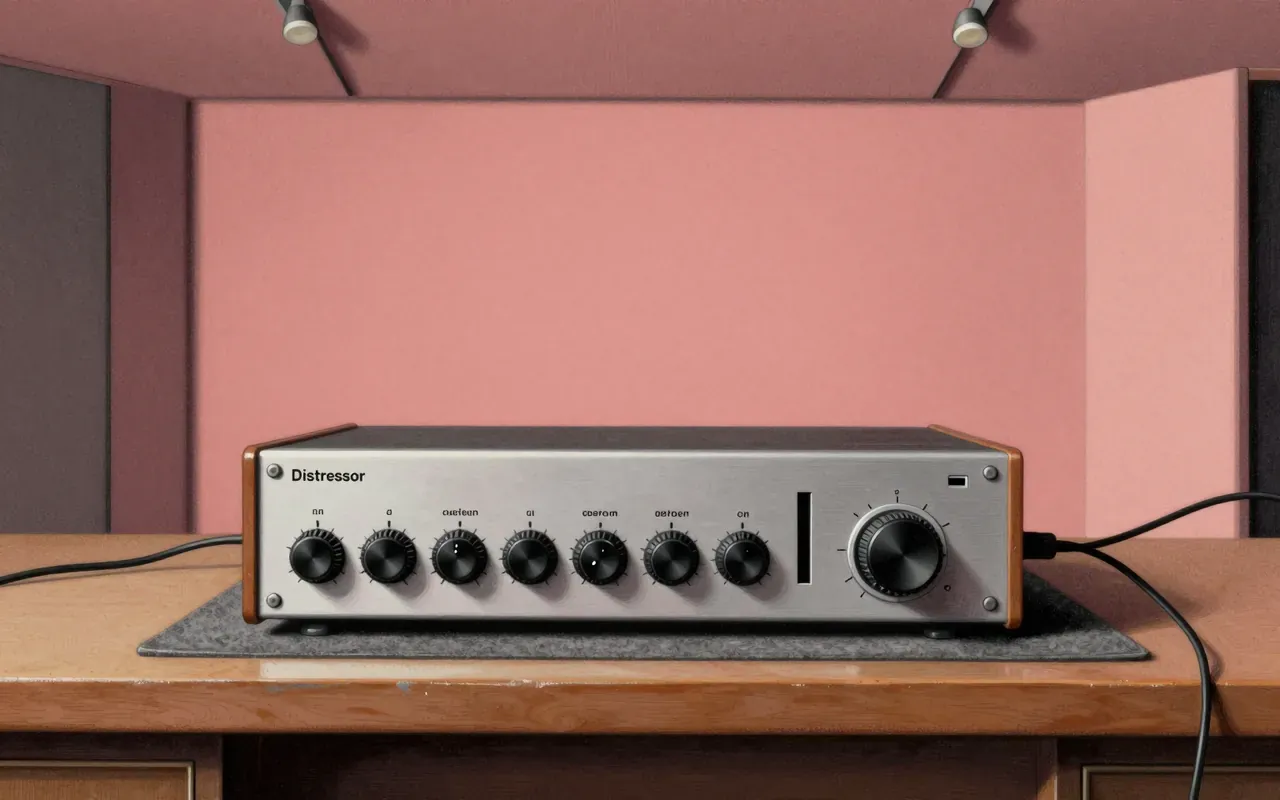
The Empirical Labs Distressor is an analog VCA compressor introduced in 1995. It has a fixed threshold, soft knee, and variable ratio, attack, release, input gain and output gain. At 10:1, it uses a photoresistor-based optical emulation circuit. It includes tube and tape distortion emulations, side-chain high-pass filtering, and on the EL8-X model, British Mode and Image Link. It was inducted into the TECnology Hall of Fame in 2016 and has sold an estimated 40,000 units.

9:16

Doepfer A-100

Doepfer

The Doepfer A-100 is an analog modular synthesizer system introduced in 1995. It uses 3U-height, 2HP-width modules patched with 3.5 mm leads. It established the Eurorack standard adopted by many manufacturers. It enables emulation of the Trautonium and Theremin using specific modules.

8:48

Eurorack

Doepfer

Eurorack is a modular synthesizer format introduced in 1995 by Doepfer Musikelektronik. It defines mechanical, electrical and interconnection standards so modules from different makers fit the same cases and communicate reliably. It has no built-in keyboard, sequencer or interface. It demands manual patching and physical organisation. It supports deep signal routing and long-term system expansion. It is used by musicians and designers to build custom synthesis environments.

10:10

Frankenstein (guitar)

Eddie Van Halen

Frankenstein is a custom guitar built by Eddie Van Halen to combine Gibson’s PAF humbucker tone with Fender Stratocaster playability and tremolo. It uses one potted PAF in the bridge, mounted offset for string spacing, wired through a single 500k pot labelled 'TONE' and an output jack. No tone controls. No working selector. Middle and neck positions hold non-functional parts. It delivers aggressive, feedback-resistant lead tone — nothing else.

9:00

LA-2A Leveling Amplifier

Teletronix

The LA-2A is a hand-wired, vacuum tube-based audio compressor developed by Teletronix and released commercially in 1962. It uses an electroluminescent panel and cadmium sulfide photoresistor for program-dependent gain reduction. Its attack is fixed at 10 ms; its release varies from 60 ms to 15 seconds depending on input. It preserves perceived performance dynamics under heavy compression. UREI acquired its patent rights in 1967.

9:43

Beyerdynamic M 160

Beyerdynamic · 1957

The Beyerdynamic M 160 is a hypercardioid ribbon microphone introduced in 1957. It uses dual 15-mm aluminum ribbons suspended between alnico magnets (later neodymium), rotated 90 degrees to achieve end-address operation and a highly directional pickup pattern. It softens harsh characteristics of strident sound sources. It has been used in broadcasting, live concerts, and studio recordings — notably by Eddie Kramer on Jimi Hendrix and Andy Johns on John Bonham’s drums for 'When the Levee Breaks'. It remains in production over six decades later.

8:08

Moog Modular

Moog · 1964

The Moog synthesizer is a modular, voltage-controlled analog synthesizer invented by Robert Moog in 1964. It was the first commercial synthesizer and established the analog synthesizer concept through its use of patch-cord-connected modules—including voltage-controlled oscillators, filters, envelope generators, and amplifiers—to implement subtractive synthesis.

10:49

Korg MS-20

Korg · 1978

A monophonic analog synthesizer from 1978. Two VCOs. Two VCFs in series: high-pass then low-pass. Ring modulation on VCO2. Modulation generator with pulse and sloped outputs. Two envelope generators. Noise source. Modulation VCA. External control via frequency-voltage converter and envelope follower. Patch panel enables rerouting of audio and modulation signals.

10:33

Elektron Octatrack

Elektron

The Elektron Octatrack DPS-1 is a sampling instrument built for real-time, step-sequenced audio manipulation. It loads samples from CompactFlash or live inputs, plays them across eight tracks, and sequences both audio and MIDI with the same button grid. Its strength is tight integration and tactile control. Its limits are RAM-only editing, no non-destructive tools, and no timeline-based workflow.

9:55

Roland Corporation

Roland · 1972

Roland Corporation is a Japanese instrument manufacturer founded in 1972. It pioneered compact synthesizers, programmable drum machines, guitar synths, and early microprocessor sequencers — shaping electronic music through tactile, genre-defining hardware.

8:55

Music Man StingRay

Music Man · 1976

The Music Man StingRay is a 1976 electric bass co-designed by Leo Fender as a modern update to the Precision Bass. It introduced active electronics to bass design — a 9-volt-powered preamp with 2-band EQ, an oversized humbucker wired in parallel, and epoxy-sealed circuitry. It delivers a uniquely bright, scooped-mid, deep-low tone with high output and rigidity. It lacks passive tone shaping, midrange control in early models, and serviceable electronics. It became essential for slap bass, studio clarity, and cutting through dense mixes.

9:10

Marshall Super Lead

Marshall · 1965

The Marshall Super Lead is a 100-watt guitar amplifier head made by Marshall between 1966 and 1981. It was developed in response to player demand for higher output than the earlier JTM45. Its distortion arises solely from overdriving its EL34-based power amp section at high volume. It has two channels and four inputs but no master volume. Its core character is bold, midrange-heavy, and bright — delivering the foundational 'Marshall crunch' sound of 1970s rock.

10:23

1176 Peak Limiter

UREI

The UREI 1176 Peak Limiter is a fast, characterful, all-solid-state audio compressor introduced in 1968. It uses a field-effect transistor in feedback configuration for gain reduction. Compression is soft-knee with a fixed threshold controlled by input level. Four ratios — 4:1, 8:1, 12:1, 20:1 — each raise the threshold. Attack and release are program-dependent. Stereo linking is supported. The 'all-button mode' adds harmonic distortion and alters compression behaviour. It marked the transition from vacuum tube to solid-state technology in studio dynamics processing.

8:31

API 550

API

The API 550b is a four-band analog EQ re-issuing the 1967 API 550 with an added band. It offers seven switchable frequency centres per band, ±12 dB boost/cut, shelf/peak switching on bands 1 and 4, Proportional Q, reciprocal and repeatable filtering, and a +30 dBu clipping level. It uses API’s 2520 op amp and is built to original blueprints.

8:40

Mutable Instruments Clouds

Mutable Instruments

Clouds is a granular audio processor for Eurorack that transforms live input into dense, overlapping grains. It records continuously into a short, variable buffer (up to 8 seconds), allows freezing that buffer to isolate a sonic space, and provides hands-on control over grain position, size, pitch, density, timing distribution, and envelope shape. A diffuser blurs transients using all-pass filters. It supports 40–60 concurrent grains and operates in stereo with extensive CV control, dry/wet blending, feedback, and reverb-like effects during freeze mode. It does not store or recall samples, nor does it support offline processing or waveform editing.

10:15

Mutable Instruments Marbles

Mutable Instruments

Mutable Instruments Marbles is a Eurorack module for generative timing and control voltage. It uses hardware randomness, memory-based reuse (DEJA VU), and adaptive quantization (STEPS) to produce rhythm and pitch that respond to player input. It has no audio output, no presets, no MIDI, and no visual interface beyond LEDs. Its strength is in linking decision-making across domains—timing, pitch, and memory—in real time.

9:34

Make Noise Maths

Make Noise

MATHS is a 20hp Eurorack module by Make Noise Music that functions as an analog computer for generating, transforming, and routing control voltages and digital timing signals. It extends Buchla’s legacy of analog control voltage processing, enabling scaling, inversion, amplification, integration, arithmetic, logic, and autonomous function generation — including LFOs and envelopes — with timing ranging from milliseconds to minutes.

10:42

MXR Phase 90

MXR · 1972

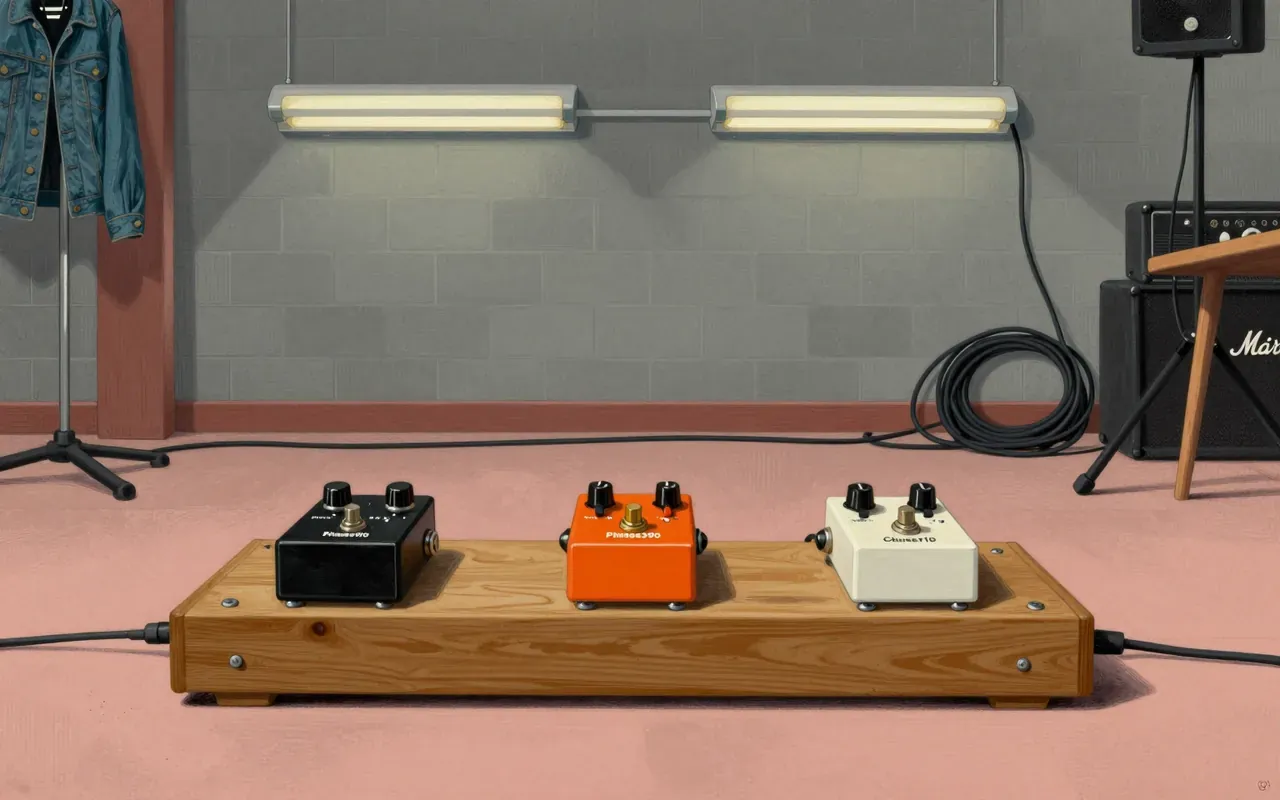
The MXR Phase 90 is a phaser effects pedal introduced in 1972, the first pedal sold by MXR. It features one knob (Speed), an orange enclosure, and evolved logo designs (script then block). Production ceased in 1984 when MXR went bankrupt. Dunlop resumed production with added features: an LED and optional AC power supply. Pre-1981 units lacked LEDs, A/C adaptor jacks, and true-bypass switching. It was used on the first two Van Halen albums.

9:22

Mutable Instruments Plaits

Mutable Instruments

Plaits is a decisive instrument. It forces choices — bank or trigger, pitch or noise, sweep or strike. It gives no second chances, no presets, no visual confirmation. But within those limits, it delivers sixteen coherent sonic identities in one compact, power-efficient package.

9:20

Korg PS-3300

Korg

The Korg PS-3300 is a 1977 polyphonic analog synthesizer built from three PS-3100-derived units (PSU-3301), delivering 144 voices with independent oscillators, filters, envelopes, and amplifiers per note. It enables multitimbral sound creation through individual module adjustment and mixing. It omits the PS-3100's ensemble effect. It supports extensive voltage control and patching — including pitch modulation from envelopes or external sources — and uses a detachable keyboard format. It belongs to Korg’s 1970s line of large, expensive, patchable instruments, positioned as a high-end professional device.

9:48

Make Noise René

Make Noise

René is a 34hp Eurorack module that functions as a three-channel, three-dimensional Cartesian sequencer, enabling real-time, performative programming and delivering maximal musical variation from minimal analog input; it stores up to 64 complete STATEs and features simultaneous Snake and Cartesian patterns, visual feedback via illuminated knobs and touch buttons, and Select Bus integration with TEMPI.

9:15

Vox AC15

Vox

The Vox AC15 is a foundational British guitar amplifier — simple, immediate, and sonically specific. It trades versatility for character. Its design choices are constraints, not oversights. It remains relevant not as a relic, but as a functional tool with an unrepeatable voice.

8:15

Vox AC30

Vox

The Vox AC30 is a valve-powered guitar amplifier introduced in 1959 to provide higher wattage and greater volume than the AC15. Its class AB operation, cathode-biased EL84 push-pull output stage, and Celestion Blue speaker pairing produce a jangly, mid-forward, high-clarity tone with limited low-end at low volumes but strong headroom and smooth overdrive. It is not synthesizer-based and does not employ digital or solid-state synthesis methods.

9:49

Ampex ATR-100

Ampex

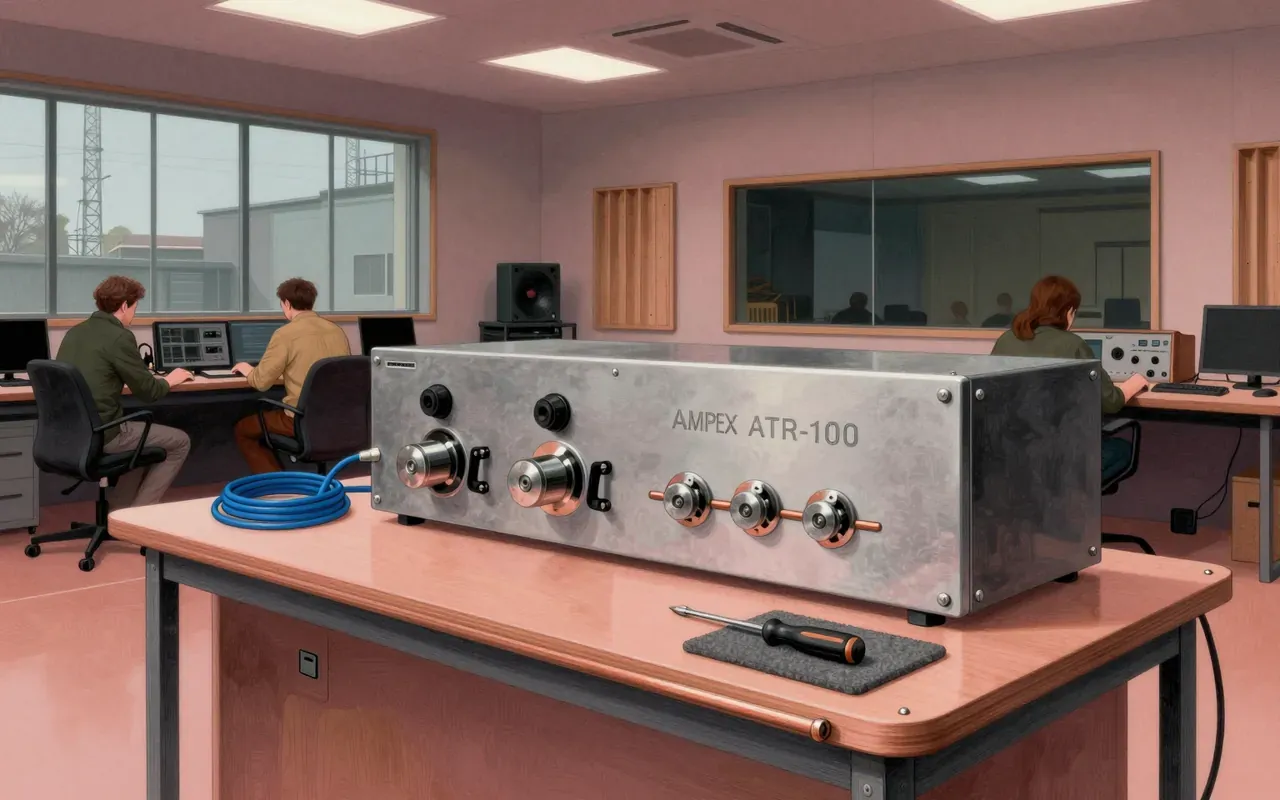
The Ampex ATR-100 is a mastering-grade analogue tape recorder introduced in Spring 1976 at the AES Conference in Los Angeles. Designed exclusively for stereo or quadraphonic mixdown and mastering, it features a servo-controlled direct-drive-capstan transport and interchangeable headblocks for quarter-inch or half-inch tape. Its wow and flutter performance set a new standard for analogue accuracy. It does not support multitrack recording. No verified claims exist about recordings made on it, its users, or its sonic signature beyond accuracy.

9:21

Fender Telecaster

Fender

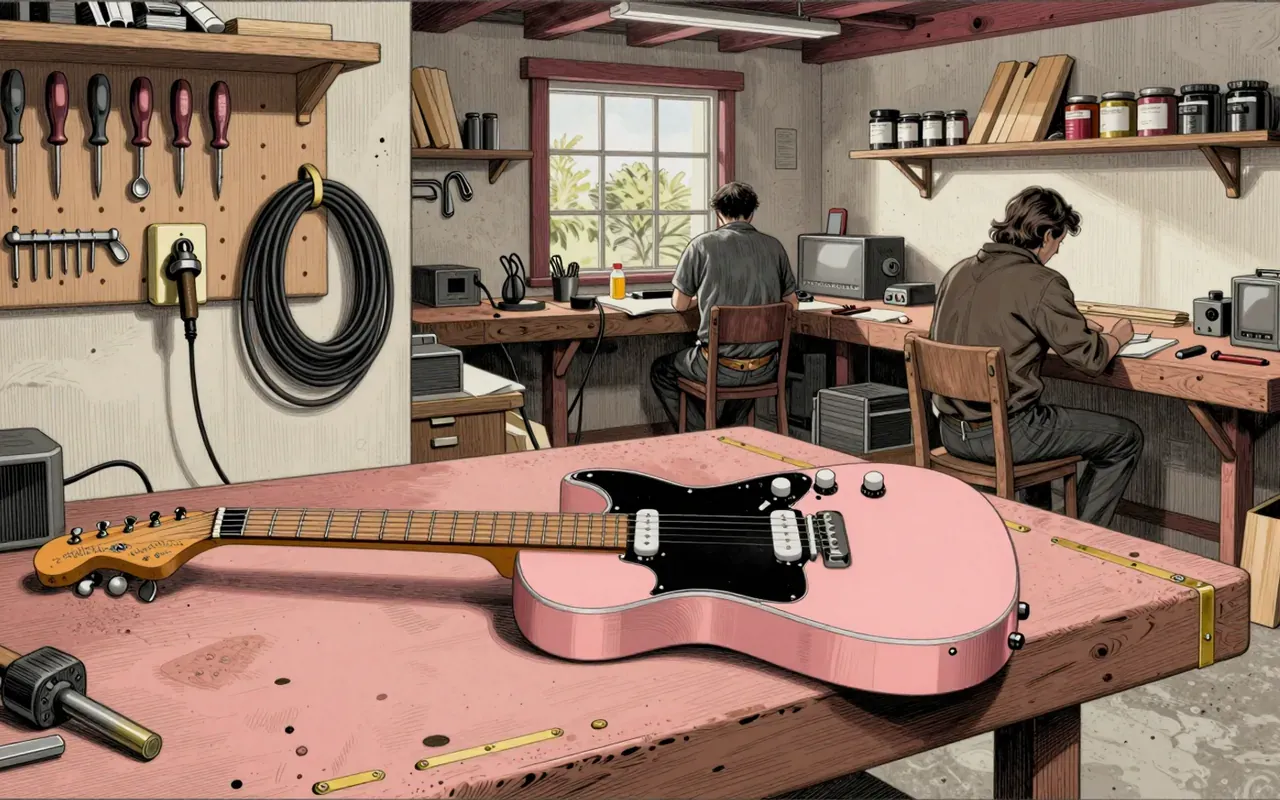
The Telecaster is the original mass-produced solid-body electric guitar. It established the bolt-on neck, single-cutaway solid-body template. It remains in continuous production since autumn 1950. Its simplicity enables durability and directness—but offers no noise cancellation, ergonomic contouring, or tonal versatility beyond its two-pickup circuit.

7:51

Buchla 100

Buchla · 1962

The Buchla Electronic Musical Instruments (1965) were modular, voltage-controlled systems designed for creating novel sounds—not imitating existing ones—using touch/pressure interfaces instead of keyboards, with synthesis based on FM, AM, and dynamic waveshaping.

10:20

Fender Deluxe Reverb

Fender

The Fender Deluxe Reverb is a 22-watt tube combo amplifier introduced in 1963, featuring spring reverb, tremolo, and a fixed 12-inch speaker configuration. It uses 6V6GT power tubes operated beyond specification, four 12AX7s, two 12AT7s, and a 5AR4 rectifier. Most commonly fitted with a Jensen C-12Q speaker, it has appeared with Oxford, Marlboro, Utah, and Eminence alternatives. Its circuit remained largely unchanged across black-panel (1963), silver-panel (1968), and black-panel reintroduction (1980) eras.

10:38

Mesa/Boogie Rectifier

Mesa/Boogie

The Mesa/Boogie Rectifier is a 100-watt tube guitar amplifier introduced in 1991 or 1992, built for aggressive, bass-heavy distortion and refined across seven circuit revisions. It defined 1990s rock tone—but offered little clean headroom, resisted nuance, and cemented Mesa’s association with metal over its broader legacy.

9:56

Gibson ES-335

Gibson · 1958

The ES-335 is a semi-hollow body semi-acoustic guitar introduced in 1958 as a compromise between hollow-body warmth and solid-body feedback resistance, featuring a solid maple center block with hollow upper bouts and f-holes. It achieved commercial success and continuous production due to its tonal flexibility across blues, jazz, and rock.

9:34

Fender Jazz Bass

Fender

The Jazz Bass is a purpose-built alternative to the Precision Bass—brighter, faster, less fundamental, less quiet. It does not replace the P-Bass. It displaces it.

8:51

Marshall JTM45

Marshall

The Marshall JTM45 is Marshall's first guitar amplifier, prototyped in 1962 and produced from 1963. It was developed as a British alternative to Fender amplifiers, using a modified Fender Bassman circuit with a 12AX7 preamp valve, Celestion speakers in a closed cabinet, and a modified negative feedback circuit that altered harmonic content. Its name reflects Jim and Terry Marshall and its 45-watt RMS rating.

9:30

Klon Centaur

Klon · 1994

The Klon Centaur is an overdrive pedal introduced in 1994. It was designed to emulate high-volume amplifier distortion while preserving tone. Its circuit uses a JFET-based TL072 op amp and hard-clipping 1N34A diodes. After internal voltage doubling, the signal splits into three paths. It adds slight midrange emphasis. It was built as a standalone pedal in a custom-cast enclosure.

10:29

Gibson Les Paul

Gibson · 1952

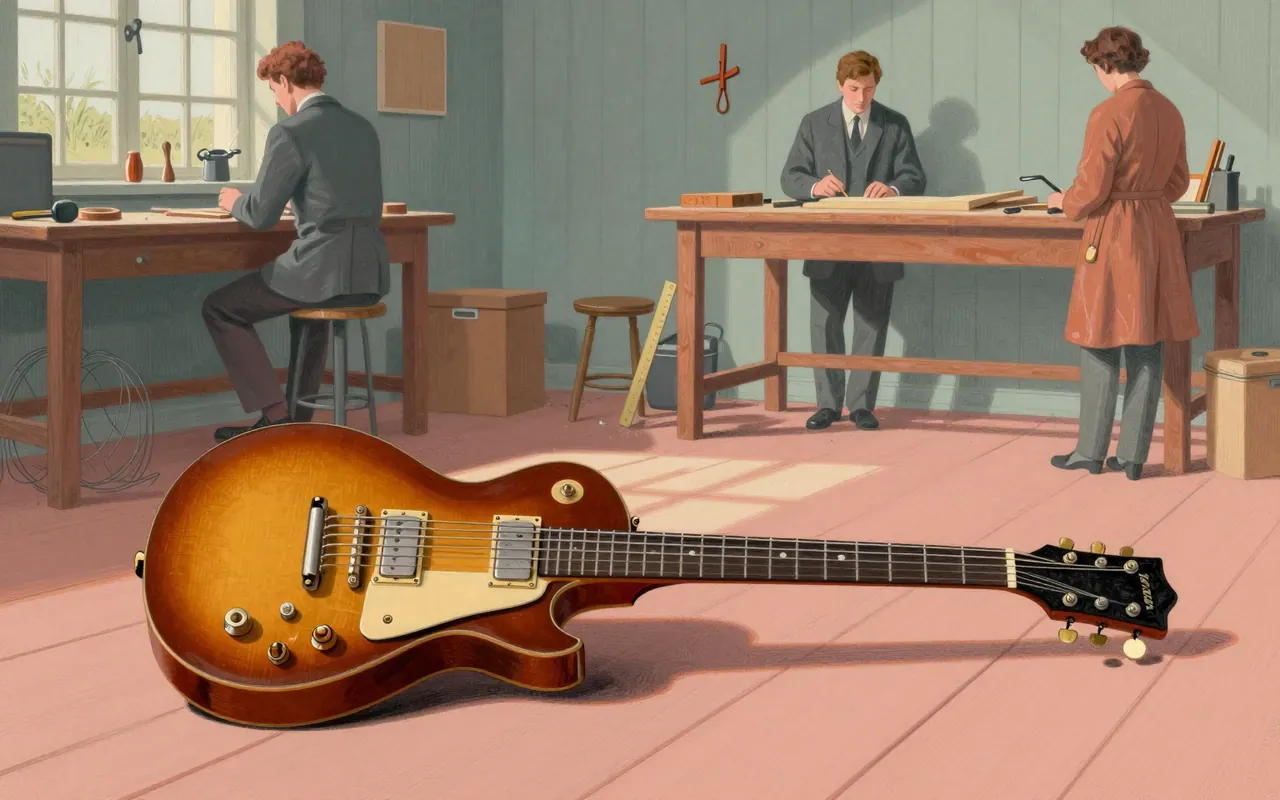
A physically dense, sonically authoritative solid-body guitar built for sustain and midrange focus — not speed or lightness.

9:43

Beyerdynamic M 160

Beyerdynamic · 1957

The Beyerdynamic M 160 is a hypercardioid ribbon microphone introduced in 1957. It uses dual 15-mm aluminum ribbons suspended between alnico magnets, rotated 90° to achieve end-address directionality. It softens strident sound sources without dulling transients. It was used by Eddie Kramer on Jimi Hendrix’s vocals and amplifier and by Andy Johns on John Bonham’s drums for 'When the Levee Breaks.' It remains in production after over six decades.

9:28

Mesa/Boogie Mark IIC+

Mesa/Boogie

The Mark IIC+ is a purpose-built, hand-assembled high-gain amplifier defined by its aggressive midrange, tight low end, and footswitched Rhythm/Lead duality. It sacrifices clean headroom, feature depth, and production consistency for saturated, compressed tone that cuts and sustains. Its value lies entirely in what it delivers to the player’s hands and ears—not in rarity, pedigree, or resale.

8:02

Roland MC-8 Microcomposer

Roland

The Roland MC-8 Microcomposer is a pioneering CV/Gate sequencer from early 1977. It uses an Intel 8080A CPU and 16 KB RAM to store up to 5,300 notes. It enables polyphonic sequencing via CV/Gate allocation and precise, rapid control of VCOs, VCFs, and lighting. It was designed for large modular systems like the System 700 and System-100M. It does not support real-time recording well and lacks modern interface conveniences.

9:18

Sennheiser MD 421

Sennheiser · 1960

The MD 421 is a 1960 cardioid dynamic mic with a 27 mm diaphragm, 30–17,000 Hz ± 3 dB response, portless closed housing, and hum-compensation coil. Still in production. Over 500,000 units sold.

9:53

Sony MDR-V6

Sony

The Sony MDR-V6 is a folding, closed-back, circumaural headphone introduced in 1985 and discontinued in 2020. It was designed for professional monitoring in live and studio settings. Its closed, sealed-ear construction provides isolation and portability. Consumer Reports measured it as the most accurate headphone they had tested in 1989. Dave Rat confirmed its near-neutral response—though slightly rolled off at both extremes. It was part of Sony’s Studio Monitor line, produced by Sony/Taiyo Corporation in Ōita Prefecture, Japan. Its durability and consistency made it a staple for sound engineers and DJs for thirty-five years.

8:47

Nagra

Kudelski · 1951

Nagra recorders were Swiss-engineered portable analog tape machines built for professional film and broadcast sound capture from 1951 onward. They prioritised mechanical reliability, sync accuracy, and tactile control over flexibility or convenience. Their dominance lasted until digital alternatives offered file-based workflows, multitrack capability, and lighter weight.

9:22

Nord Modular

Clavia

The Nord Modular is a 1997 software-based semi-modular synthesizer that uses DSP to emulate analogue circuitry and supports multiple synthesis methods including subtractive, additive, FM, and physical modelling. Patch editing is performed on a PC using graphical editor software, while sound generation occurs independently on the hardware. Patch complexity is constrained by available DSP resources, and polyphony varies from 4 to 32 voices depending on patch complexity. It was upgraded in 2004 as the Nord Modular G2 with endless rotary knobs and a larger keyboard with aftertouch.

8:50

Fender Precision Bass

Fender · 1951

The Fender Precision Bass is a solid-body, four-string electric bass introduced in 1951. It has a 34-inch scale length, a 20-fret maple neck bolted on with four screws, and a single pickup. It produces a deep and full-bodied sound. Leo Fender designed the prototype in 1950 for big band bass players. The 34-inch scale was chosen after trial and error to balance resonance and fret spacing. Pre-1957 models used a Telecaster-style headstock; later models adopted the Stratocaster's styling.

9:32

Electro-Voice RE20

Electro-Voice

The Electro-Voice RE20 is a professional cardioid dynamic microphone introduced in 1968 for broadcasting applications. It employs Variable-D technology—a single transducer element with internal porting—to eliminate proximity effect and maintain stable frequency response regardless of source distance. It features a switch to attenuate frequencies below 400 Hz, a humbucking coil for EMI rejection, and a deeply mounted element to handle high SPLs. It delivers excellent fidelity despite its large size and weight. It continues to be used in recording studios and on the concert stage.

8:53

Serge Modular

Serge

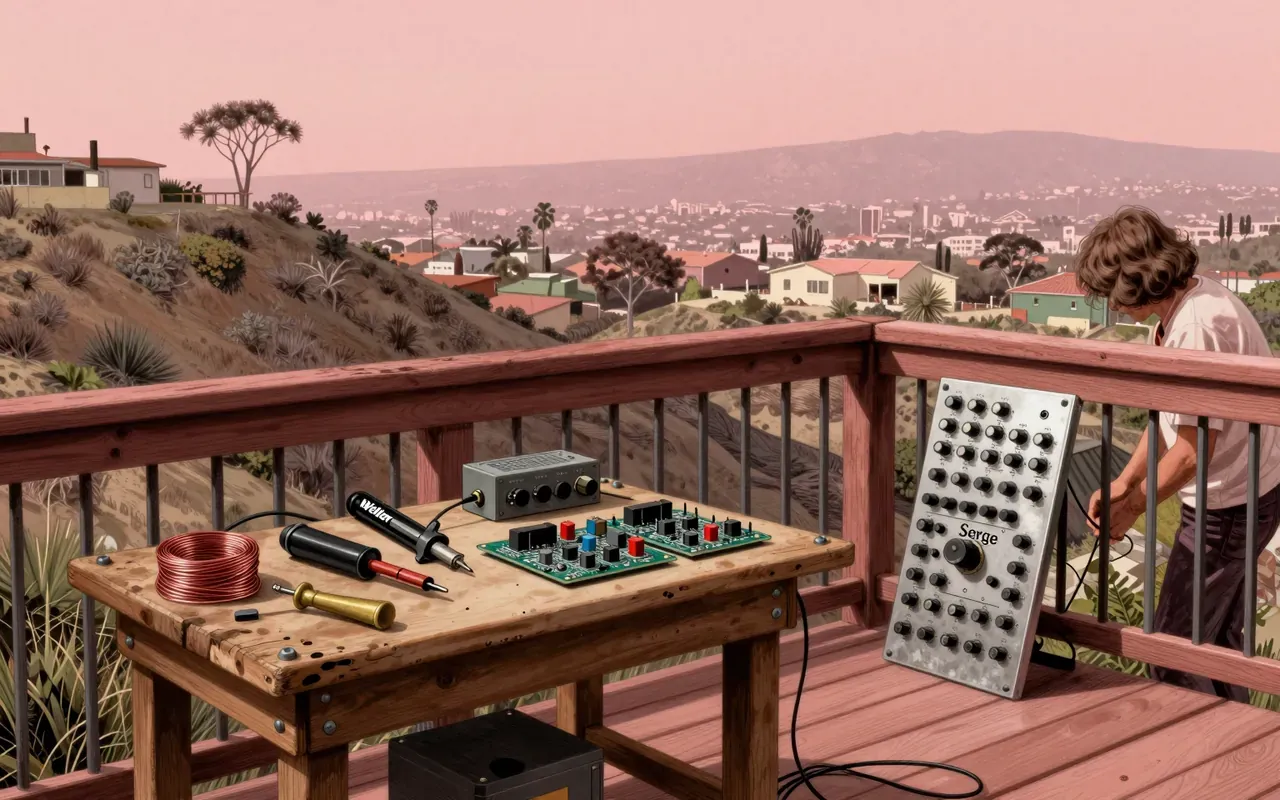
The Serge synthesizer is an analogue modular system developed at CalArts in late 1972. It was built to be inexpensive and powerful, a democratic alternative to Buchla systems. It shipped as DIY kits assembled unofficially on a CalArts balcony. Modules expose circuit aspects on the front panel for unconventional patching. All signals use banana jacks—no separation between audio and control voltage. Stackable banana plugs reduce the need for mults. One unit was used on the 1975 Greenpeace anti-whaling expedition to approximate and broadcast whale sounds.

8:29

Technics SL-1200

Technics · 1972

The Technics SL-1200 is a tool for physical intervention — not passive playback. Its engineering serves one demand: keep spinning, exactly, while being handled.

9:19

Shure SM57

Shure · 1965

The Shure SM57 is a low-impedance cardioid dynamic microphone introduced in 1965. It uses the Unidyne III capsule, shares design DNA with the SM58, and features impedance balancing via XLR. Its frequency response runs from 40 Hz to 15 kHz. Its cardioid pattern reduces background noise and feedback. It was built for TV studios — non-reflective, no on-off switch — and tested under torture. It has been used for every U.S. presidential speech since 1965 and remains one of the world’s two bestselling microphones since the late 1960s.

8:46

Shure SM58

Shure · 1966

The Shure SM58 is a professional cardioid dynamic microphone introduced in 1966. It is commonly used in live vocal applications. It has been produced since 1966 and is still the industry standard for live vocal performance microphones. It is the most popular live vocal microphone in the world. Like all directional microphones, it is subject to proximity effect, a low-frequency boost when used close to the source. Its cardioid response reduces pickup from the side and rear, helping to avoid feedback onstage. The SM58 uses an internal shock mount to reduce handling noise. A distinctive feature of the SM58 is its pneumatic suspension system for the microphone capsule. The SM58 was introduced in 1966 as part of the SM series. The SM58 was originally developed for the TV studio market with a non-reflective finish and no on-off switch. The SM58 has been one of the two bestselling microphones in the world since the late 1960s. The SM58 shares nearly identical features with the SM57, differing mainly in grille design.

8:32

E-mu SP-1200

E-mu Systems

The E-mu SP-1200 is a sampling drum machine introduced in August 1987 by E-mu Systems. It uses 12-bit linear sampling at 26.04 kHz, drop-sample pitch-shifting, analog SSM2044 lowpass filters on channels 1 and 2, volatile RAM loaded from 3.5" disk, and offers 10 seconds of total sampling time—with a 2.5-second limit per sound. It succeeded the SP-12 and offered integrated sequencing and sample looping in a single unit.

9:57

Fender Stratocaster

Fender · 1954

The Stratocaster is a solid-body electric guitar introduced in 1954. Designed between 1952 and 1954 by Leo Fender, Bill Carson, George Fullerton, and Freddie Tavares. Continuously manufactured since 1954. Its distinctive body shape was revolutionary when introduced in the mid-1950s. The heavily contoured back was designed for better comfort while playing. The elongated top horn changes the balance when played standing up with a strap compared to the Fender Telecaster. While the original release of the Stratocaster included a vibrato system, Stratocasters without it ("hardtails") were added to the portfolio in March 1955. The modular nature of the guitar, with its easily removable components, enabled players and luthiers to perform numerous modifications to their own guitars, changing out pickups or necks to fit the needs of the player. All of these design elements were popularized and later became industry standards due to the success of the Stratocaster.

34:32

Fender Twin

Fender

The Fender Twin is a clean-headroom amplifier built for volume and clarity — not saturation or convenience.

13:34

Neumann U 87

Neumann · 1967

The Neumann U 87 is a large-diaphragm condenser microphone introduced in 1967 as the solid-state successor to the U 67. It features a 25.4 mm diaphragm and three selectable polar patterns — cardioid, omnidirectional, and figure-8. It can be powered by 48V phantom power or two internal 22.5V batteries. The original used the K 87 capsule, a modified version of the K 67. The 1986 U 87A reverted to the standard K 67 capsule and eliminated the dual-battery requirement.

8:56

PPG Wave

PPG

PPG Wave pioneered real-time interpolated wavetable scanning—making timbre itself a sequenced parameter. Its hybrid digital-analog signal path (digital oscillators, analog filters and VCAs) delivered spectral animation impossible on analog synths of the era. But it demands peripheral hardware for editing, sampling, or expressive control—and offers no direct waveform manipulation or polyphonic sequencing. It belongs in a studio built for sound design, not stage performance.

8:51

Korg Wavestation

Korg

The Korg Wavestation is a vector and wavetable synthesizer introduced in 1990. It uses Wave Sequencing — a method of multi-timbral sound generation using successively played PCM waveforms — combined with Advanced Vector Synthesis, allowing dynamic mixing and morphing between up to four oscillators. It enables crossfading up to 255 waveforms, jumping to any PCM wave in ROM, and generating complex, evolving timbres and rhythmic sequences from a single keypress. Unlike contemporaries, it lacks an onboard sequencer and is designed as a 'pure' synthesizer.

9:28

Rickenbacker 330

Rickenbacker

A semi-acoustic twelve-string electric guitar in the Capri series, introduced in 1958 and designed by Roger Rossmeisl. Built for clarity, projection, and rhythmic definition in ensemble playing.

8:48

Fairchild 660

Fairchild

The Fairchild 660 is a mono tube compressor introduced in 1959. It was the first intelligent automatic volume control limiter. Designed by Rein Narma, the first ten units were built by him. The first unit went to Rudy Van Gelder, who used it to cut lacquer masters for Blue Note Records and Vox Records. It functions as a compressor (2:1, threshold 5 dB below normal) or peak limiter (30:1, threshold 10 dB above normal), with fixed 1/10,000-second attack and variable release. Its push-pull amplification and high control voltage yield low distortion, low noise, and no audible thumps.