audiobriefs
Highest rated

All briefs

747 briefs · 6840 min · 289–384 on page 4 of 8
8:38

Korg Z1

Korg

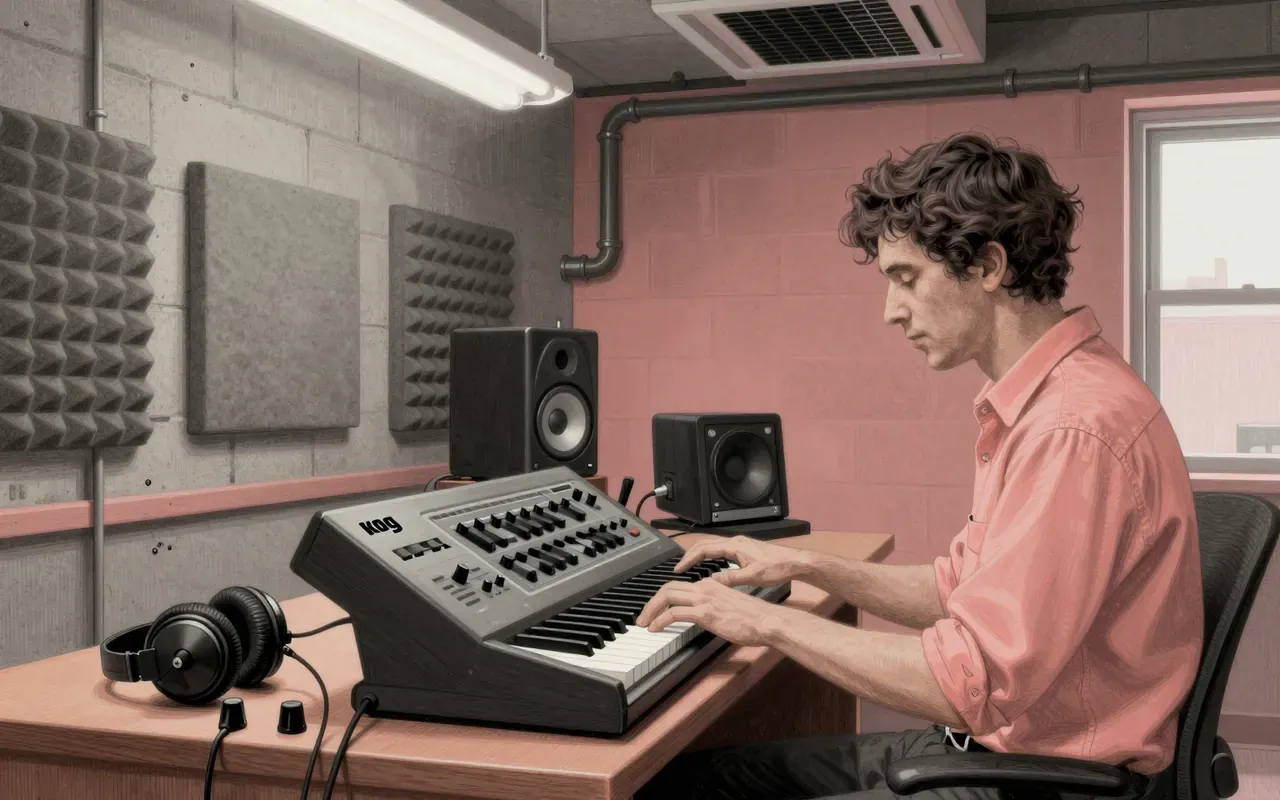
The Korg Z1 is a 1997 digital synthesizer using physical modelling synthesis with 12-voice polyphony. It extends Korg's MOSS system—first introduced in the 1995 Prophecy—into a polyphonic, multitimbral format, incorporating OASYS-based physical modelling engines, two physically modelled oscillators per voice plus sub-oscillator and noise generator, and performance features including a 61-note keyboard with aftertouch and an XY touchpad.
9:20

ARP 2600

ARP

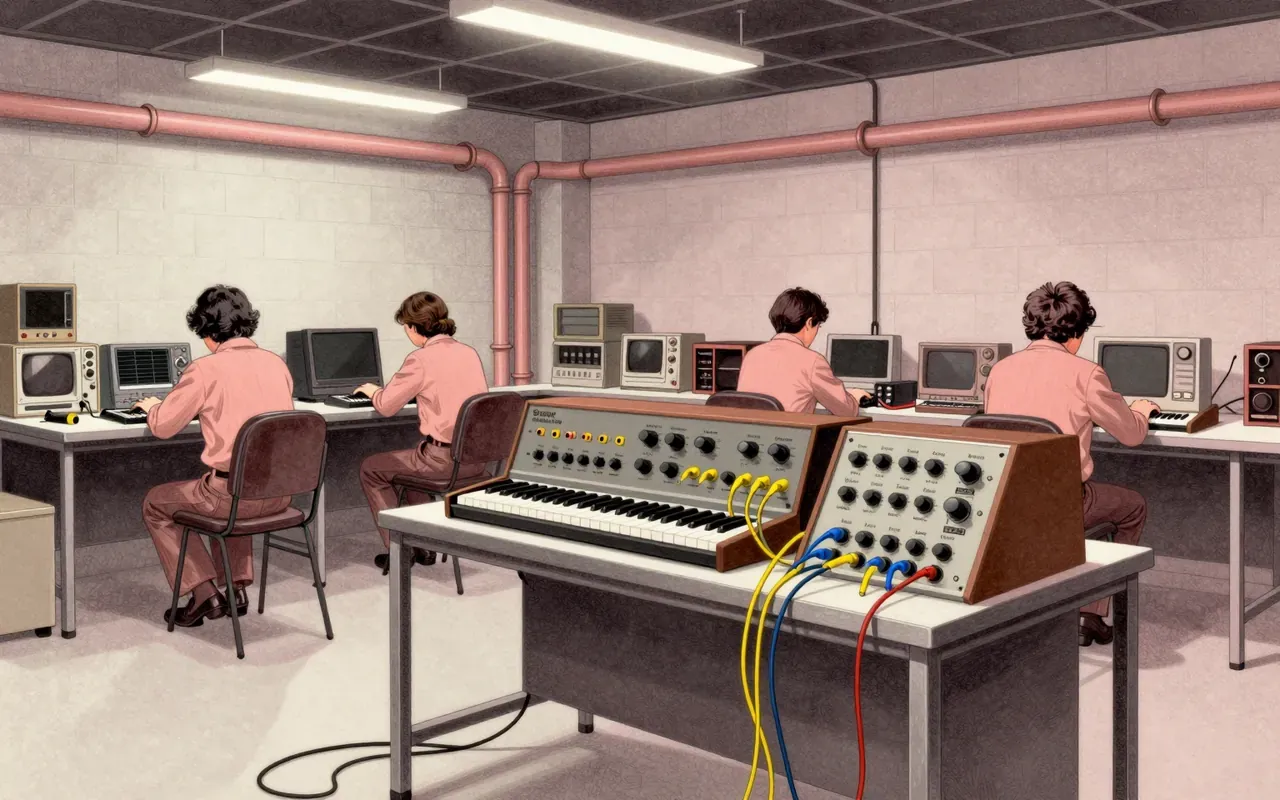
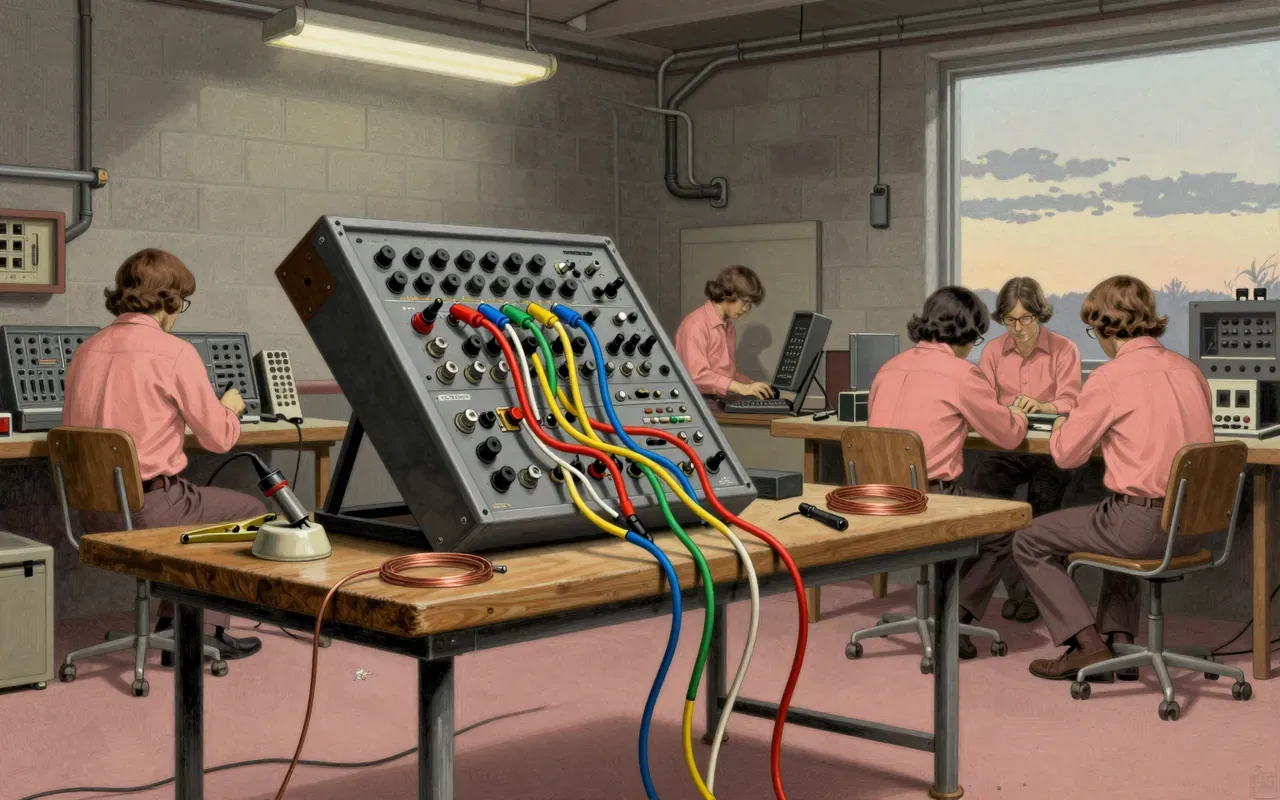
The ARP 2600 is a foundational analog synthesizer designed for education. Its semimodular architecture, front-panel signal graphics, and duophonic voice count reflect its classroom purpose—not stage use. Its original filter was replaced after a patent dispute. It teaches synthesis more directly than any contemporaneous instrument, but offers no polyphony, no presets, and unstable tuning.

9:15

Big Muff

Electro-Harmonix · 1969

The Big Muff Pi is a 1969 fuzz effects pedal with four transistors, two soft-clipping stages, and a tone stack that scoops mids when centred. It delivers smooth, saturated, bass-heavy sustain at any volume—making small amps sound bigger. It was intended to mimic Hendrix but became heavier and more distinctive. It does not offer gain staging, midrange recovery, or dynamic clean-up.

8:52

Watkins Copicat

Watkins

The Watkins Copicat is a valve-based tape echo unit introduced in 1958. It features three replay heads, a selector switch, and a feedback loop for variable echo-repeat. It was designed to be simple, affordable, and portable. It was one of the first commercially available tape delay units and preceded other major European echo units. The first production run of 100 units sold out on the first day.

8:47

Roland CR-78

Roland

The CR-78 is historically singular: the first microprocessor-based drum machine and the first to allow user-programmable pattern creation. Its analog synthesis yields 14 fixed drum sounds. Its four-note polyphony defines its rhythmic ceiling. It does not offer sound editing, velocity layers, or sample playback. It belongs in rooms where constraint is compositional strategy—not a flaw to be patched.

11:15

Roland D-50

Roland · 1987

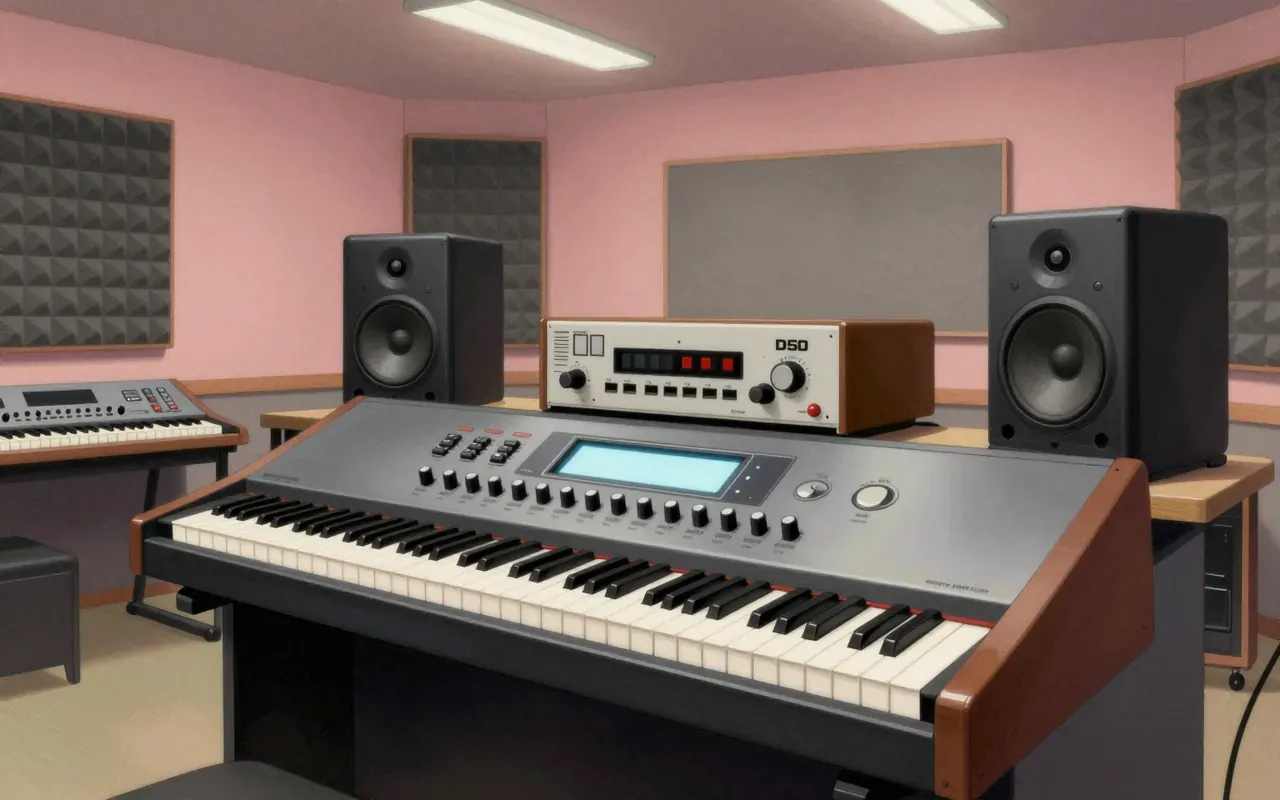
The Roland D-50 is a 1987 hybrid synthesiser that pairs 47 ROM-based PCM attack samples with subtractive synthesis to create realistic, bright, and instantly usable tones. Its architecture — two tones, each with two partials — delivers clarity and presence but imposes strict limits on timbral complexity and real-time control. It was built for affordability and immediacy, not flexibility or depth.

9:08

Oberheim DMX

Oberheim

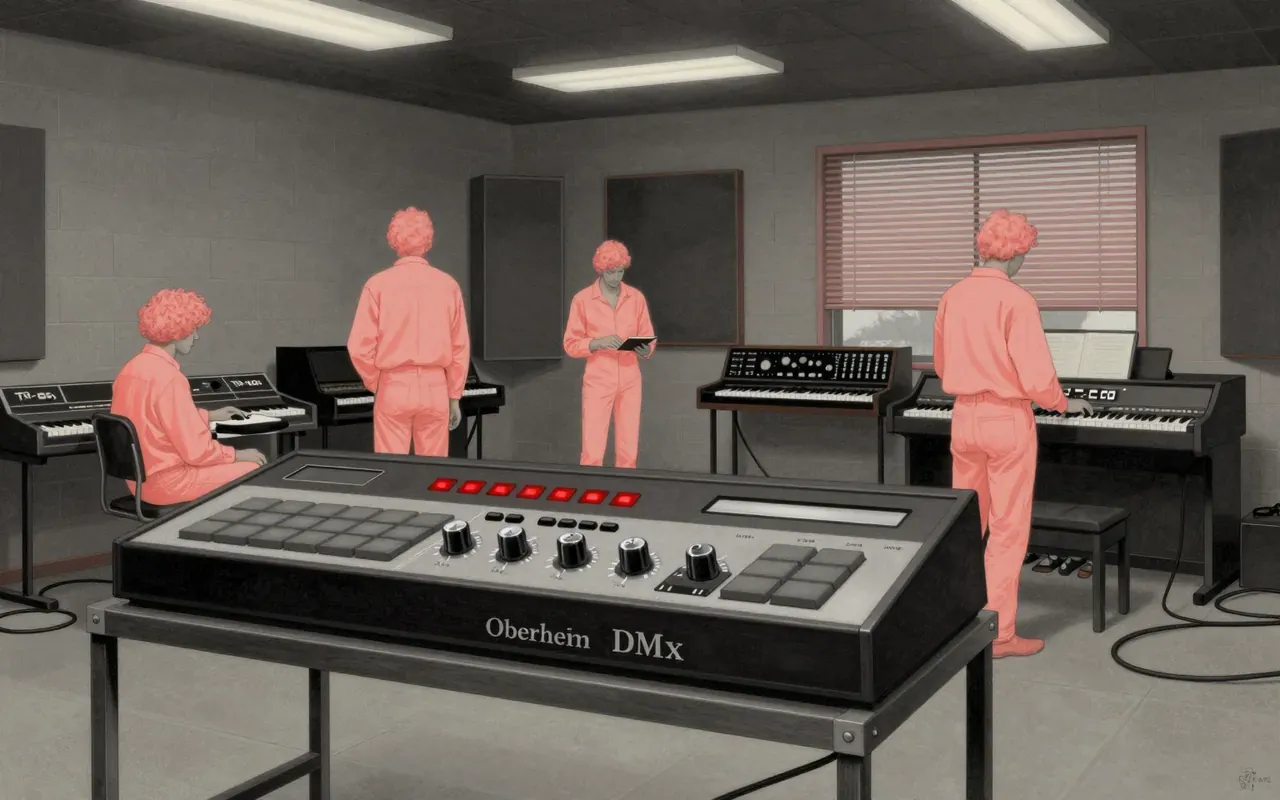
The Oberheim DMX is a programmable digital drum machine introduced in 1980. It was the second commercially sold digital drum machine after the Linn LM-1. It used sampled sounds of real drums stored in EPROM chips on removable voice cards. It offered 24 drum sounds derived from 11 original samples and supported up to 8-voice polyphony. It included humanizing features like rolls, flams, and timing variations. It was designed to interface with the OB-Xa synthesizer via the Oberheim Serial Buss and marketed as part of 'The System' alongside the DSX sequencer and OB-Xa or OB-8. It was widely used in 1980s new wave, synth-pop, and hip hop recordings.

11:16

Gibson ES-345

Gibson · 1959

The Gibson ES-345 is a semi-hollow electric guitar introduced in 1959. It was designed as a hybrid between a solid-body electric guitar and a jazz guitar. It was developed in 1958 as an upscale version of the ES-335. Gibson announced the ES-345 as the ES-345T in May 1959. The ES-345T had a price of $345 in the standard sunburst finish. From the guitar's 1959 introduction through 1979, 10,560 ES-345s were shipped. Gibson designed the guitar to create a guitar which could be used to play jazz, as would be typical of an Electric Spanish guitar, but with a maple block running through the guitar to allow the versatility of a solid body electric guitar. The bodies were made of laminated maple with spruce bracing, and a solid maple center block - designed to prevent unwanted feedback from the pickups - extending from the base of the body (where the strap button is mounted) all the way to the mahogany neck, along with a rosewood fingerboard.

9:45

Roland JD-800

Roland

The Roland JD-800 is a hands-on, sample-based digital synthesizer manufactured between 1991 and 1996. It features many knobs and sliders for patch editing and performance control. Roland's intention was to return to the roots of synthesis. It employs sample-based oscillators and a fully digital signal path. It has 108 built-in sampled waveforms, expandable via PCM cards. A patch consists of up to four tones. In Multi mode it is possible to play five different patches over MIDI, plus a 'special' patch — which assigns different waveforms to the 61 keys for drums and percussion.

8:40

Roland Juno-106

Roland

The Juno-106 is a six-voice analog synthesizer released by Roland in February 1984. It features digitally controlled oscillators, 128 patch memories (up from the Juno-60’s 56), a performance lever for pitch and modulation, and early MIDI implementation enabling parameter change sequencing.

9:55

Gibson Les Paul Custom

Gibson · 1954

The Gibson Les Paul Custom is a luxury electric guitar introduced in 1953 at Les Paul’s request for a black, tuxedo-like instrument. It featured the ABR-1 bridge from 1954, adopted the PAF pickup in mid-1957, and switched to Grover Rotomatics by 1958. It remained a double-cutaway model until 1963, when it was renamed the SG Custom after Les Paul’s endorsement ended.

9:00

Minimoog Voyager

Moog · 2002

The Minimoog Voyager is a monophonic analog synthesizer released in 2002. It was modelled after the 1970s Minimoog and intended as its successor. It promised modern features while preserving the original sound quality. Over 14,000 units shipped between 2002 and 2015.

8:45

Nord Lead

Clavia

The Nord Lead redefined hands-on synthesis by replacing menus with knobs and analog circuitry with DSPs — all to deliver immediate, expressive control over virtual analog tones.

8:08

Oberheim OB-X

Oberheim

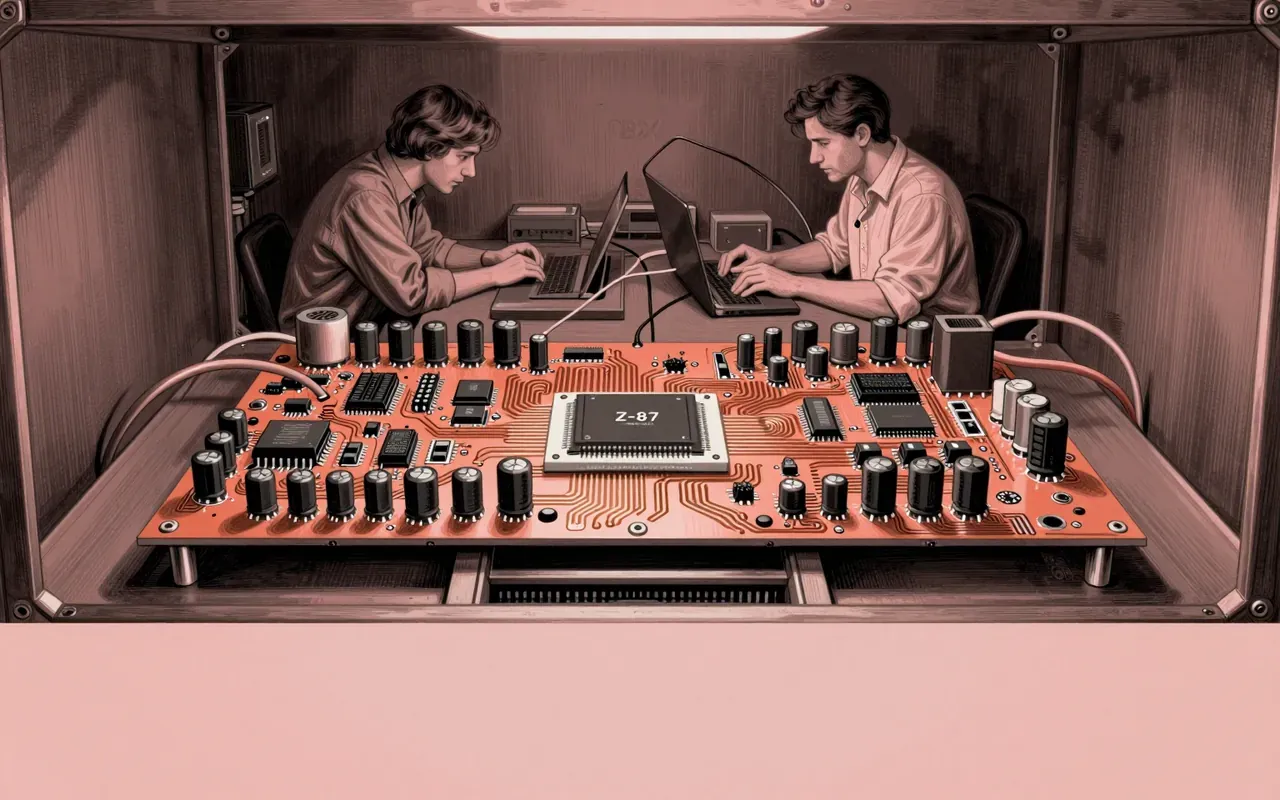
The OB-X was Oberheim’s first OB-series polyphonic analog subtractive synthesizer. Introduced in June 1979 to compete with the Prophet-5, it replaced modular SEM-based systems with a unified design built around interchangeable voice cards. It offered 4-, 6-, or 8-voice configurations, 32 user-programmable presets, and automated tuning via a Z-80 microprocessor. Its architecture prioritised stability and integration over flexibility or expressivity.

11:30

Oberheim OB-Xa

Oberheim

The OB-Xa is a pragmatic evolution: layering and splitting built in, filter envelope replacing cross modulation, Curtis ICs for stability, and Serial Buss for closed-system integration. It delivers thick, reliable polyphony — but sacrifices the OB-X’s discrete-circuit idiosyncrasy and FM flexibility.

8:26

ARP Odyssey

ARP

The ARP Odyssey is a duophonic analog synthesizer introduced in 1972. It was designed as a portable, performance-oriented alternative to the Moog Minimoog.

9:59

Korg Polysix

Korg

The Korg Polysix is a 1981 six-voice polyphonic analog synthesizer designed for affordability through single-oscillator-per-voice architecture, compensated by built-in bucket-brigade-based chorus/phaser/ensemble effects — features that were relatively uncommon at launch and contributed to its accessibility and sonic richness.

9:44

Fender Princeton Reverb

Fender

The Fender Princeton Reverb is a 12-watt tube combo that integrates reverb and vibrato into a single, responsive, non-master-volume design. Introduced in 1964, revised through 1977, discontinued in 1981, and reissued in 2008, it delivers a specific kind of saturated, modulated tone at low-to-moderate volumes—and nothing else.

9:14

Akai S1000

Akai · 1988

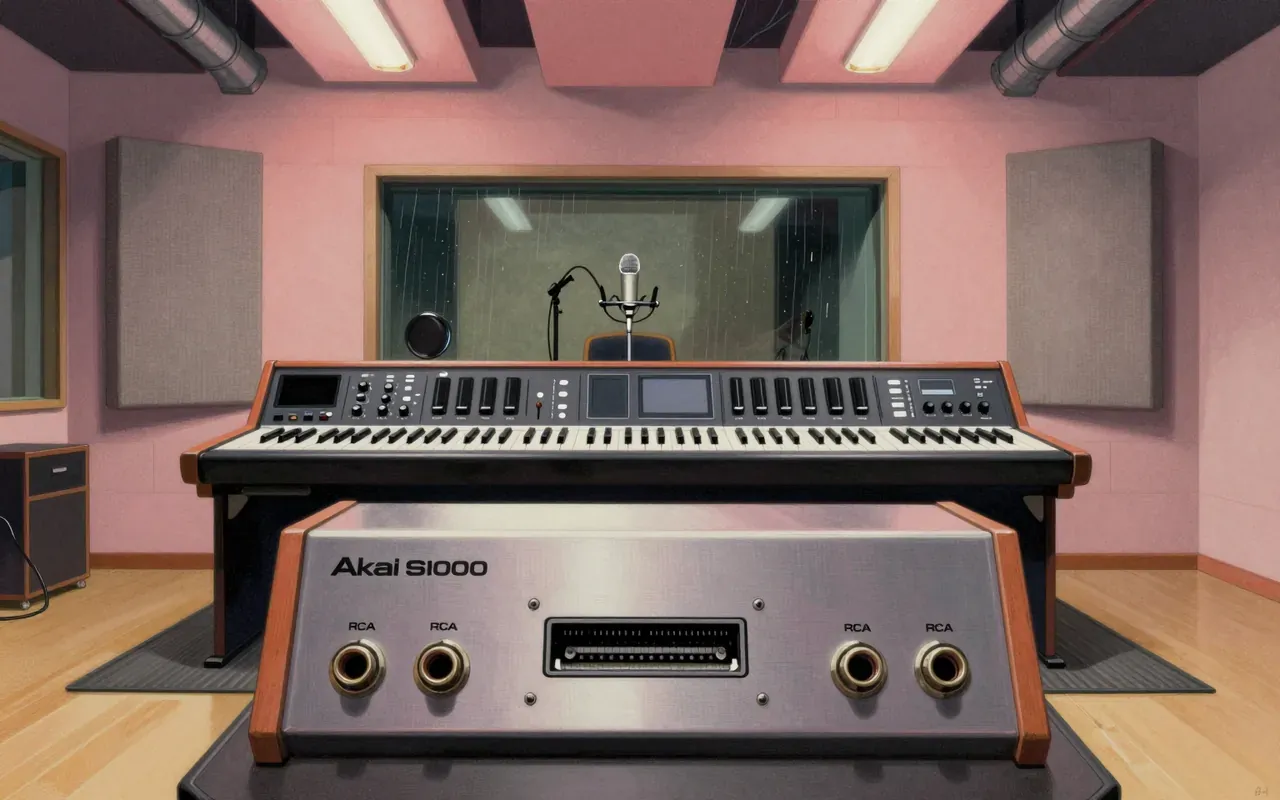
The Akai S1000 was a 16-bit stereo digital sampler released in 1988. It offered CD-quality sampling, 24-bit internal processing, digital filters, effects routing, and early timestretching. It read CD-ROMs and wrote to SCSI hard disks. Its timestretching was crude but sonically distinctive—used on 'Higher State of Consciousness' and 'RipGroove'. It displaced the S900 as the studio standard.

9:06

Oberheim Polyphonic Synthesizer

Oberheim

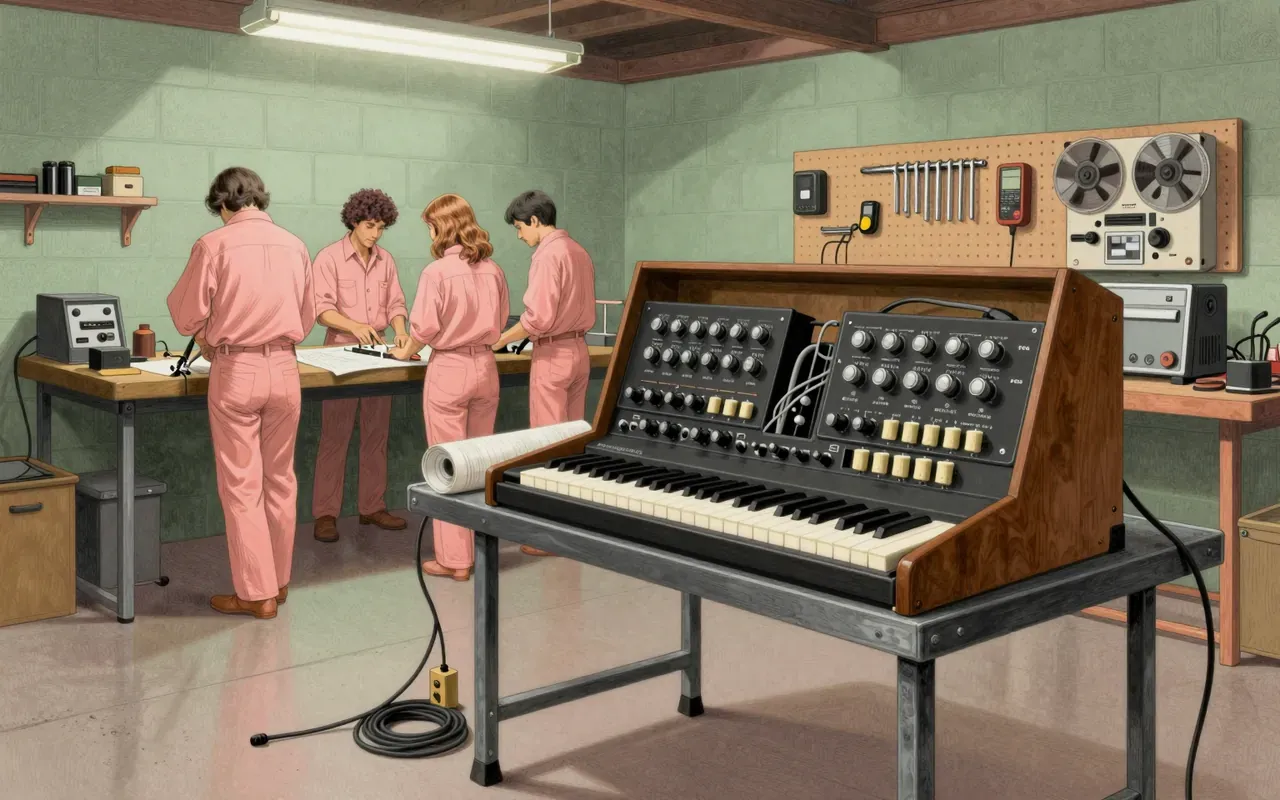
The Oberheim Polyphonic Synthesizer is a series of analog music synthesizers produced from 1975 to 1979. It was the first production synthesizer capable of playing chords. It works by combining multiple SEM modules — each generating one voice — under shared keyboard control and a two-channel sequencer. Its sonic thickness and depth arise partly from random variance between SEM modules. It has no patch memory, suffers tuning drift, and demands high maintenance. Musicians used it for unstable, breathing chordal textures. It suits players who prioritise tactile, variable analog polyphony over stability or recall.

9:04

Roland SH-101

Roland

The Roland SH-101 is a monophonic analog synthesizer made by Roland Corporation between 1982 and 1986. It features a single oscillator, sub-oscillator, low-pass filter, mixer, noise generator, arpeggiator and sequencer. An ADSR envelope controls the filter and VCA. The LFO modulates filter, VCA, pitch and pulse width. It can be played as a keytar using an optional handgrip and shoulder strap, and it can be powered via battery.

9:27

Yamaha SY99

Yamaha

The Yamaha SY99 is a 1991 hybrid digital synthesizer combining FM, sample-based, and subtractive synthesis. It enables PCM samples to function as FM modulators, controllable via velocity, aftertouch, wheels, pedal, and breath controller. It improves on the SY77 with a 76-key keyboard, expanded ROM, user-loadable PCM samples usable in FM synthesis, and an SPX900-derived real-time controllable effects processor.

8:24

Roland System 100

Roland

The Roland System 100 is an analog semi-modular synthesizer introduced in 1975. It consists of discrete rack- and keyboard-mounted units (101, 102, 103, 104, 109), each independently powered, supporting patch-cable reconfiguration of an otherwise fixed signal path. It forms an expandable two-oscillator monosynth with sequencing and effects, uses 1V/oct control, and avoids fixed oscillator footages for enhanced sound design flexibility.

9:38

Tone Bender

Sola Sound

The Tone Bender is a lineage of germanium-transistor fuzz pedals designed to out-sustain the Maestro Fuzz-Tone. Its revisions trade transistor count, topology, and features—not stability or convenience. It rewards touch. It punishes precision.

11:00

Dallas Rangemaster Treble Booster

Dallas Rangemaster

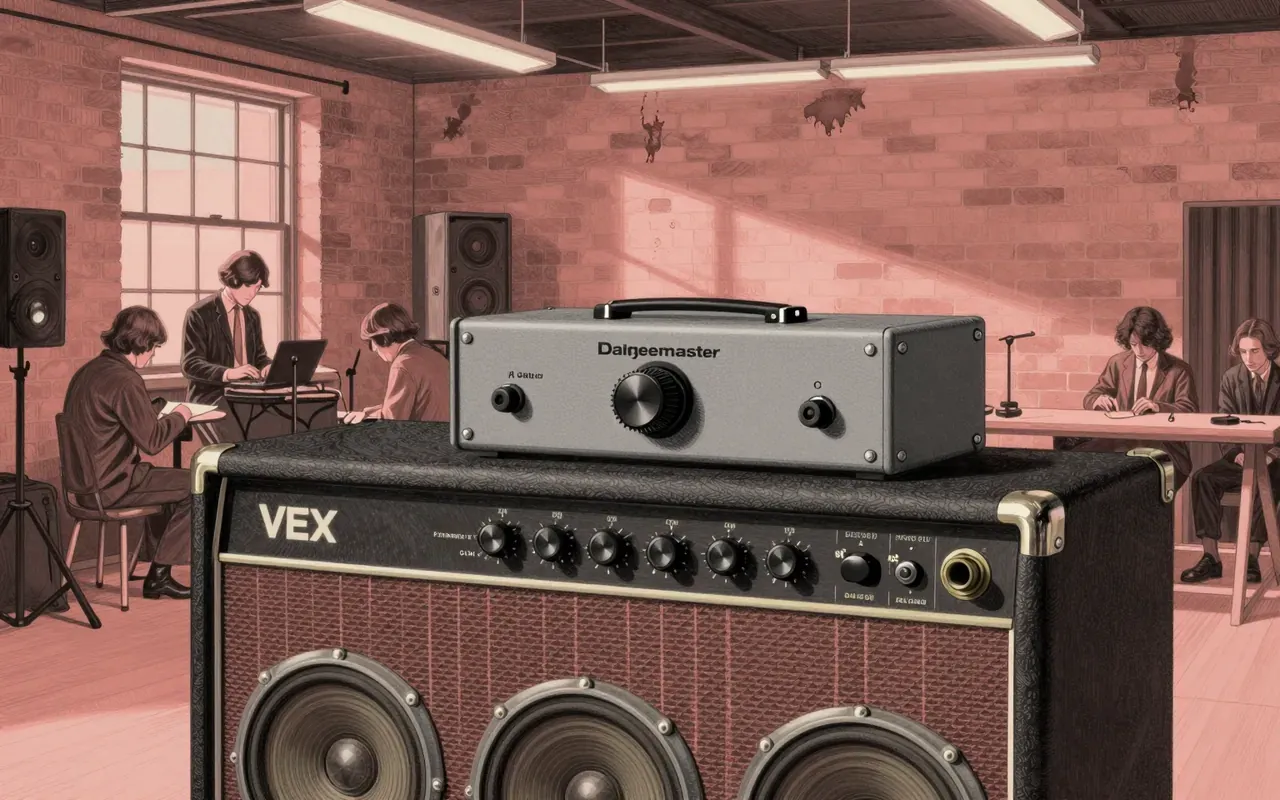
The Dallas Rangemaster Treble Booster is a 1965 desktop effects unit made for guitarists in the 1960s. Its function was two-fold: to increase the signal strength of the guitar going into the amplifier, and to increase tones at the high end of the spectrum (a treble booster). The need for a treble booster arose in the mid-1960s, as British tube amplifiers such as the Vox AC30 or Marshall JTM45 tended to produce a slightly dark, muddy sound when overdriven, particularly when used with humbucking pickups. A pre-amplifier that also boosted treble proved a solution. Additionally, the vintage components in the Rangemaster circuitry could add characteristic distortion and overtones to color the guitar sound, much in the way of the more modern overdrive pedals. The Rangemaster Treble Booster was first made in the 1965 by London company Dallas Musical Ltd., incorporated in 1959. The unit is simple and consists of a grey folded metal casing with an on/off switch, a potentiometer controlling the boost setting, and in- and output jacks. It was designed to sit on top of an amplifier rather than on the floor, where most effects units live.

8:32

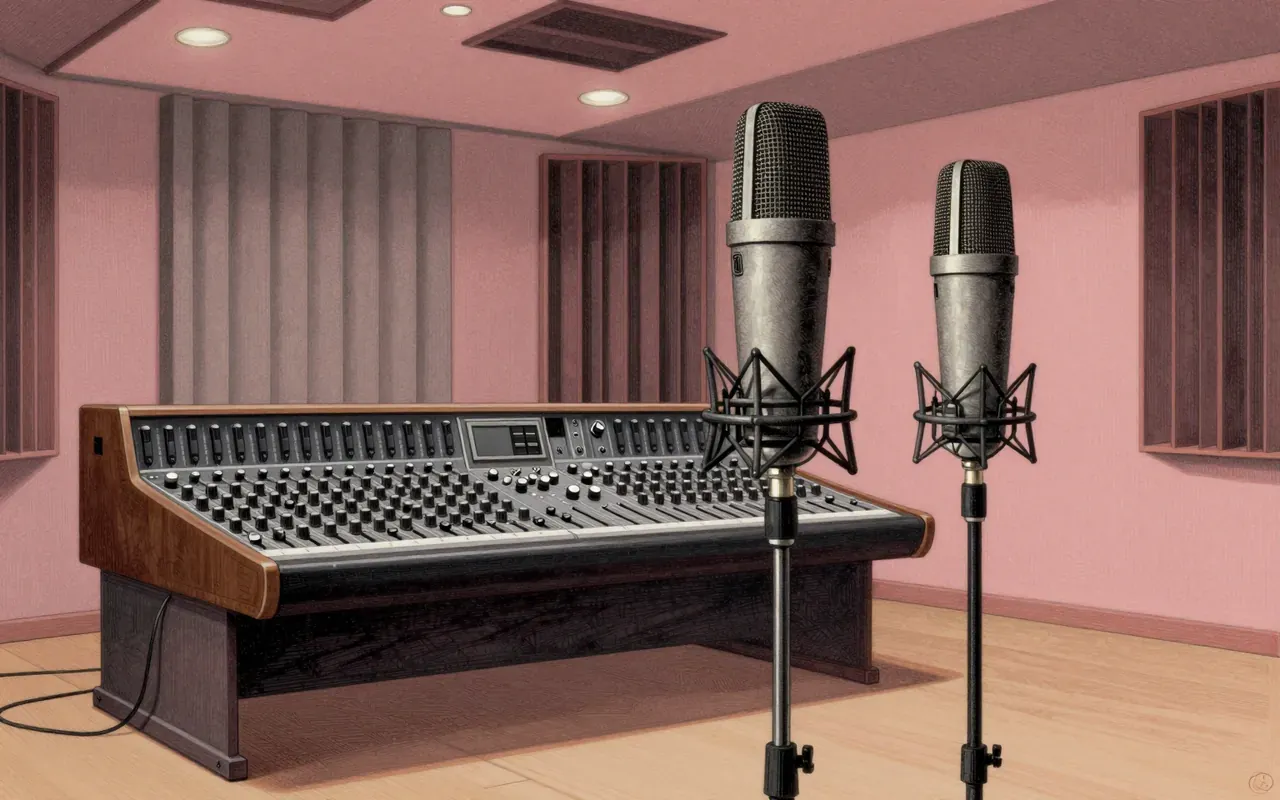
Trident A Range

Trident

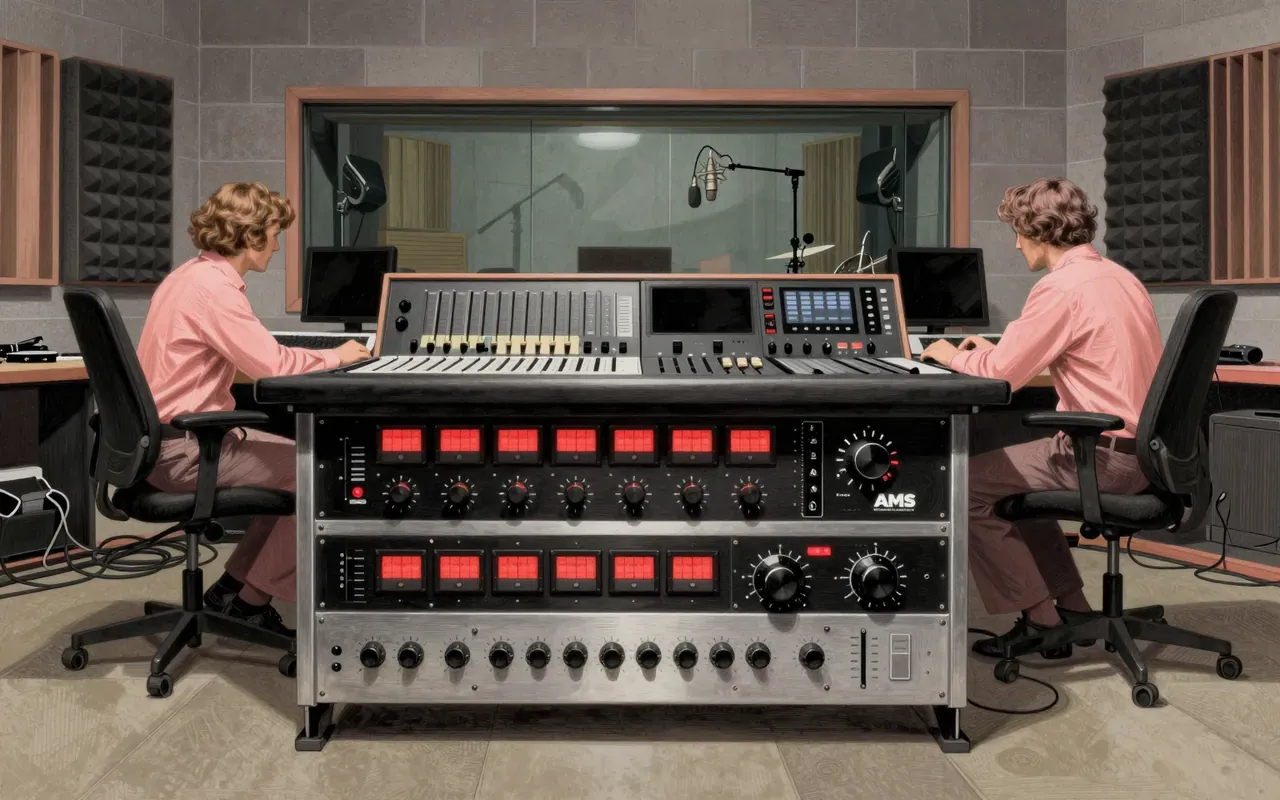
The Trident A Range is a rare, studio-built analog mixing console — not an instrument — with only 13 units ever made. It was built by and for Trident Studios, adopted by Cherokee Studios after outperforming Neve, Helios, and Cadac in a drum-miking test, and prized for its distinct, 'musical' EQ and saturated tonal character. It offers no automation, no digital features, no portability, and no relevance outside high-end analog studio contexts.

10:14

Ensoniq VFX

Ensoniq

The Ensoniq VFX is a performance-type synthesizer released in 1989. It employs Transwave Wavetable Synthesis, Sample playback and Subtractive Synthesis. It has 21-voice polyphony. It features Poly-Key Pressure (Polyphonic Aftertouch). It allows combining up to three voices into a preset for live performance. It includes the Ensoniq Signal Processing (ESP) chip for 24-bit effects. A single sound can contain up to six oscillators. It integrates synthesis, effects and sequencing into a single-unit digital studio. It delivers terrific acoustic sounds and innovative performance and sequencing features.

9:02

Access Virus

Access

The Access Virus is a series of DSP-based virtual analog synthesizers introduced in 1997 and updated through the TI series. It offers subtractive, phase distortion, and FM synthesis—with wavetable added from the TI generation onward. Formats include rack modules (Virus B, C, TI Snow), keyboard versions (Virus KB, TI Keyboard, TI Polar), and fixed control layouts. It prioritises polyphonic stability, real-time editing, and aggressive tonal character over tactile expressivity or modern integration.

9:26

DigiTech Whammy

DigiTech · 1989

The DigiTech Whammy is a treadle-controlled digital pitch shifter pedal introduced in 1989. It uses a licensed IVL Technologies algorithm to shift pitch up to two octaves. Early models were monophonic and produced artificial, wobbly artifacts on chords. Later models improved chord tracking accuracy. It was developed by DOD Electronics (branded as DigiTech), a company founded in 1974.

8:55

Hammond A-100

Hammond · 1959

The Hammond A-100 is a console tonewheel organ introduced in 1959. It is effectively a self-contained version of the B-3 and C-3, with an internal power amplifier and speakers, and it was built in many chassis styles identified by the last two digits of the model number.

10:14

Emulator II

E-mu Systems

The Emulator II, released in 1984, was E-mu's second sampler. It stayed an eight-bit machine but improved fidelity with companding converters and a 27.7 kHz sample rate, and it added resonant analog filters, more flexible editing and far better real-time control. At about $8,000 it was priced like the original, and far below a Fairlight.

8:35

J37

Studer · 1964

The J37 is Studer’s first multitrack machine, released in 1964. It recorded four tracks on one-inch tape. At EMI Studios London, later renamed Abbey Road Studios, The Beatles used a pair of J37s to record Sgt. Pepper’s Lonely Hearts Club Band in 1967. Studer went on to build 8-, 16- and 24-track machines with tape up to two inches wide.

9:51

Mellotron Mk II

Mellotron

The Mk II was the update to the first commercial Mellotron, released in 1964 with the full set of sounds selectable by banks and stations. About 160 were made. It has two manuals, an organ-style cabinet and two internal 12-inch speakers with an amp, and it was meant for the home rather than the road.

9:06

Pianet N

Hohner

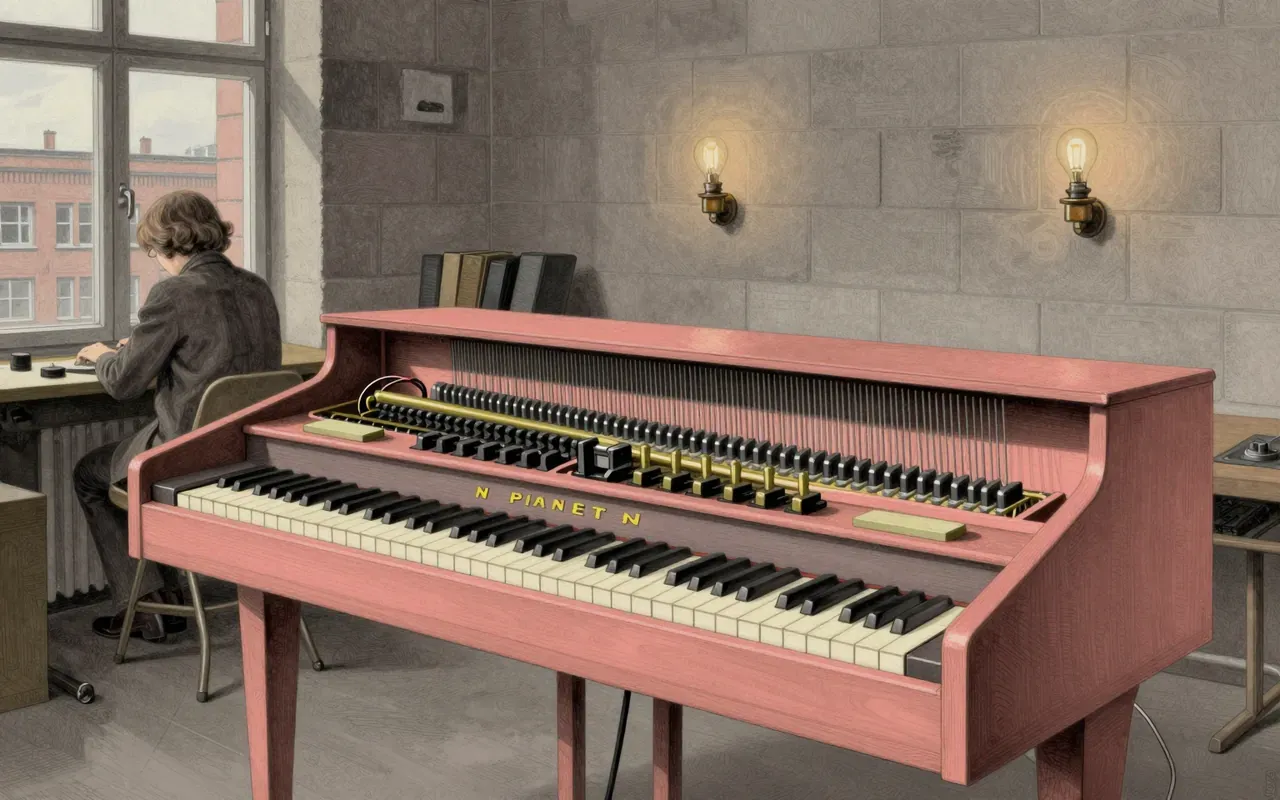
The Pianet N was Hohner's most popular Pianet, made from about 1965 to 1977 in two variants. The N stands for natural wood finish. It has inverted-V legs, a folding top that doubles as a music stand, a transistorised pre-amplifier, a floor pedal for volume and standard vibrato, and it plays through an external amplifier.

8:47

Pianet T

Hohner

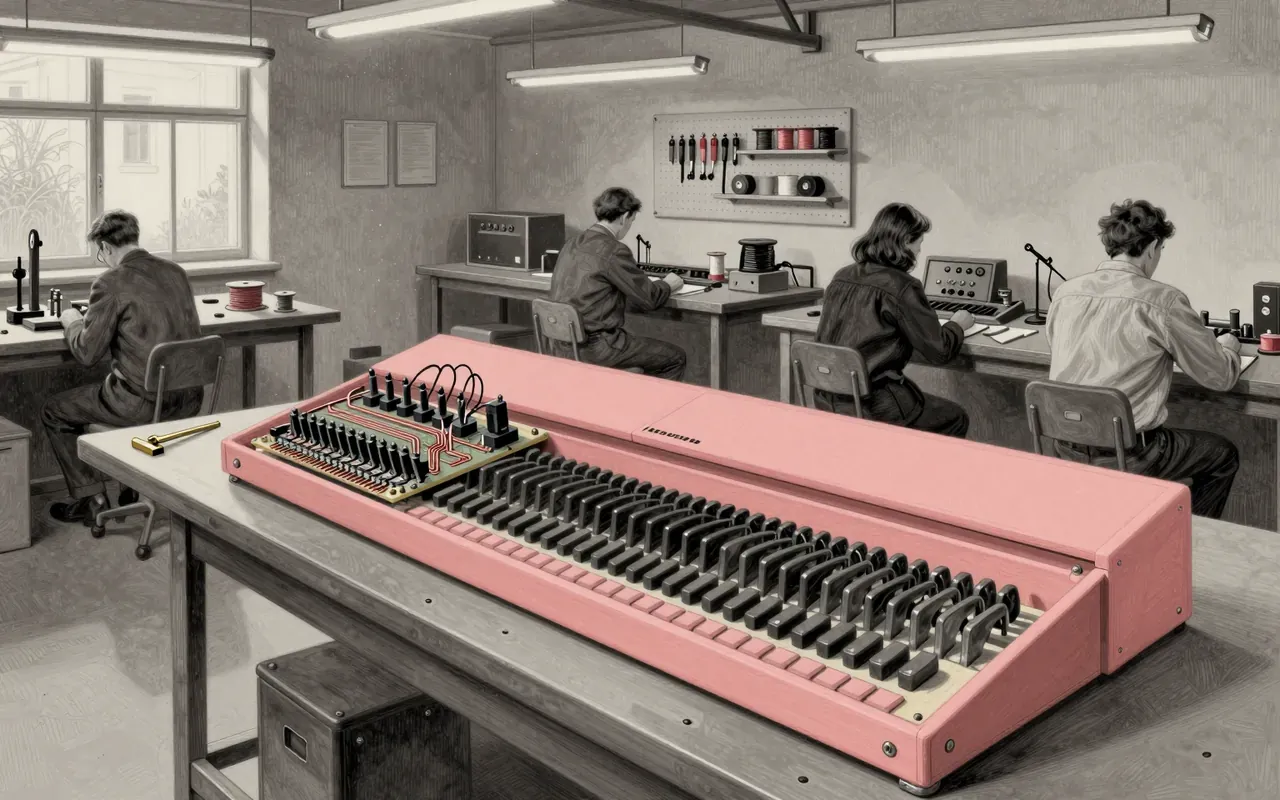
The Pianet T was made from 1977 to about 1983 and headed Hohner's second group of Pianets. Plastic suction pads pluck its reeds, an electro-magnetic pick-up like the one in a Rhodes converts the vibration, and the instrument needs no electrical power of its own. Vinyl-covered, with a hinged lid, it was built for live use but has no built-in amplifier.

7:59

S950

Akai · 1988

The Akai S950 is an expanded version of the S900 sampler, released in 1988 alongside the higher-end S1000. It took over some of the S1000's improvements, including time-stretching, and raised the maximum sample rate to 48 kHz. Like the rest of the S900 series, it can loop a sample alternating forwards and backwards, which the S1000 series cannot. Akai has discontinued it.

9:12

ShredMaster

Marshall · 1991

The ShredMaster is the high-gain pedal in the trio Marshall released in 1991 with the Bluesbreaker and Drivemaster. It is a conventional distortion pedal with Gain, Bass, Contour, Treble and Volume controls in a black, wedge-shaped metal case. Poor sales ended the run within a few years, and Marshall reissued it in 2023.

8:50

Neve 1272 Line Amp

Neve

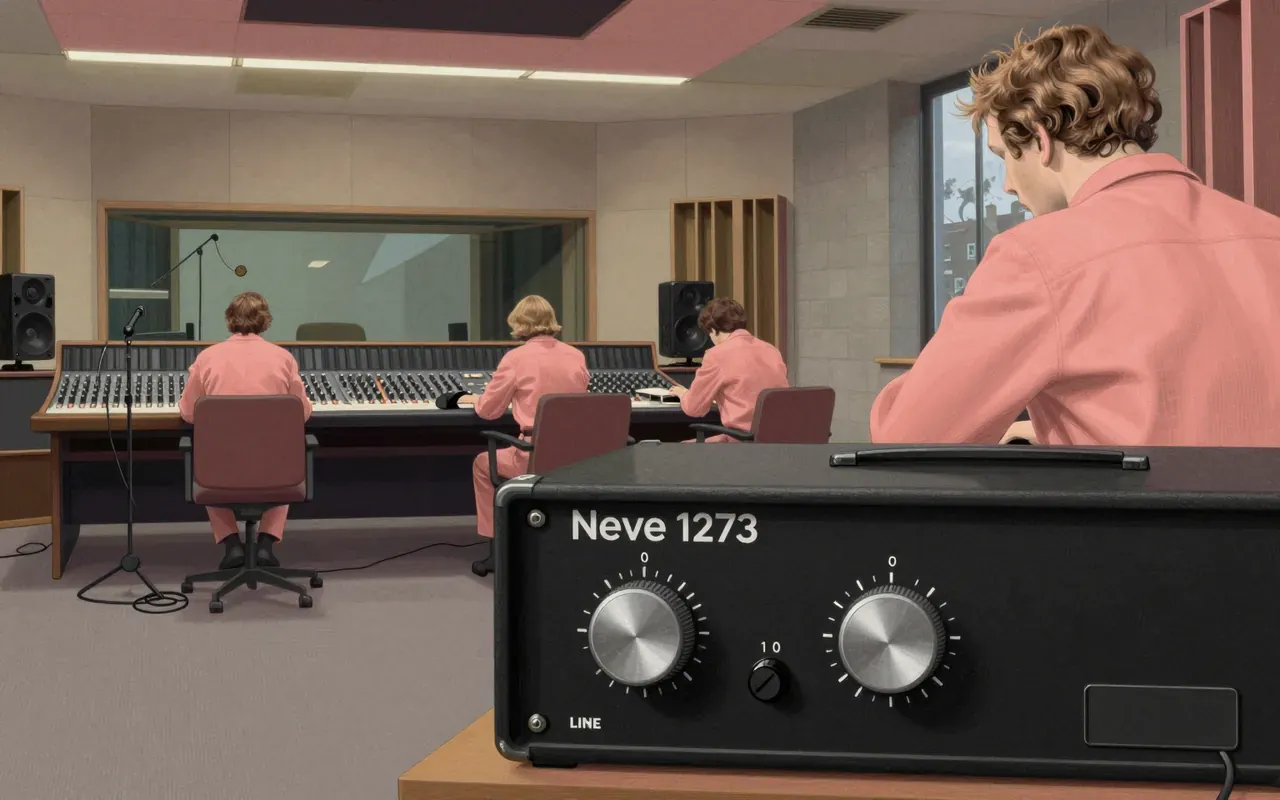
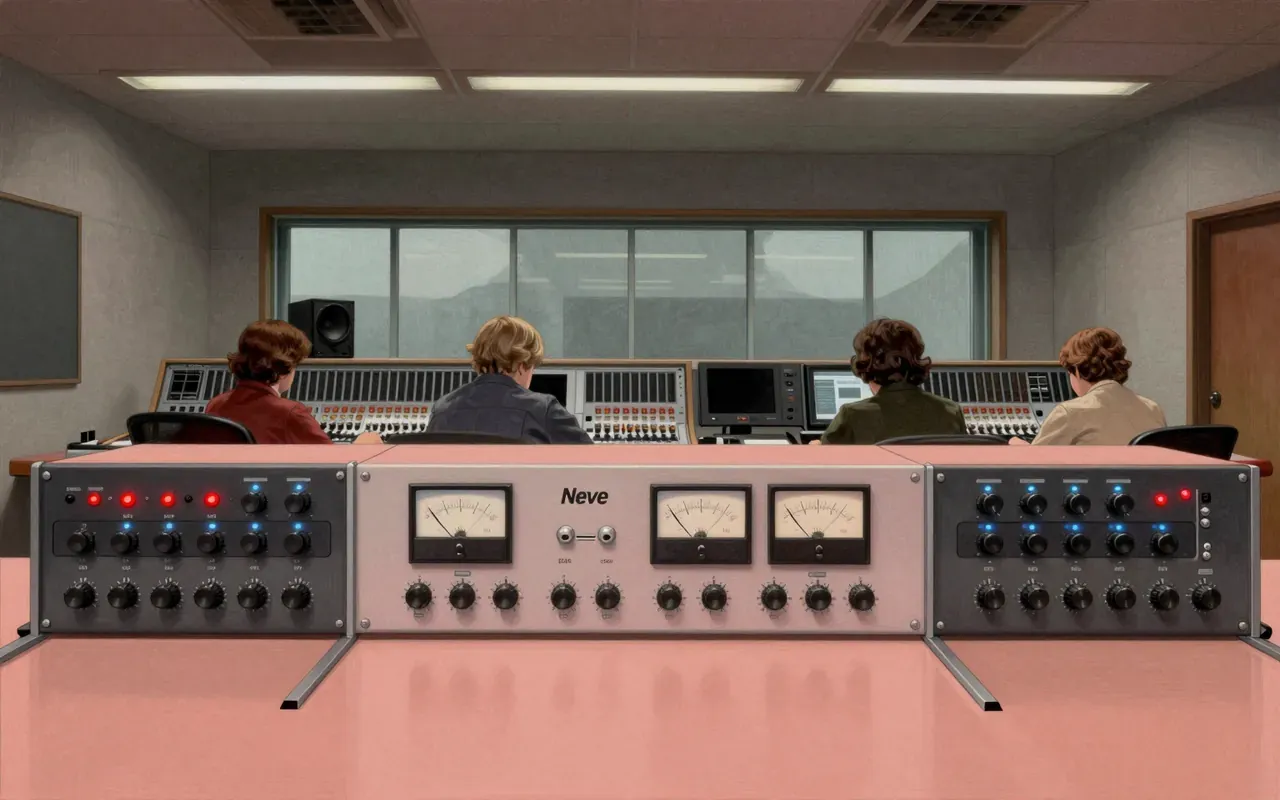
The Neve 1272 is a solid-state line amplifier. It does not accept microphone signals. It adds clean, transformer-coupled gain to line-level sources. It offers no input flexibility, no EQ, no saturation controls. Its value lies in its place in a fixed-path studio chain — not in versatility.

9:04

Marshall 1960A Cabinet

Marshall

The Marshall 1960A JCM900 is Marshall’s designated main 4x12 cabinet—widely used, widely modified, and widely criticised. Its four Celestion G12T75 speakers deliver 300 watts of aggressive, scooped tone. Birch plywood construction meets an MDF back panel. Rear-panel impedance and stereo switching add flexibility. But air leaks at the seams. Joints feel insecure. Plastic handles flex under load. It excels only where harsh highs and tight lows serve metal—but fails jazz, grunge, and any genre demanding warmth or low-end authority.

9:48

Digidesign 888/24 I/O

Digidesign

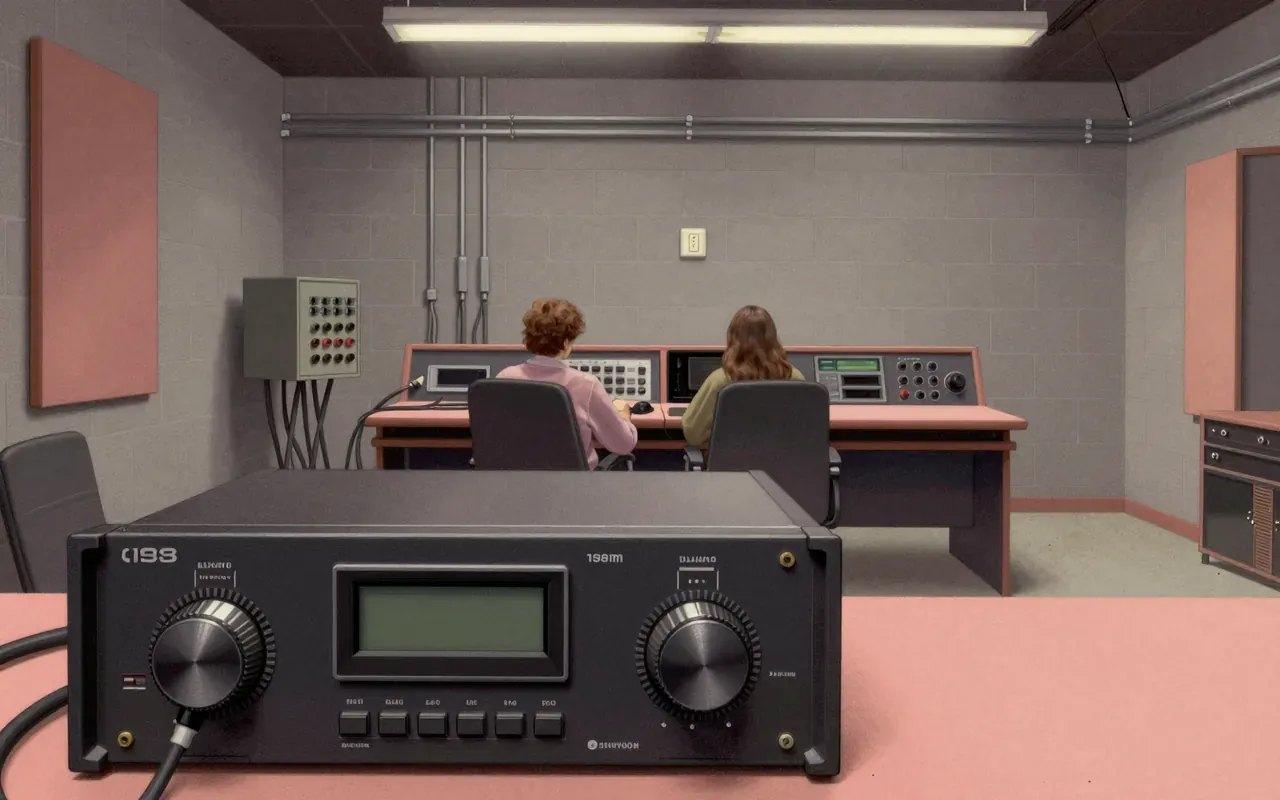
The Digidesign 888/24 is a Pro Tools–only analog-to-digital converter with eight XLR I/O channels and four AES-EBU digital paths. It delivers clean conversion, solid build quality, and low used-market cost—but only functions inside a compatible TDM system. No standalone mode. No MIDI. No monitor control. No software editor. It is a tool, not a platform.

9:14

Auratone 5C Super Sound Cube

Auratone

The Auratone 5C is a passive monitor requiring an external amplifier. Its extremely flat response and limited frequency range make it useful for quick A/B checks — but its lack of low-end response rules it out for primary mixing. It does one thing well: revealing what a mix loses when stripped of bass and extension.

10:04

Avalon Design Avalon VT-737sp

Avalon Design

A vacuum tube-based, rack-only channel strip with two identical preamp channels, each offering gain, phantom power, pad, phase reverse, Lo-Z input, compressor, EQ, and flexible routing. It trades portability and recall for consistent warmth and headroom — especially with transformerless mics.

8:45

Boss BF-1 Flanger

Boss

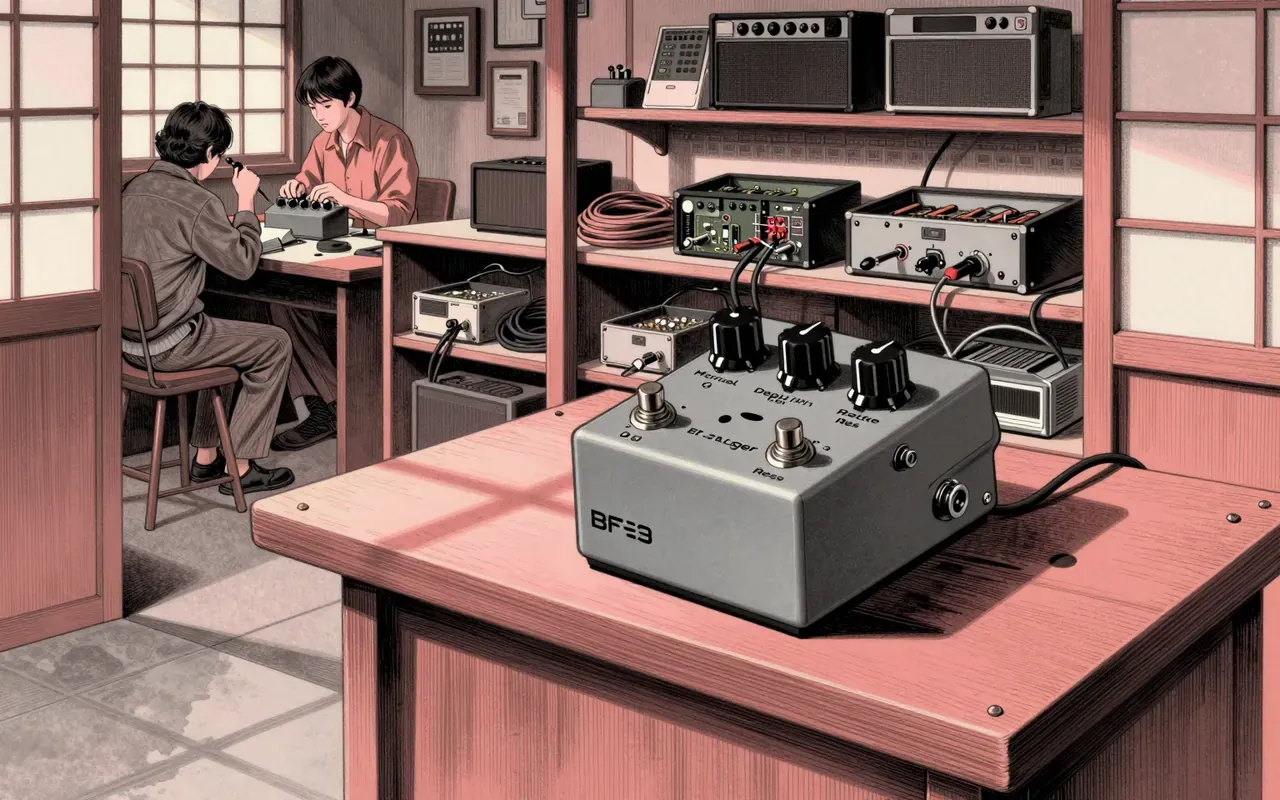
The Boss BF-1 Flanger is a 1979 analog foot pedal designed for electric guitar. It uses four knobs — manual, depth, rate, resonance — to control a simple, unstable flange sweep. It has no bypass, no presets, no expression input, and no stereo output. It was discontinued and replaced by the BF-3.

8:00

Boss BF-2 Flanger

Boss

The Boss BF-2 Flanger is an analog stomp-box flanger pedal sold from June 1980 to December 2001. It has 1/4-inch inputs and outputs, four controls (Manual, Depth, Rate, Res), and runs on 9V battery or AC adapter. It is not rackable. It was succeeded by the digital BF-3.

7:26

Bozak CMA-10-2DL

Bozak

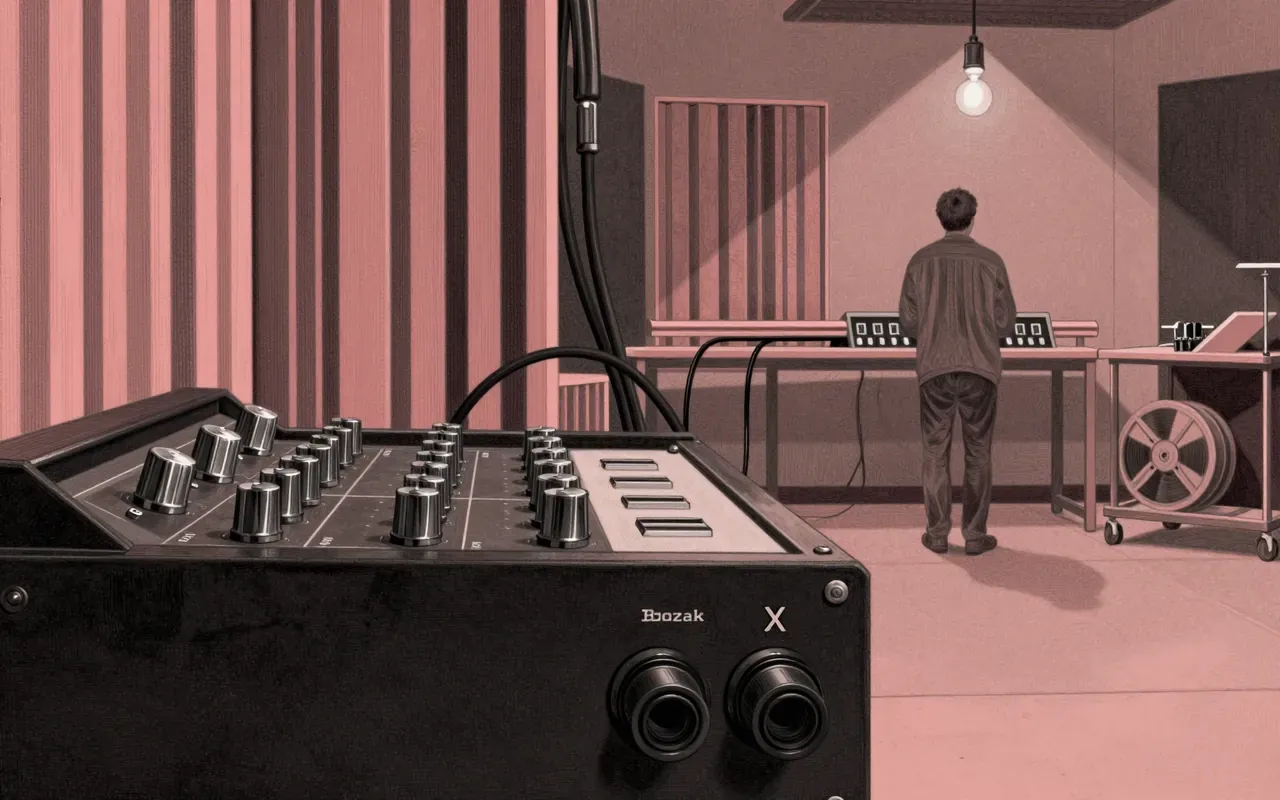
The Bozak CMA-10-2DL is a 4+ channel analogue mixer. It routes four inputs to two outputs. It has no equalisation, no dynamics, no monitoring path, and no amplification. Its name appears in multiple inconsistent spellings. No use cases, dates, or technical specifications are verified in available sources.

7:56

Boss CE-1 Chorus Ensemble

Boss

The Boss CE-1 Chorus Ensemble is Boss’s first chorus pedal: an analog stomp box offering chorus or vibrato — never both — with dedicated controls, tone toggle, and fixed power.

9:33

Boss CE-3 Chorus

Boss

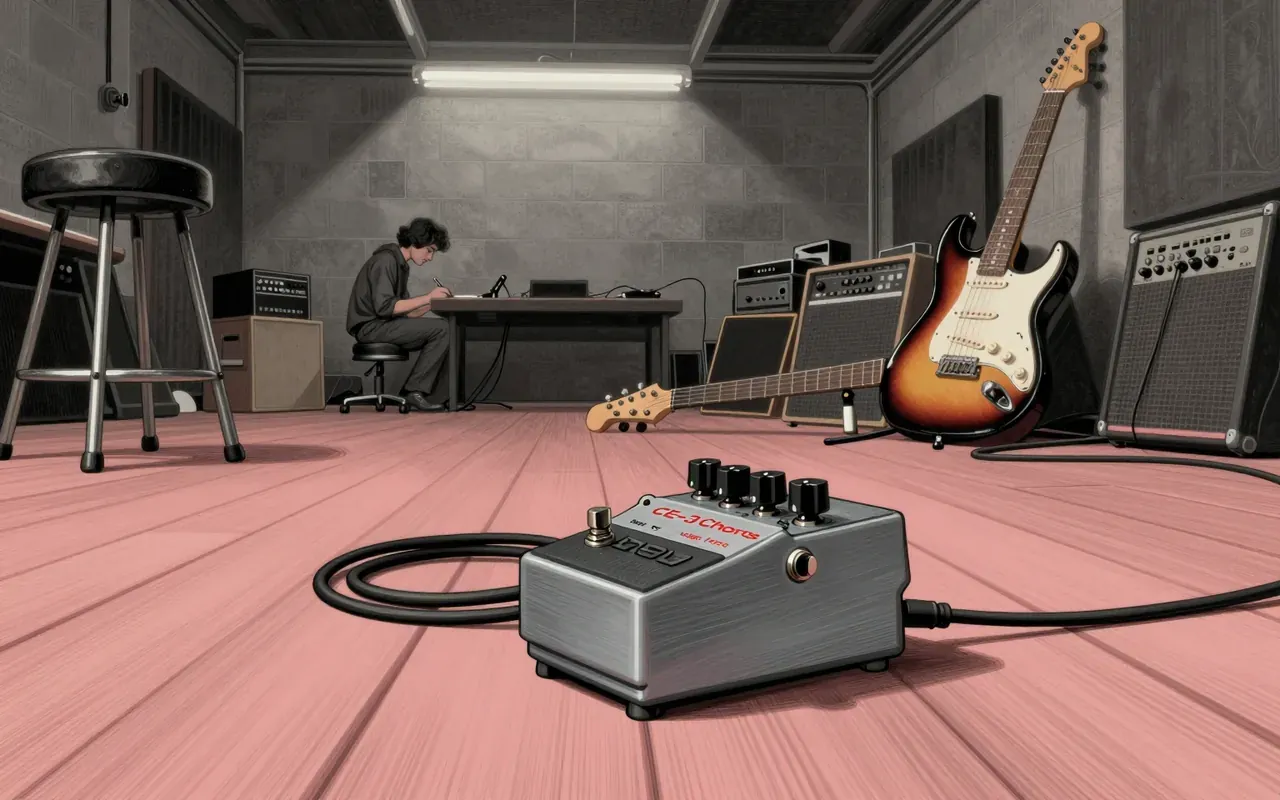
The Boss CE-3 Chorus is an analog guitar pedal built for stereo routing. It has no mix or level control. Its sound matches the CE-2 exactly — lush, hazy, shimmering — but its dual outputs enable wet/dry or true stereo setups. It is useful only where those outputs matter.

7:18

Colorsound Overdriver

Colorsound

The Colorsound OverDriver is a fixed-gain overdrive pedal. It has no controls. It offers no specifications. It does one thing, consistently, without variation.

8:32

Roland CompuRhythm CR-68

Roland

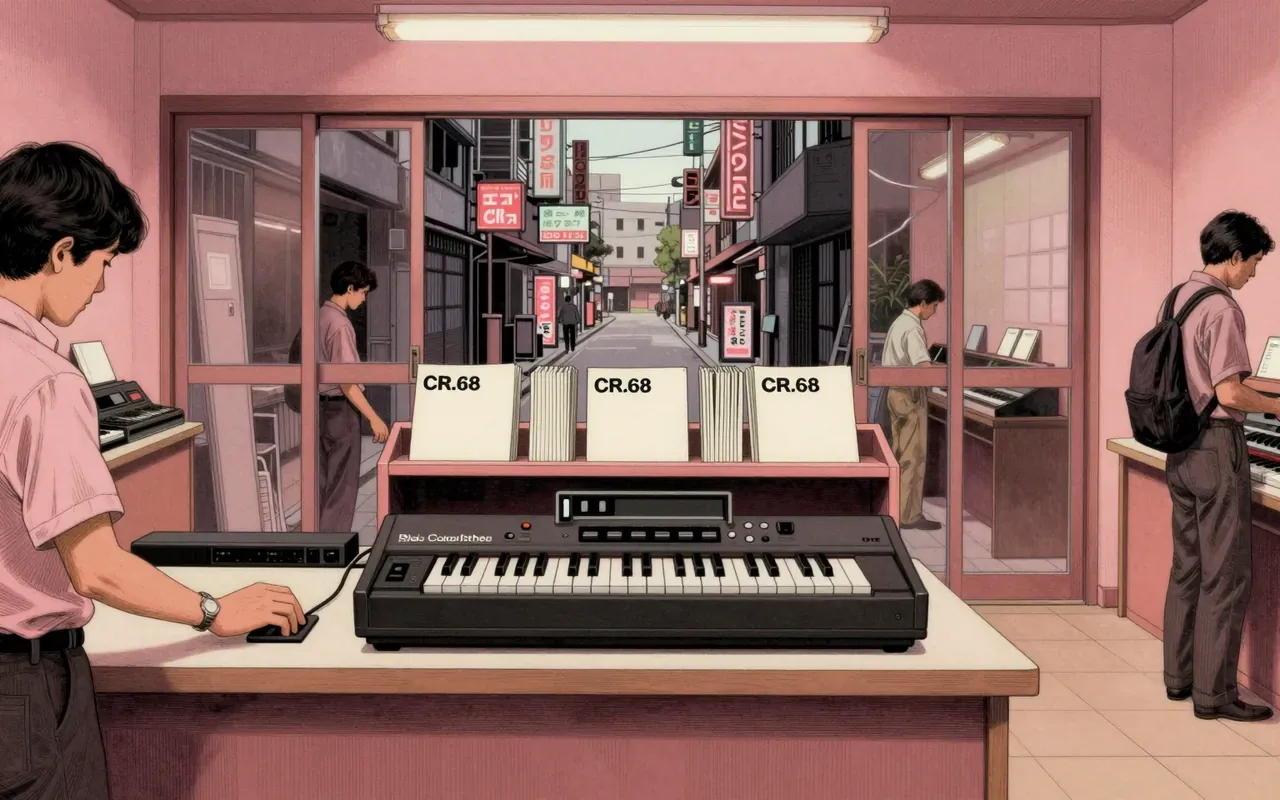
The Roland CR-68 is a non-programmable mono analog rhythm machine from the late 1970s. It shares the CR-78’s sound set and 54 preset rhythms but removes all user programming. Its controls — tempo, level, accent, balance — shape playback in real time. Fills trigger automatically or manually. It has no MIDI, no keyboard, no memory. Its sounds are now more often sampled than played live. Add N To (X) used it.

9:06

Boss DC-2 Dimension C

Boss

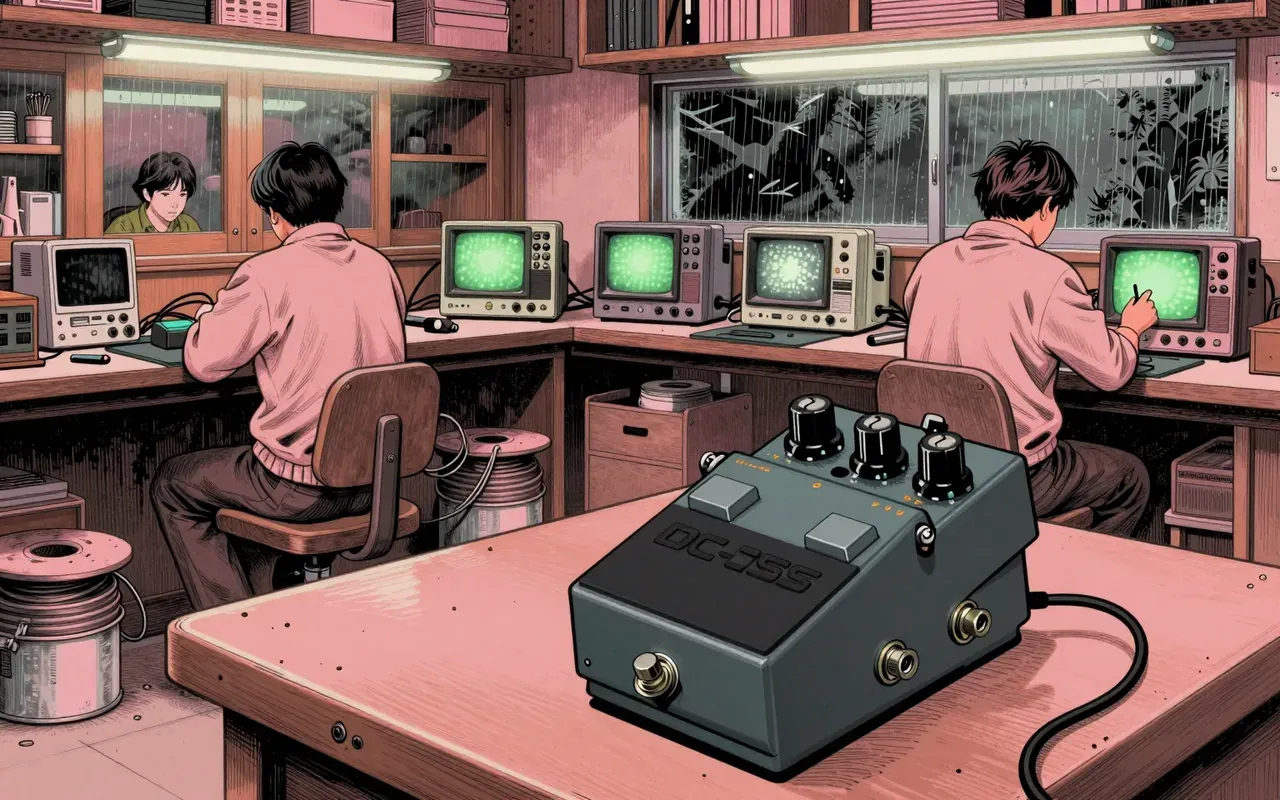
The Boss DC-2 Dimension C is a fixed-preset stereo analog chorus pedal made from 1985 to 1989. It offers five distinct chorus tones — one automatic, four selected by buttons — with no user controls. It reproduces the Roland SDD-320 Dimension D’s spatial effect: thickness, depth and width for a 3D sound. Stereo outputs widen the effect. Built-in noise reduction lowers hiss. It cannot be adjusted mid-performance. It belongs in a rig where consistency matters more than flexibility.

7:46

Tascam DTRS DA-88

Tascam

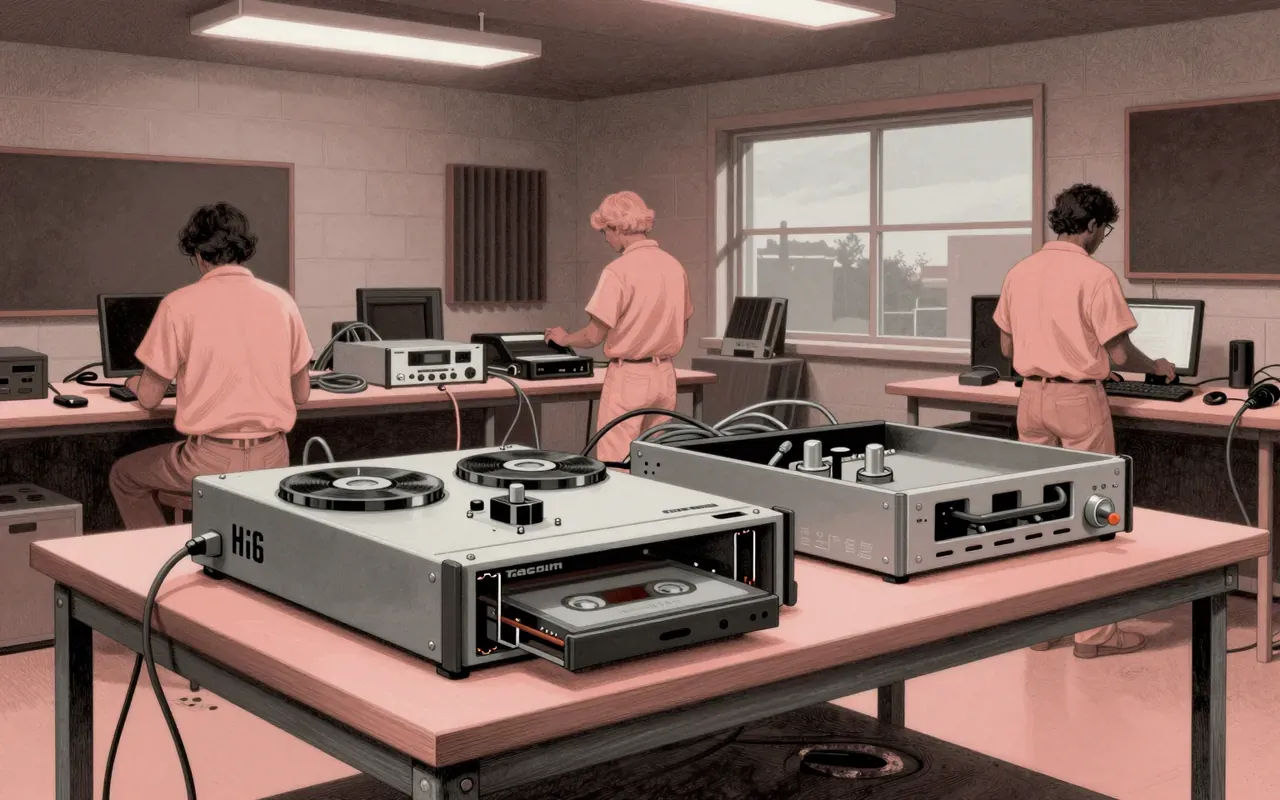
The Tascam DA-88 is a dedicated eight-track digital recorder using Hi8 tape. It occupies four rack units. It has XLR and RCA inputs. It uses large VU meters. Its audio quality remains acceptable today.

9:08

Ibanez FL9 Flanger

Ibanez

The Ibanez FL9 Flanger is an analog stompbox flanger pedal for guitar. It delivers swooshing phase-based effects via four knobs: Speed, Regen, Width, and Delay Time. It is not true bypass, so it colours the signal even when disengaged. It does not claim to be anything else — no digital emulation, no stereo outputs, no expression input, no presets.

9:23

Boss FZ-2 Hyper Fuzz

Boss

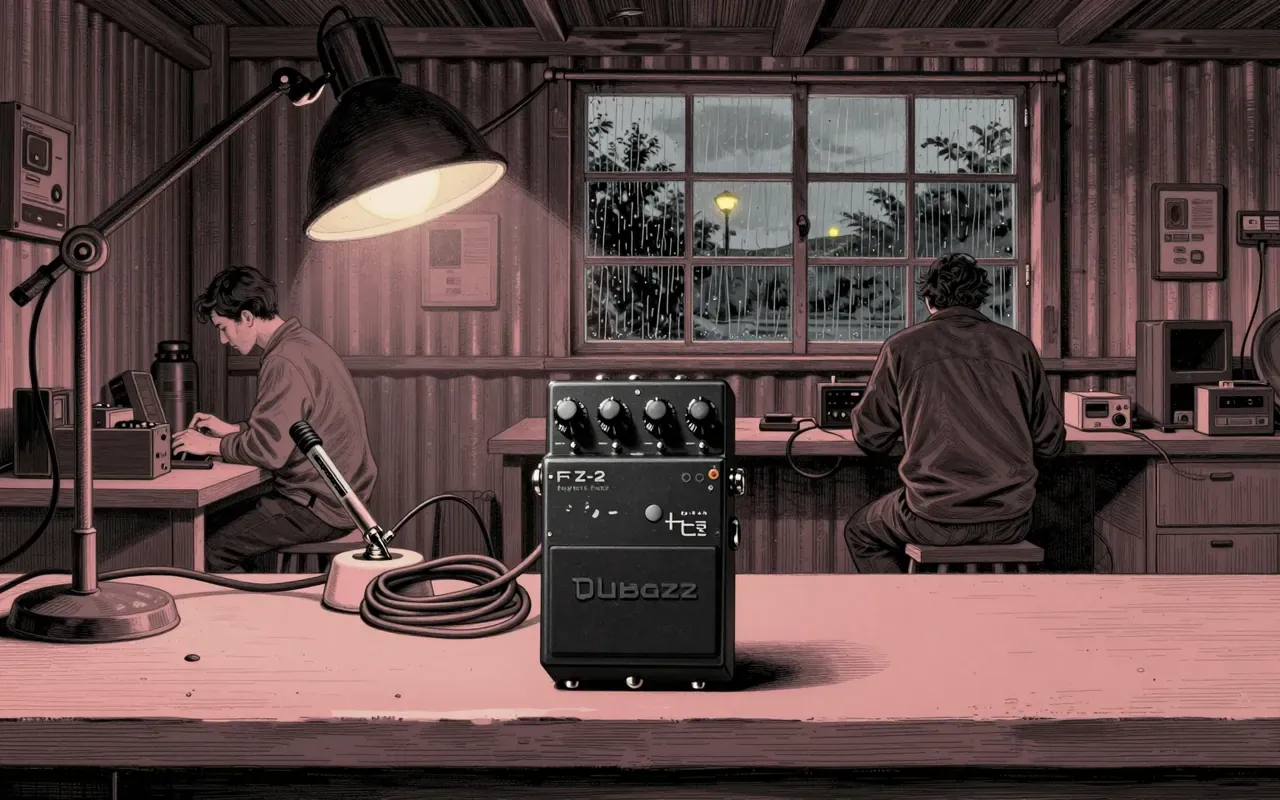
The Boss FZ-2 Hyper Fuzz is a discontinued analog fuzz pedal with three selectable modes and five physical controls. It lacks true bypass. It was succeeded by the FZ-5.

8:02

Roland Juno-2 / Alpha Juno-2

Roland

The Roland Juno-2 (Alpha Juno-2) is an 80s hybrid synth: analog filters and voice path, digital control over oscillators, envelopes, LFO, PWM, and chorus. It has 64 factory and 64 user patches, a velocity-sensitive 61-key keyboard, and a single digital wheel for editing. It lacks computer update capability and rack-mounting. Real-time sound switching is slow. It was built for studio use — not live performance.

8:32

Roland MKS-70 Super JX

Roland

The Roland MKS-70 is a 1986 2U rack-mount analog synthesizer module. It combines two JX-8P engines for 12-voice polyphony and dual-tone layering. It stores 100 patches, each built from two of 64 tones. Chorus has only off/slow/fast settings. Chase-play enables delayed voice repeats. Front-panel editing is cumbersome and tedious. Full SysEx control and PC editing require firmware v1.08. It has three stereo outputs: one per tone and one mix. It lacks arpeggiator, sequencer and keyboard.

10:22

Boss OD-1 OverDrive

Boss

The Boss OD-1 is a 1977–1985 overdrive pedal with Level and Overdrive knobs only. It uses a FET boost circuit that degrades the dry signal when bypassed. It delivers low-gain saturation by pushing an already overdriven amp’s front end—not by distorting on its own. It lacks tone control. It preceded the SD-1. It performs best in that narrow context—and nowhere else.

7:15

Boss PH-1 Phaser

Boss

The Boss PH-1 is a compact phaser pedal released by Boss in 1977 as one of its first three pedals. It emulates Leslie speaker phasing with greater versatility. It has only two controls: Rate (speed) and Depth (dry/wet mix). Production ran from 1977 to 1981.

9:58

Boss PH-2 Super Phaser

Boss

The Boss PH-2 Super Phaser is a discontinued analog guitar stompbox pedal built from 1984 to 2001. It adds a rate knob and two-mode switch to the PH-1 lineage. Mode 1 uses 10-step phasing. Mode 2 uses 12-step phasing. Controls are Rate, Depth, Res, and a 2-way Mode switch. LFO speed ranges from 100 ms to 14 s. Input impedance is 1 Mohm (FET). Residual noise is -80 dBm (IHF-A). Current draw is 20 mA at 9 V DC. Early Incubus used it for its distinctive ‘in-your-face’ phase character—especially in mode 2.

9:13

Boss PS-2 Digital Pitch Shifter/Delay

Boss

The Boss PS-2 is a mono digital pitch shifter and delay pedal with fixed +1/−1 octave modes and three delay time ranges. It delivers immediate, stable octave doubling and atmospheric delay tails — but offers no stereo output, no expression control, and no fine pitch adjustment. It belongs on a gigging guitarist’s board, not in a stereo studio chain.

8:50

Rane/Serato Scratch Live SL1

Rane/Serato

The Rane Serato SL 1 is a purpose-built bridge between vinyl and digital audio. It does one job: translating timecode signals into Serato Scratch Live 2.5. It asks for turntables, a mixer, and a laptop — and gives back stable, low-latency control. It offers no flexibility, no expansion, no autonomy. It is obsolete as a product, but functional as a node — if your setup still runs on it.

9:55

Soundcraft Ghost

Soundcraft

The Soundcraft Ghost 32 is a dual-path analog mixer that delivers 64-channel mixing by combining 32 fader-based A channels and 32 knob-based B channels. It prioritises routing flexibility and hands-on control over silent operation or real-time EQ parity.

8:33

Boss TR-2 Tremolo

Boss

The Boss TR-2 Tremolo is an analog foot pedal for guitarists. It has three knobs: Rate, Depth, and Wave. Rate goes faster than the PN-2. Wave shifts the LFO from triangle to square. It is not rackable.

8:23

Boss VB-2 Vibrato

Boss

The Boss VB-2 Vibrato is an analog foot pedal that modulates pitch — not volume — for electric guitar and other electronic instruments. It uses depth, rate, and rise time controls, plus a mode switch. It has no MIDI, no rack mounting, and no presets. Its strength is expressive, natural-sounding vibrato. Its weakness is inflexibility and a learning curve. It belongs in the hands of players who value analog immediacy over convenience.

8:46

dbx 160X

dbx

The dbx 160X is a fixed-response analog limiter/compressor built for immediacy, not nuance. It excels when slammed on snare, kick, bass, or guitar — but fails at subtlety, especially on vocals. Its simplicity is functional, not forgiving.

9:12

Neve 2264A

Neve

The Neve 2264A is a mono limiter/compressor module built for studio use. No technical specifications are published. It weighs 1.3 kg. Its function is defined by category, not data sheet.

8:35

JBL 4350

JBL

The JBL 4350 is a passive studio monitor requiring bi-amplification, offering no passive filter adjustments, and demanding extensive room integration and speaker placement. It is physically imposing and highly detailed in sound reproduction. It is not turnkey-ready.

7:50

JBL 4435

JBL

The JBL 4435 is a passive monitor built for raw output — not finesse. It trades integration for extension.

8:04

Neve 8068

Neve

The Neve 8068 is a 1970s large-format analog console with 32 fully equipped channel strips—24 on the left, 8 on the right—each featuring a mic preamp, parametric EQ in the standard Neve style, and routing options. Its sound is defined by strong low-mid response and a balance of clarity and warmth. It is exceptionally difficult for beginners but familiar to experienced Neve users.

9:21

MOTU 828

MOTU

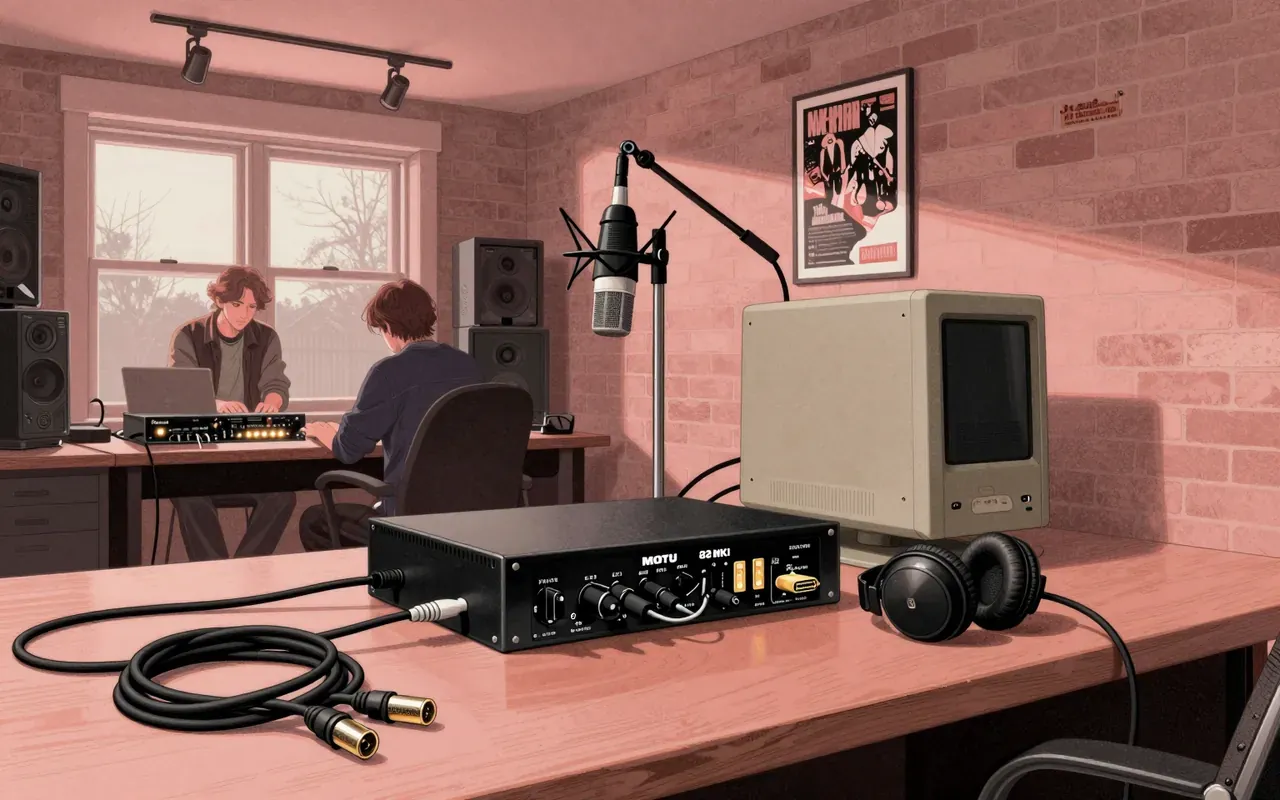
The MOTU 828 MKI is a discontinued FireWire audio interface introduced around 2001–2002. It offered two mic preamps with phantom power and XLR/1/4" inputs, six additional balanced line inputs, eight balanced outputs, ADAT and optical I/O, 24-bit 64x/128x oversampling converters, and front-panel monitoring controls. Priced at $800 at launch, it was considered expensive but highly stable and easy to install. It remains functional for years in typical home studio use but is no longer sold and has been succeeded by newer models including the 828 (2024).

10:06

SSL 9000 J

SSL

The SSL 9000 J is an analog mixer. That is all the source confirms. It belongs to the category of analog mixers. No specifications, features, or use cases beyond that are given. It is not described as rare, expensive, or influential. It is not tied to any record, person, place, or date. It is what it is: a large-format analog mixer for studio use.

9:23

SSL 9000 K

SSL

The SSL 9000 K is an analog mixer. That is all the sources confirm. It belongs to the category of analog mixers. Nothing more is verified.

9:56

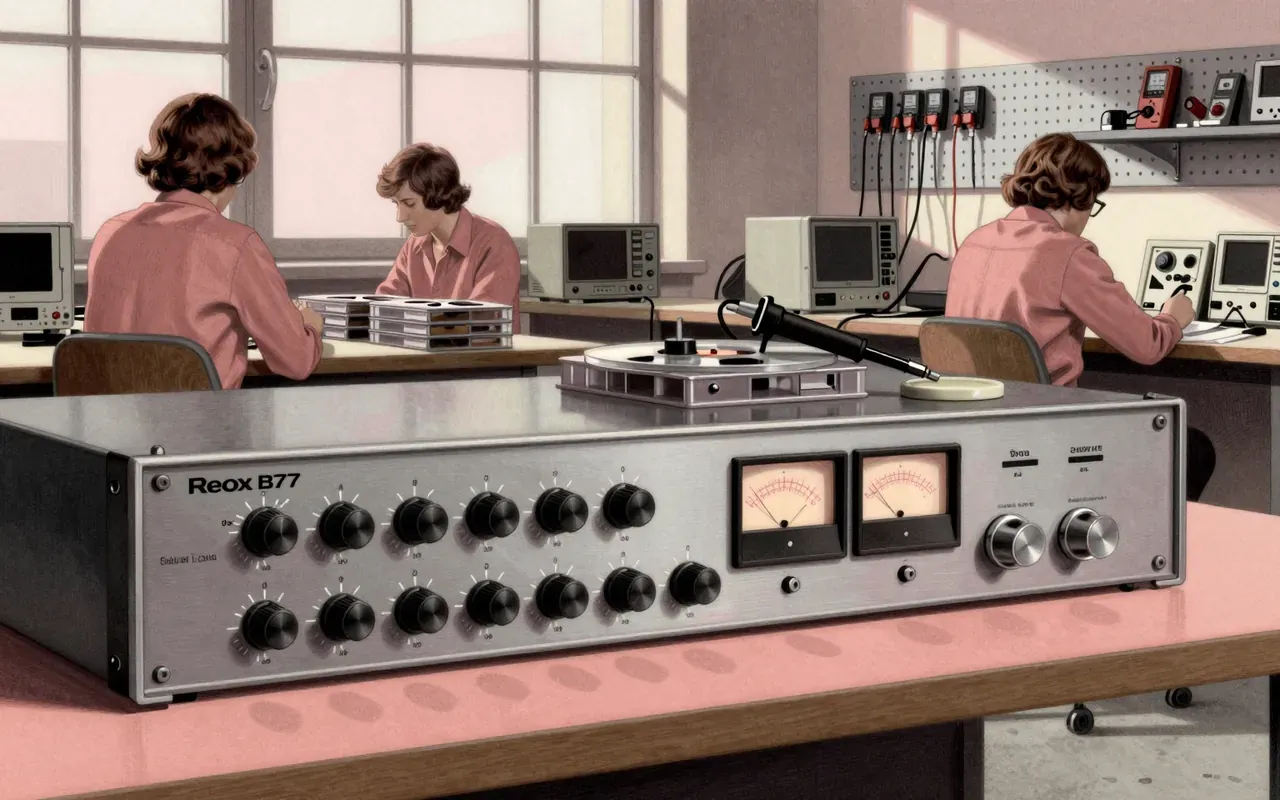
Revox A77

Revox

The Revox A77 is an analog multitrack tape recorder. Users deploy it to replay and digitise vintage tape — especially 1980s band mixes. It is robust and simple to operate, more so than the B77 or G36. But it trades mechanical precision and low-noise playback for that durability. It does not record multitrack. It does not edit. It plays — and keeps playing.

8:30

Studer A80

Studer

The Studer A80 is a tape recorder that shapes sound by softening transients and adding organic saturation. It works only when configured precisely: 19/38 or 38/76 cm/s, 1/2-inch tape, GP9-aligned heads. It excels in rock. It fails in dance, house and electro. It is not flexible. It is not neutral. It is a deliberate, physical constraint.

9:18

Apogee AD-8000

Apogee

The Apogee AD-8000 is an eight-channel analog-to-digital converter built for recording studios. It was introduced circa 1996. It supports 24-bit resolution at up to 48 kHz. It has eight XLR analog inputs and AES/EBU and S/PDIF digital connections. Front-panel level meters and controls let you monitor and adjust all eight channels. It includes a 1/4-inch headphone jack for direct monitoring. Optional cards enable ADAT, TDIF and Pro Tools connectivity.

9:21

Prism Sound ADA-8

Prism Sound

The Prism Sound Dream ADA-8 is a dual-path AD/DA converter built for clean, separated signal routing at up to 96 kHz. It delivers stable internal clocking and user-friendly displays, but lacks built-in sample rate conversion and fails under external sync with Pro Tools HD interfaces. It belongs in studios where path independence matters more than interoperability.

8:43

Roland Alpha Juno-1

Roland

The Roland Alpha Juno-1 is a 1986 6-voice analog synth built for techno and rave. It delivers sharp bass and noise, improved MIDI, and chord memory — but sacrifices warmth and hands-on editability.

8:33

Roland Alpha Juno-2

Roland

The Roland Alpha Juno-2 is a 1986 6-voice subtractive synth with velocity and aftertouch, 64 presets, 64 user patches, chord memory, portamento, transpose, and a 24dB analog low-pass filter. It uses membrane buttons and the Alpha Dial for editing. It was built for stage and studio bass and rhythmic work — not for deep, fast sound design.

8:52

AMS AMS RMX16

AMS

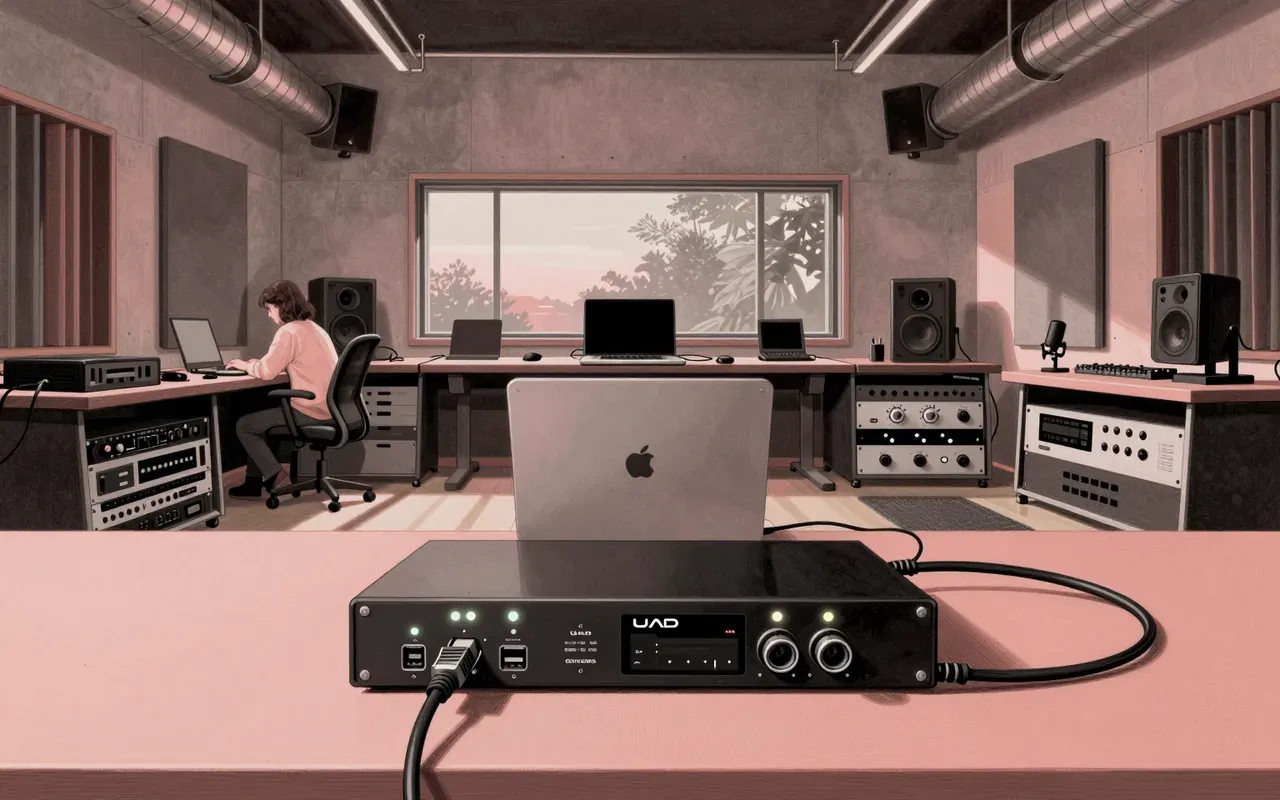
The AMS RMX16 is a UAD-only reverb plug-in. It requires UA hardware. It costs $349. It arrived in UA Software 1.7. It gives one sound — nothing more.

9:04

Yamaha AN200

Yamaha

The Yamaha AN200 is a 2001 compact table-top physical modelling analog synthesizer and sequencer built for live pattern-based dance production and quick sound sketching.

9:51

API API Vision

API

The API Vision Console Emulation Bundle is a UAD plug-in channel strip made by Universal Audio. It requires UAD hardware to run. It offers no standalone operation, no technical specs in the source material, and no evidence of real-world usage examples. Its value is strictly conditional on existing UAD ownership and desire for API’s sonic signature in digital form.

9:04

Echo AudioFire 12

Echo

The Echo Audiofire 12 is a FireWire audio interface in the Audiofire series. It has 12 line inputs and 12 outputs. It has no mic preamps. It has no headphone output. It supports daisy-chaining up to three units for 36 I/O. It achieves 2.9 ms round-trip latency at 24-bit/96 kHz. Its line inputs are transparent and electrically isolated. Users record 12 tracks simultaneously at up to 192 kHz, firmware permitting.

9:45

Revox B77

Revox

The Revox B77 is an analog multitrack tape recorder built for studio and project recording. It supports 3 3/4, 7 1/2, and 15 ips tape speeds—but the 15 ips setting is obsolete for digital use. Units from 1980 remain fully functional. It is mechanically robust and quieter than UHER models. Its meter is breakable and irreplaceable. It offers no digital functionality. It is worth your time only if you need durable, low-noise analog multitrack operation—and can maintain it yourself.

8:09

Dynaudio Acoustics BM15A

Dynaudio Acoustics

The Dynaudio Acoustics BM15A is an active studio monitor designed for nearfield monitoring. It integrates amplification, reproduces down to 45 Hz at 0 dB, and complies with EU and FCC electromagnetic shielding standards. One unit exhibited unintended FM radio reception at 104.1 MHz — isolated to the right channel. Users report no distortion or hum, even at maximum volume. No information is given about music, artists, or recordings made with it.

7:32

Sony C37A

Sony

The Sony C37A is a large diaphragm condenser tube microphone. It belongs to a narrow class of studio mics defined by harmonic colour rather than flexibility. It has no documented switches, filters or pads. Its alternate names — 'c 37a' and 'c37 a' — appear in official listings but indicate no functional variation.

8:54

AKG C414

AKG

The AKG C414 is a series of large diaphragm condenser microphones. Thirteen variants exist. Two are matched pairs: the XLII and the XLS. All share the same functional category. None are described by frequency response, noise floor, or circuit details in the source.

9:24

AKG C451

AKG

The AKG C451 B is a fixed-cardioid small-diaphragm condenser with -10 dB/-20 dB pads and 75 Hz/150 Hz high-pass filters. Its CK1 capsule cannot be swapped. It delivers precision on acoustic sources but fails under high SPLs due to capsule fragility.

8:41

AKG C452

AKG

The AKG C452 C is a small diaphragm condenser microphone. It has no stated controls, no pattern options, no filters, no pad. Its function is narrow and fixed. Its value lies in consistency, not versatility.
9:23

Pioneer CDJ-1000

Pioneer

The Pioneer CDJ-1000 is a tabletop DJ player. It plays CDs. It does not read MP3 files. It is no longer sold. It was replaced by the CDJ-2000 Nexus.

9:12

Pioneer CDJ-2000

Pioneer

The Pioneer CDJ-2000 is a discontinued tabletop DJ player. It supports playback from CDs, DVDs, SD cards, USB devices, and wirelessly via WiFi from computers and phones. It has a ~6-inch colour LCD display. Its loop quantisation is automatic and highly accurate. User preferences are saved across power cycles. It was replaced by the CDJ-2000 Nexus.

7:55

Pioneer CDJ-500

Pioneer

The Pioneer CDJ-500 is a tabletop DJ player built to play CDs in live and private DJ sets.

7:56

Farfisa Compact Duo

Farfisa

The Farfisa Compact Duo MK1 is a portable electronic organ with drawbars and vibrato. It delivers a distinctive, aggressive organ tone. No technical specifications are available. Its design prioritises immediacy over documentation or expandability.

8:32

Yamaha CS-30

Yamaha

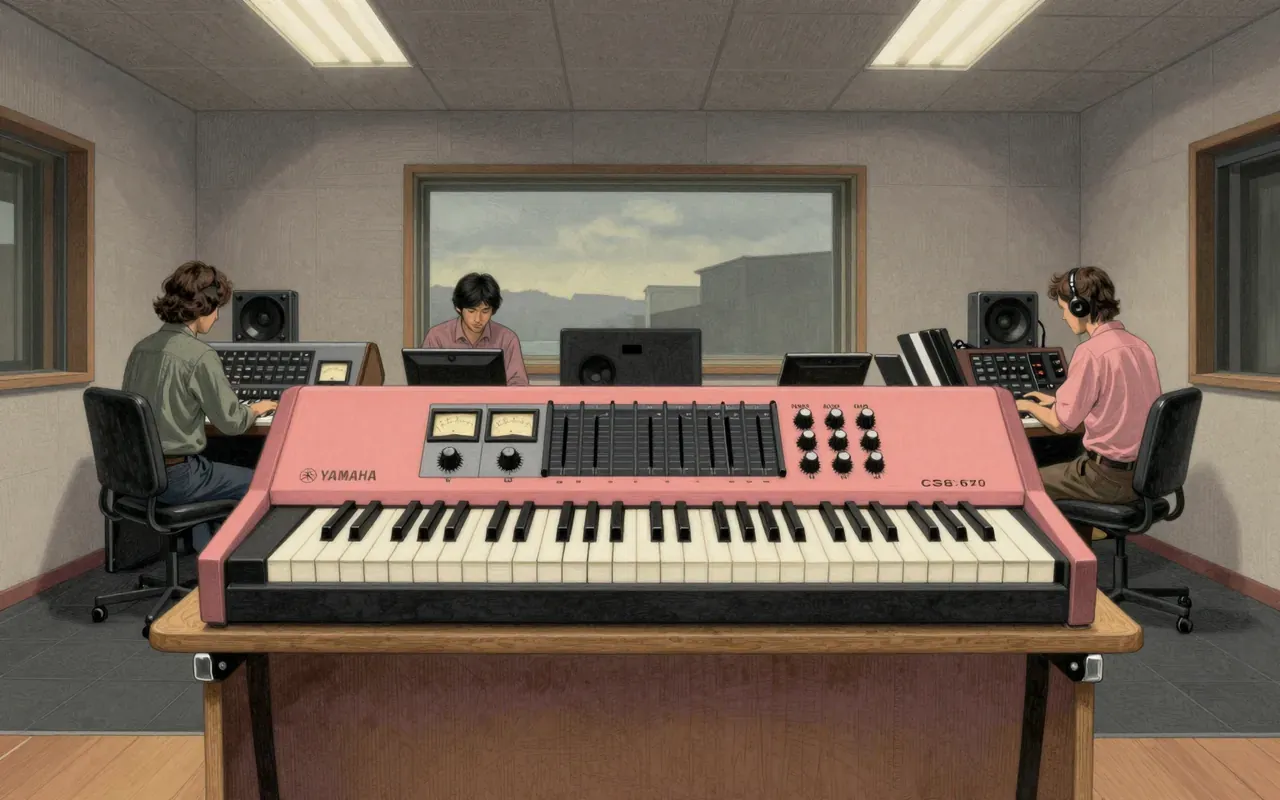
The Yamaha CS-30 is a monophonic analog subtractive synthesizer introduced in 1977. It has two VCOs, two resonant VCFs, two VCAs, three envelopes, a ring modulator, external audio triggering and an 8-step sequencer. It has a 44-key keyboard. It lacks onboard effects, memory and MIDI. It is used by 808 State.

9:01

Yamaha CS-5

Yamaha

The Yamaha CS-5 is a 1978 monophonic analog synth with one oscillator, a multi-mode 12 dB/Oct filter, and an LFO with sample-and-hold. It has no patch storage, no MIDI, no velocity sensitivity. It is built for immediacy — not recall.

8:33

Yamaha CS-50

Yamaha

The Yamaha CS-50 is a 4-voice, 49-key, pressure-sensitive synthesizer released in 1977. It visually resembles a scaled-down CS-80, weighs about 100 pounds, and shares the CS-series sound — but with thin chords (one oscillator per voice, 12 dB/oct filters), no user memory, and unstable tuning.

9:26

Yamaha CS-60

Yamaha

The Yamaha CS-60 is a polyphonic analog synthesizer released in 1977. It is smaller and cheaper than the CS-80. It lacks polyphonic aftertouch.

8:40

Ibanez CS9 Stereo Chorus

Ibanez

The Ibanez CS9 Stereo Chorus is an early-1980s analog chorus pedal using Bucket Brigade Delay chips. It has two knobs (speed and width), one switch, one analog input, and two outputs (L(mono) and R stereo). It operates on 9V battery or AC/DC adapter. Its metal case ensures durability and repairability. The effect is subtle: cranking both knobs yields only gentle thickening—not pronounced modulation. It warms the clean tone rather than applying overt chorus. It does not deliver strong, fast, or wide modulation. It belongs in the rig of players who prioritise warmth, stereo spread, and reliability over dramatic movement.