audiobriefs
Highest rated

All briefs

747 briefs · 6840 min · 97–192 on page 2 of 8
9:00

Neve 80 Series

Neve

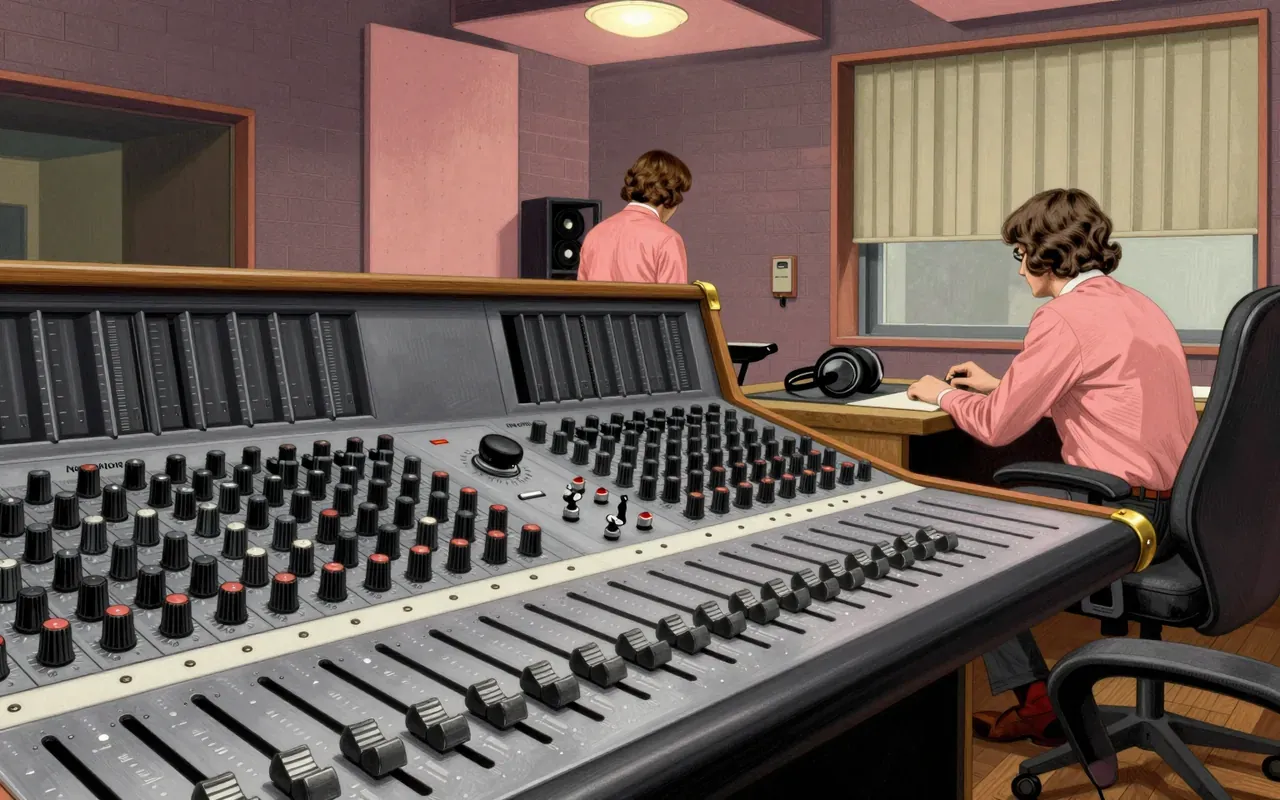
The Neve 80 Series is a hand-wired analogue mixing console built from 1968 to 1979. It uses custom preamps, line amps, and compressor/limiters wired point-to-point by hand. The 8048 model features the 1081 preamp and 4-band EQ across 24 or 32 channels. In 1976, Neve launched the in-line-monitor 8058 and 8068. Late-’70s units offered NECAM, the world’s first successful moving-fader automation system. Production was limited; manufacturing ceased in 1979.
8:36

Yamaha CS-80

Yamaha · 1976

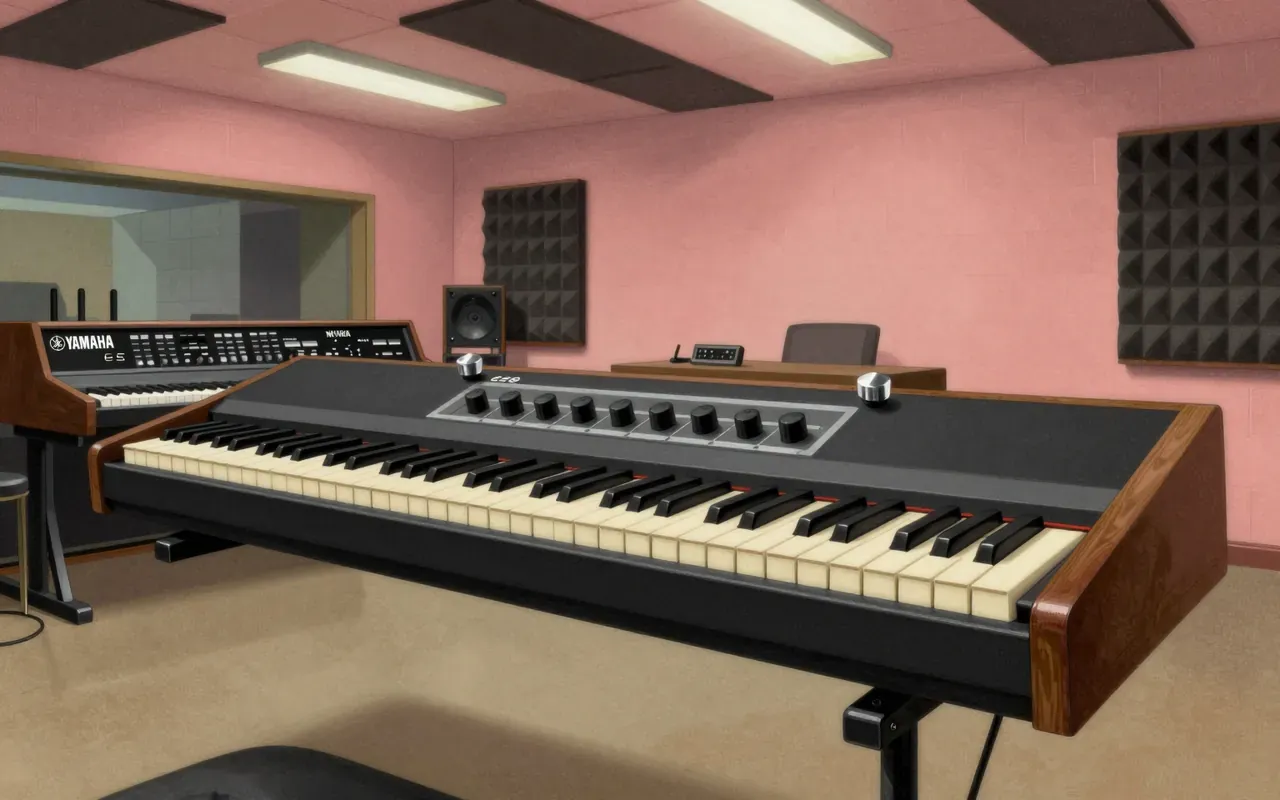
The Yamaha CS-80 is an analog synthesizer introduced in 1977. It supports true 8-voice polyphony, with two independent synthesizer layers per voice each with its own set of front panel controls. It has a layered keyboard that is both velocity-sensitive and pressure-sensitive, with polyphonic aftertouch and a ribbon controller for polyphonic pitch-bends and glissandos. Production of the instrument ceased in 1980.

9:38

Yamaha DX7

Yamaha

The Yamaha DX7 is a landmark instrument — not for its playability or depth, but for delivering a new kind of digital clarity at scale. It trades expressiveness for precision, intuition for architecture, and warmth for brilliance. Its legacy is sonic, not ergonomic.

9:46

Pultec EQP-1

Pultec

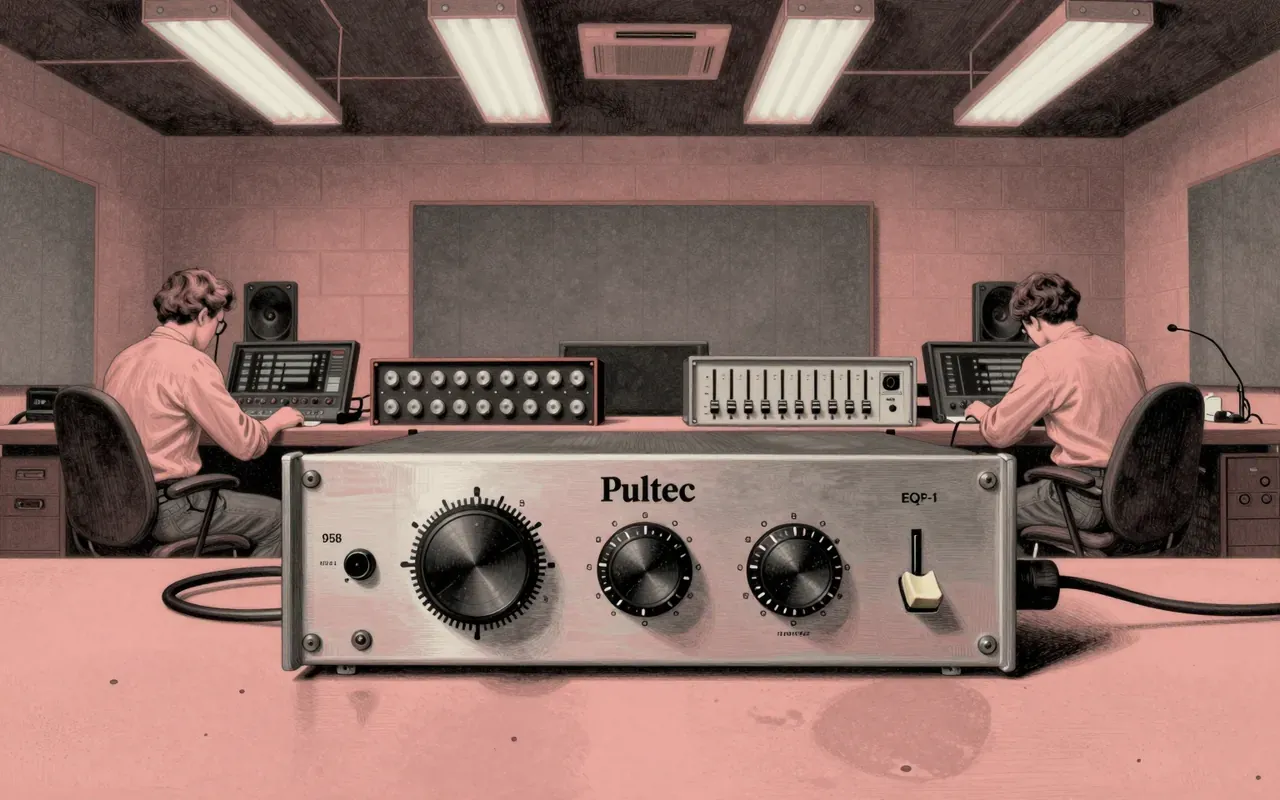
The Pultec EQP-1 is a passive, tube-amplified equalizer introduced in 1956 in a 3U 19-inch rack chassis, designed specifically for professional recording studios to overcome noise issues in existing film-industry equalizers. It features a low-frequency shelving filter with three bands (30, 60, 100 Hz) and a parametric high-frequency section with boost frequencies at 3, 5, 8, 10, and 12 kHz plus adjustable bandwidth. Its design enabled simultaneous boost and attenuation of adjacent low frequencies — a technique later adopted despite being discouraged in the original manual.

9:26

Roland Juno-60

Roland

The Roland Juno-60 is an analog synthesizer introduced in 1982 as a lower-cost, more stable alternative to contemporaries like the Prophet-5 and Jupiter-8. It features digitally controlled oscillators for tuning stability, a single oscillator architecture compensated by a signature chorus effect, patch memory for 54 sounds, an arpeggiator, and performance controls.

8:29

Roland Jupiter-8

Roland

The Jupiter-8 is an eight-voice polyphonic analog subtractive synthesizer introduced by Roland in early 1981. Each voice features two discrete VCOs with cross-modulation and sync, pulse-width modulation, a non-resonant high-pass filter, a resonant low-pass filter with 2-pole and 4-pole settings, an LFO with variable waveforms and routings, and two envelope generators (one invertible). It includes adjustable polyphonic portamento, a hold function for infinite sustain, an assignable bender for pitch or filter frequency, balanced XLR and unbalanced 1/4" outputs for Upper and Lower presets in Split mode, and a unique polyphonic unison mode where all 16 oscillators stack onto one note and divide down when more keys are pressed. Its arpeggiator syncs externally via DCB or CV. Tuning stability improved from serial #171700 onward.

8:24

Gibson Les Paul Junior

Gibson

The Gibson Les Paul Junior is a stripped-down, single-pickup electric guitar introduced in 1954 as Gibson’s affordable entry into the solid-body market. It features one P-90 'dog-ear' pickup at the bridge, one volume and one tone control, no binding, and no carved top. A double-cutaway version launched in 1958 nearly doubled sales. The original run ended in 1963. Its raw, overdrivable tone made it a favourite among rock and blues players in the 1960s and 1970s.

10:14

Korg M1

Korg

The Korg M1 is a 1988 sampling-based music workstation with 16-note polyphony, 16-bit PCM sample playback, built-in effects including reverb, delay, chorus, tremolo, EQ, distortion and Leslie simulation, and an eight-track MIDI sequencer. It uses sampled attack transients, loops, sustained waveforms and percussive samples. It was the bestselling synthesizer ever at that time, selling over 250,000 units. None of its features was unique, but their integration was unprecedented.

8:06

Minimoog

Moog · 1970

The Minimoog is an analog keyboard synthesizer introduced by Moog in 1970. It was built as a portable, affordable alternative to modular systems — the first synth sold in retail stores. Its three unsynchronised analog oscillators, unique voltage-controlled filter, and pioneering pitch wheel give it immediate, expressive, monophonic voice — but no chords, no presets, no stability. It made blistering funky bass blurps and spacey whistle leads — not because it was precise, but because it wasn’t.

9:14

Akai MPC

Akai · 1988

The MPC60 redefined beat-making by collapsing sampling, sequencing, and performance into one hardware instrument. Its strength is immediacy. Its weakness is inflexibility.

8:46

Prophet-5

Sequential Circuits

The Prophet-5 is an analog synthesizer manufactured by Sequential Circuits. It was designed by Dave Smith and John Bowen in 1977. It was the first polyphonic synthesizer with fully programmable memory. Before the Prophet-5, synthesizers required users to adjust controls to change sounds, with no guarantee of exactly recreating a sound. Sequential used microprocessors to allow users to recall sounds instantly rather than having to recreate them manually. The Prophet-5 facilitated a move from synthesizers creating unpredictable sounds to producing "a standard package of familiar sounds". Initially, Smith and Bowen developed the Prophet-10, a synthesizer with ten voices of polyphony, meaning it could play up to ten notes simultaneously. Smith and Bowen removed half the electronics, reducing the voices to five and creating the Prophet-5. In 1978, Sequential released the Prophet-5, the first programmable polyphonic synthesizer, which was widely used in the music industry. Whereas previous synthesizers required users to adjust cables and knobs to change sounds, with no guarantee of exactly recreating a sound, the Prophet-5 used microprocessors to store sounds in patch memory.

8:41

Pro Co RAT

Pro Co

The Pro Co RAT is a distortion pedal for electric guitar, first prototyped in 1977 or 1978 and entering full production in 1979. Its distinctive aggressive distortion stems from an accidental 47 ohm resistor substitution that increased op-amp gain, combined with diode-based hard-clipping. It uses an op-amp to amplify and diodes to limit the signal.

9:56

Fender Super Reverb

Fender

The Fender Super Reverb is a loud, physical, all-tube guitar amplifier with built-in spring reverb and tremolo — made from 1963 to 1982. Its blackface and silverface variants differ in circuit design, not just looks. It demands space and volume. It rewards touch. It does not apologise.

8:29

Ampeg SVT

Ampeg

The Ampeg SVT is a 1969 bass amplifier head designed by Bill Hughes and Roger Cox. It uses 14 vacuum tubes to deliver 300 watts of RMS power. Early units used unstable 6146B output tubes, later replaced with 6550s. It is a stand-alone head, not a combo. The Rolling Stones used five prototypes on tour in 1969, playing all guitars and basses through them.

7:37

Roland TB-303

Roland

The Roland TB-303 is a 1981 subtractive bass synthesizer with a 24 dB/octave low-pass filter controlled by an envelope generator and an internal sequencer for note programming. Designed to simulate bass guitars, it was commercially unsuccessful and discontinued in 1984 due to its unrealistic sound.

9:49

Roland TR-808

Roland

The TR-808 is a programmable analog drum machine introduced in 1980. It generated all sounds via analog synthesis—not sampling—and allowed full percussion track programming including breaks and rolls. It supported up to 32 patterns, chaining up to 768 measures, and beat accents. Roland discontinued it in 1983 after approximately 12,000 units due to semiconductor shortages. It was a commercial failure because the market preferred realistic drum sounds.

9:00

Roland TR-909

Roland

The TR-909 is a rigid, unyielding rhythmic engine. Its strength is timing, not texture. Its legacy is built on what it withheld—not what it offered.

9:42

4003

Rickenbacker · 1980

The Rickenbacker 4003 debuted in 1980 as a near-twin of the 4001 with an updated truss rod system made for roundwound strings. It has neck-through construction, has stayed in continuous production, and has spawned five-string, eight-string, fretless, limited-edition and signature versions.

10:52

Electric Mistress

Electro-Harmonix · 1976

The Electric Mistress is an analog flanger from Electro-Harmonix, first sold in 1976 and the first flanger in pedal format. Every version after the first blue and red one has a Filter Matrix mode that freezes the flange at any point for chime-like tones. The Deluxe version is still in production, and NEO Mistress and Stereo Electric Mistress are digital recreations.

9:30

Emax II

E-mu Systems · 1989

The Emax II replaced the original Emax in fall 1989. It is a true 16-bit sampler with more polyphony and digital filters, priced from $3,595. The Emax II Turbo of 1990 added 8 MB of built-in sample memory and an internal SCSI hard disk. It stayed in production until 1995, one of the longest runs of any E-mu product.

9:30

FireworX

TC Electronic

FireworX is a multi-effects processor from the Danish company TC Electronic. It holds distortion, compression, noise and curve generators, ring modulation, vocoding, parametric EQ, tremolo, reverb and delay, and the effects can be routed in a large variety of ways. It won best Hardware Signal Processing Technology at the 1998 TEC Awards, and producers and DJs used it with CD players for live sets.

8:52

MXR Micro Amp

MXR · 1978

The MXR Micro Amp (M133) is an op-amp boost pedal released in 1978. It has a single volume control and offers 26 dB of boost, meant to add volume or distortion, depending on where it sits in the signal chain, without colouring the tone. It has become perhaps the most commonly used boost pedal on the market.

7:48

Nord Lead 2

Clavia

The Nord Lead 2 was launched by Clavia in 1997, two years after the original Nord Lead. It raised polyphony from four voices to 16 and added a ring modulator, a sine waveform on oscillator 1, filter distortion, four individual outputs, more patch storage and a PCMCIA slot. A refreshed Lead 2X followed in 2003 on the same synthesis engine.

8:54

Steinberger L2

Steinberger

The L-series was the best-known Steinberger design, first made as a bass; the first Steinberger basses were built in Brooklyn in 1979. It dropped the headstock, moved the tuners to a tailpiece and made the whole instrument from a graphite and carbon-fibre blend in two pieces. The L2 is the version with two EMG pickups. Listeners were split on a sound that some called clean and others called synthetic.
9:24

Virus B

Access · 1999

The Virus B is a virtual analog synthesizer from Access Music GmbH of Germany, released in 1999 as the follow-up to the Virus A. It is a desktop (rackable) module without a keyboard, with improved converters and expanded polyphony. It has two filters per voice and a modulation matrix, and a keyboard version was sold as the Virus KB.

9:57

Doepfer A-110 VCO

Doepfer

The Doepfer A-110 Standard VCO is a generator module for modular synthesizers in the A-100 series. It outputs saw, pulse, triangle, and sine waveforms simultaneously. Octave switching and ±1 semitone fine tuning set pitch range. Manual and CV-controlled pulse width modulation are available. A Sync input allows hard-syncing to another VCO. It lacks FM, LFO-range operation, and tuning beyond ±1 semitone.

10:34

Doepfer A-120 VCF

Doepfer

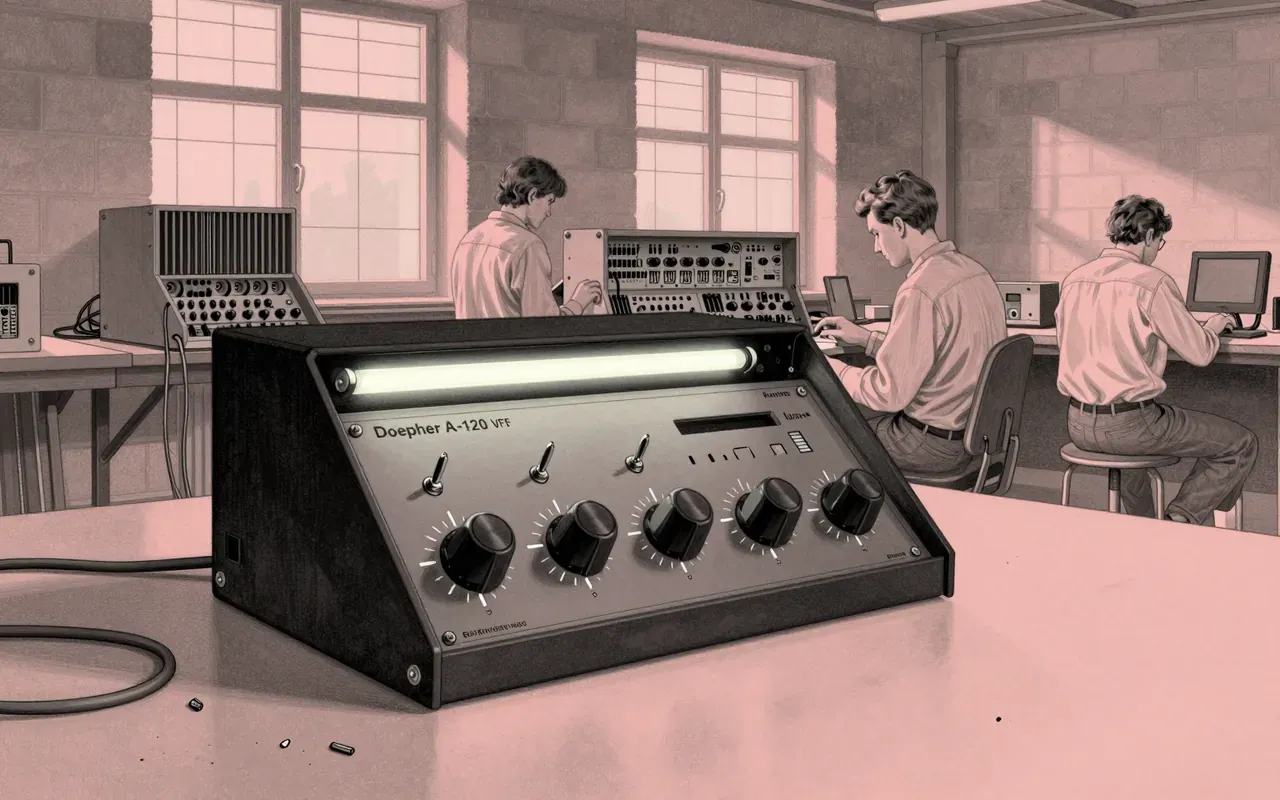
The Doepfer A-120 is a Eurorack filter module built to replicate the Moog 24dB low pass filter. Five potentiometers control cutoff, resonance, input level, and two CV amplitudes. Three CV inputs allow layered, complex modulation. It delivers Moog-like saturation and character at low cost. It offers no multimode filtering, no self-oscillation feedback control, and no visual indicators for resonance peak or clipping. Use it for warm, resonant, hands-on low-pass filtering in modular systems. Avoid it if you need versatility beyond 24dB low pass.

9:34

Ibanez AD9 Analog Delay

Ibanez

The Ibanez AD9 is a stripped-down analog delay pedal that prioritises warmth and clarity over features. Its compander-based signal path delivers clean repeats up to 300 ms. It has no tone control, no modulation, no tap tempo, and no stereo capability. It suits players who want a dependable, affordable analog echo — not a Swiss Army knife.

9:08

Alembic Series I

Alembic

The Alembic Series I is a 1977 US-made 4-string bass with rabl neck and top, mahogany body, bne key, brass bridge and nut, and 24-fret pearl-inlaid neck. Its electronics include two single-coil pickups, a central dummy hum pickup, stereo 5-pin XLR output, external power supply, dual volume/tone controls, dual 3-position Q-switches, and a 3-position + Off selector. It delivers precise, clear, full-range sound suited to slap, fingerstyle, and pick playing—but is relatively heavy, fragile (headstock prone to breakage), and has non-independent string height adjustment at the bridge.

8:18

Ibanez Artist AR300

Ibanez

The Ibanez AR300 is a 1981 Japanese-made, violin-shaped electric guitar with a glued-in neck, two humbuckers, 22 frets, and four dedicated controls. It weighs like a vintage Les Paul and plays with warmth and authority in blues and jazz—but resists speed, modern ergonomics, and tonal neutrality.

8:36

Avalon Design Avalon AD2022

Avalon Design

The Avalon AD2022 is a two-channel, analog, solid-state, pure class A microphone preamplifier. It delivers transparent, low-noise amplification. It has variable input impedance. It accepts microphones and DI sources. It includes phantom power, a 20dB pad per channel, polarity reversal, and a switchable variable high-pass filter. It uses XLR connections. It has front-panel XLR and jack connectors for instruments. It is rackmounted and occupies two standard rack spaces.

8:47

Boss BD-2 Blues Driver

Boss

The Boss BD-2 Blues Driver is an overdrive pedal sold since at least 2003. Users report its tone as round, expressive, smooth, and sultry. It responds sharply to small knob adjustments. It covers a wide sonic range — from clean overdrive to heavy grunge. It is available new and second-hand. Prices recorded are $50 (used), $79.99 (Kayes Music Scene), and $80 (Sam Ash).

8:11

Boss CE-2 Chorus

Boss

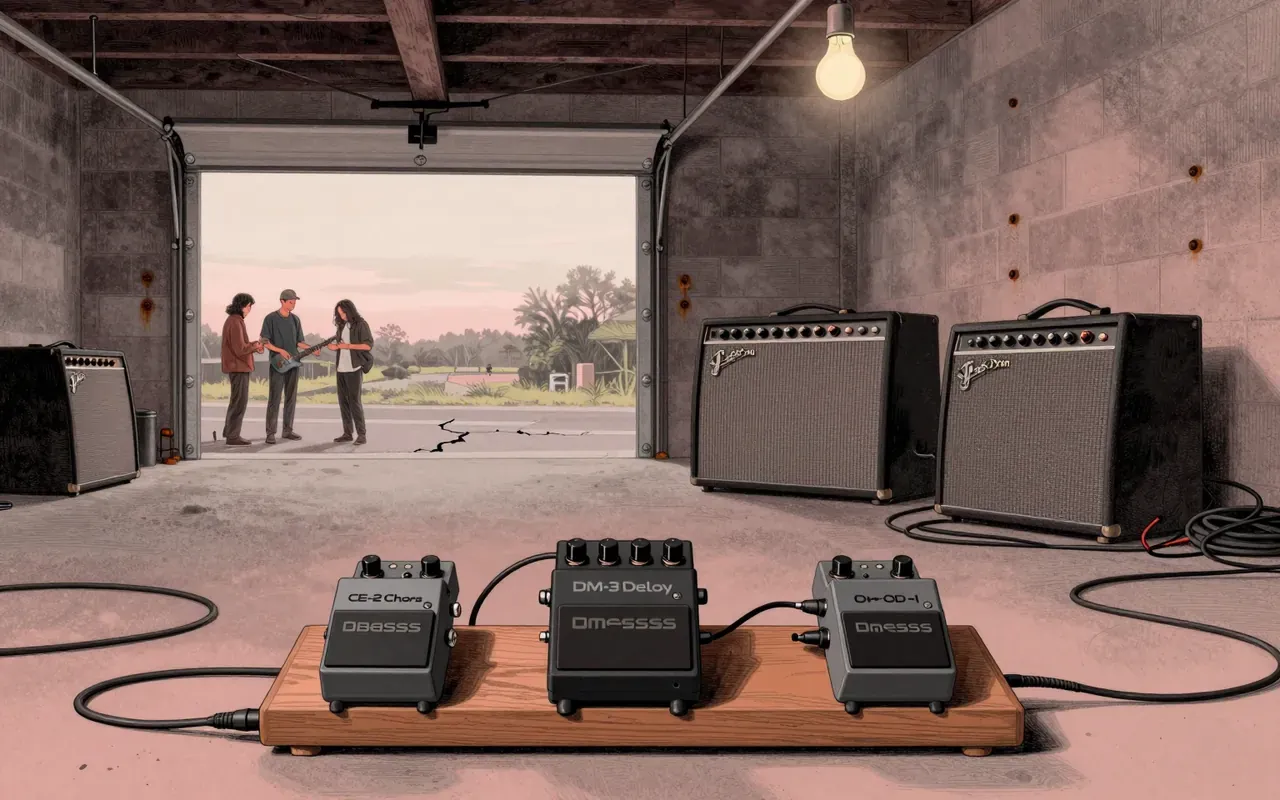
The Boss CE-2 Chorus is an all-analog stomp box introduced in the early 1980s. It has two controls: Rate and Depth. It was Boss’s first compact chorus pedal and the first they housed in a stomp box. Production ended in 1990. It runs on 9V battery or transformer. It was made in Japan.

9:26

Boss CH-1 Super Chorus

Boss

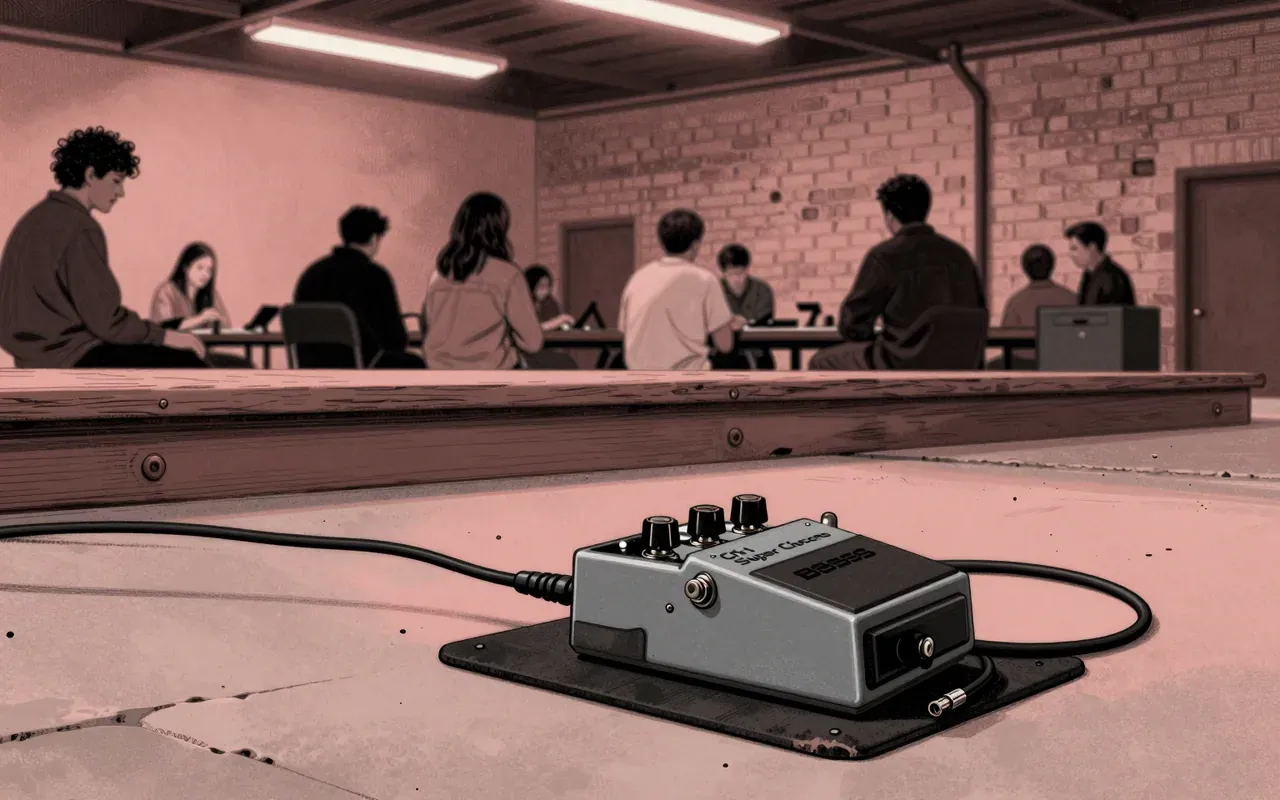
The Boss CH-1 Super Chorus is an analog stomp-box chorus pedal for guitar and keyboards. It has four dedicated knobs — Effect Level, EQ, Rate, Depth — and supports mono input with mono or stereo output. It runs on 9 V battery or AC power. It is Boss’s best-selling chorus pedal. It is not rackable.

9:22

Daking Mic Pre IV

Daking

The Daking Mic-Pre IV is a 4-channel solid-state analog preamp with minimal controls and no colouration. It amplifies cleanly and intensely—revealing rather than refining the source. Its design prioritises workflow over flavour.

8:29

dbx 166

dbx

The dbx 166 is a no-compromise stereo FET compressor built for speed and instrument tracking—not vocals, not mixing, not analysis. It delivers efficient, transparent compression with subtle warmth. Its design gives immediacy and reliability. It withholds metering, sidechain, vocal suitability, and fine dynamic control.

9:56

Boss DD-3 Digital Delay

Boss

The Boss DD-3 is a digital delay pedal for guitar. It uses four knobs to control effect level, feedback time, delay time, and delay mode. It delivers clear, sharp echo without muddiness. It is extremely durable. It is probably the most well-known digital delay pedal.

7:59

Boss DM-2 Delay

Boss

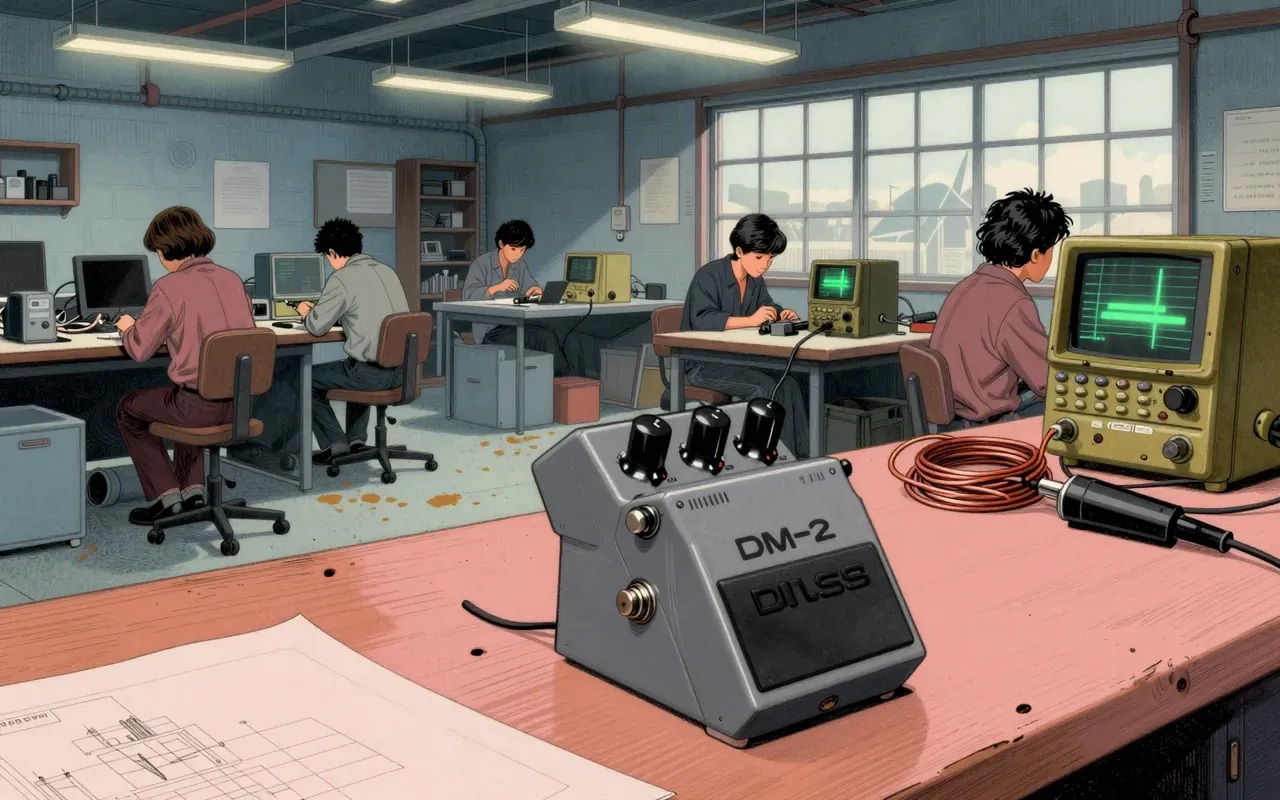
The Boss DM-2 is a Japanese-made analog delay pedal released in 1981. It delivers warm, tone-enhancing repeats from 20ms to 300ms using three knobs: Repeat Rate, Echo, and Intensity. It has no MIDI, no computer control, and is not rackable. It was built for guitar and other electronic instruments. It thickens tone rather than cutting with precision.

9:39

Boss DM-3 Delay

Boss

The Boss DM-3 is the last compact analog delay Boss made. It runs from 1984 to 1988. Its 20ms–300ms delay is set by Repeat Rate, Echo, and Intensity knobs—the only Boss pedal with this shape and layout. It has an unlabeled stereo output and revised filtering to reduce noise. It does not do digital, modulation, or long delays. It does warm, decaying repeats with physical immediacy.

9:00

Grace Design m201

Grace Design

The Grace Design m201 is a single-channel solid-state microphone preamplifier. It provides clean, high-headroom gain with no EQ, no compression, no digital conversion, and no additional signal path options. It serves one purpose: to amplify a mic signal without alteration. It is not a channel strip. It is not an interface. It is not a tool for tonal manipulation. It is a specialist device for specialists who know exactly when they need it — and when they do not.

9:27

Ibanez Musician MC924

Ibanez

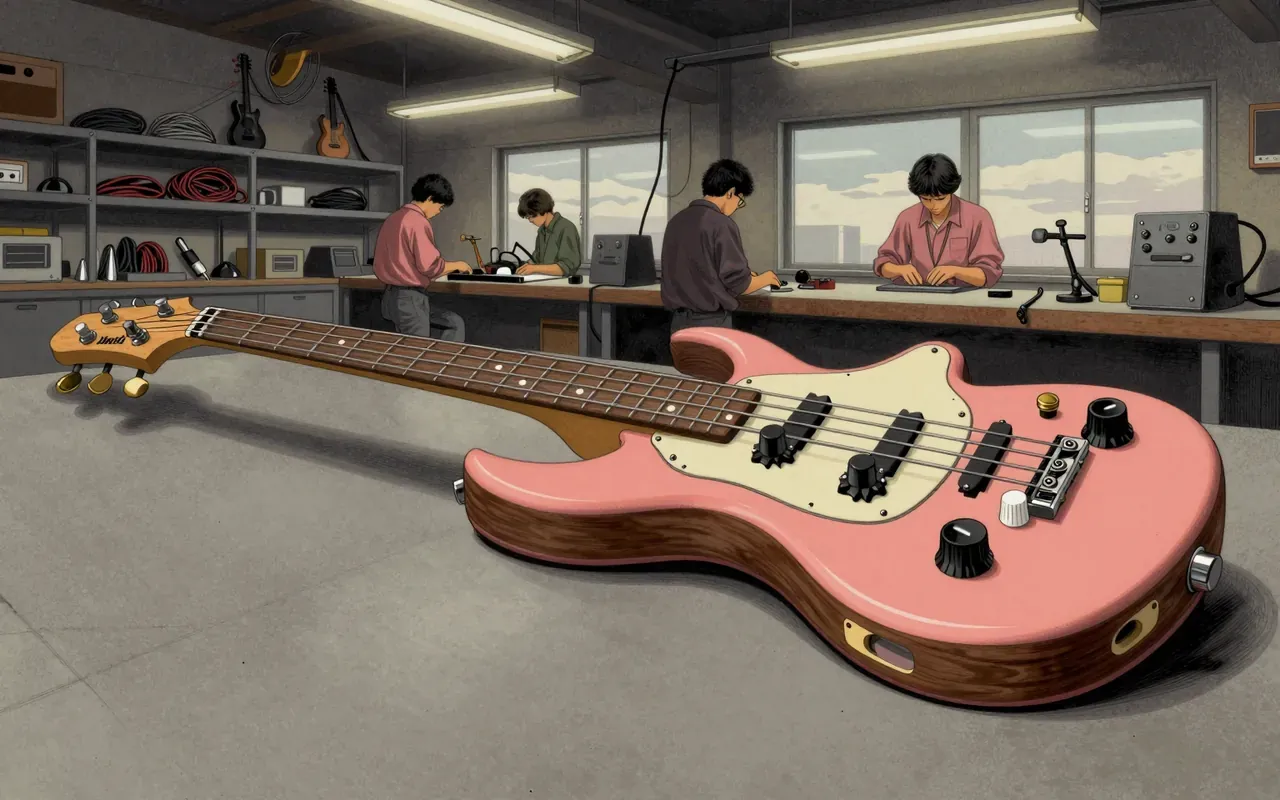
The Ibanez MC924 is a 4-string bass guitar from the Musician series, introduced in 1978. It is heavy, sustain-rich, and exceptionally durable — one unit stayed mint for over 25 years. Its active three-band EQ and responsive pickups give broad tonal control. But its weight demands strap-locks live, and age brings failing switches and jacks. It is not lightweight. It is not low-maintenance. It is built to endure.

10:14

Marshall JCM800 2203

Marshall

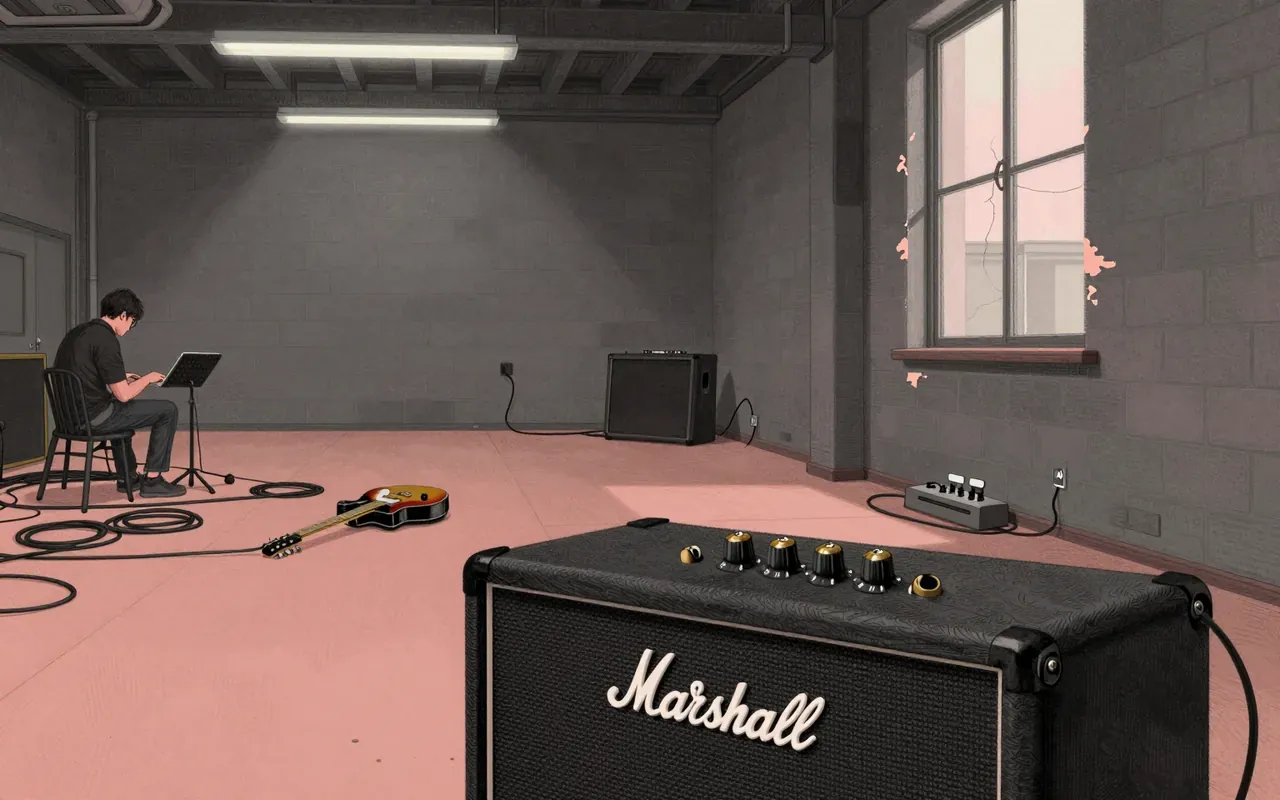
The Marshall 2203 JCM800 Master Volume Lead is a tube guitar amp head introduced in 1981 and produced until 1989. It delivers aggressive, mid-forward distortion at manageable stage volumes — but offers no clean headroom, no effects loop, and no modern conveniences.

8:36

Korg Kaoss Pad KP3

Korg

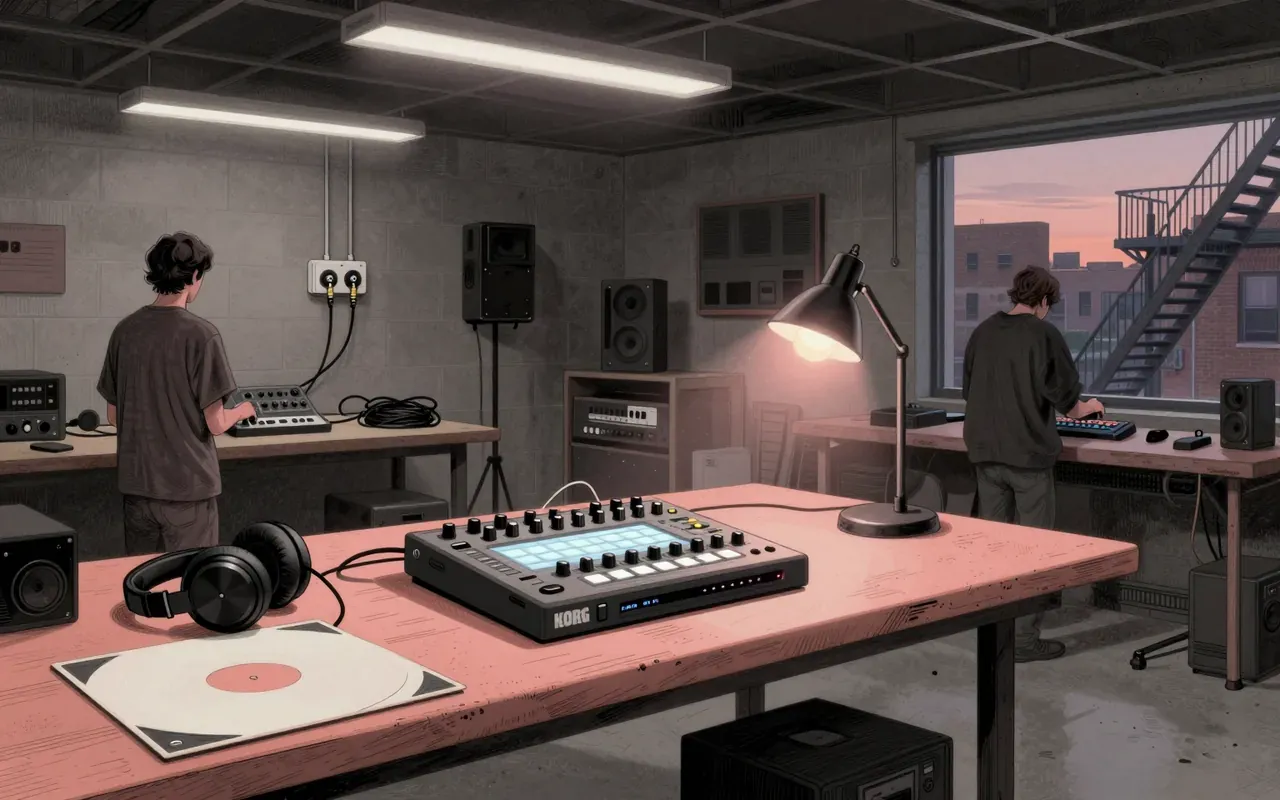
The Korg Kaoss Pad 3 is a live-performance effects unit. It uses an X/Y touchpad for real-time control of 128 built-in programs—including reverb, delay, flanger, analog filter, drive circuit, and a vocoder. It samples onboard. Some effects sync to tempo. It functions as a MIDI controller. Connections are RCA only.

8:26

Millennia HV-3D

Millennia

The Millennia HV-3D is a solid-state mic preamp built for fidelity, not flavour. It gives you three transparent gain stages per channel, 1.5 dB stepped gain, phantom power, no phase flip, and eight channels in two rack units — all on internal power. It excels on strings, voice, and piano. It fails on distorted guitar and bright cymbals. It is not subtle. It is literal.

10:37

Roland Space Echo RE-201

Roland

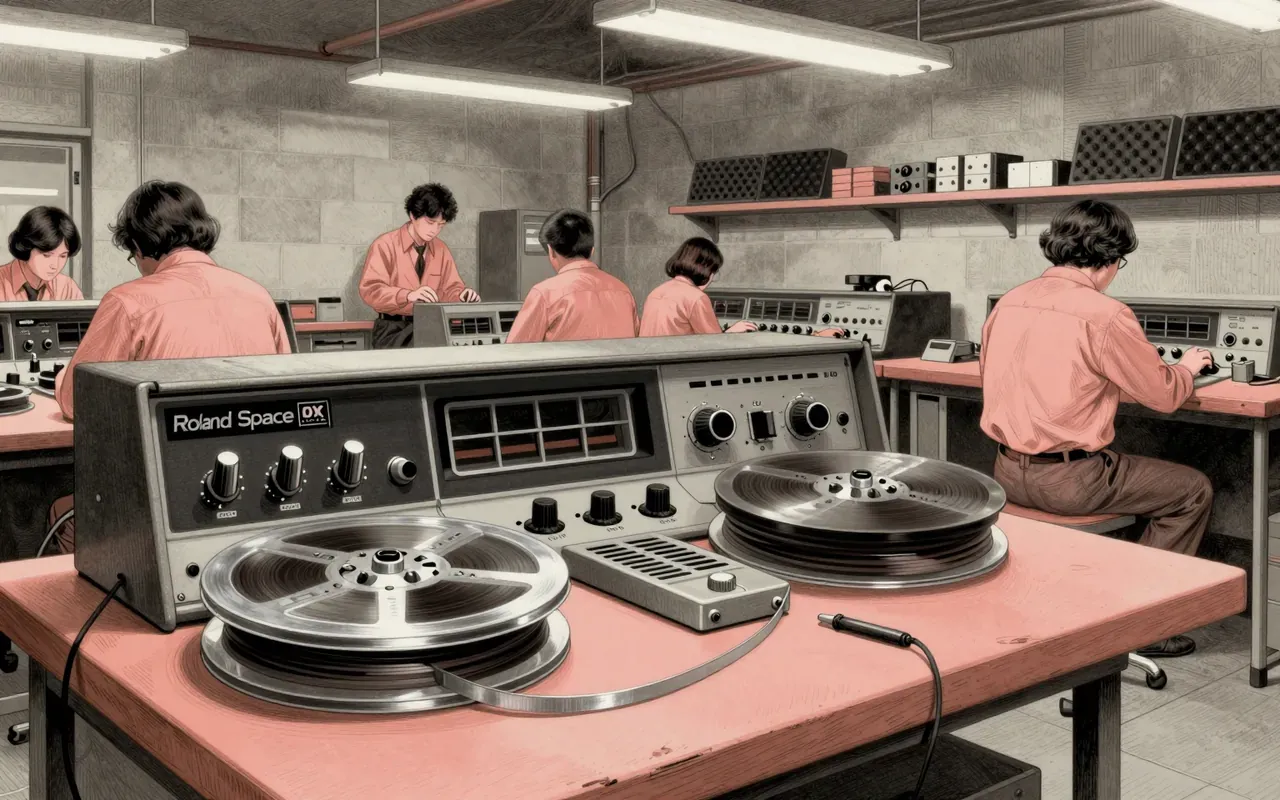
The Roland RE-201 Space Echo is a non-rackable desktop analog tape echo unit with three inputs (two mic, one instrument), five magnetic tape playback heads, 1/4" wet/direct outputs, footswitch input, and controls for time, feedback (intensity), low/high EQ, dry/wet mix, and reverb. Its reverb has a compromised tonal character ('trs CRADA'). It uses an actual reel of tape — distinguishing it from imitators. It does not offer precision, stability, or clean reverb. It does deliver saturated, decaying, pitch-wobbling repeats no digital model fully replicates.

8:21

Ibanez Tube Screamer TS808

Ibanez

The Ibanez TS808 Tube Screamer Reissue is an analog overdrive pedal in the Tube Screamer series. It has three knobs: tone, level, and overdrive. It uses the JRC4558 chip. It runs on a 9-volt battery or AC adapter. Its metal housing is 4.9" x 2.8" x 2" and weighs just over a pound. It delivers warm, smooth, mid-heavy overdrive suited for solos and blues-rock—not high-gain riffing. It is very strongly built.

8:38

Wurlitzer 200A

Wurlitzer

The Wurlitzer 200A is a 73-key electro-mechanical electric piano with built-in speakers, output jacks, a sustain pedal, carrying handles, and two knobs — one for volume, one for tremolo speed. Its keyboard action is tactile and easy to play. Its tone is uniquely recognizable. It is a newer model than earlier Wurlitzer electric pianos. It offers more tonal range than those earlier models only via dedicated tremolo and volume controls.

8:48

Genelec 1032A

Genelec

The Genelec 1032A is a high-end, individually sold, active two-way near-field studio monitor. It uses a 10-inch woofer and 1-inch tweeter. Its frequency response is 36 Hz to 23 kHz. It delivers a clean sound with tight highs and reportedly accurate mids and lows. It requires no external power amplifier. It is sold singly, not in pairs.

7:28

AMS Neve 1073 DPA

AMS Neve

The AMS Neve 1073 DPA is a solid-state, pure class A, 2-channel preamp with DI, variable impedance, phantom power, and phase inversion — but no EQ, no insert, no flexibility beyond its fixed tonal signature. It gives you a clear, present midrange, smooth highs, and round, deep lows. It is not neutral. It is not modular. It is not subtle. It is specific.

8:04

Aphex 204 Aural Exciter

Aphex

The Aphex 204 Aural Exciter is a two-channel hardware processor that enhances bass tone while preserving attack and avoiding speaker damage. It uses optical low-end enhancement and aural excitation to deliver creamy, fat sound with sleek tone and crystal-clear attack. Users report success in loud live contexts with drums and distorted guitars — the bass remains powerful yet clear and defined. It pulls clean, fat low-end from existing bass amplifiers and speakers, eliminating the need for bulky speaker upgrades. It does not address midrange or high-frequency detail beyond attack preservation. Bass players using standard rigs in loud live settings should use it. Studio engineers seeking surgical EQ or harmonic control should not.

9:26

Neve 33115

Neve

The Neve 33115 is a compact, broadcast-optimised channel strip built in Cambridge between 1974 and 1975. It uses the same class A preamp and EQ circuitry as the 1081 but drops the fourth EQ band and simplifies the layout. Its 300/1200 Ω input switch supports ribbons. It belongs in small consoles like the Melbourne and broadcast frames like the 5315 and 5316—not in large-format studio rigs.

8:28

JBL 4312

JBL

The JBL 4312 is a passive three-way studio monitor built for punch, precision, and stereo imaging — not neutrality or refinement.

8:19

JBL 4430

JBL

The JBL 4430 is a 2-way active monitor built for studio monitoring. It delivers stable, wide, non-directional dispersion and excellent overall homogeneity. Its horn is more neutral than predecessors like the 4331 and L200 — eliminating long repetitive directional artifacts. It lacks the top-end finesse of the 2405 tweeter. Bi-amplification enables sonic evolution, but mechanical decoupling from the floor is mandatory. It was produced continuously for 20 years with iterative hardware updates: the 1-inch compression driver shifted from aluminum diaphragm and alnico magnets to titanium and ferrite. Each unit supports up to 80 kg.

8:45

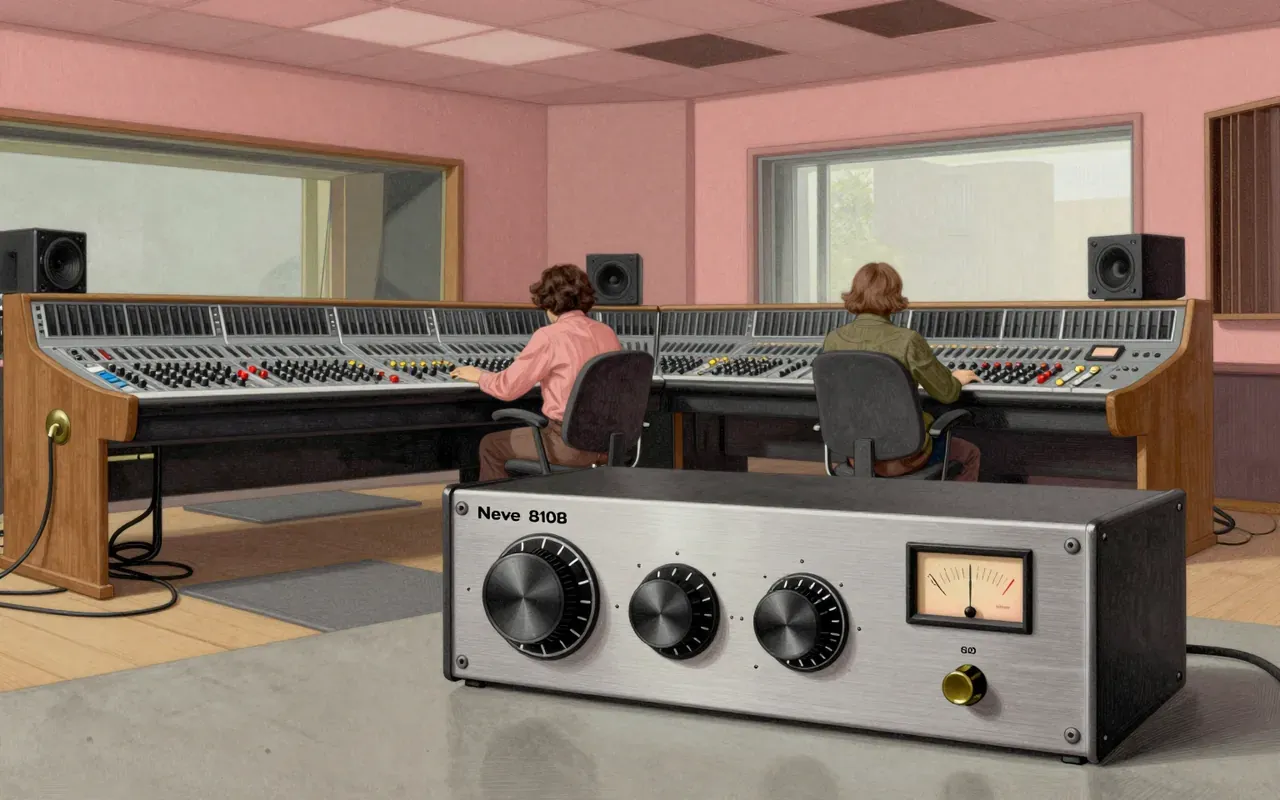
Neve 8108

Neve

The Neve 8108 is a 32-channel analog mixing console built in 1979. It delivers warm, full preamps and top-notch parametric EQ on every channel. Its channel strips are laid out for convenient access. Its digital routing system is quirky.
9:58

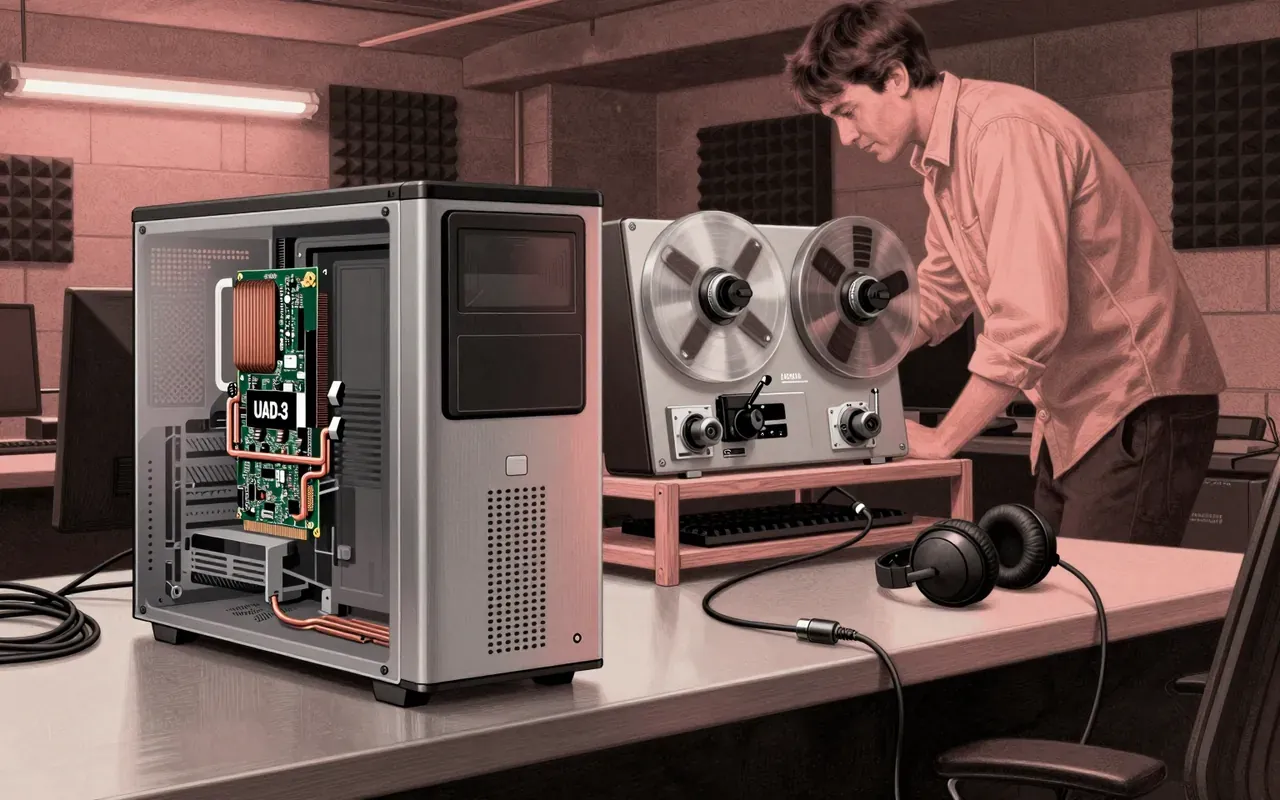
Studer A800

Studer

The Studer A800 is a UAD-2 plug-in that adds tape-style warmth and drive to digital mixes. It works best post-summing. It uses gang control for unified management. It does not simulate physical tape mechanics.

8:56

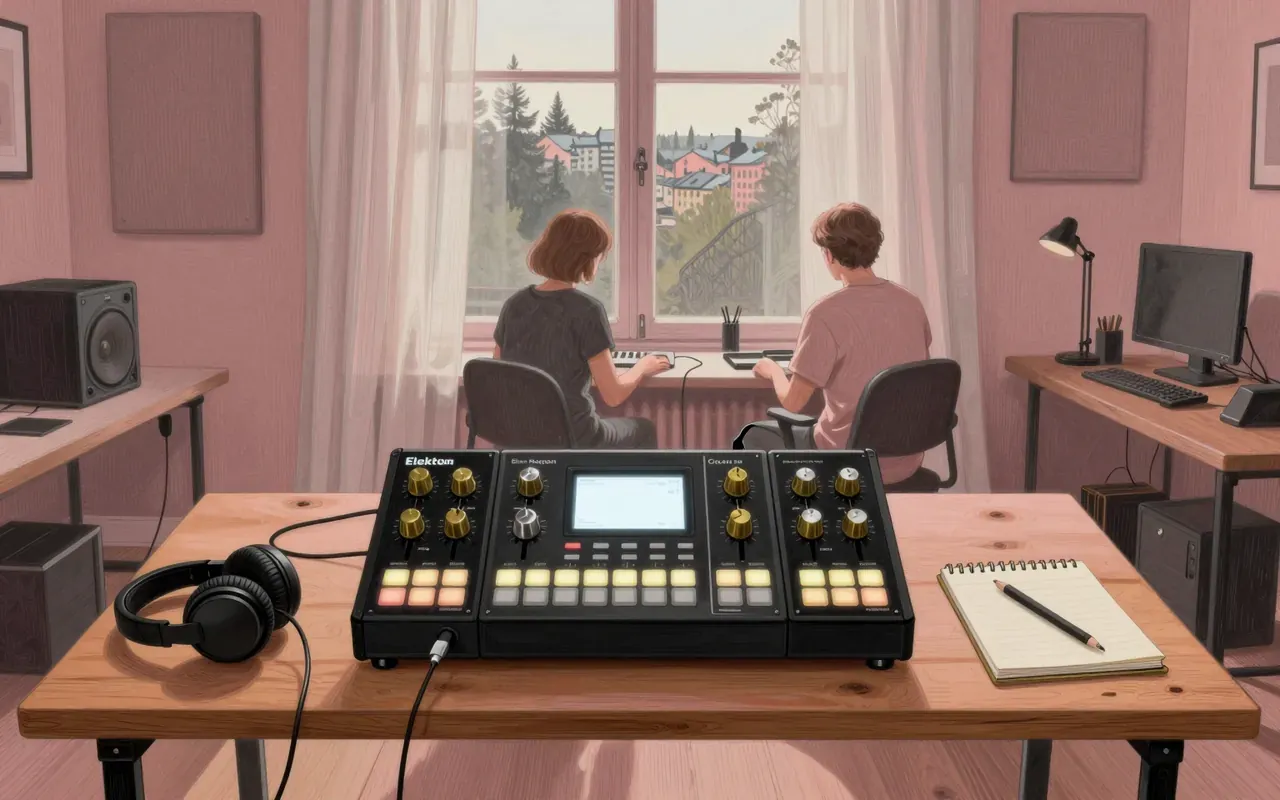
Elektron Analog Four

Elektron

The Elektron Analog Four is a tabletop groove machine with four mono analog synth voices, each with two analog oscillators, a 1-pole analog lowpass ladder filter, and a 2-pole analog multi-mode filter. It includes a 6-track MIDI sequencer and two audio inputs and outputs—but no digital connections.

8:01

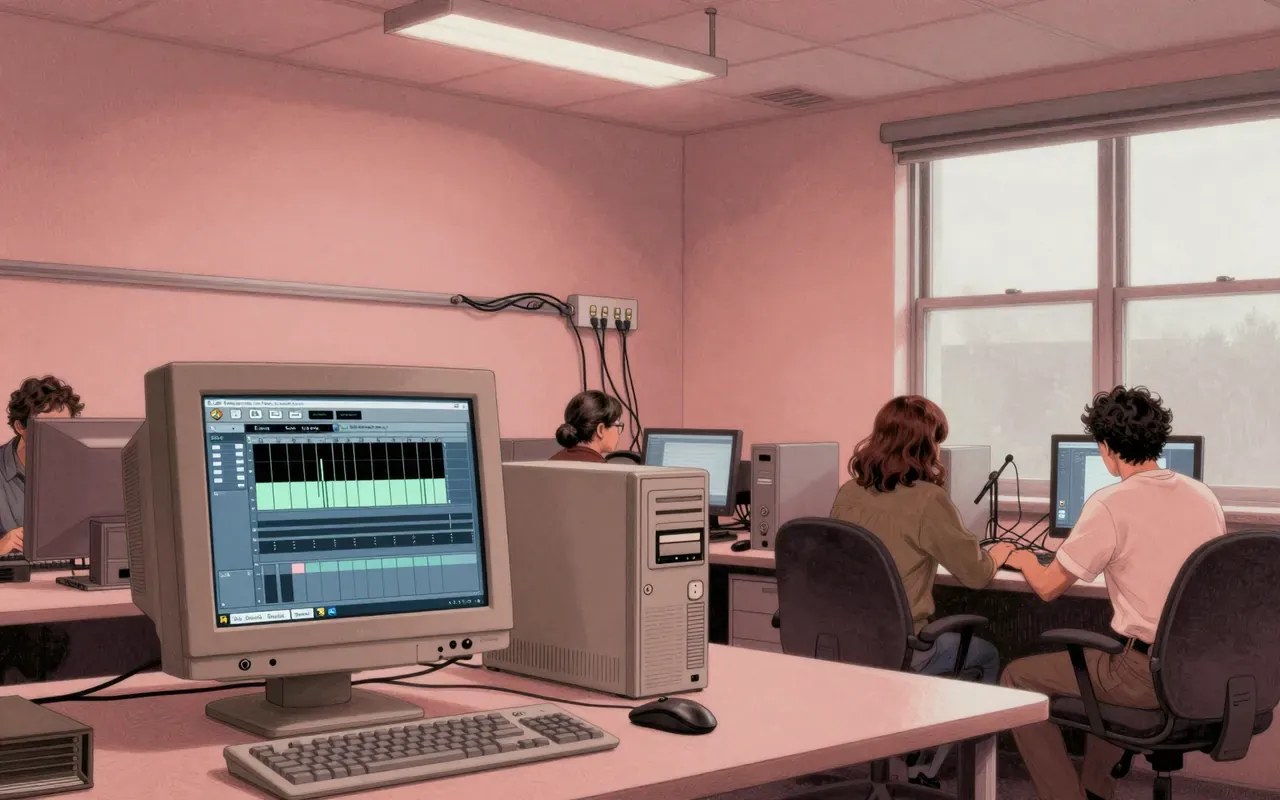
M-Audio Audiophile 2496

M-Audio

The M-Audio Delta Audiophile 24/96 is a PCI/ISA sound card for Windows-based music production and amateur vocal recording. It connects MIDI controllers and turntables. It supports 24-bit/96 kHz audio when host software allows. Latency drops to 4ms with buffer reductions. It runs silently in Cubase VST, Pro Tools, Fruity Loops, and six other DAWs. Recordings are clean. Softsynths sound great. Wave Table Synthesis is absent — but users found it unnecessary. I/O is limited. Modern OS support is not provided.

8:46

Shure Beta 52

Shure

The Shure Beta 52 is a dynamic microphone built for kick drum and bass. It has a supercardioid pattern, 20Hz–10kHz response with 4kHz presence boost, strong proximity effect, and handles 174dB SPL. It was replaced by the Beta 52A.

8:47

Lovetone Big Cheese

Lovetone

The Lovetone Big Cheese is a UK-made, all-analog fuzz pedal for electric guitar. It has four controls: 'Curds' (gain), 'Whey' (volume), a traditional tone knob, and a stepped tone switch with four positions including bypass. It uses 1/4" input/output jacks and a 1/8" 9V power jack. It is not rack-mountable. It produces high-gain, noisy, aggressive fuzz — but can also deliver subtle overdrive. It is expensive and regarded as top-notch.

10:26

AKG C24

AKG

The AKG C24 is a Pro Tools-specific motorized control surface with 24 bankable channel strips, touch-sensitive motorized faders, 16 mic/line/DI preamps, an 8x2 stereo line submixer, a 5.1 analog monitor section, talkback mic inputs, and illuminated dedicated switches for mute, solo, record, select, EQ, dynamics, sends, and inserts.

8:44

AKG C460

AKG

The AKG C460B + CK63ULS is a small diaphragm condenser microphone. It delivers accuracy, not attitude. It has no switches, no colour, no compromise — just a fixed cardioid pattern, fixed frequency response, and fixed reliance on external preamp and placement. It excels where definition matters most. It fails where character is required.

8:09

Fender Champ 5F1

Fender

The Fender Champ 5F1 is a tube combo guitar amplifier made from 1958 to 1964. It has volume and tone controls only. It uses a single 6V6 power tube driving an 8-inch speaker. It breaks up early and stays simple. It does not offer clean headroom, effects, or expandability.

8:11

Chandler Limited Curve Bender

Chandler Limited

The Curve Bender is a software parametric EQ made by Softube. It costs $299 including VAT. It does not claim to be hardware. It does not add dynamics, M/S, or analysis. It does one thing: shape tone with four bands, modelled on Chandler’s approach.

8:44

AKG D112

AKG

The AKG D112 MkII is a dynamic microphone built for one purpose: capturing kick drum impact. It is heavier than many mics (778 g), requires no power, and belongs to the same lineage as the original D112 — updated, not reinvented. It excels where low-end punch and SPL tolerance matter most. It fails where clarity, air, or transient fidelity are required. It is not a vocal mic. Not a room mic. Not a hi-hat mic. It is a kick drum mic — and nothing more.

10:25

Electro-Harmonix Deluxe Electric Mistress

Electro-Harmonix

An analog stereo flanger and filter matrix stomp box for electric guitar. It runs on a dedicated 24 V power supply. It has input, effect out, and clean output jacks. It uses three knobs — color, range, and rate — plus a switch for the filter matrix function. It is not rack-mountable.

8:51

Electro-Harmonix Deluxe Memory Man

Electro-Harmonix

The Electro-Harmonix Deluxe Memory Man Mk4 is an all-analog stomp-box delay/echo pedal with built-in chorus and vibrato. It has no MIDI, no computer editing, no rack-mount capability, and requires a 24-volt power supply. It features a 1/4-inch input, a dry output, and a dedicated echo output for routing to a separate amplifier.

9:35

Pioneer DJM-800

Pioneer

The Pioneer DJM-800 is a 4-channel, 96 kHz / 24-bit digital mixer designed for live DJ performance. It delivers tight, immediate control over EQ, beat effects (Roll, Reverse Delay, Filter), and harmonic effects (Sweep, Crush). Its 61 assignable MIDI/HID controls integrate hardware and software without abstraction. But it offers no resonance adjustment on its filter effect, and headphone monitoring routing is rigid.

9:22

Make Noise DPO

Make Noise

The Make Noise DPO is a dual-oscillator Eurorack VCO built for FM synthesis and wavefolding. It produces deep, rich FM-type sounds using its dedicated wavefolder section. Its output is clean and cold—not Moog-style warm. It has no built-in LFO, envelope, or quantizer. It is not a full voice module. It is a precision tool for FM texture generation.

9:12

Prism Sound Dream ADA-8XR

Prism Sound

The Prism Sound Dream ADA-8XR is an eight-channel analog/digital converter built for fixed-install mastering and DAW integration. It provides eight balanced XLR I/O at +4 dBu, two RCA monitoring outputs, DB-25 AES I/O, and dual BNC Word-Clock. Its build quality is impeccable—but it runs hot, demanding 1U of rack clearance. It does not offer USB, optical, headphone output, or variable monitor level control.

7:20

Beyerdynamic DT 48

Beyerdynamic

The Beyerdynamic DT 48 is the world’s first dynamic headphone, launched in 1939. Its closed, tight-fitting design isolates sound but causes fatigue. Its midrange is superb and revealing—built to monitor voice, sound objects, and mood in reporting, radio, film, and medical audiometry. It is not intended for mastering.
10:06

Fender Dual Showman

Fender

The Fender Dual Showman Reverb is a 100-watt all-tube head built for volume, clarity, and built-in modulation. Two channels—clean and reverb/vibrato—each have full EQ and a Bright switch. No master volume. No channel switching on the fly. Heavy. Loud. Uncompromising.

9:38

E-mu Systems E4XT Ultra

E-mu Systems

The E-MU E4XT Ultra is a 1999 hardware sampler. It delivers verbatim audio playback, 128-voice polyphony, and studio-grade reliability. It has no onboard effects, shallow editing, and fixed storage. It belongs in a rack—not a laptop bag.

8:40

E-mu Systems E6400

E-mu Systems

The E-mu Systems E6400 is a hardware sampler built for radical sample transformation — not faithful reproduction. Its strength is in routing: the modulation matrix and modular-style processing blocks (quantize, flipflop, diode, lag) let users rewire signal flow in ways few samplers allowed. Its SCSI support exceeds its 9GB spec — users ran 18GB drives. Its DACs are transparent; its ADCs are not. It includes Z-plane, formant, phaser, flanger, Doppler, bitreducer and Convolver tools — and its reverb uses impulse response sampling. It ships with EOS 3.00b and 1MB CPU RAM. It is for sound designers who treat samples as raw material to be corrupted, rerouted and convolved — not archived.

10:17

Strymon El Capistan

Strymon

The Strymon El Capistan is a discontinued digital tape echo pedal that emulates the Echoplex and Space Echo through three tape head configurations and three operational modes. It uses five front-panel knobs and hidden footswitch-accessed parameters to shape delay character. Its analog dry path preserves unaffected tone. It does not implement phrase sampling, despite the product title. It runs on 9V and supports both buffered and true bypass.

10:42

Korg Electribe MX EMX-1

Korg

The Korg Electribe MX EMX-1 is a 2003 desktop dance production instrument built for live electronic music creation. It combines synthesis, sampling, sequencing, and effects in a single unit aimed at performers and producers who work in patterns and loops.

8:42

Korg Electribe SX ESX-1

Korg

The Korg Electribe SX (ESX-1) is a 2003 sample-based groovebox built for dance music production and live performance. It uses sample-based sound creation to generate 16 assignable parts—including nine one-shot drum parts, two keyboard parts for melodic playback, two stretch parts for tempo-adjusted loops, one slice part for rhythmic phrase division, one audio-in part, and one drum accent part. It ships with 196 preloaded samples, 128 factory patterns, and 3 demo songs. A major upgrade over earlier ElecTribe models, it offers 285 seconds of sample memory at 44.1kHz for up to 384 user samples, slicing at rhythmic peaks, Motion Sequencing for real-time parameter automation, and three stereo effects processors with chaining.

8:13

EMT EMT 250

EMT

The EMT 250 was the first digital reverberation device to create ambience through a purely electronic system. The Universal Audio plug-in models that hardware exactly — including its single reverb program, five additional effects (Delay, Phasing, Chorus, Echo, Space), lever-driven interface and all its limitations: non-linear-phase anti-aliasing filters, system latency, input clipping and limited frequency response. It uses the exact same algorithm as the original, captured from Allen Sides’ unit and re-engineered by Dr. Barry Blesser.

9:01

E-mu Systems Emulator III

E-mu Systems

The E-mu Emulator III is a 1987 digital sound production system. It was E-mu's biggest and most professional sampler-synthesizer before the 1990s. It was the first sampler to offer 16-bit, 44.1 kHz stereo or mono sampling. RAM is 4 MB expandable to 8 MB. It includes extensive sample editing features including looping and rate conversions. Its on-board 16-track sequencer and arpeggiator are superb. It is equipped with MIDI, SMPTE, SCSI, a built-in disk drive, and multiple outputs. A Macintosh can be hooked up for graphical editing because the LED screen is so tiny.

10:08

Fulltone Fulldrive 2

Fulltone

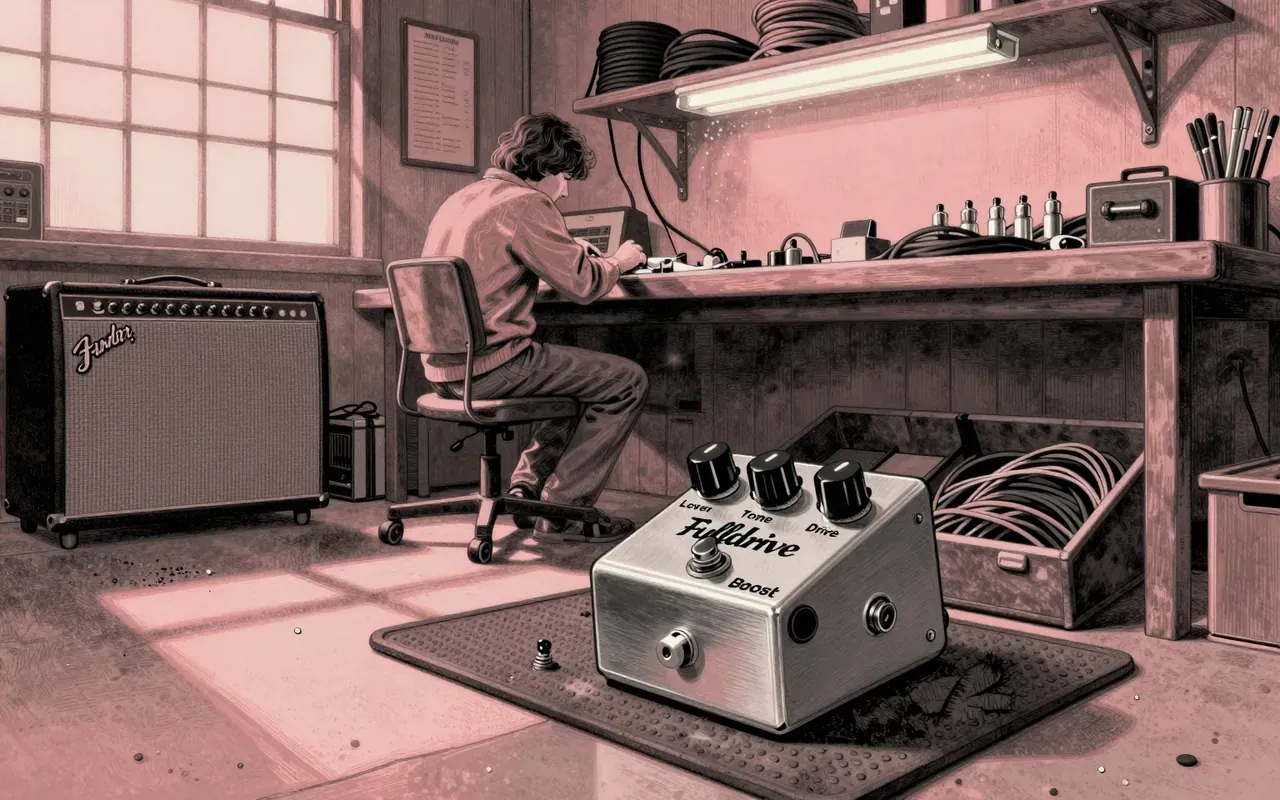
The Fulltone Fulldrive 2 is a hand-wired analog overdrive/booster pedal introduced in 1996. It gives players four knobs, two footswitches, and two 3-way toggles to shape tone, drive, boost, voicing, and clipping. It excels at delivering three distinct tonal identities — clean boost, mid-boosted overdrive, and flat-mid transparency — from one circuit. It falls short where independence and expandability matter: Boost requires overdrive to be active, and it offers no rack option, no buffered bypass, and no external control. It belongs in the hands of guitarists who want tactile, analog tonal switching — not those building a programmable, integrated rig.

8:24

Chandler Limited Germanium Compressor

Chandler Limited

The Chandler Limited Germanium Compressor is a mono, 1U, all-analog FET compressor using germanium transistors. It offers a ratio range of 1.5:1 to 10:1 and a Clean/Dirty switch that toggles between low-distortion (0.2–0.5%) and higher-distortion (2–5%) modes. It has symmetric XLR I/O, is rack mountable, and linkable for stereo or surround use. It delivers fast, coloured compression — but gives up timing control, metering, and multi-channel operation to do so.

9:36

Eventide H9 Harmonizer

Eventide

The Eventide H9 Harmonizer is a pedal-format multi-effects unit built to consolidate four Eventide Factor-series stompboxes into one device.

8:50

Mackie HR824

Mackie

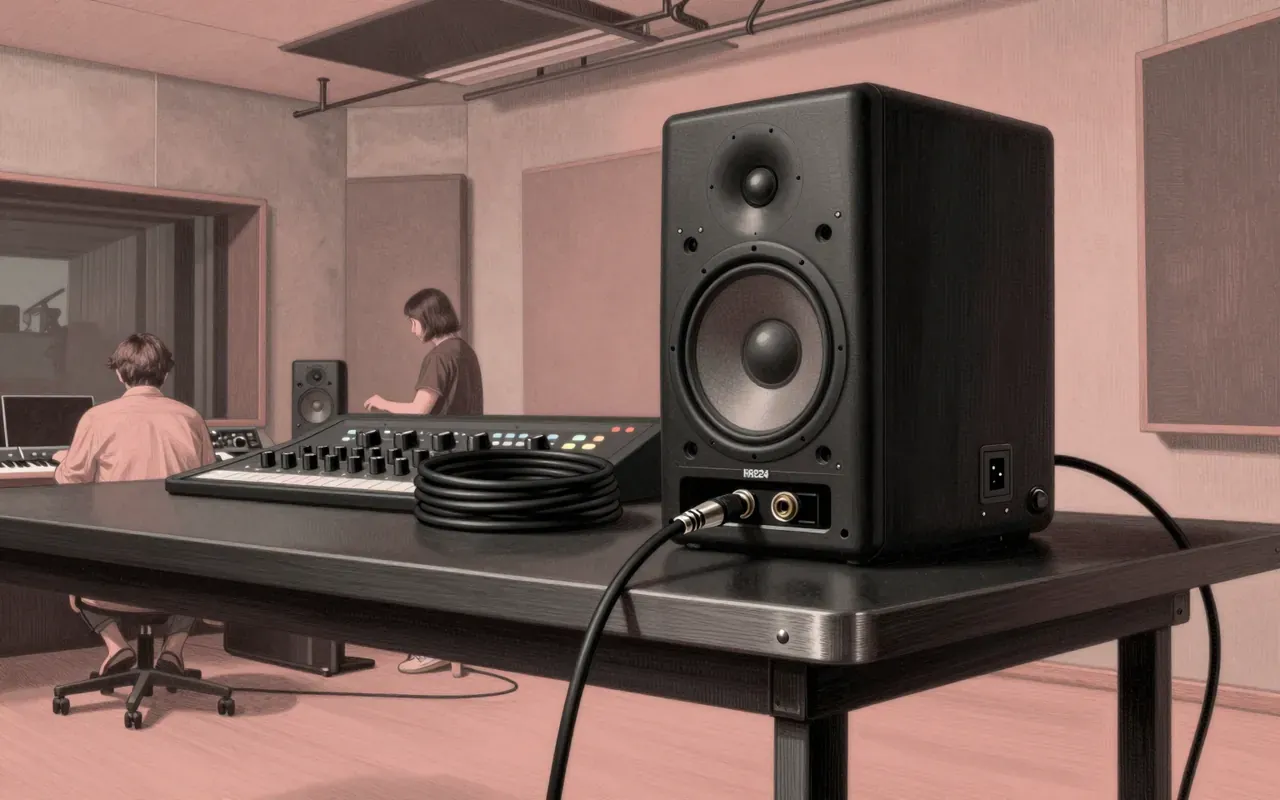
The Mackie HR824 is a discontinued, self-powered near-field monitor. Each unit has its own amplifier and power cord. It delivers uncoloured, accurate sound for critical mixing—and mixes made on it translate well elsewhere.

11:48

Ibanez JEM777

Ibanez

The Ibanez JEM777 is a made-in-Japan STC-shaped guitar built from 1987 to 1996 for Steve Vai’s technical demands. It features a basswood body, maple or rosewood fretboard, 24 frets (some scalloped), HSH pickups, passive volume/tone/five-way switching, and either an Edge or Lo Pro Edge tremolo. It delivers exceptional upper-fret access and stable tremolo performance — but offers no coil-splitting, no active circuitry, and no tolerance for neglected tremolo maintenance.

11:18

Kurzweil K2600

Kurzweil

The Kurzweil K2600 is a 1999 workstation built for deep sound engineering — not quick playing. It uses V.A.S.T. synthesis with 60 DSP functions and 438 presets. It holds 12MB of sample ROM (expandable to 44MB) and 64MB of sampling RAM (expandable to 128MB). Its 32-track sequencer supports pattern, linear, and step recording, plus advanced editing. It processes external signals in real time via ADAT, TDIF, and AES/EBU — with any parameter modulating the input and 20-bit digital output. It falls short on immediacy, tactile control, and workflow clarity. It belongs in a fixed studio, not on stage or in a laptop bag.

8:09

Korg Kaoss Pad KP1

Korg

The KP1 is a 1999 touch-driven effects box for DJs. It runs six effects at once. It has no sampling. It has no synthesis. It has no presets. It has no deep editing. It has a pad, four buttons, and a fader. It rewards gesture over precision. It belongs on a deck, not in a DAW.

9:04

Lexicon Lexicon 224

Lexicon

The Universal Audio Lexicon 224 Digital Reverb is a UAD plug-in that models the 1978 hardware unit using its exact algorithms, firmware version 4.4, input transformers, and 12-bit AD/DA gain stepping converters. It exposes all eight reverb programs and every tunable parameter as dedicated fader-style controls. It adds Input/Output gain, Pitch Shift, and a selectable Bug Fix mode. It belongs to the UAD Plug-In series and is categorised as a software algorithmic reverb.

9:04

Linn Electronics LinnDrum

Linn Electronics

The LinnDrum is a hands-on, sample-based drum machine built for studio precision — not live flexibility.

9:27

Hammond M3

Hammond

The Korg M3 88 is a workstation belonging to the M3 series. It features a dynamic 88-note RH3 keyboard with aftertouch. It supports expansion via an EXB-Radias card to reach nearly 1700 sounds across HD-1, EDS, and optional MMT synthesis. KARMA functions as a highly sophisticated and flexible live arpeggiator. A Kaos Pad is accessible via the touchscreen. The onboard sampler is size-limited despite memory expansion. The instrument is modular: the module can be separated from the keyboard or added to a RADIAS rack. Its six pads are less accurate than those on an MPC.

10:41

Elektron Machinedrum SPS-1

Elektron

The Machinedrum SPS-1 gives you four distinct drum synthesis methods—TR emulation, FM, SP1200/Simmons sampling, and acoustic physical modelling—all editable per voice with multimode filtering, distortion, and sample-rate reduction. Its Extended sequencer stores kits and tweaks across complex patterns; Classic mode abandons both. It delivers unmatched hybrid control—but demands patience, not immediacy.

8:17

Mesa/Boogie Mark I

Mesa/Boogie

The Mesa Boogie Mark I Combo is a late-1970s tube guitar amplifier built for players who wanted controlled, responsive overdrive from a compact combo. It was not originally exported, later adapted for 220 V use in France.

9:56

Manley Massive Passive

Manley

The Manley Massive Passive is a stereo, all-tube, passive parametric EQ. It occupies four rack spaces. It runs hot. It has four bands per channel plus high-pass and low-pass filters. It does not boost or cut actively — tubes restore level after passive attenuation. It is built for stereo bus and mastering, not surgical channel work.

8:29

MCI MCI JH-500

MCI

The MCI JH-500 is a channel strip module inside the MCI JH-528 B studio rack. It delivers clear, powerful, live-sounding results straight out of the box—especially on acoustic guitar—with no EQ required. Its notch EQ sweeps effectively across the spectrum. Four XLR I/O and two rear line inputs support flexible routing. It is built for immediacy, not fine-grained control.

8:34

Sennheiser MD 21

Sennheiser

The Sennheiser MD 21 is a dynamic omnidirectional proximity microphone built for TV and film sound. It excels where other mics fail: under physical stress, in loud environments, and with aggressive vocal delivery. It gives warmth and intelligibility without colouring consonants. It offers no directionality, no pad, no filter — just durability and clarity. It belongs on stage, on set, and in the hands of performers who move while they speak.

10:20

Sennheiser MD 409

Sennheiser

The Sennheiser MD 409 is a unidirectional dynamic microphone built for studio and live use, especially guitar cabinet miking.

6:50

Pultec MEQ-5

Pultec

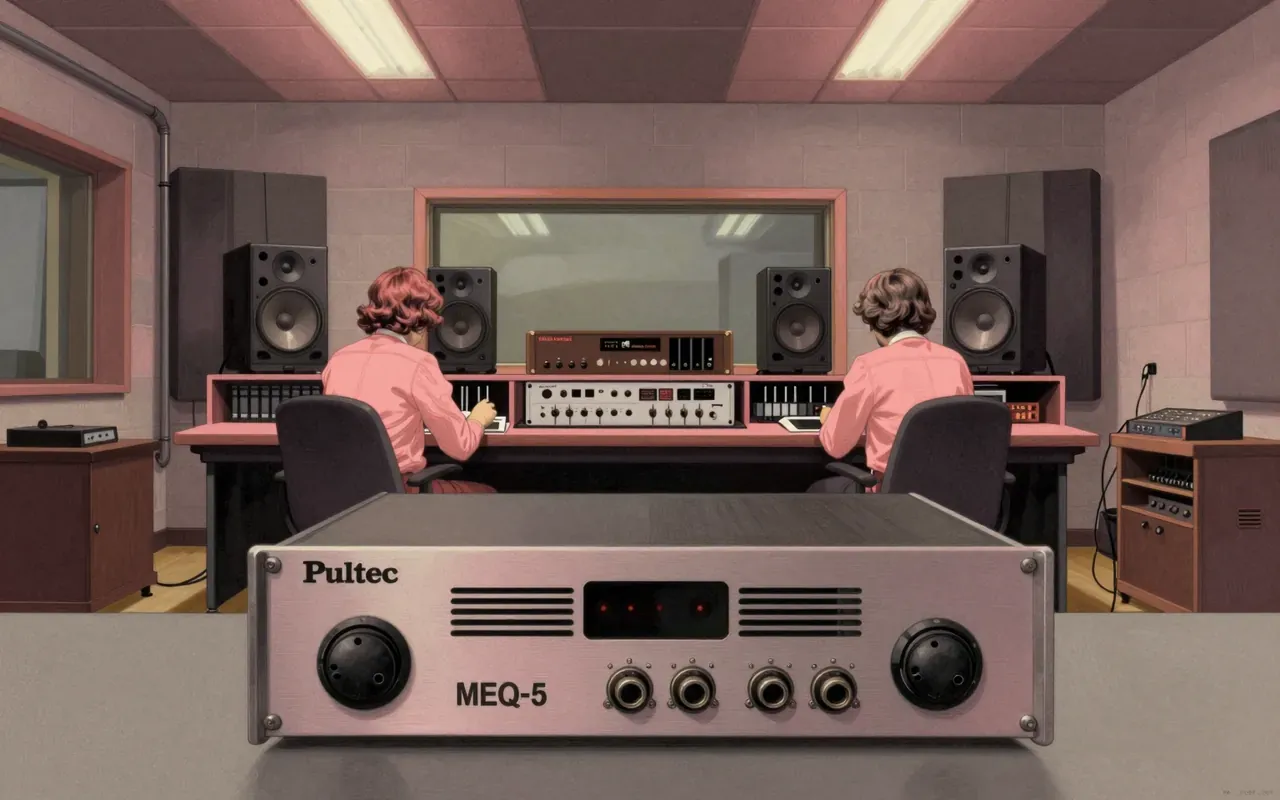
The Pultec MEQ-5 is a clean, transparent, three-band analog EQ. It occupies two rack spaces. Each band uses a frequency switch and a gain knob. It covers nearly the full frequency spectrum. It alters sound cleanly—nothing more, nothing less.

8:30

Waldorf Microwave XT

Waldorf

The Waldorf Microwave XT is a 1998 rackmount synthesizer using digital wavetable and FM synthesis, featuring 44 real-time control knobs, 20-bit DSP functions, and 10-voice polyphony expandable to 30; it shares its engine with the Microwave II and Wave synths, excels at emulating PPG sounds and generating acid or Moog-style bass, and includes onboard arpeggiator, digital effects, and MIDI-transmitting knobs.