audiobriefs
Highest rated

All briefs

747 briefs · 6840 min · 193–288 on page 3 of 8
8:16

Make Noise Morphagene

Make Noise

The Morphagene is an effects module for modular synthesizers made by Make Noise. It belongs in the 'Effects modules for modular synthesizer' category. It does not function as a sampler, sequencer, or DAW plugin — it transforms audio live using tape-style operations. Its design gives immediate, irreversible, hands-on manipulation. It withholds saving, syncing, and visual feedback.

8:19

Rane MP2016

Rane

The Rane MP2016 is a 3U rack-mount DJ mixer with six inputs — four phono/line, two mic/line — each with bass/mid/treble and gain. Master/House and Booth outputs each have a 3-band EQ. It delivers crystal-clear sound with no noise or bleed. It has no built-in effects.

10:56

Akai MPC1000

Akai

The MPC1000 delivers the MPC workflow in a smaller, cheaper, more portable form. It adds six outputs, built-in effects, and memory expansion over the MPC2000 — while storing samples as WAV and sequences as MIDI on CompactFlash. Build quality is reduced, but sound quality is preserved. It is a sampling and sequencing instrument — not a synth, not a DAW, not a controller.

10:05

Akai MPC4000

Akai

The Akai MPC4000 is a 2002 hardware sampler sequencer built to lead the hardware sampler category. It has 16 velocity- and pressure-sensitive pads. It performs 96 kHz 24-bit sampling. It has 16 MB of sampling memory, upgradeable to 512 MB. It includes IDE bays for installing an internal hard disk drive and CD-ROM drive. It supports optional plug-in boards including Effects, ADAT, S/P-DIF & wordclock, and 8 analogue outputs boards. It has 2 MIDI inputs and 4 MIDI outputs. It was released in 2002 with the intent to lead hardware samplers.

9:14

Yamaha NS-10M

Yamaha

The Yamaha NS-10M is a two-way passive near-field monitor. It delivers clear mid and high frequencies but lacks deep low-end extension. Engineers use it to verify mix translation and to A/B compare with other speakers. Its non-neutral response demands experience. It is not a full-range solution.

8:29

Fulltone OCD

Fulltone

The Fulltone OCD V1.1 is an analog overdrive pedal. It has volume, drive, and tone controls. It has a high-pass/low-pass switch. It uses true bypass. It is white with black knobs and a red LED.

10:52

Orange OR120

Orange

The Orange OR120 is a 120-watt tube guitar amp head built around four EL34 tubes. It has high and low inputs, echo send/return, handles, and controls for master, gain, presence, treble, bass and FAC — but no middle control or standby switch. It delivers rich overdrive and vibrant clean tones at volume, but cannot be used quietly without compromising tone or risking tube stress.

8:01

Tascam Portastudio 424

Tascam

The Tascam Portastudio 424 is a cassette-based four-track recorder and mixer. It uses type II (CrO2) tape. It has two inputs — XLR and 1/4 inch — and supports tape speeds of 9.5, 4.75, and 2375 cm/s. dbx type II noise reduction is permanent. Each input has gain, three-band EQ, and panning. It has main stereo outputs and a headphone jack.

8:54

Rupert Neve Designs Portico 5012

Rupert Neve Designs

The Portico 5012 is a solid-state mic preamp with intuitive gain staging and a subjective Silk function that transforms its clean base tone into something euphoric — but unpredictable.

8:40

Korg PS-3100

Korg

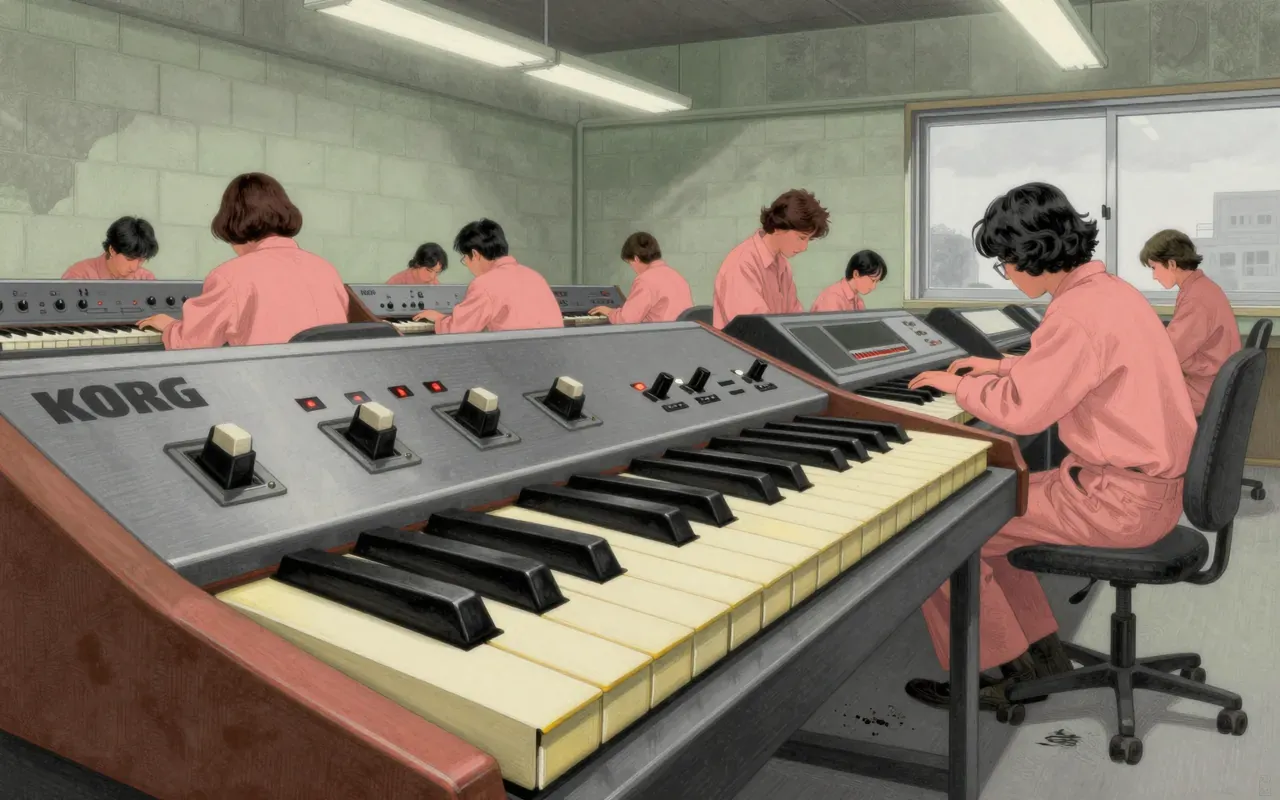
The Korg PS-3100 is a rare (600 units), 30kg, 48-voice analog synthesizer from 1977. It uses 12 divide-down VCOs to drive 48 independent voice circuits — one VCO, VCF, VCA and EG per key. Its warm LPF and 3-band resonator enable rich formant and phase effects. LFO1 reaches audio rate and delivers AM up to ring modulation. One EG is polyphonic; the other is universal and paraphonic. Twelve intonation scaling controls allow non-equal-tempered tuning. It has no patch memory.

11:48

Boss RE-20 Space Echo

Boss

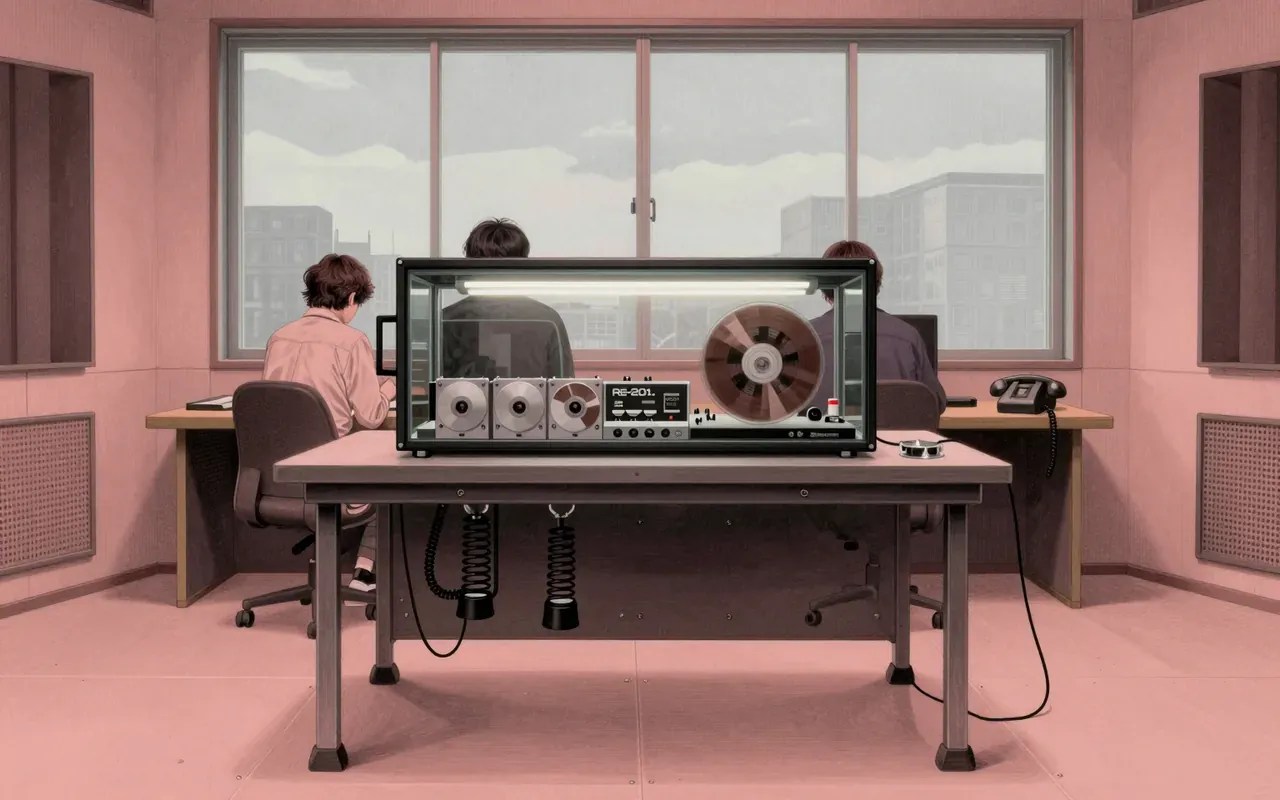
The Boss RE-20 Space Echo is a digital emulation of the Roland RE-201 Space Echo. It is a twin-pedal stomp box with stereo inputs and outputs, an expression pedal input, and a 12-mode selector. Eight front-panel knobs control Bass, Treble, Reverb Volume, Repeat Rate, Intensity, and Echo Volume. One pedal toggles delay on/off. The other handles tap tempo. It operates in Normal (up to 3s) and Long (up to 6s) delay modes. It supports a 'warp' function via footswitch hold.

9:41

Yamaha REV1

Yamaha

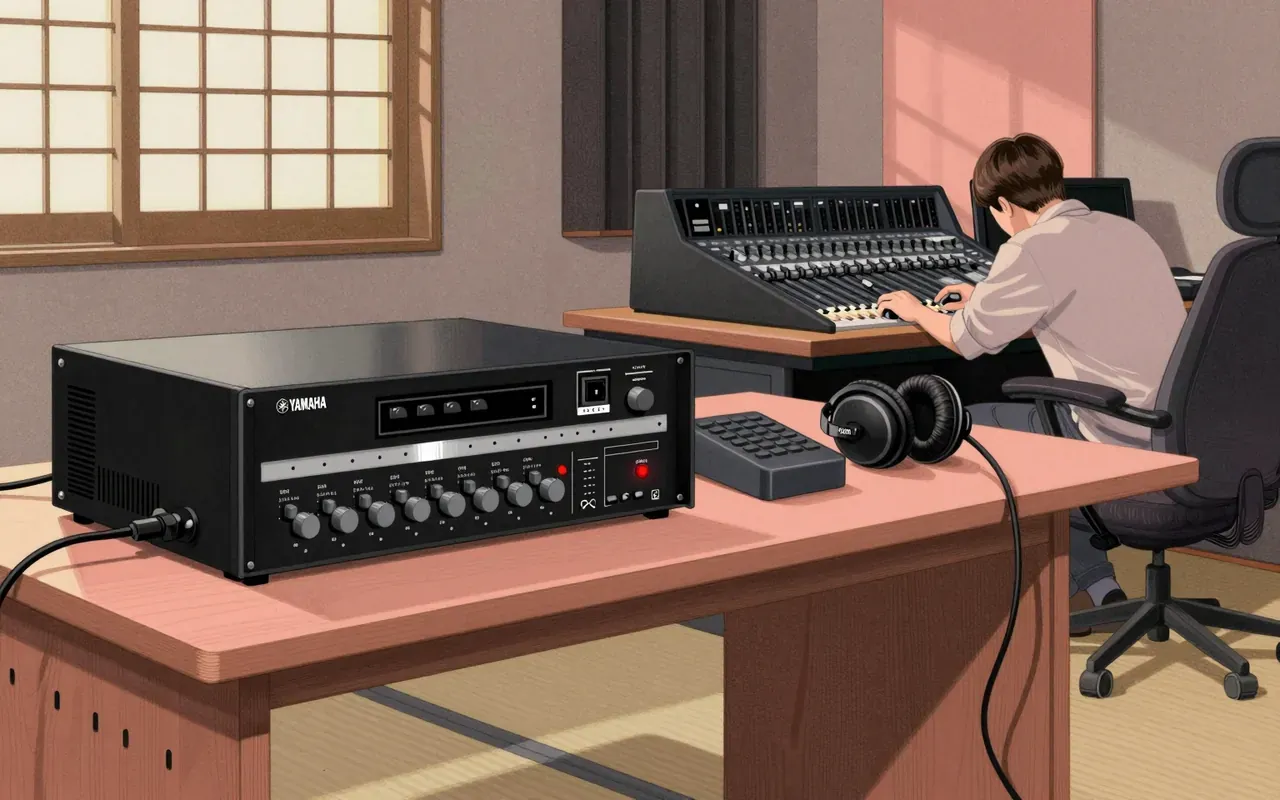
The Yamaha REV1 is a two-part digital reverb: a rack unit and a separate remote. It runs at 16-bit/44.1 kHz. It has one XLR input, two XLR outputs, external clock sync, and RS232 remote connectivity. Its sound is clear, clean, soft, and distinct from other Yamaha gear. Only the Lexicon 224 XL surpassed it in finesse among contemporaneous units.

9:34

Rhodes piano

Fender Rhodes

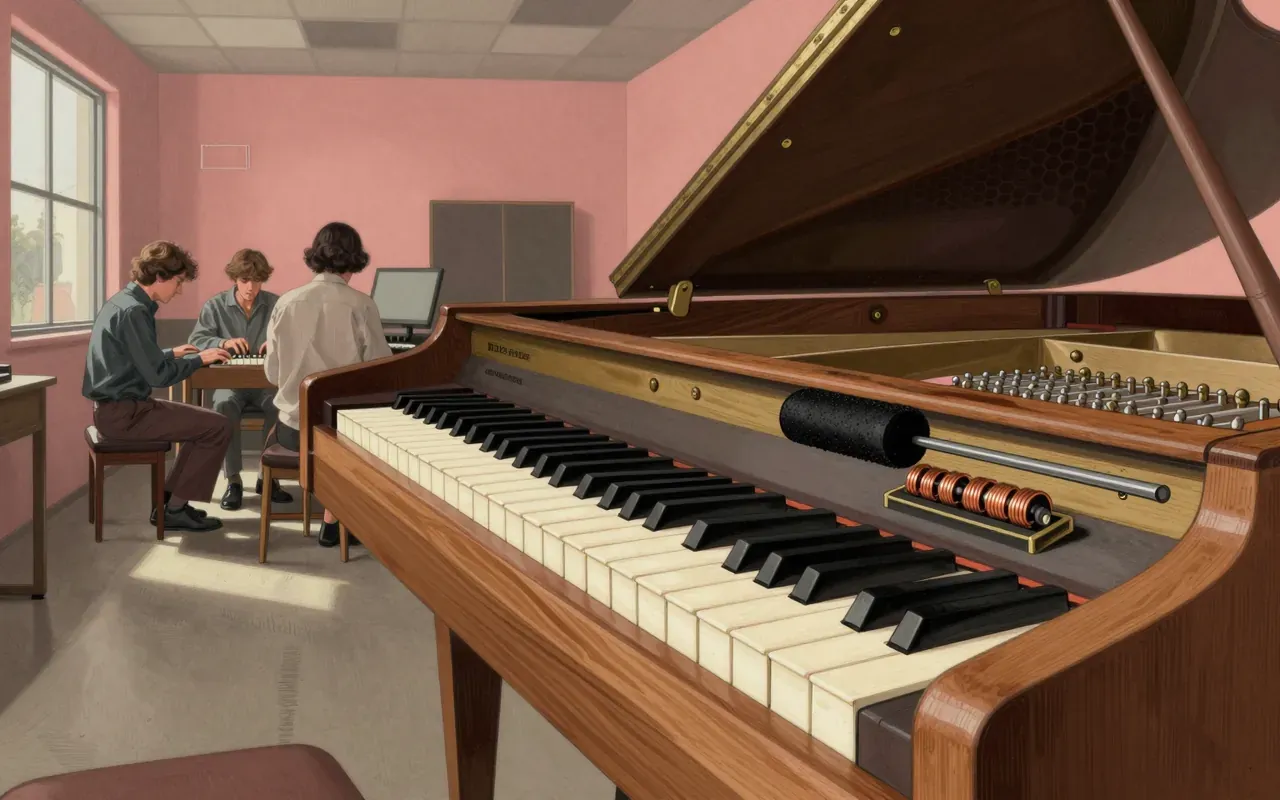
The Rhodes piano is an electromechanical electric piano invented by Harold Rhodes. It uses hammers to strike metal tines whose vibrations are captured by electromagnetic pickups. It outputs an electrical signal requiring external amplification for full fidelity. It makes audible sound unplugged — quieter and thinner — and features a vocal-range frequency gap that supports singing without masking.

9:12

Roland SDE-3000

Roland

The Roland SDE-3000 is a mono digital delay unit introduced in 1984. It delivers up to 4500 ms of delay with 10 Hz–17 kHz frequency response and low distortion. It has wet/dry outputs, time loop, and TRS footswitch support. It is built for reliability, not versatility.

8:37

Roland SH-2

Roland

The Roland SH-2 is a monophonic analog synthesizer introduced in 1978. It has two detunable VCOs, a resonant self-oscillating 24dB lowpass filter, one envelope, one LFO, and a 3-octave keyboard. Its one-button-one-function interface is simple and effective. It produces fat, aggressive, authentic vintage analog tones—especially when the oscillators are detuned. It shares sonic traits with the SH-101 but adds detunability and thickness. It is flexible enough for punchy basses, leads and squelchy sounds. Every sound—including drums—has been made on it in at least one documented case. It is simple, programmable, and sonically aligned with Roland’s high-end SH series.

10:54

Roland SH-7

Roland

The Roland SH-7 is a 1978 duophonic analog synthesizer built to expand on the SH series with greater flexibility and sonic aggression.

10:32

Radikal Technologies Spectralis

Radikal Technologies

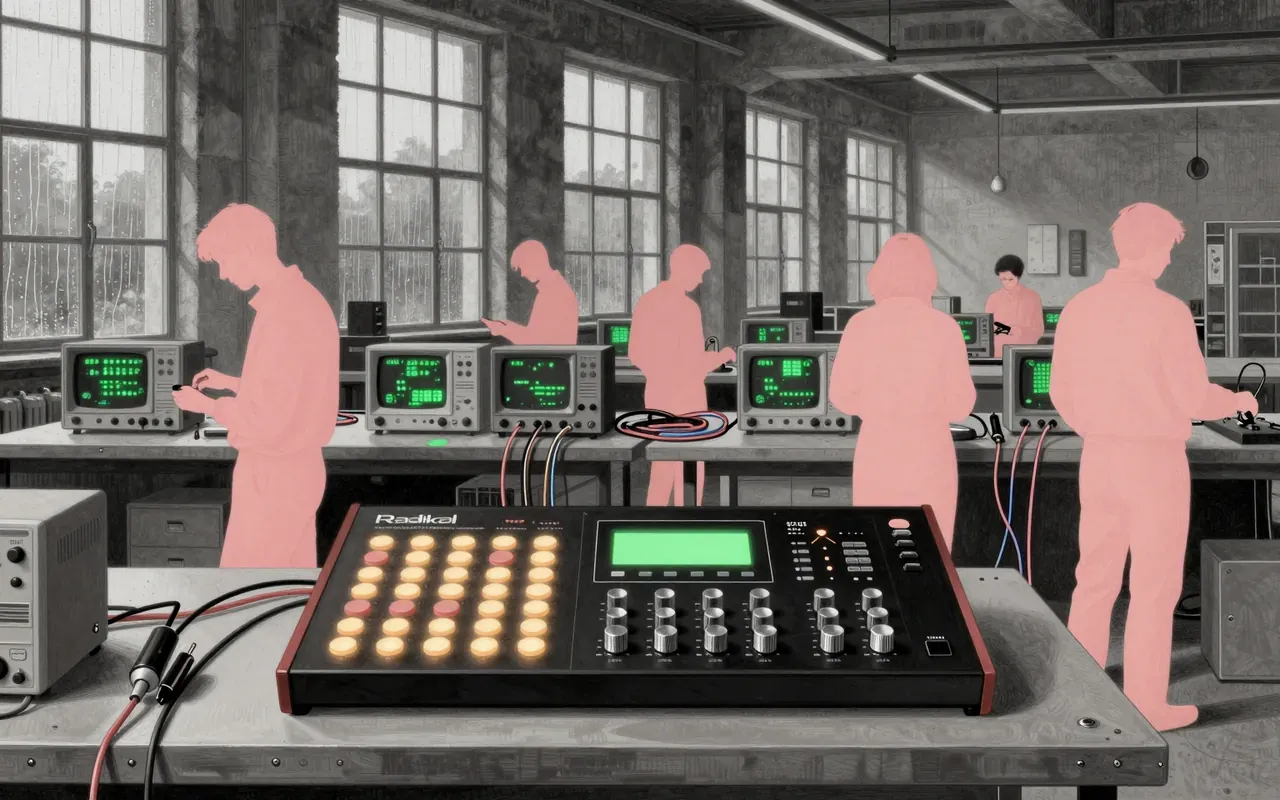
The Spectralis is a 2004 hybrid instrument built for studio composition. It combines a monophonic Asynth (four digital oscillators, two analog filters, time linearity modulation) with a 32-voice, 3-part multi-timbral Dsynth engine (128 MB RAM, unrestricted sample import). Its sequencer ties both engines and external gear together with per-parameter automation. It has no audio interface, no velocity-sensitive Dsynth layers, and no DAW integration. It belongs in a production room — not on stage.

10:18

Alesis SR-16

Alesis

The Alesis SR-16 is a 1990 drum machine built for immediacy: twelve velocity-sensitive pads, four outputs, and step editing deliver fast, routable, mechanical rhythm tracks. Its Dynamic Articulation varies tone with hit strength. Its 233 samples sound distinctly synthetic—not acoustic, not modern. It was used by Autechre and Vangelis. It has no swing, no audio input, no built-in effects beyond reverb on some samples. It remains valuable for hands-on pattern building and discrete signal routing—but only if that’s what you need.

9:33

Yamaha SU700

Yamaha

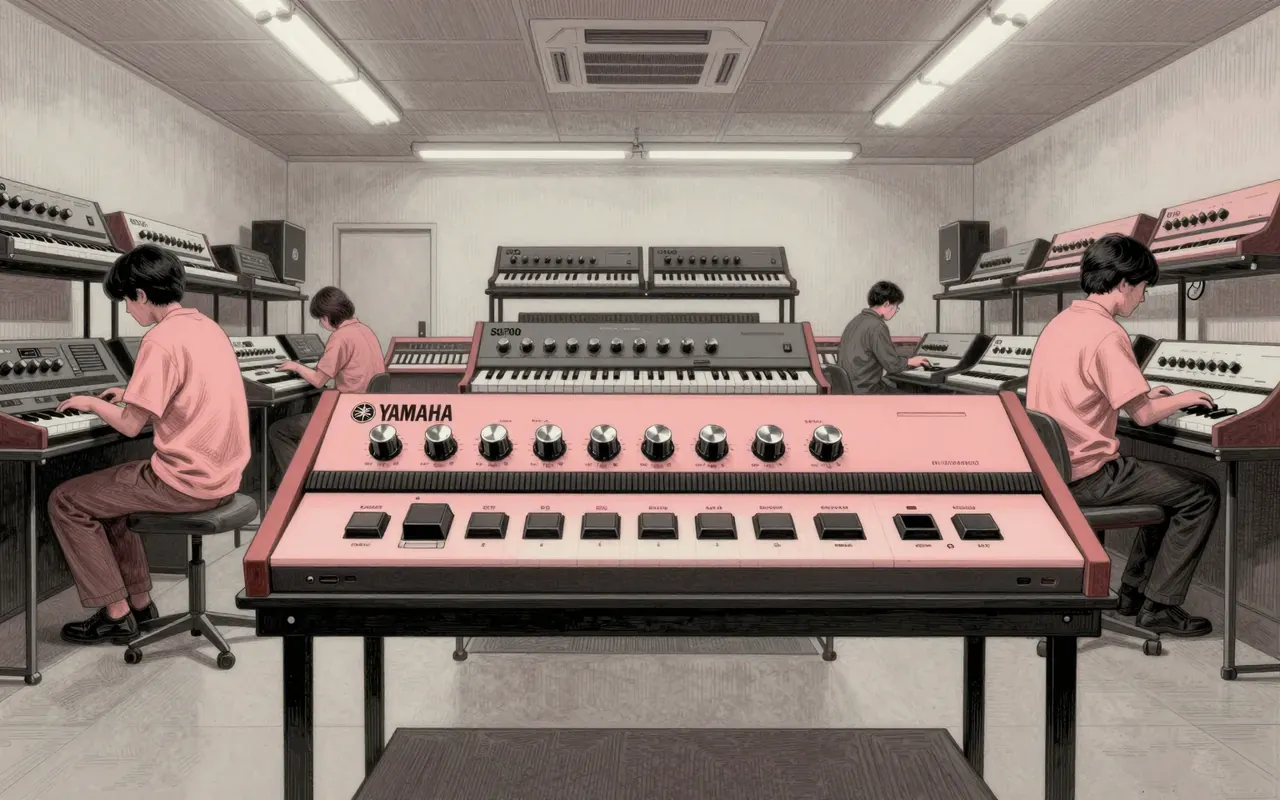
The Yamaha SU700 is a 1998 all-in-one sampler/sequencer music production studio designed for dance music creation.

9:45

Novation Super Bass Station

Novation

The Novation Super Bass Station is a 1997 monophonic desktop synthesizer built to emulate Roland and Moog bass synths. It adds separate ADSRs for filter and amplitude, key follow, an SH-type sub oscillator, noise generator, ring mod, true mixer, distortion, stereo chorus, panning, two LFOs, arpeggiator with clock out, slide function, and 200-patch memory. It delivers focused, hands-on bass synthesis—but only one note at a time.

9:44

Eventide TimeFactor

Eventide

The Eventide TimeFactor is a 2011 stompbox-format digital delay/echo/phrase sampler for guitar. It offers ten distinct delay types, two independent 3-second delays, stereo I/O with level switches, true analog bypass, rugged cast metal construction, MIDI and expression pedal control, USB firmware updates, and 100 factory presets. Its 12-second looper is integrated into the same unit.

7:12

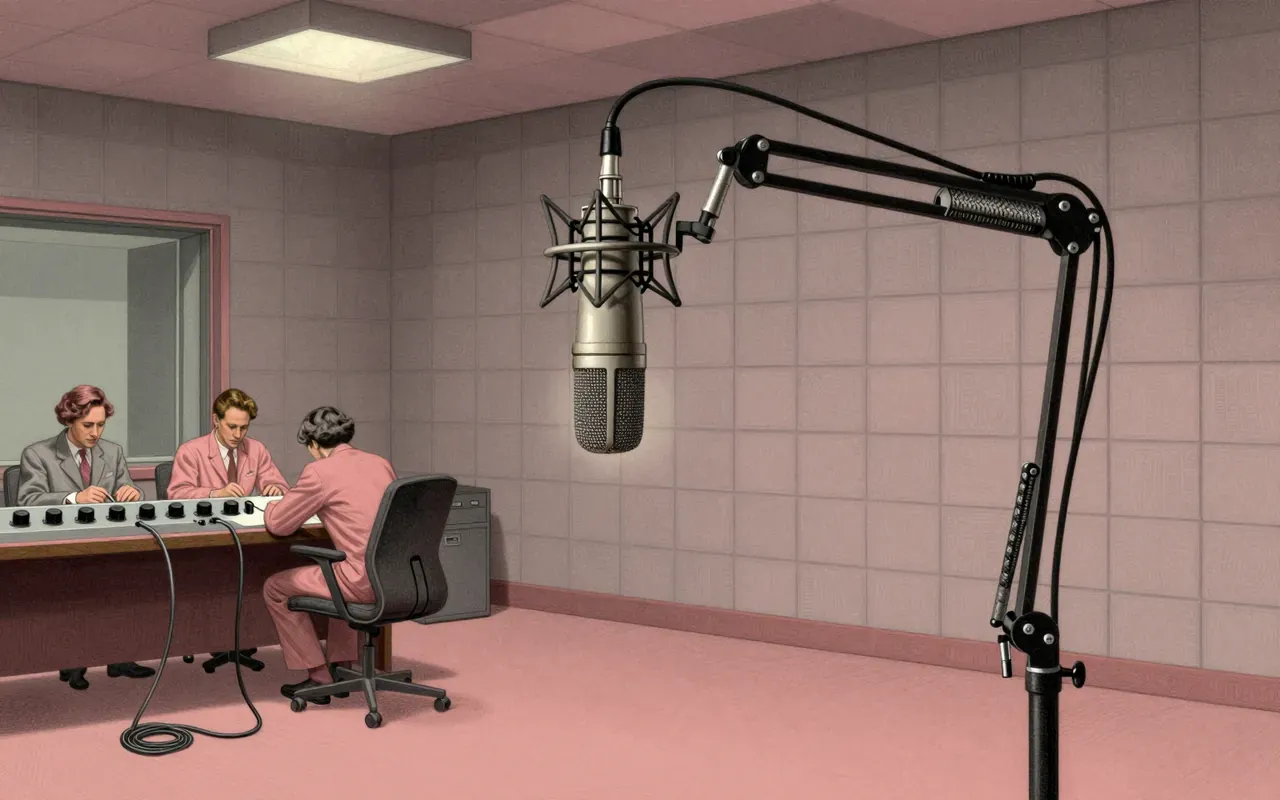
Neumann TLM 103

Neumann

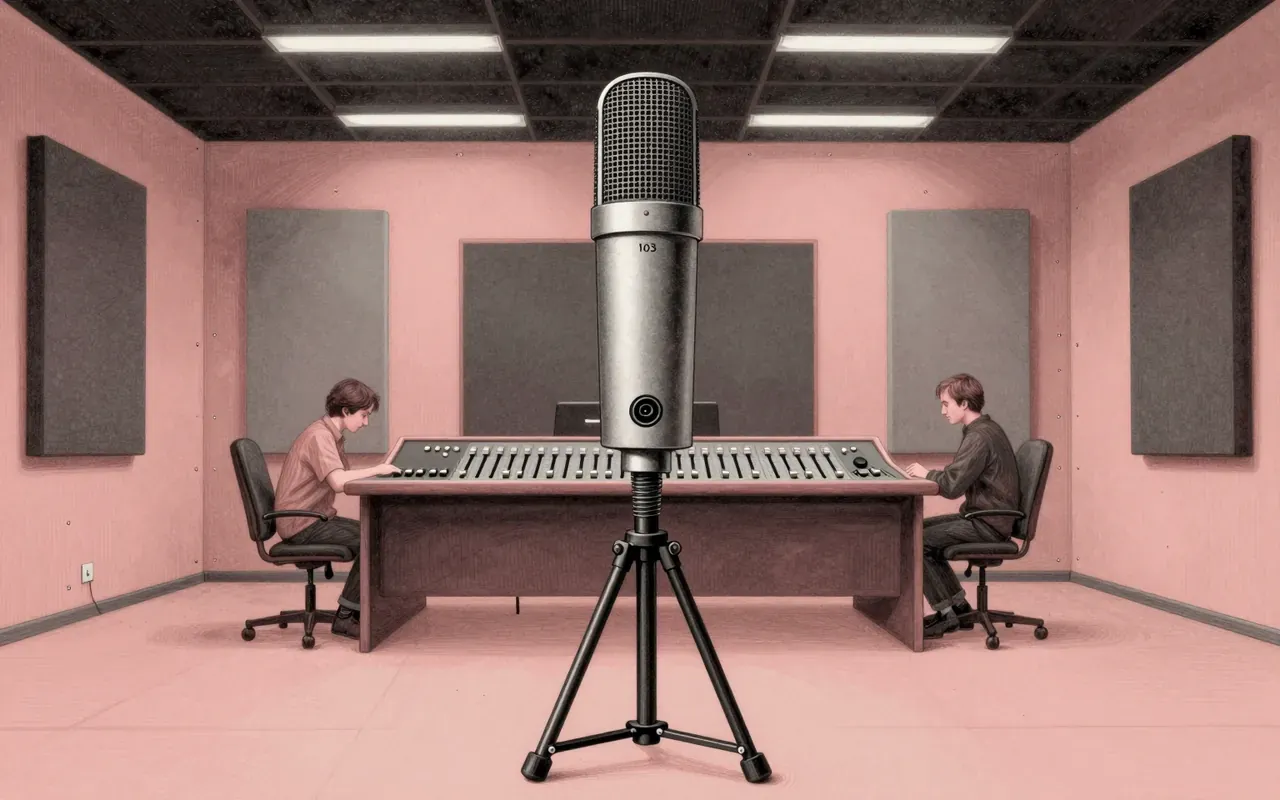
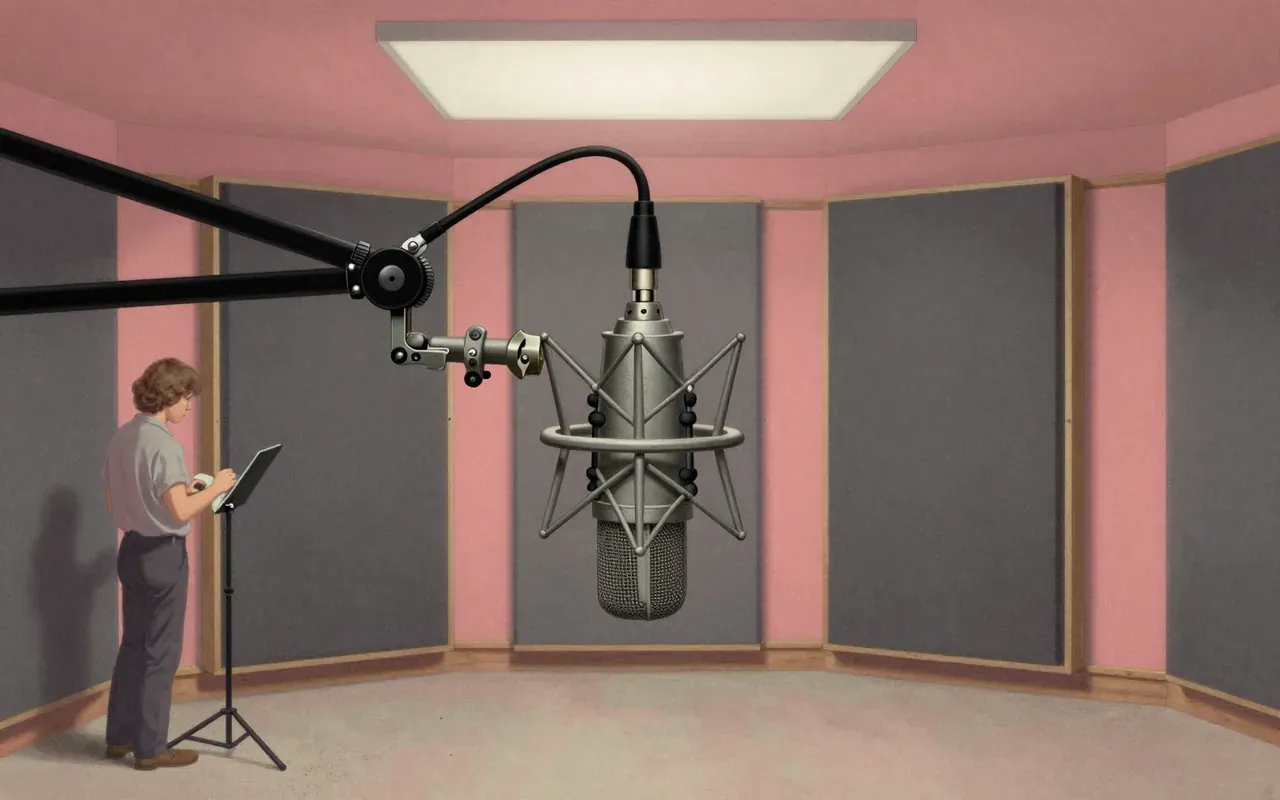
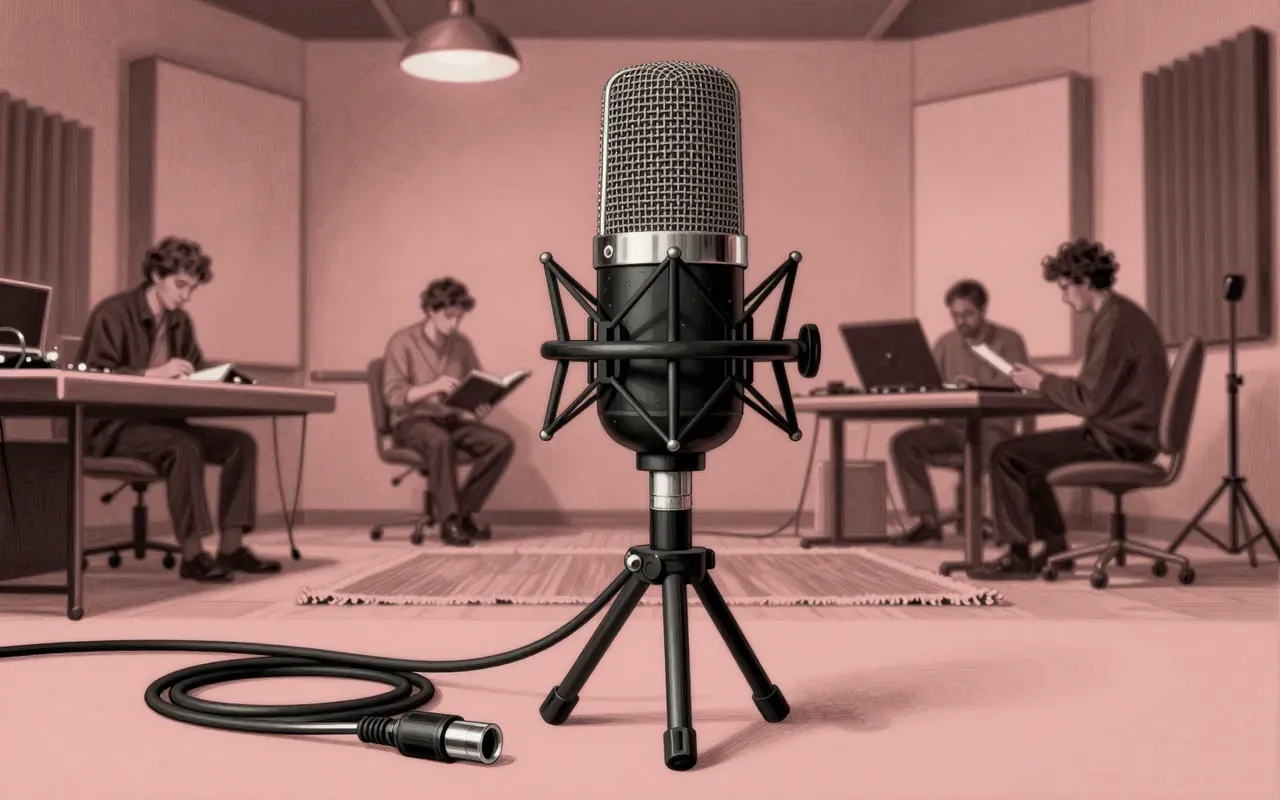
The Neumann TLM 103 is a fixed cardioid condenser microphone. It delivers a full 20 Hz–20 kHz frequency response. It has no low-cut filter or pad. It does not include a shock mount. It ships in a wooden, padded box. Its output impedance is 50 ohms.

11:02

Neumann TLM 170

Neumann

The Neumann TLM 170 is a discontinued large-diaphragm condenser microphone built solely for studio recording. It offers five polar patterns, a -10 dB pad, and a low-cut switch. It ships with a swivel mount and supports U87-style suspension. It fails in live performance. No recordings, artists or sessions are documented in the source material.

8:14

Chandler/Butler Tube Driver

Chandler/Butler

A tube overdrive pedal built around one 12AX7 tube. Metal case. Own power supply. High output. Creamy distortion. Nearly a decade of field reliability. No EQ. No blend. No compromise on toughness.

9:04

Neumann U 89

Neumann

The Neumann U 89 is a 1980 large-diaphragm condenser microphone built for versatility: five polar patterns via rotary switch, two fixed low-cut filters (80 Hz and 160 Hz), an attenuator, 140 dB SPL handling, and a neutral, less vivid tonal character than the U 87. It excels at distance capture and fits where bulkier mics cannot. It does not offer colouration, warmth or extended sub-bass response. No recordings or users are named in the source material.

9:22

SPL Vitalizer

SPL

The SPL Stereo Vitalizer MK2 is a hands-on exciter that trades surgical control for immediate sonic uplift — sharpening treble, rounding bass, widening stereo image, and adding air. Its strength is cohesion, not correction.

8:17

Allen & Heath Xone:V6

Allen & Heath

The Xone:V6 is a 4+ channel analogue DJ mixer from Allen & Heath. It routes four main sources plus an effects return. It has no digital features, no software, no built-in effects. It delivers clean, hands-on control—nothing more, nothing less.

9:45

Roland XV-5080

Roland

The Roland XV-5080 is a 2000 rack-mount sound module built for studio composers needing stereo sample playback, deep modulation via Matrix Control, and expandability through SRX and SR-JV80 boards. It reads Akai S1000 and Roland S-700 CD-ROMs via SCSI, supports up to 128MB of sample memory, and includes COSM effects and digital outputs — features the XV-3080 lacks. It offers no keyboard, no sequencer, no USB, and demands physical navigation. It belongs in a fixed studio with legacy hardware — not on a laptop stand.

10:18

Rickenbacker 360

Rickenbacker

The Rickenbacker 360 is a semi-acoustic electric guitar built for sharp, articulate presence—not warmth, depth, or adaptability.

9:26

Rickenbacker 4001

Rickenbacker

The Rickenbacker 4001 is an electric bass built for clarity, not compromise. Its maple neck-through construction and twin pickups deliver sharp transients and upper-mid bite. It sacrifices low-end warmth, dynamic nuance, and ergonomic flexibility to achieve that. It was chosen—not for versatility—but for unmistakable presence.

9:08

RCA Type 44

RCA

The RCA Type 44 is a bi-directional ribbon microphone introduced in 1931. Its thin corrugated metal ribbon generates voltage when vibrating in a magnetic field. It hears only front and back. It breaks under wind, phantom power, and loud transients. It flatters voice and acoustic instruments with smooth mids and gentle highs. It belongs in a vintage studio chain—not on a podcast desk or a stage.

9:41

Shure 55SH

Shure

The Shure 55SH is a 1939 cardioid dynamic microphone built for public address. It delivers vocal clarity under load, resists feedback, and shrugs off physical stress. It does not offer studio-grade fidelity or flexibility. It belongs on podiums—not in overdub booths.

10:36

Roland MKS-80

Roland

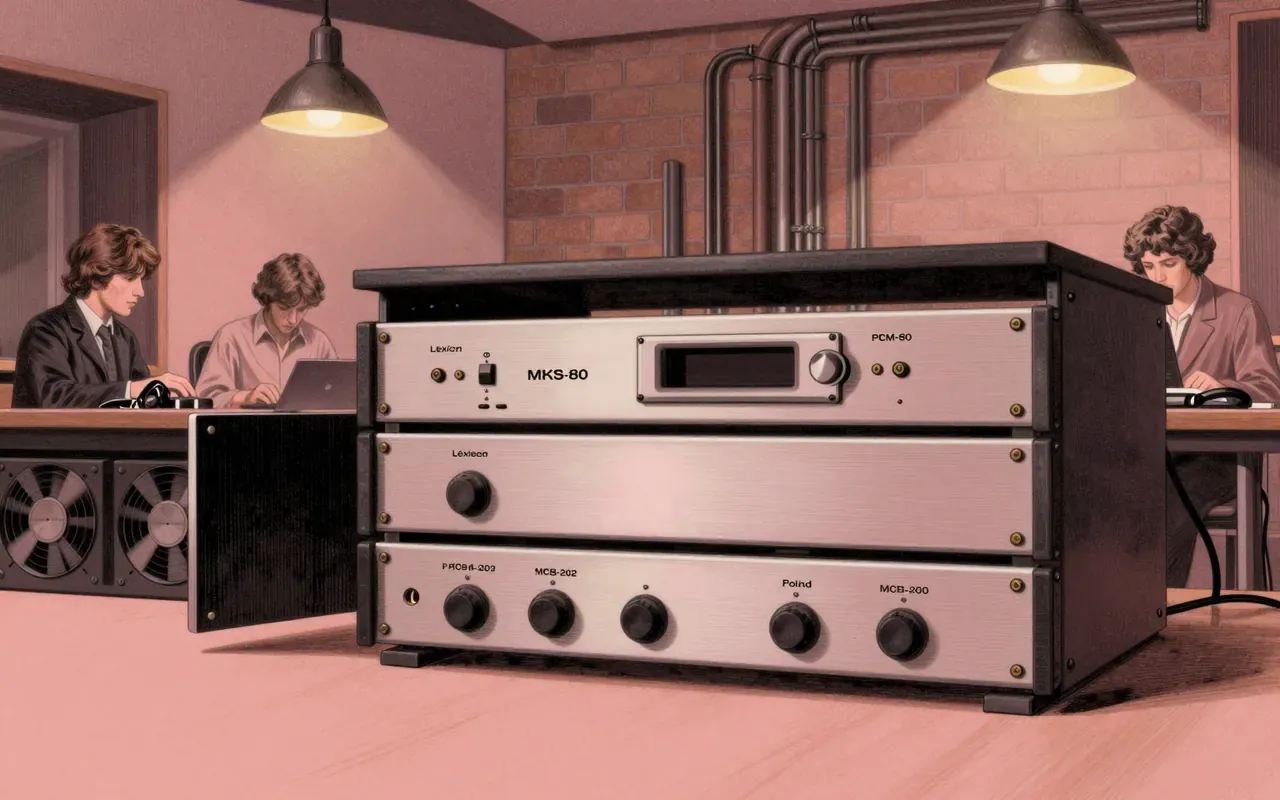
The Roland MKS-80 is an 8-voice, rack-mount, fully analog subtractive synthesizer made from 1984 to 1987. It is the only MKS-series unit with voltage-controlled oscillators—not digitally-controlled ones. Its voice architecture mirrors the Jupiter-6 but adds an HPF, a low boost circuit in the second VCA, and a DC supply current boost. A February 1985 revision introduced updated VCOs, VCAs, and a filter later shared with the JX-8P, JX-10, and MKS-70. Each voice uses two Curtis CEM3340 VCOs. It has no keyboard, no sequencer, and minimal front-panel editing—requiring SysEx tools for deep programming.

8:58

Elektron Monomachine

Elektron

The Elektron Monomachine is a 2007 hardware synthesizer and music sequencer. It runs six sequencer tracks, each assigned one of five synthesis engines: SID, VO, FM+, SuperWave, or DigiPro. Every step stores a full snapshot of all track parameters — what Elektron calls parameter locks. It routes audio to six mono or three stereo outputs. Two physical variants exist: the SFX-6 keyboard version with joystick, and the SFX-60 desktop module. The MkII revision improved signal-to-noise ratio, reduced size, and added user waveform support via OS 1.20.

9:18

Lexicon (company)

Lexicon · 1971

Lexicon is a company, not an instrument. Its first product was a digital delay system released in 1971. It pioneered commercial digital audio processing hardware for professional and live applications — notably digital reverb starting with the Model 224 in 1978. Its hardware is rack-mounted, hardware-controlled, and designed for integration into analog signal paths. It does not run as software, has no built-in synthesis or recording, and offers no modern digital workflow features.

9:10

Prophet '08

Dave Smith Instruments

The Prophet '08 is an eight-voice analog synthesizer released in 2007 by Dave Smith Instruments. It uses analog subtractive synthesis with digitally controlled oscillators, voltage-controlled filter and amplifier, ADSR envelopes, and three playing modes. It was conceived as an affordable eight-voice analog synthesizer.

9:06

Akai S3000XL

Akai · 1995

The Akai S3000XL is a 16-bit sampler released in 1995. It has 32-voice polyphony and 2 MB of built-in RAM. It loads samples via a 3.5" floppy drive or SCSI-connected devices. Its large screen and intuitive interface enable quick and in-depth sample editing. Akai discontinued production and support, but many working units remain in studios worldwide.

9:25

Boss SD-1

Boss · 1981

The Boss SD-1 is a 1981 overdrive pedal. It is the second overdrive made by Boss. It adds a tone control and refines the OD-1’s circuit for more gain and aggression. Its asymmetrical soft-clipping uses two diodes on the positive waveform peak and one on the negative—producing both even and odd harmonics. It is midrange-focused at 800Hz and rolls off less bass than the OD-1. Its circuit has remained unchanged since release.

8:04

Roland SH-3A

Roland

The Roland SH-3A is a monophonic analog synthesizer introduced in 1975. It supports both subtractive and additive synthesis. It includes two LFOs and a unique sample-and-hold section. It was Roland’s first non-preset based synth. It uses a transistor ladder-filter to produce Moog-like sounds.

9:08

Small Stone Records

Electro-Harmonix · 1995

The Small Stone is a 4-stage analog phaser pedal introduced by Electro-Harmonix in 1974. Designed by David Cockerell, it became central to Jean-Michel Jarre’s sound and was later reissued in a Nano chassis. Its simplicity — one knob, two modes — gives immediate, expressive motion but no depth control, no buffered bypass, and no digital features.

8:27

Boss SP-303

Boss

The Boss SP-303 is a 2001 digital sampler with eight pads, four soundbanks, three minutes and twelve seconds of sampling, twenty-six internal effects, and a built-in pattern sequencer. It was used by J Dilla, Madlib, Animal Collective, Panda Bear, Four Tet, and Moka Only. Dilla used it with a 45 record player to make 29 of the 31 tracks on Donuts while hospitalized. Madlib used it with a portable turntable and cassette deck to produce most of Madvillainy.

8:59

Roland System-100M

Roland

The Roland System-100M is a modular analog synthesizer built in the late 1970s. It delivers independent LFOs, envelopes, and patchbay-enabled feedback—not convenience, not recall, not polyphony.

8:38

Uni-Vibe

Shin-ei · 1968

The Uni-Vibe is a 1968 Shin-ei footpedal phaser designed by Fumio Mieda. It creates chorus and vibrato simulations using an optical circuit: an incandescent bulb shining on LDRs inside a reflective shield drives staggered phasing filters—without op-amps. Its effect is a throbbing, hypnotic pulse rooted in atmospheric radio modulation, not Leslie emulation. It was modified to improve fuse access and add a speed foot pedal. Players value its lo-fi sweep but contend with bulb burnout, speed instability, and lack of precision.

9:00

Fender Vibrolux Reverb

Fender

The Fender Vibrolux Reverb is a 35-watt blackface/silverface tube amp built around smaller transformers and 10″ speakers. It breaks up earlier and more sweetly than larger 6L6 Fenders. Its tone is scooped, punchy and sparkling—but it sacrifices clean headroom and low-end weight. CBS-era revisions increased clean headroom, but the core character remains defined by responsiveness over restraint.

8:39

Voyetra-8

Octave-Plateau

The Voyetra-8 is an eight-voice, rack-mountable, analog synthesizer introduced in 1982 by Octave-Plateau Electronics. It features 8 programmable analog voice cards, a sophisticated modulation matrix with four banks per voice, and supports Whole-8, Split, and Layer modes. Its memory stores 100 Programs and 100 Steps, and it dumps presets via MIDI using controller changes rather than SysEx. Each voice includes two VCOs, a 24 dB/octave lowpass VCF, two LFOs, two ADSRs, noise, and VCO sync. Key assignment modes and extended envelope parameters allow deep real-time control over voice behavior and articulation.

8:19

Mutable Instruments Braids

Mutable Instruments

Braids delivers radical timbral variety in minimal space—but with no internal editing, no tuning stability guarantees, and no analogue circuitry. It is a selector, not a synthesizer.

10:15

Doepfer Dark Energy

Doepfer

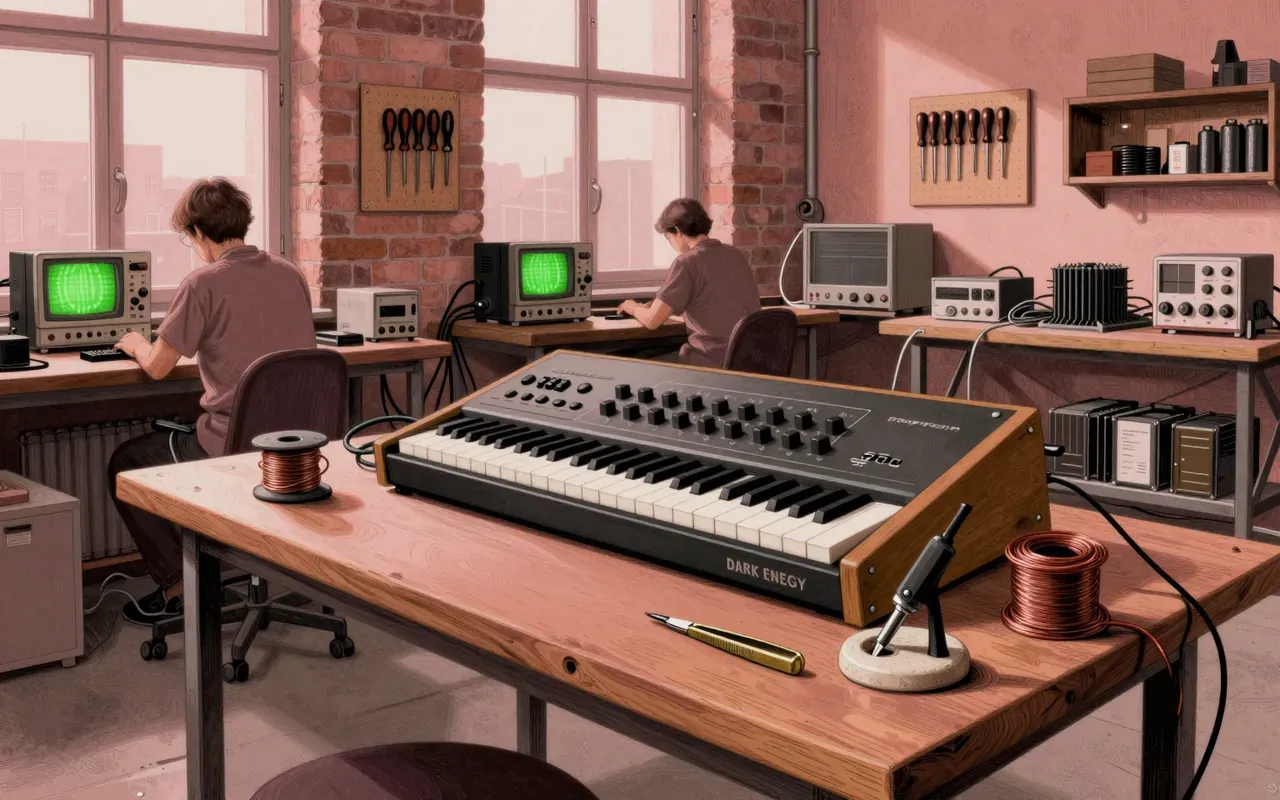
A compact, monophonic, fully analog synthesizer released in 2010 as a stand-alone version of the Doepfer A-111-5 Eurorack module. It features dual LFOs capable of audio-rate FM (~5 kHz), a 24 dB/octave low-pass VCF, and a triangle-based VCO. The VCF can function as a sine oscillator when the VCO is disengaged and resonance is maxed. All sound generation and modulation are analog; only USB/MIDI contain digital components. It has no polyphony, no patch memory, no velocity or aftertouch, and no audio input. Superseded by the Dark Energy II in 2012.

10:10

Korg DW-8000

Korg

The Korg DW-8000 is a hybrid digital-analog synthesizer released in 1985. It features eight-note polyphony, a five-octave keyboard with velocity sensitivity and aftertouch, 16 digital waveforms (created via additive synthesis and stored on ROM chips), analog VCF and VCA, digital delay, arpeggiator, auto-bend, and DWGS architecture. Its rack-mounted counterpart is the EX-8000, which omits the arpeggiator.

8:27

LS3/5A

BBC

The LS3/5A is a compact BBC-designed studio monitor built for broadcast consistency, not domestic indulgence. Its revisions track component supply — not artistic evolution. It excels in transparency but fails at bass, volume, and modern amplifier compatibility.

8:54

Electro-Harmonix Memory Man

Electro-Harmonix

The Electro-Harmonix Deluxe Memory Man is an analog delay pedal introduced in 2008, offering up to 550ms of delay, selectable chorus or vibrato modulation, true bypass switching, and mono audio I/O.

9:11

Waldorf Microwave

Waldorf

The Waldorf Microwave is a hybrid wavetable-analogue synthesizer whose distinctiveness comes from forcing digital waveforms through characterful analogue filters — not from flexibility, expansion, or modern workflow features.

8:56

Waldorf Microwave II

Waldorf

The Waldorf Microwave II is a dedicated wavetable instrument that delivers sharp, immediate, and spectrally distinct tones. It trades flexibility for focus — offering no filter resonance control, no effects, no velocity-driven modulation. Its strength is in launching sounds that pierce rather than blend.

11:12

Korg Prophecy

Korg

The Korg Prophecy is a monophonic synthesizer released by Korg in 1995. It uses MOSS (Multi Oscillator Synthesis System) to emulate analog synthesis, FM, and physical modelling. It offers five synthesis methods encompassing nine oscillator types: analog, variable phase modulation, brass, reed, and plucked string modelling, noise with comb filtering, and three types of analog-style models — sync, ring modulation, and cross modulation — collectively referred to as 'MOD'. Each oscillator is processed by a linked waveshaper for generating distortion or resonance effects. The signal, combined with outputs from a sub-oscillator and noise generator, and feedback, is then fed through two multi-mode filters, which can be arranged in series, parallel, or split configurations. The Prophecy's modulation options include six multi-stage envelopes and four low-frequency oscillators (LFOs) with a selection of 30 types. The keyboard features velocity sensitivity and aftertouch and is complemented by three physical wheels dedicated to pitch bending, modulation, and the Wheel 3, a cylindrical control that combines a modulation wheel with a pressure- and position-responsive ribbon controller. It is equipped with five programmable Performance Editors (PE) knobs, each of which can control up to four parameters simultaneously, enabling precise manipulation of aspects like filter cutoff frequencies, envelope attack times, filter resonance, and stereo panning with a single turn. KORG was the first company to feature effects on a synthesizer, and the first to use a sample + synthesis sound design.
9:01

E-mu SP-12

E-mu Systems

A foundational sampling drum machine introduced in 1985. Built for immediacy, not refinement.

9:51

Eventide Space

Eventide

The Eventide Space is a reverb-and-delay pedal offering 12 algorithmic spatial effects—including Hall, Plate, Blackhole®, and Shimmer—controlled via 10 knobs, MIDI, expression pedal, or HotSwitch. It features 100 presets (some artist-designed), true analog bypass, tap tempo/MIDI clock sync, and mono/stereo I/O in a rugged metal pedal format. Software tools FactorLib and H9 Control manage presets; the SpaceTime algorithm combines modulation, two delays, and reverb.

10:33

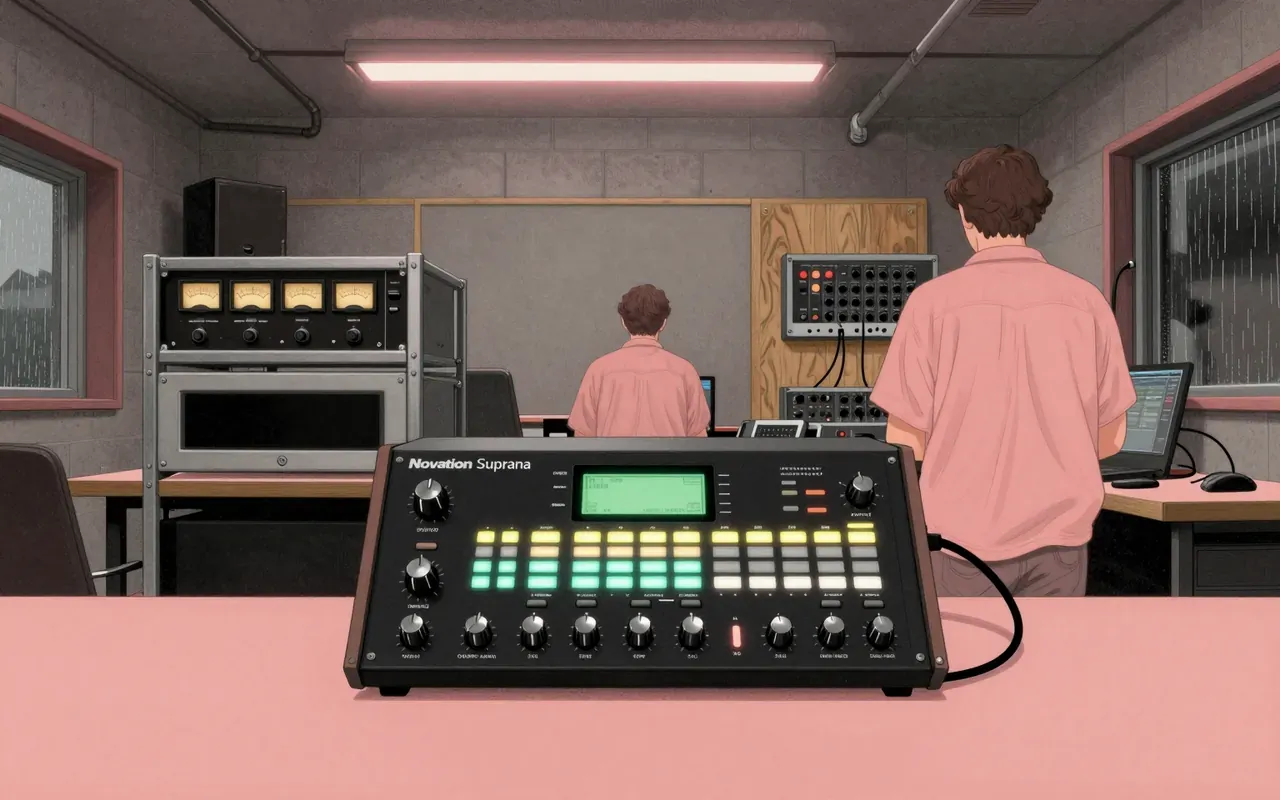
Novation Supernova

Novation

The Novation Supernova is a 1998 3U virtual analogue rack synth with 16+ note polyphony and multitimbral operation. It models subtractive synthesis digitally and includes a resonant self-oscillating filter. Its defining strength is a 7-effect-per-part engine retained per part in multitimbral use, with no polyphony loss. It lacks triangle and sine wave oscillators — requiring their derivation via a hardness attenuator. No other details about sound character, interface layout, modulation matrix, LFO count, or physical controls are verified.
9:30

Gretsch Tennessean

Gretsch

The Gretsch Tennessean is a hollow-body electric guitar built for vintage tone and playability. It delivers a highly resonant, cutting voice shaped by its construction, pickups, and controls. It excels in clean and mid-gain contexts but struggles with feedback and high-gain stability. Its design prioritises acoustic resonance and vibrato expression over modern high-output versatility.

8:04

Coles 4038

Coles

The Coles 4038 is a BBC-designed ribbon microphone from 1953. It uses a bi-directional polar pattern and has a flat frequency response from ~30–15,000 Hz. High-frequency attenuation reduces sibilance but also reduces detail. Its technical specifications have remained unchanged since its design in the 1950s.

8:24

RCA Type 77-DX microphone

RCA

The RCA Type 77-DX is a 1954 poly-directional ribbon microphone with mechanical pattern control, low-tension 2.5-micron ribbon, and user-selectable impedance and low-frequency rolloff.

10:14

Vox AC50

Vox

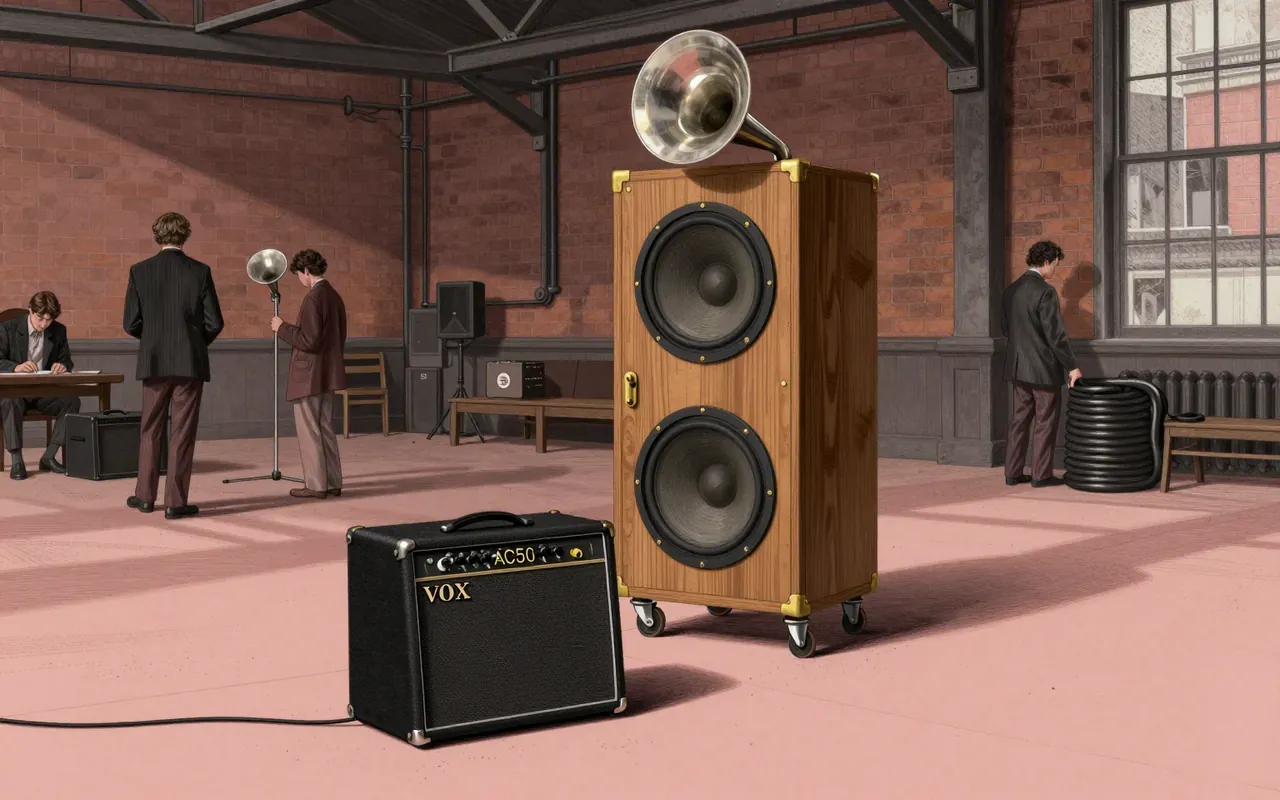
The Vox AC50 is a loud, clear, live-performance amplifier head introduced in 1964. It uses EL34 output tubes, ECC82 and ECC83 preamp tubes, and evolved from GZ34 to diode rectification. Its dual then quad inputs offer immediate tonal contrast. It pairs with a trolley cabinet featuring Alnico speakers and a Goodmans Midax Horn for crowd-piercing clarity. It sacrifices compactness, low-volume usability, and modern features for authoritative stage presence.

9:26

ADAT

Alesis

The ADAT was a tape-based digital multitrack recorder introduced by Alesis in 1991 and shipped in early 1992. It recorded eight tracks of 16-bit audio on S-VHS cassettes, supported locate points and auto play/record for precise editing, and could be synchronised with up to 15 other units for 128-track recording. Its CD-resolution audio and low price disrupted home and project studios. Later models like the HD24 moved to hard disk and introduced File Streaming Technology.

9:30

Ampeg

Ampeg · 1946

Ampeg began in 1946 with Everett Hull’s tailpin transducer for upright bass. Jess Oliver later engineered the B-15’s flip-top chassis. It defined studio bass tone for decades—but only for players who matched its physical and sonic constraints.

9:37

ARP Instruments

ARP · 1969

ARP Instruments (1970) built analog synthesizers focused on stability, usability, and performance readiness—not abstraction or infinite patchability.

9:54

Ensoniq ASR-10

Ensoniq · 1982

The Ensoniq ASR-10 is a 1992 sampling keyboard designed for live performance and self-contained music production. It integrates sampling, synthesis, sequencing, and effects in one unit. It loads samples while playing. It layers up to eight samples per instrument. It modulates them with envelopes, filters, LFOs, and real-time controls. It sequences with 16 tracks at 96 PPQN. It applies up to 62 effects — including vocoder and distortion — and resamples with them. It records to SCSI hard drives or proprietary 3.5-inch floppies. Its SCSI implementation rejects many common drives unless specially flashed. It ships in keyboard, weighted (ASR-88), and rackmount (ASR-10R) versions. It is the third-generation EPS-series sampler. It runs at 16-bit, 29.7619 kHz or 44.1 kHz. It ships with 2MB RAM, expandable to 16MB.

10:11

Shure Beta 58A

Shure

A live vocal mic defined by rejection, presence, and deliberate low-end roll-off.

9:38

Epiphone Casino

Epiphone

A true hollow-body electric guitar built for resonance, not resistance. Lightweight. Loud unplugged. Feedback-prone. P-90-driven. 16th-fret neck joint. Used by The Beatles and generations of players who value immediacy over isolation.

7:56

Clavinet

Hohner

The Clavinet is a 60-key electromechanical keyboard made by Hohner from 1964 to 1982. It uses rubber pads to strike tensioned steel strings, with electromagnetic pickups capturing the vibration. Its weighted action enables dynamic volume and aftertouch via string stretch. It excels at percussive, expressive, midrange-heavy articulation—but offers no sustain, limited range, or tonal flexibility beyond its fixed pickup response.

8:04

Gretsch

Gretsch · 1883

Gretsch is not a guitar brand by origin. It is a Brooklyn drum and percussion company founded in 1883 that added guitars late—and only committed to them after Chet Atkins demanded a hum-free hollowbody. The Filter'Tron pickup solved a real problem: 60-cycle hum in live and studio settings. But it did not solve feedback, sustain, or tonal flexibility. Its value lies in what it removed—not what it added.

10:48

Yamaha CP-70

Yamaha

The CP-70 is a mechanically faithful grand piano stripped of its soundboard and fitted with piezo pickups for touring. It delivers unmatched keybed realism and feedback resistance—but at the cost of acoustic presence, convenience, and tonal flexibility.

10:00

Gretsch 6128

Gretsch

The Gretsch 6128 Duo Jet is a chambered mahogany electric guitar introduced in 1953. It features two pickups, a body-mounted pickup selector, a cutaway-mounted master volume, and a headstock-accessible truss rod. Bo Diddley played it in the mid-1950s.

8:17

MXR Dyna Comp

MXR

The MXR Dyna Comp is a guitar compressor pedal introduced in the 1970s. It has two controls: Sensitivity and Output. It produces a non-tone-neutral, colour-rich compression effect. It became a Nashville standard. It smooths out volume differences between notes, especially in chicken picking. It was one of the six original pedals in the MXR Series 2000 line.

10:12

Gibson ES-175

Gibson · 1949

The ES-175 is a purpose-built hollowbody jazz guitar: functional, focused, and frozen in time.

8:28

Gibson ES-295

Gibson

The ES-295 is a hollow body guitar introduced in May 1952. It shares dimensions with the ES-175. It was conceived as a full-sized hollowbody archtop intended to complement the solidbody Les Paul. Its original price was $295. Les Paul claimed involvement in its creation. The first ES-295s came outfitted with one pickup. By 1953 the guitar was shipping with two pickups. It was discontinued in 1959 and reissued multiple times. Scotty Moore used it.

8:48

Gretsch 6120

Gretsch

The Gretsch 6120 is a hollow body electric guitar introduced in 1955, developed with Chet Atkins, featuring design evolution including prototype testing, introduction of neoclassic fret markers in 1958, replacement of DeArmond pickups with Filter'Tron humbuckers, cessation of production in the late 1970s, and subsequent revival.

8:57

Fender Jaguar

Fender · 1962

The Fender Jaguar is a 1962 electric guitar with an offset-waist body, 24-inch scale, 22-fret neck, dual-circuit switching (lead/rhythm), smaller single-coil pickups with notched side plates for improved RF shielding, a spring-loaded string mute, and design lineage from the Jazzmaster.

8:50

Gretsch G6131

Gretsch

The Gretsch G6131 is a double-cutaway electric guitar with gold hardware, two Filtertron humbuckers, and a Burns vibrato — built for clarity, cut, and expressive tremolo. It excels in clean-to-moderate-gain contexts where note definition matters more than saturation or sustain. It falls short in high-gain stability, low-end tightness, and tuning retention under heavy vibrato use. Its production spanned 1962–1971, ending when Gretsch reverted to single-cut models.

9:03

Roland JV-1080

Roland

The Roland JV-1080 is a sample-based 2U rack sound module with 64-voice polyphony and 16-part multi-timbrality, introduced in 1995.

9:17

Kurzweil K250

Kurzweil

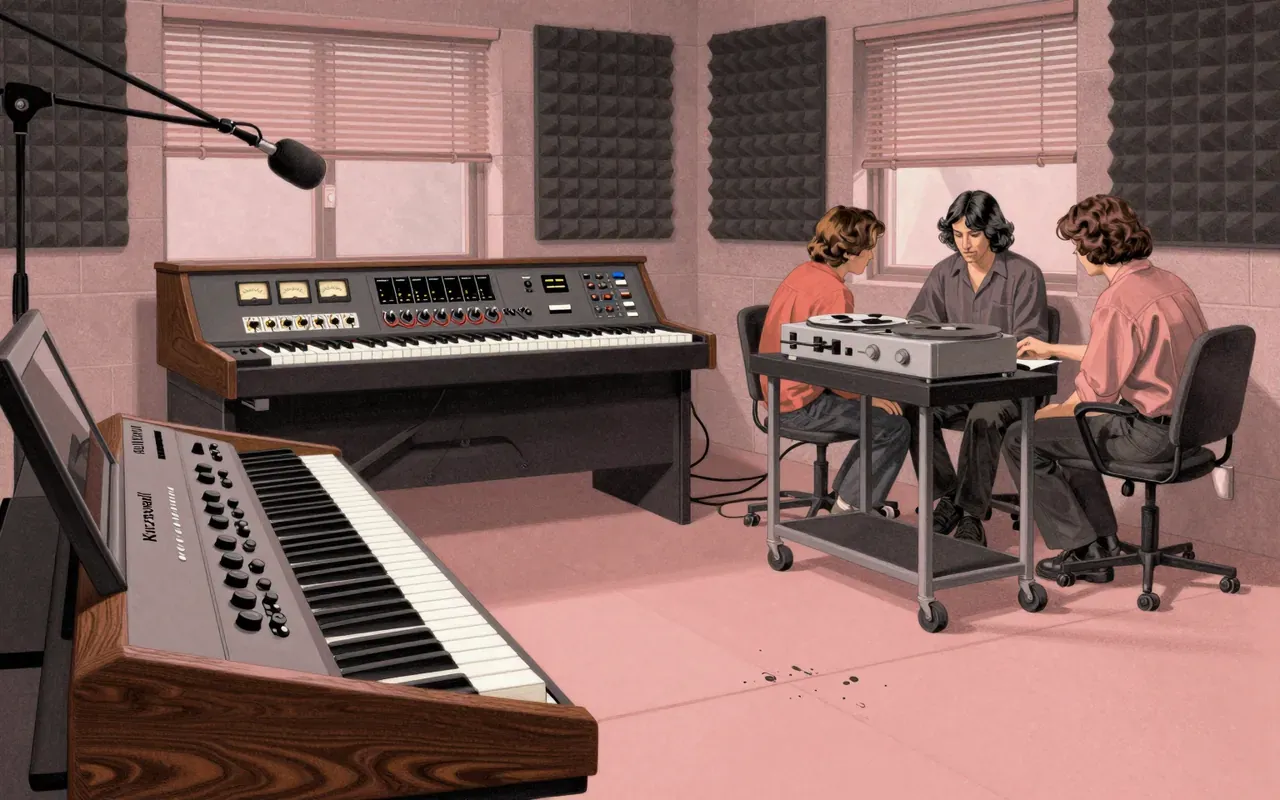
The Kurzweil K250 was an 88-key, ROM-based sampling keyboard introduced in 1984. It used proprietary 'contoured modelling' compression to store acoustic instrument and oscillator waveform samples. Twelve separate DACs converted the data to analog. CEM 3335 analog envelopes restored dynamics lost in compression. It delivered 12-note polyphony and was the first electronic instrument to faithfully reproduce an acoustic grand piano.

9:41

Gibson L-5

Gibson

The Gibson L-5 is a hollow body guitar introduced in 1923. It was one of the first guitars with F-holes. Its construction uses carving, bracing, and tap-tuning like a cello. It amplifies string vibration through carved and tuned woods using F-holes as projection points. The lower bout width increased from 16" to 17" in 1934 and has remained 17" since. It was originally offered as an acoustic instrument. In 1951, the 17" L-5 was outfitted with a pair of P-90 pickups. Starting in 1958, the P-90 pickups were replaced by humbuckers.

10:14

Gibson Les Paul Special

Gibson

The Les Paul Special is a 1955 Gibson variation designed as an intermediate instrument between the Junior and Standard Les Paul. It launched in TV Yellow for black-and-white television visibility. In 1958, it shifted from singlecut to doublecut. In 1961, it became the SG after Les Paul’s contract expired; original models returned in 1968 upon renewal.

8:32

Roland MC-202

Roland

The Roland MC-202 is a monophonic analog synthesizer and music sequencer released by Roland in 1983. It was the first groovebox. Its synth is similar to the TB-303 bass synth and the SH-101 synthesizer, featuring one voltage-controlled oscillator with simultaneous saw and square/pulse-width waveforms. The internal synthesizer features one voltage-controlled oscillator with simultaneous saw, square/pulse-width and sub-octave square waveforms. Additionally there is a 24dB Low Pass filter, an LFO and a single ADSR envelope generator. In terms of circuitry, it is nearly identical to the earlier SH-101 synthesizers but lacks the noise generator, choice of LFO shapes and modulation/pitch bend controls. However, unlike the SH-101, it does include a delay on the LFO. The MC-202 includes a sequencer that can play back two separate sequences simultaneously.

9:39

Sennheiser MD 441

Sennheiser

A purpose-built dynamic mic from 1971 that prioritises rejection, bass control, and electromagnetic immunity over sonic versatility or modern convenience.

10:58

Korg Mono/Poly

Korg

The Mono/Poly is a 1981 analog synthesizer with four VCOs, a 4-pole resonant lowpass filter, dual LFOs, and flexible key assignment modes. It operates either as a monophonic synth using all four oscillators or as a four-voice paraphonic synth. It was the only monophonic synthesizer with an integrated quad-VCO design at launch. Each VCO offers triangle, sawtooth, pulse, and pulse width modulation waveforms. Every VCO can be individually adjusted for octave, volume, and detuning relative to VCO 1, which has Master Tuning. Only the fixed pulse width and the amount of pulse width modulation are shared across all VCOs. The Mono/Poly features a 4-pole resonant lowpass filter with ADSR envelopes modulating both the VCF and VCA. It has two LFOs: one with four waveforms targeting multiple parameters via the modulation wheel, and a second triangle-wave LFO dedicated to pulse width modulation and arpeggiator tempo.

9:32

Oberheim OB-1

Oberheim

The Oberheim OB-1 is a monophonic analog synthesizer introduced in late 1977. It was the world's first completely programmable synthesizer, offering eight preset memories. It features two VCOs with selectable and continuously-variable waveforms, a switchable 2- or 4-pole VCF, and two ADSR envelopes—one for the filter and one for the VCA. Its design built upon technology from the Polyphonic Synthesizer Programmer.

10:27

Parker Fly

Parker

The Parker Fly rethinks the electric guitar as a lightweight, resonant, hybrid-voice platform — built around a carbon-fibre exoskeleton and dual-pickup architecture. It succeeds where mass and material convention fail. It falters where tradition, repairability, and passive tone control matter.

8:02

Fender amplifier

Fender

Fender amplifiers are electric instrument amplifiers produced by the Fender Musical Instruments Corporation. The first guitar amplifiers attributed to Leo Fender were manufactured by the K&F Manufacturing Corporation (K&F) in 1945. Later, Fender began building its own line of electric guitars. Fender amplifiers would become favorites of guitarists like Jimi Hendrix, Eric Clapton, and Stevie Ray Vaughan, also known in these cases for playing Fender guitars. Fender amps have come in many configurations and styles. The early K&F and Fender amplifiers relied upon vacuum tube circuitry, with solid-state models appearing in the late 1960s. Fender frequently updated the internal circuitry of its amps, and changed their appearance throughout its history.

10:12

Pro Tools

Digidesign · 1989

Pro Tools is a digital audio workstation used for music creation, sound for picture, and audio recording, editing, and mastering. It operates as standalone software and with external analog-to-digital converters and PCIe cards with on-board DSP, which provides additional processing power for real-time effects and lower latency. It performs multitrack tape recorder and mixing console functions plus digital-only features including non-linear and non-destructive editing, track compositing, time compression and expansion, pitch shifting, and faster-than-real-time mixdown. Audio, MIDI, and video tracks are graphically represented on a timeline. Audio effects, virtual instruments, and hardware emulators can be added, adjusted, and processed in real-time in a virtual mixer. It supports 16-bit, 24-bit, and 32-bit float audio bit depths at sample rates up to 192 kHz.

9:52

Rickenbacker 360/12

Rickenbacker

The Rickenbacker 360/12 is a narrowly optimised instrument: its reversed string courses, angled headstock, semi-hollow body and thru-neck combine to produce a bright, cutting, fast-decaying jangle. It excels in one role—rhythmic texture in mid-60s pop—and falls short everywhere else: tuning stability, ergonomic playability, tonal range. It was developed in 1963, prototyped with Dick Burke’s headstock, entered production in 1964, and became essential to the Beatles’ A Hard Day's Night sound. It is not a general-purpose guitar. It is a specialist tool.

10:34

Gibson SG

Gibson

The Gibson SG is a 1961 solid-body electric guitar built to deliver upper-fret access and playing speed at the expense of body mass and low-end sustain. Its design choices — double cutaway, thinner contoured body, outward-shifted neck joint, slender mahogany neck — are all functional responses to physical limits players hit on earlier Gibsons. It does not try to be a Les Paul. It tries to be faster, lighter, and more direct — and succeeds on those terms alone.

10:00

Roland SP-404

Roland

The SP-404 is a dedicated, tactile sampler built for speed and texture — not precision or polish.

10:43

EMS Synthi AKS

EMS · 1972

The EMS Synthi AKS is a portable modular analog synthesiser introduced in March 1972. It features a built-in keyboard and sequencer, a patch pin matrix, and shares design DNA with the VCS 3. Its sequencer creates eight-note repeating patterns. Users have described it as a 'noise machine'. One full album—Music from the SYNTHI—was made using only this instrument.

9:45

Korg Triton

Korg

The Korg Triton is a 1999 music workstation synthesizer with digital sampling and sequencing. It introduced 62-note polyphony, dual polyphonic arpeggiators, RPPR phrase recording, onboard sampling with expandable RAM, five insert effects per Program, dual filters per oscillator (24dB/octave low-pass or parallel 12dB/octave HP/LP), faster touchscreen response, category search UI, and expanded memory and outputs. It was available in 61-, 76-, and 88-key Classic versions and as a rackmount Triton-Rack with optional ADAT/Word Clock via EXB-DI.

9:53

EMS VCS 3

EMS · 1969

The EMS VCS 3 is a portable analogue synthesizer introduced in 1969 by Electronic Music Studios. Designed largely by David Cockerell and styled by Tristram Cary, it uses a pin-based patchboard matrix instead of cables. It lacks a built-in keyboard, making it better suited for sound effects generation and external signal processing than melodic playing. Its tuning instability stems from exponential voltage-to-frequency conversion. It was one of the first portable commercially available synthesizers, housed entirely in a small wooden case.

9:06

Oberheim Xpander

Oberheim

A keyboardless, six-voice analog synthesizer launched in 1984 and discontinued in 1988. Rack-mounted. Uses Matrix Modulation to route digital control to analog VCOs, multi-mode VCF, and two sequential VCAs. Each voice is independently configurable — including FM via VCO-to-VCO modulation — via multi-patch mode.