audiobriefs
Highest rated

All briefs

747 briefs · 6840 min · 481–576 on page 6 of 8
10:08

Yamaha CS-15

Yamaha

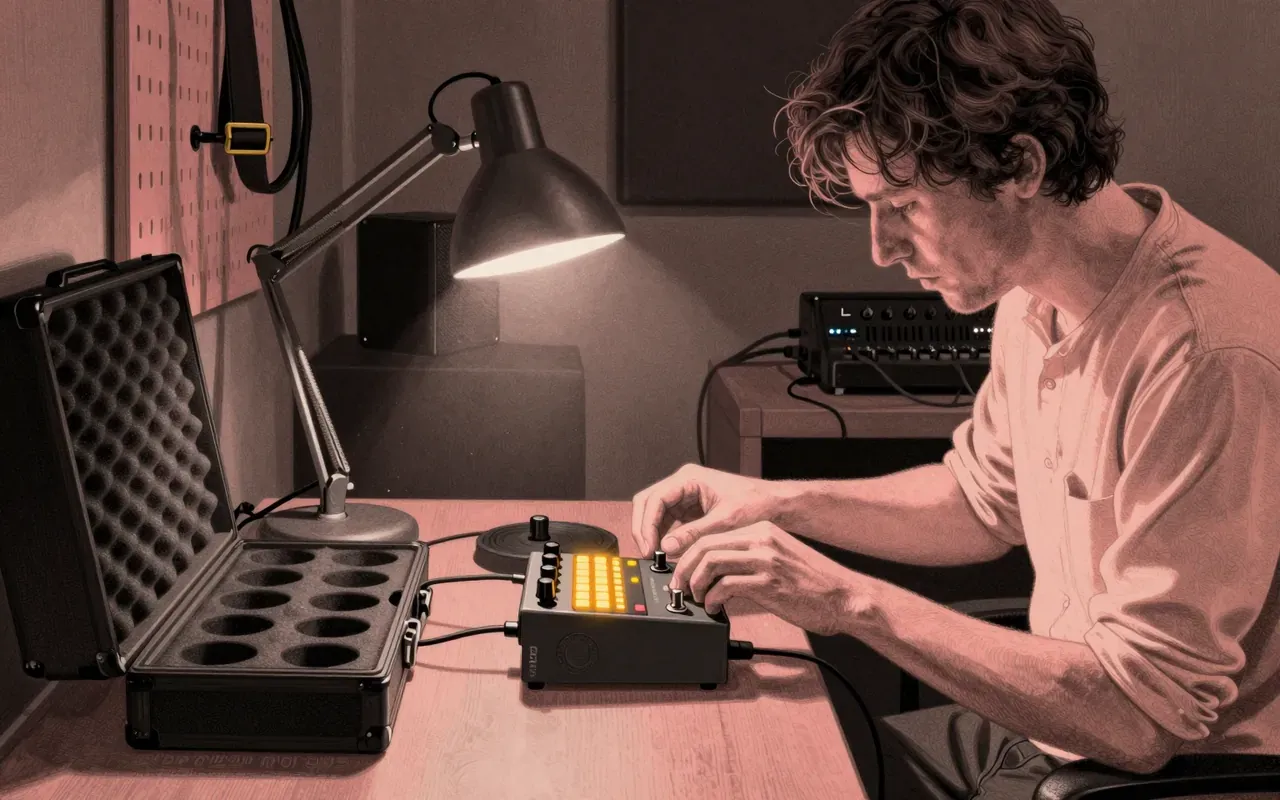
The Yamaha CS-15 is a monophonic analog synthesizer produced by Yamaha from 1979 to 1982. It features two voltage-controlled oscillators, two 12 dB/Oct multi-mode voltage-controlled filters (low-pass, high-pass or band-pass), two ADSR envelopes and a low-frequency oscillator. It also features white noise and an external-in for processing other sounds. The CS-15 offers great flexibility with various routing possibilities to the filters and envelopes. You can, for example, route VCO 1 to both VCFs and the VCFs to any of the envelopes positive or negative voltage. It's actually a duophonic / bitimbral synthesizer but you have to connect it to two separate CV/Gate controls (Hz/V like Korg synthesizers not V/Oct) to play the extra voice. In the CS series, the CS-5, CS-10, CS-30 and CS-30L were similar in sound, structure and design. The CS-5 and CS-10 had a single oscillator and one multimode filter, whereas the CS-15, CS-30 and CS-30L each had two oscillators that could be routed in various ways through two multimode filters.
10:08

MXR Distortion +

MXR

The MXR Distortion + is a 1974 distortion pedal using a single op-amp and germanium diodes. It has Output and Distortion controls only. Increasing Distortion raises both clipping and treble. It was one of MXR’s earliest original pedals, released shortly after the Phase 90. It later appeared in the Series 2000 line in 1982.

8:44

Line 6 DL4

Line 6

The Line 6 DL4 is a 1999 digital delay pedal. It models 16 vintage delays. It has a 14-second looper. It is one of the first digital modeling effects units.

9:00

Boss DS-1

Boss · 1978

The Boss DS-1 is a 1978 distortion pedal built for tight, aggressive tones using hard-clipping circuitry. It uses input/output buffers, a transistor boost stage, an op-amp gain stage with hard clipping diodes, and a tone control. A JFET switching circuit engages or bypasses the effect via a momentary push button. It helped popularise distortion as a distinct pedal category and served as a template for later designs. The 1994 circuit redesign introduced volume loss and a fizzy or waspy edge—problems that spawned a community of modifiers. It remains Boss’s bestselling drive pedal.

8:16

Yamaha DX100 (synthesizer)

Yamaha

The Yamaha DX100 is a 1986 FM synthesiser with 49 mini-keys, eight-voice polyphony, four operators per voice, eight algorithms, 192 presets, 24 RAM-storable user sounds, cassette-based patch storage, and the YM2164 chip. It was the cheapest user-programmable FM synthesiser of the 1980s.

8:50

E-mu Emulator

E-mu Systems

A foundational but bare-bones sampler that traded sonic refinement for accessibility.

9:25

Fender Harvard

Fender

The Fender Harvard is a vacuum tube guitar amplifier made by Fender from 1955 to 1963. It appeared only in a tweed-covered narrow-panel cabinet. It had no predecessor or direct descendant. It served as a mid-tier option between the Champ/Princeton and Deluxe models.

9:29

Epiphone Jack Casady Signature Bass

Epiphone

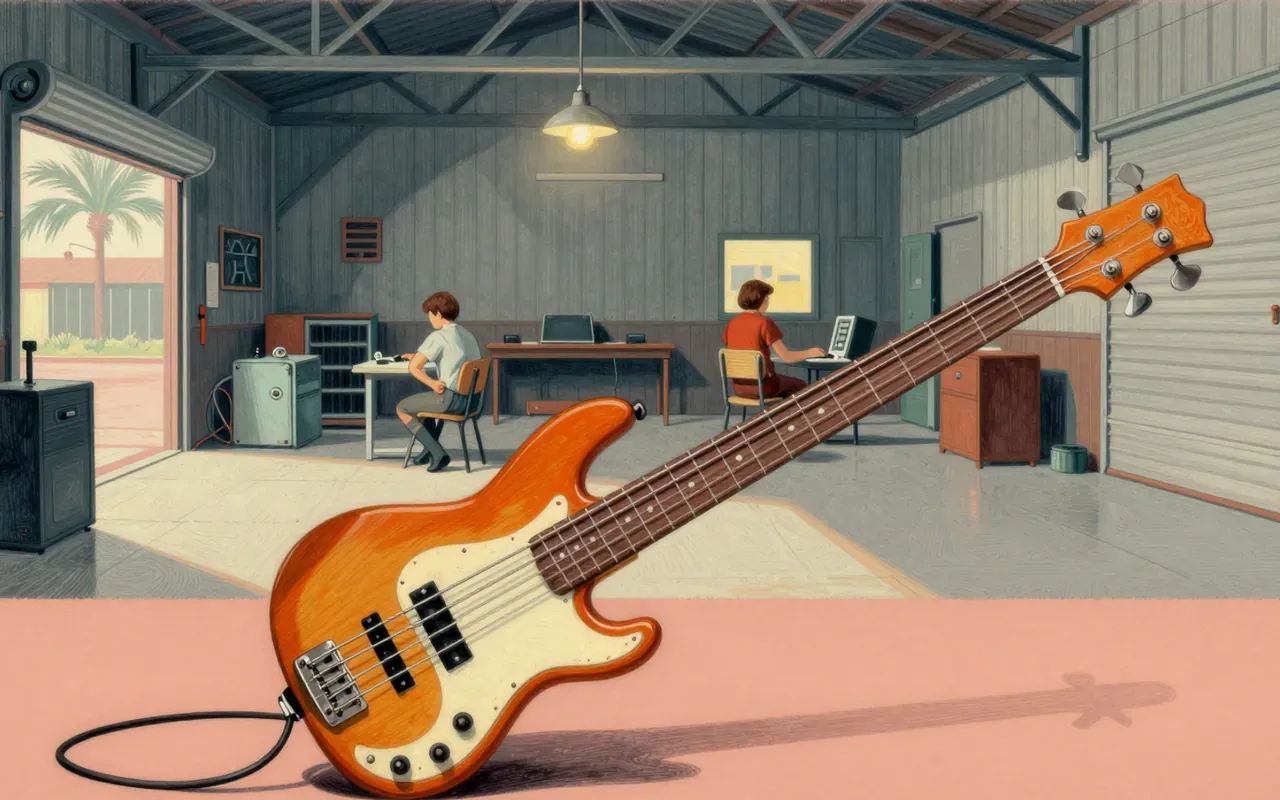
The Epiphone Jack Casady Signature Bass is a 4-string semi-hollow bass guitar co-developed by Jack Casady and Epiphone. It features a maple body, mahogany neck, and a custom low-impedance humbucking pickup connected to a transformer with a three-position impedance selector (50, 250, or 500 ohms). It was designed specifically to improve tonal definition in ensemble playing — a documented shortcoming of the 1970s-era Gibson Les Paul Signature bass. It belongs to Epiphone’s list of exclusive electric bass guitars. It offers no tone controls, no second pickup, and no active circuitry. Its tonal range is defined entirely by impedance selection: lower values yield clarity and balance; higher values yield output and bass weight.

10:15

Roland JX-10

Roland

The Roland JX-10 is a 12-voice analog keyboard synthesizer introduced in 1986. It combines two independent 6-voice Tone Modules for layering and splitting. Its 76-note velocity-sensitive keyboard includes aftertouch. Internal memory holds 64 patches, each configurable as one 12-voice tone or two 6-voice tones. Original firmware lacks SysEx for Tone or Patch data—but updating it restores that capability. PWM was omitted despite existing hardware resources. Its architecture differs sonically from the JX-8P due to distinct chorus and amplifier sections.

9:10

Roland JX-3P

Roland · 1983

The Roland JX-3P is a six-note polyphonic synthesizer produced by Roland Corporation of Japan from 1983 to 1985. Its name stands for 'Programmable Preset Polyphonic'. It uses two digitally controlled oscillators with sawtooth, 50% and 10% pulse waveforms plus noise. It stores 32 factory and 32 user programs. It features a built-in 128-step polyphonic sequencer synced to external clock pulses — not MIDI clock. Its MIDI implementation supports only note on/off, pitch bend, hold, modulation and program change. The PG-200 programmer enables deeper editing but disables MIDI while connected.

10:06

Neumann M 49

Neumann

The Neumann M 49 is a large-diaphragm condenser microphone developed at the NWDR’s Central Laboratory in Hamburg. It entered German broadcasting studios in 1952. It was the world’s first microphone with a remotely switchable polar pattern. Its pressure-gradient capsule causes proximity effect even in omnidirectional mode.

9:21

Roland MC-303

Roland

The Roland MC-303 is the first groovebox: a fixed-palette, preset-only instrument built for house DJs and amateur home musicians. It combines a JV-80-derived rompler (28-note polyphony) with an 8-track pattern sequencer and real-time phrase tools. It lacks sampling, MIDI-transmittable knob control, and sound editing — making it fast for sketching but inflexible for production.

9:02

Ensoniq Mirage

Ensoniq

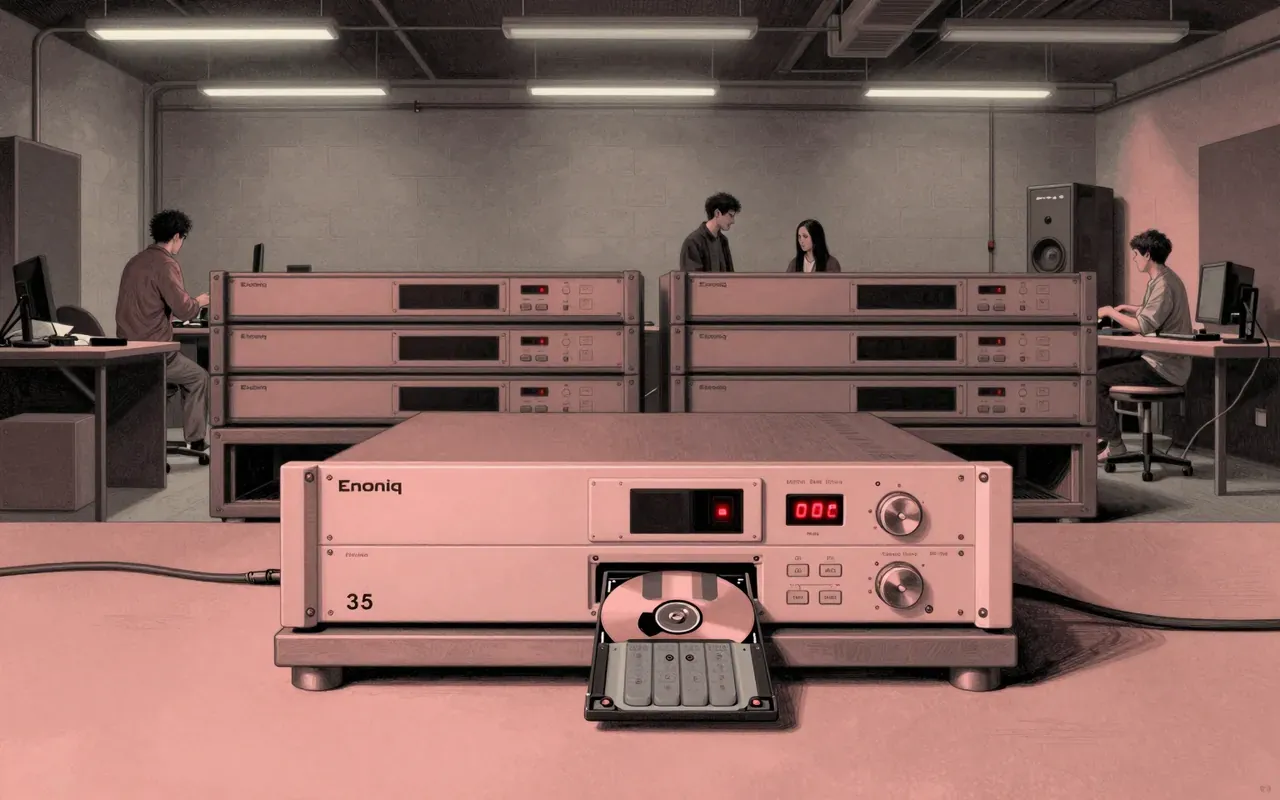
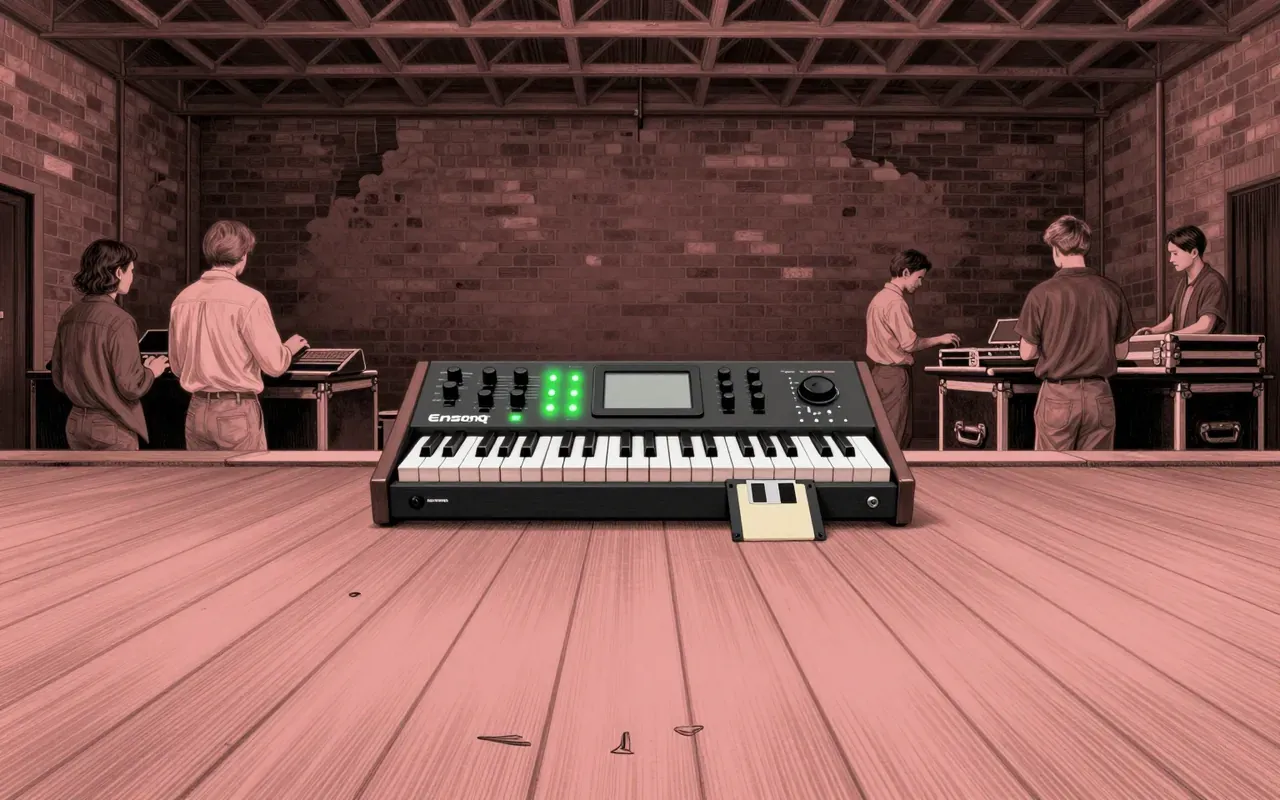
The Ensoniq Mirage is an 8-bit sampling keyboard introduced in late 1984 as Ensoniq's first product. It offered eight-voice polyphony, analog Curtis CEM3328 filtering, and wavetable synthesis via alternative OS. It booted and stored data on a built-in 3.5-inch floppy drive — one of the first consumer uses of that format. Priced at $1695, it sold 8,000 units in its first year, undercutting the Fairlight CMI and E-MU Emulator.

10:02

Moog Rogue

Moog · 1981

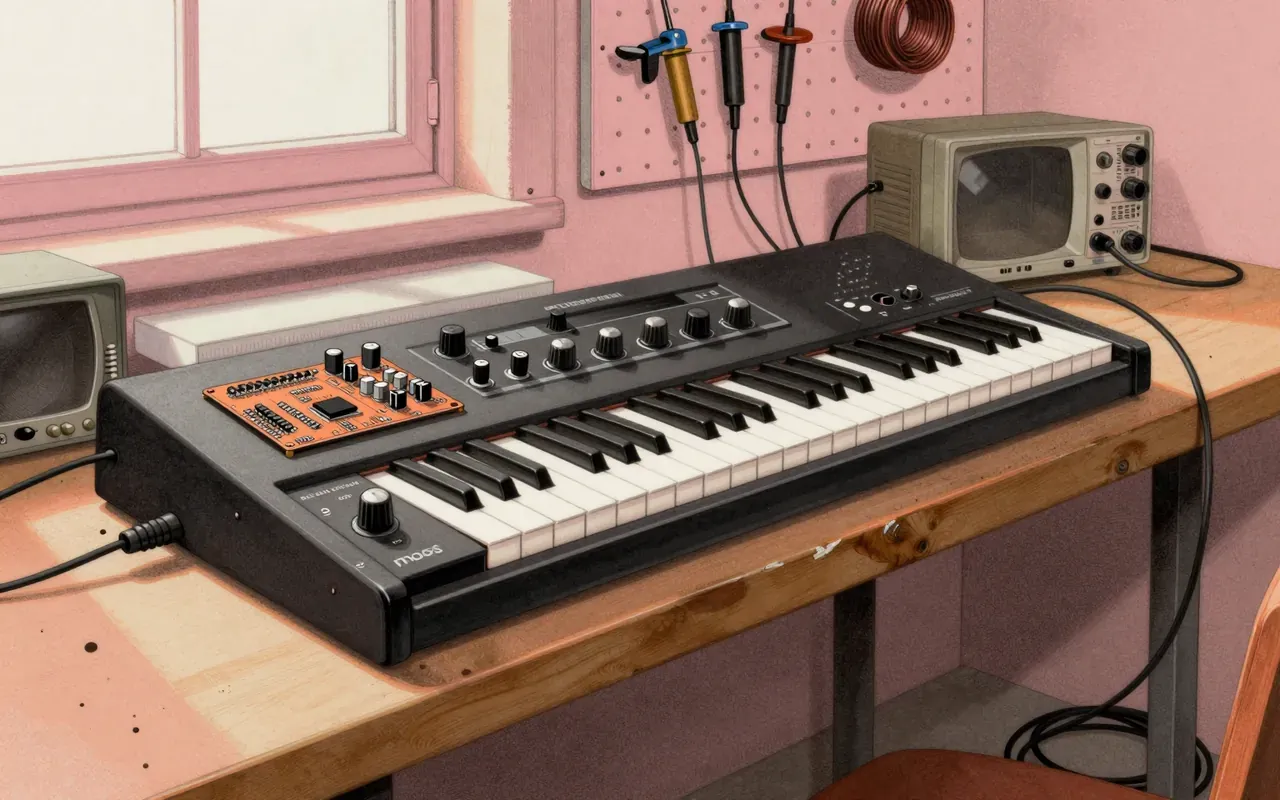
The Moog Rogue is a monophonic analog synthesizer introduced in the early 1980s. It has a 32-note keyboard and two VCOs. VCO 2 tunes from a half-step below to an octave above VCO 1. This allows atonal sounds. It includes Sample-and-Hold. Its hard-wired patch system enables varied sounds but offers no full patch programming flexibility. VCF and VCA controls are simple to operate.

9:56

Moog Source

Moog · 1981

The Moog Source is a monophonic analog synthesizer made by Moog Music from 1981 to 1985. It was Moog’s first with patch memory and the only Moog with a membrane keyboard and multihued panel graphics. It stores 16 presets onboard and expands memory via audio cassette. Its 24 dB/octave VCF, two analog ADSRs, LFO and sample-and-hold deliver classic Moog tone — but its interface sacrifices playability for recall.

9:49

Korg MS-10

Korg · 1978

The Korg MS-10 is a monophonic, 32-key analogue synthesizer released in 1978. It has one VCO (triangle, sawtooth, pulse, white noise), one 12dB/octave low-pass VCF, one LFO with pulse and sloped outputs, and one envelope generator with Hold, Attack, Decay, Sustain, and Release. Its normalized patch points allow flexible modulation without cables — but it offers no second envelope, no polyphony, no effects, and no key transpose.

7:57

Multimoog

Moog · 1978

The Multimoog is a monophonic analog synthesizer built by Moog Music from 1978 to 1981. Derived from the Micromoog, it adds a second circuit board to deliver aftertouch and expanded modulation routing—features missing from the Minimoog. It was intended as a less expensive alternative to that flagship instrument. It does not store patches. It drifts. It demands attention. But it gives aftertouch control over filter, pitch and amplitude in real time—rare in 1978.

10:21

Fender Mustang Bass

Fender · 1964

A compact, student-oriented bass built for immediacy — not depth, not versatility, not power.

9:33

Oberheim OB-8

Oberheim

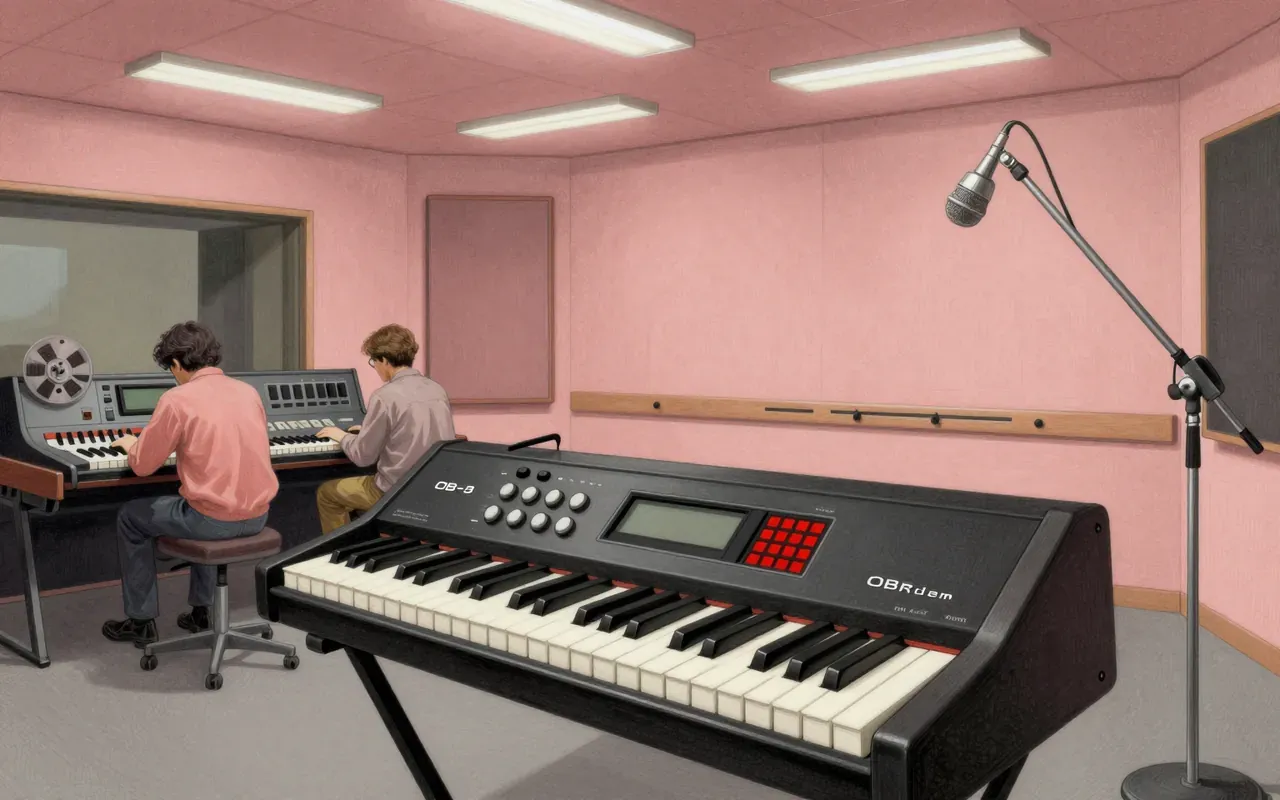
The OB-8 gave players twice the programming depth of earlier OB synths—via Page 2—while anchoring Oberheim’s ‘The System’ with the DSX and DMX. It runs on a Z80 CPU, stores 120 patches, and plays eight voices across a 61-note keyboard. It does not hide its age: cassette storage, no effects, and bi-timbral mode cuts voice count in half.

9:24

OSC OSCar

Oxford Synthesiser Company

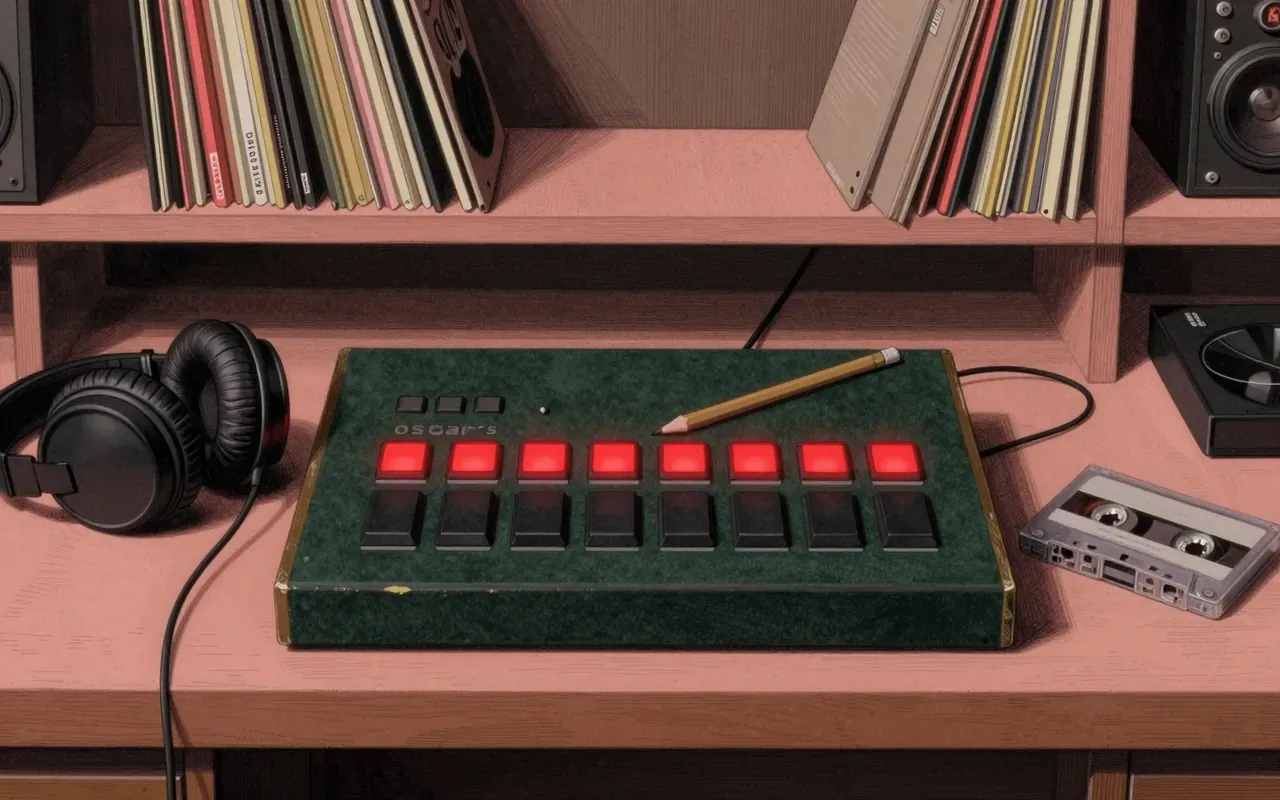
The OSCar is a 1983–1985 subtractive synthesizer with digital oscillators enabling additive synthesis, dual analog filters with independent cutoff, duophonic mode, and a built-in sequencer. Designed by Chris Huggett (electronics) and Anthony Harrison-Griffin (aesthetics and build), around 2000 units were produced.

10:20

Roland R-8

Roland

The Roland R-8 is a 1989 PCM drum machine built for expressive, human-sounding rhythm programming—not raw sound design or live sampling.

12:36

Roland RS-202

Roland

The Roland RS-202 is a 1976 string synthesizer that uses sawtooth oscillators and frequency division for full polyphony. Its paraphonic architecture routes all notes through one envelope shaper—but assigns per-note articulation to prevent attack re-triggering. Split-keyboard controls allow independent top/bottom sounds. An analog chorus with LFO-modulated delay lines creates ensemble realism. It does not offer true polyphonic envelopes, per-voice filters, or digital memory.

12:26

Yamaha RX-5

Yamaha

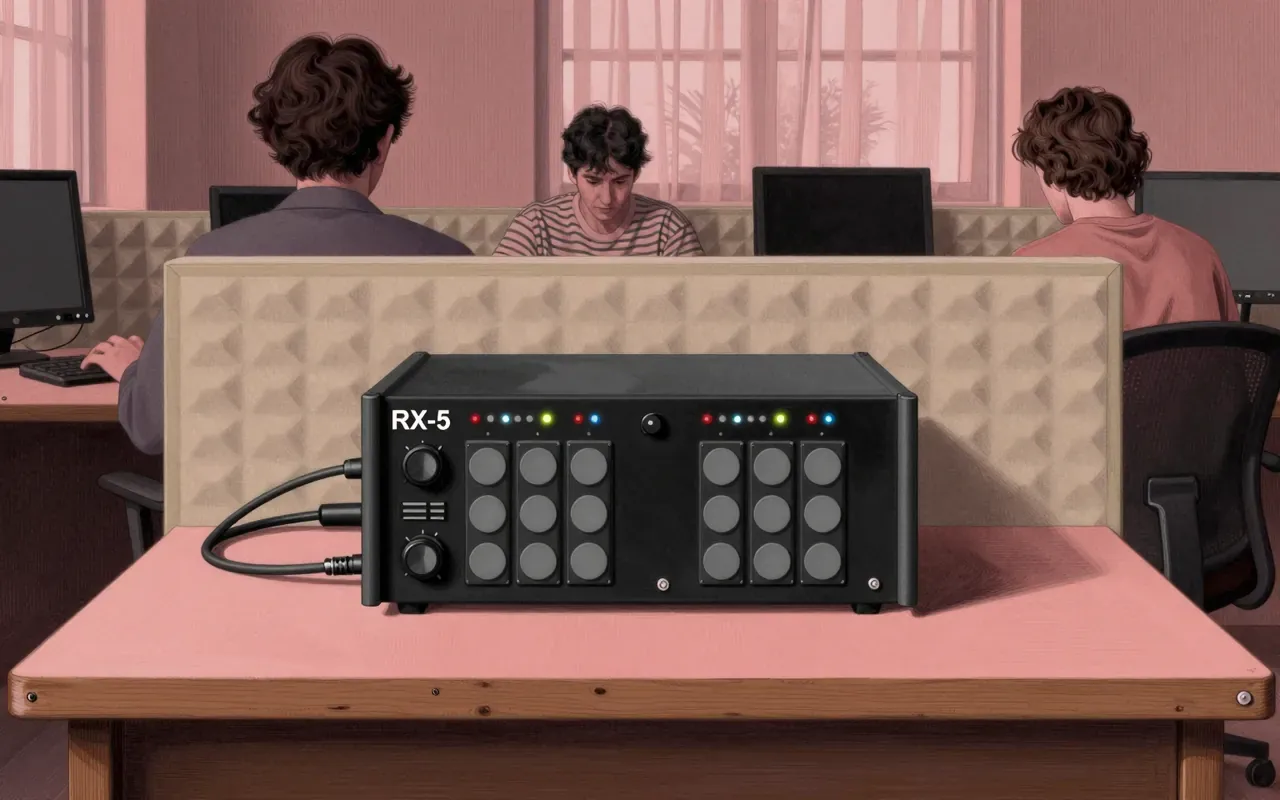
The Yamaha RX-5 is a 1986 programmable digital sample-based drum machine. It delivers 24 built-in and 28 cartridge-based digitally sampled sounds. It has 12 individual outputs—one per vertical drum pad pair. It supports sound editing including chromatic pitch, envelope, reverse, and damp. Its sequencer records up to 100 patterns in Real Time or Step Time, with lengths up to 99 bars.

9:32

Akai S900

Akai · 1986

The Akai S900 is a 12-bit sampler introduced in 1986. It supports up to six active samples simultaneously. Its firmware became upgradable via floppy disk from version 1.2. It features alternating forward-and-backward looping — a capability absent in the later S1000 series. An expanded variant, the S950, followed in 1988.

9:01

Gibson EB-3

Gibson

The Gibson EB-3 is a short-scale bass built for midrange punch, not low-end authority. Its 30.5" scale, slim SG-style body, and asymmetric pickup pair — large humbucker at the neck, mini-humbucker at the bridge — define its physical and sonic identity. The four-way rotary switch offers distinctive tonal options, including two that deliberately roll off low frequencies. It was produced from 1961 to 1979. Exactly 14,167 were made.

9:48

Six-Trak

Sequential Circuits · 1984

The Six-Trak is a six-voice analogue synthesizer released by Sequential Circuits in January 1984. It was built as an inexpensive, portable 'scratch-pad' for trying out arrangements.

8:14

Boss SP-202

Boss

The Boss SP-202 is a portable sampling workstation released in 1998. It succeeded Roland's MS-1 Digital Sampler. It has eight pads, four banks, two control knobs, a built-in microphone, six built-in effects, BPM-based looping, user-selectable sampling grade per pad, and sampling capacity of 4 minutes 20 seconds internally or up to 37 minutes with a SmartMedia card. It was built for club DJs, hip-hop and dance music artists.

9:49

ARP String Ensemble

Solina

The ARP String Ensemble is a fixed-architecture string machine. Twelve tone generators feed 49 keys via divide-down. Its triple BBD chorus — driven by two LFOs — defines the sound. No envelopes. No filters. No expression. Just one lush, unchanging texture.
9:15

Yamaha TG77

Yamaha

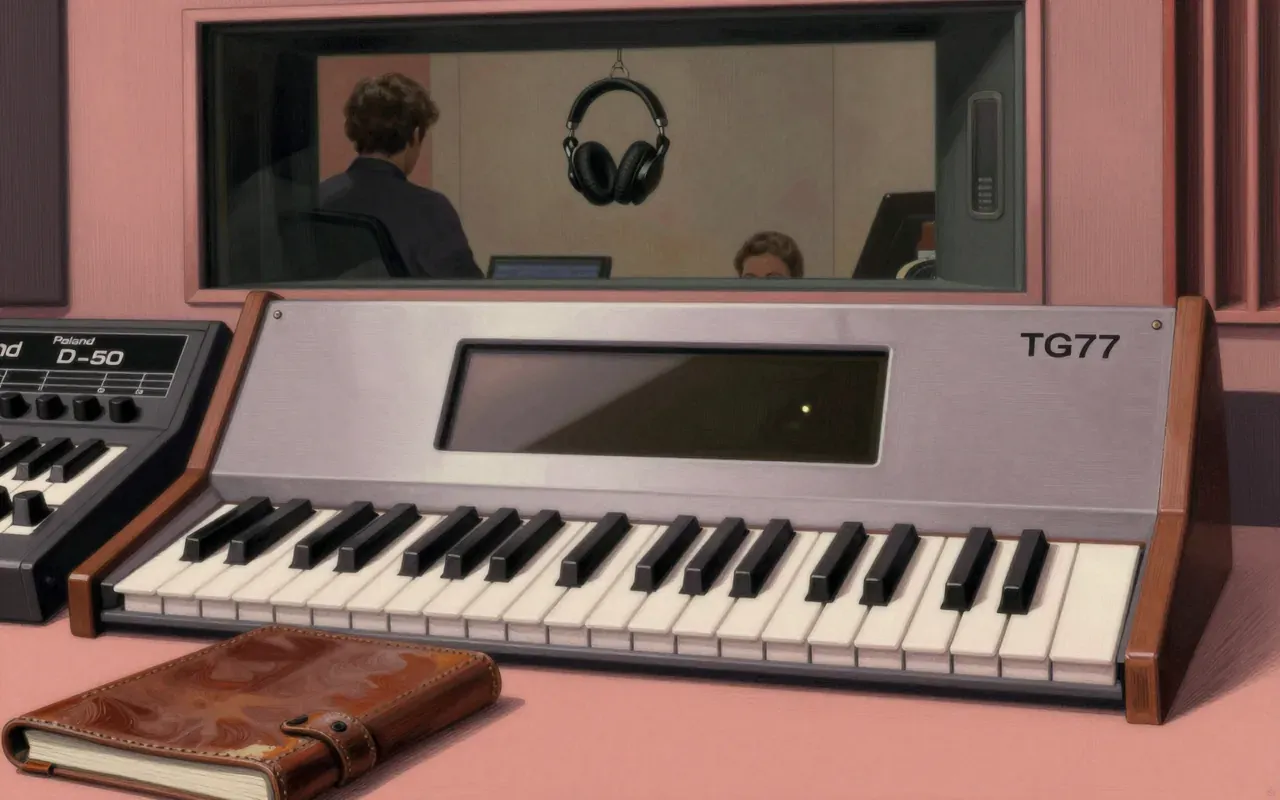
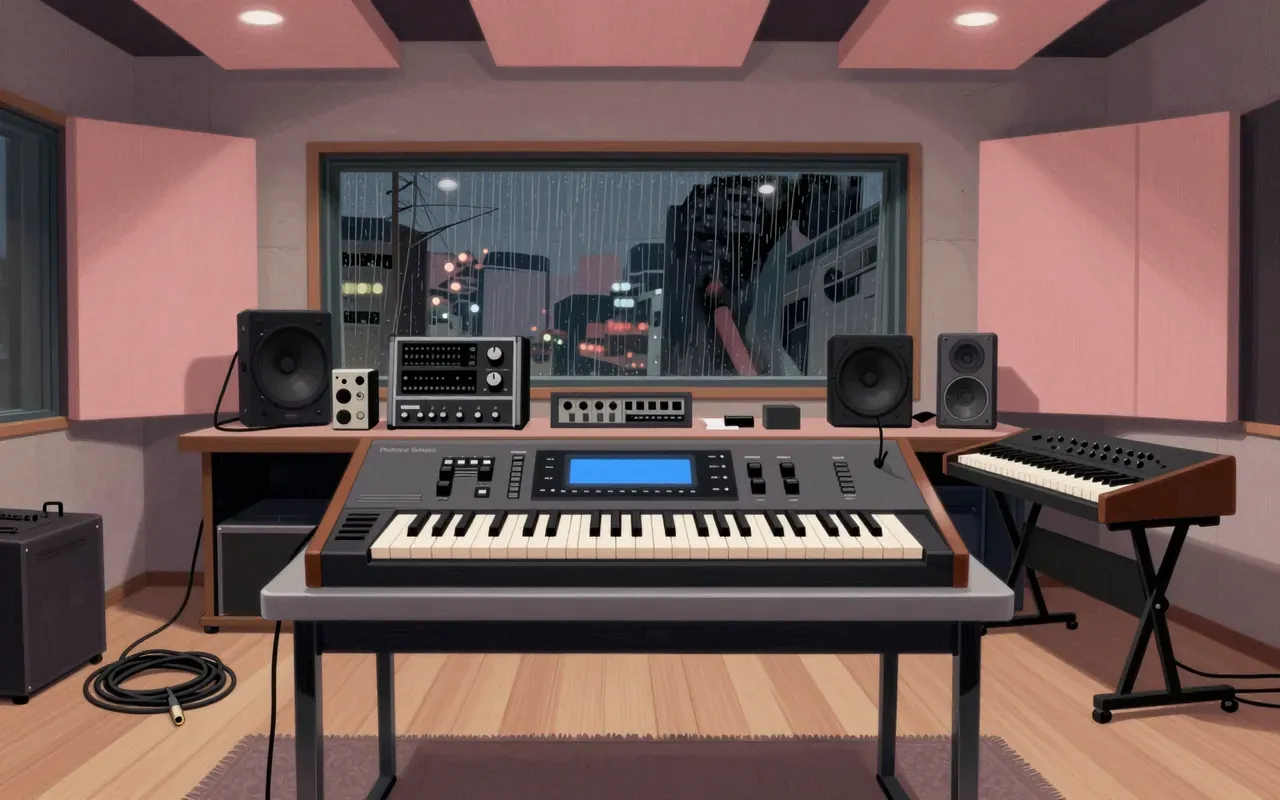
The Yamaha TG77 is a 1989 rack synth that merges FM and sample-based synthesis with unprecedented routing flexibility—but at the cost of immediacy and tactile control.

8:39

Gibson Thunderbird

Gibson

The Gibson Thunderbird is a 34-inch scale electric bass introduced in 1963. Designed by auto stylist Raymond H. Dietrich, it features neck-through construction and a reverse body shape. It was Gibson’s first bass at that scale and originally came in two models: the single-pickup Thunderbird II and dual-pickup Thunderbird IV. Its soapbar humbuckers deliver focused midrange. In 1966, Gibson altered the design to a non-reverse body and set-neck construction following a lawsuit from Fender.

9:13

Roland TR-606

Roland

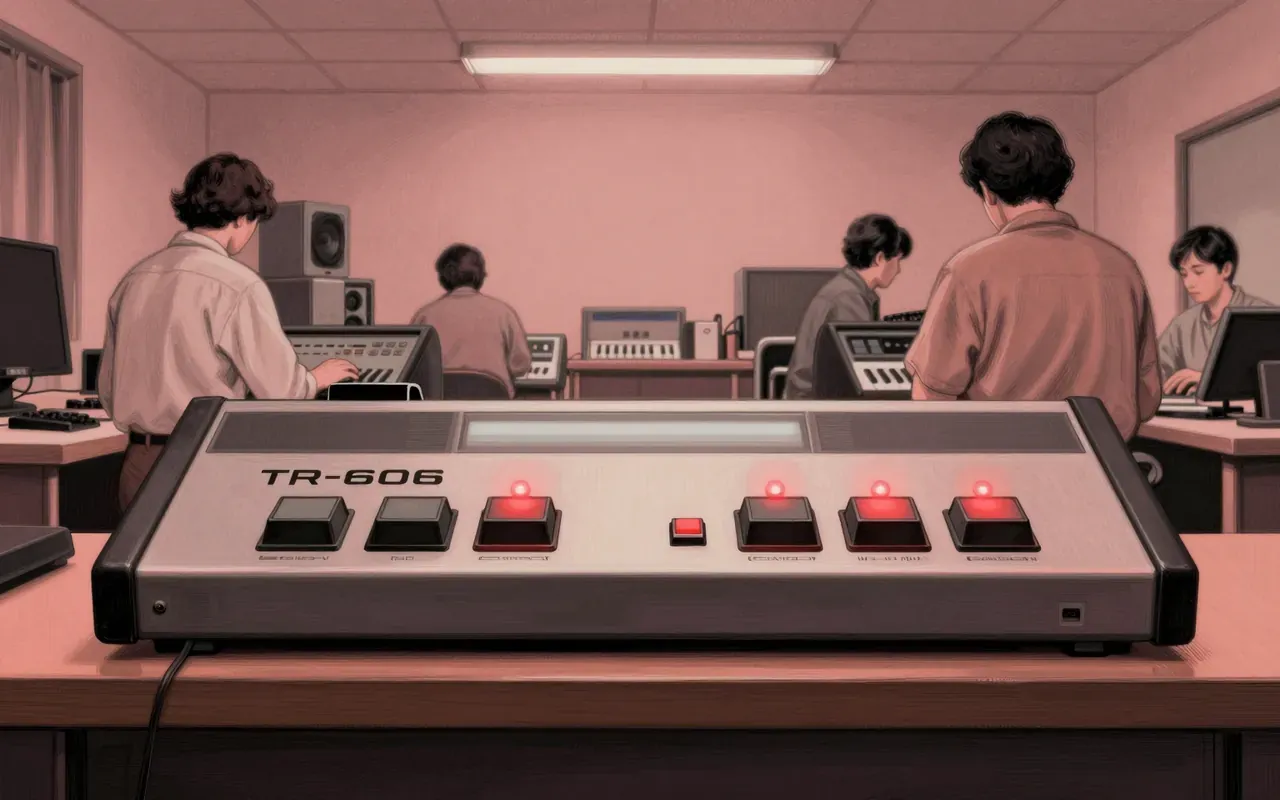
The Roland TR-606 is a fixed-voice analog drum machine built from 1981 to 1984. It generates bass drum, snare, toms, cymbal, and open/closed hi-hat sounds using analog synthesis—not samples—and offers no sound editing. Its 32-pattern sequencer includes accent controls and song chaining. DIN sync enables tight integration with the TB-303. It does one thing decisively: deliver unvarnished, immediate rhythm. It refuses everything else.

9:38

Roland V-Synth

Roland · 2003

The Roland V-Synth is a 2003 polyphonic synthesizer combining multiple oscillator technologies and built-in sampling, featuring arpeggiation, COSM filtering, and expandable vocoder/vocal synthesis via VC-2; the XT variant is a rack-mount module.

10:18

Korg VC-10

Korg

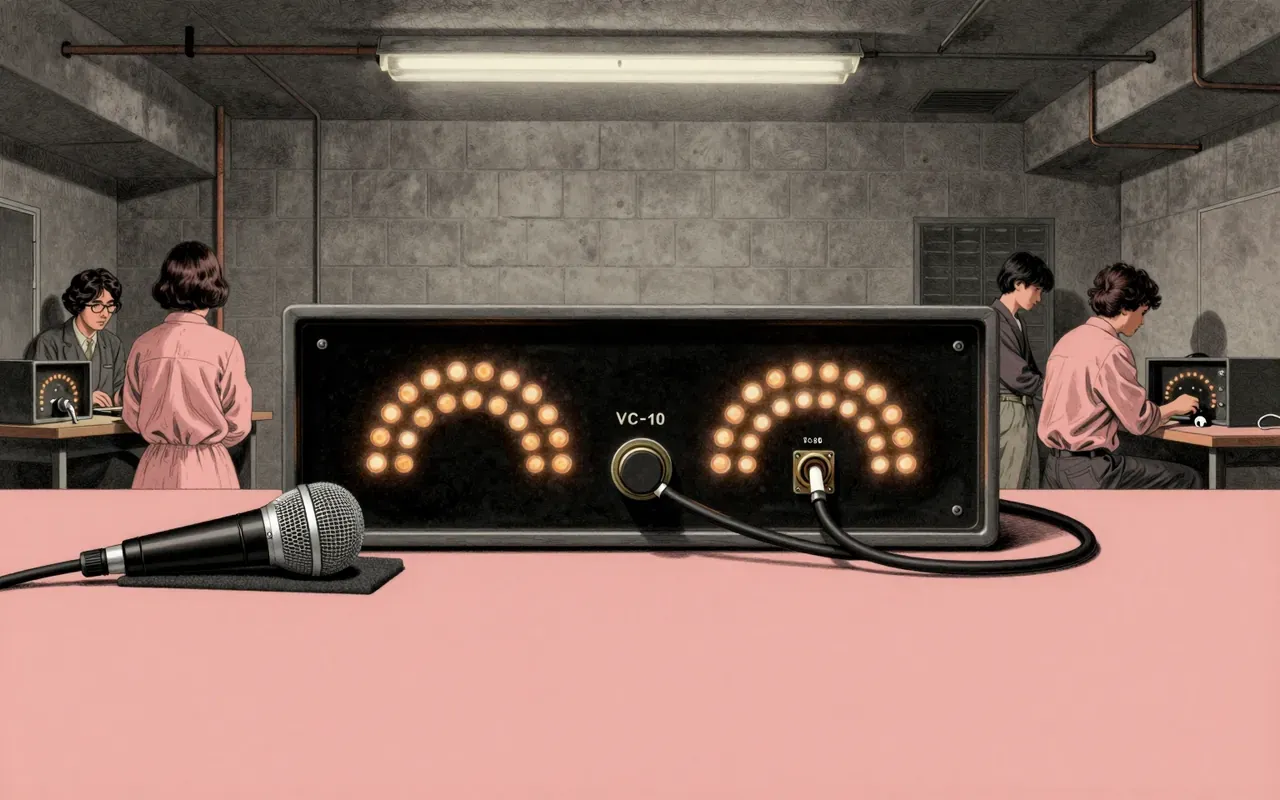
The Korg VC-10 is a 1978 analog vocoder with a built-in 32-note keyboard, 20-band analysis and synthesis, and support for both internal and external signal modulation — including voice, guitar, and pitch control inputs — making it a self-contained, polyphonic vocoding instrument.

10:41

Roland VP-330

Roland

The Roland VP-330 is a 1979 paraphonic vocoder and string machine. It combines ten-band vocoding, electronic strings, and four synthetic choir sounds using seven shared bandpass filters. Its BBD ensemble effect thickens all three sections. Touring musicians adopted it as a lighter, more robust alternative to the Mellotron — despite its choir and strings being less realistic. It offers no patch memory, no MIDI, and no polyphonic independence.
8:27

Streamer bass

Warwick

The Streamer bass is a functional, ergonomic, and legally contested instrument. It does one thing well: deliver focused low-end articulation in a comfortable, German-built package. It does nothing else — no tonal flexibility, no innovation, no independent identity in its first years. Its history is defined by imitation, negotiation, and eventual divergence — not invention.

8:47

Warwick Thumb SC

Warwick

The Warwick Thumb SC is a 2010 single-cut bass born from a fan forum contest. It adapts the Thumb NT shape with new tonewoods and adds coil-splitting via two mini toggles—its sole functional departure from the NT. It has no passive mode, no 6-string option, and no historical lineage beyond its 2009–2010 development cycle.

9:31

Gretsch Country Club

Gretsch

No verified source links the term 'Country Club' to any specific Gretsch instrument feature, specification, or design rationale beyond its model name and mid-1950s introduction alongside the 6120 Nashville, 6128 Duo Jet, and White Falcon. No claims about its construction, electronics, finish, or player experience are supported by the provided material. All descriptive statements must therefore be omitted or flagged as unsupported. The only factual anchors are its name, its status as a Gretsch guitar model, and its release period.

9:03

Korg DDD-1

Korg · 1986

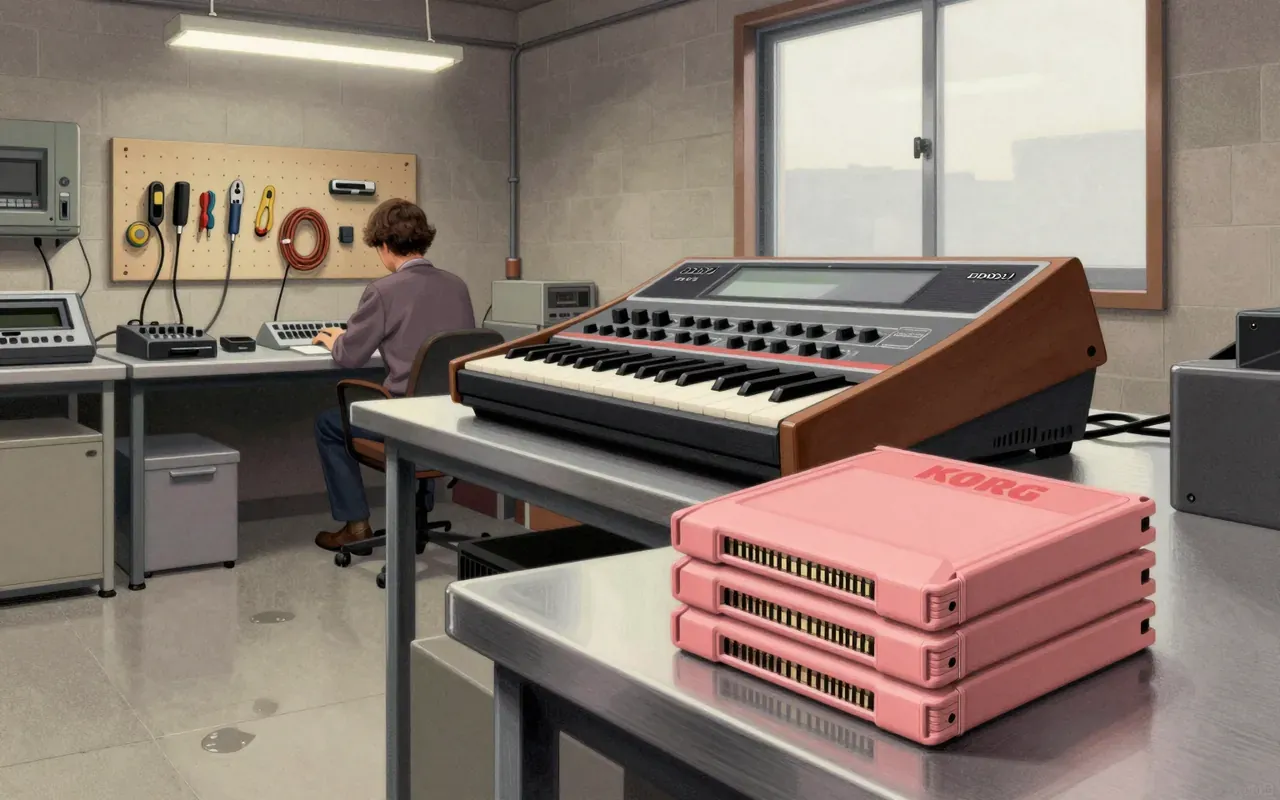
The Korg DDD-1 is a 1986 sampling drum machine with 14 velocity-sensitive pads, 12-bit samples, limited user sampling, five dynamic envelopes, and ROM card expansion (up to four cards, eight sounds each). It has 18 presets and six assignable audio outputs.

9:27

Drumtraks

Sequential Circuits

The Drumtraks is a 1984 sample-based drum machine by Sequential Circuits. It was the company’s first drum machine and first sample-based product. It featured early MIDI implementation, ROM-swappable sounds, velocity-sensitive MIDI input, and flexible synchronization with both MIDI and legacy gear.

9:06

Korg DSS-1

Korg

The Korg DSS-1 is a 1986 polyphonic sampling synthesizer combining sampling, additive synthesis, and hand-drawn waveform creation with an analog signal path. Its 12-bit sampler supports fixed rates from 16–48kHz, yielding up to 16 seconds of recording at the lowest rate. Its synthesis architecture emulates subtractive analog design with dual oscillators, switchable VCF slopes, and an extended ADBSSR envelope.

8:34

Korg DW-6000

Korg

The Korg DW-6000 is a 1985 six-voice hybrid digital-analog synthesizer using sampled waveforms in ROM, analog VCA/VCF, dual oscillators per voice with detune, and a programmable stereo chorus — while noting design limitations like lack of touch sensitivity and single parameter control.

9:46

Eventide Eclipse

Eventide

A professional-grade digital effects processor with dual independent effects blocks, nearly 100 algorithms—including 11 reverbs—and 24-bit/96kHz conversion. Supports true stereo reverb I/O and extensive looping (up to 20 seconds per block). Firmware updates require Compact Flash and strict version dependencies; bootloader corruption requires factory reprogramming.

9:40

Korg MS2000

Korg

The Korg MS2000 delivers the MS-10/MS-20 workflow in virtual analog form — with dual timbres, real-time knob control, and mod sequencing — but enforces a strict 4-voice polyphony limit that defines its practical use. It competes directly with the Nord Lead and Roland JP-8000 series. Its physical forms are a 44-key keyboard and a rack module. Connecting both via MIDI yields eight offset voices — not true polyphony expansion.

8:22

Eventide Orville

Eventide

The Eventide Orville is a dual-DSP, 24-bit digital audio processor with fully flexible I/O routing, near-three-minute sampling (DSP A), 40-second delay on both engines, UltraShifter™, DistortionCurve™ analog distortion modelling, and Predictive Vocoder™ based on a high-resolution physical model of the vocal tract. Firmware updates require Windows XP and a USB-to-serial adapter—and delete all User Programs unless backed up.

9:33

Ensoniq SQ-80

Ensoniq

The SQ-80 is a digital/analog synthesizer introduced in 1987 and manufactured until 1989. It features Polypressure Keyboard technology, 43 additional waveforms (including five drumkits), an enhanced sequencer, a floppy disk drive, MIDI in/out/thru, and the 2nd Release reverb simulation. Its OS was later back-ported to the ESQ-1. It was promoted professionally alongside the EPS sampler, including in a limited-edition CD with the Dixie Dregs.

10:39

Korg Trinity

Korg

The Korg Trinity is a 1995 music workstation. It was Korg's first modern workstation. It introduced a large touchscreen for advanced control and editing functions. It became the flagship successor to the M1. It introduced resonant filters to Korg's workstation line. It offered built-in digital audio recording, 32-note polyphony, an extensive internal sound library, and assignable effects.

9:57

Korg 01/W

Korg

The Korg 01/W is a 1991 workstation that expands on the M1 with more polyphony, more memory, and Waveshaping—but does not deepen synthesis control. It delivers reliability and scale, not flexibility.

10:06

Rickenbacker 325

Rickenbacker · 1958

The Rickenbacker 325 is a compact, bright, feedback-prone hollow-body guitar defined by its short scale, semi-hollow construction, and visual signature — the crescent moon cutaways and angled sound hole. It was designed for clarity and portability, not warmth or power.

9:45

Yamaha AN1x

Yamaha

The Yamaha AN1x is a 1997 virtual analog synthesizer using DSP-based modelling of analog subtractive synthesis components. It features duo-timbral architecture with two programmable Scenes per voice, parameter interpolation via morphing, and a maximum polyphony of ten notes—dependent on playing mode. Its synthesis engine includes dual oscillators, multimode resonant filtering, extensive modulation routing, and real-time control via assignable knobs and ribbon controller.

9:26

ARP 2500

ARP

The ARP 2500 is a monophonic or duophonic analog modular synthesizer introduced in 1970 as the first product of ARP Instruments. It used matrix switches instead of patch cables, enabling a cable-free experience but suffering from dirty connections and crosstalk. Its voltage-controlled oscillators achieved good tuning stability compared to competitors, due to patented exponential converters and a dual core design. The matrix switch scheme allowed any module's output to connect to any other module's input.

9:36

ARP Omni

ARP

The ARP Omni is a polyphonic analog synthesizer with preset orchestral string voices, a monophonic bass section, and a polyphonic synthesizer section featuring a 24 dB/oct VCF, ADSR envelope, triangle LFO, and waveform enhancement switch. Its string and synth sections used divide-down architecture for full polyphony, and it offered simultaneous, mixable, separately outputted sections — Strings, Synthesizer, and Bass — with onboard chorus phasing applied primarily to the strings.

9:18

ARP Quadra

ARP

The ARP Quadra is a 61-key analog synthesizer introduced in 1978. It was built as a paraphonic instrument using pre-existing ARP modules. It features four sound sections (Bass, String, Poly Synth, Lead), limited memory that recalls only on/off states and intervals—not slider positions—and relies on manual real-time adjustment. Its architecture uses divide-down circuits for the string section and shares controls like the hollow wave button across sections. It is not truly polyphonic and includes an arpeggiator specific to the lead section.

9:19

Fender Bass VI

Fender

A six-string bass that trades punch for possibility — and never found enough players who needed both.

9:07

Rhodes Chroma

Rhodes

The Rhodes Chroma is a microprocessor-controlled analog synthesizer originally developed by ARP Instruments, Inc. in 1979–1980 and produced by Rhodes in 1982. It features sixteen-voice polyphony, digitally encoded parameter processing, and software-generated envelopes and LFOs. Its architecture relies on software-based control of analog voice channels, enabling programmable multitimbral synthesis but introducing latency and instability.

9:25

Vox Continental

Vox

A portable transistor organ designed for touring musicians as a lightweight alternative to the Hammond organ.

8:30

Yamaha DX1

Yamaha

The Yamaha DX1 is the top-level member of Yamaha's prolific DX series of FM synthesizers.

9:54

Yamaha DX21

Yamaha

The Yamaha DX21 is a 1985 bi-timbral FM synthesizer with four sine-wave operators, 128 ROM presets, 61 non-velocity keys, and eight-note polyphony — split into four notes per zone when divided.

8:37

Gibson EB-0

Gibson

The Gibson EB-0 is a bass guitar introduced in 1959 to replace the underperforming EB-1. It used the EB-1’s mahogany neck, body, and 30.5-inch scale but adopted a double-cutaway body inspired by the Les Paul Junior. Production ended in 1979 after 20,844 units. Early models were cherry red only. In 1961, the body was redesigned to match the SG. In 1962, the pickup’s black plastic cover became metal. Around 1964/5, nickel hardware gave way to chrome.

9:48

Gibson EB-2

Gibson

The Gibson EB-2 is a purpose-built, no-compromise semi-hollow bass: warm, resonant, limited. Its design gives you one voice — rich and rounded — and refuses all others.

8:56

Ensoniq EPS

Ensoniq

The Ensoniq EPS is a 13-bit sampling keyboard introduced in 1988 as the Mirage's successor. It uses dual processors and a dedicated sound engine to enable load-while-play. It reads double-density 3.5" floppies formatted to 800k. It integrates MIDI for control or computer connection. Early units suffered mechanical issues with their polypressure keyboard.

9:11

Ensoniq EPS-16 Plus

Ensoniq

The EPS-16 Plus is a purpose-built 1990 sampler that trades flexibility for immediacy. It records mono, plays back 16-bit samples at seven fixed rates, and routes everything through stereo panning and 13 effects. Its ES5505 OTIS chip gives it tight, responsive playback—but no sample rate conversion, no stereo input, and no non-destructive editing. Turbo versions added flash and SCSI, but Ensoniq replaced it with the ASR-10 in 1992. It belongs in a room where decisions are made by ear and fingers—not by menu diving.

10:26

Gibson ES-125

Gibson

The Gibson ES-125 is a purpose-built, no-compromise entry into hollow-body electric guitar playing. It gives one voice, one circuit, and one physical response—nothing more, nothing less.

8:50

Gibson ES-330

Gibson

The ES-330 is a thinline hollow-body electric guitar introduced in 1959. It uses P-90 pickups and has no center block. It is prone to feedback. It was discontinued in 1972.

9:19

Ensoniq ESQ-1

Ensoniq

The ESQ-1 is a hybrid digital-analog workstation that prioritises immediacy and integration over depth or durability.

9:31

Gibson Explorer

Gibson

The Gibson Explorer is a solid-body electric guitar released by Gibson in 1958. It features a radical, futuristic body design derived from the 1957 Futura prototype. Only 19 were produced in 1958 and 3 in 1959. Early models had a 'split'-shaped headstock with 3+3 tuners; later models used a long drooping 'hockey-stick' headstock with tuners in a straight line on one side.

8:11

Synton Fenix

Synton

The Synton Fenix is a rare, handbuilt modular synthesizer from 1997 — 75 units total — designed by Marc Paping and Bert Vermeulen to include only the vintage-analogue features they personally valued, and nothing more.

9:11

Gibson Firebird

Gibson

The Gibson Firebird is a solid-body electric guitar introduced in 1963. It features neck-through-body construction—the first Gibson solid-body to do so—with a stepped neck, reverse headstock, treble-side banjo-style planetary geared tuners, and fully covered mini-humbucking pickups with metal surrounds. The neck is built from five plies of mahogany and four narrow strips of walnut.

9:09

Ensoniq Fizmo

Ensoniq

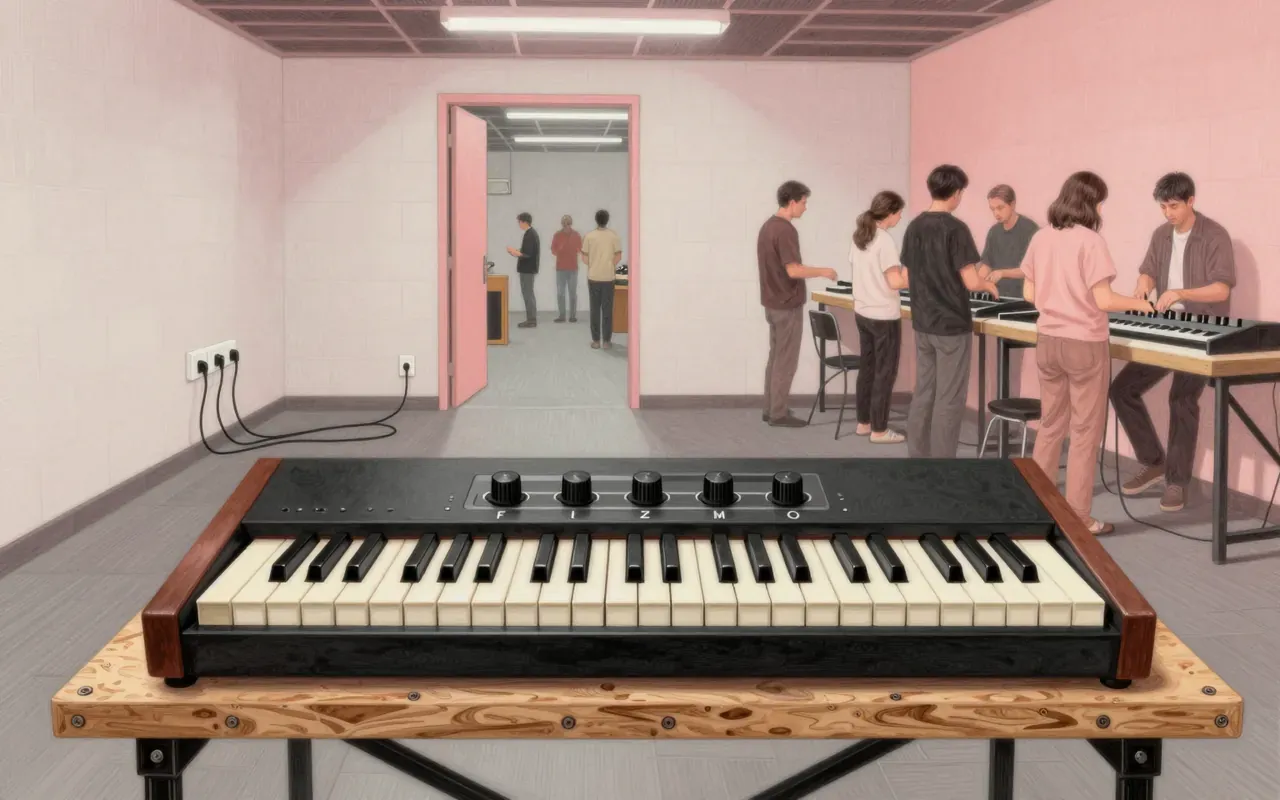
The Ensoniq Fizmo is a 1998 digital synthesizer using Transwave synthesis, capable of 48-voice polyphony, featuring real-time F-I-Z-M-O knob modulation, multi-segment envelopes, and a focus on evolving pads and arpeggiation — though hampered by hardware and UI limitations.

9:32

Gibson Flying V

Gibson · 1958

The Gibson Flying V is an electric guitar introduced in 1958 with a radical futuristic body design, initially made from korina (limba) wood, with only 98 units produced in its first run due to poor sales. It was reissued in 1967 using mahogany and design updates including a new bridge and larger pickguard. Its physical design — including 17-degree headstock angle and central pickup placement — was intended to enhance sustain.

8:56

Gibson Grabber

Gibson

The Gibson Grabber is a bass guitar introduced in 1973. It features a bolt-on 34½-inch neck, an adjustable pickup that slides to simulate neck or bridge positions, brighter output than traditional Gibson humbuckers, simple controls (one volume, one tone), and a removable bridge cover. Its body changed from maple to alder in 1975 — the year it peaked in sales at 2,637 units, largely due to Gene Simmons’s use with Kiss. It was discontinued in 1982, with limited production until 1984.

9:45

Boss HM-2

Boss · 1983

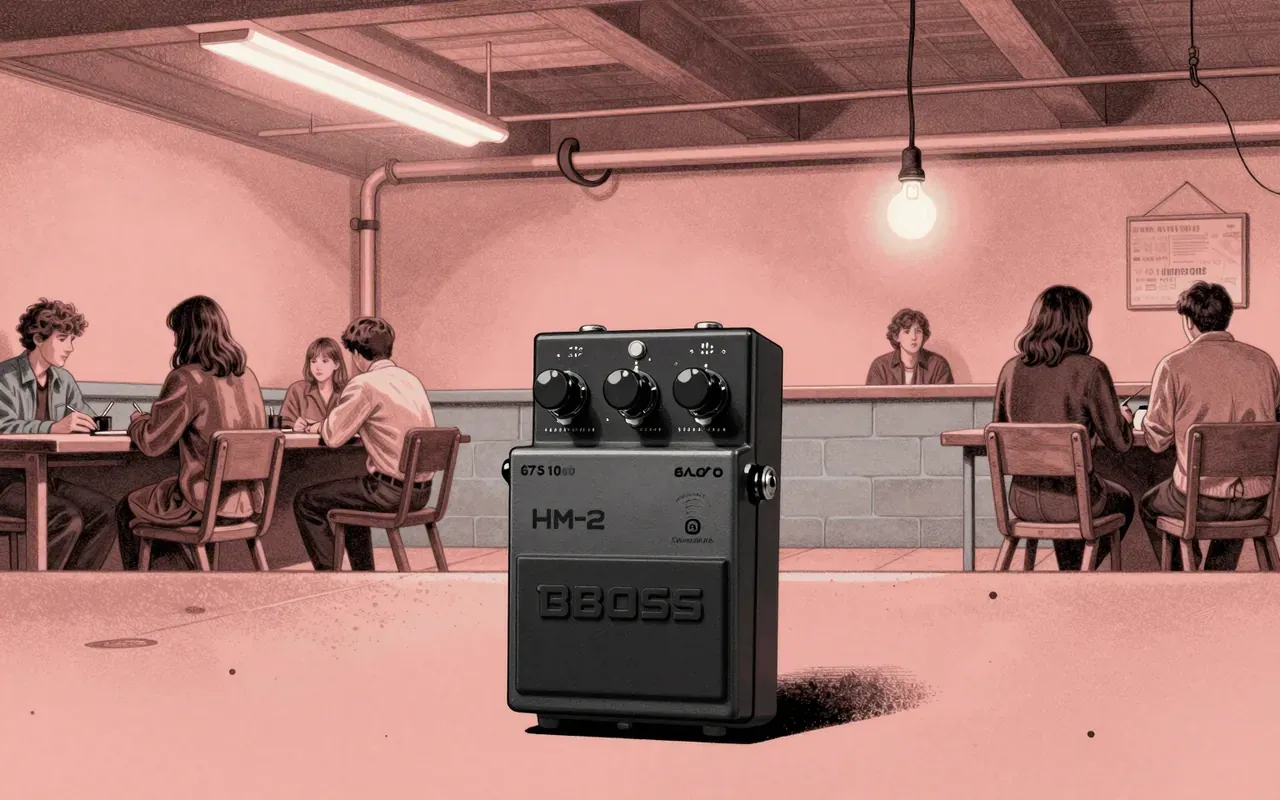
The Boss HM-2 is a distortion pedal introduced in October 1983. It was designed to emulate the mid-range response of a Marshall stack and is based on the Boss DS-1. Its defining feature is the radically versatile Low and High ‘Color Mix’ EQ controls, each offering 20 dB of boost or cut.

9:05

Roland JD-990

Roland

The Roland JD-990 is a 1993 module-based, PCM sample synthesizer. It expands on the JD-800 with more ROM, multitimbrality, front-panel programming, and expansion support. It generates both vintage-analogue-remnant and modern-digital textures—but only from its fixed 6 MB of PCM waveforms, and only via menu navigation.

8:23

Roland JV-2080

Roland

The Roland JV-2080 is a rack-mount, sample-based MIDI sound module released in early 1997. It supports 768 internal patches and can be stacked up to eight units for 512-voice polyphony.

8:52

Kurzweil K2000

Kurzweil

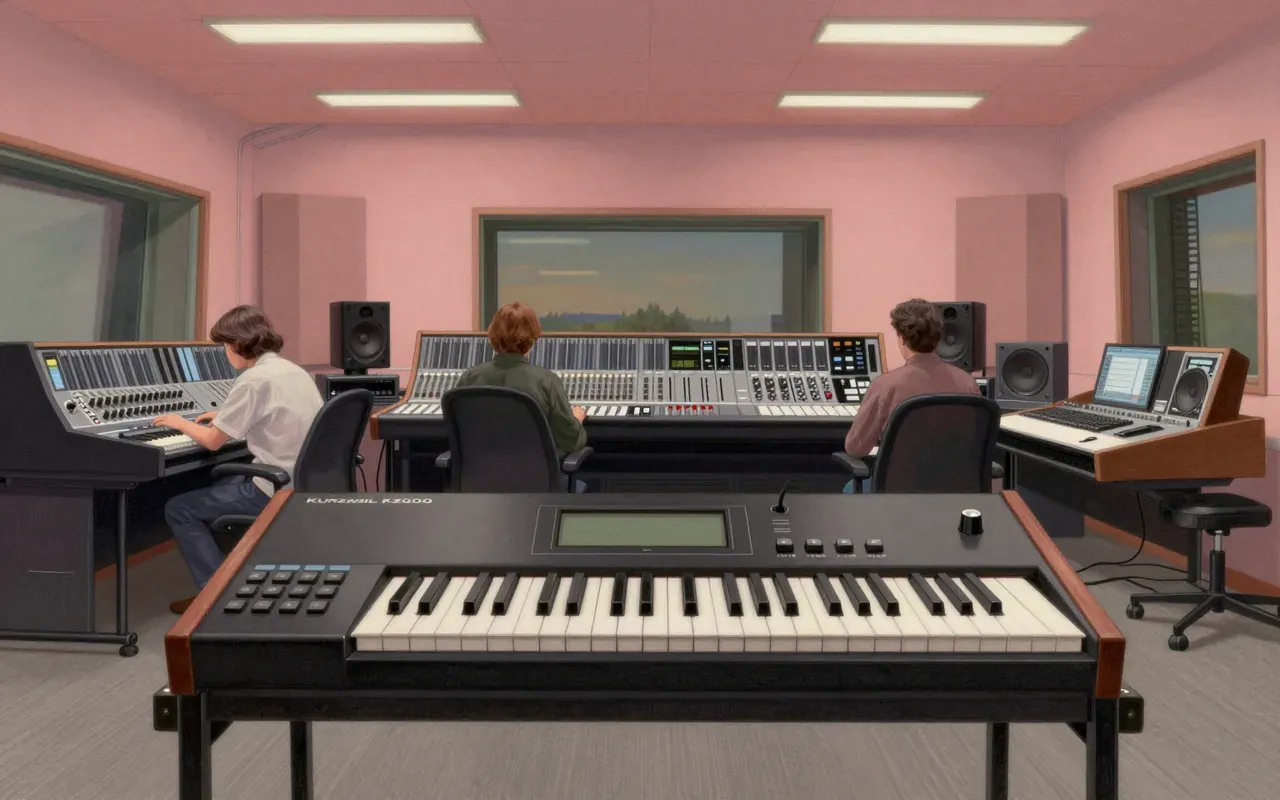
The Kurzweil K2000 is a digital synthesizer and music workstation introduced in 1991, built around the V.A.S.T. digital signal processing architecture. V.A.S.T. allows users to select different signal paths containing different DSP functions for sound creation and shaping. It includes an extensive modulation system where modulation sources can be assigned to parameters and combined. The instrument was available in keyboard and rack-mountable formats and included 16-bit user sampling.

10:19

Marshall Major

Marshall

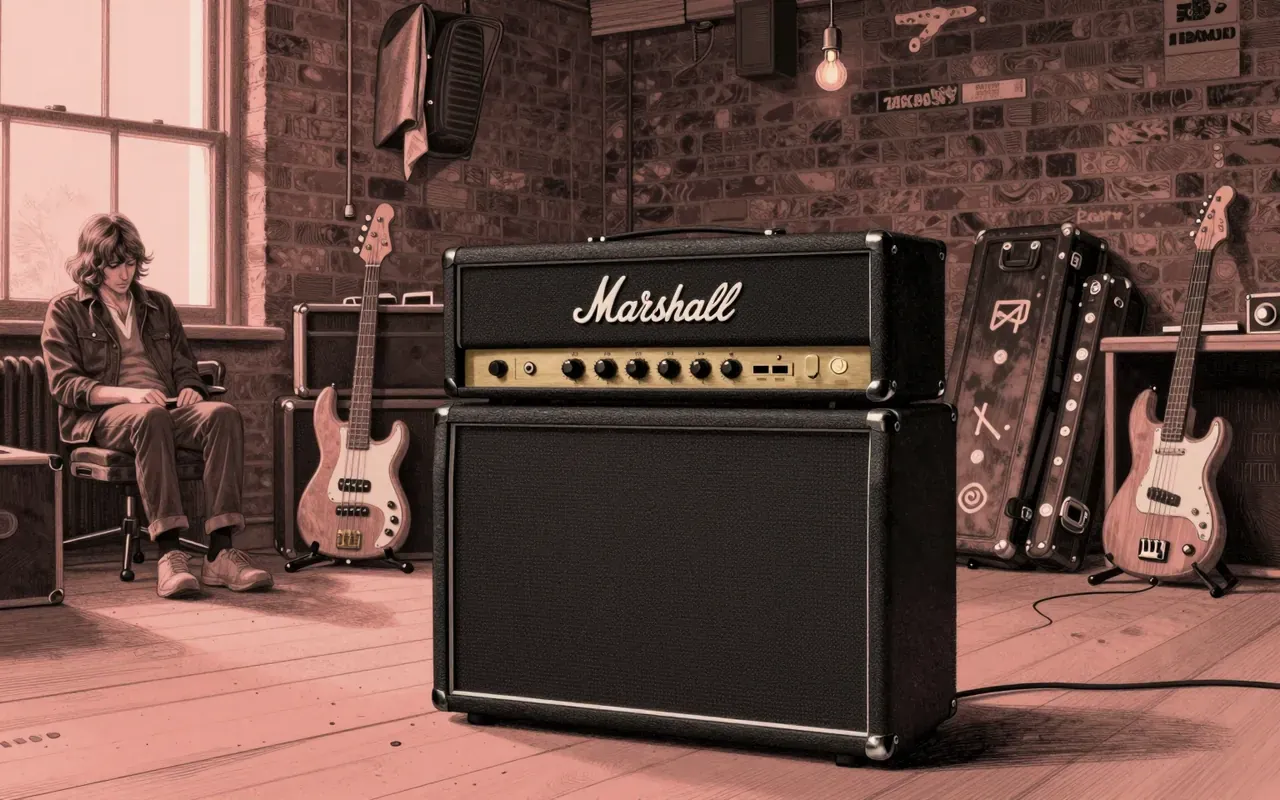
The Marshall Major is a 200-watt guitar amplifier built from 1967 to 1974. It was designed to produce more volume and clean headroom than Marshall's other amplifiers like the Super Lead. The 200 had only three controls on the front panel and used a preamplifier circuit that was closer in design to a hi-fi amplifier rather than a guitar amp. In 1968, Marshall updated the 200 with a typical EQ compliment of treble, middle, bass, and presence controls, and it was now named the Major. This tone stack—which was passive compared to the 200's active controls—was placed between the second and third gain stages created using ECC83 (12AX7) preamp tubes. Ritchie Blackmore of Deep Purple and Mick Ronson of David Bowie's band are frequently associated with the Major.

8:42

Gibson Marauder

Gibson

The Gibson Marauder is a 1975–1979 bolt-on electric guitar designed to compete with Fender’s single-coil models. It features a custom Bill Lawrence humbucker in the neck and an angled blade-style single coil at the bridge — both sealed in clear epoxy. Its construction includes a Les Paul–shaped contoured single-cutaway body and bolt-on maple neck. Only 7,111 units were made before discontinuation in 1979 (though some were made until 1982). Endorsed by Ace Frehley and Paul Stanley, it failed to gain traction against Fender due to its compromised playability and lack of tonal flexibility.

10:22

Roland MC-4 Microcomposer

Roland

The Roland MC-4 Microcomposer is a 1981 microprocessor-based CV/Gate sequencer with four output channels, programmable via numeric keypad or live monophonic keyboard input, using numeric pitch values (Middle C = 24), step time values, and gate time values; it features volatile memory requiring cassette storage, supports syncing to other MC-4s or Roland gear, and predates MIDI.

9:19

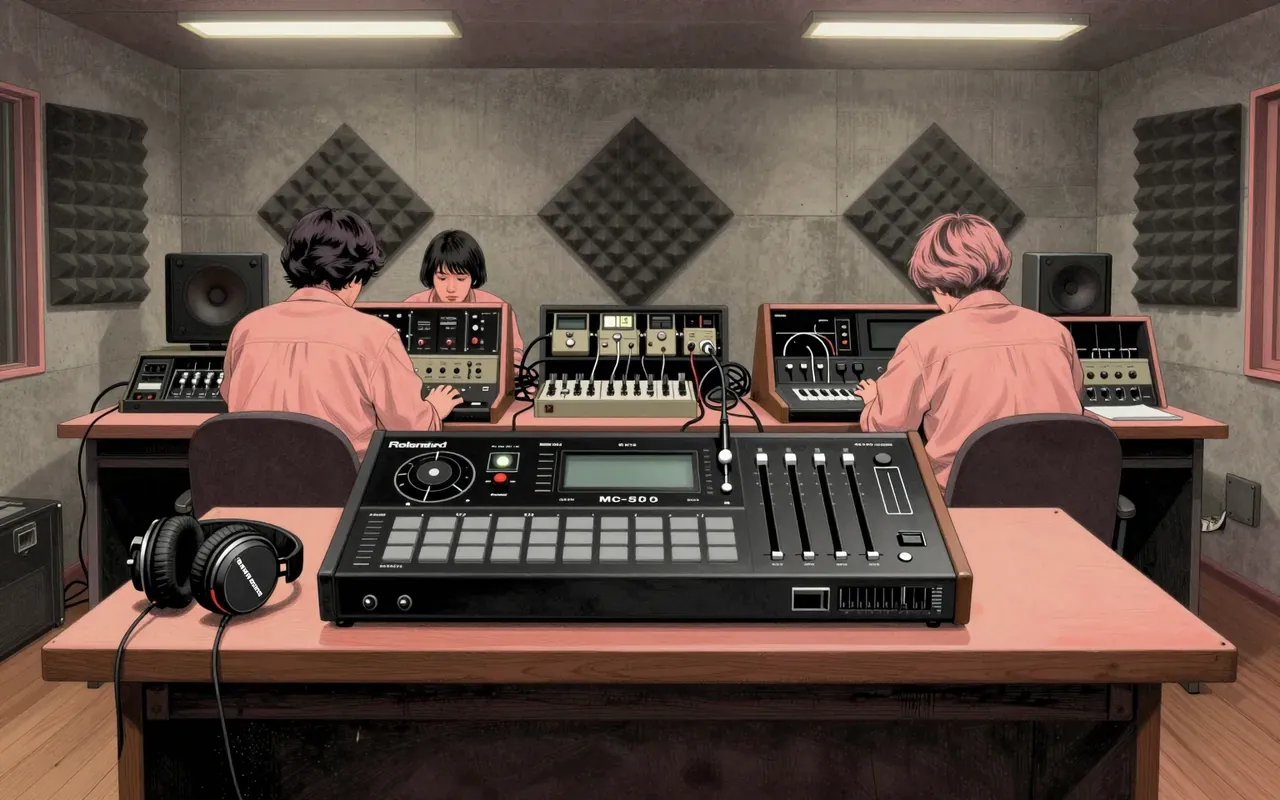
Roland MC-505

Roland

A 1998 groovebox that prioritises immediacy over depth. It bundles sequencing, synthesis, and classic Roland drums—but locks you into its architecture.

9:41

Roland MC-909

Roland

The Roland MC-909 is a 2002 groovebox built for live pattern performance. It merges ROM-based synthesis, sampling, and 16-track sequencing into one hardware unit. Its strength is immediacy: hands-on control, fast patch loading, and real-time pattern switching. Its limits are hard-coded: buggy OS, shallow sample editing, rigid pattern flow, and no true synthesis — only tone layering from fixed PCM waves. It belongs on stage, not in a modern production chain.

8:46

MicroKORG

Korg

The MicroKORG is a compact, DSP-based synthesizer/vocoder released in 2002. It uses analog modelling to deliver immediate, expressive sounds — especially through its built-in vocoder and key transpose function. Its four-voice polyphony limits chordal playing and layering, but its hands-on interface and portability made it a staple for live vocalists and electronic performers. Still in production as of 2022, it prioritises utility over expandability.

8:55

Micromoog

Moog · 1975

The Micromoog is a monophonic analog synthesizer produced by Moog Music from 1975 to 1979. Designed as a scaled-down, lower-priced alternative to the Minimoog, it was intended for musicians new to synthesis who could not afford the $1,500 Minimoog. Priced at $650–$800, it features a single VCO with variable waveshape from sawtooth to pulse, sub-octave generation one or two octaves below the fundamental, a −24dB per octave low-pass filter with its own envelope generator and VCO frequency modulation capability, a voltage-controlled amplifier with its own envelope generator, and two A(S)R envelope generators with switchable sustain — a design choice that distinguishes it from most budget synths of the era which used a single ADSR. It includes Moog Open System control inputs, an audio input for external signal processing, and uses 0.95V/oct CV scaling. It was designed by Moog engineer Jim Scott in consultation with Tom Rhea, with electronic refinement input from David Luce and Robert Moog.

8:52

Korg miniKORG 700

Korg

The miniKORG 700 is Korg’s first monophonic analog synthesizer, released in 1973. Designed for organists, it sits atop an organ with controls facing upward. It features five oscillator waveforms including two pulse-width modulation variants, an envelope with attack and 'singing' (decay/release), a 'sustain' toggle that functions only as release, and a dual-filter 'Traveler' system with a safety constraint preventing silence. Its filters produce vocal-like sounds.

9:11

Boss MT-2

Boss · 1991

The Boss MT-2 Metal Zone is a 1991 distortion pedal designed for heavy metal guitarists. It features high-gain capabilities, a thick and tight tone, and powerful semi-parametric EQ controls. Boss developed it as a more versatile successor to the HM-2, using a dual-stage gain circuit and seven pre- and post-distortion filters.
8:40

Prophet 2000

Sequential Circuits

The Prophet 2000 is Sequential Circuits’ first sampler — released in 1985. It uses 12-bit sampling at up to 41.667 kHz, with 256 kilowords of memory. It offers 8-voice polyphony and early multitimbral operation via MIDI channels. Its analog VCFs and VCAs give it warmth absent in later samplers. It was relatively affordable at £2,000.

10:17

Yamaha QY10

Yamaha

The QY10 is a fixed-function sketchpad—not a flexible instrument. It trades control for immediacy. It works only in C major. It rescales, but never reveals how. It stores patterns internally, but exports only via MIDI. It is portable, self-contained, and stubbornly simple.

8:48

Red Special

Brian May / John Birch

The Red Special is a functional anomaly: a self-contained solution to feedback and sustain, built before those problems had names. Its value lies in what it withheld — standardisation, mass production, modularity — not what it delivered.

8:54

Gibson Ripper

Gibson

The Gibson Ripper is a purpose-built electric bass: set-neck, two Bill Lawrence Super Humbuckers, and a Q System circuit that prioritises midrange control over flexibility. It delivers punch and presence but withholds neck-pickup isolation and tonal versatility.

9:33

Yamaha RM1x

Yamaha

The RM1x is a fixed-architecture groovebox that prioritises fast, style-based arrangement over flexible sound design or real-time control.

10:14

Akai S3000XL

Akai · 1995

The Akai S3000XL is a 1995 sampling instrument with 32-voice polyphony and 2 MB of RAM. It features a large screen and intuitive interface for fast sample editing. It loads sounds via a 3.5" floppy drive and SCSI port, and plays back MIDI files for live triggering. Akai discontinued it in 1995. It belongs to the S3000 series, which succeeded the S1000 series and offered optional CD-ROM.

8:44

Roland SP-808

Roland

The SP-808 is a self-contained sampling workstation built for immediacy—not convenience. Its limits are absolute: four stereo voices, Zip-only storage, no modern connectivity. Its strength is integration: sampler, synth, and sequencer in one tactile unit, holding over 1,000 samples internally while demanding physical media discipline.

10:03

Yamaha SY77

Yamaha

The Yamaha SY77 is a 1989 16-voice multitimbral workstation combining AFM (expanded 6-operator FM), AWM2 PCM sampling, and their real-time hybrid RCM. It features a 61-key keyboard with velocity and aftertouch, two modulation wheels, pitch wheel, backlit LCD, floppy drive, expansion slots, on-board effects, and a 16,000-note sequencer. AWM2 waveforms can be used standalone, layered with FM Elements, or — uniquely in the SY/TG series — as modulators for FM operators. Its AFM is a superset of the DX7’s FM, adding waveforms, algorithms, feedback routing, and filter integration.

7:42

Steiner-Parker Synthacon

Steiner-Parker

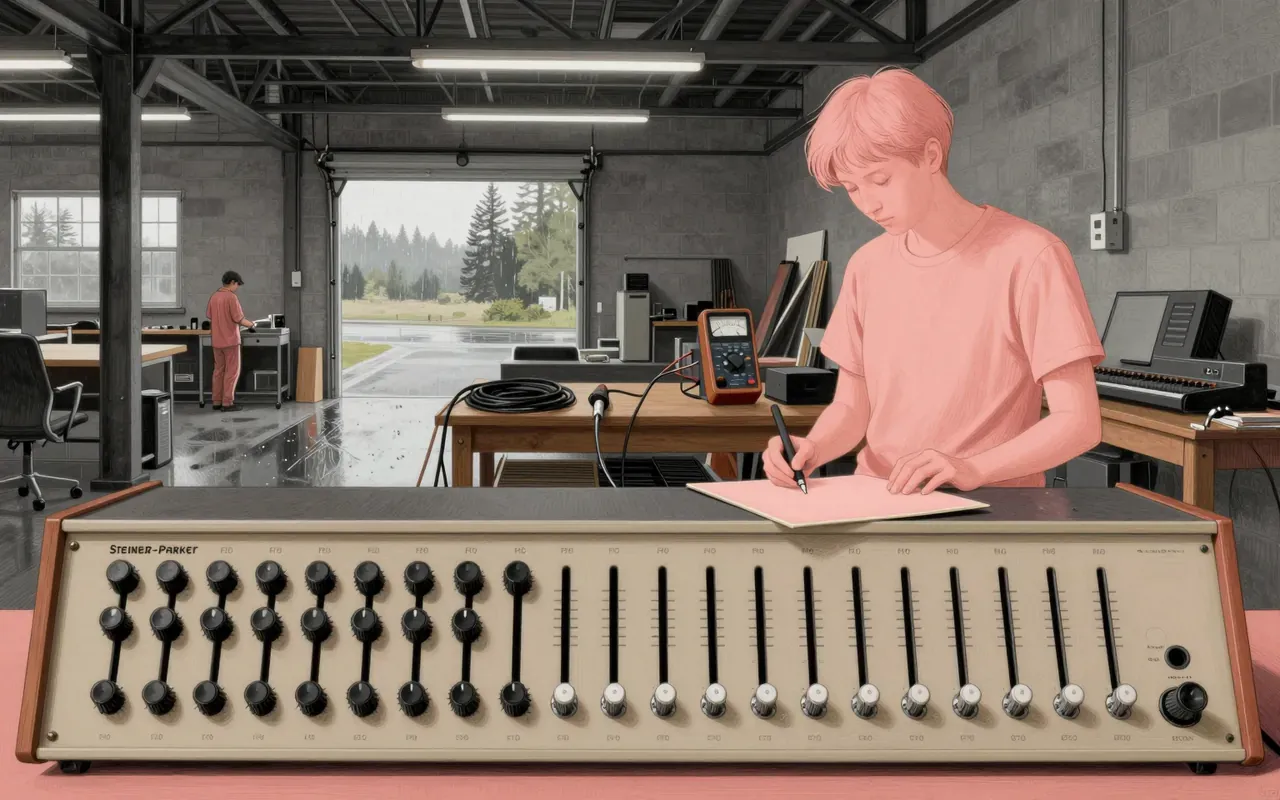
The Steiner-Parker Synthacon is a monophonic analog synthesizer released in 1975. Its defining feature is Nyle Steiner’s 12dB/octave multimode filter, which self-oscillates and sustains full amplitude at all resonance settings—a deliberate departure from the Minimoog and ARP Odyssey. Several hundred units were made. It has no polyphony, no LFO, no patch memory, and tuning stability is not documented. Its value lies in its singular filter behaviour, not versatility or convenience.

8:42

Elka Synthex

Elka

The Elka Synthex is an 8-voice analog keyboard synthesizer produced by Italian music instrument manufacturer Elka from 1981 to 1985.

9:12

EMS Synthi 100

EMS

The EMS Synthi 100 is a large analogue/digital hybrid synthesizer commissioned by Radio Belgrade, designed by David Cockerell and documented in 1971. It developed from a concept of three VCS3 systems but contains analogue modules equivalent to six VCS3s. It features 12 voltage-controlled oscillators and eight voltage-controlled filters. Two monophonic keyboards produce four control voltages and two triggers. Its digital sequencer has three duophonic layers and 256 duophonic note events. Two 60×60 matrices connect modules via patch pins. Keyboard spread adjusts for equal temperament or microtonal tunings up to 61 divisions per semitone.
9:00

Roland System 700

Roland · 1976

The Roland System 700 is a professional monophonic modular synthesizer released in 1976 by Roland Corporation.

8:07

Moog Taurus

Moog

The Moog Taurus is a foot-operated analog synthesizer introduced in 1975. It uses an organ-style pedal board. It is monophonic, with a single voice generated by two oscillators and one VCA. Taurus I and III offer only a distorted sawtooth wave. Taurus II introduced a pulse wave. All models use a 24dB/octave resonant low-pass filter with key tracking. Early models lack an LFO; Taurus III includes one routable to oscillator pitch or filter frequency.