audiobriefs
Oldest

All briefs

747 briefs · 6840 min · 193–288 on page 3 of 8
10:43

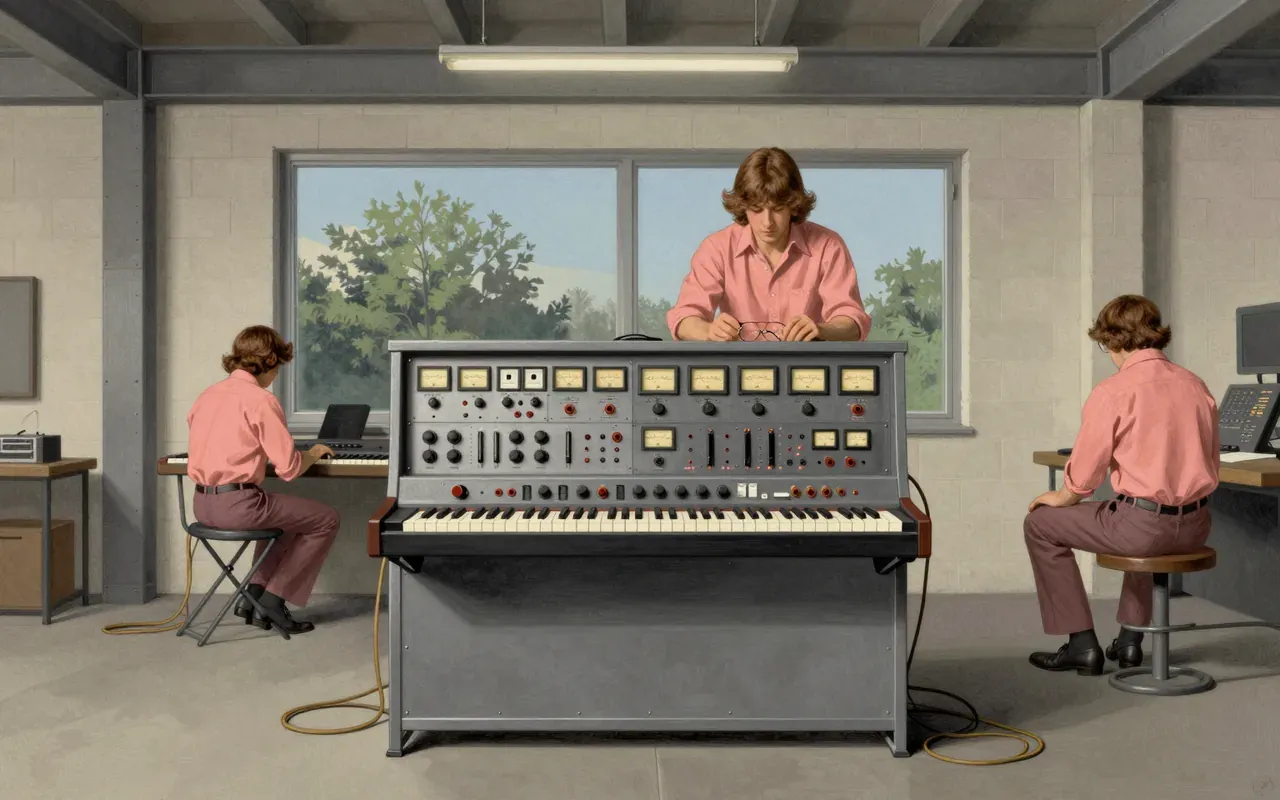
EMS Synthi AKS

EMS · 1972

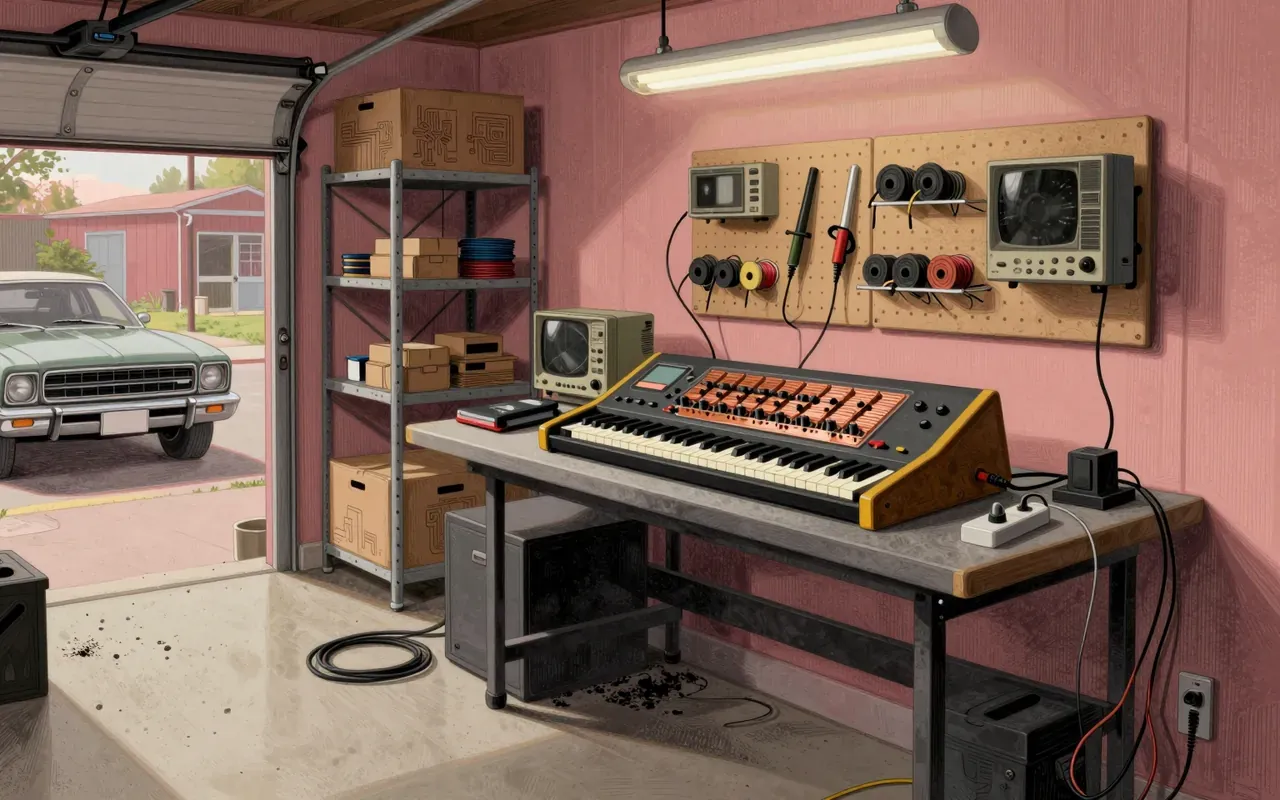
The EMS Synthi AKS is a portable modular analog synthesiser introduced in March 1972. It features a built-in keyboard and sequencer, a patch pin matrix, and shares design DNA with the VCS 3. Its sequencer creates eight-note repeating patterns. Users have described it as a 'noise machine'. One full album—Music from the SYNTHI—was made using only this instrument.

9:00

Roland System 700

Roland · 1976

The Roland System 700 is a professional monophonic modular synthesizer released in 1976 by Roland Corporation.

8:07

Moog Taurus

Moog

The Moog Taurus is a foot-operated analog synthesizer introduced in 1975. It uses an organ-style pedal board. It is monophonic, with a single voice generated by two oscillators and one VCA. Taurus I and III offer only a distorted sawtooth wave. Taurus II introduced a pulse wave. All models use a 24dB/octave resonant low-pass filter with key tracking. Early models lack an LFO; Taurus III includes one routable to oscillator pitch or filter frequency.

9:16

Fender Telecaster Bass

Fender

A no-compromise bass that sacrifices versatility for presence. It does one thing well — deliver tight, articulate low end with zero detours — and refuses to do anything else.

11:04

Epiphone Texan

Epiphone

The Epiphone Texan is a jumbo acoustic flattop guitar introduced in 1961 as a continuation of the FT-79. It was built for songwriting and studio use — not for high-volume amplification or tonal experimentation. Its defining features are its jumbo body, midrange-forward voice, and (from 1962) an adjustable bridge. Later reissues added a lightweight internal pickup, but the original was acoustic-only. Paul McCartney used a 1964 model to write 'Yesterday'. It is generally equivalent to the Gibson J-45, differing only in scale-length. Production shifted from the US to Japan and back; discontinuations and reissues reflect corporate ownership changes, not design evolution.

8:30

Roland TR-505

Roland

The TR-505 delivers rigid, punchy sequencing with integrated Latin percussion — but its 8-voice limit forces trade-offs no modern sequencer accepts.

10:08

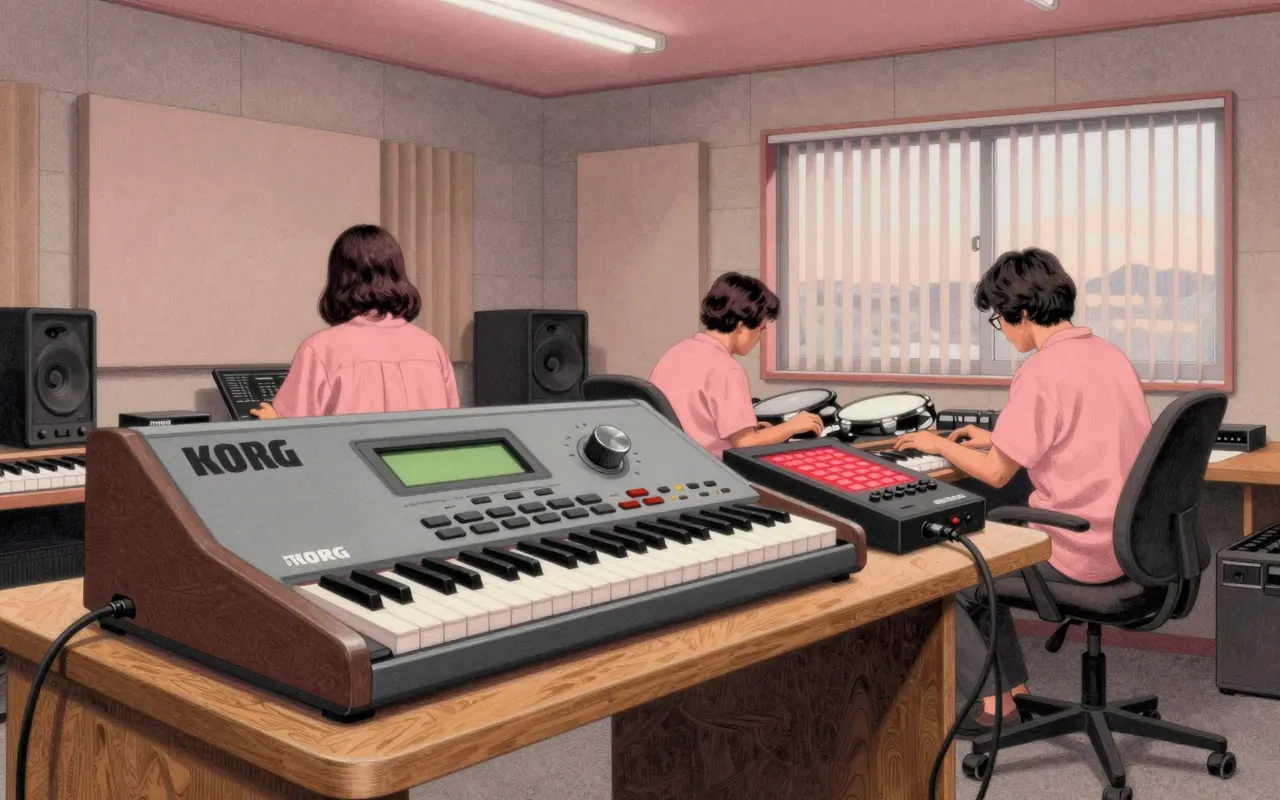
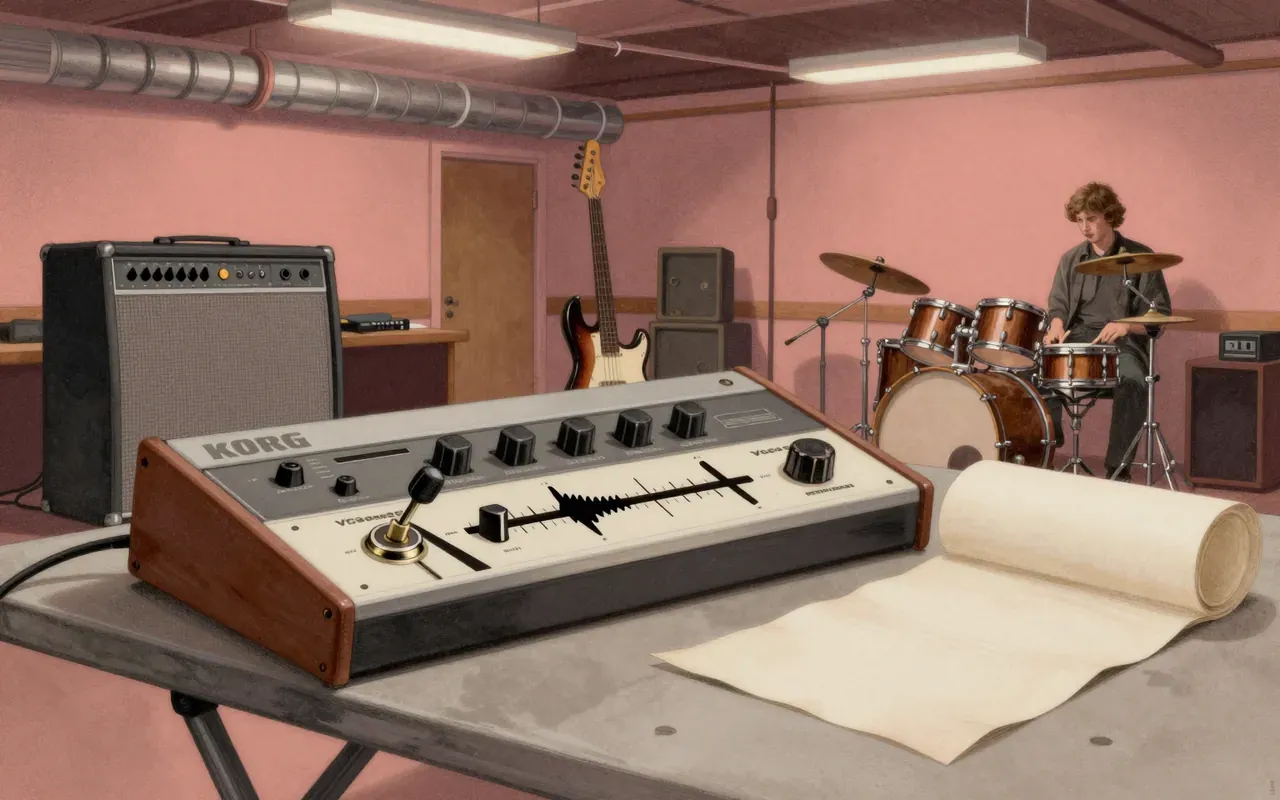
Korg Trident

Korg · 1980

The Korg Trident is a 1980 subtractive synthesizer with eight-note polyphony, integrating three independent sections — polyphonic, string, and brass — into one keyboard. It allows assignment to two keyboard zones, includes a flanger effect and joystick for pitch and modulation. The 1982 MkII revision added memory, improved stability via better heat-sinking and power supply, and separate ADSR envelopes for filter and VCA — unlike the MkI’s shared envelope. It does not use effects or sample+synthesis, despite KORG pioneering both elsewhere.

9:45

Korg Triton

Korg

The Korg Triton is a 1999 music workstation synthesizer with digital sampling and sequencing. It introduced 62-note polyphony, dual polyphonic arpeggiators, RPPR phrase recording, onboard sampling with expandable RAM, five insert effects per Program, dual filters per oscillator (24dB/octave low-pass or parallel 12dB/octave HP/LP), faster touchscreen response, category search UI, and expanded memory and outputs. It was available in 61-, 76-, and 88-key Classic versions and as a rackmount Triton-Rack with optional ADAT/Word Clock via EXB-DI.

34:32

Fender Twin

Fender

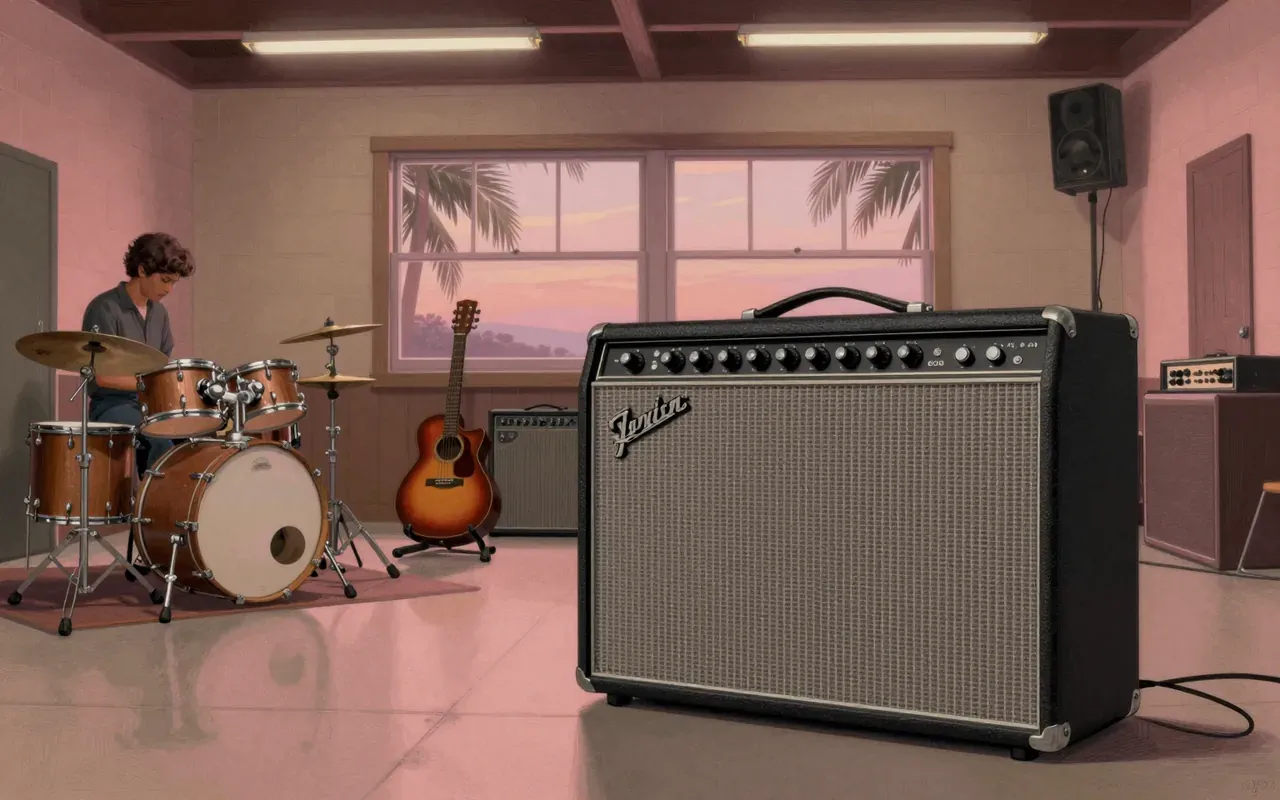
The Fender Twin is a clean-headroom amplifier built for volume and clarity — not saturation or convenience.

9:22

Yamaha TX81Z

Yamaha

The TX81Z is a stripped-down, rack-only FM synth that trades expressive controls for affordability and waveform novelty. Its non-sine oscillators opened new sonic doors — but its single-chip architecture left out pitch envelopes, velocity sensitivity, and operator depth. It belongs in a modern studio only as a character voice, not a workhorse.

7:34

Roland U-20

Roland

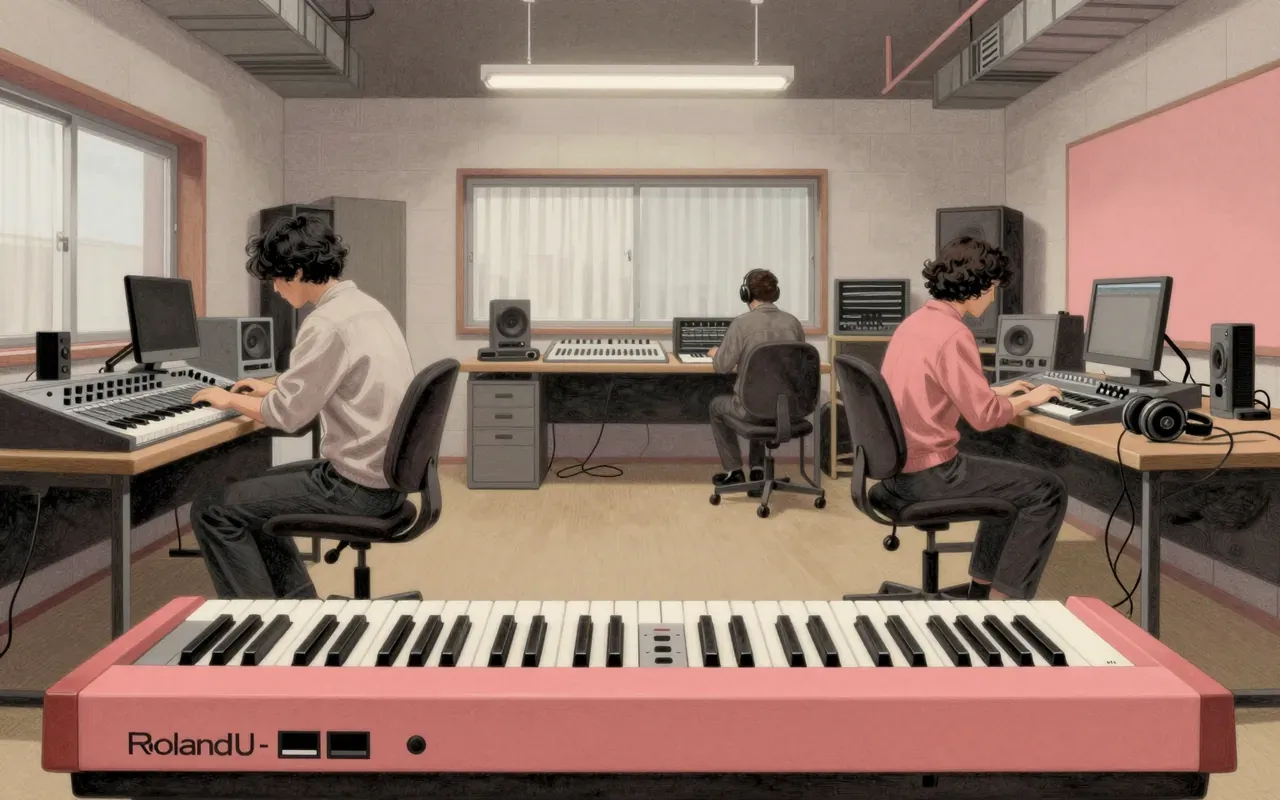
The Roland U-20 is a 1989 PCM-sample keyboard that plays back stored sounds with no filtering. It uses ADSR envelopes and DSP effects like reverb and chorus for limited modification. It supports expansion via the M-256E RAM card and two ROM PCM-card slots. Its lack of filters and impractical aftertouch are documented drawbacks.

13:34

Neumann U 87

Neumann · 1967

The Neumann U 87 is a large-diaphragm condenser microphone introduced in 1967 as the solid-state successor to the U 67. It features a 25.4 mm diaphragm and three selectable polar patterns — cardioid, omnidirectional, and figure-8. It can be powered by 48V phantom power or two internal 22.5V batteries. The original used the K 87 capsule, a modified version of the K 67. The 1986 U 87A reverted to the standard K 67 capsule and eliminated the dual-battery requirement.

9:53

EMS VCS 3

EMS · 1969

The EMS VCS 3 is a portable analogue synthesizer introduced in 1969 by Electronic Music Studios. Designed largely by David Cockerell and styled by Tristram Cary, it uses a pin-based patchboard matrix instead of cables. It lacks a built-in keyboard, making it better suited for sound effects generation and external signal processing than melodic playing. Its tuning instability stems from exponential voltage-to-frequency conversion. It was one of the first portable commercially available synthesizers, housed entirely in a small wooden case.

7:58

Wasp

Electronic Dream Plant

The Wasp is a 1978 monosynth defined by its copper-plate keyboard, black-and-yellow casing, internal speaker, and proprietary interconnection. It was EDP’s best-received product but flawed in execution: unreliable live, prone to autonomous triggering, and technologically isolated. Its sound is inseparable from its limitations.

8:56

PPG Wave

PPG

PPG Wave pioneered real-time interpolated wavetable scanning—making timbre itself a sequenced parameter. Its hybrid digital-analog signal path (digital oscillators, analog filters and VCAs) delivered spectral animation impossible on analog synths of the era. But it demands peripheral hardware for editing, sampling, or expressive control—and offers no direct waveform manipulation or polyphonic sequencing. It belongs in a studio built for sound design, not stage performance.

8:51

Korg Wavestation

Korg

The Korg Wavestation is a vector and wavetable synthesizer introduced in 1990. It uses Wave Sequencing — a method of multi-timbral sound generation using successively played PCM waveforms — combined with Advanced Vector Synthesis, allowing dynamic mixing and morphing between up to four oscillators. It enables crossfading up to 255 waveforms, jumping to any PCM wave in ROM, and generating complex, evolving timbres and rhythmic sequences from a single keypress. Unlike contemporaries, it lacks an onboard sequencer and is designed as a 'pure' synthesizer.

9:10

Roland XP-80

Roland

The Roland XP-80 is a 1996 76-key workstation using digital PCM subtractive synthesis, delivering 64-voice polyphony and 16-part multi-timbrality via a semi-weighted keyboard. It merges the JV-1080 engine with the MRC-Pro sequencer for tight internal composition—but offers no aftertouch, limited real-time sound control, and no modern connectivity.

9:06

Oberheim Xpander

Oberheim

A keyboardless, six-voice analog synthesizer launched in 1984 and discontinued in 1988. Rack-mounted. Uses Matrix Modulation to route digital control to analog VCOs, multi-mode VCF, and two sequential VCAs. Each voice is independently configurable — including FM via VCO-to-VCO modulation — via multi-patch mode.

8:38

Korg Z1

Korg

The Korg Z1 is a 1997 digital synthesizer using physical modelling synthesis with 12-voice polyphony. It extends Korg's MOSS system—first introduced in the 1995 Prophecy—into a polyphonic, multitimbral format, incorporating OASYS-based physical modelling engines, two physically modelled oscillators per voice plus sub-oscillator and noise generator, and performance features including a 61-note keyboard with aftertouch and an XY touchpad.

10:23

1176 Peak Limiter

UREI

The UREI 1176 Peak Limiter is a fast, characterful, all-solid-state audio compressor introduced in 1968. It uses a field-effect transistor in feedback configuration for gain reduction. Compression is soft-knee with a fixed threshold controlled by input level. Four ratios — 4:1, 8:1, 12:1, 20:1 — each raise the threshold. Attack and release are program-dependent. Stereo linking is supported. The 'all-button mode' adds harmonic distortion and alters compression behaviour. It marked the transition from vacuum tube to solid-state technology in studio dynamics processing.

8:31

API 550

API

The API 550b is a four-band analog EQ re-issuing the 1967 API 550 with an added band. It offers seven switchable frequency centres per band, ±12 dB boost/cut, shelf/peak switching on bands 1 and 4, Proportional Q, reciprocal and repeatable filtering, and a +30 dBu clipping level. It uses API’s 2520 op amp and is built to original blueprints.

8:19

Mutable Instruments Braids

Mutable Instruments

Braids delivers radical timbral variety in minimal space—but with no internal editing, no tuning stability guarantees, and no analogue circuitry. It is a selector, not a synthesizer.

8:40

Mutable Instruments Clouds

Mutable Instruments

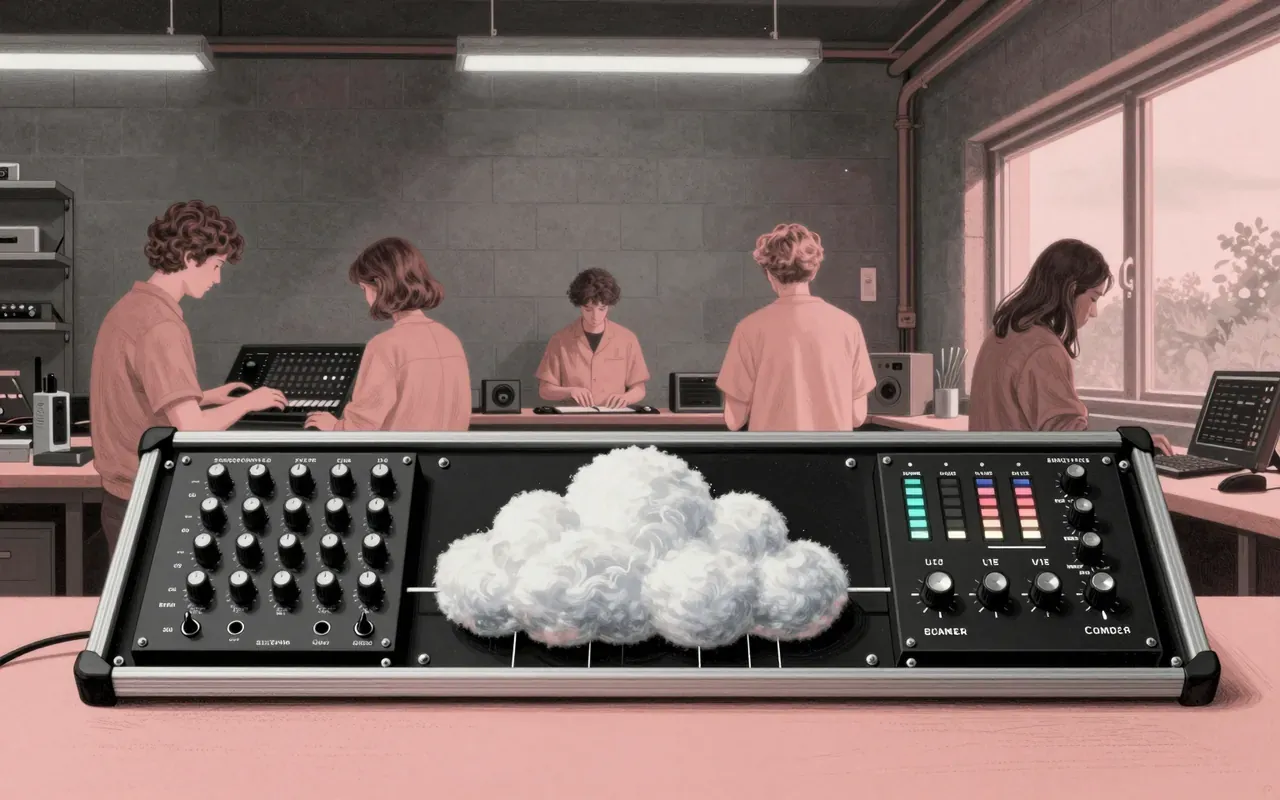
Clouds is a granular audio processor for Eurorack that transforms live input into dense, overlapping grains. It records continuously into a short, variable buffer (up to 8 seconds), allows freezing that buffer to isolate a sonic space, and provides hands-on control over grain position, size, pitch, density, timing distribution, and envelope shape. A diffuser blurs transients using all-pass filters. It supports 40–60 concurrent grains and operates in stereo with extensive CV control, dry/wet blending, feedback, and reverb-like effects during freeze mode. It does not store or recall samples, nor does it support offline processing or waveform editing.

9:31

Gretsch Country Club

Gretsch

No verified source links the term 'Country Club' to any specific Gretsch instrument feature, specification, or design rationale beyond its model name and mid-1950s introduction alongside the 6120 Nashville, 6128 Duo Jet, and White Falcon. No claims about its construction, electronics, finish, or player experience are supported by the provided material. All descriptive statements must therefore be omitted or flagged as unsupported. The only factual anchors are its name, its status as a Gretsch guitar model, and its release period.

10:15

Doepfer Dark Energy

Doepfer

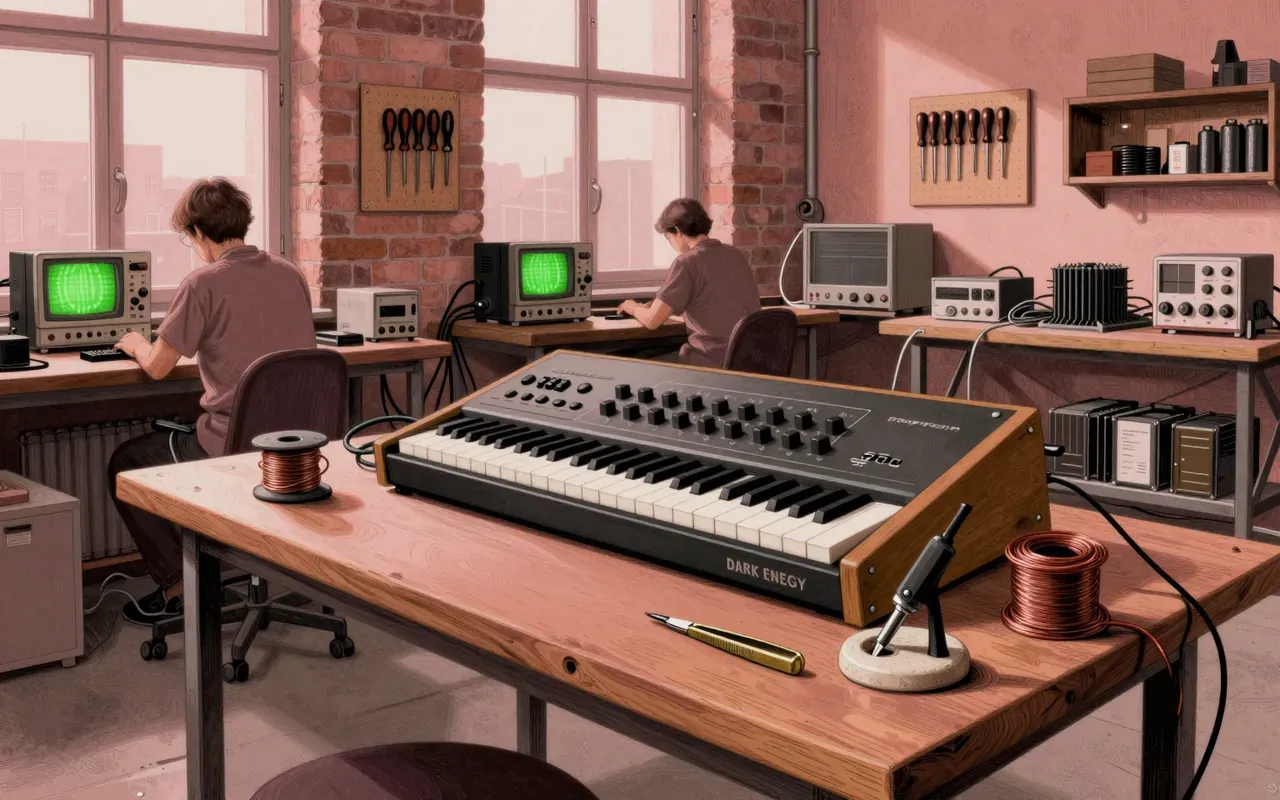
A compact, monophonic, fully analog synthesizer released in 2010 as a stand-alone version of the Doepfer A-111-5 Eurorack module. It features dual LFOs capable of audio-rate FM (~5 kHz), a 24 dB/octave low-pass VCF, and a triangle-based VCO. The VCF can function as a sine oscillator when the VCO is disengaged and resonance is maxed. All sound generation and modulation are analog; only USB/MIDI contain digital components. It has no polyphony, no patch memory, no velocity or aftertouch, and no audio input. Superseded by the Dark Energy II in 2012.

9:03

Korg DDD-1

Korg · 1986

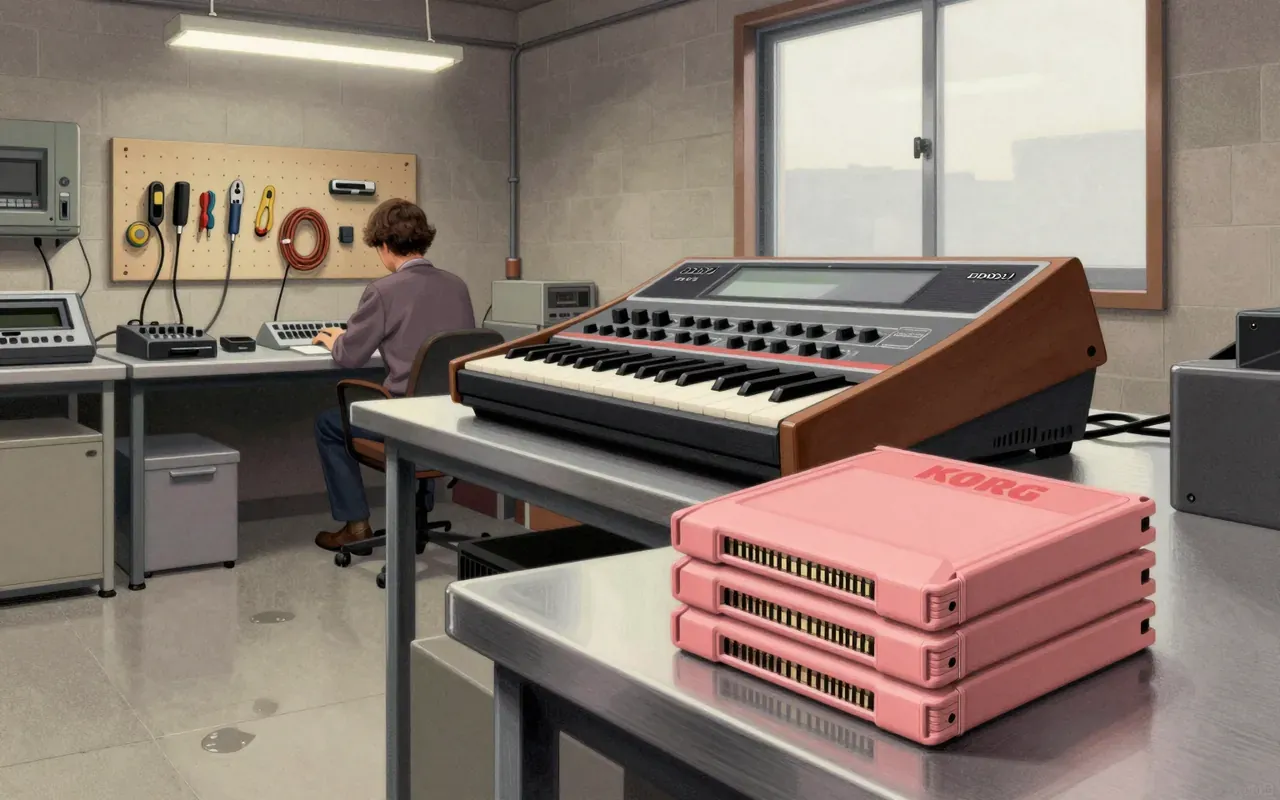
The Korg DDD-1 is a 1986 sampling drum machine with 14 velocity-sensitive pads, 12-bit samples, limited user sampling, five dynamic envelopes, and ROM card expansion (up to four cards, eight sounds each). It has 18 presets and six assignable audio outputs.

9:27

Drumtraks

Sequential Circuits

The Drumtraks is a 1984 sample-based drum machine by Sequential Circuits. It was the company’s first drum machine and first sample-based product. It featured early MIDI implementation, ROM-swappable sounds, velocity-sensitive MIDI input, and flexible synchronization with both MIDI and legacy gear.

9:06

Korg DSS-1

Korg

The Korg DSS-1 is a 1986 polyphonic sampling synthesizer combining sampling, additive synthesis, and hand-drawn waveform creation with an analog signal path. Its 12-bit sampler supports fixed rates from 16–48kHz, yielding up to 16 seconds of recording at the lowest rate. Its synthesis architecture emulates subtractive analog design with dual oscillators, switchable VCF slopes, and an extended ADBSSR envelope.

8:34

Korg DW-6000

Korg

The Korg DW-6000 is a 1985 six-voice hybrid digital-analog synthesizer using sampled waveforms in ROM, analog VCA/VCF, dual oscillators per voice with detune, and a programmable stereo chorus — while noting design limitations like lack of touch sensitivity and single parameter control.

10:10

Korg DW-8000

Korg

The Korg DW-8000 is a hybrid digital-analog synthesizer released in 1985. It features eight-note polyphony, a five-octave keyboard with velocity sensitivity and aftertouch, 16 digital waveforms (created via additive synthesis and stored on ROM chips), analog VCF and VCA, digital delay, arpeggiator, auto-bend, and DWGS architecture. Its rack-mounted counterpart is the EX-8000, which omits the arpeggiator.

8:54

E-mu Modular System

E-mu Systems

The E-mu Modular System is an analog modular synthesizer introduced in 1972 by E-mu Systems as a competitor to ARP and Moog modular synthesizers. It featured a microprocessor-controlled polyphonic keyboard and sequencer — claimed by E-mu to be the first of its kind — and allowed sound creation via patch cord routing among user-specified modules. Users could store configurations using 'firm-wire' patches, and the system was capable of producing any popular synthesizer sound of the era, noted for a 'cleaner' sonic character than competitors.

9:46

Eventide Eclipse

Eventide

A professional-grade digital effects processor with dual independent effects blocks, nearly 100 algorithms—including 11 reverbs—and 24-bit/96kHz conversion. Supports true stereo reverb I/O and extensive looping (up to 20 seconds per block). Firmware updates require Compact Flash and strict version dependencies; bootloader corruption requires factory reprogramming.

9:58

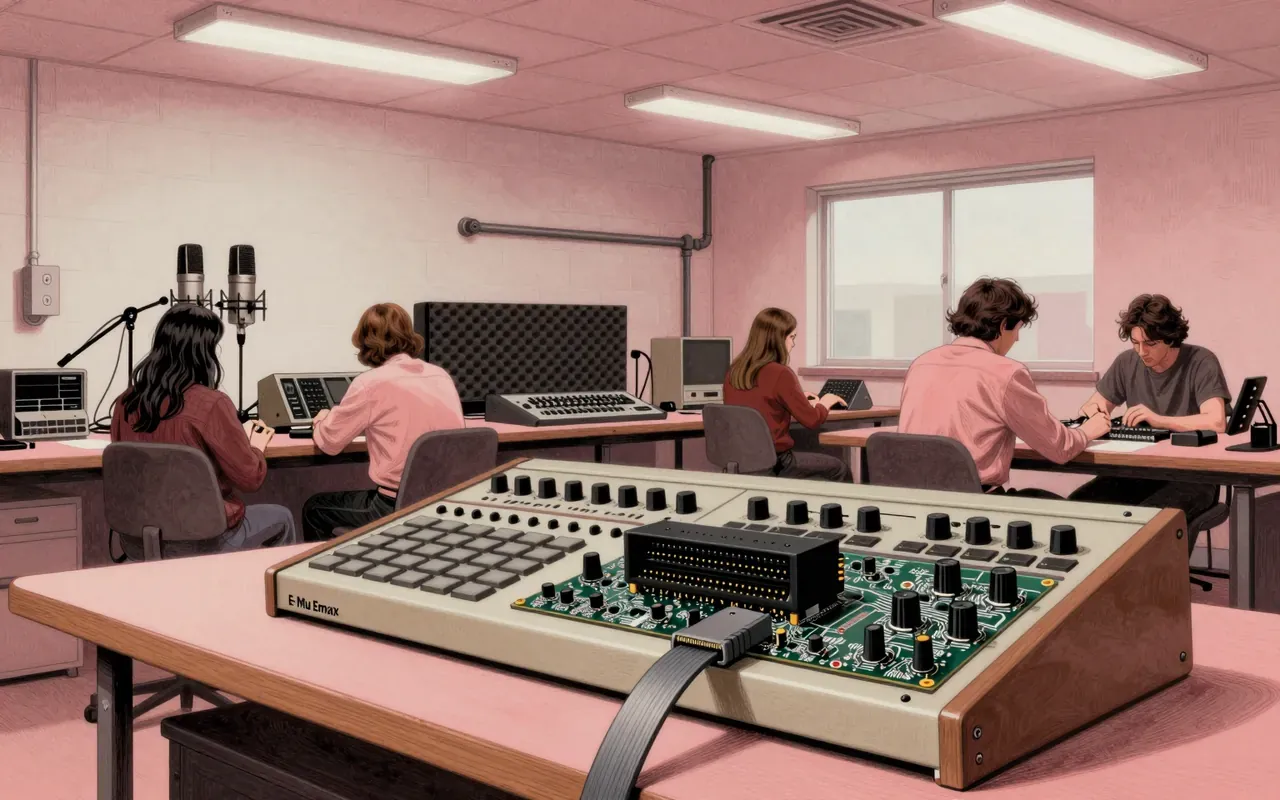
E-mu Emax

E-mu Systems

The Emax is a line of samplers introduced by E-mu Systems in 1986 as a low-cost version of the Emulator II. It stored samples on 3½" floppy disks — more reliable than the Emulator II’s 5¼" disks. Models include the HD (with 20 MB hard drive), SE (with additive synthesis), and Plus (with SCSI). All models retain 512 KB of sample memory.

9:28

Apogee Ensemble

Apogee

The Apogee Ensemble (FireWire) and Ensemble Thunderbolt are legacy audio interfaces with fixed end-of-life dates, discontinued software support, and hard macOS version limits. They offer no documented sonic distinction, no stated creative use cases, and no path forward beyond legacy maintenance.

8:27

LS3/5A

BBC

The LS3/5A is a compact BBC-designed studio monitor built for broadcast consistency, not domestic indulgence. Its revisions track component supply — not artistic evolution. It excels in transparency but fails at bass, volume, and modern amplifier compatibility.

10:15

Mutable Instruments Marbles

Mutable Instruments

Mutable Instruments Marbles is a Eurorack module for generative timing and control voltage. It uses hardware randomness, memory-based reuse (DEJA VU), and adaptive quantization (STEPS) to produce rhythm and pitch that respond to player input. It has no audio output, no presets, no MIDI, and no visual interface beyond LEDs. Its strength is in linking decision-making across domains—timing, pitch, and memory—in real time.

9:34

Make Noise Maths

Make Noise

MATHS is a 20hp Eurorack module by Make Noise Music that functions as an analog computer for generating, transforming, and routing control voltages and digital timing signals. It extends Buchla’s legacy of analog control voltage processing, enabling scaling, inversion, amplification, integration, arithmetic, logic, and autonomous function generation — including LFOs and envelopes — with timing ranging from milliseconds to minutes.

8:54

Electro-Harmonix Memory Man

Electro-Harmonix

The Electro-Harmonix Deluxe Memory Man is an analog delay pedal introduced in 2008, offering up to 550ms of delay, selectable chorus or vibrato modulation, true bypass switching, and mono audio I/O.

9:11

Waldorf Microwave

Waldorf

The Waldorf Microwave is a hybrid wavetable-analogue synthesizer whose distinctiveness comes from forcing digital waveforms through characterful analogue filters — not from flexibility, expansion, or modern workflow features.

8:56

Waldorf Microwave II

Waldorf

The Waldorf Microwave II is a dedicated wavetable instrument that delivers sharp, immediate, and spectrally distinct tones. It trades flexibility for focus — offering no filter resonance control, no effects, no velocity-driven modulation. Its strength is in launching sounds that pierce rather than blend.

9:40

Korg MS2000

Korg

The Korg MS2000 delivers the MS-10/MS-20 workflow in virtual analog form — with dual timbres, real-time knob control, and mod sequencing — but enforces a strict 4-voice polyphony limit that defines its practical use. It competes directly with the Nord Lead and Roland JP-8000 series. Its physical forms are a 44-key keyboard and a rack module. Connecting both via MIDI yields eight offset voices — not true polyphony expansion.

8:22

Eventide Orville

Eventide

The Eventide Orville is a dual-DSP, 24-bit digital audio processor with fully flexible I/O routing, near-three-minute sampling (DSP A), 40-second delay on both engines, UltraShifter™, DistortionCurve™ analog distortion modelling, and Predictive Vocoder™ based on a high-resolution physical model of the vocal tract. Firmware updates require Windows XP and a USB-to-serial adapter—and delete all User Programs unless backed up.

9:51

PCM adaptor

Sony

The PCM adaptor is a transitional artifact: a hardware hack that made digital audio portable and recordable using 1970s video infrastructure. It solved one problem — getting 16-bit audio onto physical media for CD mastering — and introduced many others: tape instability, video sync dependency, and zero interoperability with later digital standards.

10:42

MXR Phase 90

MXR · 1972

The MXR Phase 90 is a phaser effects pedal introduced in 1972, the first pedal sold by MXR. It features one knob (Speed), an orange enclosure, and evolved logo designs (script then block). Production ceased in 1984 when MXR went bankrupt. Dunlop resumed production with added features: an LED and optional AC power supply. Pre-1981 units lacked LEDs, A/C adaptor jacks, and true-bypass switching. It was used on the first two Van Halen albums.

9:22

Mutable Instruments Plaits

Mutable Instruments

Plaits is a decisive instrument. It forces choices — bank or trigger, pitch or noise, sweep or strike. It gives no second chances, no presets, no visual confirmation. But within those limits, it delivers sixteen coherent sonic identities in one compact, power-efficient package.

11:12

Korg Prophecy

Korg

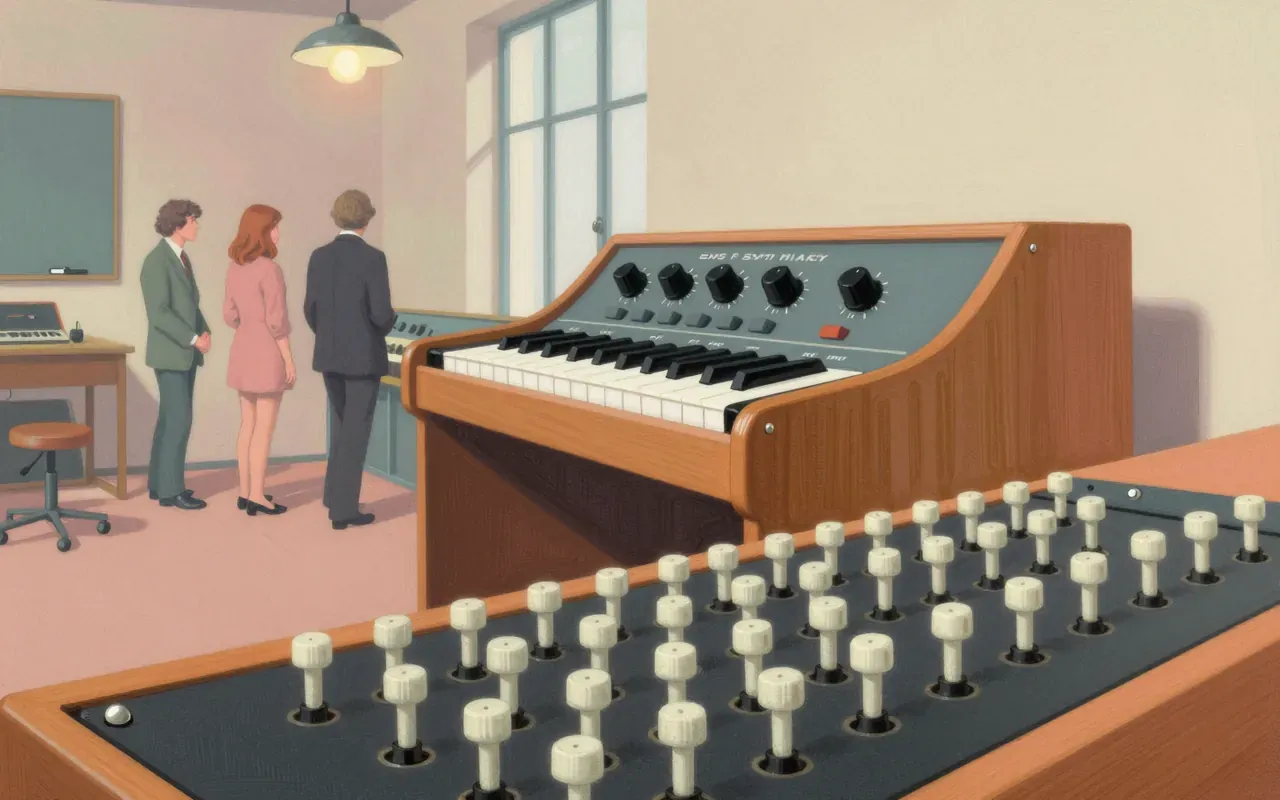
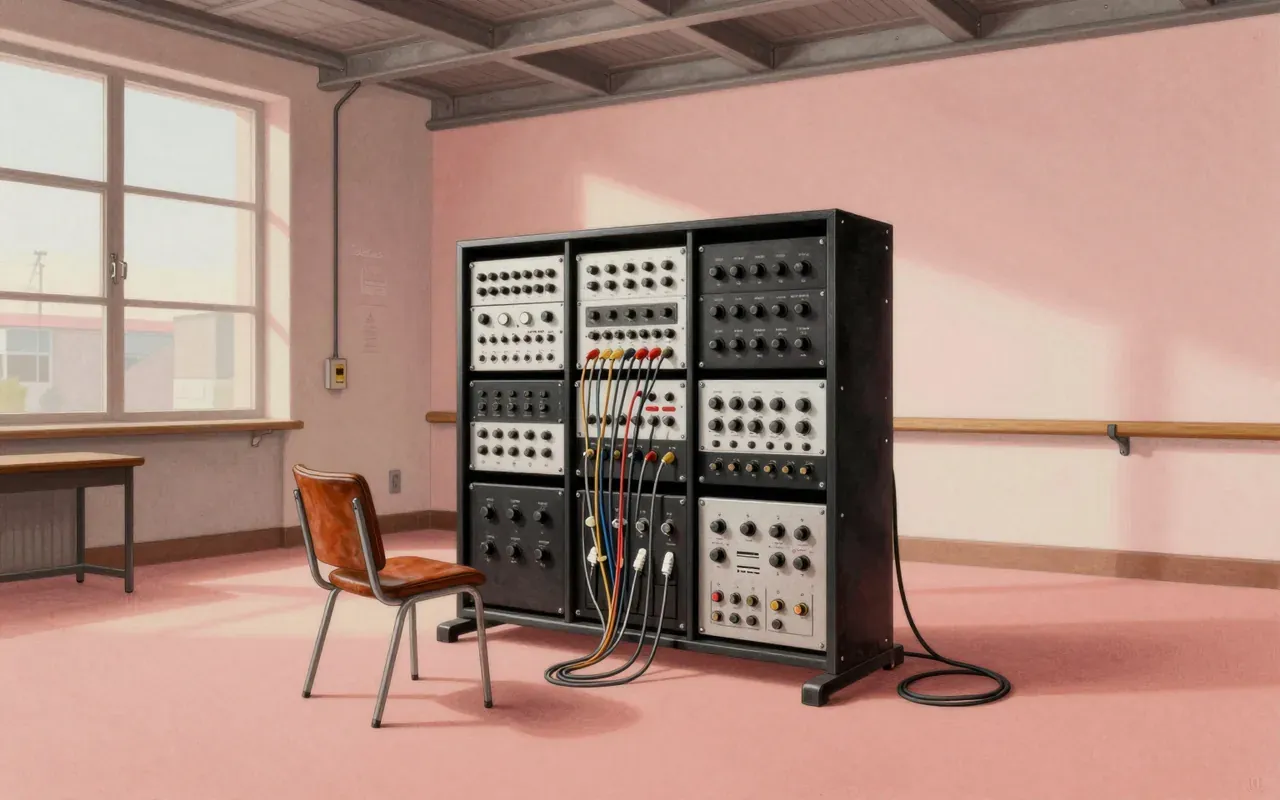
The Korg Prophecy is a monophonic synthesizer released by Korg in 1995. It uses MOSS (Multi Oscillator Synthesis System) to emulate analog synthesis, FM, and physical modelling. It offers five synthesis methods encompassing nine oscillator types: analog, variable phase modulation, brass, reed, and plucked string modelling, noise with comb filtering, and three types of analog-style models — sync, ring modulation, and cross modulation — collectively referred to as 'MOD'. Each oscillator is processed by a linked waveshaper for generating distortion or resonance effects. The signal, combined with outputs from a sub-oscillator and noise generator, and feedback, is then fed through two multi-mode filters, which can be arranged in series, parallel, or split configurations. The Prophecy's modulation options include six multi-stage envelopes and four low-frequency oscillators (LFOs) with a selection of 30 types. The keyboard features velocity sensitivity and aftertouch and is complemented by three physical wheels dedicated to pitch bending, modulation, and the Wheel 3, a cylindrical control that combines a modulation wheel with a pressure- and position-responsive ribbon controller. It is equipped with five programmable Performance Editors (PE) knobs, each of which can control up to four parameters simultaneously, enabling precise manipulation of aspects like filter cutoff frequencies, envelope attack times, filter resonance, and stereo panning with a single turn. KORG was the first company to feature effects on a synthesizer, and the first to use a sample + synthesis sound design.
9:20

Korg PS-3300

Korg

The Korg PS-3300 is a 1977 polyphonic analog synthesizer built from three PS-3100-derived units (PSU-3301), delivering 144 voices with independent oscillators, filters, envelopes, and amplifiers per note. It enables multitimbral sound creation through individual module adjustment and mixing. It omits the PS-3100's ensemble effect. It supports extensive voltage control and patching — including pitch modulation from envelopes or external sources — and uses a detachable keyboard format. It belongs to Korg’s 1970s line of large, expensive, patchable instruments, positioned as a high-end professional device.

9:48

Make Noise René

Make Noise

René is a 34hp Eurorack module that functions as a three-channel, three-dimensional Cartesian sequencer, enabling real-time, performative programming and delivering maximal musical variation from minimal analog input; it stores up to 64 complete STATEs and features simultaneous Snake and Cartesian patterns, visual feedback via illuminated knobs and touch buttons, and Select Bus integration with TEMPI.

9:01

E-mu SP-12

E-mu Systems

A foundational sampling drum machine introduced in 1985. Built for immediacy, not refinement.

9:51

Eventide Space

Eventide

The Eventide Space is a reverb-and-delay pedal offering 12 algorithmic spatial effects—including Hall, Plate, Blackhole®, and Shimmer—controlled via 10 knobs, MIDI, expression pedal, or HotSwitch. It features 100 presets (some artist-designed), true analog bypass, tap tempo/MIDI clock sync, and mono/stereo I/O in a rugged metal pedal format. Software tools FactorLib and H9 Control manage presets; the SpaceTime algorithm combines modulation, two delays, and reverb.

9:33

Ensoniq SQ-80

Ensoniq

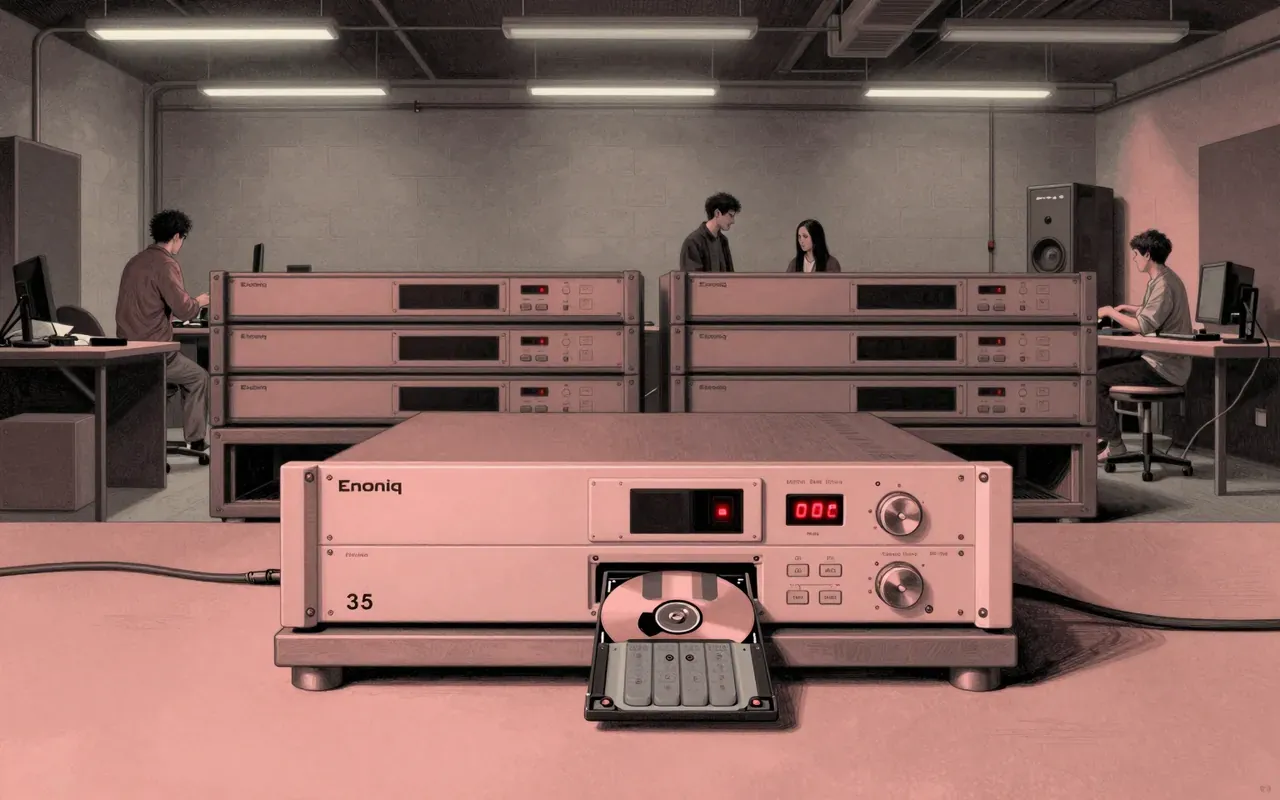
The SQ-80 is a digital/analog synthesizer introduced in 1987 and manufactured until 1989. It features Polypressure Keyboard technology, 43 additional waveforms (including five drumkits), an enhanced sequencer, a floppy disk drive, MIDI in/out/thru, and the 2nd Release reverb simulation. Its OS was later back-ported to the ESQ-1. It was promoted professionally alongside the EPS sampler, including in a limited-edition CD with the Dixie Dregs.

10:33

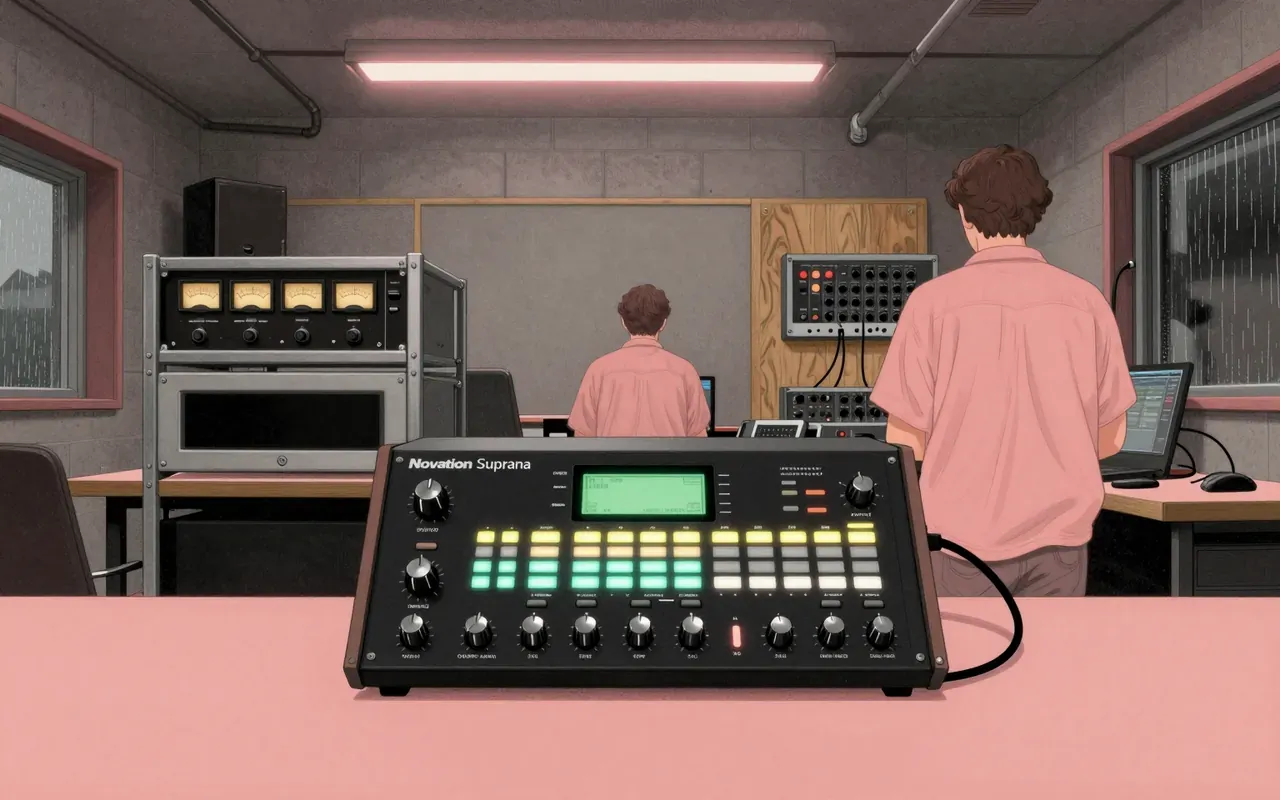
Novation Supernova

Novation

The Novation Supernova is a 1998 3U virtual analogue rack synth with 16+ note polyphony and multitimbral operation. It models subtractive synthesis digitally and includes a resonant self-oscillating filter. Its defining strength is a 7-effect-per-part engine retained per part in multitimbral use, with no polyphony loss. It lacks triangle and sine wave oscillators — requiring their derivation via a hardness attenuator. No other details about sound character, interface layout, modulation matrix, LFO count, or physical controls are verified.

9:30

Gretsch Tennessean

Gretsch

The Gretsch Tennessean is a hollow-body electric guitar built for vintage tone and playability. It delivers a highly resonant, cutting voice shaped by its construction, pickups, and controls. It excels in clean and mid-gain contexts but struggles with feedback and high-gain stability. Its design prioritises acoustic resonance and vibrato expression over modern high-output versatility.

10:39

Korg Trinity

Korg

The Korg Trinity is a 1995 music workstation. It was Korg's first modern workstation. It introduced a large touchscreen for advanced control and editing functions. It became the flagship successor to the M1. It introduced resonant filters to Korg's workstation line. It offered built-in digital audio recording, 32-note polyphony, an extensive internal sound library, and assignable effects.

10:18

Rickenbacker 360

Rickenbacker

The Rickenbacker 360 is a semi-acoustic electric guitar built for sharp, articulate presence—not warmth, depth, or adaptability.

9:26

Rickenbacker 4001

Rickenbacker

The Rickenbacker 4001 is an electric bass built for clarity, not compromise. Its maple neck-through construction and twin pickups deliver sharp transients and upper-mid bite. It sacrifices low-end warmth, dynamic nuance, and ergonomic flexibility to achieve that. It was chosen—not for versatility—but for unmistakable presence.

9:08

RCA Type 44

RCA

The RCA Type 44 is a bi-directional ribbon microphone introduced in 1931. Its thin corrugated metal ribbon generates voltage when vibrating in a magnetic field. It hears only front and back. It breaks under wind, phantom power, and loud transients. It flatters voice and acoustic instruments with smooth mids and gentle highs. It belongs in a vintage studio chain—not on a podcast desk or a stage.

9:41

Shure 55SH

Shure

The Shure 55SH is a 1939 cardioid dynamic microphone built for public address. It delivers vocal clarity under load, resists feedback, and shrugs off physical stress. It does not offer studio-grade fidelity or flexibility. It belongs on podiums—not in overdub booths.

10:09

Alesis Andromeda A6

Alesis

The Alesis Andromeda A6 is a 16-voice, 16-channel multitimbral analog synthesizer released in 2000. It combines a pure analog audio path with digital control. Its VCOs include pitch correction—a feature missing on older synths. Alesis developed a custom ASIC for it. Axel Hartmann designed it. It is high-end, innovative gear from Alesis, a company known for budget equipment. Alesis developed studio equipment during the 1990s.

9:17

ARP Avatar

ARP · 1977

The ARP Avatar was a 1977 guitar-controlled synthesizer module. It copied the ARP Odyssey’s synthesis architecture but removed the keyboard and added a 6-way fuzzbox. It required a hexaphonic pickup and pitch-to-voltage conversion. It failed commercially. Sales totalled $1 million over two years against $4 million spent on R&D and production. It contributed to ARP Instruments’ bankruptcy in 1981.

10:22

Marshall Bluesbreaker

Marshall

The Marshall Bluesbreaker is Models 1961 and 1962 — Marshall’s first combo, built from 1964/65 to 1972. It is the JTM45 circuit in an open-backed cabinet. It delivers aggressive, responsive overdrive with no master volume, no clean headroom, and no flexibility — and that is precisely what made it essential.

9:43

Epiphone Crestwood

Epiphone

The Epiphone Crestwood is a solid-body electric guitar introduced in 1958. It has no Gibson equivalent. It evolved through named variants—Crestwood Custom, Crestwood DeLuxe—before ending production in 1970. Its construction is mahogany. Its pickups are New Yorker. Its headstock changed from three-on-a-side to six-on-a-side. Its pickguard changed design and lost the Epiphone logo. Its fretboard markers changed from dots to ovals. Its plating changed from gold to nickel. Its upper horn lengthened slightly by 1963. The Crestwood DeLuxe added a third pickup and an ebony fretboard with block inlays.

10:08

Yamaha CS-15

Yamaha

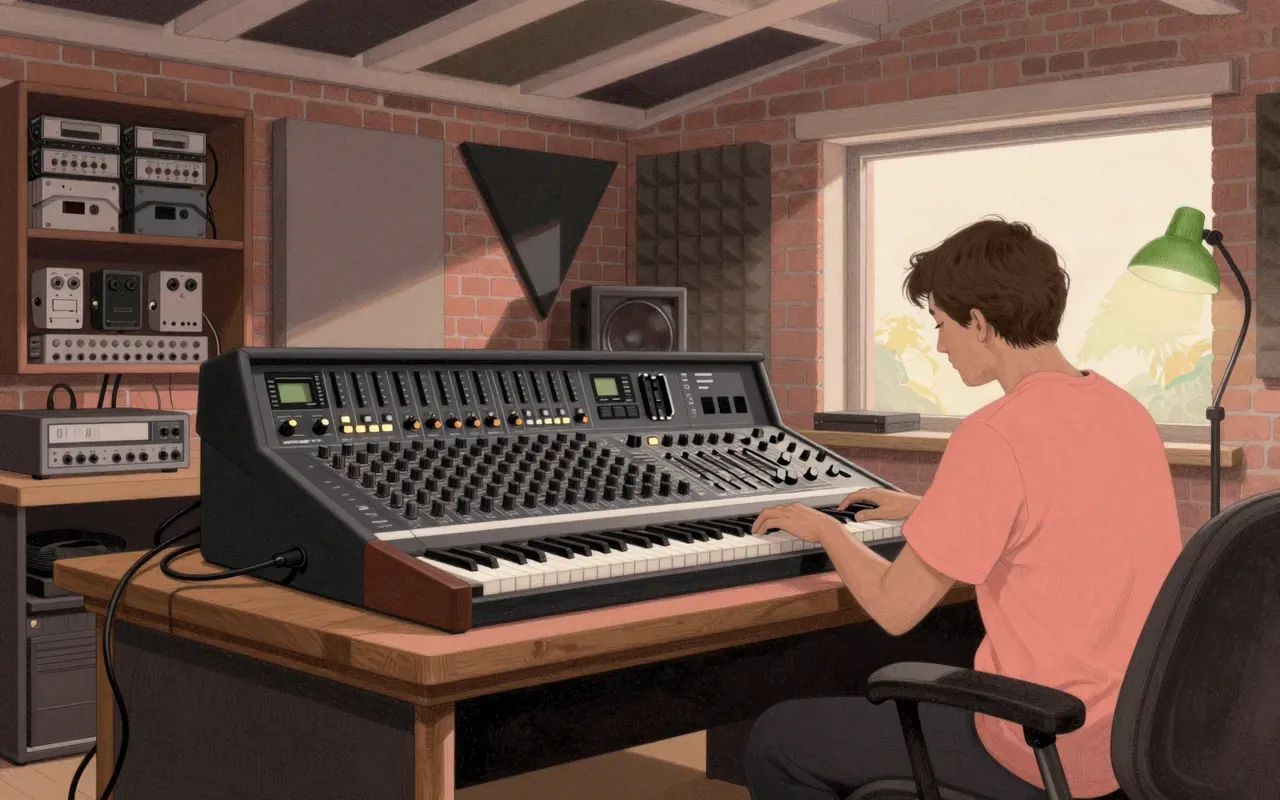
The Yamaha CS-15 is a monophonic analog synthesizer produced by Yamaha from 1979 to 1982. It features two voltage-controlled oscillators, two 12 dB/Oct multi-mode voltage-controlled filters (low-pass, high-pass or band-pass), two ADSR envelopes and a low-frequency oscillator. It also features white noise and an external-in for processing other sounds. The CS-15 offers great flexibility with various routing possibilities to the filters and envelopes. You can, for example, route VCO 1 to both VCFs and the VCFs to any of the envelopes positive or negative voltage. It's actually a duophonic / bitimbral synthesizer but you have to connect it to two separate CV/Gate controls (Hz/V like Korg synthesizers not V/Oct) to play the extra voice. In the CS series, the CS-5, CS-10, CS-30 and CS-30L were similar in sound, structure and design. The CS-5 and CS-10 had a single oscillator and one multimode filter, whereas the CS-15, CS-30 and CS-30L each had two oscillators that could be routed in various ways through two multimode filters.
9:48

Korg DDD-5

Korg

The Korg DDD-5 is documented only by two PDF files: a 3.3 MB owner’s manual and a 466.4 KB pattern chart, both published on 22 November 2017 and requiring Adobe Reader. Neither contains technical specifications, sonic description, interface details, or operational guidance. No use case, user, or creative output is stated. It is a product defined entirely by its licensing constraints and file formats — not by what it does.

10:08

MXR Distortion +

MXR

The MXR Distortion + is a 1974 distortion pedal using a single op-amp and germanium diodes. It has Output and Distortion controls only. Increasing Distortion raises both clipping and treble. It was one of MXR’s earliest original pedals, released shortly after the Phase 90. It later appeared in the Series 2000 line in 1982.

8:26

Empirical Labs Distressor

Empirical Labs · 1995

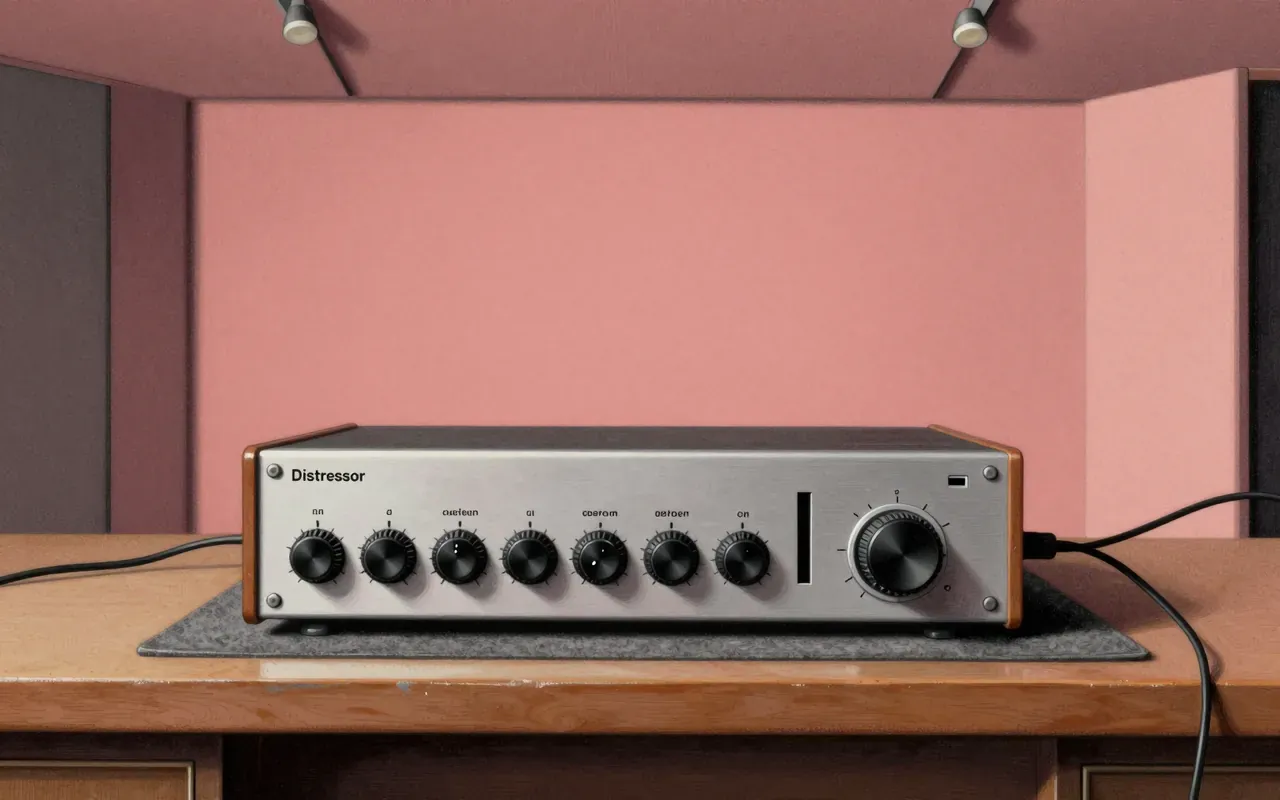
The Empirical Labs Distressor is an analog VCA compressor introduced in 1995. It has a fixed threshold, soft knee, and variable ratio, attack, release, input gain and output gain. At 10:1, it uses a photoresistor-based optical emulation circuit. It includes tube and tape distortion emulations, side-chain high-pass filtering, and on the EL8-X model, British Mode and Image Link. It was inducted into the TECnology Hall of Fame in 2016 and has sold an estimated 40,000 units.
8:44

Line 6 DL4

Line 6

The Line 6 DL4 is a 1999 digital delay pedal. It models 16 vintage delays. It has a 14-second looper. It is one of the first digital modeling effects units.

9:16

Doepfer A-100

Doepfer

The Doepfer A-100 is an analog modular synthesizer system introduced in 1995. It uses 3U-height, 2HP-width modules patched with 3.5 mm leads. It established the Eurorack standard adopted by many manufacturers. It enables emulation of the Trautonium and Theremin using specific modules.

10:31

Movement Systems Drum Computer

Movement

A British drum computer from 1981–1983. It merges analogue synthesis and 8-bit digital sampling across 14 independent voices (5 digital), sequenced via CRT graphics and controlled by a Nascom 2 computer.

9:00

Boss DS-1

Boss · 1978

The Boss DS-1 is a 1978 distortion pedal built for tight, aggressive tones using hard-clipping circuitry. It uses input/output buffers, a transistor boost stage, an op-amp gain stage with hard clipping diodes, and a tone control. A JFET switching circuit engages or bypasses the effect via a momentary push button. It helped popularise distortion as a distinct pedal category and served as a template for later designs. The 1994 circuit redesign introduced volume loss and a fizzy or waspy edge—problems that spawned a community of modifiers. It remains Boss’s bestselling drive pedal.

8:16

Yamaha DX100 (synthesizer)

Yamaha

The Yamaha DX100 is a 1986 FM synthesiser with 49 mini-keys, eight-voice polyphony, four operators per voice, eight algorithms, 192 presets, 24 RAM-storable user sounds, cassette-based patch storage, and the YM2164 chip. It was the cheapest user-programmable FM synthesiser of the 1980s.

8:50

E-mu Emulator

E-mu Systems

A foundational but bare-bones sampler that traded sonic refinement for accessibility.

8:48

Eurorack

Doepfer

Eurorack is a modular synthesizer format introduced in 1995 by Doepfer Musikelektronik. It defines mechanical, electrical and interconnection standards so modules from different makers fit the same cases and communicate reliably. It has no built-in keyboard, sequencer or interface. It demands manual patching and physical organisation. It supports deep signal routing and long-term system expansion. It is used by musicians and designers to build custom synthesis environments.

10:10

Frankenstein (guitar)

Eddie Van Halen

Frankenstein is a custom guitar built by Eddie Van Halen to combine Gibson’s PAF humbucker tone with Fender Stratocaster playability and tremolo. It uses one potted PAF in the bridge, mounted offset for string spacing, wired through a single 500k pot labelled 'TONE' and an output jack. No tone controls. No working selector. Middle and neck positions hold non-functional parts. It delivers aggressive, feedback-resistant lead tone — nothing else.

9:25

Fender Harvard

Fender

The Fender Harvard is a vacuum tube guitar amplifier made by Fender from 1955 to 1963. It appeared only in a tweed-covered narrow-panel cabinet. It had no predecessor or direct descendant. It served as a mid-tier option between the Champ/Princeton and Deluxe models.

9:29

Epiphone Jack Casady Signature Bass

Epiphone

The Epiphone Jack Casady Signature Bass is a 4-string semi-hollow bass guitar co-developed by Jack Casady and Epiphone. It features a maple body, mahogany neck, and a custom low-impedance humbucking pickup connected to a transformer with a three-position impedance selector (50, 250, or 500 ohms). It was designed specifically to improve tonal definition in ensemble playing — a documented shortcoming of the 1970s-era Gibson Les Paul Signature bass. It belongs to Epiphone’s list of exclusive electric bass guitars. It offers no tone controls, no second pickup, and no active circuitry. Its tonal range is defined entirely by impedance selection: lower values yield clarity and balance; higher values yield output and bass weight.

10:15

Roland JX-10

Roland

The Roland JX-10 is a 12-voice analog keyboard synthesizer introduced in 1986. It combines two independent 6-voice Tone Modules for layering and splitting. Its 76-note velocity-sensitive keyboard includes aftertouch. Internal memory holds 64 patches, each configurable as one 12-voice tone or two 6-voice tones. Original firmware lacks SysEx for Tone or Patch data—but updating it restores that capability. PWM was omitted despite existing hardware resources. Its architecture differs sonically from the JX-8P due to distinct chorus and amplifier sections.

9:10

Roland JX-3P

Roland · 1983

The Roland JX-3P is a six-note polyphonic synthesizer produced by Roland Corporation of Japan from 1983 to 1985. Its name stands for 'Programmable Preset Polyphonic'. It uses two digitally controlled oscillators with sawtooth, 50% and 10% pulse waveforms plus noise. It stores 32 factory and 32 user programs. It features a built-in 128-step polyphonic sequencer synced to external clock pulses — not MIDI clock. Its MIDI implementation supports only note on/off, pitch bend, hold, modulation and program change. The PG-200 programmer enables deeper editing but disables MIDI while connected.

9:00

LA-2A Leveling Amplifier

Teletronix

The LA-2A is a hand-wired, vacuum tube-based audio compressor developed by Teletronix and released commercially in 1962. It uses an electroluminescent panel and cadmium sulfide photoresistor for program-dependent gain reduction. Its attack is fixed at 10 ms; its release varies from 60 ms to 15 seconds depending on input. It preserves perceived performance dynamics under heavy compression. UREI acquired its patent rights in 1967.

9:43

Beyerdynamic M 160

Beyerdynamic · 1957

The Beyerdynamic M 160 is a hypercardioid ribbon microphone introduced in 1957. It uses dual 15-mm aluminum ribbons suspended between alnico magnets (later neodymium), rotated 90 degrees to achieve end-address operation and a highly directional pickup pattern. It softens harsh characteristics of strident sound sources. It has been used in broadcasting, live concerts, and studio recordings — notably by Eddie Kramer on Jimi Hendrix and Andy Johns on John Bonham’s drums for 'When the Levee Breaks'. It remains in production over six decades later.

10:06

Neumann M 49

Neumann

The Neumann M 49 is a large-diaphragm condenser microphone developed at the NWDR’s Central Laboratory in Hamburg. It entered German broadcasting studios in 1952. It was the world’s first microphone with a remotely switchable polar pattern. Its pressure-gradient capsule causes proximity effect even in omnidirectional mode.

9:45

Bombardier M5000

TC Electronic

The Bombardier M5000 is a light rail vehicle. TC Electronic is an audio equipment company. They have no relationship. The M5000 uses pre-recorded WAV files for warnings — but offers no user-accessible audio controls, no synthesis, no sampling, no modulation, no inputs or outputs. It is not an instrument. It is not software. It is not part of TC Electronic’s product line. It belongs in transport policy, not in an audio brief.

9:21

Roland MC-303

Roland

The Roland MC-303 is the first groovebox: a fixed-palette, preset-only instrument built for house DJs and amateur home musicians. It combines a JV-80-derived rompler (28-note polyphony) with an 8-track pattern sequencer and real-time phrase tools. It lacks sampling, MIDI-transmittable knob control, and sound editing — making it fast for sketching but inflexible for production.

9:02

Ensoniq Mirage

Ensoniq

The Ensoniq Mirage is an 8-bit sampling keyboard introduced in late 1984 as Ensoniq's first product. It offered eight-voice polyphony, analog Curtis CEM3328 filtering, and wavetable synthesis via alternative OS. It booted and stored data on a built-in 3.5-inch floppy drive — one of the first consumer uses of that format. Priced at $1695, it sold 8,000 units in its first year, undercutting the Fairlight CMI and E-MU Emulator.

10:36

Roland MKS-80

Roland

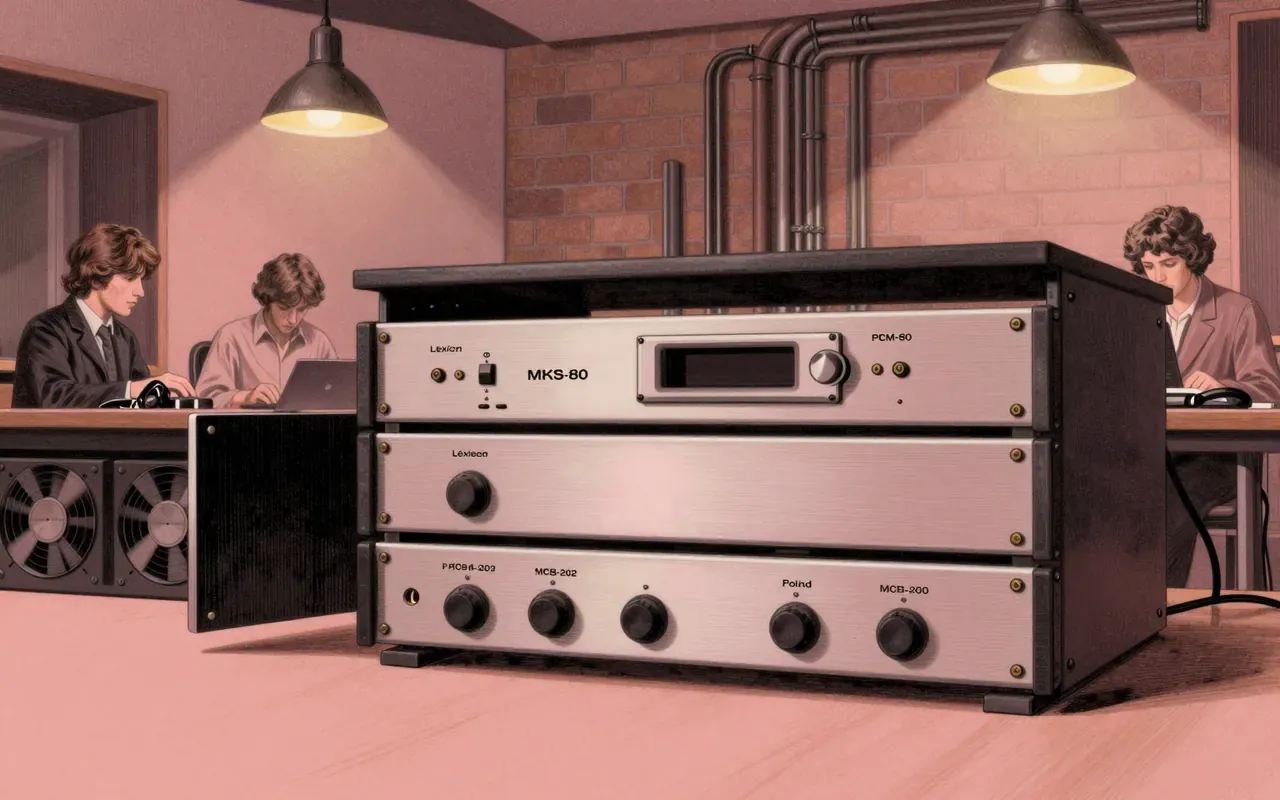
The Roland MKS-80 is an 8-voice, rack-mount, fully analog subtractive synthesizer made from 1984 to 1987. It is the only MKS-series unit with voltage-controlled oscillators—not digitally-controlled ones. Its voice architecture mirrors the Jupiter-6 but adds an HPF, a low boost circuit in the second VCA, and a DC supply current boost. A February 1985 revision introduced updated VCOs, VCAs, and a filter later shared with the JX-8P, JX-10, and MKS-70. Each voice uses two Curtis CEM3340 VCOs. It has no keyboard, no sequencer, and minimal front-panel editing—requiring SysEx tools for deep programming.

8:58

Elektron Monomachine

Elektron

The Elektron Monomachine is a 2007 hardware synthesizer and music sequencer. It runs six sequencer tracks, each assigned one of five synthesis engines: SID, VO, FM+, SuperWave, or DigiPro. Every step stores a full snapshot of all track parameters — what Elektron calls parameter locks. It routes audio to six mono or three stereo outputs. Two physical variants exist: the SFX-6 keyboard version with joystick, and the SFX-60 desktop module. The MkII revision improved signal-to-noise ratio, reduced size, and added user waveform support via OS 1.20.

8:08

Moog Modular

Moog · 1964

The Moog synthesizer is a modular, voltage-controlled analog synthesizer invented by Robert Moog in 1964. It was the first commercial synthesizer and established the analog synthesizer concept through its use of patch-cord-connected modules—including voltage-controlled oscillators, filters, envelope generators, and amplifiers—to implement subtractive synthesis.

10:02

Moog Rogue

Moog · 1981

The Moog Rogue is a monophonic analog synthesizer introduced in the early 1980s. It has a 32-note keyboard and two VCOs. VCO 2 tunes from a half-step below to an octave above VCO 1. This allows atonal sounds. It includes Sample-and-Hold. Its hard-wired patch system enables varied sounds but offers no full patch programming flexibility. VCF and VCA controls are simple to operate.

9:56

Moog Source

Moog · 1981

The Moog Source is a monophonic analog synthesizer made by Moog Music from 1981 to 1985. It was Moog’s first with patch memory and the only Moog with a membrane keyboard and multihued panel graphics. It stores 16 presets onboard and expands memory via audio cassette. Its 24 dB/octave VCF, two analog ADSRs, LFO and sample-and-hold deliver classic Moog tone — but its interface sacrifices playability for recall.

9:49

Korg MS-10

Korg · 1978

The Korg MS-10 is a monophonic, 32-key analogue synthesizer released in 1978. It has one VCO (triangle, sawtooth, pulse, white noise), one 12dB/octave low-pass VCF, one LFO with pulse and sloped outputs, and one envelope generator with Hold, Attack, Decay, Sustain, and Release. Its normalized patch points allow flexible modulation without cables — but it offers no second envelope, no polyphony, no effects, and no key transpose.

10:49

Korg MS-20

Korg · 1978

A monophonic analog synthesizer from 1978. Two VCOs. Two VCFs in series: high-pass then low-pass. Ring modulation on VCO2. Modulation generator with pulse and sloped outputs. Two envelope generators. Noise source. Modulation VCA. External control via frequency-voltage converter and envelope follower. Patch panel enables rerouting of audio and modulation signals.

7:57

Multimoog

Moog · 1978

The Multimoog is a monophonic analog synthesizer built by Moog Music from 1978 to 1981. Derived from the Micromoog, it adds a second circuit board to deliver aftertouch and expanded modulation routing—features missing from the Minimoog. It was intended as a less expensive alternative to that flagship instrument. It does not store patches. It drifts. It demands attention. But it gives aftertouch control over filter, pitch and amplitude in real time—rare in 1978.

10:21

Fender Mustang Bass

Fender · 1964

A compact, student-oriented bass built for immediacy — not depth, not versatility, not power.

9:33

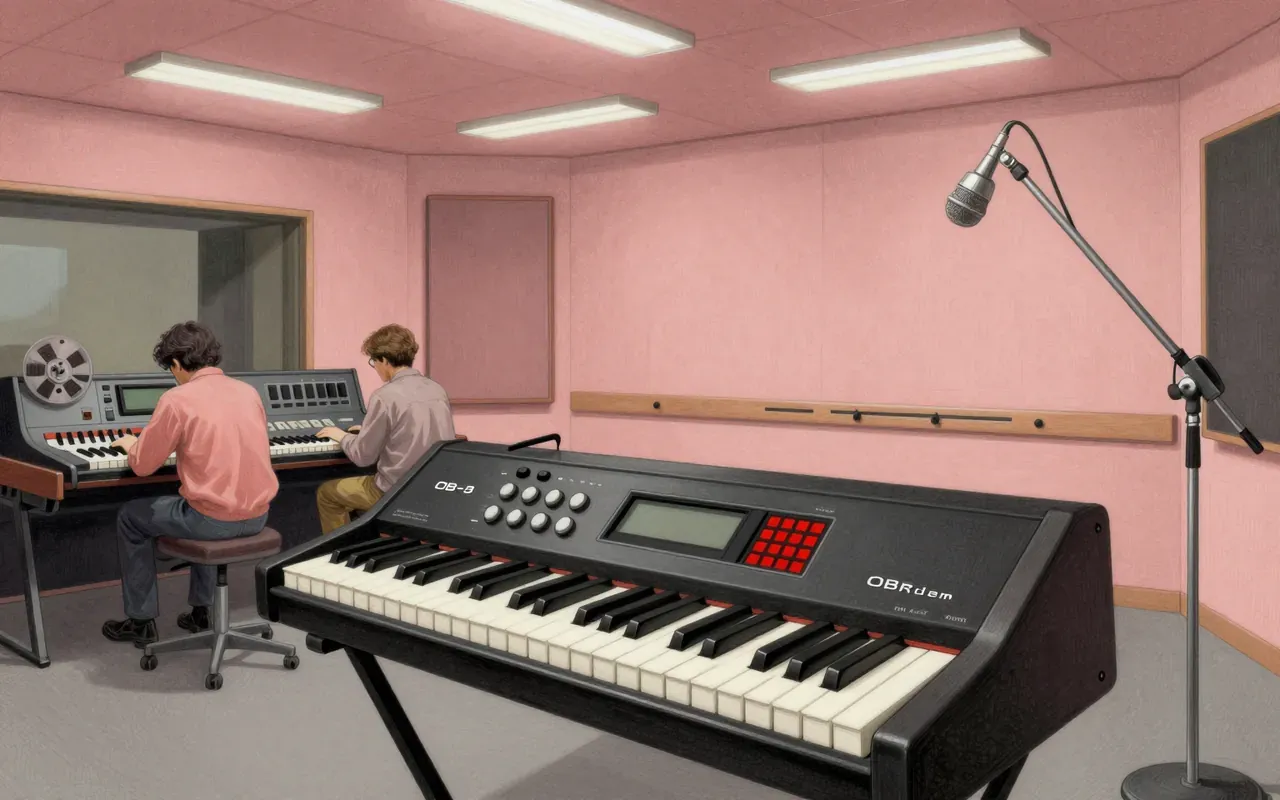
Oberheim OB-8

Oberheim

The OB-8 gave players twice the programming depth of earlier OB synths—via Page 2—while anchoring Oberheim’s ‘The System’ with the DSX and DMX. It runs on a Z80 CPU, stores 120 patches, and plays eight voices across a 61-note keyboard. It does not hide its age: cassette storage, no effects, and bi-timbral mode cuts voice count in half.

10:33

Elektron Octatrack

Elektron

The Elektron Octatrack DPS-1 is a sampling instrument built for real-time, step-sequenced audio manipulation. It loads samples from CompactFlash or live inputs, plays them across eight tracks, and sequences both audio and MIDI with the same button grid. Its strength is tight integration and tactile control. Its limits are RAM-only editing, no non-destructive tools, and no timeline-based workflow.