audiobriefs
Oldest

All briefs

747 briefs · 6840 min · 481–576 on page 6 of 8
9:30

Eventide H3000

Eventide

The Eventide H3000 Ultra Harmonizer is one of the first analog harmonizers. It is an all-analog, rack-mountable unit occupying two rack spaces. Its layout is sometimes hard to follow. It has few parameters. Its configuration isn't the easiest to follow. Its sound quality is pretty good for its age.
9:36

Eventide H9 Harmonizer

Eventide

The Eventide H9 Harmonizer is a pedal-format multi-effects unit built to consolidate four Eventide Factor-series stompboxes into one device.

8:49

Eventide H949 Harmonizer

Eventide

The Eventide H949 Harmonizer is a pitch shifter and time stretcher. It has no published technical specifications. It is also known as H949Harmonizer, H 949 Harmonizer, and H 949Harmonizer.

7:37

Sennheiser HD 600

Sennheiser

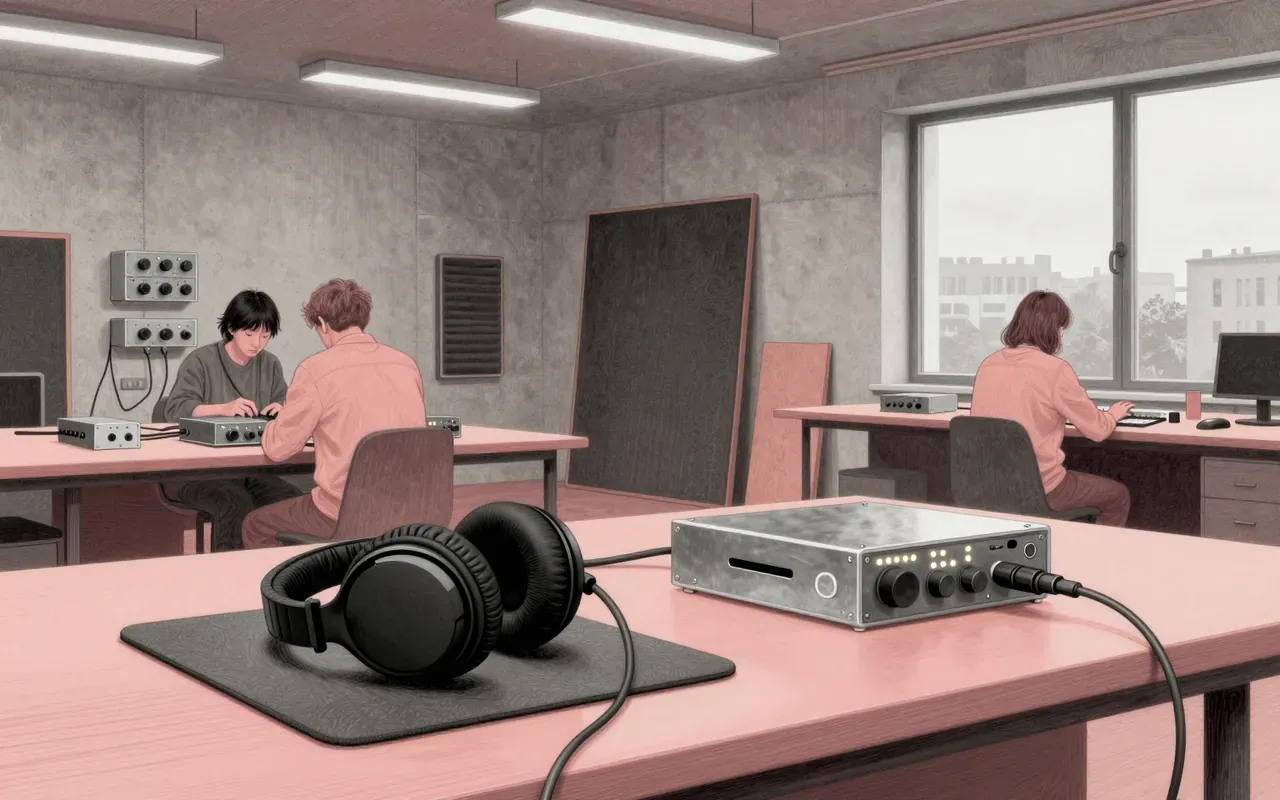
The Sennheiser HD 600 is a studio-grade open-back headphone. It delivers an even frequency response. It renders acoustic instruments realistically across the full spectrum. Its highs are clear and crisp without harshness. Its lows are detailed and clear without overpowering. It was tested against the HD650, HD700, and HD800 using a decent D/A converter and a good headphone amplifier. It is used for mixing and mastering in professional and home studios. It requires capable amplification. It offers no sound isolation.

8:37

Crane Song HEDD 192

Crane Song

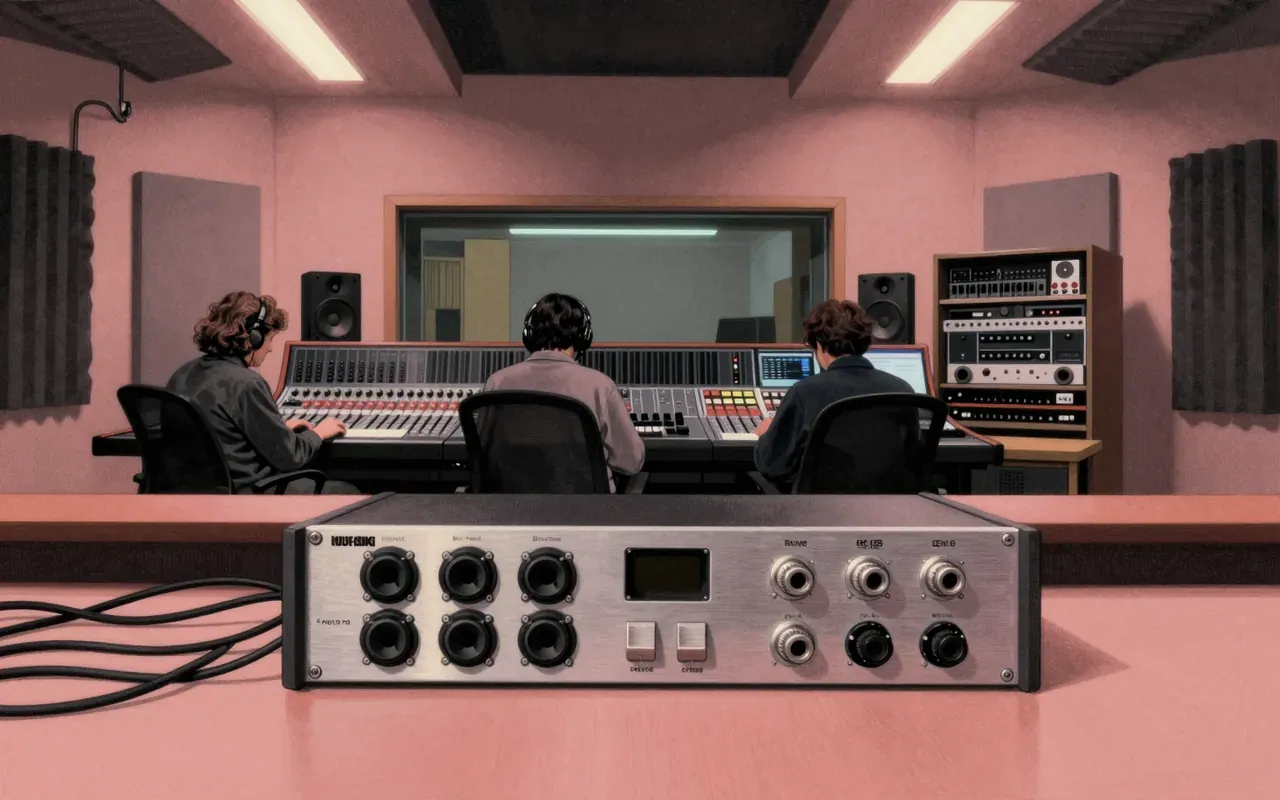
The Crane Song HEDD 192 is a two-channel DAC for mixing and mastering. It converts digital audio at up to 192 kHz/24-bit. Its defining feature is three fixed analog circuit emulations — triode, pentode, and tape — each altering harmonic texture and dynamics in distinct ways. It offers no transparency, no bypass, no fine-tuning. It exists to commit.

8:47

Alesis HR-16

Alesis

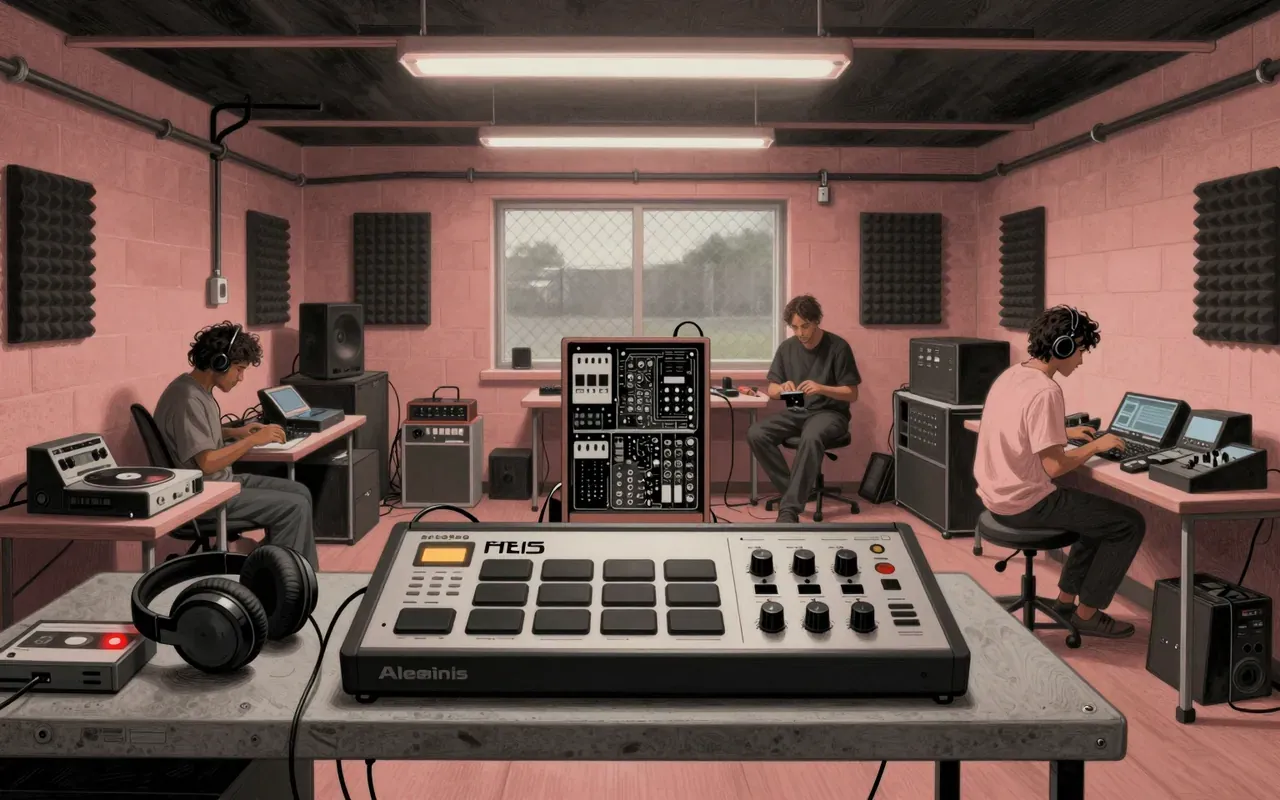
The Alesis HR-16 is a 1987/88 drum machine with 49 16-bit samples — 10 kicks, 7 snares, and an ethnic set — each tunable and mixable with individual level controls. It supports step or real-time pattern programming, 16-voice polyphony, and syncs via MIDI or external click. Its drum sounds are described as 'pretty cheesy'.

8:50

Mackie HR824

Mackie

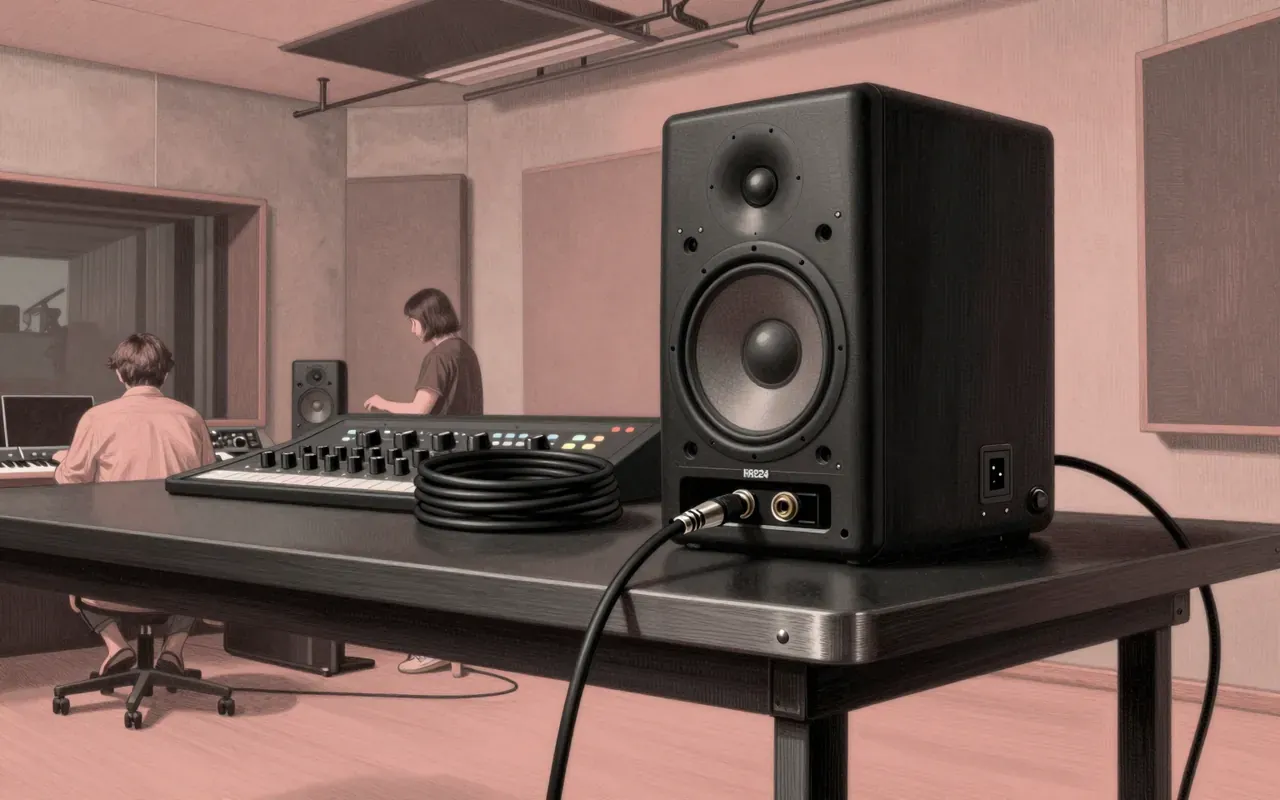
The Mackie HR824 is a discontinued, self-powered near-field monitor. Each unit has its own amplifier and power cord. It delivers uncoloured, accurate sound for critical mixing—and mixes made on it translate well elsewhere.

8:10

Publison Infernal Machine 90

Publison

The Publison Infernal Machine 90 is a 3U rackmount analog/digital multi-effects processor built for video post-production. It delivers delay, echo, harmonizer, sampler, reverb, transposition, time compression/expansion, and DVR-style long-sample playback — all synchronised to SMPTE timecode. All programs are editable on-device; no external editor exists. It excels at frame-accurate effect triggering in film dubbing. It fails for anyone needing patch libraries, remote editing, or non-video workflows.

8:52

Focusrite ISA 110

Focusrite

The Focusrite ISA 110 is a discontinued solid-state microphone preamplifier. It belongs to Focusrite’s ISA series. It was replaced by the ISA 430 MKII. It is no longer sold.

9:36

Roland JC-120 Jazz Chorus

Roland

The Roland JC-120 Jazz Chorus Plug-In is a software amp simulator released by Roland in January 2025. It models the JC-120’s sound for use inside a DAW. Nothing in the source describes its controls, signal path, tone-shaping options, or how closely it matches the hardware. It offers convenience and consistency — not physicality or unpredictability.

10:29

Marshall JCM900

Marshall

The Marshall JCM900 is a series of valve guitar amplifiers produced between 1990 and 1999, with some models reissued from 2003 onward. It was built for guitarists needing high-gain distortion and built-in reverb in a professional touring and studio context.

11:48

Ibanez JEM777

Ibanez

The Ibanez JEM777 is a made-in-Japan STC-shaped guitar built from 1987 to 1996 for Steve Vai’s technical demands. It features a basswood body, maple or rosewood fretboard, 24 frets (some scalloped), HSH pickups, passive volume/tone/five-way switching, and either an Edge or Lo Pro Edge tremolo. It delivers exceptional upper-fret access and stable tremolo performance — but offers no coil-splitting, no active circuitry, and no tolerance for neglected tremolo maintenance.

9:45

Marshall JMP 2203

Marshall

The Softube Marshall JMP 2203 is a software amp simulator in the Amp Room series. Softube made it. It carries the Marshall JMP 2203 name. It belongs to the Software Amp Simulators category.

10:12

Ibanez JS1

Ibanez

The Ibanez JS1 is Joe Satriani’s first signature model — a basswood STC-shaped guitar with a custom neck profile, DiMarzio PAF Pro and FRED humbuckers, master volume and tone controls, and a 3-way pickup selector. Early versions used the original Edge tremolo. It delivers a focused, expressive lead voice — but offers no tonal expansion, limited tuning stability under stress, and zero ergonomic adaptation.

11:18

Kurzweil K2600

Kurzweil

The Kurzweil K2600 is a 1999 workstation built for deep sound engineering — not quick playing. It uses V.A.S.T. synthesis with 60 DSP functions and 438 presets. It holds 12MB of sample ROM (expandable to 44MB) and 64MB of sampling RAM (expandable to 128MB). Its 32-track sequencer supports pattern, linear, and step recording, plus advanced editing. It processes external signals in real time via ADAT, TDIF, and AES/EBU — with any parameter modulating the input and 20-bit digital output. It falls short on immediacy, tactile control, and workflow clarity. It belongs in a fixed studio, not on stage or in a laptop bag.

8:09

Korg Kaoss Pad KP1

Korg

The KP1 is a 1999 touch-driven effects box for DJs. It runs six effects at once. It has no sampling. It has no synthesis. It has no presets. It has no deep editing. It has a pad, four buttons, and a fader. It rewards gesture over precision. It belongs on a deck, not in a DAW.

9:08

Neumann KM 184

Neumann

The KM 184 is a fixed-cardioid small-diaphragm condenser microphone built for clarity, durability, and extreme SPL handling — not for shaping or adapting.

9:07

Neumann KM 54

Neumann

The KM 54 is a rare, discontinued large-diaphragm tube condenser microphone. It has a fixed cardioid pattern and requires its own unique power supply. It is fragile and unsuitable for live use. It delivers a warm, wide vocal tone — ideal for capturing subtlety — but lacks the clarity of newer Neumann tube mics. A reviewer used it successfully on vocals for themselves and a client. It resembles the AKG C12 in sound and appearance.

9:09

Neumann KM 56

Neumann

The Neumann KM 56 is a small diaphragm condenser microphone in the KM series. It belongs to the category of small diaphragm condenser microphones. It is also referred to as ‘km 56’ or ‘km56’. No technical specifications are provided.

9:37

Neumann KM 84

Neumann

The Neumann KM 84 is a studio-only small diaphragm condenser microphone. It delivers clean, crisp, accurate recordings of acoustic instruments—no low-end filtering needed. Its presence peak adds clarity; its rapid top-end roll-off removes air. Proximity effect forces tight mic placement. Phantom power is required. It is fragile and unsuited for live or field work.

10:28

Neumann KM 86

Neumann

The KM 86 is not a KM 84 variant. It is a dual-capsule small-diaphragm condenser that delivers three virtual polar patterns — and a sound described as 'more pais'. It was sold with XLR or Tuchel connectors. That is all the source tells us.

8:00

UREI LA-4

UREI

The UREI/JBL LA-4 "s" is a studio compressor. UREI and JBL made it. No technical specifications are available. That is all the sources say.

8:54

Fender Lead III

Fender

The Fender Lead III is a discontinued STC-shaped electric guitar with a smaller body and small-size neck designed for lead playing. Its pickup configuration delivers a wide tonal range: crunchy distortion from the bridge pickup and smooth clean tones from the neck pickup.

7:54

Leslie Leslie 122

Leslie

The Leslie 122 is a rotating speaker cabinet designed for organs—not a preamp, not an effects unit, not a standalone amplifier. Its entire function depends on connection to a compatible organ like the Hammond M3. It offers no user controls. Its effect is purely mechanical: rotation creates tremolo and vibrato through air displacement. It cannot be used without modification for guitar or other instruments. It belongs only where an organ lives—and nowhere else.

9:04

Lexicon Lexicon 224

Lexicon

The Universal Audio Lexicon 224 Digital Reverb is a UAD plug-in that models the 1978 hardware unit using its exact algorithms, firmware version 4.4, input transformers, and 12-bit AD/DA gain stepping converters. It exposes all eight reverb programs and every tunable parameter as dedicated fader-style controls. It adds Input/Output gain, Pitch Shift, and a selectable Bug Fix mode. It belongs to the UAD Plug-In series and is categorised as a software algorithmic reverb.

9:10

Lexicon Lexicon 480L

Lexicon

The Lexicon 480L is a rack-mounted digital reverb processor introduced in 1986. It contains 200 internal programs. It supports RAM and ROM cartridges. It is controlled via the LARC remote control unit. It has 2 or 4 XLR analog outputs. Two units can be cascaded for two independent engines. Version 1.01 launched in 1986 and immediately became the new world standard for high-end studio reverb machines. Firmware extended to version 4.01 with a surround kit before being replaced by the 960L.

9:04

Linn Electronics LinnDrum

Linn Electronics

The LinnDrum is a hands-on, sample-based drum machine built for studio precision — not live flexibility.

10:01

Focusrite Liquid Channel

Focusrite

The Focusrite Liquid Channel is a rack-mounted channel strip that uses convolution to deliver 80 preamp and compressor presets — but only with mandatory software and a steep learning curve.

9:19

Neumann M 269

Neumann

The Neumann M269 is a large diaphragm condenser tube microphone made by Neumann. It is listed under that category. It is also called 'm269' or 'm 269'. No technical specifications are available. Nothing is stated about its use, sound, controls, or history.

10:20

Neumann M 50

Neumann

The Korg M50 61 is a 2008 sampling workstation built for real-time layering and editing. It delivers 80-voice polyphony, 1077 samples across 608 editable programs, and up to 896 combinations — all controlled via an angled panel and full-size TouchView interface. It includes one GM2-compatible sound bank. It was reviewed as industry-ready but criticised for weak electro/lead sounds and lack of built-in sampler compared to the M3.

7:27

Beyerdynamic M 88

Beyerdynamic

The Beyerdynamic M 88 TG - 90 years edition is a discontinued dynamic microphone. It has been replaced by the M 88 TG. It is no longer sold.

9:27

Hammond M3

Hammond

The Korg M3 88 is a workstation belonging to the M3 series. It features a dynamic 88-note RH3 keyboard with aftertouch. It supports expansion via an EXB-Radias card to reach nearly 1700 sounds across HD-1, EDS, and optional MMT synthesis. KARMA functions as a highly sophisticated and flexible live arpeggiator. A Kaos Pad is accessible via the touchscreen. The onboard sampler is size-limited despite memory expansion. The instrument is modular: the module can be separated from the keyboard or added to a RADIAS rack. Its six pads are less accurate than those on an MPC.

10:41

Elektron Machinedrum SPS-1

Elektron

The Machinedrum SPS-1 gives you four distinct drum synthesis methods—TR emulation, FM, SP1200/Simmons sampling, and acoustic physical modelling—all editable per voice with multimode filtering, distortion, and sample-rate reduction. Its Extended sequencer stores kits and tweaks across complex patterns; Classic mode abandons both. It delivers unmatched hybrid control—but demands patience, not immediacy.

8:17

Mesa/Boogie Mark I

Mesa/Boogie

The Mesa Boogie Mark I Combo is a late-1970s tube guitar amplifier built for players who wanted controlled, responsive overdrive from a compact combo. It was not originally exported, later adapted for 220 V use in France.

13:36

Mesa/Boogie Mark II

Mesa/Boogie

The Mesa Boogie Mark II is a series of ten tube guitar amplifiers — all combos or heads — designed for high-gain responsiveness and channel-switching control. It delivers saturated lead tones with tight low-end and immediate touch dynamics. It does not offer clean headroom at low volume, built-in effects, or silent operation. It remains in production, with the Mark IIC+ 1x12 Combo released in 2024.

9:56

Manley Massive Passive

Manley

The Manley Massive Passive is a stereo, all-tube, passive parametric EQ. It occupies four rack spaces. It runs hot. It has four bands per channel plus high-pass and low-pass filters. It does not boost or cut actively — tubes restore level after passive attenuation. It is built for stereo bus and mastering, not surgical channel work.

7:58

Matamp Matamp GT120

Matamp

The Matamp GT120 is a tube guitar amp head. No technical specifications are available. Nothing else is confirmed.

9:13

Oberheim Matrix-1000

Oberheim

The Oberheim Matrix-1000 is a 1987 rackmount analog synthesizer. It contains 1,000 Matrix 6 patches. Each voice has two DCOs, one low-pass filter, two VCAs, three envelope generators, two LFOs and two ramp generators. Editing requires external MIDI tools. It is optimised for pads, textures and ambient sound design.

9:59

Oberheim Matrix-12

Oberheim

The Oberheim Matrix-12 is a 12-voice, 61-key, fully analog synthesizer introduced in 1985. It uses Matrix Modulation for virtual patching. Every control can affect another parameter. It provides 15 LFO types and VCAs per voice. It is more programmable and sonically fatter than the Matrix-6 and Xpander. It is not intended for beginners. It is renowned for thick analog pads, sweeps, buzzes, basses and textures—and was called the 'king of analog sounds' in the mid-eighties.

7:33

Oberheim Matrix-6

Oberheim

The Oberheim Matrix-6 is a discontinued analog synthesizer made by Oberheim. No technical details, availability or usage context are given in the source. It exists only as a named category and manufacturer claim.

8:32

Roland MC-09 PhraseLab

Roland

The Roland MC-09 PhraseLab is a compact sampling sequencer built as a simplified, budget counterpart to the MC-909. It integrates monophonic synthesis, a TB-303–style 2×16-step sequencer, and a 4-track looper/sampler. Its sampler sounds like an 8bit unit and introduces audible crackle when tempo changes. It supports only four independent audio loops. Its monophonic synth produces FAT acid bass and lead tones. It is suited for live phrase capture but limited by low screen clarity, slow sample loading, and constrained user memory.

8:29

MCI MCI JH-500

MCI

The MCI JH-500 is a channel strip module inside the MCI JH-528 B studio rack. It delivers clear, powerful, live-sounding results straight out of the box—especially on acoustic guitar—with no EQ required. Its notch EQ sweeps effectively across the spectrum. Four XLR I/O and two rear line inputs support flexible routing. It is built for immediacy, not fine-grained control.

8:34

Sennheiser MD 21

Sennheiser

The Sennheiser MD 21 is a dynamic omnidirectional proximity microphone built for TV and film sound. It excels where other mics fail: under physical stress, in loud environments, and with aggressive vocal delivery. It gives warmth and intelligibility without colouring consonants. It offers no directionality, no pad, no filter — just durability and clarity. It belongs on stage, on set, and in the hands of performers who move while they speak.

10:20

Sennheiser MD 409

Sennheiser

The Sennheiser MD 409 is a unidirectional dynamic microphone built for studio and live use, especially guitar cabinet miking.

7:34

Mellotron Mellotron M400

Mellotron

The Mellotron M4000D Mini is a digital sampling synthesizer released in 2013. It uses a Fatar keybed and delivers 24-voice polyphony. It replaces tape mechanics with sample playback. It offers consistency, portability, and reliability — at the cost of mechanical character.

6:50

Pultec MEQ-5

Pultec

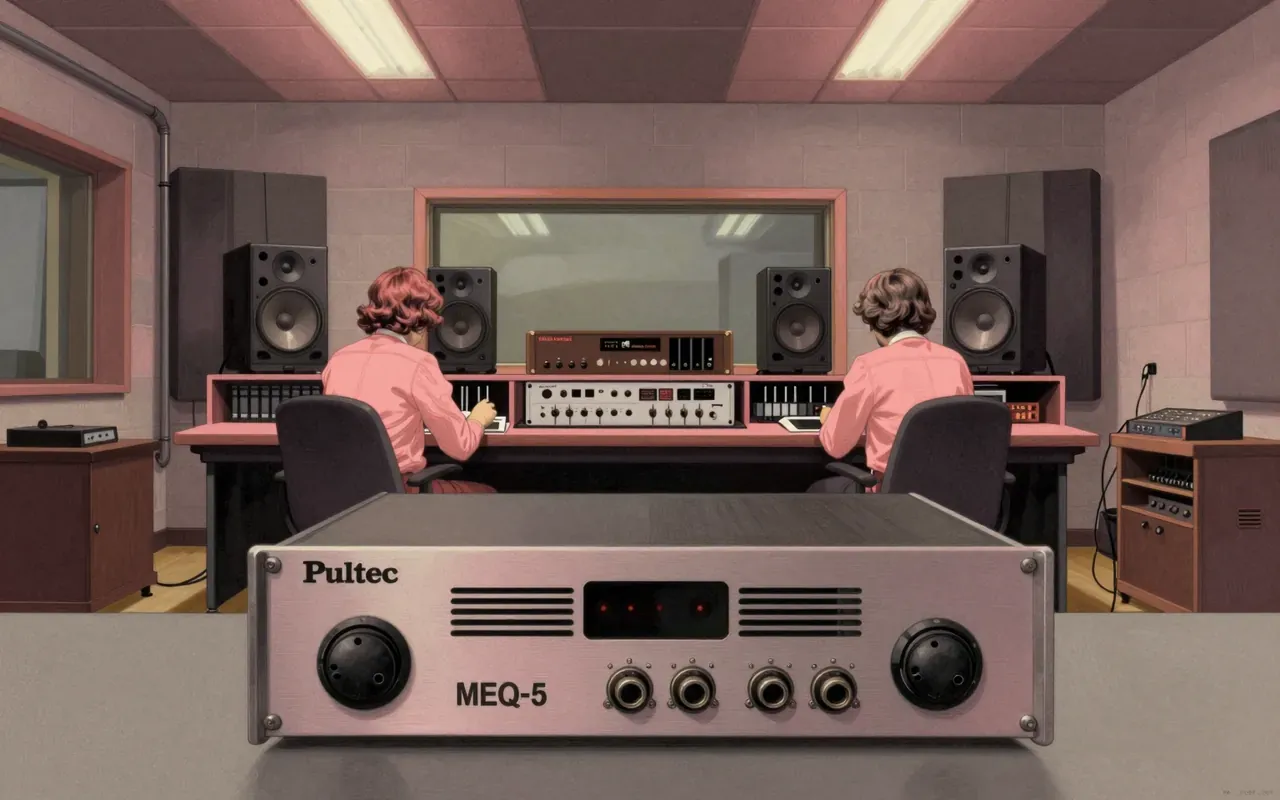
The Pultec MEQ-5 is a clean, transparent, three-band analog EQ. It occupies two rack spaces. Each band uses a frequency switch and a gain knob. It covers nearly the full frequency spectrum. It alters sound cleanly—nothing more, nothing less.

8:30

Waldorf Microwave XT

Waldorf

The Waldorf Microwave XT is a 1998 rackmount synthesizer using digital wavetable and FM synthesis, featuring 44 real-time control knobs, 20-bit DSP functions, and 10-voice polyphony expandable to 30; it shares its engine with the Microwave II and Wave synths, excels at emulating PPG sounds and generating acid or Moog-style bass, and includes onboard arpeggiator, digital effects, and MIDI-transmitting knobs.

6:22

Ampex MM-1000

Ampex

The Gemini DJ MM-1000 is a 3-channel analogue mixer. It offers no EQ, no effects, no headphone output, no crossfader, and no cueing. It exists only to sum three line-level signals and send them to one output. Its value lies entirely in its simplicity and reliability — not in versatility or sonic character.

6:54

Ampex MM-1200

Ampex

The Ampex MM-1200 is an analog multitrack recorder. No technical specifications exist for it. That absence defines its limits.

8:16

Make Noise Morphagene

Make Noise

The Morphagene is an effects module for modular synthesizers made by Make Noise. It belongs in the 'Effects modules for modular synthesizer' category. It does not function as a sampler, sequencer, or DAW plugin — it transforms audio live using tape-style operations. Its design gives immediate, irreversible, hands-on manipulation. It withholds saving, syncing, and visual feedback.

8:19

Rane MP2016

Rane

The Rane MP2016 is a 3U rack-mount DJ mixer with six inputs — four phono/line, two mic/line — each with bass/mid/treble and gain. Master/House and Booth outputs each have a 3-band EQ. It delivers crystal-clear sound with no noise or bleed. It has no built-in effects.

10:56

Akai MPC1000

Akai

The MPC1000 delivers the MPC workflow in a smaller, cheaper, more portable form. It adds six outputs, built-in effects, and memory expansion over the MPC2000 — while storing samples as WAV and sequences as MIDI on CompactFlash. Build quality is reduced, but sound quality is preserved. It is a sampling and sequencing instrument — not a synth, not a DAW, not a controller.

10:25

Akai MPC2500

Akai

The MPC2500 upgrades the MPC2000 with 16-bit/44.1 kHz sampling, individually adjustable pad sensitivity, and the Grid editor — but keeps 64-track sequencing, 32-voice polyphony, and no automated effects sends.

10:05

Akai MPC4000

Akai

The Akai MPC4000 is a 2002 hardware sampler sequencer built to lead the hardware sampler category. It has 16 velocity- and pressure-sensitive pads. It performs 96 kHz 24-bit sampling. It has 16 MB of sampling memory, upgradeable to 512 MB. It includes IDE bays for installing an internal hard disk drive and CD-ROM drive. It supports optional plug-in boards including Effects, ADAT, S/P-DIF & wordclock, and 8 analogue outputs boards. It has 2 MIDI inputs and 4 MIDI outputs. It was released in 2002 with the intent to lead hardware samplers.

9:39

Akai MPC500

Akai

The MPC500 is Akai’s entry-level sampling sequencer—a portable, self-contained beat-making station built for quick capture, arrangement, and performance.

8:50

Korg MS-50

Korg

The Korg MS-50 is a 1978 keyboard-less analog expander module. It has one VCO, two VCFs (highpass and lowpass), two ADSRs, an LFO, pink and white noise, ring modulator, voltmeter, and sample & hold. It uses Hz/V CV/Gate control and was designed to complement the SQ-10 sequencer.

7:30

Roland MSQ-100

Roland

The Roland MSQ-100 is a sequencer with no documented technical specifications. It exists only as a named object with alternate spellings. Nothing is verified about its function, capacity, interface behaviour, or sonic role.

9:00

Roland MSQ-700

Roland

The Roland MSQ-700 is an 8-track MIDI sequencer with lithium battery-backed memory, step-time and real-time recording, punch-in, merge, quantization, chaining, and analog tape sync. It stores 6500 notes per track. It has no screen, no file export, no velocity editing, and no USB.

8:20

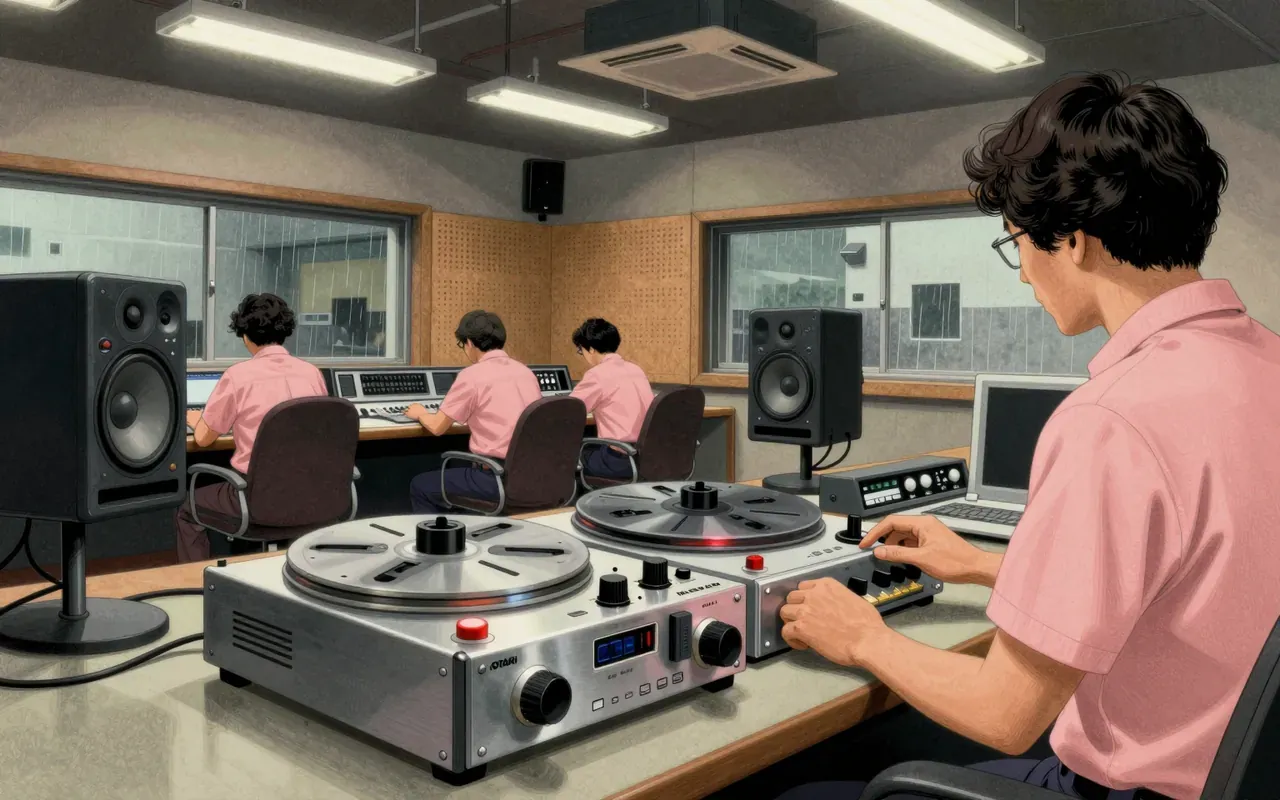
Otari MTR-10

Otari

The Otari MTR-10 is an analog multitrack recorder. No technical specifications are available. It is also referred to as 'mtr 10' or 'mtr10'.

10:16

Otari MTR-12

Otari

The Otari MTR12 is an analog multitrack recorder. No technical specifications exist for it. That absence defines its utility — or lack thereof.

6:52

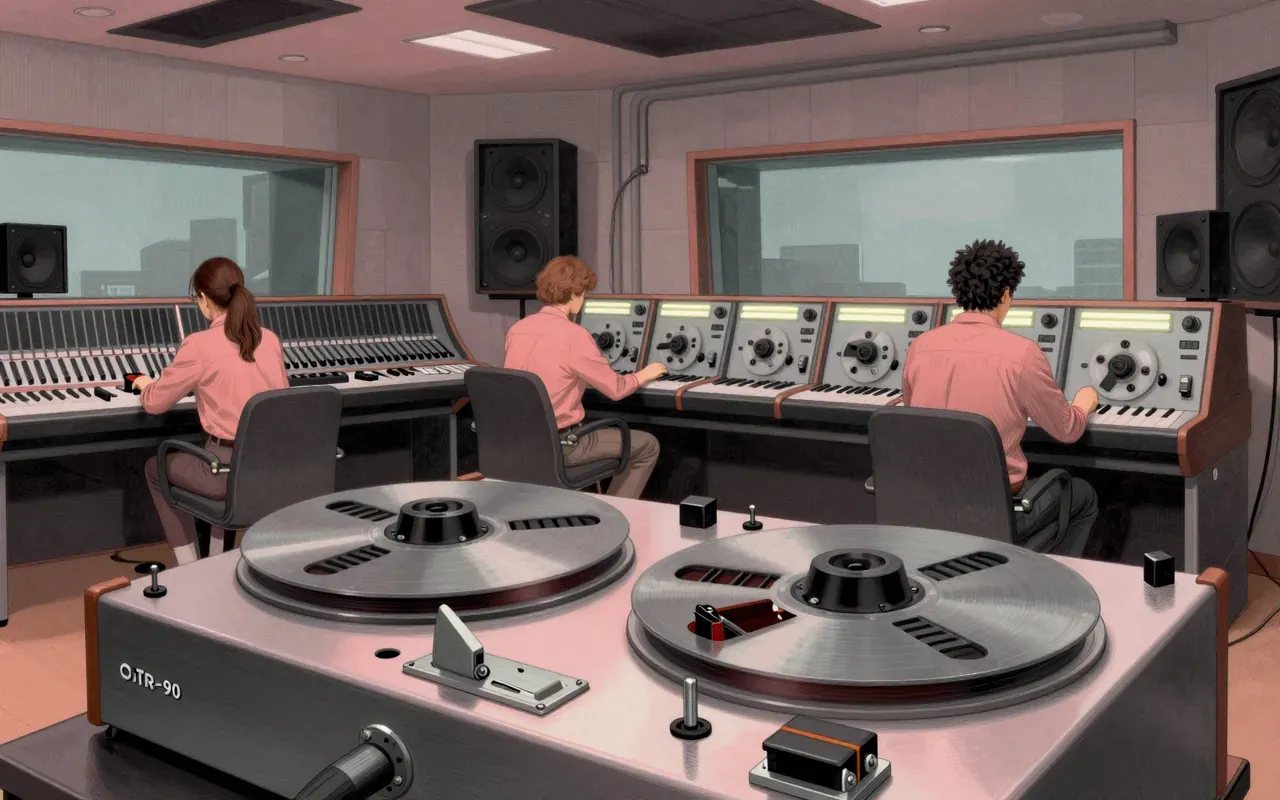
Otari MTR-90

Otari

The Otari MTR-90 is listed as an analog multitrack recorder. No technical specifications are available. Nothing else is confirmed.

9:01

Buchla Music Easel

Buchla

The Buchla Music Easel is an analog synth with no technical specifications. That is all that is verified.

9:10

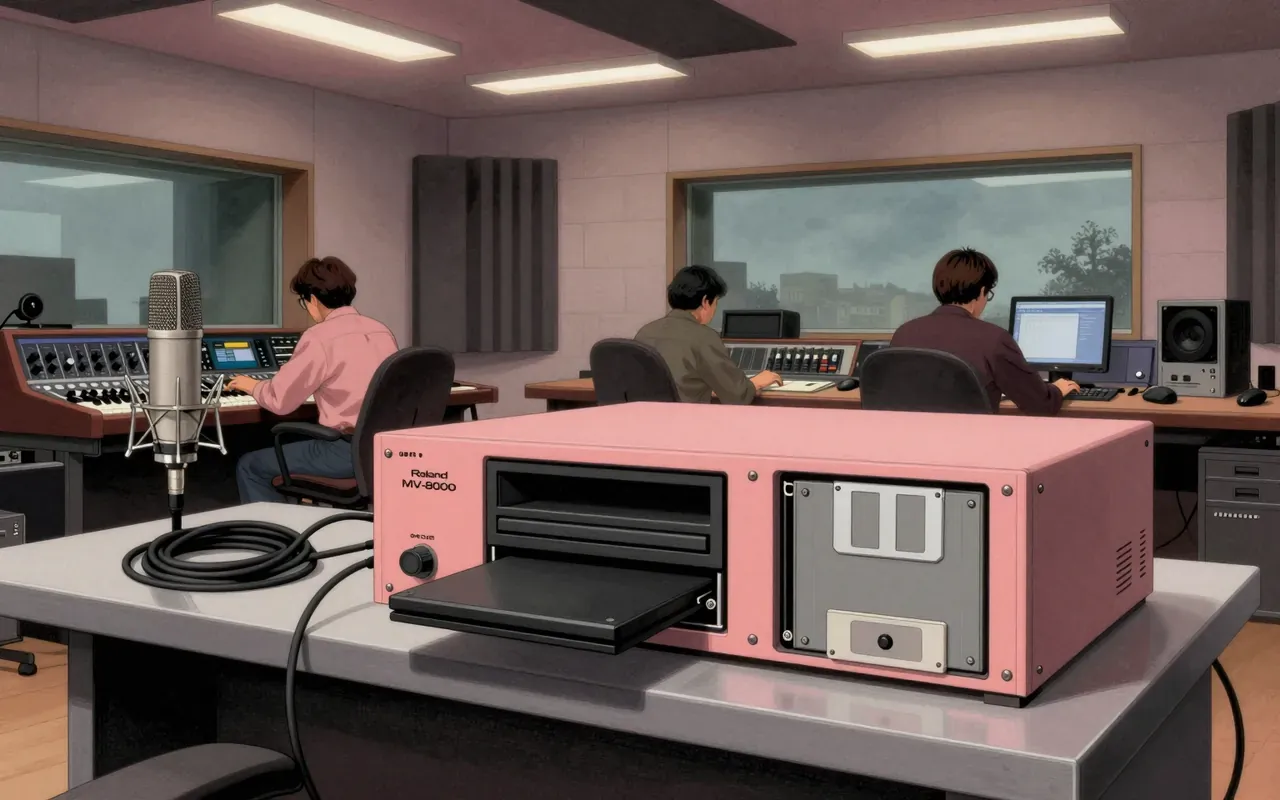
Roland MV-8000

Roland

The Roland MV-8000 is a 2004 sampling sequencer built for producers who want to record, edit, sequence, and master full tracks without a computer.

10:47

Roland MV-8800

Roland

The Roland MV-8800 is a sampling sequencer. It hosts VSTs internally. It requires external video monitoring. It accepts a USB mouse. It is complex. Its hard drive is slow. Its manual is poor. One user tested it for three hours in a retail store and found it capable of handling many music production tasks.

10:14

Otari MX-5050

Otari

The Otari MX-5050 is an 8-track analog multitrack cassette recorder introduced in 1987. It records at 3.75 ips. Its recording head is superior to that of the Otari 488 and 488 mkII. dbx Type II noise reduction applies separately to tracks 1–4 and 5–8. A pitch/speed wheel allows ±15% variation. Its digitally controlled transport enables automated punch-in between memory points. It uses direct-drive mechanics — no capstan belt required. It records all eight tracks simultaneously, unlike the 488 models.

8:28

GenoQs Nemo

GenoQs

The GenoQs Nemo is a hardware sequencer. That is all that is verified.

8:59

TC Electronic Nova Delay

TC Electronic

The TC Electronic ND-1 Nova Delay is a digital guitar effects pedal offering six studio-quality delay types—including Delay line, Dynamic, Reverse, Ping-pong, Pan, and Slap-back—with up to 2290 ms delay time, audio-generated tap tempo, delay spillover, true stereo I/O, true bypass, and nine user-programmable presets; it operates in manual or preset mode and includes analog-tone emulation via a tone knob.

9:14

Yamaha NS-10M

Yamaha

The Yamaha NS-10M is a two-way passive near-field monitor. It delivers clear mid and high frequencies but lacks deep low-end extension. Engineers use it to verify mix translation and to A/B compare with other speakers. Its non-neutral response demands experience. It is not a full-range solution.

13:06

Boss OC-2 Octave

Boss

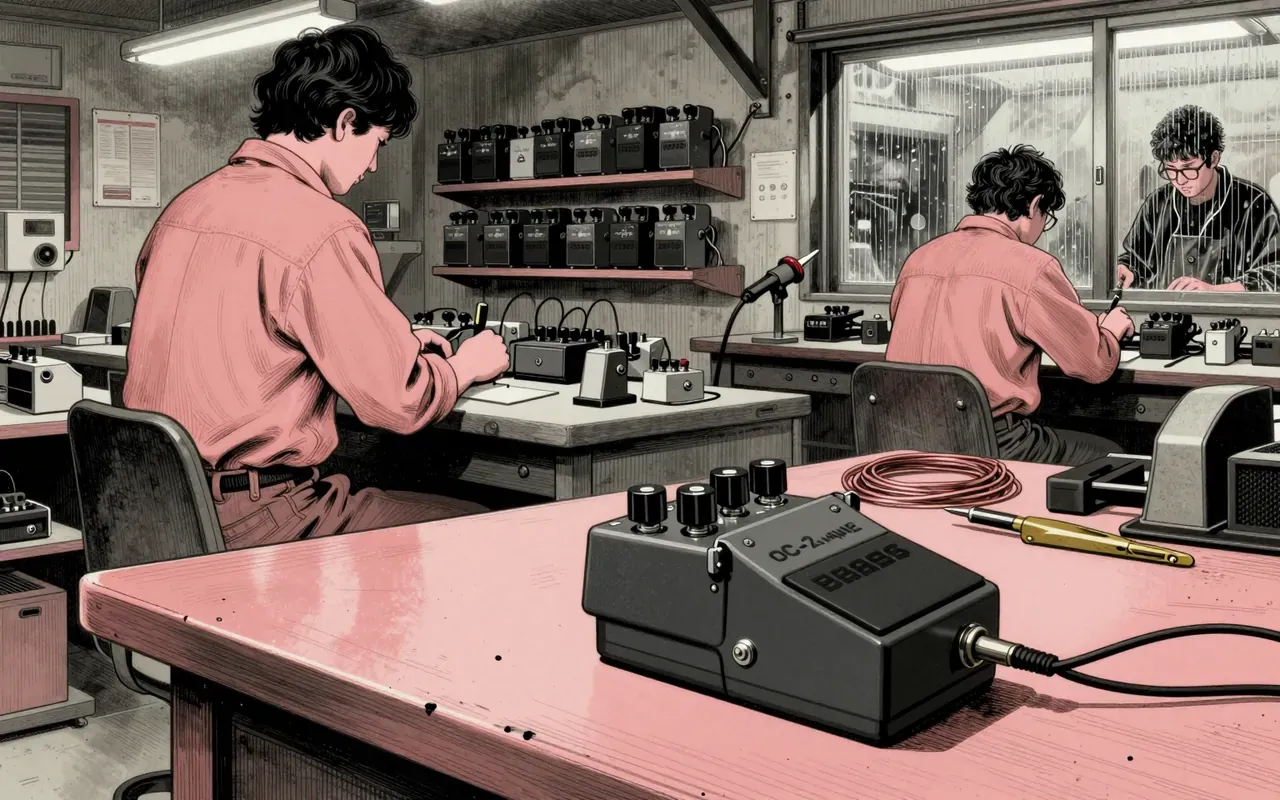
The Boss OC-2 Octave is a stompbox that adds one or two sub-octaves to a guitar signal. Its three knobs control each layer. It runs on 9V DC or battery. Higher notes track smoothly — without digital harshness. But notes below the 12th fret on the low E string mis-track badly: wobbly, out-of-tune, uncorrectable. It is unfit for conventional use. Only noise or experimental players gain anything from its failure.

8:29

Fulltone OCD

Fulltone

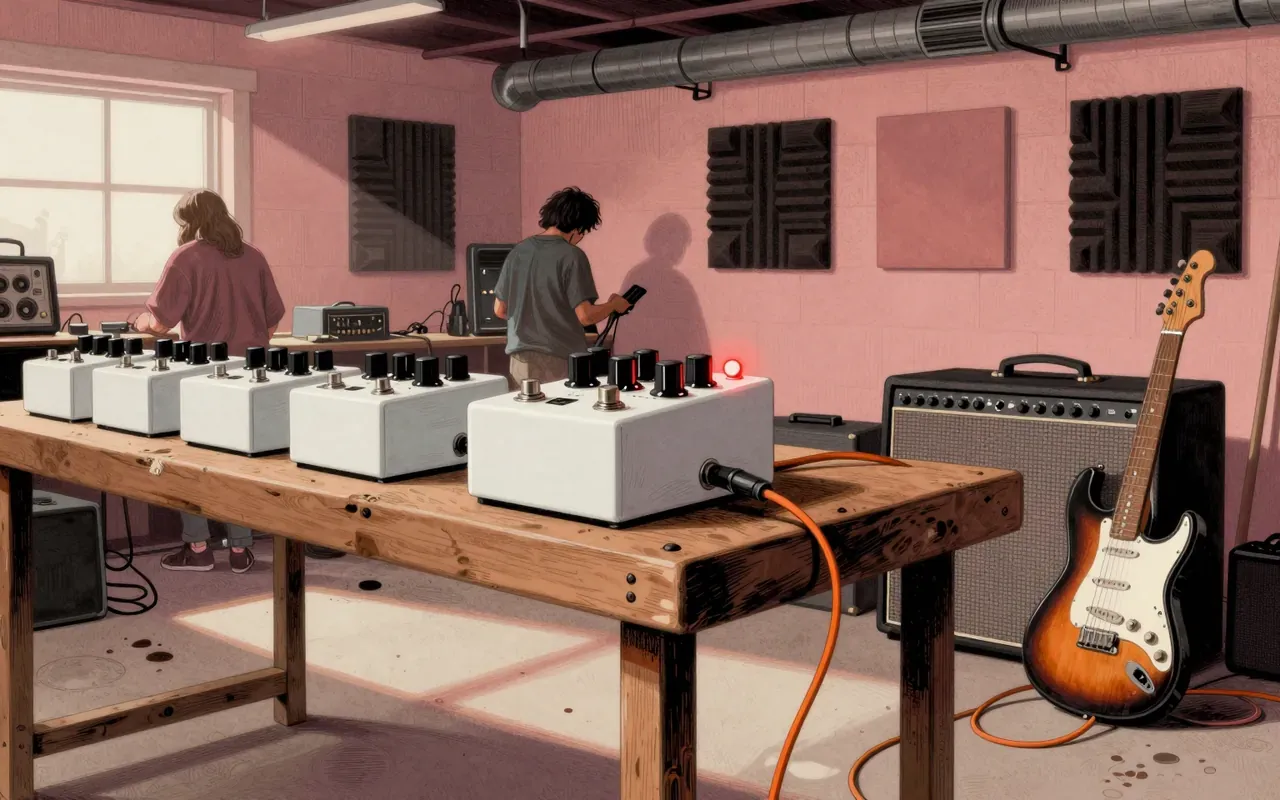
The Fulltone OCD V1.1 is an analog overdrive pedal. It has volume, drive, and tone controls. It has a high-pass/low-pass switch. It uses true bypass. It is white with black knobs and a red LED.

8:20

Eventide Omnipressor 2830

Eventide

The Eventide Omnipressor 2830 Au is a studio compressor. No technical specifications are available. It belongs to the studio compressors category.

10:52

Orange OR120

Orange

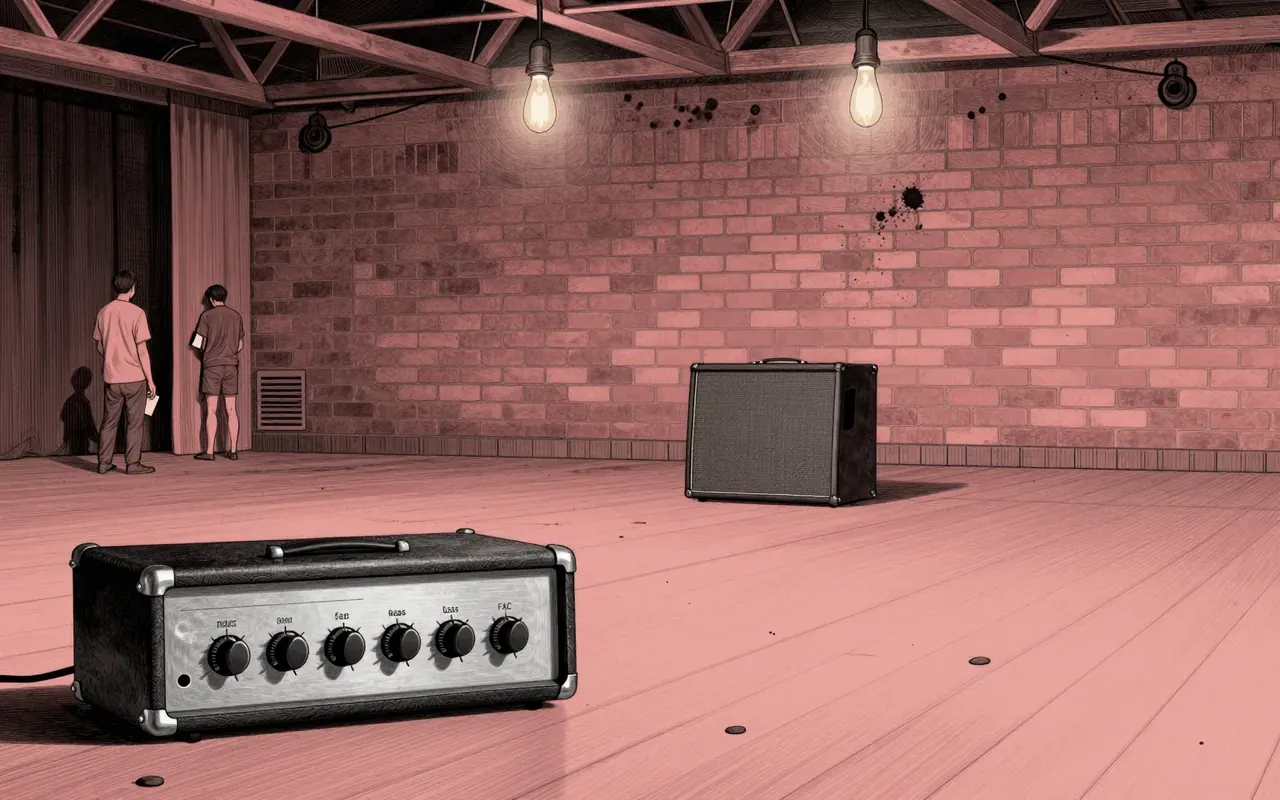
The Orange OR120 is a 120-watt tube guitar amp head built around four EL34 tubes. It has high and low inputs, echo send/return, handles, and controls for master, gain, presence, treble, bass and FAC — but no middle control or standby switch. It delivers rich overdrive and vibrant clean tones at volume, but cannot be used quietly without compromising tone or risking tube stress.

8:43

Vestax PDX-2000

Vestax

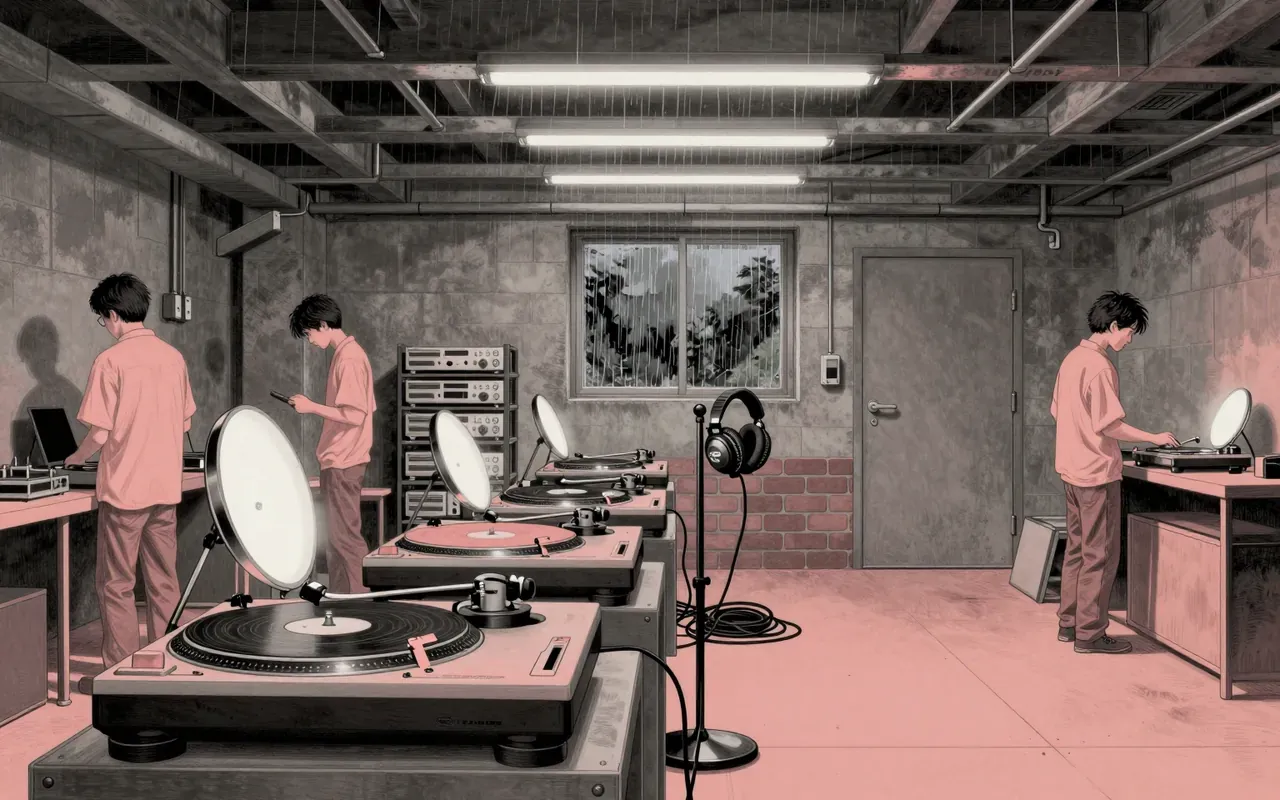
The Vestax PDX-2000 is a DJ turntable built for scratching and mixing. It delivers high torque and stable tracking. Its straight tone arm, pop-up light, and adjustable brake serve functional roles in performance. Pitch control is imprecise. The start button and pitch fader are fragile. Road cases are hard to find due to its length.

9:18

Thermionic Culture Phoenix

Thermionic Culture

The Aerial7 Phoenix is a HiFi/audiophile headphone. It belongs to the Street series. It is made by Aerial7. It has an alternate name: phoenixchino. Nothing else is verified.

7:58

Vestax PMC-05 Pro

Vestax

The Vestax PMC-05 Pro III VCA is a 2-channel DJ mixer with RCA inputs and outputs, a headphone output jack, post-fader effect send with level control, and a 2-band EQ. It delivers a warm and generous low-end sound. Users find it super easy to use and effective. Its EQ limitation makes it unsuitable for genres like DnB and Dubstep.

8:30

Vestax PMC-07 Pro

Vestax

The Vestax PMC-07 Pro is a 2-channel scratch mixer. It prioritises precision, durability, and clarity over features. Its crossfader is adjustable and preferred for scratching over competitors including the PMC-05, Numark, Ecler, Rane, and PMC-07 PSI. It sounds clear and unsaturated. It has no digital functions, no headphone cueing beyond basic monitoring, and no more than two channels.

9:14

Vestax PMC-25

Vestax

The Vestax PMC-25 is a 2-channel DJ mixer designed for house music. It is 3U tall and rack mountable. It features PGM vs. Master LED VU metering, split cue, a third cueable aux input, and EQ kill switches implemented as mini faders to avoid clicks and achieve -85 dB attenuation. The crossfader has a fixed curve. Faders and crossfader are replaceable. Sound quality is perceived as superior to a cheap Numark mixer.

9:54

Boss PN-2 Tremolo/Pan

Boss

The Boss PN-2 Tremolo/Pan is an analog stomp box released in May 1990 and discontinued in March 1995. It delivers tremolo and stereo panning via rate, depth, and a 4-way mode switch. It needs two amps for panning and runs on 9V DC. It was replaced by the mono TR-2.

8:18

Electro-Harmonix Polychorus

Electro-Harmonix

The Electro-Harmonix Polychorus Mk2 is a stereo analog stomp-box modulation pedal for guitar. It offers chorus, flanger, double track, and filter matrix modes via toggle switches. It has one input and two outputs. It requires 24V power. It has no preset memory.

8:51

Tascam Portastudio 144

Tascam

The Tascam Portastudio 144 is a four-track analog cassette recorder. It was used by adolescents for home multitrack recording in 1981. It lacked dBX noise reduction but functioned effectively. It enabled users to record and mix music at home, creating a personal musical environment.

8:43

Tascam Portastudio 244

Tascam

The Tascam Portastudio 244 is a 1984 four-track cassette recorder. It gives immediate, portable multitrack recording with EQ, gain, and switchable input impedance per track. DBX noise reduction works. Analog saturation stays musical. But signal degrades horribly at each bounce. Cassette transport is fragile. Preamps sound thin and harsh. No phantom power. Unbalanced inputs only. It was bought in Paris in 1984 for nearly 5,000 francs.

7:10

Tascam Portastudio 246

Tascam

The Tascam Portastudio 246 is an analog multitrack-studio. No technical specifications exist for it. It belongs to the category of Analog Multitrack-studios.

8:01

Tascam Portastudio 424

Tascam

The Tascam Portastudio 424 is a cassette-based four-track recorder and mixer. It uses type II (CrO2) tape. It has two inputs — XLR and 1/4 inch — and supports tape speeds of 9.5, 4.75, and 2375 cm/s. dbx type II noise reduction is permanent. Each input has gain, three-band EQ, and panning. It has main stereo outputs and a headphone jack.

8:54

Rupert Neve Designs Portico 5012

Rupert Neve Designs

The Portico 5012 is a solid-state mic preamp with intuitive gain staging and a subjective Silk function that transforms its clean base tone into something euphoric — but unpredictable.

9:08

Rupert Neve Designs Portico 5033

Rupert Neve Designs

The Portico 5033 is a parametric EQ in Rupert Neve Designs’ Portico series. No technical specifications are published. It offers hands-on control but no documented performance metrics.

8:46

Rupert Neve Designs Portico 5043

Rupert Neve Designs

The Portico 5043 is a studio compressor in Rupert Neve Designs’ Portico series. It delivers consistent, source-agnostic compression with optional harmonic colouration. Its physical format undermines its rack-ready promise. It does not replace a dedicated clean limiter or a compact multi-channel solution — but it rarely needs replacing on a track once engaged.

8:05

Roland PR-100

Roland

The Epiphone PR-100 is a Chinese-made, US-designed dreadnought acoustic guitar with 22 frets, a mahogany neck, rosewood fretboard, and plastic bridge. It has no electronics or controls. It is built for unamplified play only.
8:26

Revox PR99

Revox

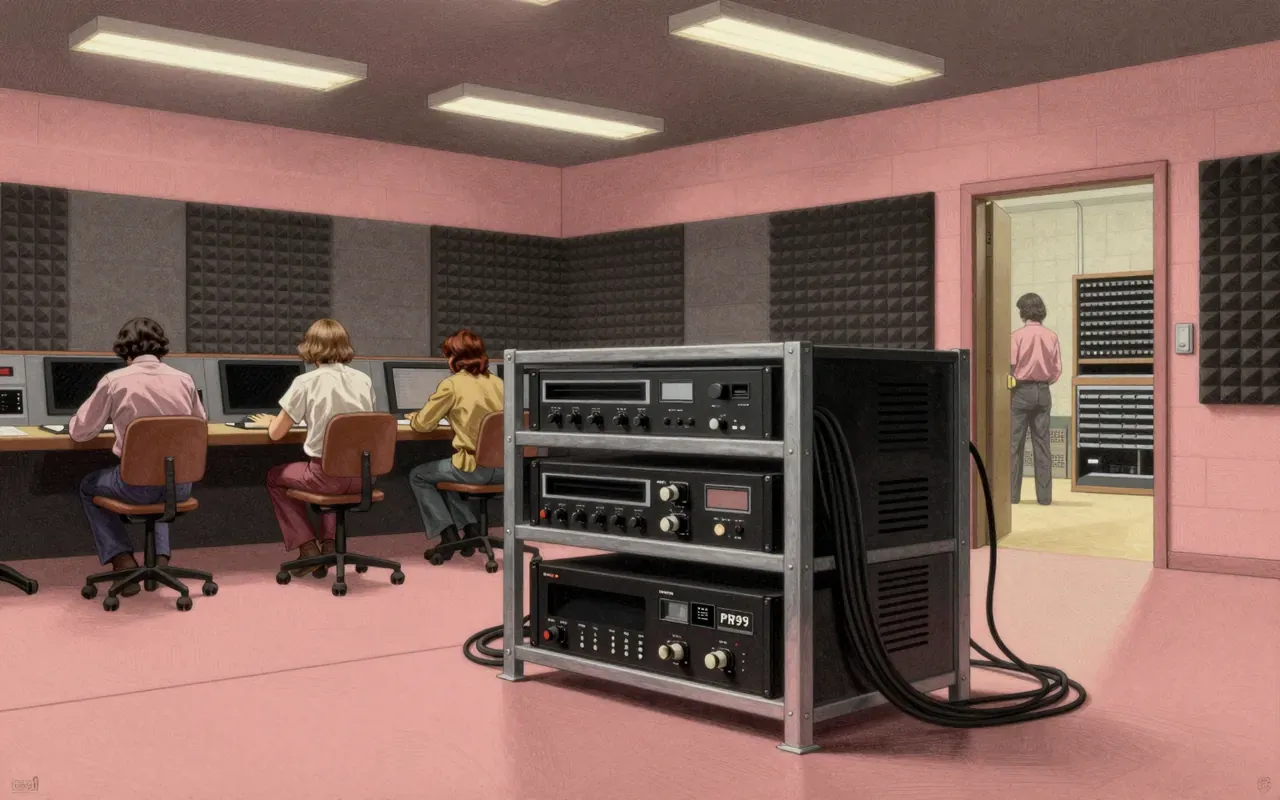
The Revox PR99 is an analog multitrack recorder with no published technical specifications. Its function is limited to basic tape-based multitrack recording and playback — but without documented parameters, alignment, or service history, it resists reliable use or evaluation.

8:07

Digidesign Pro Tools 24 MIX

Digidesign

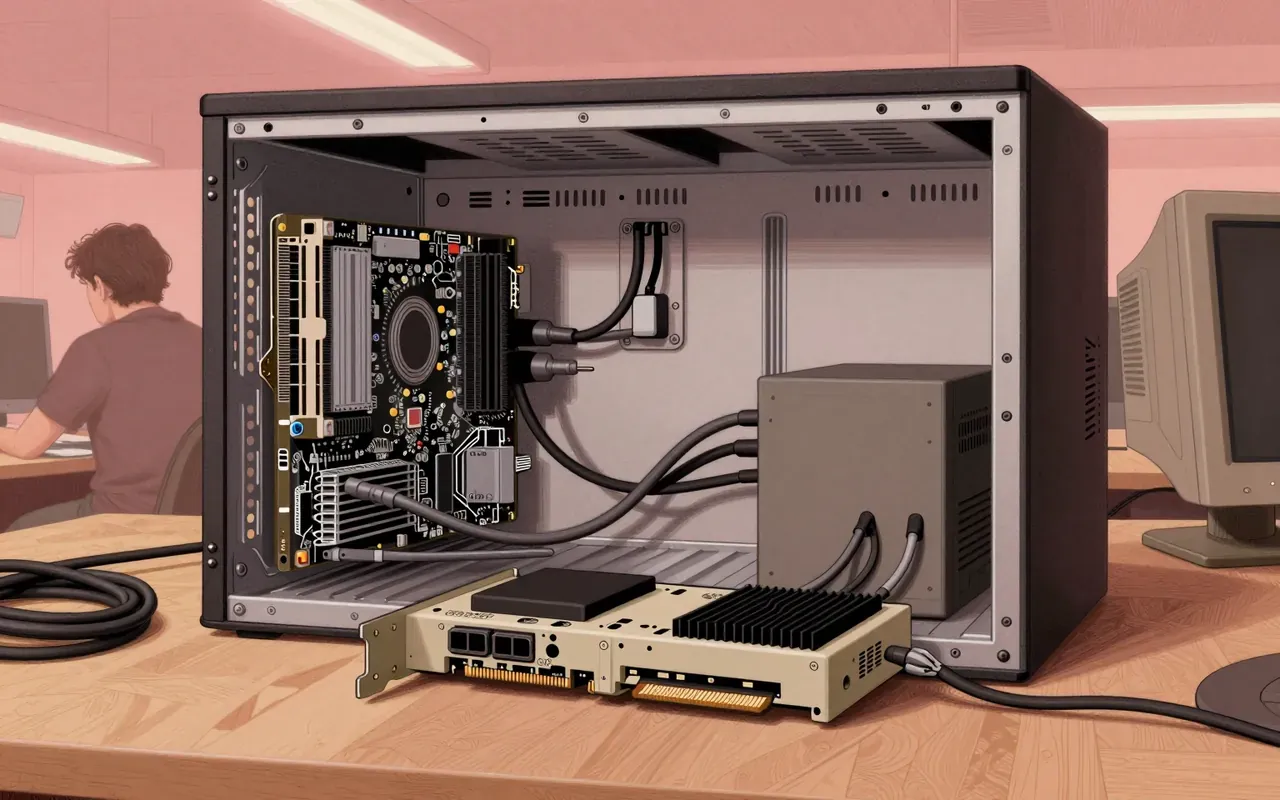
The Digidesign Pro Tools|24 Mix + is a discontinued PCI DSP board for Pro Tools|24 systems. It requires Pro Tools 6.4.1 and Mac OS 10.3.8. Installation is difficult. Setup is simple. Once running, it performs reliably and professionally.
9:36

Sequential Circuits Prophet-10

Sequential Circuits

The Prophet-10 is two Prophet-5s stacked into one instrument. It delivers ten-voice analog thickness no other 1980 synth matches. But it overheats, detunes, and demands physical and technical concessions. Version 3 fixes stability with CEM chips — at the cost of low-end weight.

8:44

Sequential Circuits Prophet-600

Sequential Circuits

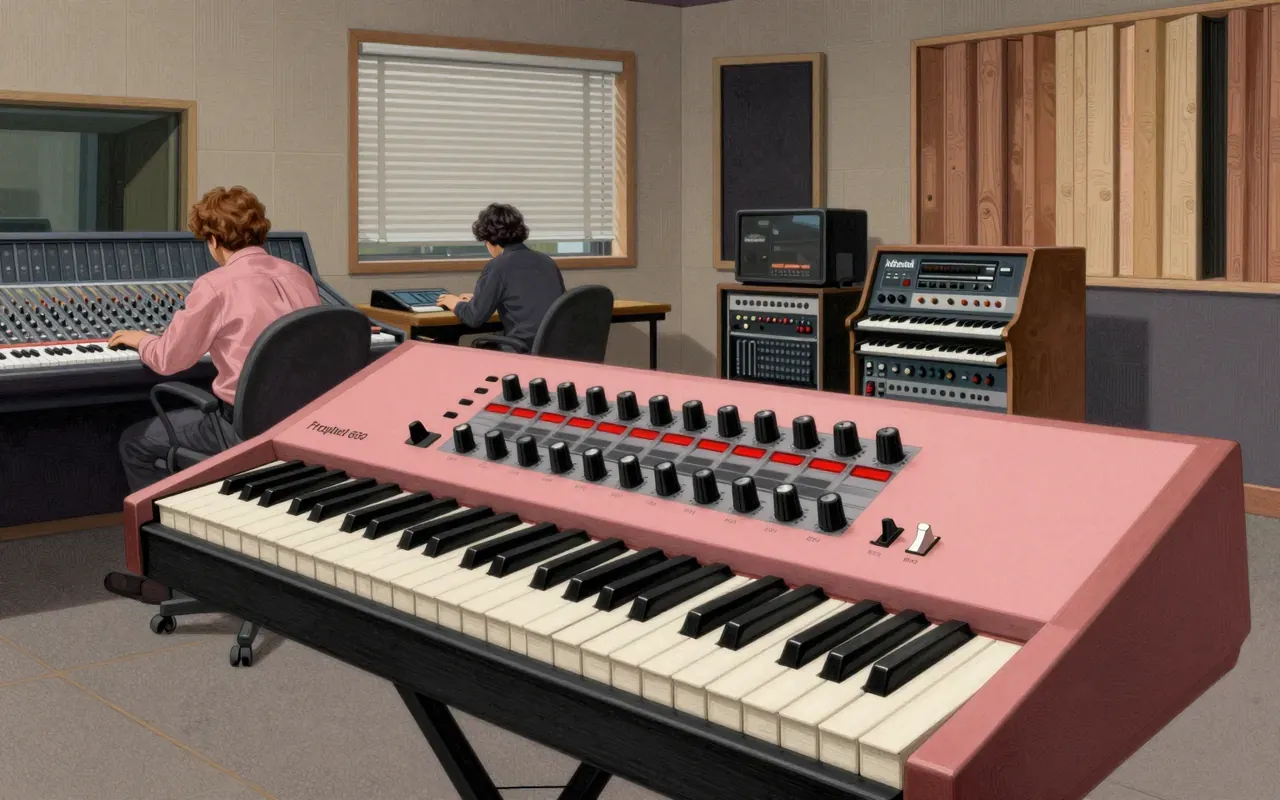
The Prophet-600 is a 1982 6-voice analogue synth. It introduced MIDI to commercial instruments. It gives players two oscillators per voice with sync, variable pulse, and triangle/saw waveforms. Its VCF, VCA, and Poly-Mod come from the Prophet-5. It includes an arpeggiator and 2-track sequencer. It glides. It modulates flexibly. It does not track reliably over time. It has no velocity or aftertouch. It is not expandable. It belongs in rooms where history and immediacy matter more than precision.

8:16

Sequential Circuits Prophet-T8

Sequential Circuits

The Prophet-T8 is an 8-voice analog polysynth released by Sequential Circuits in 1983. It features digital control of analog sound, a 76-key weighted keyboard with velocity and aftertouch, full MIDI implementation, split/layer/double/unison modes, and a real-time sequencer. Its tone resembles the Prophet-5. It was Sequential’s finest analog synthesizer—but faced commercial pressure from the Yamaha DX7.

8:40

Korg PS-3100

Korg

The Korg PS-3100 is a rare (600 units), 30kg, 48-voice analog synthesizer from 1977. It uses 12 divide-down VCOs to drive 48 independent voice circuits — one VCO, VCF, VCA and EG per key. Its warm LPF and 3-band resonator enable rich formant and phase effects. LFO1 reaches audio rate and delivers AM up to ring modulation. One EG is polyphonic; the other is universal and paraphonic. Twelve intonation scaling controls allow non-equal-tempered tuning. It has no patch memory.

9:48

Korg PS-3200

Korg

The Korg PS-3200 is the final model in Korg's PS series. It integrates two PS-3100 units into a single chassis. It provides 16 memory locations that can be individually addressed and recalled. It was regarded as remarkable in its era due to having two oscillators per key and 48-note polyphony. Each voltage-controlled oscillator module includes a dedicated voltage-controlled filter and low-frequency oscillator. Its patching and signal routing capabilities were comparatively restricted versus other modular systems. Its envelope generator design was constrained. It was considered sonically rich for its era, and its 16-patch memory was highly valued.

8:12

Make Noise QMMG

Make Noise

The QMMG is a filter module for modular synthesizers. That is all the sources confirm. It is made by Make Noise. It belongs in the category 'Filter modules for modular synthesizers'. Nothing else is verified.