audiobriefs
Shortest first

All briefs

747 briefs · 6840 min · 97–192 on page 2 of 8
8:07

Moog Taurus

Moog

The Moog Taurus is a foot-operated analog synthesizer introduced in 1975. It uses an organ-style pedal board. It is monophonic, with a single voice generated by two oscillators and one VCA. Taurus I and III offer only a distorted sawtooth wave. Taurus II introduced a pulse wave. All models use a 24dB/octave resonant low-pass filter with key tracking. Early models lack an LFO; Taurus III includes one routable to oscillator pitch or filter frequency.
8:08

Moog Modular

Moog · 1964

The Moog synthesizer is a modular, voltage-controlled analog synthesizer invented by Robert Moog in 1964. It was the first commercial synthesizer and established the analog synthesizer concept through its use of patch-cord-connected modules—including voltage-controlled oscillators, filters, envelope generators, and amplifiers—to implement subtractive synthesis.

8:08

Oberheim OB-X

Oberheim

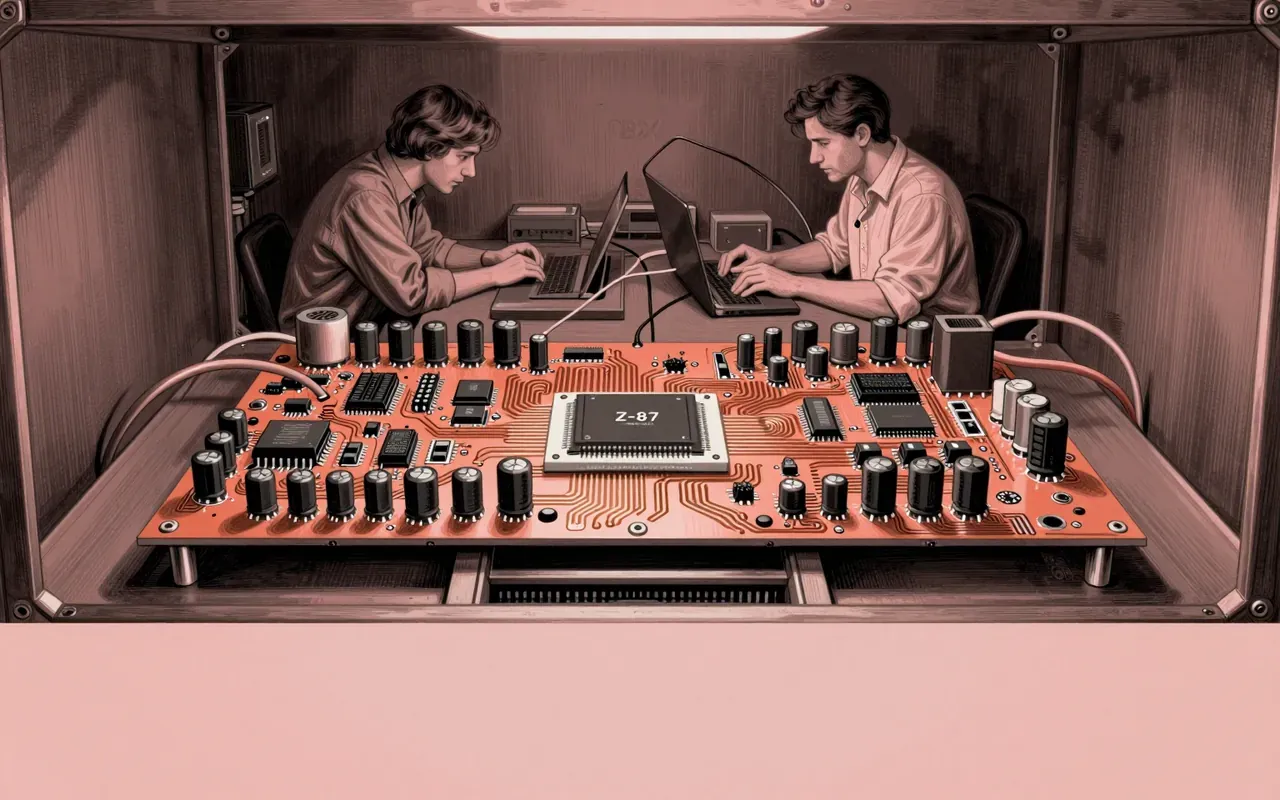
The OB-X was Oberheim’s first OB-series polyphonic analog subtractive synthesizer. Introduced in June 1979 to compete with the Prophet-5, it replaced modular SEM-based systems with a unified design built around interchangeable voice cards. It offered 4-, 6-, or 8-voice configurations, 32 user-programmable presets, and automated tuning via a Z-80 microprocessor. Its architecture prioritised stability and integration over flexibility or expressivity.

8:09

Dynaudio Acoustics BM15A

Dynaudio Acoustics

The Dynaudio Acoustics BM15A is an active studio monitor designed for nearfield monitoring. It integrates amplification, reproduces down to 45 Hz at 0 dB, and complies with EU and FCC electromagnetic shielding standards. One unit exhibited unintended FM radio reception at 104.1 MHz — isolated to the right channel. Users report no distortion or hum, even at maximum volume. No information is given about music, artists, or recordings made with it.

8:09

Fender Champ 5F1

Fender

The Fender Champ 5F1 is a tube combo guitar amplifier made from 1958 to 1964. It has volume and tone controls only. It uses a single 6V6 power tube driving an 8-inch speaker. It breaks up early and stays simple. It does not offer clean headroom, effects, or expandability.

8:09

Korg Kaoss Pad KP1

Korg

The KP1 is a 1999 touch-driven effects box for DJs. It runs six effects at once. It has no sampling. It has no synthesis. It has no presets. It has no deep editing. It has a pad, four buttons, and a fader. It rewards gesture over precision. It belongs on a deck, not in a DAW.

8:09

Roland S-760

Roland

The Roland S-760 is a 1990 rackmount sampler. It samples at 44.1 kHz or 48 kHz with 16-bit stereo resolution. It supports 24-voice polyphony across 32 multitimbral parts. It uses no synthesis method beyond sampling. It has built-in filters but no effects.

8:10

Neve 33609

Neve

The Neve 33609 is a dual-channel, all-analog studio compressor and limiter occupying two rack units. Each channel contains independent compressor and limiter sections. The compressor section provides threshold, recovery, gain, ratio, and bypass. The limiter section provides threshold, recovery, fast/slow attack, and bypass. It supports dual-mono or stereo operation with per-channel gain reduction metering.

8:10

Korg Electribe ES-1

Korg

The Korg Electribe ES-1 is a sampling sequencer built for live beat construction and loop manipulation.

8:10

Publison Infernal Machine 90

Publison

The Publison Infernal Machine 90 is a 3U rackmount analog/digital multi-effects processor built for video post-production. It delivers delay, echo, harmonizer, sampler, reverb, transposition, time compression/expansion, and DVR-style long-sample playback — all synchronised to SMPTE timecode. All programs are editable on-device; no external editor exists. It excels at frame-accurate effect triggering in film dubbing. It fails for anyone needing patch libraries, remote editing, or non-video workflows.

8:10

Neve V Series

Neve

The Waves V-Series is an effects bundle with no published technical details. It offers no verifiable functionality, no documented use cases, and no basis for evaluation beyond its category label.

8:11

AKG C414 EB

AKG

The AKG C414 EB is a large diaphragm condenser microphone. It is one of 13 products in the AKG C414 series. No technical, historical, or functional detail beyond that is provided in the source material.

8:11

Boss CE-2 Chorus

Boss

The Boss CE-2 Chorus is an all-analog stomp box introduced in the early 1980s. It has two controls: Rate and Depth. It was Boss’s first compact chorus pedal and the first they housed in a stomp box. Production ended in 1990. It runs on 9V battery or transformer. It was made in Japan.

8:11

Chandler Limited Curve Bender

Chandler Limited

The Curve Bender is a software parametric EQ made by Softube. It costs $299 including VAT. It does not claim to be hardware. It does not add dynamics, M/S, or analysis. It does one thing: shape tone with four bands, modelled on Chandler’s approach.

8:11

Audio Electronics EchoCzar

Audio Electronics

The Audio Electronics EchoCzar does not exist in the provided material. The instrument named is the Toneczar Echoczar. Audio Electronics is not mentioned anywhere in the sources.

8:11

Synton Fenix

Synton

The Synton Fenix is a rare, handbuilt modular synthesizer from 1997 — 75 units total — designed by Marc Paping and Bert Vermeulen to include only the vintage-analogue features they personally valued, and nothing more.

8:12

Tube-Tech CL 1B

Tube-Tech

The Tube-Tech CL 1B MKII is a Universal Audio software compressor plugin. Nothing more is verified.

8:12

Make Noise QMMG

Make Noise

The QMMG is a filter module for modular synthesizers. That is all the sources confirm. It is made by Make Noise. It belongs in the category 'Filter modules for modular synthesizers'. Nothing else is verified.

8:12

EMS Vocoder 5000

EMS

The EMS Vocoder 5000 is classified as an 'Other Effects Processor'. No technical specifications are available for it.

8:12

Gibson Victory Bass

Gibson

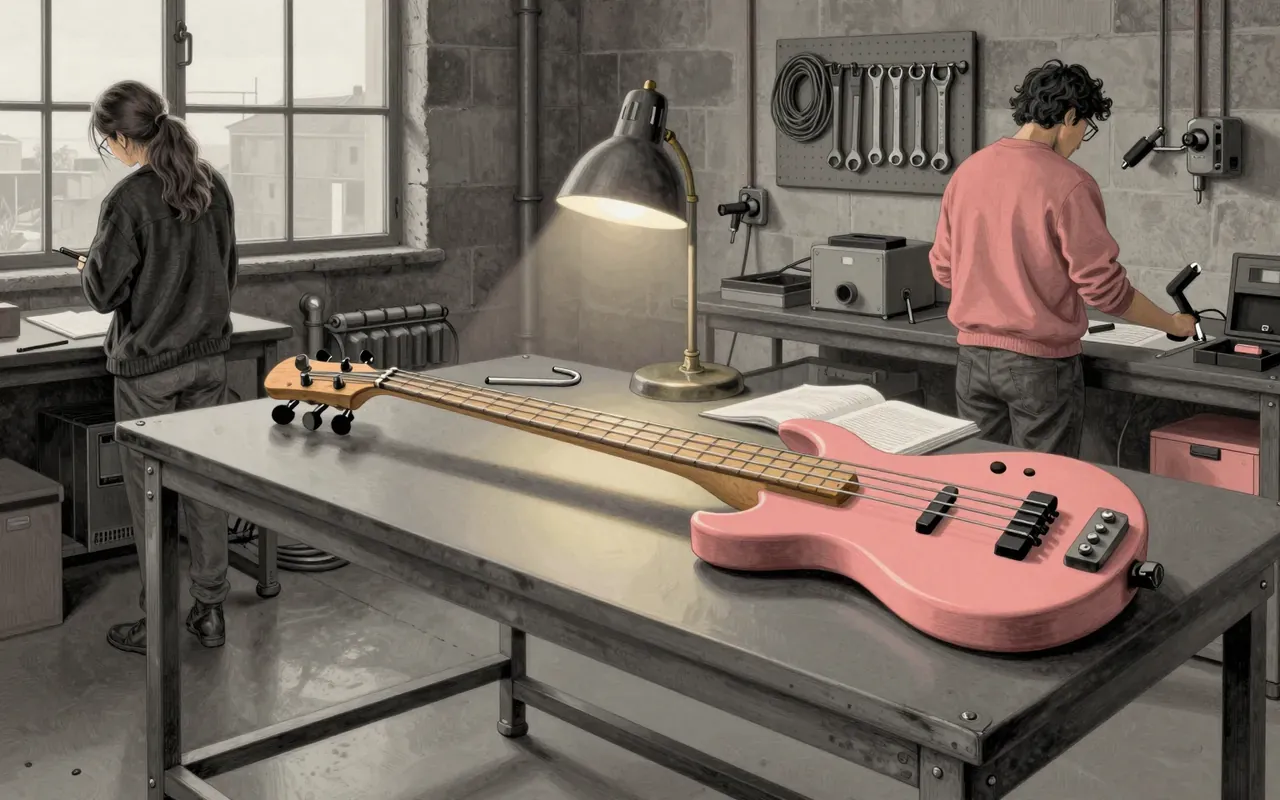
The Gibson Victory Bass is a four-string solid-body electric bass designed by Wayne Charvel for Gibson from 1981 to 1986. It shares its lineage with the Gibson Victory, uses fixed materials (maple body, three-ply maple neck, rosewood fingerboard), and offers a fretless option — but nothing more. It was not a successful model. No evidence confirms distinctive tone, player adoption or recorded use.

8:12

Epiphone Sheraton

Epiphone

The Epiphone Sheraton is a thinline semi-hollow body electric guitar introduced in 1958 under Gibson’s ownership but exclusively manufactured by Epiphone. It was reworked from Epiphone’s Century archtop and shares its body design with Gibson’s ES-series. Key spec changes include the 1958 twin-pickup configuration, 1961 switch to mini-humbuckers, and 1970 shift to full-sized humbuckers and Japanese production.

8:13

EMT EMT 250

EMT

The EMT 250 was the first digital reverberation device to create ambience through a purely electronic system. The Universal Audio plug-in models that hardware exactly — including its single reverb program, five additional effects (Delay, Phasing, Chorus, Echo, Space), lever-driven interface and all its limitations: non-linear-phase anti-aliasing filters, system latency, input clipping and limited frequency response. It uses the exact same algorithm as the original, captured from Allen Sides’ unit and re-engineered by Dr. Barry Blesser.

8:14

Sony DAT DTC-1000ES

Sony

The Sony DTC-1000ES is a DAT deck in Sony’s DTC series. No technical specifications are available. Nothing else is verifiable.

8:14

Chandler/Butler Tube Driver

Chandler/Butler

A tube overdrive pedal built around one 12AX7 tube. Metal case. Own power supply. High output. Creamy distortion. Nearly a decade of field reliability. No EQ. No blend. No compromise on toughness.

8:14

Boss SP-202

Boss

The Boss SP-202 is a portable sampling workstation released in 1998. It succeeded Roland's MS-1 Digital Sampler. It has eight pads, four banks, two control knobs, a built-in microphone, six built-in effects, BPM-based looping, user-selectable sampling grade per pad, and sampling capacity of 4 minutes 20 seconds internally or up to 37 minutes with a SmartMedia card. It was built for club DJs, hip-hop and dance music artists.

8:15

Vox AC30

Vox

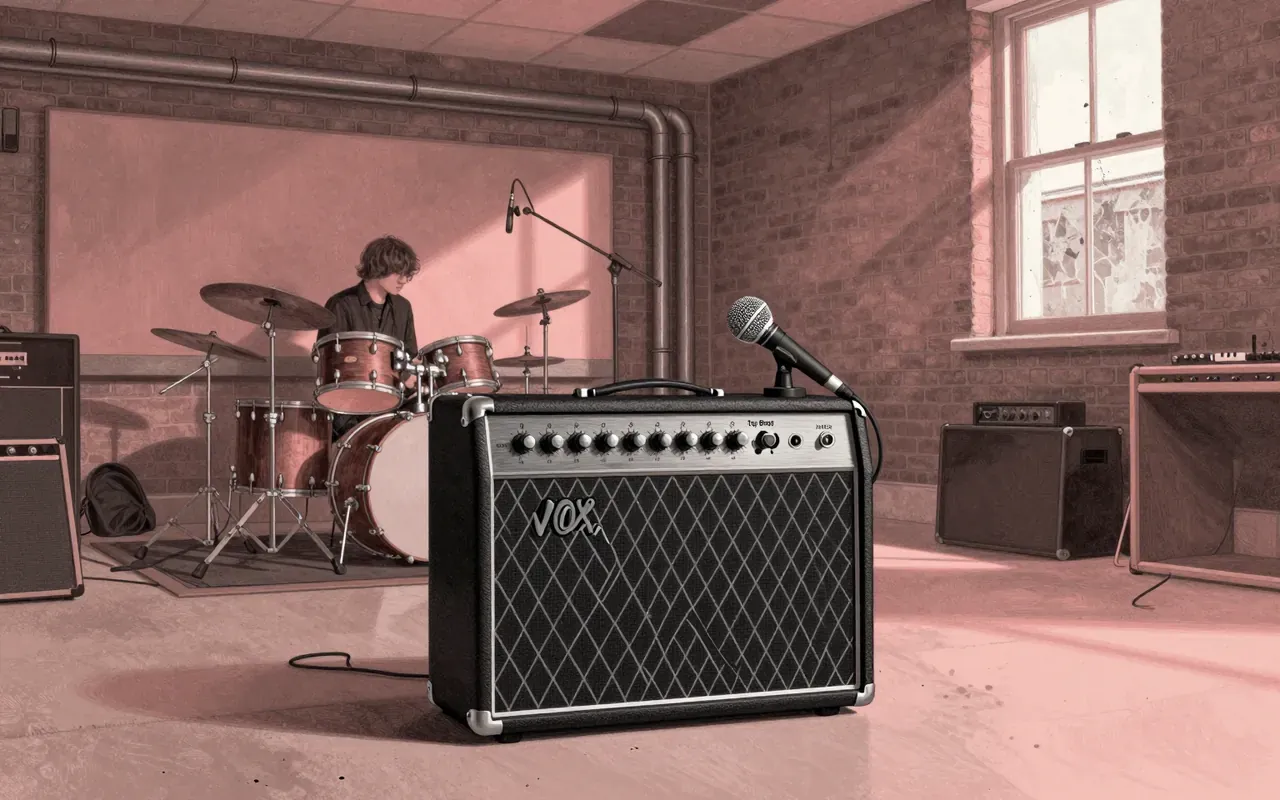
The Vox AC30 is a valve-powered guitar amplifier introduced in 1959 to provide higher wattage and greater volume than the AC15. Its class AB operation, cathode-biased EL84 push-pull output stage, and Celestion Blue speaker pairing produce a jangly, mid-forward, high-clarity tone with limited low-end at low volumes but strong headroom and smooth overdrive. It is not synthesizer-based and does not employ digital or solid-state synthesis methods.

8:16

E-mu Systems Drumulator

E-mu Systems

The Drumulator is a fixed-sample, floppy-driven drum machine built to undercut the Linn LM-1 — not match it. It gives you eight gritty 12-bit hits, real-time or step sequencing, and Apple II editing. It withholds sound editing, velocity, swing, and any expansion beyond its ROM.

8:16

Make Noise Morphagene

Make Noise

The Morphagene is an effects module for modular synthesizers made by Make Noise. It belongs in the 'Effects modules for modular synthesizer' category. It does not function as a sampler, sequencer, or DAW plugin — it transforms audio live using tape-style operations. Its design gives immediate, irreversible, hands-on manipulation. It withholds saving, syncing, and visual feedback.

8:16

Sequential Circuits Prophet-T8

Sequential Circuits

The Prophet-T8 is an 8-voice analog polysynth released by Sequential Circuits in 1983. It features digital control of analog sound, a 76-key weighted keyboard with velocity and aftertouch, full MIDI implementation, split/layer/double/unison modes, and a real-time sequencer. Its tone resembles the Prophet-5. It was Sequential’s finest analog synthesizer—but faced commercial pressure from the Yamaha DX7.

8:16

Roland SH-2000

Roland

The SH-2000 is a 1973 monophonic analog preset synthesizer. It is Roland’s second synth and a simplified version of the SH-1000. It was built for home organists needing expressive, portable tone colour without synthesis theory.

8:16

Eventide SP2016

Eventide

The Eventide SP2016 Reverb plug-in is a faithful software recreation of the 1982 hardware unit. It gives users six algorithmic reverbs — Room, Stereo Room, and Hi-Density Plate, each in Vintage and Modern variants — with authentic early reflections, evolving echo density, and smooth decay. It prioritises immediacy and character over flexibility or physical accuracy.

8:16

Yamaha DX100 (synthesizer)

Yamaha

The Yamaha DX100 is a 1986 FM synthesiser with 49 mini-keys, eight-voice polyphony, four operators per voice, eight algorithms, 192 presets, 24 RAM-storable user sounds, cassette-based patch storage, and the YM2164 chip. It was the cheapest user-programmable FM synthesiser of the 1980s.

8:17

AKG C12

AKG

The AKG C12 is a large diaphragm condenser tube microphone designed for studio recording. It requires a dedicated power supply. It captures a wide frequency range. It is exceptionally high-performing but delicate and unsuitable for live use.

8:17

Mesa/Boogie Mark I

Mesa/Boogie

The Mesa Boogie Mark I Combo is a late-1970s tube guitar amplifier built for players who wanted controlled, responsive overdrive from a compact combo. It was not originally exported, later adapted for 220 V use in France.

8:17

Allen & Heath Xone:V6

Allen & Heath

The Xone:V6 is a 4+ channel analogue DJ mixer from Allen & Heath. It routes four main sources plus an effects return. It has no digital features, no software, no built-in effects. It delivers clean, hands-on control—nothing more, nothing less.

8:17

MXR Dyna Comp

MXR

The MXR Dyna Comp is a guitar compressor pedal introduced in the 1970s. It has two controls: Sensitivity and Output. It produces a non-tone-neutral, colour-rich compression effect. It became a Nashville standard. It smooths out volume differences between notes, especially in chicken picking. It was one of the six original pedals in the MXR Series 2000 line.

8:18

Ibanez Artist AR300

Ibanez

The Ibanez AR300 is a 1981 Japanese-made, violin-shaped electric guitar with a glued-in neck, two humbuckers, 22 frets, and four dedicated controls. It weighs like a vintage Les Paul and plays with warmth and authority in blues and jazz—but resists speed, modern ergonomics, and tonal neutrality.

8:18

Genelec 1031A

Genelec

The Genelec 1031A is a large, active, self-powered studio monitor built for stationary use in professional recording studios. It delivers full-spectrum sound with strong low-end presence and tight high-end response. It plays loudly without colouration and reveals fine audio detail. Its built-in amplification is highly effective. Its size and sonic neutrality make it unsuitable for small rooms or home studios. Users report it excels in medium-to-large spaces and is trusted for critical mixing and tracking.

8:18

Fostex E16

Fostex

The Fostex E-16 is an analog multitrack recorder. No technical specifications are available for it.

8:18

Electro-Harmonix Polychorus

Electro-Harmonix

The Electro-Harmonix Polychorus Mk2 is a stereo analog stomp-box modulation pedal for guitar. It offers chorus, flanger, double track, and filter matrix modes via toggle switches. It has one input and two outputs. It requires 24V power. It has no preset memory.

8:18

Fender Duo-Sonic

Fender

The Duo-Sonic is a compact, fixed-bridge student guitar built for physical accessibility — not sonic flexibility.

8:18

Maestro FZ-1 Fuzz-Tone

Maestro · 1962

The Maestro FZ-1 Fuzz-Tone is the first widely marketed fuzz effect. Introduced in 1962. Achieved mainstream impact in 1965 via Keith Richards on 'Satisfaction'. Uses three germanium transistors. Powered by two 1.5V batteries (later one). Responds directly to input amplitude. Temperature sensitive. Delivers brass-like tones. Integrated into Gibson EB-0F basses circa 1964. Revised as FZ-1a in late 1965.

8:19

MOTU 2408

MOTU

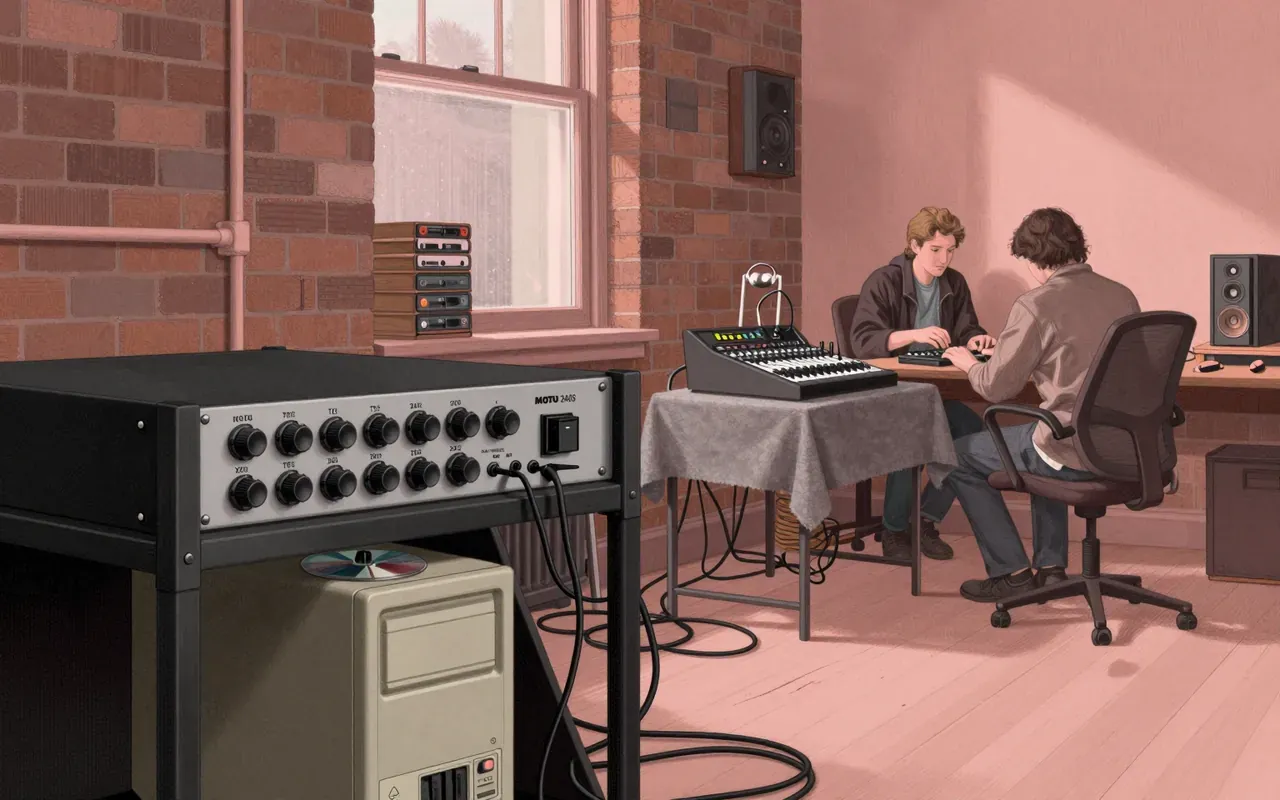
The MOTU 2408 is a discontinued PCI/ISA rack-mount soundcard built for multitrack recording and mixing in home and project studios.

8:19

JBL 4430

JBL

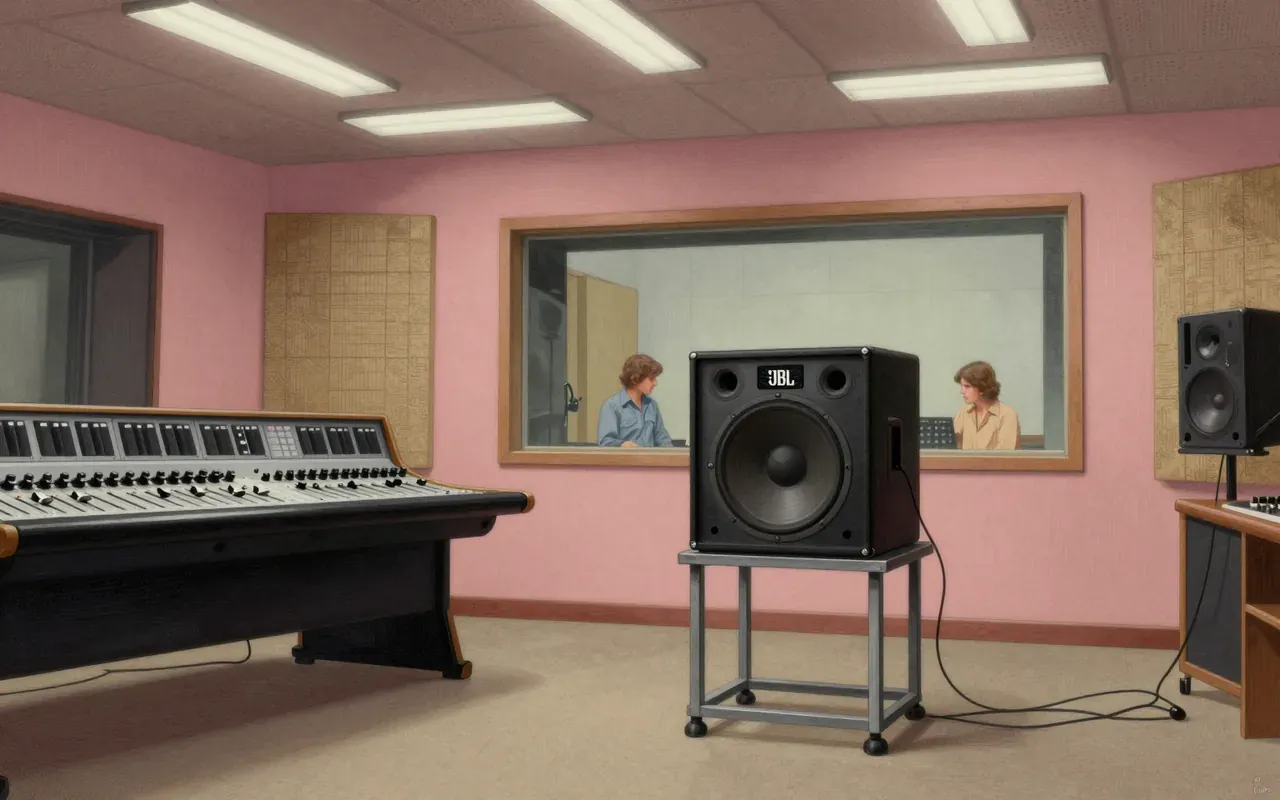
The JBL 4430 is a 2-way active monitor built for studio monitoring. It delivers stable, wide, non-directional dispersion and excellent overall homogeneity. Its horn is more neutral than predecessors like the 4331 and L200 — eliminating long repetitive directional artifacts. It lacks the top-end finesse of the 2405 tweeter. Bi-amplification enables sonic evolution, but mechanical decoupling from the floor is mandatory. It was produced continuously for 20 years with iterative hardware updates: the 1-inch compression driver shifted from aluminum diaphragm and alnico magnets to titanium and ferrite. Each unit supports up to 80 kg.

8:19

Rane MP2016

Rane

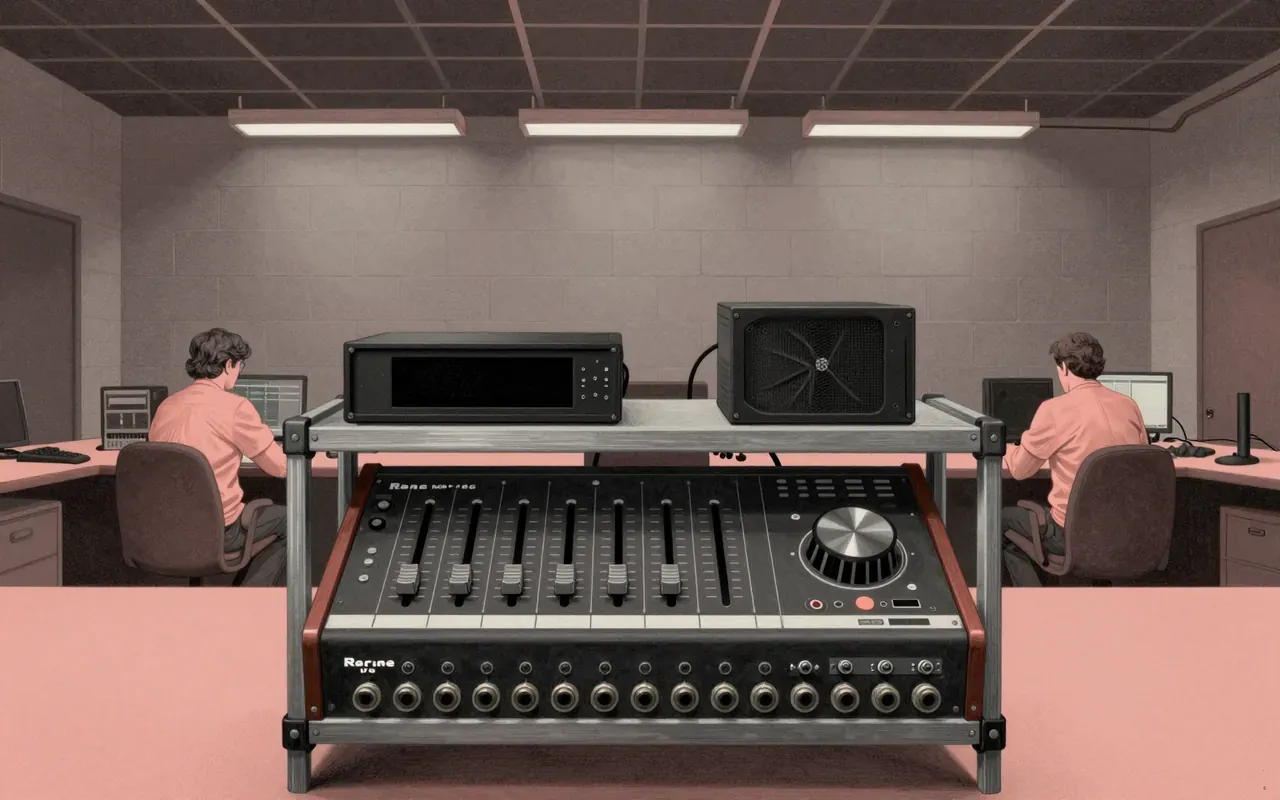
The Rane MP2016 is a 3U rack-mount DJ mixer with six inputs — four phono/line, two mic/line — each with bass/mid/treble and gain. Master/House and Booth outputs each have a 3-band EQ. It delivers crystal-clear sound with no noise or bleed. It has no built-in effects.

8:19

Mutable Instruments Braids

Mutable Instruments

Braids delivers radical timbral variety in minimal space—but with no internal editing, no tuning stability guarantees, and no analogue circuitry. It is a selector, not a synthesizer.

8:20

Otari MTR-10

Otari

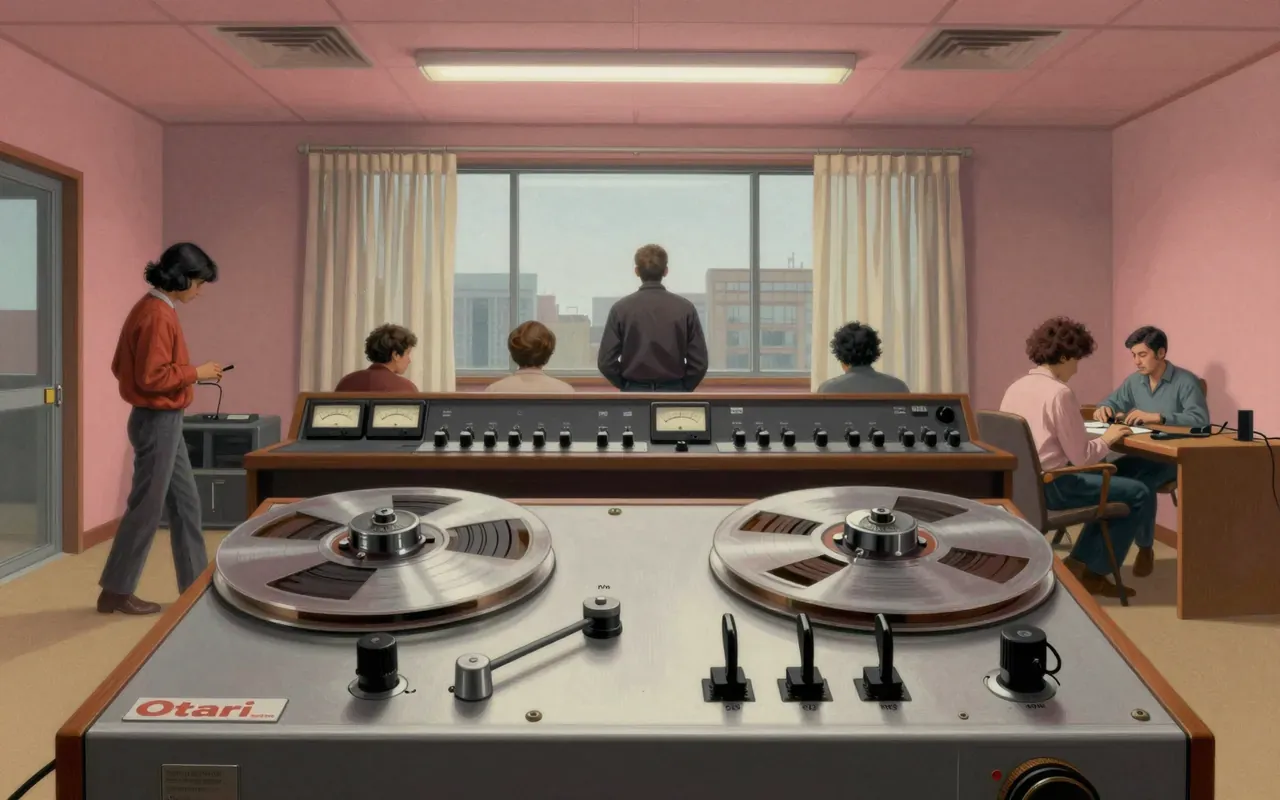
The Otari MTR-10 is an analog multitrack recorder. No technical specifications are available. It is also referred to as 'mtr 10' or 'mtr10'.

8:20

Eventide Omnipressor 2830

Eventide

The Eventide Omnipressor 2830 Au is a studio compressor. No technical specifications are available. It belongs to the studio compressors category.

8:21

Ibanez Tube Screamer TS808

Ibanez

The Ibanez TS808 Tube Screamer Reissue is an analog overdrive pedal in the Tube Screamer series. It has three knobs: tone, level, and overdrive. It uses the JRC4558 chip. It runs on a 9-volt battery or AC adapter. Its metal housing is 4.9" x 2.8" x 2" and weighs just over a pound. It delivers warm, smooth, mid-heavy overdrive suited for solos and blues-rock—not high-gain riffing. It is very strongly built.

8:21

Pioneer DJM-909

Pioneer

The Pioneer DJM-909 is a 2-channel DJ mixer built for live blending, EQ, and effects. It has no published technical specifications. Pioneer manufactured it. User reviews highlight transparency and effective equalization—but give no data on filter slope, latency, or headroom. It does not integrate with software or offer recallable settings. It belongs in a booth, not a studio rack.

8:22

Yamaha SPX900

Yamaha

The Yamaha SPX900 is a 1U digital multi-effects processor with analog-only I/O, 16-bit/44.1 kHz processing, and 99 fixed presets. It delivers studio-ready reverb, delay and modulation in a compact, MIDI-controllable package — but offers no digital connectivity and no on-the-fly parameter editing.

8:22

Eventide Orville

Eventide

The Eventide Orville is a dual-DSP, 24-bit digital audio processor with fully flexible I/O routing, near-three-minute sampling (DSP A), 40-second delay on both engines, UltraShifter™, DistortionCurve™ analog distortion modelling, and Predictive Vocoder™ based on a high-resolution physical model of the vocal tract. Firmware updates require Windows XP and a USB-to-serial adapter—and delete all User Programs unless backed up.

8:23

Boss VB-2 Vibrato

Boss

The Boss VB-2 Vibrato is an analog foot pedal that modulates pitch — not volume — for electric guitar and other electronic instruments. It uses depth, rate, and rise time controls, plus a mode switch. It has no MIDI, no rack mounting, and no presets. Its strength is expressive, natural-sounding vibrato. Its weakness is inflexibility and a learning curve. It belongs in the hands of players who value analog immediacy over convenience.

8:23

Alesis Quadraverb

Alesis

The Alesis Quadraverb is a rack-mount digital multi-effects processor introduced in the early 1990s. It focuses on reverb and delay but also offers pitch, EQ, and 'Change' effects. It runs up to four effects simultaneously in stereo or mono, covers 20 Hz–20 kHz, and connects via 1/4" stereo I/O and MIDI. Users value its lo-fi character—not its fidelity—for feedback loops and textural layering.

8:23

Roland JV-2080

Roland

The Roland JV-2080 is a rack-mount, sample-based MIDI sound module released in early 1997. It supports 768 internal patches and can be stacked up to eight units for 512-voice polyphony.

8:23

Fender Starcaster

Fender

The Fender Starcaster is a semi-hollowbody electric guitar introduced in 1975. It features a bolt-on neck with a three-bolt joint, an offset body, maple fretboard, and a master volume control — distinguishing it from typical semi-hollow designs.

8:24

Trace Elliot AH250

Trace Elliot

The Trace Elliot AH250 is a bass guitar amp head made by Trace Elliot. No technical specifications are available for it.

8:24

Studer A807

Studer

The Studer A807 is an analog multitrack recorder. No technical specifications exist for it. That absence defines it.

8:24

Sequentix Cirklon

Sequentix

The Cirklon is a hardware sequencer. It outputs MIDI, audio (HP), and optionally CV/Gate. It produces no sound. Its clock accuracy and track synchronisation are exceptional. All data saves to flash memory and survives power failure. It operates in step and real-time modes, organising music into SONGs and SCENES.

8:24

Chandler Limited Germanium Compressor

Chandler Limited

The Chandler Limited Germanium Compressor is a mono, 1U, all-analog FET compressor using germanium transistors. It offers a ratio range of 1.5:1 to 10:1 and a Clean/Dirty switch that toggles between low-distortion (0.2–0.5%) and higher-distortion (2–5%) modes. It has symmetric XLR I/O, is rack mountable, and linkable for stereo or surround use. It delivers fast, coloured compression — but gives up timing control, metering, and multi-channel operation to do so.

8:24

RCA Type 77-DX microphone

RCA

The RCA Type 77-DX is a 1954 poly-directional ribbon microphone with mechanical pattern control, low-tension 2.5-micron ribbon, and user-selectable impedance and low-frequency rolloff.

8:24

Gibson Les Paul Junior

Gibson

The Gibson Les Paul Junior is a stripped-down, single-pickup electric guitar introduced in 1954 as Gibson’s affordable entry into the solid-body market. It features one P-90 'dog-ear' pickup at the bridge, one volume and one tone control, no binding, and no carved top. A double-cutaway version launched in 1958 nearly doubled sales. The original run ended in 1963. Its raw, overdrivable tone made it a favourite among rock and blues players in the 1960s and 1970s.

8:24

Roland System 100

Roland

The Roland System 100 is an analog semi-modular synthesizer introduced in 1975. It consists of discrete rack- and keyboard-mounted units (101, 102, 103, 104, 109), each independently powered, supporting patch-cable reconfiguration of an otherwise fixed signal path. It forms an expandable two-oscillator monosynth with sequencing and effects, uses 1V/oct control, and avoids fixed oscillator footages for enhanced sound design flexibility.

8:26

Millennia HV-3D

Millennia

The Millennia HV-3D is a solid-state mic preamp built for fidelity, not flavour. It gives you three transparent gain stages per channel, 1.5 dB stepped gain, phantom power, no phase flip, and eight channels in two rack units — all on internal power. It excels on strings, voice, and piano. It fails on distorted guitar and bright cymbals. It is not subtle. It is literal.

8:26

Neve 31102

Neve

The Neve 31102 is a UAD-exclusive software graphic EQ. It has no published technical specifications. It offers fixed-band EQ only. It requires UAD hardware to run. It makes no claim to model any specific Neve hardware circuit.

8:26

Revox PR99

Revox

The Revox PR99 is an analog multitrack recorder with no published technical specifications. Its function is limited to basic tape-based multitrack recording and playback — but without documented parameters, alignment, or service history, it resists reliable use or evaluation.

8:26

Allen & Heath Xone:62

Allen & Heath

The Allen & Heath Xone:62 (Old Design) is a rack-mountable analog DJ mixer with twelve inputs, six channels, four balanced XLR outputs, per-channel analog high-pass/band-pass/low-pass filters, six channel sends, a four-band EQ whose knobs do not fully cut the signal, and a crossfader that does not fully cut the signal.

8:26

Empirical Labs Distressor

Empirical Labs · 1995

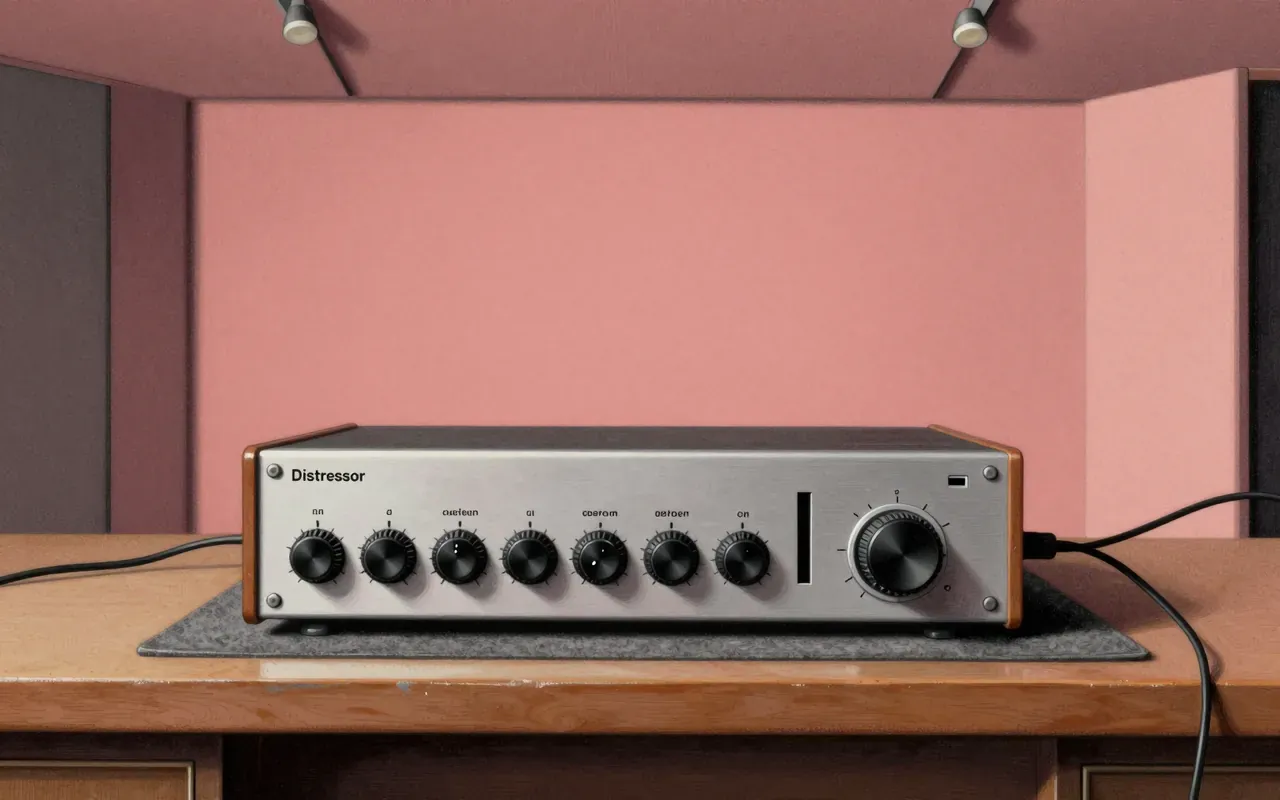
The Empirical Labs Distressor is an analog VCA compressor introduced in 1995. It has a fixed threshold, soft knee, and variable ratio, attack, release, input gain and output gain. At 10:1, it uses a photoresistor-based optical emulation circuit. It includes tube and tape distortion emulations, side-chain high-pass filtering, and on the EL8-X model, British Mode and Image Link. It was inducted into the TECnology Hall of Fame in 2016 and has sold an estimated 40,000 units.

8:26

ARP Odyssey

ARP

The ARP Odyssey is a duophonic analog synthesizer introduced in 1972. It was designed as a portable, performance-oriented alternative to the Moog Minimoog.

8:27

Yamaha QY70

Yamaha

The Yamaha QY70 is a 16-track MIDI sequencer with AWM2 synthesis, 519 voices, 20 drum kits, and XG editing for ADSR, cutoff, and resonance. It runs two hours on batteries. Its screen is Game Boy–sized. It is portable, self-contained, and limited to MIDI — no audio I/O, no extended runtime, no large interface.

8:27

Korg Rhythm 55 KR-55

Korg

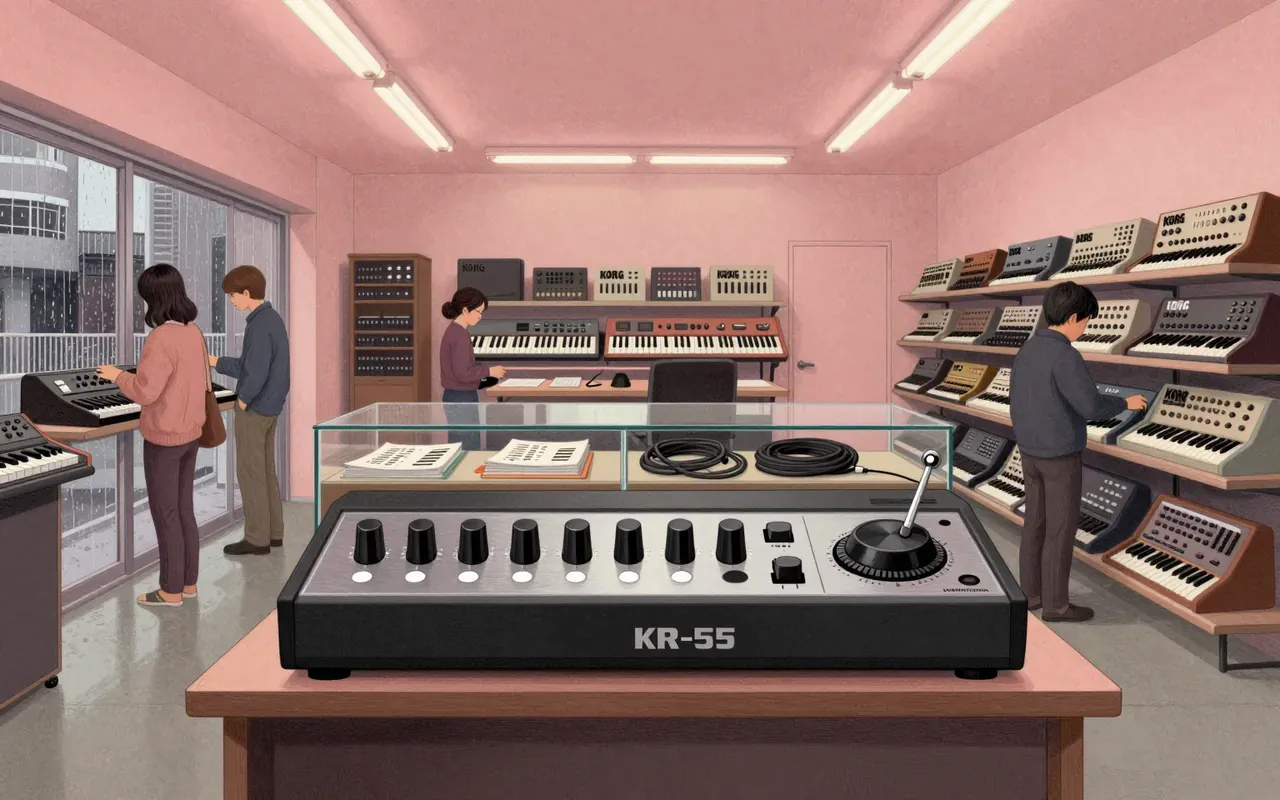
The KR-55 is a fixed-rhythm drum machine from 1979. It plays 48 preset patterns across genres including Waltz, Samba, Rhumba, Bossa Nova, Tango, Slow Rock, Swing, and Rock. It uses sample-based synthesis for 12 drum tones. It has individual level controls per drum sound per pattern. A dedicated swing knob alters groove feel. A footswitch jack enables external Start/Stop and Intro/Fill control. It has no keyboard, no pattern editing, no MIDI, no sync outputs beyond footswitch, and no individual drum outputs.

8:27

Boss SP-303

Boss

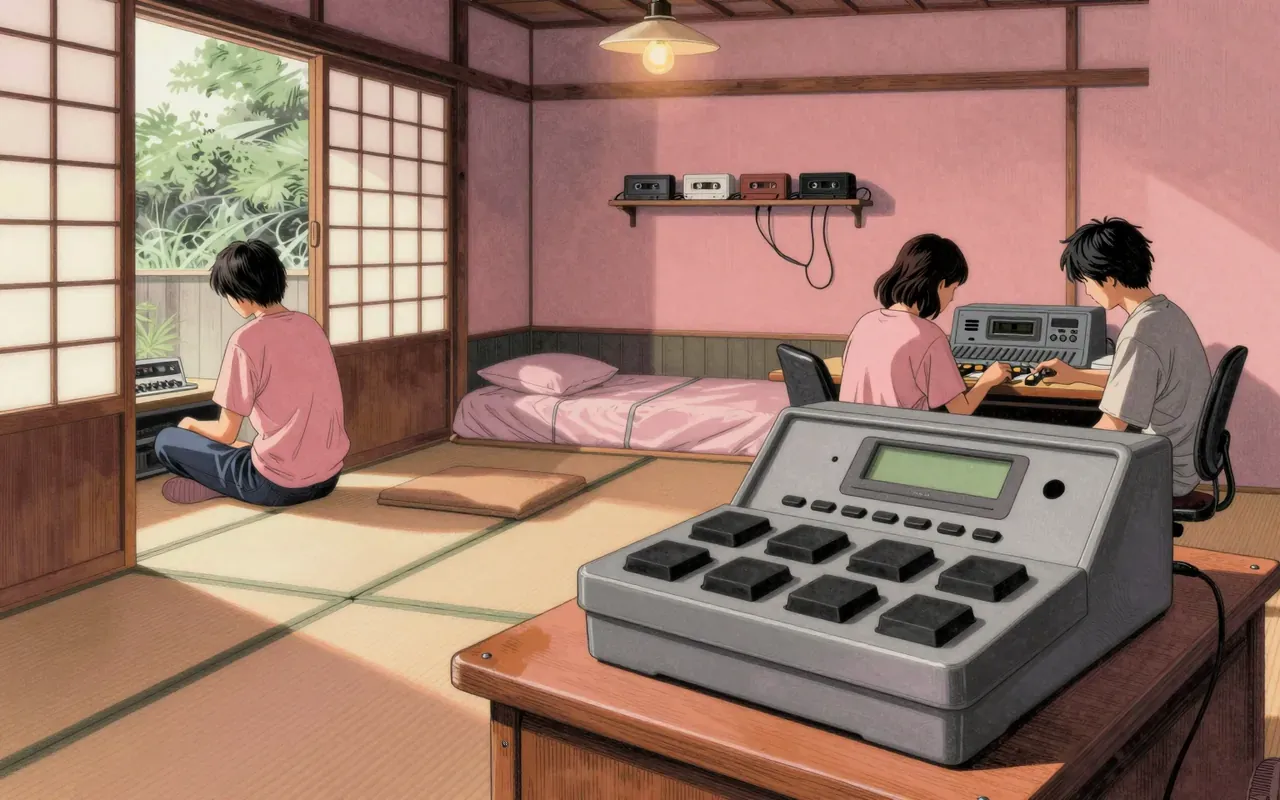
The Boss SP-303 is a 2001 digital sampler with eight pads, four soundbanks, three minutes and twelve seconds of sampling, twenty-six internal effects, and a built-in pattern sequencer. It was used by J Dilla, Madlib, Animal Collective, Panda Bear, Four Tet, and Moka Only. Dilla used it with a 45 record player to make 29 of the 31 tracks on Donuts while hospitalized. Madlib used it with a portable turntable and cassette deck to produce most of Madvillainy.

8:27

Streamer bass

Warwick

The Streamer bass is a functional, ergonomic, and legally contested instrument. It does one thing well: deliver focused low-end articulation in a comfortable, German-built package. It does nothing else — no tonal flexibility, no innovation, no independent identity in its first years. Its history is defined by imitation, negotiation, and eventual divergence — not invention.

8:27

LS3/5A

BBC

The LS3/5A is a compact BBC-designed studio monitor built for broadcast consistency, not domestic indulgence. Its revisions track component supply — not artistic evolution. It excels in transparency but fails at bass, volume, and modern amplifier compatibility.

8:28

JBL 4312

JBL

The JBL 4312 is a passive three-way studio monitor built for punch, precision, and stereo imaging — not neutrality or refinement.

8:28

GenoQs Nemo

GenoQs

The GenoQs Nemo is a hardware sequencer. That is all that is verified.

8:28

Gibson ES-295

Gibson

The ES-295 is a hollow body guitar introduced in May 1952. It shares dimensions with the ES-175. It was conceived as a full-sized hollowbody archtop intended to complement the solidbody Les Paul. Its original price was $295. Les Paul claimed involvement in its creation. The first ES-295s came outfitted with one pickup. By 1953 the guitar was shipping with two pickups. It was discontinued in 1959 and reissued multiple times. Scotty Moore used it.

8:29

dbx 166

dbx

The dbx 166 is a no-compromise stereo FET compressor built for speed and instrument tracking—not vocals, not mixing, not analysis. It delivers efficient, transparent compression with subtle warmth. Its design gives immediacy and reliability. It withholds metering, sidechain, vocal suitability, and fine dynamic control.

8:29

MCI MCI JH-500

MCI

The MCI JH-500 is a channel strip module inside the MCI JH-528 B studio rack. It delivers clear, powerful, live-sounding results straight out of the box—especially on acoustic guitar—with no EQ required. Its notch EQ sweeps effectively across the spectrum. Four XLR I/O and two rear line inputs support flexible routing. It is built for immediacy, not fine-grained control.

8:29

Fulltone OCD

Fulltone

The Fulltone OCD V1.1 is an analog overdrive pedal. It has volume, drive, and tone controls. It has a high-pass/low-pass switch. It uses true bypass. It is white with black knobs and a red LED.

8:29

Technics SL-1200

Technics · 1972

The Technics SL-1200 is a tool for physical intervention — not passive playback. Its engineering serves one demand: keep spinning, exactly, while being handled.

8:29

Roland Jupiter-8

Roland

The Jupiter-8 is an eight-voice polyphonic analog subtractive synthesizer introduced by Roland in early 1981. Each voice features two discrete VCOs with cross-modulation and sync, pulse-width modulation, a non-resonant high-pass filter, a resonant low-pass filter with 2-pole and 4-pole settings, an LFO with variable waveforms and routings, and two envelope generators (one invertible). It includes adjustable polyphonic portamento, a hold function for infinite sustain, an assignable bender for pitch or filter frequency, balanced XLR and unbalanced 1/4" outputs for Upper and Lower presets in Split mode, and a unique polyphonic unison mode where all 16 oscillators stack onto one note and divide down when more keys are pressed. Its arpeggiator syncs externally via DCB or CV. Tuning stability improved from serial #171700 onward.

8:29

Ampeg SVT

Ampeg

The Ampeg SVT is a 1969 bass amplifier head designed by Bill Hughes and Roger Cox. It uses 14 vacuum tubes to deliver 300 watts of RMS power. Early units used unstable 6146B output tubes, later replaced with 6550s. It is a stand-alone head, not a combo. The Rolling Stones used five prototypes on tour in 1969, playing all guitars and basses through them.

8:30

Studer A80

Studer

The Studer A80 is a tape recorder that shapes sound by softening transients and adding organic saturation. It works only when configured precisely: 19/38 or 38/76 cm/s, 1/2-inch tape, GP9-aligned heads. It excels in rock. It fails in dance, house and electro. It is not flexible. It is not neutral. It is a deliberate, physical constraint.

8:30

Waldorf Microwave XT

Waldorf

The Waldorf Microwave XT is a 1998 rackmount synthesizer using digital wavetable and FM synthesis, featuring 44 real-time control knobs, 20-bit DSP functions, and 10-voice polyphony expandable to 30; it shares its engine with the Microwave II and Wave synths, excels at emulating PPG sounds and generating acid or Moog-style bass, and includes onboard arpeggiator, digital effects, and MIDI-transmitting knobs.

8:30

Vestax PMC-07 Pro

Vestax

The Vestax PMC-07 Pro is a 2-channel scratch mixer. It prioritises precision, durability, and clarity over features. Its crossfader is adjustable and preferred for scratching over competitors including the PMC-05, Numark, Ecler, Rane, and PMC-07 PSI. It sounds clear and unsaturated. It has no digital functions, no headphone cueing beyond basic monitoring, and no more than two channels.

8:30

Yamaha DX1

Yamaha

The Yamaha DX1 is the top-level member of Yamaha's prolific DX series of FM synthesizers.

8:30

Roland TR-505

Roland

The TR-505 delivers rigid, punchy sequencing with integrated Latin percussion — but its 8-voice limit forces trade-offs no modern sequencer accepts.

8:31

Great River MP-2NV

Great River

The MP-2NV gives two channels of the ME-1NV’s analog preamp circuit — no more, no less. It does not add features. It does not subtract fidelity. It occupies one rack space. It accepts mic and line-level sources directly. It meters input and output. It sounds warm, clear, and accurate — as verified by users.

8:31

Akai ASQ-10

Akai

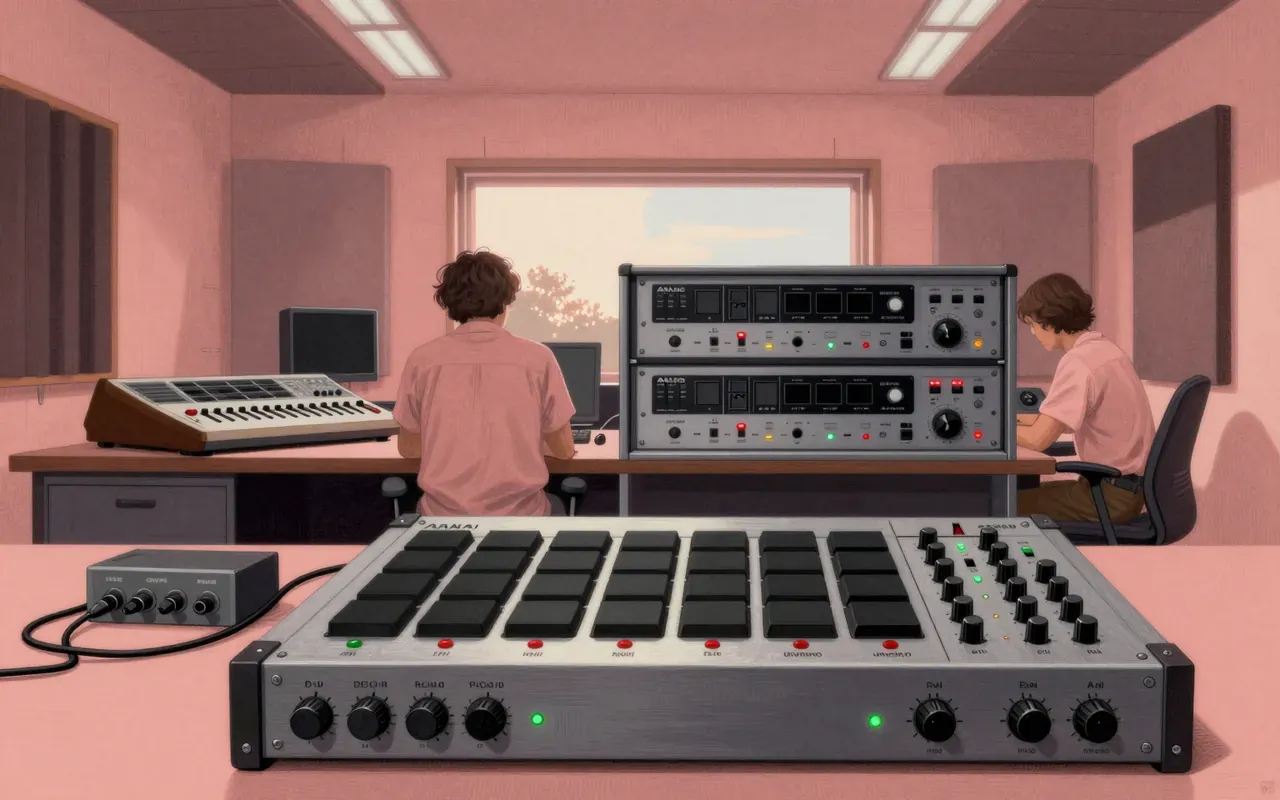
The ASQ-10 is a sequencer-only instrument. It has no sound generation. It does not sample. It exists solely to trigger, time, and lock external gear. Its design enables rhythmic complexity unplayable by hand — then corrects timing drift across the chain. It is the first MPC-shaped workflow, before the MPC existed.

8:31

M-Audio Delta 1010

M-Audio

The M-Audio Delta 1010 is a discontinued PCI/ISA + rack-mount soundcard. It delivers 8 analogue I/Os plus SPDIF. It achieves 5ms latency. It runs stably with Cubase and Sonar on legacy desktops. It crashes beyond 24 tracks — due to host computer limits, not the card. It inserts real-time effects during mixdown without issue. It requires a Pentium 4–era PC with a free PCI slot. It has no USB or FireWire support. It is no longer manufactured.
8:31

Ibanez RG550

Ibanez

The Ibanez RG550 is an STC-shaped electric guitar from the RG Standard series, manufactured from 1987 to 1994. It features a Floyd Rose locking tremolo, H-S-H pickups, a 5-way switch, and a thin maple neck. It is discontinued. Users praise its playability and tuning stability but note its weight and fragile finish.

8:31

Way Huge Swollen Pickle

Way Huge

A fuzz pedal named Swollen Pickle, sold under multiple variants. The source confirms only its category and naming variations — nothing about sound, circuit, usability, or musical role.

8:31

Akai XR10

Akai

The Akai XR10 is a budget drum machine released in the early nineties. It plays fixed PCM drum sounds from ROM. It has four modes, no backlight, no MIDI Thru, no internal amp or speakers. It is simple, stable, and silent until patched out.

8:31

API 550

API

The API 550b is a four-band analog EQ re-issuing the 1967 API 550 with an added band. It offers seven switchable frequency centres per band, ±12 dB boost/cut, shelf/peak switching on bands 1 and 4, Proportional Q, reciprocal and repeatable filtering, and a +30 dBu clipping level. It uses API’s 2520 op amp and is built to original blueprints.