audiobriefs
Shortest first

All briefs

747 briefs · 6840 min · 385–480 on page 5 of 8
9:06

Oberheim Xpander

Oberheim

A keyboardless, six-voice analog synthesizer launched in 1984 and discontinued in 1988. Rack-mounted. Uses Matrix Modulation to route digital control to analog VCOs, multi-mode VCF, and two sequential VCAs. Each voice is independently configurable — including FM via VCO-to-VCO modulation — via multi-patch mode.
9:06

Oberheim Polyphonic Synthesizer

Oberheim

The Oberheim Polyphonic Synthesizer is a series of analog music synthesizers produced from 1975 to 1979. It was the first production synthesizer capable of playing chords. It works by combining multiple SEM modules — each generating one voice — under shared keyboard control and a two-channel sequencer. Its sonic thickness and depth arise partly from random variance between SEM modules. It has no patch memory, suffers tuning drift, and demands high maintenance. Musicians used it for unstable, breathing chordal textures. It suits players who prioritise tactile, variable analog polyphony over stability or recall.
9:07

Yamaha DM2000

Yamaha

The Yamaha DM2000 is a discontinued digital mixer console built for professional live sound reinforcement and studio tracking/mixing.

9:07

Neumann KM 54

Neumann

The KM 54 is a rare, discontinued large-diaphragm tube condenser microphone. It has a fixed cardioid pattern and requires its own unique power supply. It is fragile and unsuitable for live use. It delivers a warm, wide vocal tone — ideal for capturing subtlety — but lacks the clarity of newer Neumann tube mics. A reviewer used it successfully on vocals for themselves and a client. It resembles the AKG C12 in sound and appearance.

9:07

Rhodes Chroma

Rhodes

The Rhodes Chroma is a microprocessor-controlled analog synthesizer originally developed by ARP Instruments, Inc. in 1979–1980 and produced by Rhodes in 1982. It features sixteen-voice polyphony, digitally encoded parameter processing, and software-generated envelopes and LFOs. Its architecture relies on software-based control of analog voice channels, enabling programmable multitimbral synthesis but introducing latency and instability.

9:08

Alembic Series I

Alembic

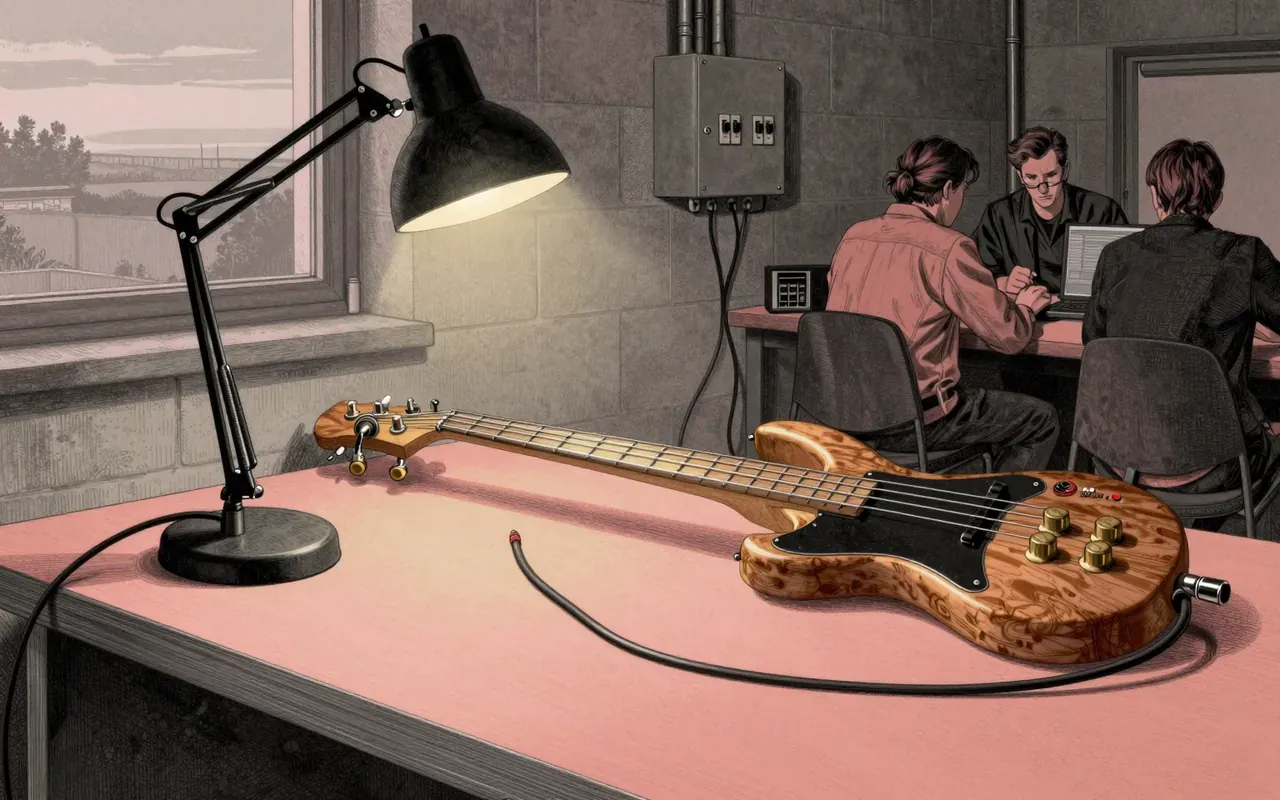
The Alembic Series I is a 1977 US-made 4-string bass with rabl neck and top, mahogany body, bne key, brass bridge and nut, and 24-fret pearl-inlaid neck. Its electronics include two single-coil pickups, a central dummy hum pickup, stereo 5-pin XLR output, external power supply, dual volume/tone controls, dual 3-position Q-switches, and a 3-position + Off selector. It delivers precise, clear, full-range sound suited to slap, fingerstyle, and pick playing—but is relatively heavy, fragile (headstock prone to breakage), and has non-independent string height adjustment at the bridge.

9:08

Ibanez FL9 Flanger

Ibanez

The Ibanez FL9 Flanger is an analog stompbox flanger pedal for guitar. It delivers swooshing phase-based effects via four knobs: Speed, Regen, Width, and Delay Time. It is not true bypass, so it colours the signal even when disengaged. It does not claim to be anything else — no digital emulation, no stereo outputs, no expression input, no presets.

9:08

Neumann KM 184

Neumann

The KM 184 is a fixed-cardioid small-diaphragm condenser microphone built for clarity, durability, and extreme SPL handling — not for shaping or adapting.

9:08

Rupert Neve Designs Portico 5033

Rupert Neve Designs

The Portico 5033 is a parametric EQ in Rupert Neve Designs’ Portico series. No technical specifications are published. It offers hands-on control but no documented performance metrics.

9:08

RCA Type 44

RCA

The RCA Type 44 is a bi-directional ribbon microphone introduced in 1931. Its thin corrugated metal ribbon generates voltage when vibrating in a magnetic field. It hears only front and back. It breaks under wind, phantom power, and loud transients. It flatters voice and acoustic instruments with smooth mids and gentle highs. It belongs in a vintage studio chain—not on a podcast desk or a stage.

9:08

Small Stone Records

Electro-Harmonix · 1995

The Small Stone is a 4-stage analog phaser pedal introduced by Electro-Harmonix in 1974. Designed by David Cockerell, it became central to Jean-Michel Jarre’s sound and was later reissued in a Nano chassis. Its simplicity — one knob, two modes — gives immediate, expressive motion but no depth control, no buffered bypass, and no digital features.

9:08

Oberheim DMX

Oberheim

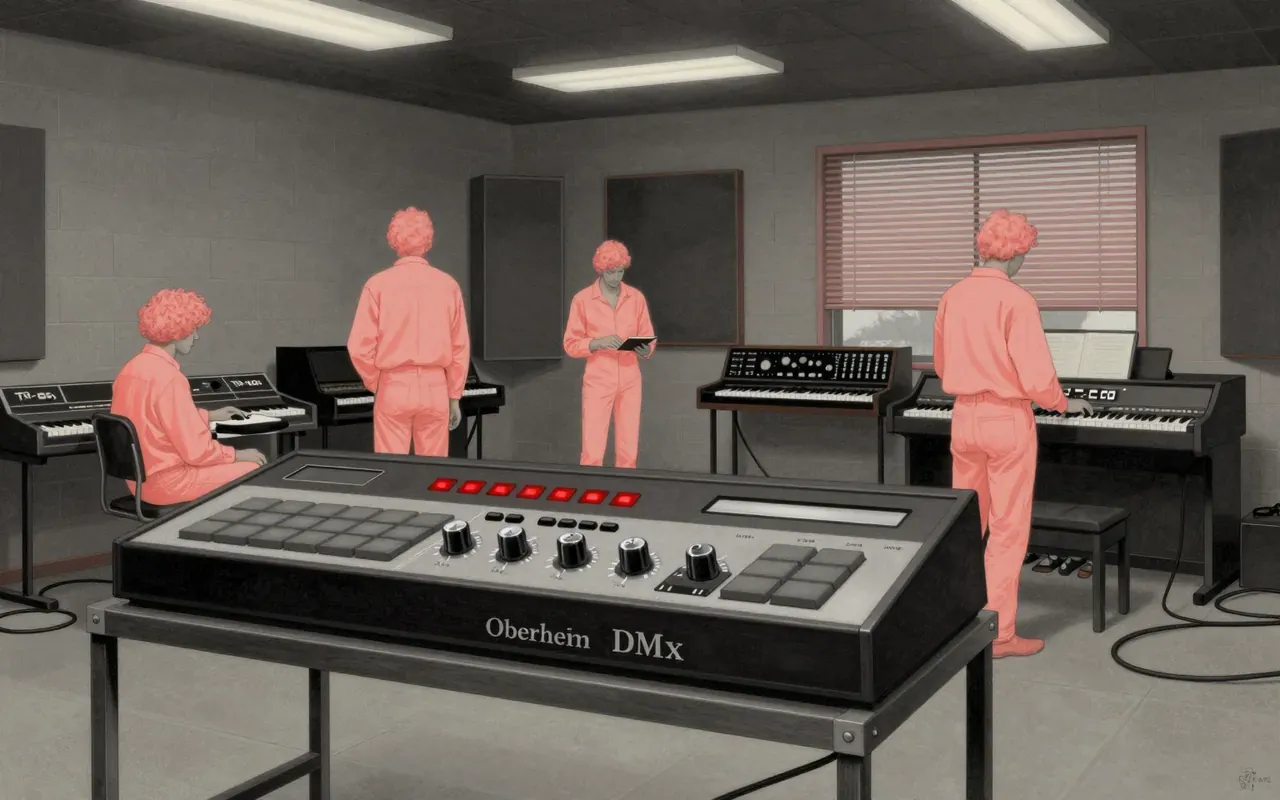
The Oberheim DMX is a programmable digital drum machine introduced in 1980. It was the second commercially sold digital drum machine after the Linn LM-1. It used sampled sounds of real drums stored in EPROM chips on removable voice cards. It offered 24 drum sounds derived from 11 original samples and supported up to 8-voice polyphony. It included humanizing features like rolls, flams, and timing variations. It was designed to interface with the OB-Xa synthesizer via the Oberheim Serial Buss and marketed as part of 'The System' alongside the DSX sequencer and OB-Xa or OB-8. It was widely used in 1980s new wave, synth-pop, and hip hop recordings.

9:09

Neumann KM 56

Neumann

The Neumann KM 56 is a small diaphragm condenser microphone in the KM series. It belongs to the category of small diaphragm condenser microphones. It is also referred to as ‘km 56’ or ‘km56’. No technical specifications are provided.

9:09

Ensoniq Fizmo

Ensoniq

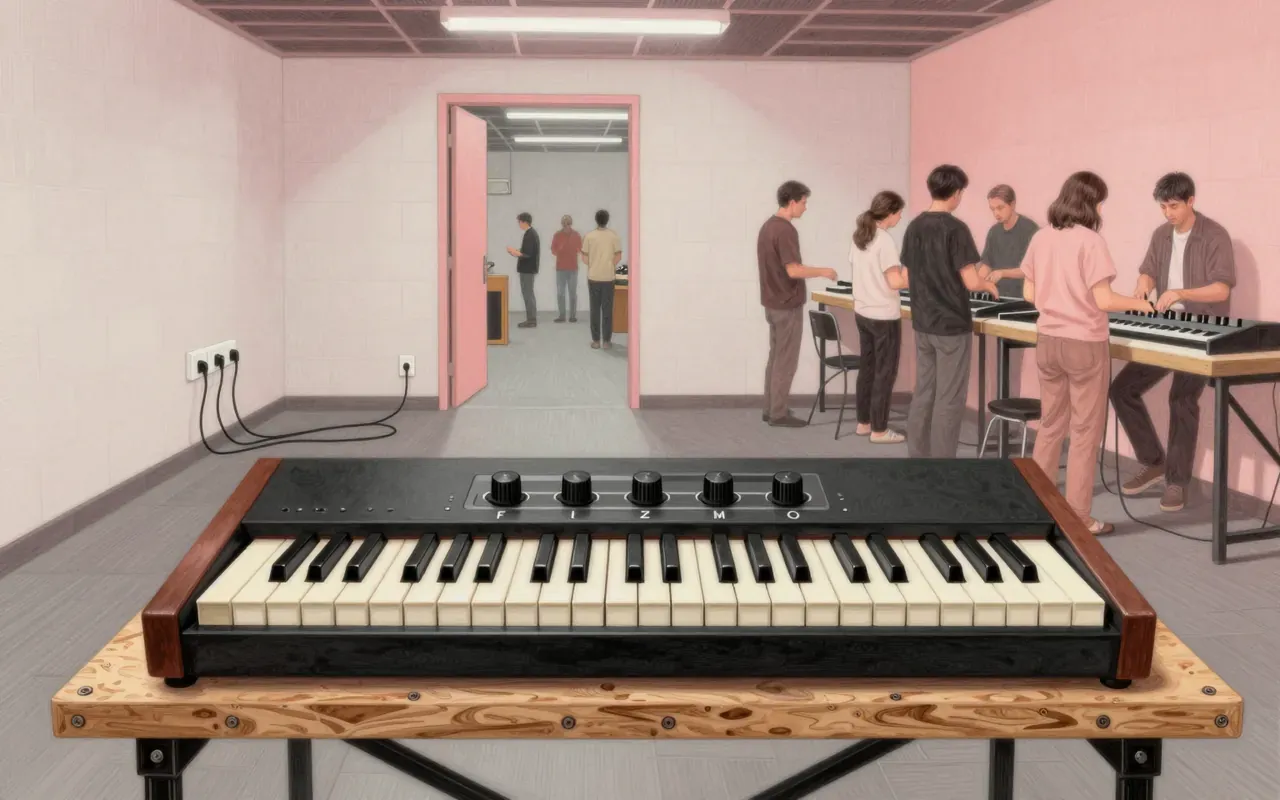
The Ensoniq Fizmo is a 1998 digital synthesizer using Transwave synthesis, capable of 48-voice polyphony, featuring real-time F-I-Z-M-O knob modulation, multi-segment envelopes, and a focus on evolving pads and arpeggiation — though hampered by hardware and UI limitations.

9:10

Korg Electribe 2

Korg

The Korg Electribe 2 is a groove machine in the ElecTribe series. It supports up to 250 patterns, each limited to four bars in length. It includes 32 master effects modeled after the Kaos Pad. Each track can have one individual effect selected from 38 available types. It offers 25 groove types that can be applied per track. It includes PCM-based sound sources: 56 kicks, 58 snares, 16 claps, 56 hi-hats/cymbals, 71 percussion/toms, 52 synth hits/FX/instrument hits, 16 voices, and 27 instruments. It uses synth modeling with 55 preset oscillators.

9:10

Lexicon Lexicon 480L

Lexicon

The Lexicon 480L is a rack-mounted digital reverb processor introduced in 1986. It contains 200 internal programs. It supports RAM and ROM cartridges. It is controlled via the LARC remote control unit. It has 2 or 4 XLR analog outputs. Two units can be cascaded for two independent engines. Version 1.01 launched in 1986 and immediately became the new world standard for high-end studio reverb machines. Firmware extended to version 4.01 with a surround kit before being replaced by the 960L.

9:10

Roland MV-8000

Roland

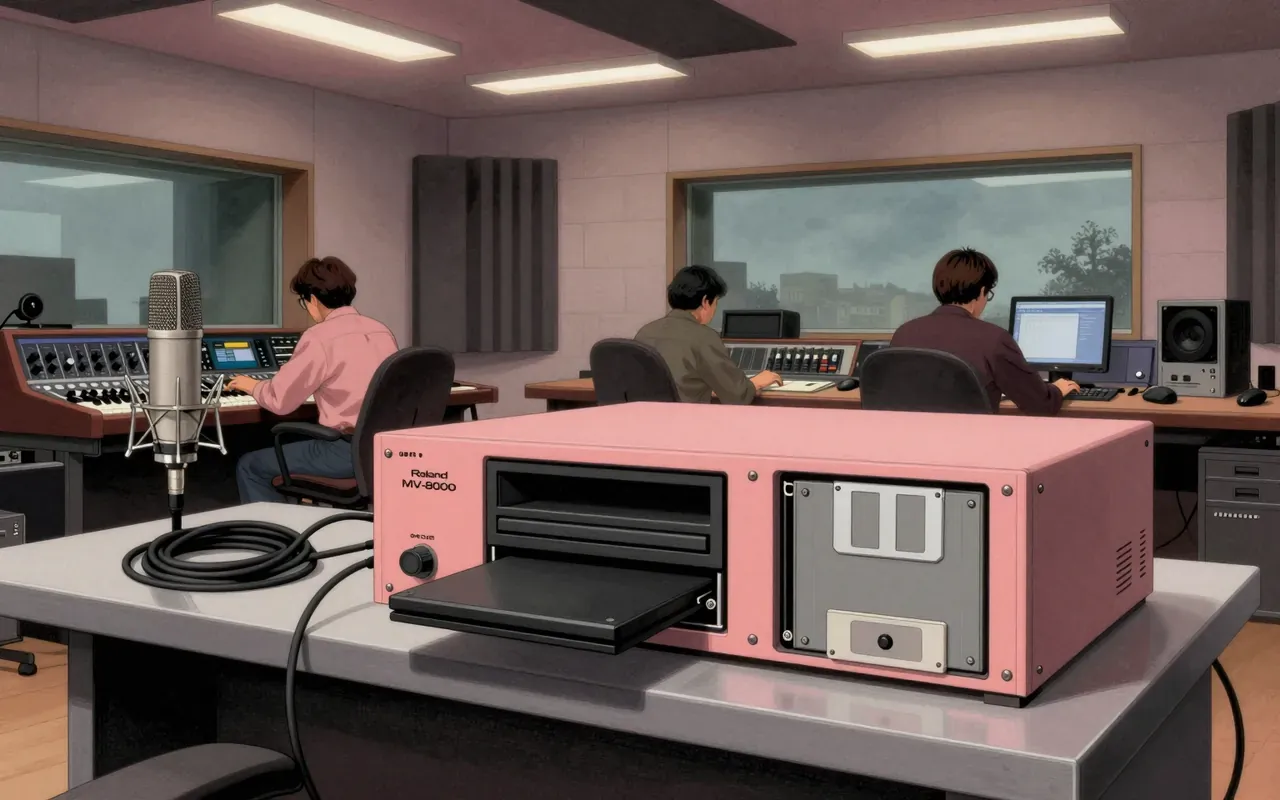
The Roland MV-8000 is a 2004 sampling sequencer built for producers who want to record, edit, sequence, and master full tracks without a computer.

9:10

Roland JX-3P

Roland · 1983

The Roland JX-3P is a six-note polyphonic synthesizer produced by Roland Corporation of Japan from 1983 to 1985. Its name stands for 'Programmable Preset Polyphonic'. It uses two digitally controlled oscillators with sawtooth, 50% and 10% pulse waveforms plus noise. It stores 32 factory and 32 user programs. It features a built-in 128-step polyphonic sequencer synced to external clock pulses — not MIDI clock. Its MIDI implementation supports only note on/off, pitch bend, hold, modulation and program change. The PG-200 programmer enables deeper editing but disables MIDI while connected.

9:10

Prophet '08

Dave Smith Instruments

The Prophet '08 is an eight-voice analog synthesizer released in 2007 by Dave Smith Instruments. It uses analog subtractive synthesis with digitally controlled oscillators, voltage-controlled filter and amplifier, ADSR envelopes, and three playing modes. It was conceived as an affordable eight-voice analog synthesizer.

9:10

Marshall Super Lead

Marshall · 1965

The Marshall Super Lead is a 100-watt guitar amplifier head made by Marshall between 1966 and 1981. It was developed in response to player demand for higher output than the earlier JTM45. Its distortion arises solely from overdriving its EL34-based power amp section at high volume. It has two channels and four inputs but no master volume. Its core character is bold, midrange-heavy, and bright — delivering the foundational 'Marshall crunch' sound of 1970s rock.

9:10

Roland XP-80

Roland

The Roland XP-80 is a 1996 76-key workstation using digital PCM subtractive synthesis, delivering 64-voice polyphony and 16-part multi-timbrality via a semi-weighted keyboard. It merges the JV-1080 engine with the MRC-Pro sequencer for tight internal composition—but offers no aftertouch, limited real-time sound control, and no modern connectivity.

9:11

Danelectro 59 DC

Danelectro

The 59DC was one of the first two reissues of Danelectro's Shorthorn line, sold between 1998 and 2001 with two pickups. The Shorthorn design it reissues is a dual cutaway hollow body of Masonite and poplar, with a Coke bottle style headstock and a seal shaped pickguard carrying stacked tone and volume knobs.

9:11

Waldorf Microwave

Waldorf

The Waldorf Microwave is a hybrid wavetable-analogue synthesizer whose distinctiveness comes from forcing digital waveforms through characterful analogue filters — not from flexibility, expansion, or modern workflow features.

9:11

Ensoniq EPS-16 Plus

Ensoniq

The EPS-16 Plus is a purpose-built 1990 sampler that trades flexibility for immediacy. It records mono, plays back 16-bit samples at seven fixed rates, and routes everything through stereo panning and 13 effects. Its ES5505 OTIS chip gives it tight, responsive playback—but no sample rate conversion, no stereo input, and no non-destructive editing. Turbo versions added flash and SCSI, but Ensoniq replaced it with the ASR-10 in 1992. It belongs in a room where decisions are made by ear and fingers—not by menu diving.

9:11

Gibson Firebird

Gibson

The Gibson Firebird is a solid-body electric guitar introduced in 1963. It features neck-through-body construction—the first Gibson solid-body to do so—with a stepped neck, reverse headstock, treble-side banjo-style planetary geared tuners, and fully covered mini-humbucking pickups with metal surrounds. The neck is built from five plies of mahogany and four narrow strips of walnut.

9:11

Boss MT-2

Boss · 1991

The Boss MT-2 Metal Zone is a 1991 distortion pedal designed for heavy metal guitarists. It features high-gain capabilities, a thick and tight tone, and powerful semi-parametric EQ controls. Boss developed it as a more versatile successor to the HM-2, using a dual-stage gain circuit and seven pre- and post-distortion filters.

9:11

Epiphone Coronet

Epiphone

The Epiphone Coronet is an Epiphone-exclusive, entry-level solidbody electric guitar with a single P-90 pickup, one volume and one tone control. First introduced as an amplified archtop in 1939, it was reclassified as a solidbody by 1961. It has been manufactured across multiple eras — 1959 US production, 1960s Dwight-branded variants, discontinuation in the 1970s after Epiphone moved overseas, a late-1990s Korean reissue, and a 2020 reissue. It offers no pickup switching, no neck pickup, and minimal control options. Its design prioritises simplicity and direct tone over versatility or refinement.

9:12

ShredMaster

Marshall · 1991

The ShredMaster is the high-gain pedal in the trio Marshall released in 1991 with the Bluesbreaker and Drivemaster. It is a conventional distortion pedal with Gain, Bass, Contour, Treble and Volume controls in a black, wedge-shaped metal case. Poor sales ended the run within a few years, and Marshall reissued it in 2023.

9:12

Neve 2264A

Neve

The Neve 2264A is a mono limiter/compressor module built for studio use. No technical specifications are published. It weighs 1.3 kg. Its function is defined by category, not data sheet.

9:12

Neve 31105

Neve

The Neve 31105 is a channel strip. No technical specifications are available. Nothing else is confirmed.

9:12

RCA BA-6A

RCA

The BA-6A is a software compressor by Antelope Audio. No technical specifications are available. Its controls, behaviour, and sonic role are undocumented. It exists only as a named category and a set of alternate spellings.

9:12

Pioneer CDJ-2000

Pioneer

The Pioneer CDJ-2000 is a discontinued tabletop DJ player. It supports playback from CDs, DVDs, SD cards, USB devices, and wirelessly via WiFi from computers and phones. It has a ~6-inch colour LCD display. Its loop quantisation is automatic and highly accurate. User preferences are saved across power cycles. It was replaced by the CDJ-2000 Nexus.

9:12

Prism Sound Dream ADA-8XR

Prism Sound

The Prism Sound Dream ADA-8XR is an eight-channel analog/digital converter built for fixed-install mastering and DAW integration. It provides eight balanced XLR I/O at +4 dBu, two RCA monitoring outputs, DB-25 AES I/O, and dual BNC Word-Clock. Its build quality is impeccable—but it runs hot, demanding 1U of rack clearance. It does not offer USB, optical, headphone output, or variable monitor level control.

9:12

Telefunken ELA M 251

Telefunken

The Telefunken ELA M 251 is a large diaphragm condenser tube microphone made by Telefunken Elektroakustik. It belongs to the category of large diaphragm condenser tube microphones. Nothing else is verified.

9:12

Roland SDE-3000

Roland

The Roland SDE-3000 is a mono digital delay unit introduced in 1984. It delivers up to 4500 ms of delay with 10 Hz–17 kHz frequency response and low distortion. It has wet/dry outputs, time loop, and TRS footswitch support. It is built for reliability, not versatility.

9:12

EMS Synthi 100

EMS

The EMS Synthi 100 is a large analogue/digital hybrid synthesizer commissioned by Radio Belgrade, designed by David Cockerell and documented in 1971. It developed from a concept of three VCS3 systems but contains analogue modules equivalent to six VCS3s. It features 12 voltage-controlled oscillators and eight voltage-controlled filters. Two monophonic keyboards produce four control voltages and two triggers. Its digital sequencer has three duophonic layers and 256 duophonic note events. Two 60×60 matrices connect modules via patch pins. Keyboard spread adjusts for equal temperament or microtonal tunings up to 61 divisions per semitone.

9:12

Gibson ES-355

Gibson · 1958

The ES-355 is Gibson’s most complex semi-hollow — a stereo, varitone-equipped evolution of the ES-335. It launched in mono in 1958, added stereo in 1959, and was discontinued in 1984 after failing to meet commercial expectations. Many players disabled the varitone. Gibson revived it in 2018.

9:13

dbx 165

dbx

The dbx 165 is a studio compressor. No technical specifications exist for it. It is categorised as a studio compressor. That is all that is confirmed.

9:13

Boss PS-2 Digital Pitch Shifter/Delay

Boss

The Boss PS-2 is a mono digital pitch shifter and delay pedal with fixed +1/−1 octave modes and three delay time ranges. It delivers immediate, stable octave doubling and atmospheric delay tails — but offers no stereo output, no expression control, and no fine pitch adjustment. It belongs on a gigging guitarist’s board, not in a stereo studio chain.

9:13

Oberheim Matrix-1000

Oberheim

The Oberheim Matrix-1000 is a 1987 rackmount analog synthesizer. It contains 1,000 Matrix 6 patches. Each voice has two DCOs, one low-pass filter, two VCAs, three envelope generators, two LFOs and two ramp generators. Editing requires external MIDI tools. It is optimised for pads, textures and ambient sound design.

9:13

Roland TR-606

Roland

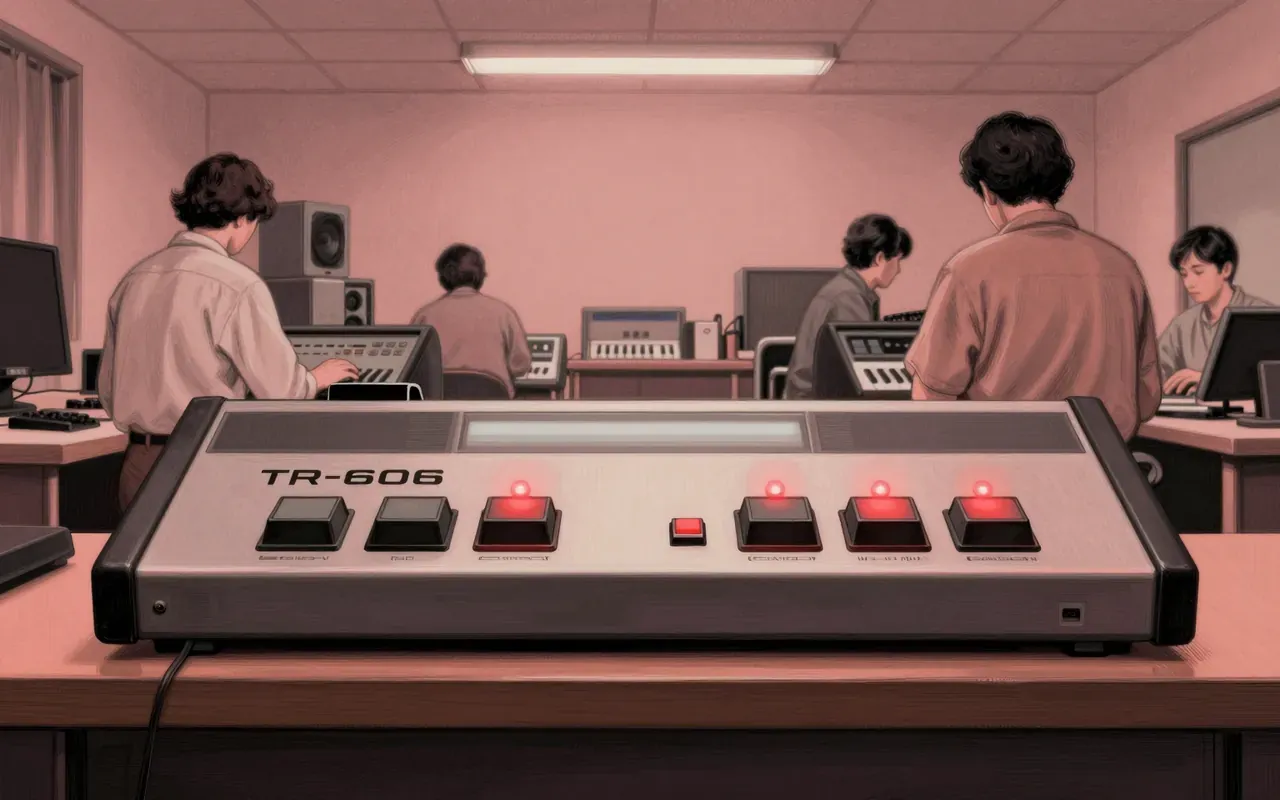
The Roland TR-606 is a fixed-voice analog drum machine built from 1981 to 1984. It generates bass drum, snare, toms, cymbal, and open/closed hi-hat sounds using analog synthesis—not samples—and offers no sound editing. Its 32-pattern sequencer includes accent controls and song chaining. DIN sync enables tight integration with the TB-303. It does one thing decisively: deliver unvarnished, immediate rhythm. It refuses everything else.

9:14

Auratone 5C Super Sound Cube

Auratone

The Auratone 5C is a passive monitor requiring an external amplifier. Its extremely flat response and limited frequency range make it useful for quick A/B checks — but its lack of low-end response rules it out for primary mixing. It does one thing well: revealing what a mix loses when stripped of bass and extension.

9:14

Yamaha DX7II

Yamaha

The Yamaha DX7 II FD Centennial is a 76-key, fully-weighted FM synthesizer released in 1987. It delivers 16-voice polyphony, a built-in sequencer and arpeggiator, and 64 user presets. Its interface is menu-driven and lacks real-time controls. It serves players who prioritise weighted-action playability and integrated sequencing over flexible sound design.

9:14

Yamaha NS-10M

Yamaha

The Yamaha NS-10M is a two-way passive near-field monitor. It delivers clear mid and high frequencies but lacks deep low-end extension. Engineers use it to verify mix translation and to A/B compare with other speakers. Its non-neutral response demands experience. It is not a full-range solution.

9:14

Vestax PMC-25

Vestax

The Vestax PMC-25 is a 2-channel DJ mixer designed for house music. It is 3U tall and rack mountable. It features PGM vs. Master LED VU metering, split cue, a third cueable aux input, and EQ kill switches implemented as mini faders to avoid clicks and achieve -85 dB attenuation. The crossfader has a fixed curve. Faders and crossfader are replaceable. Sound quality is perceived as superior to a cheap Numark mixer.

9:14

Akai MPC

Akai · 1988

The MPC60 redefined beat-making by collapsing sampling, sequencing, and performance into one hardware instrument. Its strength is immediacy. Its weakness is inflexibility.

9:14

Akai S1000

Akai · 1988

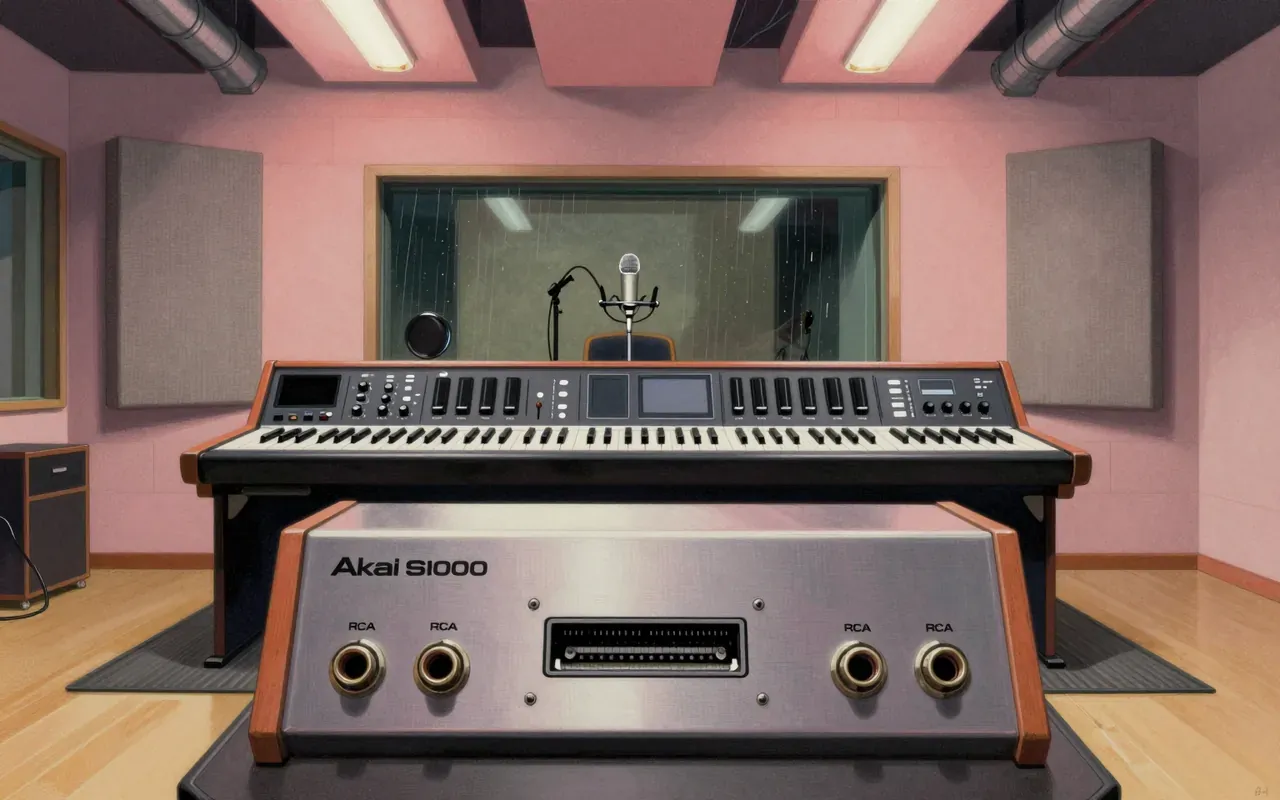
The Akai S1000 was a 16-bit stereo digital sampler released in 1988. It offered CD-quality sampling, 24-bit internal processing, digital filters, effects routing, and early timestretching. It read CD-ROMs and wrote to SCSI hard disks. Its timestretching was crude but sonically distinctive—used on 'Higher State of Consciousness' and 'RipGroove'. It displaced the S900 as the studio standard.

9:15

dbx 160

dbx

The Waves dbx 160 is a software compressor plug-in released in 2015. It delivers fast, aggressive compression with minimal setup. It lacks flexibility and colour but excels at tightening drums and bass. It costs $49 on sale. It belongs in the mix bus, not the mastering chain.

9:15

Yamaha TG77

Yamaha

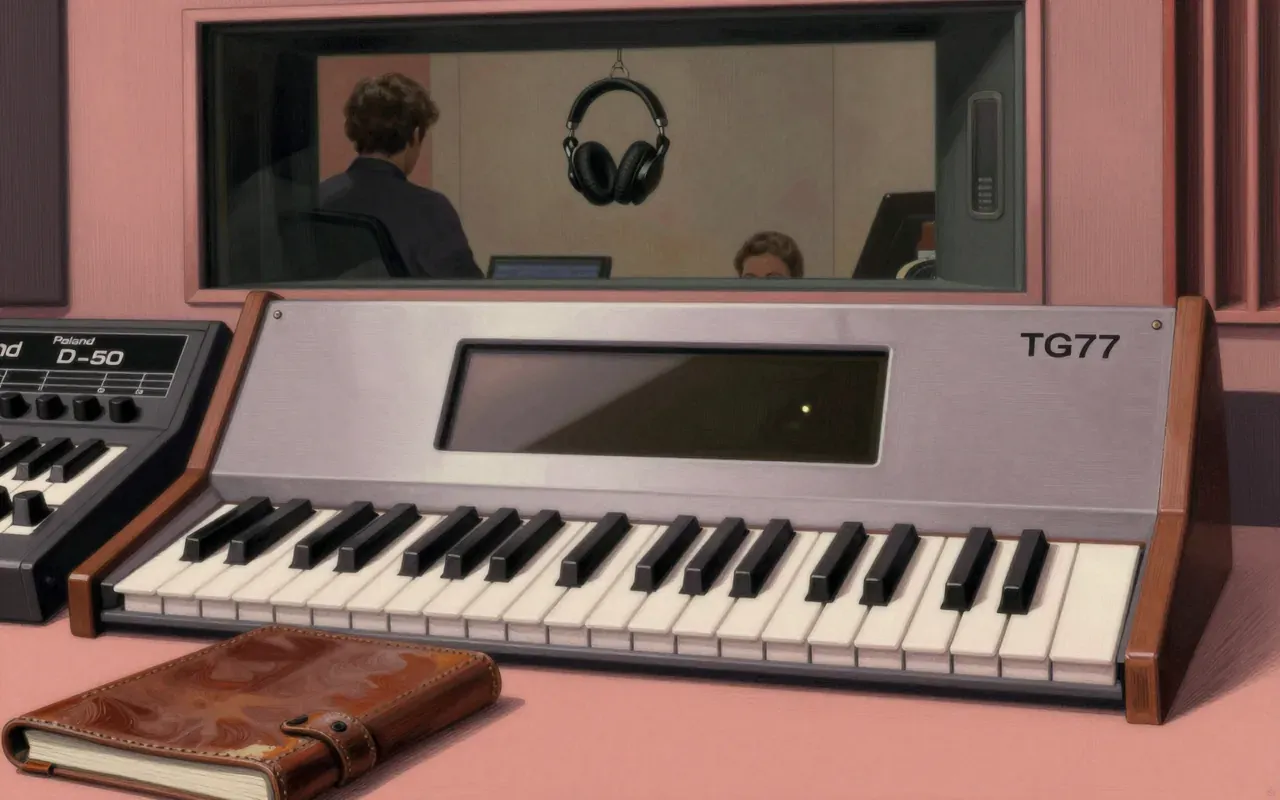
The Yamaha TG77 is a 1989 rack synth that merges FM and sample-based synthesis with unprecedented routing flexibility—but at the cost of immediacy and tactile control.

9:15

Vox AC15

Vox

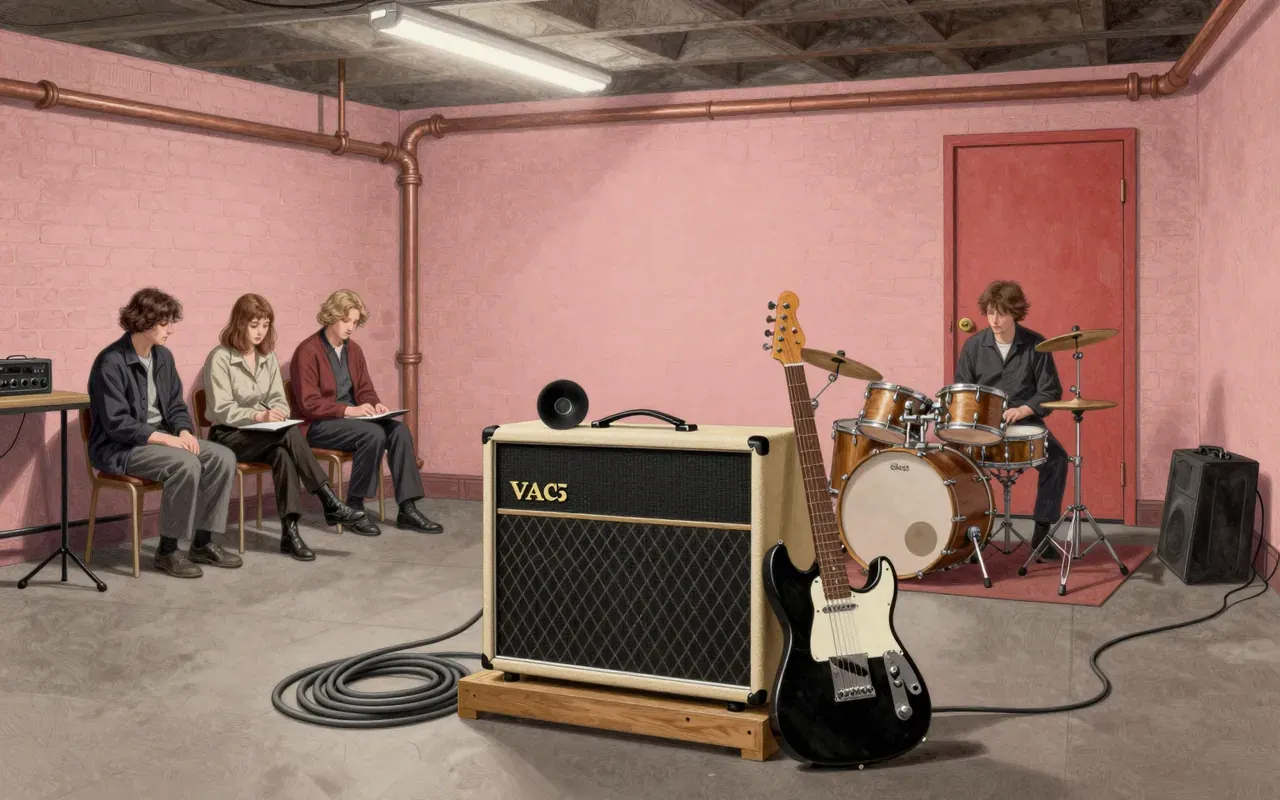
The Vox AC15 is a foundational British guitar amplifier — simple, immediate, and sonically specific. It trades versatility for character. Its design choices are constraints, not oversights. It remains relevant not as a relic, but as a functional tool with an unrepeatable voice.

9:15

Big Muff

Electro-Harmonix · 1969

The Big Muff Pi is a 1969 fuzz effects pedal with four transistors, two soft-clipping stages, and a tone stack that scoops mids when centred. It delivers smooth, saturated, bass-heavy sustain at any volume—making small amps sound bigger. It was intended to mimic Hendrix but became heavier and more distinctive. It does not offer gain staging, midrange recovery, or dynamic clean-up.

9:16

Doepfer A-100

Doepfer

The Doepfer A-100 is an analog modular synthesizer system introduced in 1995. It uses 3U-height, 2HP-width modules patched with 3.5 mm leads. It established the Eurorack standard adopted by many manufacturers. It enables emulation of the Trautonium and Theremin using specific modules.

9:16

Fender Telecaster Bass

Fender

A no-compromise bass that sacrifices versatility for presence. It does one thing well — deliver tight, articulate low end with zero detours — and refuses to do anything else.

9:16

Fender Mustang

Fender

The Fender Mustang is a solid body electric guitar introduced in 1964 as the basis of a major redesign of Fender's student models. It was produced until 1982 and reissued in 1990. It features two single-coil pickups, an unusual pickup switching configuration, and a unique vibrato system. It was originally available in two short scale lengths: 24 inches and 22.5 inches. It has two angled single-coil pickups, each with an adjacent on-off-on switch, and a master tone and volume control. It introduced the Fender Dynamic Vibrato tailpiece, which together with a floating bridge forms the Mustang vibrato system.

9:17

Alembic Series II

Alembic

The Alembic Series II is a 4-string bass guitar with stereo output, a 30.75-inch short scale option, and individual low-pass filters with continuously variable Q per pickup. It differs from Series I only in stereo capability and price. No claims are made about tonal superiority, build innovation, or broader usability.

9:17

Elektron Analog Rytm

Elektron

The Analog Rytm is a true analog drum synth. It gives each voice its own engine, up to six oscillators, and a 16-step sequencer. Its pads are velocity-sensitive but small. It enables radical timbral shifts across voices with minimal changes. It falls short on pad ergonomics, stereo per voice, and external audio input. It belongs in the studio of a sound designer—not a live beatmaker.

9:17

Pioneer DJM-1000

Pioneer

The Pioneer DJM-1000 is a rack-mountable 4+ channel DJ mixer with two master outputs and one booth output sharing a single volume control. It has no built-in effects. Its equalizer is low quality and offers parametric control only on mic channels. Its preamps and potentiometers are poor. Its output level of 2V + 6dB causes distortion across frequency ranges.

9:17

ARP Avatar

ARP · 1977

The ARP Avatar was a 1977 guitar-controlled synthesizer module. It copied the ARP Odyssey’s synthesis architecture but removed the keyboard and added a 6-way fuzzbox. It required a hexaphonic pickup and pitch-to-voltage conversion. It failed commercially. Sales totalled $1 million over two years against $4 million spent on R&D and production. It contributed to ARP Instruments’ bankruptcy in 1981.

9:17

Kurzweil K250

Kurzweil

The Kurzweil K250 was an 88-key, ROM-based sampling keyboard introduced in 1984. It used proprietary 'contoured modelling' compression to store acoustic instrument and oscillator waveform samples. Twelve separate DACs converted the data to analog. CEM 3335 analog envelopes restored dynamics lost in compression. It delivered 12-note polyphony and was the first electronic instrument to faithfully reproduce an acoustic grand piano.

9:18

Musicmaster Bass

Fender · 1971

The Musicmaster Bass is a Fender student-model bass introduced in 1971 as a variant of the Mustang Bass, on the same body and neck shape. Where the Mustang Bass has a split-coil pickup, the Musicmaster has a single-coil pickup that is a six-pole Stratocaster guitar pickup under a solid plastic cover. Production ended around 1981, and Squier reissued it for one year in 1997.

9:18

Apogee AD-8000

Apogee

The Apogee AD-8000 is an eight-channel analog-to-digital converter built for recording studios. It was introduced circa 1996. It supports 24-bit resolution at up to 48 kHz. It has eight XLR analog inputs and AES/EBU and S/PDIF digital connections. Front-panel level meters and controls let you monitor and adjust all eight channels. It includes a 1/4-inch headphone jack for direct monitoring. Optional cards enable ADAT, TDIF and Pro Tools connectivity.

9:18

Farfisa Compact

Farfisa

The JB Systems Compact is a no-nonsense 3-channel DJ mixer from 2008. It delivers reliable talk-over, basic EQ, and straightforward monitoring — all at entry-level cost and fidelity. It does not pretend to be more.

9:18

Thermionic Culture Phoenix

Thermionic Culture

The Aerial7 Phoenix is a HiFi/audiophile headphone. It belongs to the Street series. It is made by Aerial7. It has an alternate name: phoenixchino. Nothing else is verified.

9:18

Lexicon (company)

Lexicon · 1971

Lexicon is a company, not an instrument. Its first product was a digital delay system released in 1971. It pioneered commercial digital audio processing hardware for professional and live applications — notably digital reverb starting with the Model 224 in 1978. Its hardware is rack-mounted, hardware-controlled, and designed for integration into analog signal paths. It does not run as software, has no built-in synthesis or recording, and offers no modern digital workflow features.

9:18

ARP Quadra

ARP

The ARP Quadra is a 61-key analog synthesizer introduced in 1978. It was built as a paraphonic instrument using pre-existing ARP modules. It features four sound sections (Bass, String, Poly Synth, Lead), limited memory that recalls only on/off states and intervals—not slider positions—and relies on manual real-time adjustment. Its architecture uses divide-down circuits for the string section and shares controls like the hollow wave button across sections. It is not truly polyphonic and includes an arpeggiator specific to the lead section.

9:18

Sennheiser MD 421

Sennheiser · 1960

The MD 421 is a 1960 cardioid dynamic mic with a 27 mm diaphragm, 30–17,000 Hz ± 3 dB response, portless closed housing, and hum-compensation coil. Still in production. Over 500,000 units sold.

9:18

Fuzz Face

Arbiter · 1966

The Fuzz Face is a minimal, high-character fuzz pedal built for affordability—not precision. Its two-knob interface and six-component design deliver immediate, touch-sensitive distortion, especially with NKT275 germanium transistors. But its crude biasing makes germanium units thermally unstable. Silicon versions trade warmth for harshness and reliability. It excels at organic, swelling fuzz tones shaped by the player—not the pedal.

9:19

Neumann M 269

Neumann

The Neumann M269 is a large diaphragm condenser tube microphone made by Neumann. It is listed under that category. It is also called 'm269' or 'm 269'. No technical specifications are available. Nothing is stated about its use, sound, controls, or history.

9:19

Roland TR-626

Roland

The TR-626 is a 1987 digital drum machine. It upgrades the TR-606 and TR-505 with 12-bit sampled sounds, individual tuning and mixing, eight outputs, a basic sequencer (48 preset + 48 user patterns), a TR-505–style matrix display, and strong MIDI implementation. Its samples are drab and low-quality. Its routing and MIDI are its strengths.

9:19

Fender Bass VI

Fender

A six-string bass that trades punch for possibility — and never found enough players who needed both.

9:19

Ensoniq ESQ-1

Ensoniq

The ESQ-1 is a hybrid digital-analog workstation that prioritises immediacy and integration over depth or durability.

9:19

Roland MC-505

Roland

A 1998 groovebox that prioritises immediacy over depth. It bundles sequencing, synthesis, and classic Roland drums—but locks you into its architecture.

9:19

Shure SM57

Shure · 1965

The Shure SM57 is a low-impedance cardioid dynamic microphone introduced in 1965. It uses the Unidyne III capsule, shares design DNA with the SM58, and features impedance balancing via XLR. Its frequency response runs from 40 Hz to 15 kHz. Its cardioid pattern reduces background noise and feedback. It was built for TV studios — non-reflective, no on-off switch — and tested under torture. It has been used for every U.S. presidential speech since 1965 and remains one of the world’s two bestselling microphones since the late 1960s.

9:20

Roland D-110

Roland

The Roland D-110 is a 1988 rackmount sound module — the upgraded rack version of the D-10 and rack counterpart to the D-20. It delivers Linear Arithmetic synthesis, second-generation D-50 style, using tones, partials, and timbres. It has 32-voice polyphony, on-board drum sounds, reverb, internal/external memory, and six individual outputs. It requires external MIDI control. Programming is tricky but yields characteristic LA textures. Its filter resonates but does not self-oscillate. It is a cheaper alternative to the D-50, offering decent acoustic and synthetic sounds — but no keyboard, no sequencer, and no intuitive interface.

9:20

Fostex D-80

Fostex

The Fostex D-80 is a dynamic, cardioid microphone built for singing and trumpet. It handles high sound pressure like an SM58 — but delivers a 'crunchy', 1980s-evoking sound the user found in an attic. It offers no features beyond its fixed polar pattern and raw output. It belongs only where that specific texture is the goal.

9:20

Korg PS-3300

Korg

The Korg PS-3300 is a 1977 polyphonic analog synthesizer built from three PS-3100-derived units (PSU-3301), delivering 144 voices with independent oscillators, filters, envelopes, and amplifiers per note. It enables multitimbral sound creation through individual module adjustment and mixing. It omits the PS-3100's ensemble effect. It supports extensive voltage control and patching — including pitch modulation from envelopes or external sources — and uses a detachable keyboard format. It belongs to Korg’s 1970s line of large, expensive, patchable instruments, positioned as a high-end professional device.

9:20

ARP 2600

ARP

The ARP 2600 is a foundational analog synthesizer designed for education. Its semimodular architecture, front-panel signal graphics, and duophonic voice count reflect its classroom purpose—not stage use. Its original filter was replaced after a patent dispute. It teaches synthesis more directly than any contemporaneous instrument, but offers no polyphony, no presets, and unstable tuning.

9:20

Casio CZ synthesizers

Casio

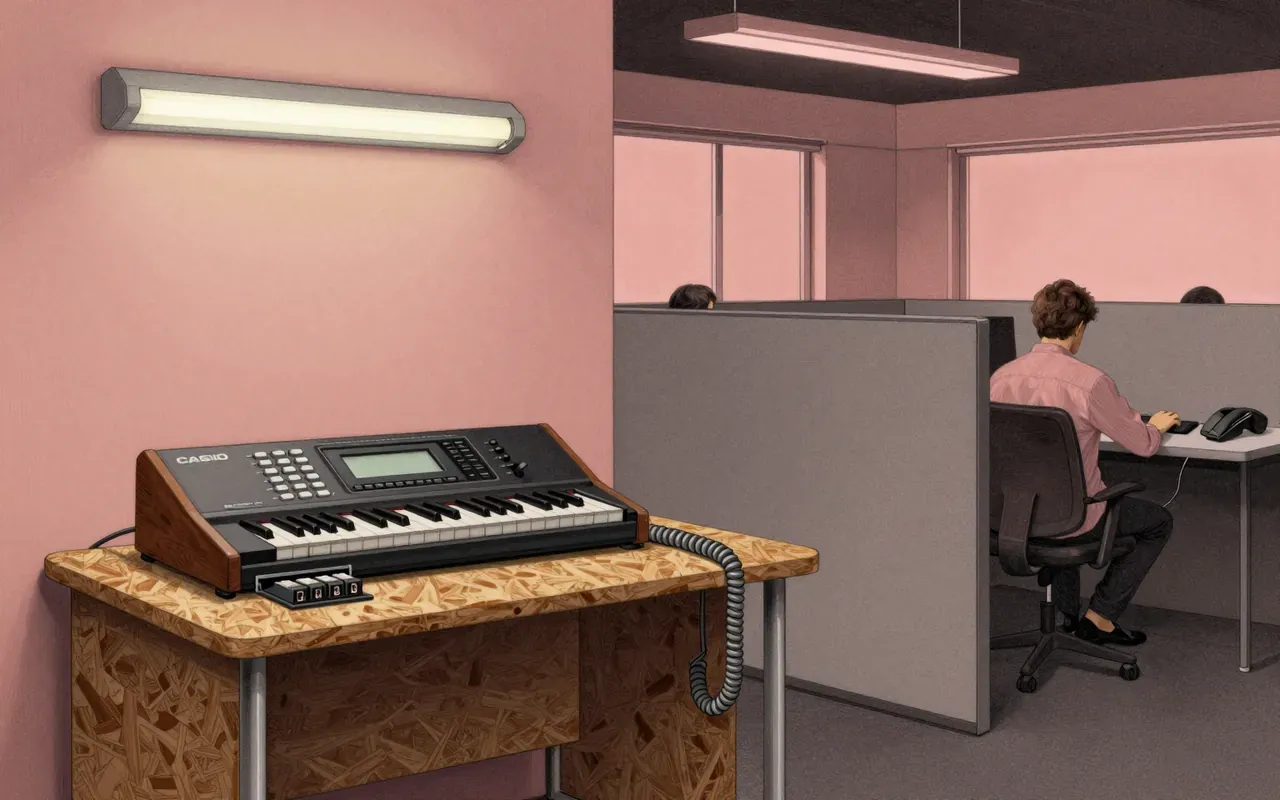
The Casio CZ series is a line of low-cost, digitally implemented phase distortion synthesizers introduced by Casio in 1984. They simulate analog filter behaviour without physical filters, using digital phase distortion instead. Each oscillator plays waveforms in series—not parallel—enabling sub-harmonics but restricting waveform pairing. Polyphony drops from eight to four voices when using two oscillators per voice. They were built for amateur musicians, prioritising affordability and portability over expressive control or sonic flexibility.

9:21

MOTU 828

MOTU

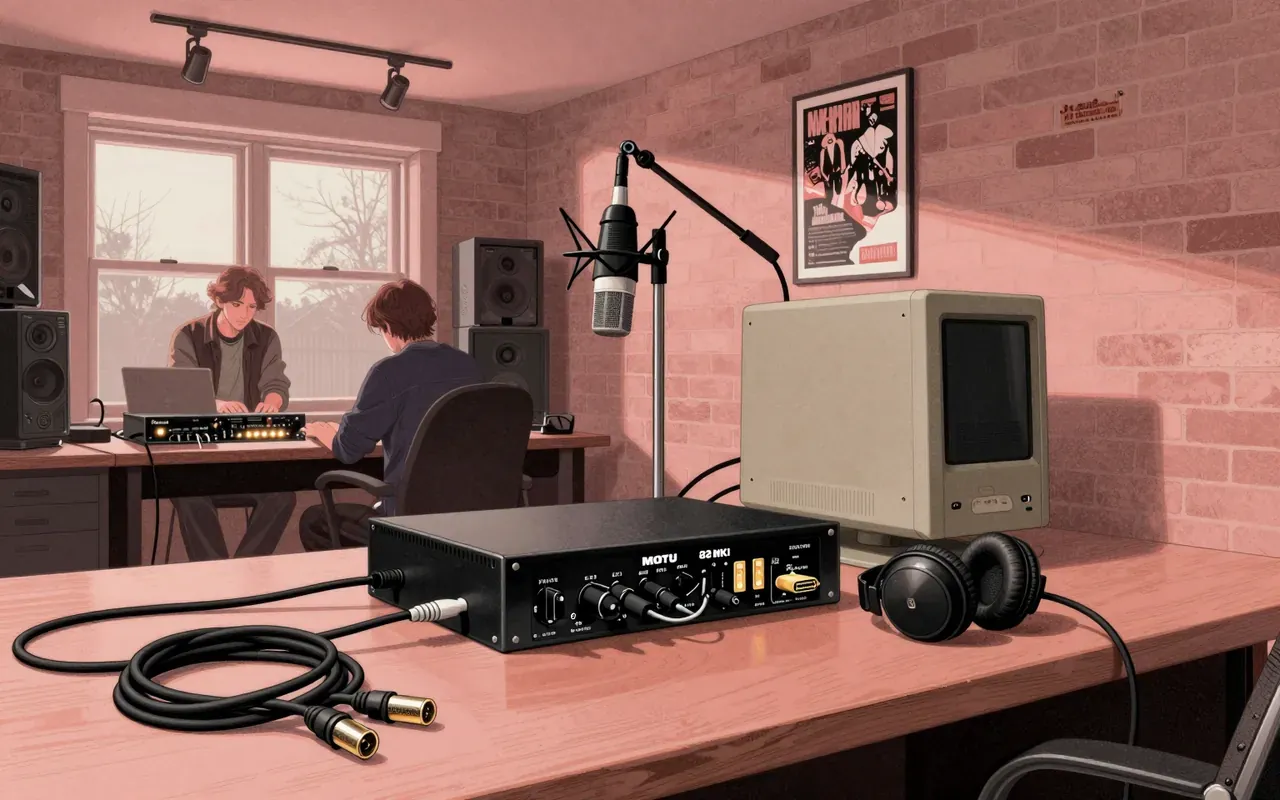
The MOTU 828 MKI is a discontinued FireWire audio interface introduced around 2001–2002. It offered two mic preamps with phantom power and XLR/1/4" inputs, six additional balanced line inputs, eight balanced outputs, ADAT and optical I/O, 24-bit 64x/128x oversampling converters, and front-panel monitoring controls. Priced at $800 at launch, it was considered expensive but highly stable and easy to install. It remains functional for years in typical home studio use but is no longer sold and has been succeeded by newer models including the 828 (2024).

9:21

Prism Sound ADA-8

Prism Sound

The Prism Sound Dream ADA-8 is a dual-path AD/DA converter built for clean, separated signal routing at up to 96 kHz. It delivers stable internal clocking and user-friendly displays, but lacks built-in sample rate conversion and fails under external sync with Pro Tools HD interfaces. It belongs in studios where path independence matters more than interoperability.

9:21

Waldorf XTk

Waldorf

The Waldorf MicroWave XTk is a 1998 wavetable synthesizer. It has 10-voice polyphony. It uses a 44-key semi-weighted keyboard. It includes a built-in arpeggiator. It is multitimbral.

9:21

Roland MC-303

Roland

The Roland MC-303 is the first groovebox: a fixed-palette, preset-only instrument built for house DJs and amateur home musicians. It combines a JV-80-derived rompler (28-note polyphony) with an 8-track pattern sequencer and real-time phrase tools. It lacks sampling, MIDI-transmittable knob control, and sound editing — making it fast for sketching but inflexible for production.

9:21

Fender Telecaster

Fender

The Telecaster is the original mass-produced solid-body electric guitar. It established the bolt-on neck, single-cutaway solid-body template. It remains in continuous production since autumn 1950. Its simplicity enables durability and directness—but offers no noise cancellation, ergonomic contouring, or tonal versatility beyond its two-pickup circuit.

9:22

Daking Mic Pre IV

Daking

The Daking Mic-Pre IV is a 4-channel solid-state analog preamp with minimal controls and no colouration. It amplifies cleanly and intensely—revealing rather than refining the source. Its design prioritises workflow over flavour.

9:22

Make Noise DPO

Make Noise

The Make Noise DPO is a dual-oscillator Eurorack VCO built for FM synthesis and wavefolding. It produces deep, rich FM-type sounds using its dedicated wavefolder section. Its output is clean and cold—not Moog-style warm. It has no built-in LFO, envelope, or quantizer. It is not a full voice module. It is a precision tool for FM texture generation.

9:22

SPL Vitalizer

SPL

The SPL Stereo Vitalizer MK2 is a hands-on exciter that trades surgical control for immediate sonic uplift — sharpening treble, rounding bass, widening stereo image, and adding air. Its strength is cohesion, not correction.

9:22

Mutable Instruments Plaits

Mutable Instruments

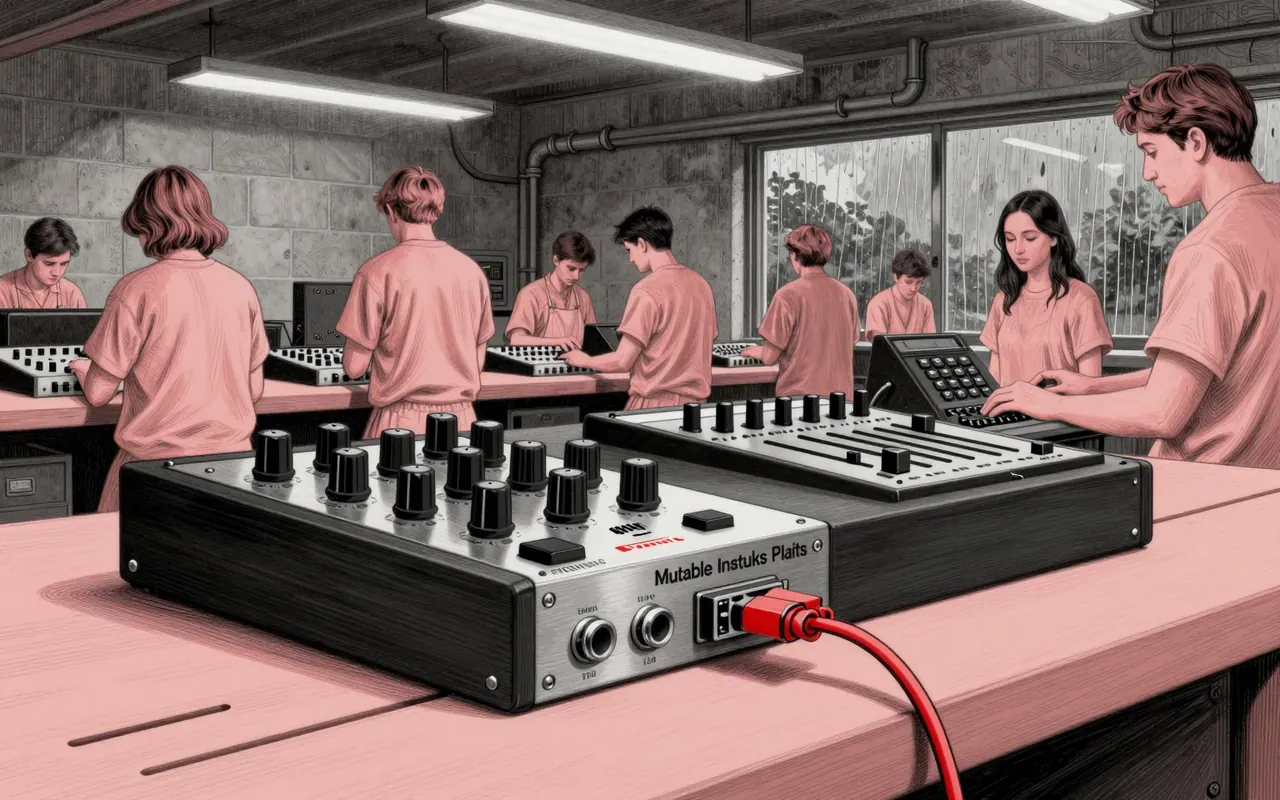
Plaits is a decisive instrument. It forces choices — bank or trigger, pitch or noise, sweep or strike. It gives no second chances, no presets, no visual confirmation. But within those limits, it delivers sixteen coherent sonic identities in one compact, power-efficient package.

9:22

Nord Modular

Clavia

The Nord Modular is a 1997 software-based semi-modular synthesizer that uses DSP to emulate analogue circuitry and supports multiple synthesis methods including subtractive, additive, FM, and physical modelling. Patch editing is performed on a PC using graphical editor software, while sound generation occurs independently on the hardware. Patch complexity is constrained by available DSP resources, and polyphony varies from 4 to 32 voices depending on patch complexity. It was upgraded in 2004 as the Nord Modular G2 with endless rotary knobs and a larger keyboard with aftertouch.

9:22

Yamaha TX81Z

Yamaha

The TX81Z is a stripped-down, rack-only FM synth that trades expressive controls for affordability and waveform novelty. Its non-sine oscillators opened new sonic doors — but its single-chip architecture left out pitch envelopes, velocity sensitivity, and operator depth. It belongs in a modern studio only as a character voice, not a workhorse.

9:22

Fender Coronado

Fender

The Fender Coronado is a true hollow-body electric guitar with no central block, designed in 1965 by Roger Rossmeisl to capitalise on the rising popularity of semi-acoustic guitars. It delivers natural resonance and a bright-and-deep tone, but feeds back at high volumes and failed to win over jazz guitarists due to its bolt-on neck. It found belated favour for what it does sonically—not what it was meant to be.

9:23

Boss FZ-2 Hyper Fuzz

Boss

The Boss FZ-2 Hyper Fuzz is a discontinued analog fuzz pedal with three selectable modes and five physical controls. It lacks true bypass. It was succeeded by the FZ-5.

9:23

SSL 9000 K

SSL

The SSL 9000 K is an analog mixer. That is all the sources confirm. It belongs to the category of analog mixers. Nothing more is verified.

9:23

Pioneer CDJ-1000

Pioneer

The Pioneer CDJ-1000 is a tabletop DJ player. It plays CDs. It does not read MP3 files. It is no longer sold. It was replaced by the CDJ-2000 Nexus.

9:23

Fender Esquire

Fender

The Fender Esquire is the first commercially marketed solid-body electric guitar. It was designed as an electronic instrument with no acoustic tone manipulation. It introduced the square-edged dreadnought shape with cutaway. It featured a combined bridge-pickup assembly derived from the Champion lap steel. The first 1950 production run had a one-piece maple neck without fretboard or truss rod. The single-pickup version debuted in the RTEC Spring 1950 catalogue.

9:24

Virus B

Access · 1999

The Virus B is a virtual analog synthesizer from Access Music GmbH of Germany, released in 1999 as the follow-up to the Virus A. It is a desktop (rackable) module without a keyboard, with improved converters and expanded polyphony. It has two filters per voice and a modulation matrix, and a keyboard version was sold as the Virus KB.

9:24

TC Electronic 2290 P Dynamic Digital Delay

TC Electronic

The TC Electronic 2290 P Dynamic Digital Delay is a guitar-focused delay, echo, and phrase sampler. No technical specifications are available. Its package weight is 1.7 kg. Nothing else is verified.