audiobriefs
Shortest first

All briefs

747 briefs · 6840 min · 673–747 on page 8 of 8
10:19

Marshall Major

Marshall

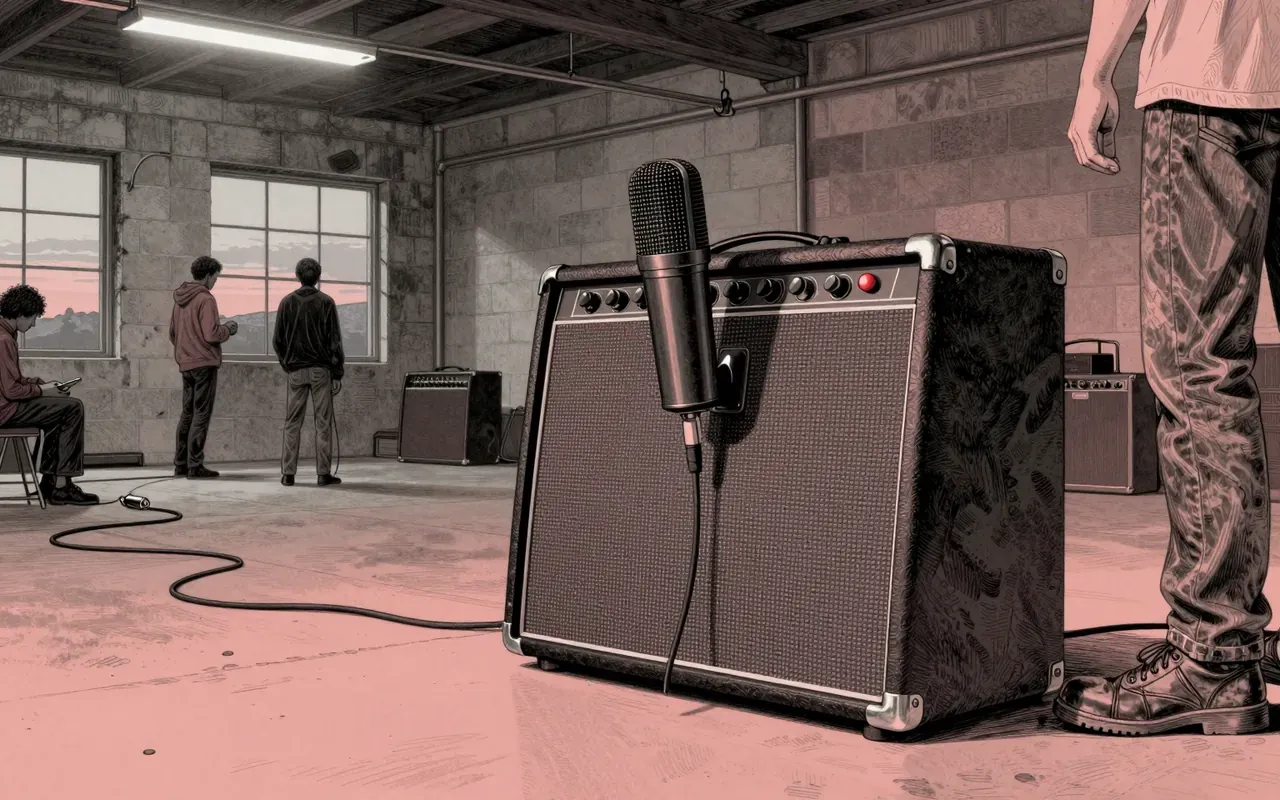
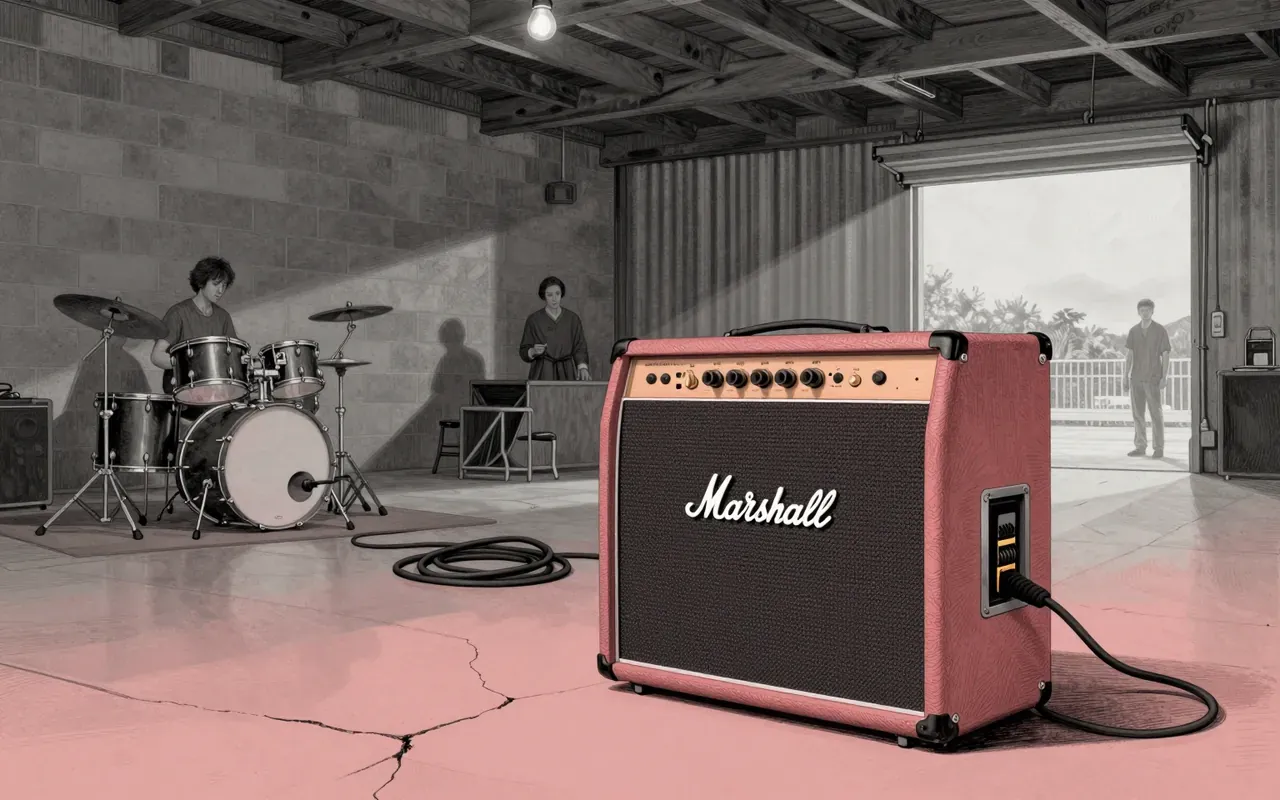
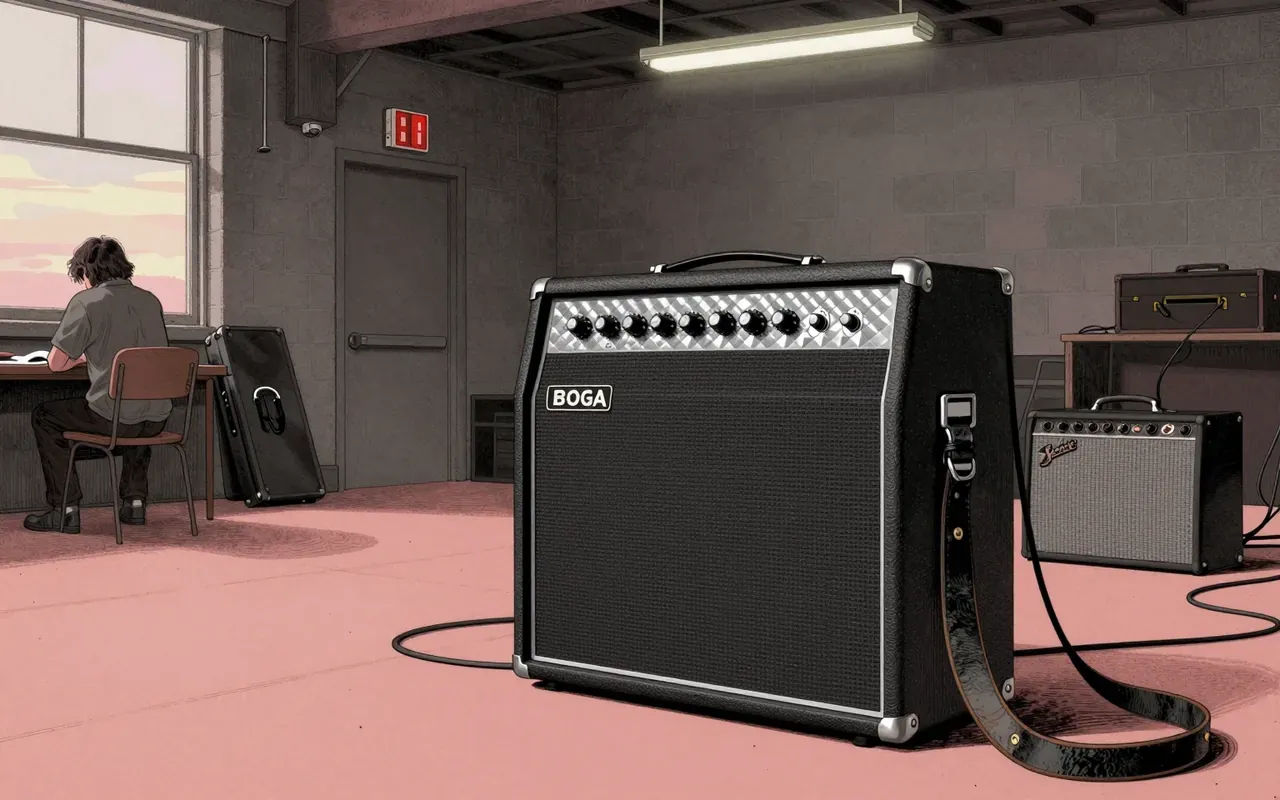
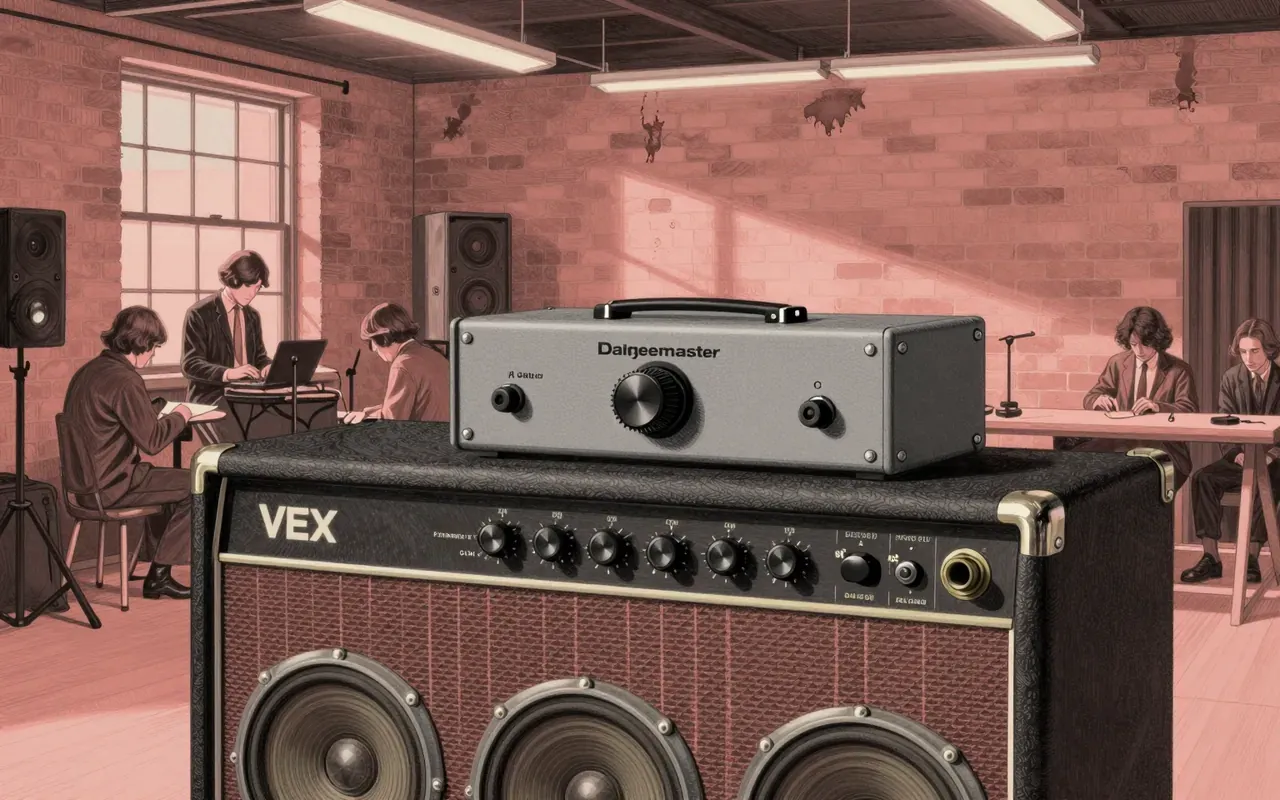
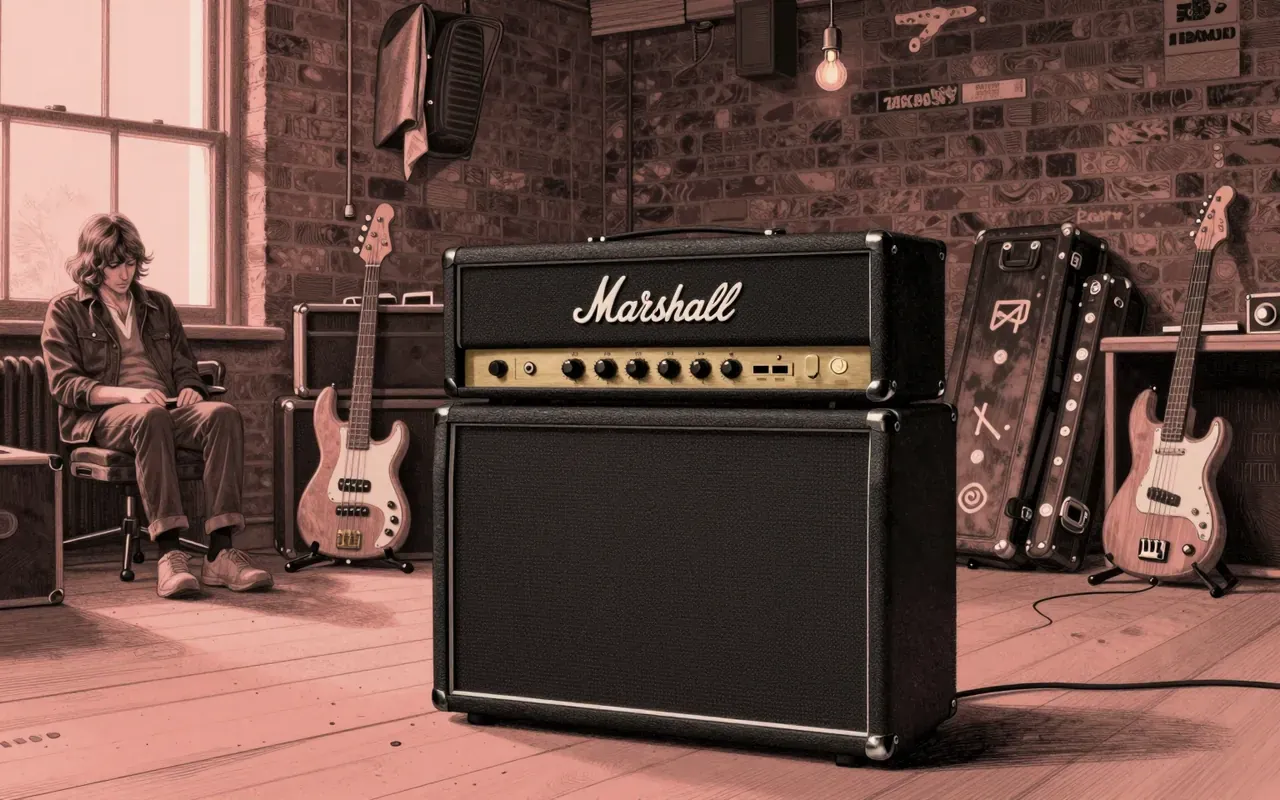
The Marshall Major is a 200-watt guitar amplifier built from 1967 to 1974. It was designed to produce more volume and clean headroom than Marshall's other amplifiers like the Super Lead. The 200 had only three controls on the front panel and used a preamplifier circuit that was closer in design to a hi-fi amplifier rather than a guitar amp. In 1968, Marshall updated the 200 with a typical EQ compliment of treble, middle, bass, and presence controls, and it was now named the Major. This tone stack—which was passive compared to the 200's active controls—was placed between the second and third gain stages created using ECC83 (12AX7) preamp tubes. Ritchie Blackmore of Deep Purple and Mick Ronson of David Bowie's band are frequently associated with the Major.

10:20

Neumann M 50

Neumann

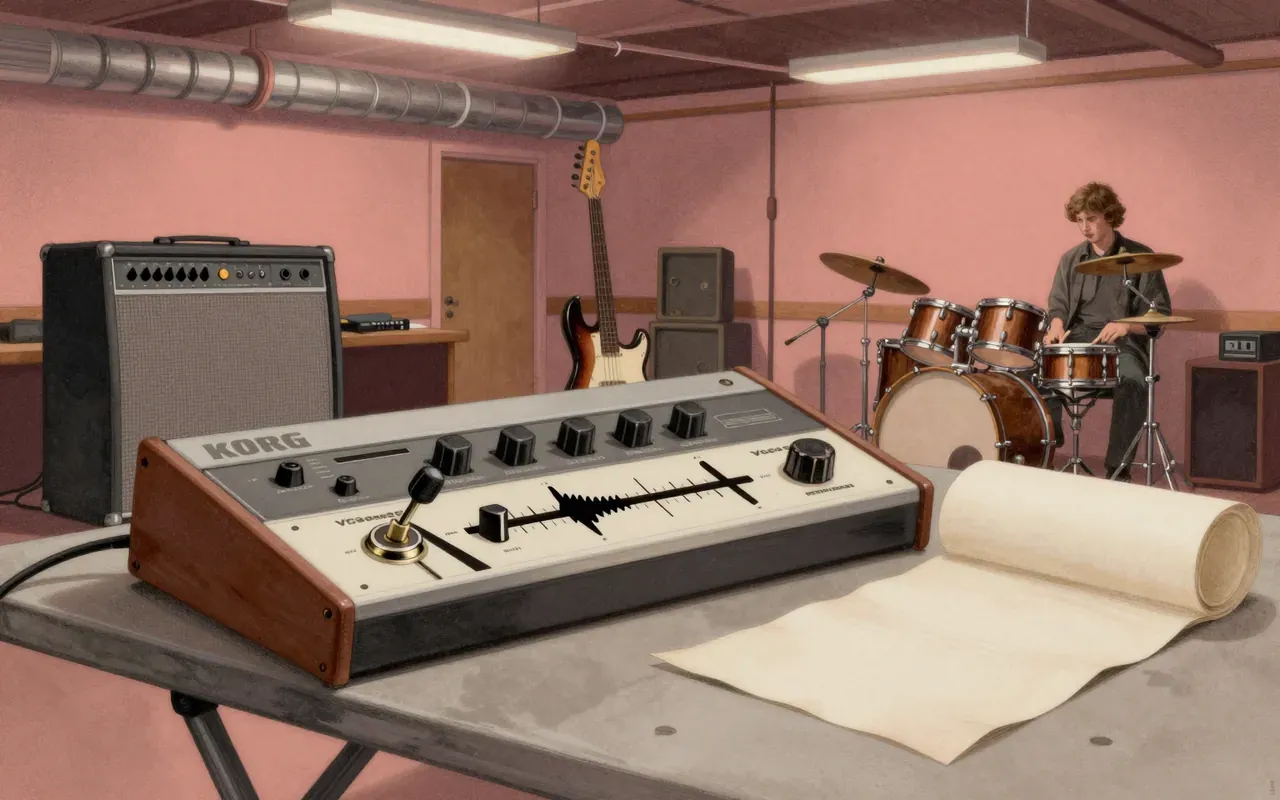
The Korg M50 61 is a 2008 sampling workstation built for real-time layering and editing. It delivers 80-voice polyphony, 1077 samples across 608 editable programs, and up to 896 combinations — all controlled via an angled panel and full-size TouchView interface. It includes one GM2-compatible sound bank. It was reviewed as industry-ready but criticised for weak electro/lead sounds and lack of built-in sampler compared to the M3.

10:20

Sennheiser MD 409

Sennheiser

The Sennheiser MD 409 is a unidirectional dynamic microphone built for studio and live use, especially guitar cabinet miking.

10:20

Roland R-8

Roland

The Roland R-8 is a 1989 PCM drum machine built for expressive, human-sounding rhythm programming—not raw sound design or live sampling.

10:20

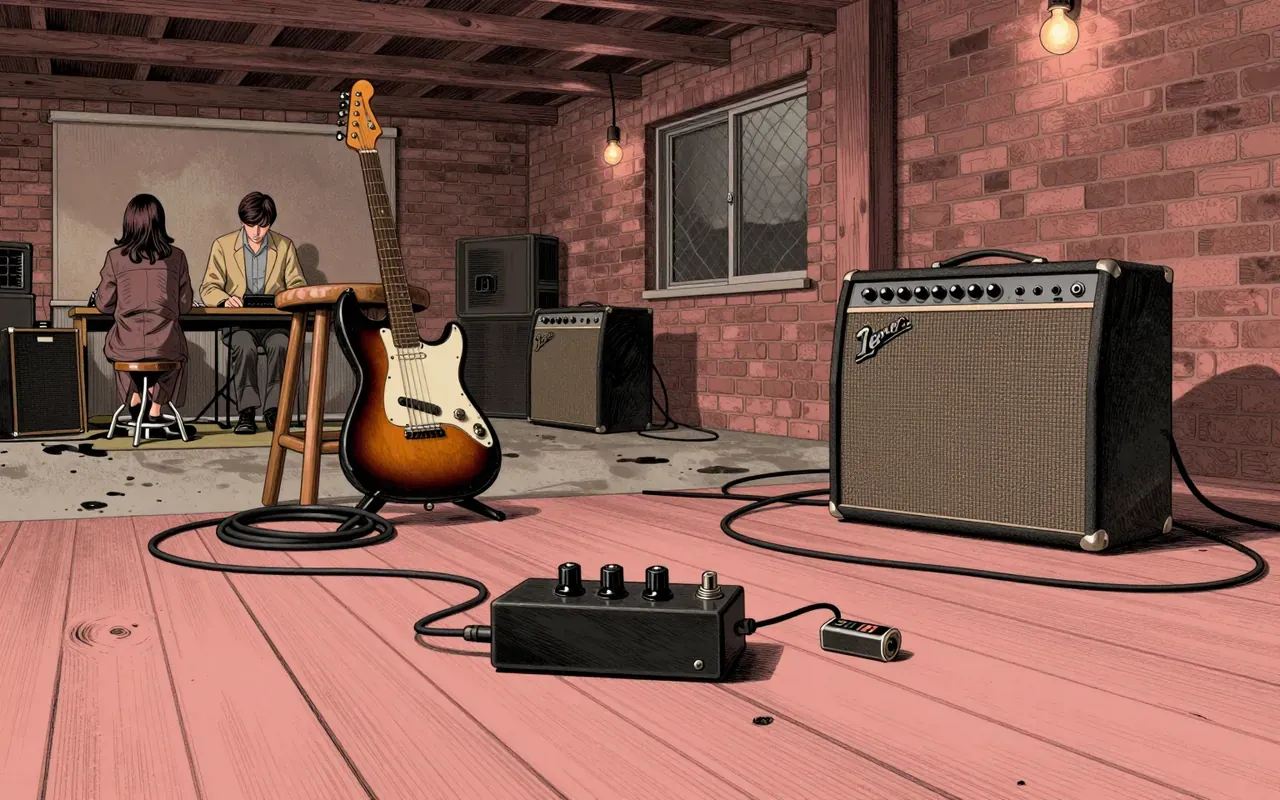
Fender Deluxe Reverb

Fender

The Fender Deluxe Reverb is a 22-watt tube combo amplifier introduced in 1963, featuring spring reverb, tremolo, and a fixed 12-inch speaker configuration. It uses 6V6GT power tubes operated beyond specification, four 12AX7s, two 12AT7s, and a 5AR4 rectifier. Most commonly fitted with a Jensen C-12Q speaker, it has appeared with Oxford, Marlboro, Utah, and Eminence alternatives. Its circuit remained largely unchanged across black-panel (1963), silver-panel (1968), and black-panel reintroduction (1980) eras.

10:20

Gretsch White Falcon

Gretsch

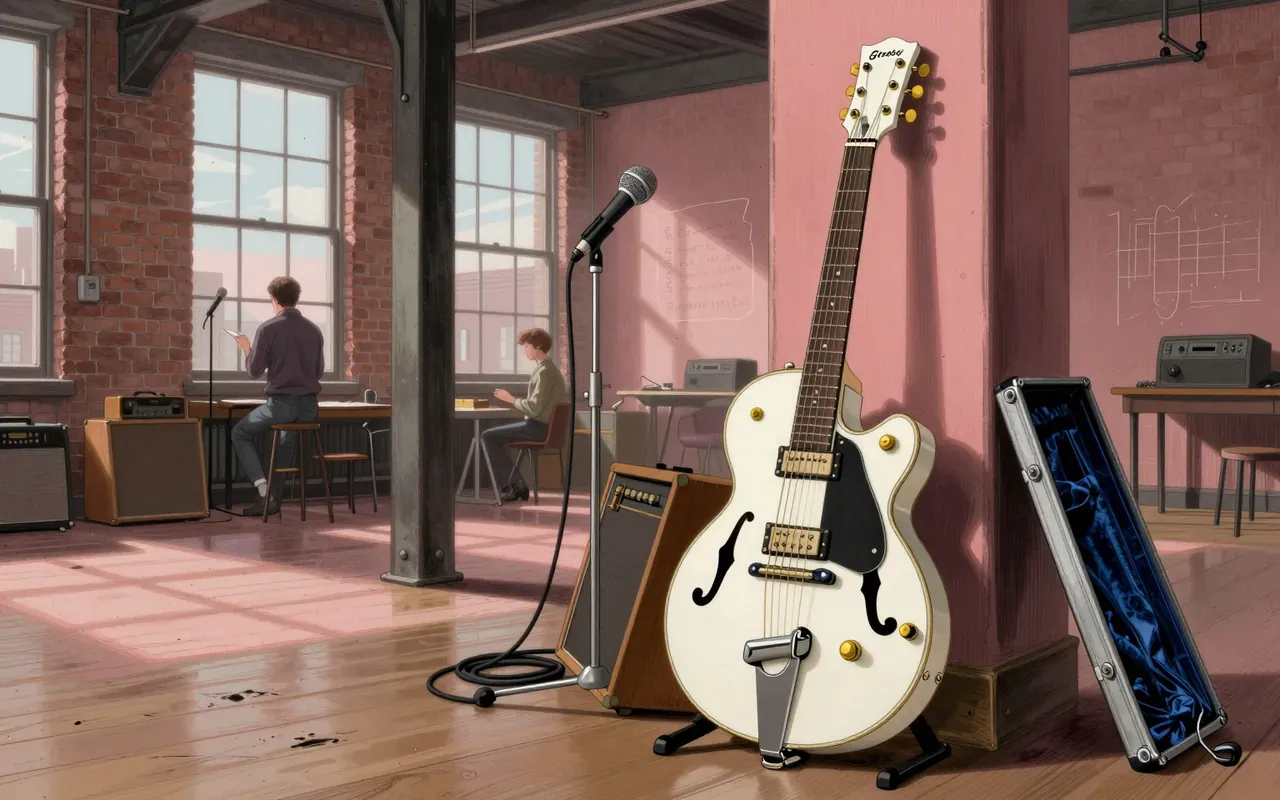
The Gretsch White Falcon is an electric hollow-body guitar introduced in 1954 as a non-commercial showpiece for the NAMM Convention. It was conceived by Jimmie Webster as an improvement over the Gibson Super 400. Strong demand led to rushed production beginning in 1955 under model number 6136. Gretsch marketed it as 'the finest guitar we know how to make – and what a beauty!' and priced it at $600 — second only to Gibson's Super 400CESN. Its finish design drew from Gretsch drum finishes and American car aesthetics of the era.

10:21

Fender Mustang Bass

Fender · 1964

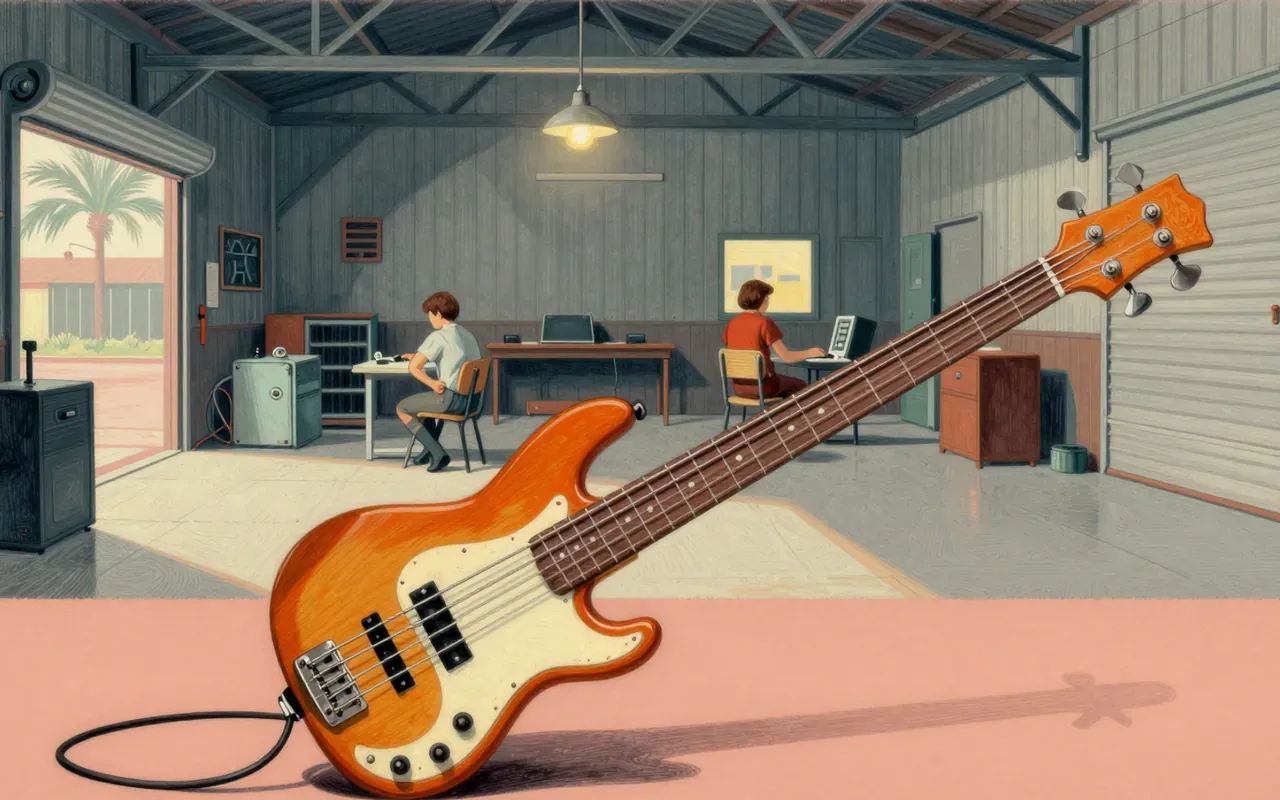
A compact, student-oriented bass built for immediacy — not depth, not versatility, not power.

10:22

Boss OD-1 OverDrive

Boss

The Boss OD-1 is a 1977–1985 overdrive pedal with Level and Overdrive knobs only. It uses a FET boost circuit that degrades the dry signal when bypassed. It delivers low-gain saturation by pushing an already overdriven amp’s front end—not by distorting on its own. It lacks tone control. It preceded the SD-1. It performs best in that narrow context—and nowhere else.

10:22

Digidesign Digi 001

Digidesign

The Digidesign Digi 001 is the original Pro Tools audio interface. It is a rack-mountable PCI/ISA soundcard with two mic preamps, phantom power, gain knobs, -25 dB pads, front headphone output, MIDI, eight outputs (including monitor outs), and six line inputs. It connects via D-Sub and serial port — not FireWire or USB — so it is incompatible with laptops and newer computers. It is obsolete outside legacy systems.

10:22

Marshall Bluesbreaker

Marshall

The Marshall Bluesbreaker is Models 1961 and 1962 — Marshall’s first combo, built from 1964/65 to 1972. It is the JTM45 circuit in an open-backed cabinet. It delivers aggressive, responsive overdrive with no master volume, no clean headroom, and no flexibility — and that is precisely what made it essential.

10:22

Roland MC-4 Microcomposer

Roland

The Roland MC-4 Microcomposer is a 1981 microprocessor-based CV/Gate sequencer with four output channels, programmable via numeric keypad or live monophonic keyboard input, using numeric pitch values (Middle C = 24), step time values, and gate time values; it features volatile memory requiring cassette storage, supports syncing to other MC-4s or Roland gear, and predates MIDI.

10:23

1176 Peak Limiter

UREI

The UREI 1176 Peak Limiter is a fast, characterful, all-solid-state audio compressor introduced in 1968. It uses a field-effect transistor in feedback configuration for gain reduction. Compression is soft-knee with a fixed threshold controlled by input level. Four ratios — 4:1, 8:1, 12:1, 20:1 — each raise the threshold. Attack and release are program-dependent. Stereo linking is supported. The 'all-button mode' adds harmonic distortion and alters compression behaviour. It marked the transition from vacuum tube to solid-state technology in studio dynamics processing.

10:25

Electro-Harmonix Deluxe Electric Mistress

Electro-Harmonix

An analog stereo flanger and filter matrix stomp box for electric guitar. It runs on a dedicated 24 V power supply. It has input, effect out, and clean output jacks. It uses three knobs — color, range, and rate — plus a switch for the filter matrix function. It is not rack-mountable.

10:25

Akai MPC2500

Akai

The MPC2500 upgrades the MPC2000 with 16-bit/44.1 kHz sampling, individually adjustable pad sensitivity, and the Grid editor — but keeps 64-track sequencing, 32-voice polyphony, and no automated effects sends.

10:26

AKG C24

AKG

The AKG C24 is a Pro Tools-specific motorized control surface with 24 bankable channel strips, touch-sensitive motorized faders, 16 mic/line/DI preamps, an 8x2 stereo line submixer, a 5.1 analog monitor section, talkback mic inputs, and illuminated dedicated switches for mute, solo, record, select, EQ, dynamics, sends, and inserts.

10:26

Gibson ES-125

Gibson

The Gibson ES-125 is a purpose-built, no-compromise entry into hollow-body electric guitar playing. It gives one voice, one circuit, and one physical response—nothing more, nothing less.

10:27

Parker Fly

Parker

The Parker Fly rethinks the electric guitar as a lightweight, resonant, hybrid-voice platform — built around a carbon-fibre exoskeleton and dual-pickup architecture. It succeeds where mass and material convention fail. It falters where tradition, repairability, and passive tone control matter.

10:28

Neumann KM 86

Neumann

The KM 86 is not a KM 84 variant. It is a dual-capsule small-diaphragm condenser that delivers three virtual polar patterns — and a sound described as 'more pais'. It was sold with XLR or Tuchel connectors. That is all the source tells us.

10:28

Akai S700

Akai

The Akai S700 is a 1987 rack-mount 12-bit sampler derived from the X7000 keyboard model. It samples mono at 4–32 kHz, holds up to 8 seconds, but at 16 kHz allows only six 0.8-second samples. It offers 6-voice polyphony, non-resonant low-pass filtering, and QuickDisk storage. It is user-friendly but rigid: no stereo, no resonance, no modern file support, no workarounds.

10:29

Marshall JCM900

Marshall

The Marshall JCM900 is a series of valve guitar amplifiers produced between 1990 and 1999, with some models reissued from 2003 onward. It was built for guitarists needing high-gain distortion and built-in reverb in a professional touring and studio context.

10:29

Gibson Les Paul

Gibson · 1952

A physically dense, sonically authoritative solid-body guitar built for sustain and midrange focus — not speed or lightness.

10:30

Fender Electric XII

Fender

The Fender Electric XII is a 12-string electric guitar designed by Leo Fender and introduced in late 1965. It features a Jaguar/Jazzmaster-style body, a 'hockey-stick' headstock to accommodate twelve tuners, a string-through-body design for increased sustain, a unique split pickup configuration, and a 4-way rotary selector offering neck, neck-and-bridge (parallel), in/out-of-phase, and bridge-only options. Its bridge has individual saddles for each string, enabling precise intonation. Unlike competitors’ models—which were adapted 6-string guitars—the Electric XII was purpose-built for folk rockers.

10:30

Neumann U 47

Neumann · 2015

The U 47 is a historically significant but operationally constrained microphone. Its innovation lies solely in being the first switchable-pattern condenser — a functional milestone, not a sonic benchmark. It demands specialist maintenance, offers no modern conveniences, and has no documented sonic signature beyond its era-specific implementation. It belongs in a museum or a dedicated vintage studio — not a general-purpose rig.

10:31

Movement Systems Drum Computer

Movement

A British drum computer from 1981–1983. It merges analogue synthesis and 8-bit digital sampling across 14 independent voices (5 digital), sequenced via CRT graphics and controlled by a Nascom 2 computer.

10:32

Roland Cube 60

Roland

The Roland Cube-60 is a 60-watt solid-state modelling combo guitar amplifier introduced in 2004. It uses COSM processing to deliver eight amp models on the drive channel. It has two channels — clean and drive — each with independent gain and volume, sharing a four-band EQ. Built-in effects and a combined headphone/line-out jack support private practice and simple recording. It offers no footswitching, no per-model EQ recall, and no pre-model effects routing.

10:32

Radikal Technologies Spectralis

Radikal Technologies

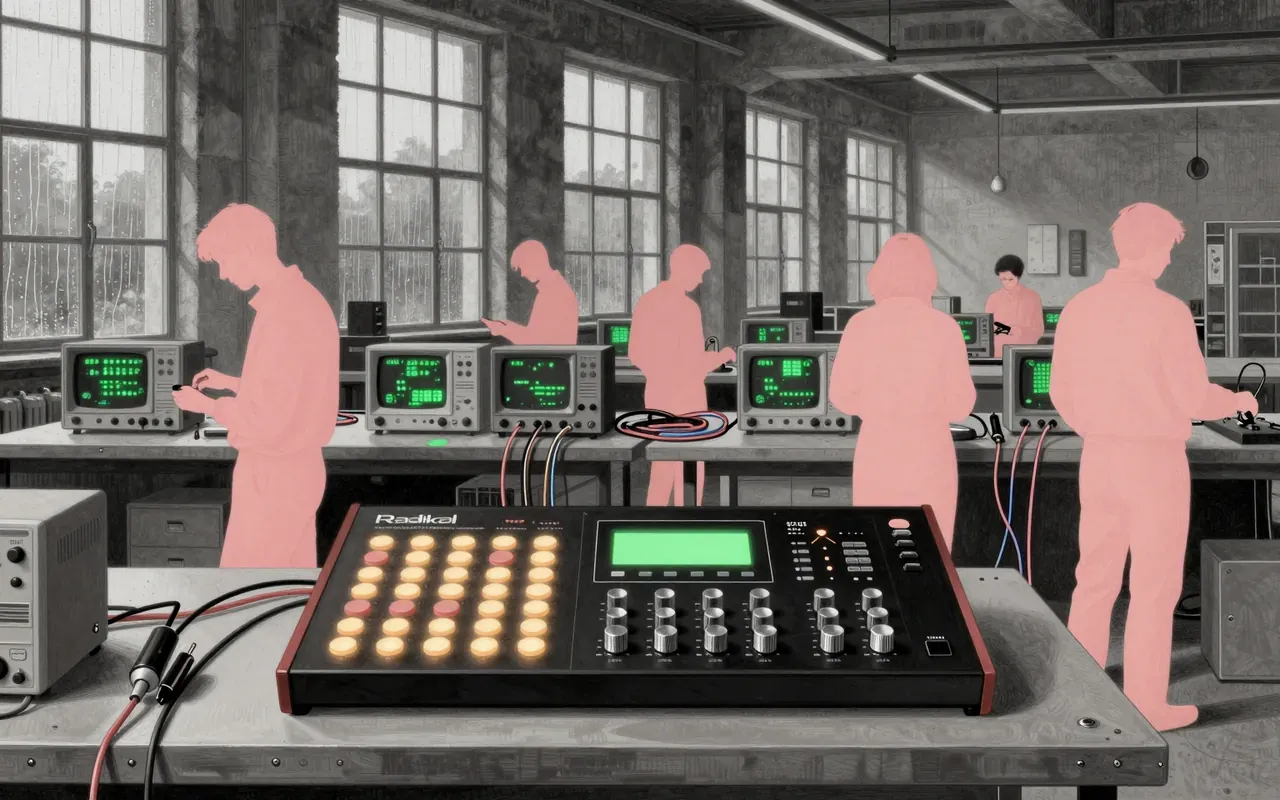
The Spectralis is a 2004 hybrid instrument built for studio composition. It combines a monophonic Asynth (four digital oscillators, two analog filters, time linearity modulation) with a 32-voice, 3-part multi-timbral Dsynth engine (128 MB RAM, unrestricted sample import). Its sequencer ties both engines and external gear together with per-parameter automation. It has no audio interface, no velocity-sensitive Dsynth layers, and no DAW integration. It belongs in a production room — not on stage.

10:33

Elektron Octatrack

Elektron

The Elektron Octatrack DPS-1 is a sampling instrument built for real-time, step-sequenced audio manipulation. It loads samples from CompactFlash or live inputs, plays them across eight tracks, and sequences both audio and MIDI with the same button grid. Its strength is tight integration and tactile control. Its limits are RAM-only editing, no non-destructive tools, and no timeline-based workflow.

10:33

Novation Supernova

Novation

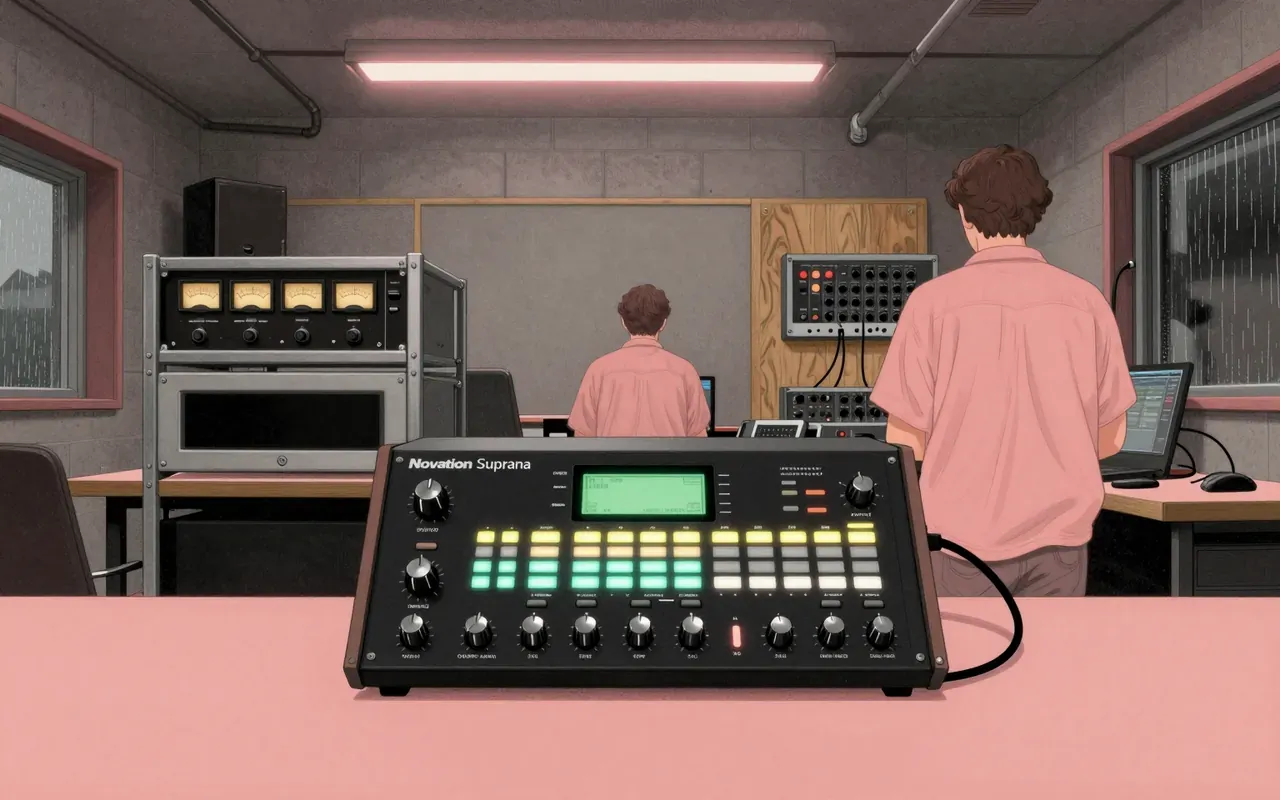
The Novation Supernova is a 1998 3U virtual analogue rack synth with 16+ note polyphony and multitimbral operation. It models subtractive synthesis digitally and includes a resonant self-oscillating filter. Its defining strength is a 7-effect-per-part engine retained per part in multitimbral use, with no polyphony loss. It lacks triangle and sine wave oscillators — requiring their derivation via a hardness attenuator. No other details about sound character, interface layout, modulation matrix, LFO count, or physical controls are verified.

10:34

Doepfer A-120 VCF

Doepfer

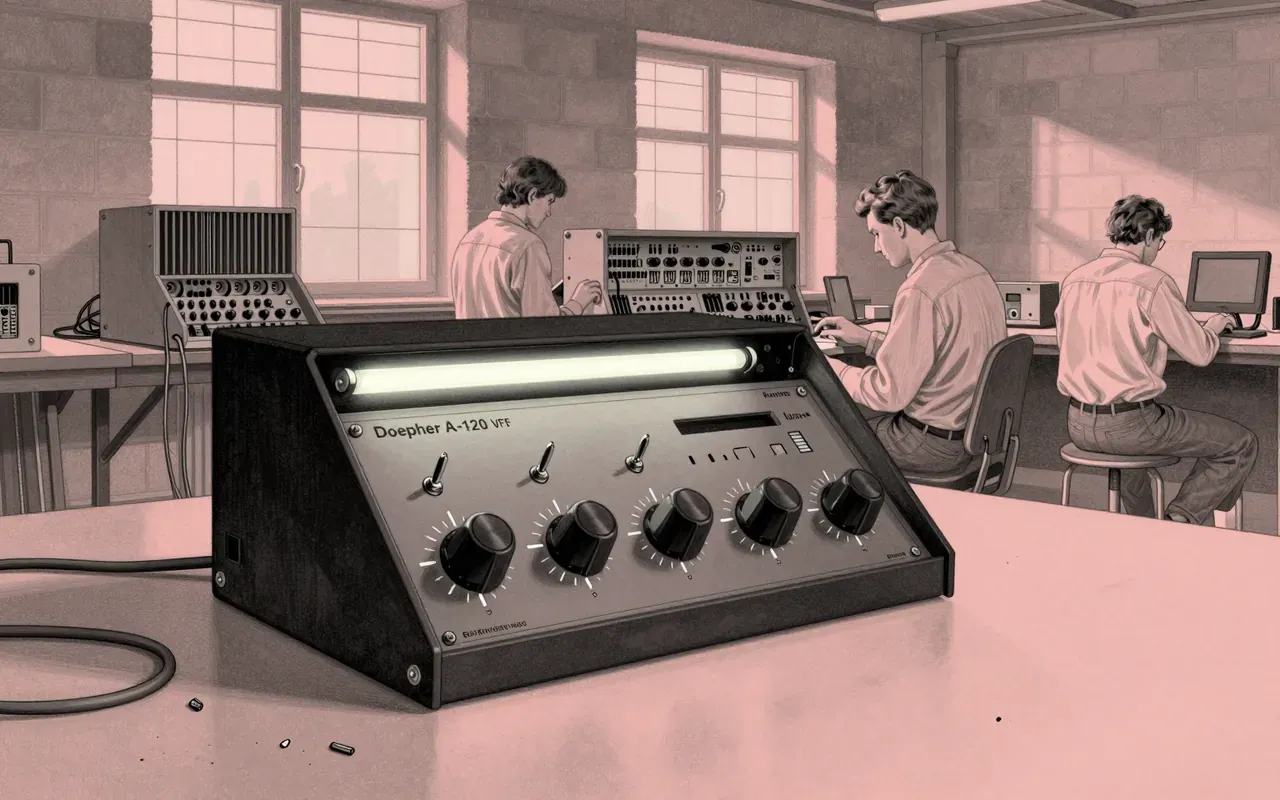
The Doepfer A-120 is a Eurorack filter module built to replicate the Moog 24dB low pass filter. Five potentiometers control cutoff, resonance, input level, and two CV amplitudes. Three CV inputs allow layered, complex modulation. It delivers Moog-like saturation and character at low cost. It offers no multimode filtering, no self-oscillation feedback control, and no visual indicators for resonance peak or clipping. Use it for warm, resonant, hands-on low-pass filtering in modular systems. Avoid it if you need versatility beyond 24dB low pass.

10:34

Gibson SG

Gibson

The Gibson SG is a 1961 solid-body electric guitar built to deliver upper-fret access and playing speed at the expense of body mass and low-end sustain. Its design choices — double cutaway, thinner contoured body, outward-shifted neck joint, slender mahogany neck — are all functional responses to physical limits players hit on earlier Gibsons. It does not try to be a Les Paul. It tries to be faster, lighter, and more direct — and succeeds on those terms alone.

10:35

Gibson RD Artist

Gibson

The Gibson RD Artist is a 1978 solid-body electric guitar with active Moog electronics, all-maple construction, a 25.5-inch scale, two humbuckers, and no vibrato. Its controls enable compressor (bridge), expander (neck), bright mode, or neutral, plus bass/treble boost/cut. Stock humbuckers are weak for rock. It was built for precise, processed tone — not vintage warmth or expressive pitch play.

10:36

Roland MKS-80

Roland

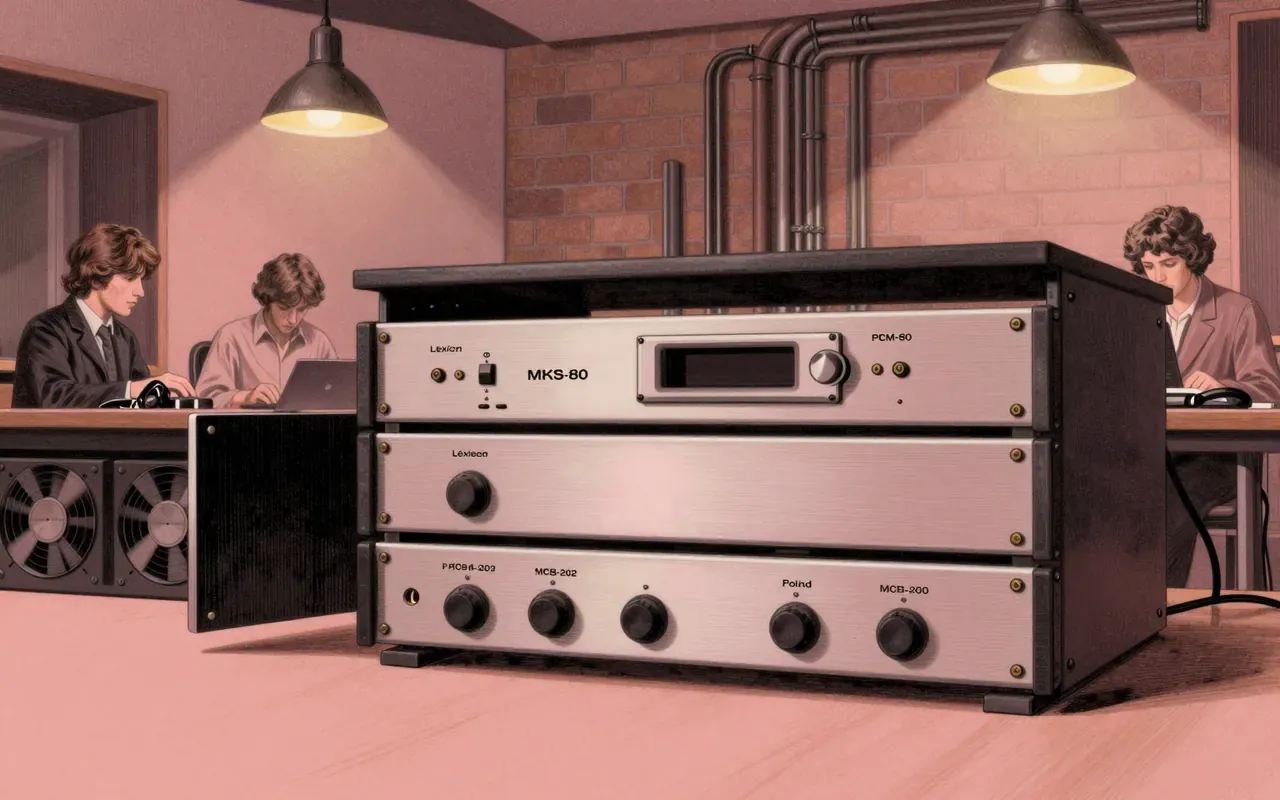
The Roland MKS-80 is an 8-voice, rack-mount, fully analog subtractive synthesizer made from 1984 to 1987. It is the only MKS-series unit with voltage-controlled oscillators—not digitally-controlled ones. Its voice architecture mirrors the Jupiter-6 but adds an HPF, a low boost circuit in the second VCA, and a DC supply current boost. A February 1985 revision introduced updated VCOs, VCAs, and a filter later shared with the JX-8P, JX-10, and MKS-70. Each voice uses two Curtis CEM3340 VCOs. It has no keyboard, no sequencer, and minimal front-panel editing—requiring SysEx tools for deep programming.

10:37

Roland Space Echo RE-201

Roland

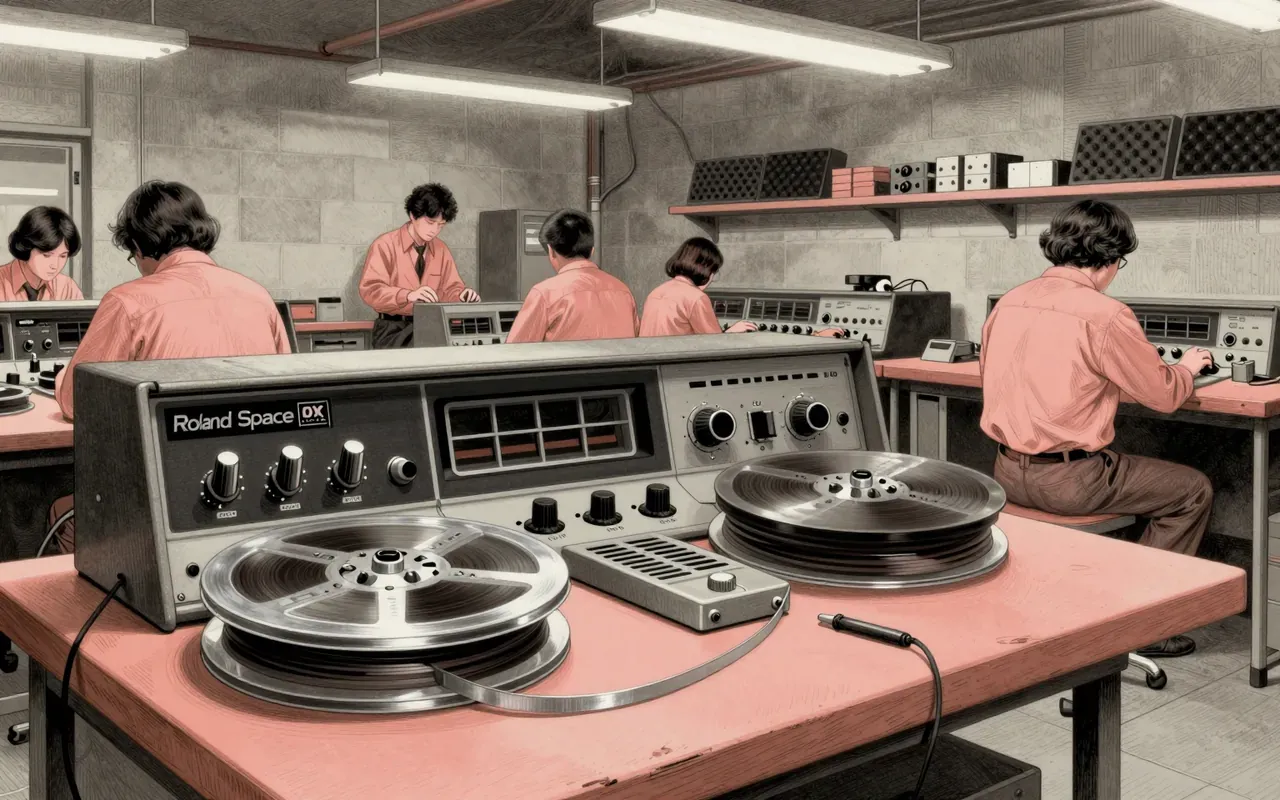
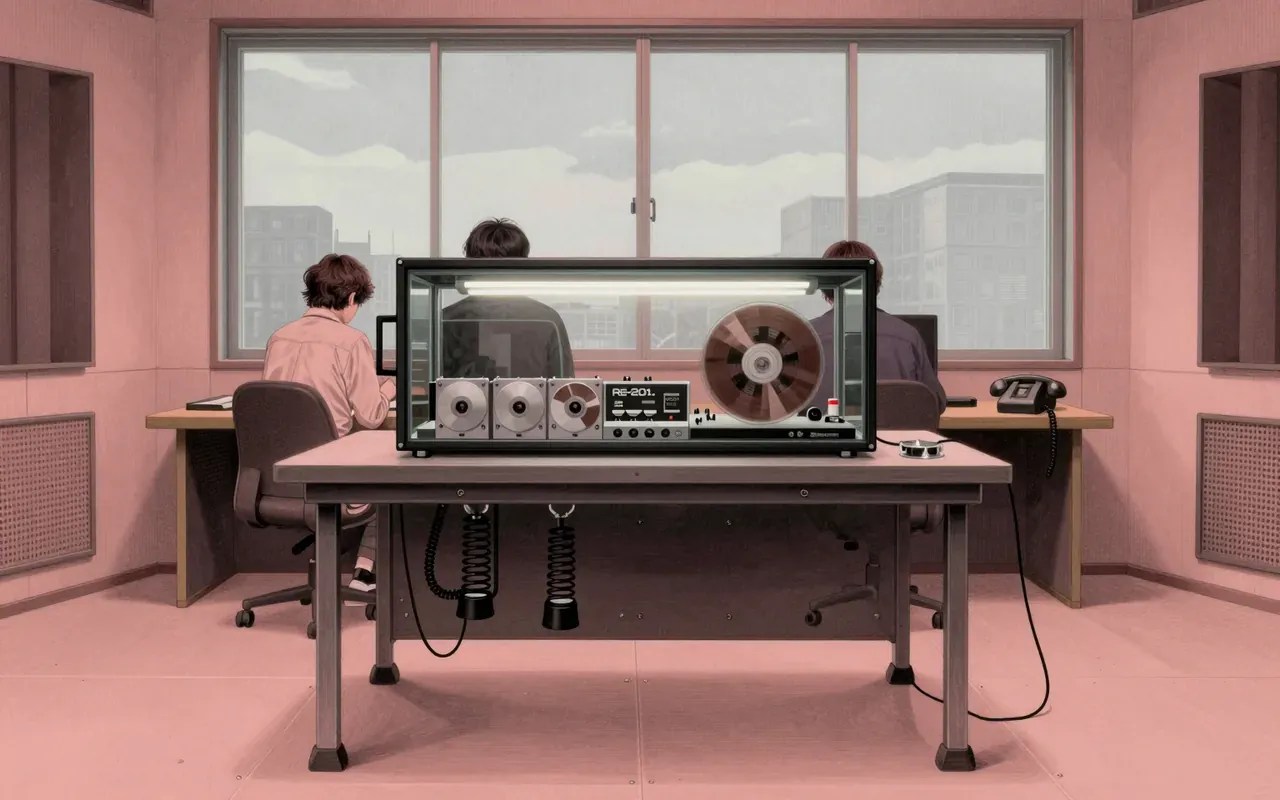
The Roland RE-201 Space Echo is a non-rackable desktop analog tape echo unit with three inputs (two mic, one instrument), five magnetic tape playback heads, 1/4" wet/direct outputs, footswitch input, and controls for time, feedback (intensity), low/high EQ, dry/wet mix, and reverb. Its reverb has a compromised tonal character ('trs CRADA'). It uses an actual reel of tape — distinguishing it from imitators. It does not offer precision, stability, or clean reverb. It does deliver saturated, decaying, pitch-wobbling repeats no digital model fully replicates.

10:38

Mesa/Boogie Rectifier

Mesa/Boogie

The Mesa/Boogie Rectifier is a 100-watt tube guitar amplifier introduced in 1991 or 1992, built for aggressive, bass-heavy distortion and refined across seven circuit revisions. It defined 1990s rock tone—but offered little clean headroom, resisted nuance, and cemented Mesa’s association with metal over its broader legacy.

10:39

Lovetone Ring Stinger

Lovetone

The Lovetone Ring Stinger is an all-analog octave and ring modulator pedal with switchable LFO modulation. It delivers distinctive Hendrix- and Jeff Beck–style tones but requires its manual for calibration and stable power for consistent operation.

10:39

Korg Trinity

Korg

The Korg Trinity is a 1995 music workstation. It was Korg's first modern workstation. It introduced a large touchscreen for advanced control and editing functions. It became the flagship successor to the M1. It introduced resonant filters to Korg's workstation line. It offered built-in digital audio recording, 32-note polyphony, an extensive internal sound library, and assignable effects.

10:40

Yamaha RS7000

Yamaha

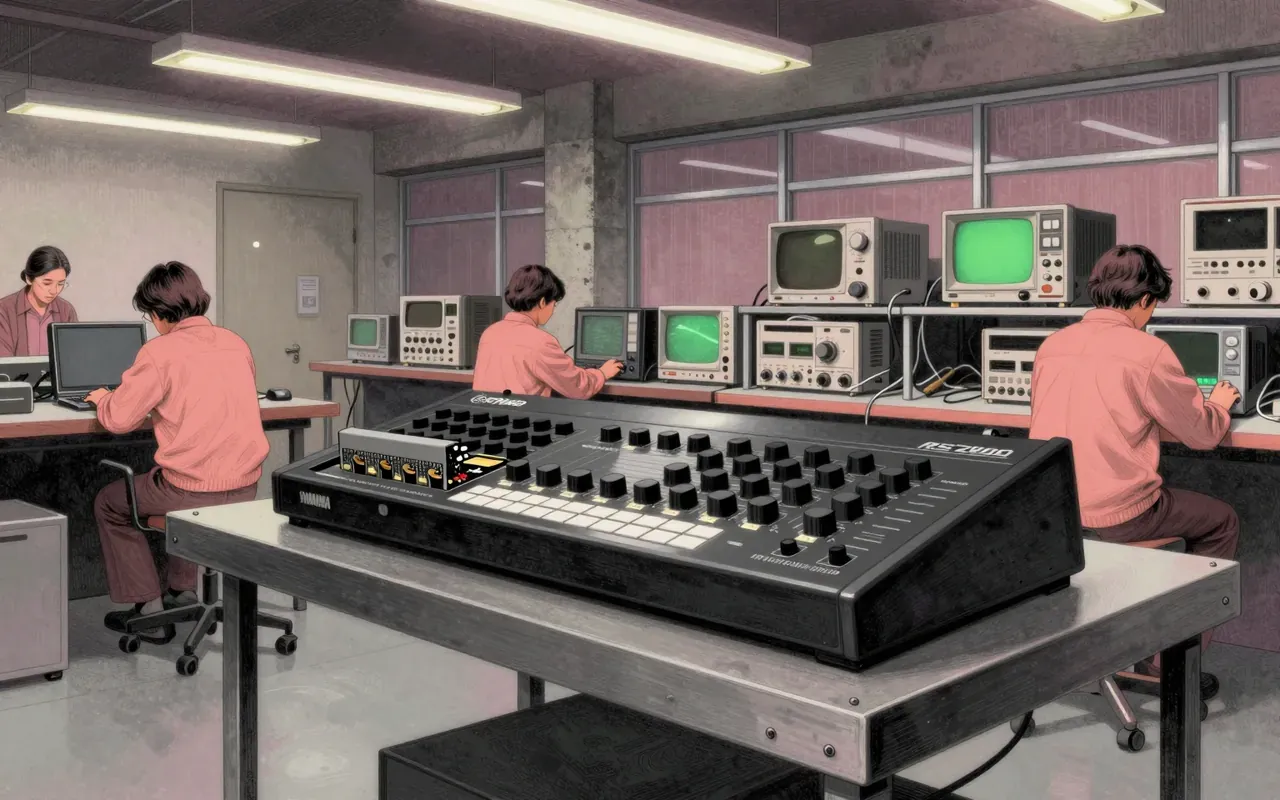
The Yamaha RS7000 is a 2001 groove production workstation. It combines sampling, sequencing, and AWM2 synthesis. It embeds sound and sample edits into patterns. It supports auto-beat slicing, pattern- and linear-based sequencing, and ROM-based sounds only.

10:41

Elektron Machinedrum SPS-1

Elektron

The Machinedrum SPS-1 gives you four distinct drum synthesis methods—TR emulation, FM, SP1200/Simmons sampling, and acoustic physical modelling—all editable per voice with multimode filtering, distortion, and sample-rate reduction. Its Extended sequencer stores kits and tweaks across complex patterns; Classic mode abandons both. It delivers unmatched hybrid control—but demands patience, not immediacy.

10:41

Roland VP-330

Roland

The Roland VP-330 is a 1979 paraphonic vocoder and string machine. It combines ten-band vocoding, electronic strings, and four synthetic choir sounds using seven shared bandpass filters. Its BBD ensemble effect thickens all three sections. Touring musicians adopted it as a lighter, more robust alternative to the Mellotron — despite its choir and strings being less realistic. It offers no patch memory, no MIDI, and no polyphonic independence.

10:42

Korg Electribe MX EMX-1

Korg

The Korg Electribe MX EMX-1 is a 2003 desktop dance production instrument built for live electronic music creation. It combines synthesis, sampling, sequencing, and effects in a single unit aimed at performers and producers who work in patterns and loops.

10:42

MXR Phase 90

MXR · 1972

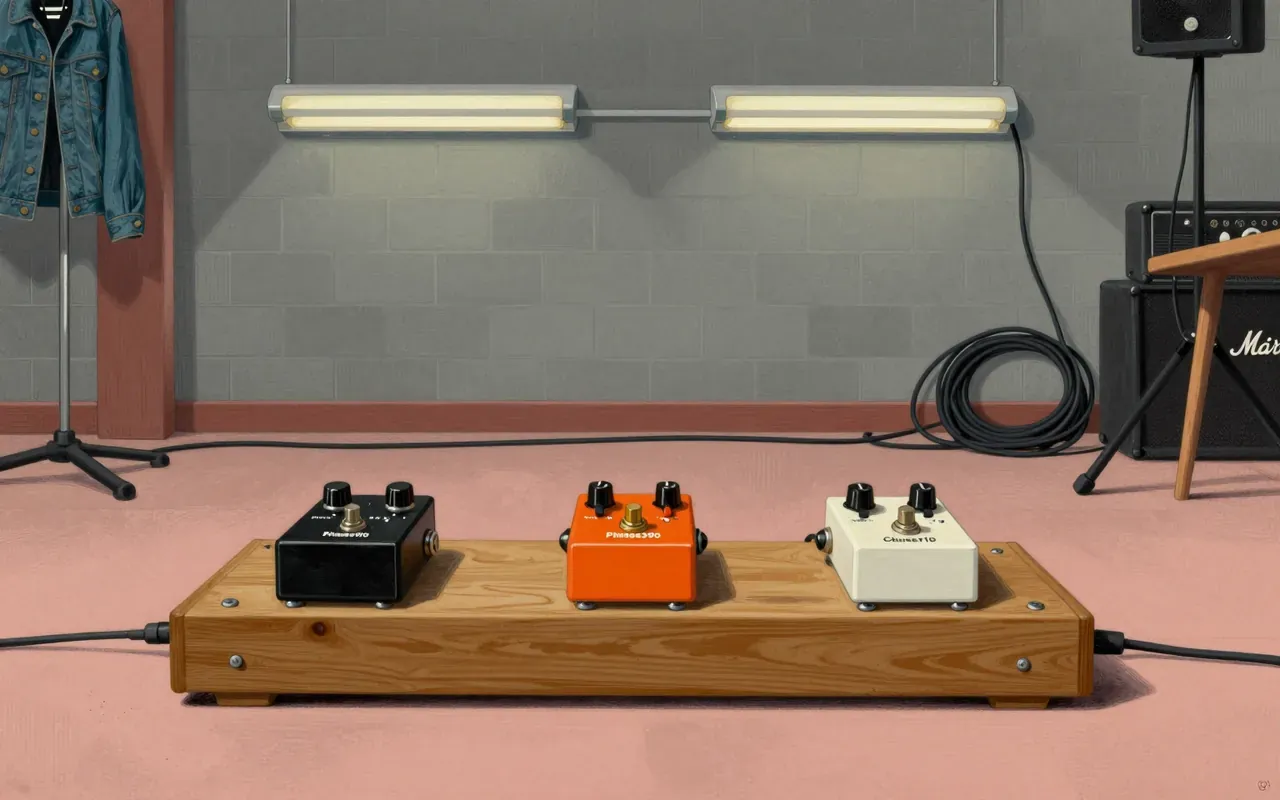
The MXR Phase 90 is a phaser effects pedal introduced in 1972, the first pedal sold by MXR. It features one knob (Speed), an orange enclosure, and evolved logo designs (script then block). Production ceased in 1984 when MXR went bankrupt. Dunlop resumed production with added features: an LED and optional AC power supply. Pre-1981 units lacked LEDs, A/C adaptor jacks, and true-bypass switching. It was used on the first two Van Halen albums.

10:43

EMS Synthi AKS

EMS · 1972

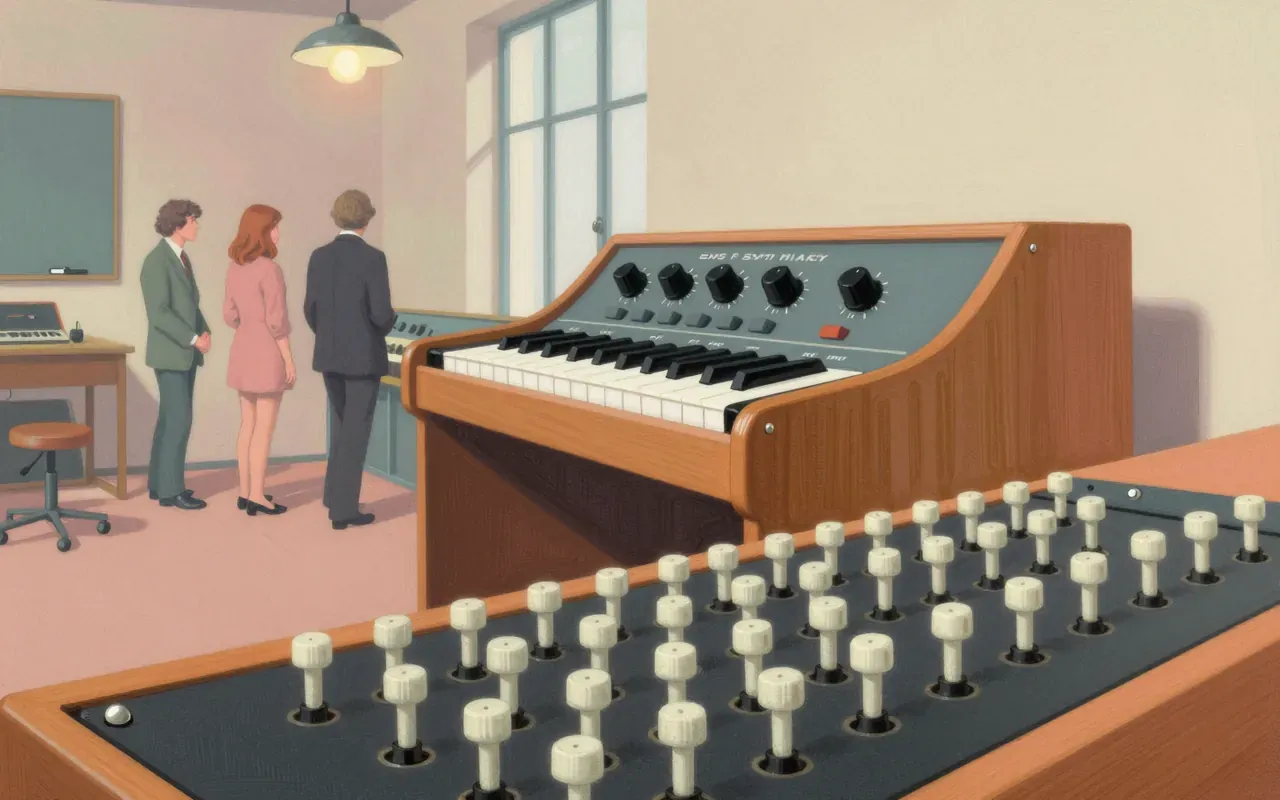
The EMS Synthi AKS is a portable modular analog synthesiser introduced in March 1972. It features a built-in keyboard and sequencer, a patch pin matrix, and shares design DNA with the VCS 3. Its sequencer creates eight-note repeating patterns. Users have described it as a 'noise machine'. One full album—Music from the SYNTHI—was made using only this instrument.

10:44

Roland JP-8000

Roland

The Roland JP-8000 is an analog modeling synthesizer released in early 1997. It sought to digitally reproduce the analog tonalities and power of its analog predecessors. Although it lacked somewhat in analog warmth due to its early digital architecture, it added many new features, such as RPS (Realtime Phrase Sequencing), which allowed short sequenced phrases to be assigned to keys, and such as motion control. It also featured the unique Supersaw oscillators and analog-style controllers such as an arpeggiator and an assignable touch response ribbon control. The Supersaw in particular was the reason why the JP-8000 was particularly successful as a main keyboard (along with the Virus) in the dance music market, especially for trance music.

10:47

Roland MV-8800

Roland

The Roland MV-8800 is a sampling sequencer. It hosts VSTs internally. It requires external video monitoring. It accepts a USB mouse. It is complex. Its hard drive is slow. Its manual is poor. One user tested it for three hours in a retail store and found it capable of handling many music production tasks.

10:47

Fairlight CMI

Fairlight · 1979

The Fairlight CMI defined sampling by doing it first — not perfectly, but decisively. It traded fidelity for immediacy, memory for recognisability, and speed for novelty. Its legacy is linguistic and architectural: it gave sampling a name, and built the first workstation where sound, sequence, and synth shared one chassis.

10:48

Yamaha CP-70

Yamaha

The CP-70 is a mechanically faithful grand piano stripped of its soundboard and fitted with piezo pickups for touring. It delivers unmatched keybed realism and feedback resistance—but at the cost of acoustic presence, convenience, and tonal flexibility.

10:49

Korg MS-20

Korg · 1978

A monophonic analog synthesizer from 1978. Two VCOs. Two VCFs in series: high-pass then low-pass. Ring modulation on VCO2. Modulation generator with pulse and sloped outputs. Two envelope generators. Noise source. Modulation VCA. External control via frequency-voltage converter and envelope follower. Patch panel enables rerouting of audio and modulation signals.

10:50

Digidesign Digi 002

Digidesign

The Digidesign Digi 002 is a FireWire audio interface built exclusively for Pro Tools LE. It delivers four mic preamps, S/PDIF and MIDI, and autonomous digital mixing — but only within that narrow software ecosystem. It is desktop-formatted and non-rack-mountable. Its limits are defined by Pro Tools LE’s track count and host compatibility. It belongs in a period-correct studio, not a modern one.

10:51

Yamaha DX200

Yamaha

The Yamaha DX200 is a 2001 desktop sequencer built for DJs and musicians who need FM synthesis and sample playback in one tight hardware unit. It runs a simplified 6-operator FM engine compatible with DX7 patches. It adds a real-time 16-step sequencer with four tracks, a resonant multi-mode filter — absent in all classic DX synths — and bundled software editing tools. It does not offer deep FM programming, internal effects, or flexible voice sharing between FM and AWM2 engines.

10:52

Electric Mistress

Electro-Harmonix · 1976

The Electric Mistress is an analog flanger from Electro-Harmonix, first sold in 1976 and the first flanger in pedal format. Every version after the first blue and red one has a Filter Matrix mode that freezes the flange at any point for chime-like tones. The Deluxe version is still in production, and NEO Mistress and Stereo Electric Mistress are digital recreations.

10:52

Orange OR120

Orange

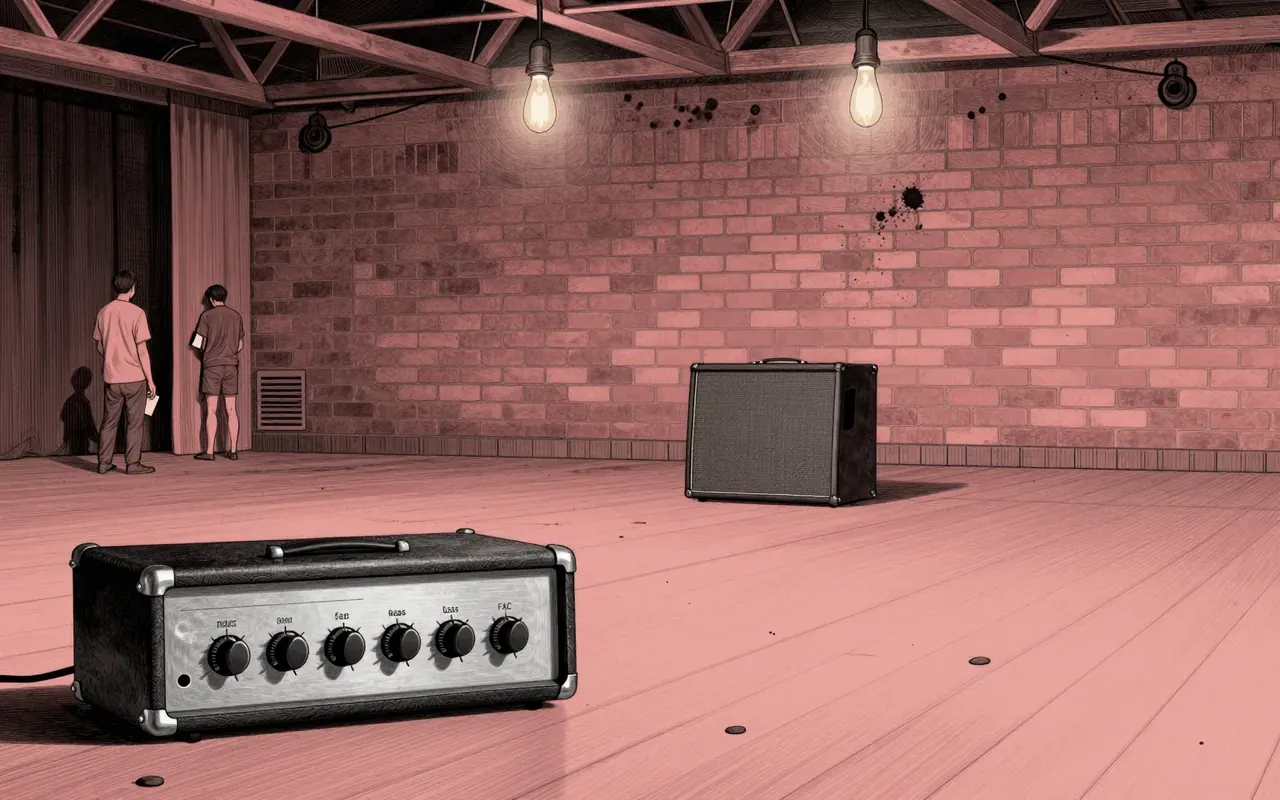
The Orange OR120 is a 120-watt tube guitar amp head built around four EL34 tubes. It has high and low inputs, echo send/return, handles, and controls for master, gain, presence, treble, bass and FAC — but no middle control or standby switch. It delivers rich overdrive and vibrant clean tones at volume, but cannot be used quietly without compromising tone or risking tube stress.

10:52

Yamaha FS1R

Yamaha

The FS1R is a rare hybrid: a formant-driven FM module that expanded what FM synthesis could model — but collapsed under its own complexity. It delivered new waveforms, deeper operator mapping, and vocal resonance no DX7 could match. Yet its interface, manual, and lack of tactile feedback made it a lab tool, not a stage instrument. Its legacy lives in Montage — but not its formants.

10:53

TC Electronic SCF Stereo Chorus Flanger

TC Electronic

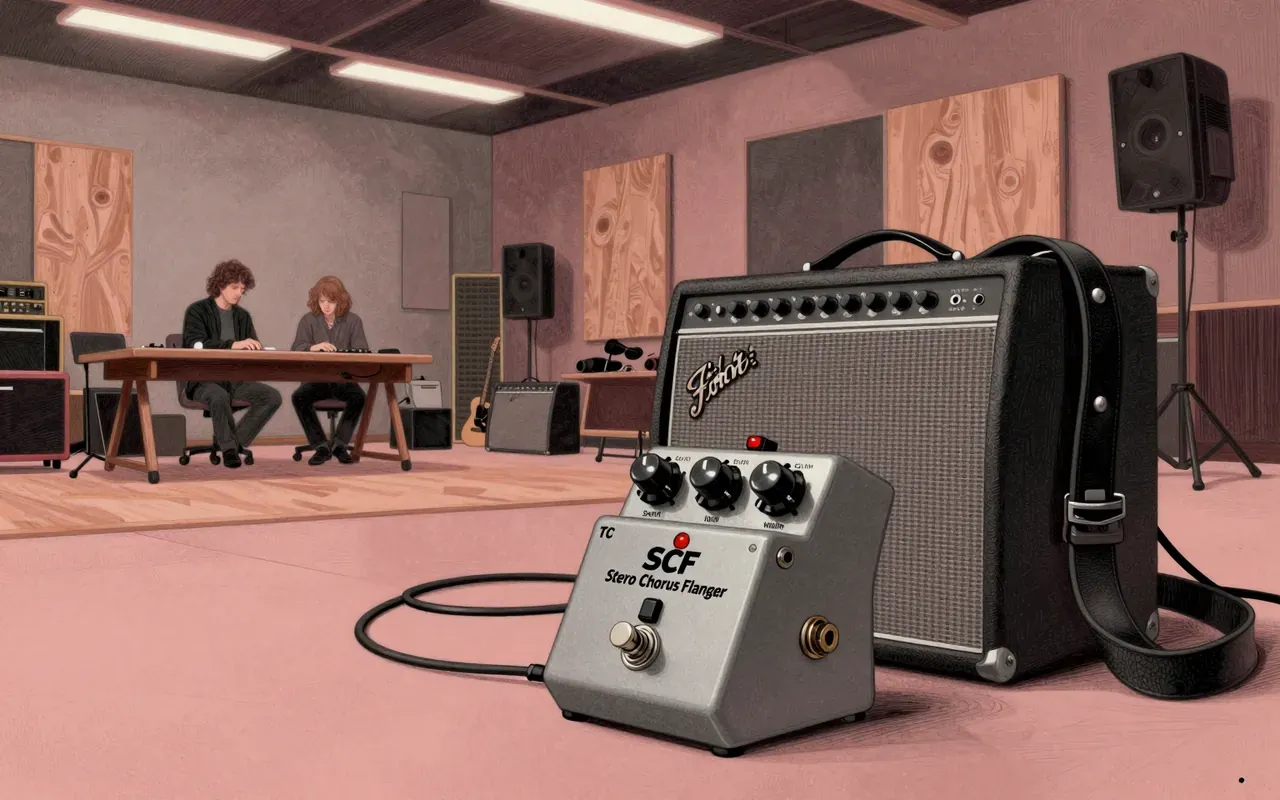
The TC Electronic SCF Stereo Chorus Flanger is an analog guitar pedal introduced in the mid-1980s. It offers Chorus, Pitch Mod, and Flanger modes via a 3-way switch. Controls include Speed, Width, and Intensity knobs, independent input gain, and a momentary footswitch. It has mono/stereo outputs, an overload LED, an external bypass jack, and draws power directly from AC mains. Its chorus mode is widely praised for its clean, studio-grade sound — but its flanger and pitch mod modes are less consistent. It is discontinued, replaced by the SCF Gold.

10:54

Roland SH-7

Roland

The Roland SH-7 is a 1978 duophonic analog synthesizer built to expand on the SH series with greater flexibility and sonic aggression.

10:55

Boss CS-2 Compression Sustainer

Boss

The Boss CS-2 Compression Sustainer is a guitar compressor/sustainer. This unit is a modified version branded 'Fat Old Comp' by MSM Workshop. No technical specifications are provided.

10:56

Akai MPC1000

Akai

The MPC1000 delivers the MPC workflow in a smaller, cheaper, more portable form. It adds six outputs, built-in effects, and memory expansion over the MPC2000 — while storing samples as WAV and sequences as MIDI on CompactFlash. Build quality is reduced, but sound quality is preserved. It is a sampling and sequencing instrument — not a synth, not a DAW, not a controller.

10:58

Korg Mono/Poly

Korg

The Mono/Poly is a 1981 analog synthesizer with four VCOs, a 4-pole resonant lowpass filter, dual LFOs, and flexible key assignment modes. It operates either as a monophonic synth using all four oscillators or as a four-voice paraphonic synth. It was the only monophonic synthesizer with an integrated quad-VCO design at launch. Each VCO offers triangle, sawtooth, pulse, and pulse width modulation waveforms. Every VCO can be individually adjusted for octave, volume, and detuning relative to VCO 1, which has Master Tuning. Only the fixed pulse width and the amount of pulse width modulation are shared across all VCOs. The Mono/Poly features a 4-pole resonant lowpass filter with ADSR envelopes modulating both the VCF and VCA. It has two LFOs: one with four waveforms targeting multiple parameters via the modulation wheel, and a second triangle-wave LFO dedicated to pulse width modulation and arpeggiator tempo.

11:00

Dallas Rangemaster Treble Booster

Dallas Rangemaster

The Dallas Rangemaster Treble Booster is a 1965 desktop effects unit made for guitarists in the 1960s. Its function was two-fold: to increase the signal strength of the guitar going into the amplifier, and to increase tones at the high end of the spectrum (a treble booster). The need for a treble booster arose in the mid-1960s, as British tube amplifiers such as the Vox AC30 or Marshall JTM45 tended to produce a slightly dark, muddy sound when overdriven, particularly when used with humbucking pickups. A pre-amplifier that also boosted treble proved a solution. Additionally, the vintage components in the Rangemaster circuitry could add characteristic distortion and overtones to color the guitar sound, much in the way of the more modern overdrive pedals. The Rangemaster Treble Booster was first made in the 1965 by London company Dallas Musical Ltd., incorporated in 1959. The unit is simple and consists of a grey folded metal casing with an on/off switch, a potentiometer controlling the boost setting, and in- and output jacks. It was designed to sit on top of an amplifier rather than on the floor, where most effects units live.

11:02

Neumann TLM 170

Neumann

The Neumann TLM 170 is a discontinued large-diaphragm condenser microphone built solely for studio recording. It offers five polar patterns, a -10 dB pad, and a low-cut switch. It ships with a swivel mount and supports U87-style suspension. It fails in live performance. No recordings, artists or sessions are documented in the source material.

11:04

Epiphone Texan

Epiphone

The Epiphone Texan is a jumbo acoustic flattop guitar introduced in 1961 as a continuation of the FT-79. It was built for songwriting and studio use — not for high-volume amplification or tonal experimentation. Its defining features are its jumbo body, midrange-forward voice, and (from 1962) an adjustable bridge. Later reissues added a lightweight internal pickup, but the original was acoustic-only. Paul McCartney used a 1964 model to write 'Yesterday'. It is generally equivalent to the Gibson J-45, differing only in scale-length. Production shifted from the US to Japan and back; discontinuations and reissues reflect corporate ownership changes, not design evolution.

11:12

Korg Prophecy

Korg

The Korg Prophecy is a monophonic synthesizer released by Korg in 1995. It uses MOSS (Multi Oscillator Synthesis System) to emulate analog synthesis, FM, and physical modelling. It offers five synthesis methods encompassing nine oscillator types: analog, variable phase modulation, brass, reed, and plucked string modelling, noise with comb filtering, and three types of analog-style models — sync, ring modulation, and cross modulation — collectively referred to as 'MOD'. Each oscillator is processed by a linked waveshaper for generating distortion or resonance effects. The signal, combined with outputs from a sub-oscillator and noise generator, and feedback, is then fed through two multi-mode filters, which can be arranged in series, parallel, or split configurations. The Prophecy's modulation options include six multi-stage envelopes and four low-frequency oscillators (LFOs) with a selection of 30 types. The keyboard features velocity sensitivity and aftertouch and is complemented by three physical wheels dedicated to pitch bending, modulation, and the Wheel 3, a cylindrical control that combines a modulation wheel with a pressure- and position-responsive ribbon controller. It is equipped with five programmable Performance Editors (PE) knobs, each of which can control up to four parameters simultaneously, enabling precise manipulation of aspects like filter cutoff frequencies, envelope attack times, filter resonance, and stereo panning with a single turn. KORG was the first company to feature effects on a synthesizer, and the first to use a sample + synthesis sound design.

11:12

Korg Poly-800

Korg

The Korg Poly-800 is an 8-voice analog synthesizer released by Korg in 1983. It was the first fully programmable polyphonic synthesizer that sold for less than $1,000. It was designed for portability, featuring battery power and a lightweight design that allowed the user to play with it strapped around their neck. It utilised digitally controlled oscillators (DCOs), and was a paraphonic synth with a single filter shared between its eight voices. Each DCO offers sawtooth and square waveforms, which are mixed together with a white noise generator before being sent to a voltage-controlled filter (VCF). The Poly-800 features 2 polyphony modes: Whole mode offers 8-voice polyphony with one DCO per voice, while Double mode places the DCOs in pairs for a richer sound, albeit at the expense of reducing polyphony to four voices. The VCF is shared across all voices, which means the Poly-800 is technically a paraphonic synth, instead of a polyphonic synth. The filter can be set to either single or multiple trigger modes; in single mode, the envelope is triggered by the first key press and won't re-trigger until all keys are released. Multi mode allows each key press to trigger the filter envelope independently.

11:15

Roland D-50

Roland · 1987

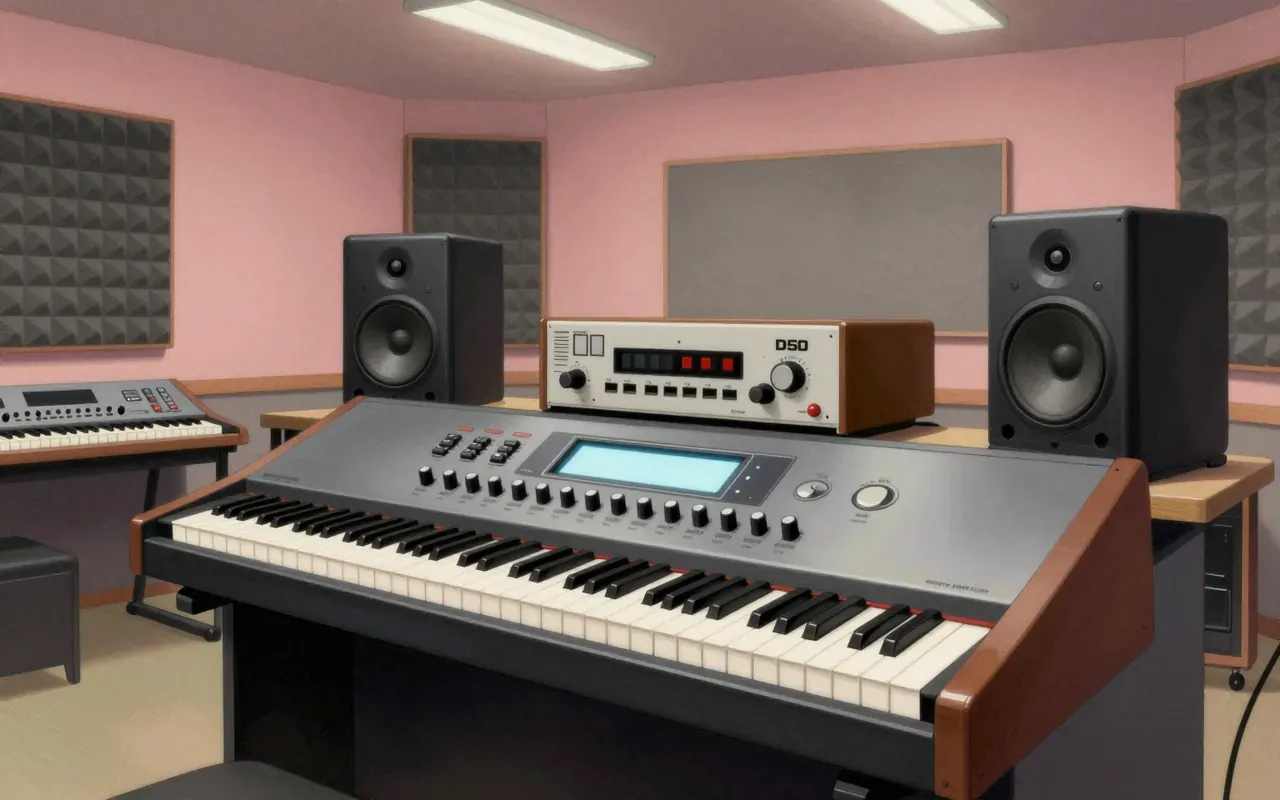
The Roland D-50 is a 1987 hybrid synthesiser that pairs 47 ROM-based PCM attack samples with subtractive synthesis to create realistic, bright, and instantly usable tones. Its architecture — two tones, each with two partials — delivers clarity and presence but imposes strict limits on timbral complexity and real-time control. It was built for affordability and immediacy, not flexibility or depth.

11:16

Gibson ES-345

Gibson · 1959

The Gibson ES-345 is a semi-hollow electric guitar introduced in 1959. It was designed as a hybrid between a solid-body electric guitar and a jazz guitar. It was developed in 1958 as an upscale version of the ES-335. Gibson announced the ES-345 as the ES-345T in May 1959. The ES-345T had a price of $345 in the standard sunburst finish. From the guitar's 1959 introduction through 1979, 10,560 ES-345s were shipped. Gibson designed the guitar to create a guitar which could be used to play jazz, as would be typical of an Electric Spanish guitar, but with a maple block running through the guitar to allow the versatility of a solid body electric guitar. The bodies were made of laminated maple with spruce bracing, and a solid maple center block - designed to prevent unwanted feedback from the pickups - extending from the base of the body (where the strap button is mounted) all the way to the mahogany neck, along with a rosewood fingerboard.

11:18

Kurzweil K2600

Kurzweil

The Kurzweil K2600 is a 1999 workstation built for deep sound engineering — not quick playing. It uses V.A.S.T. synthesis with 60 DSP functions and 438 presets. It holds 12MB of sample ROM (expandable to 44MB) and 64MB of sampling RAM (expandable to 128MB). Its 32-track sequencer supports pattern, linear, and step recording, plus advanced editing. It processes external signals in real time via ADAT, TDIF, and AES/EBU — with any parameter modulating the input and 20-bit digital output. It falls short on immediacy, tactile control, and workflow clarity. It belongs in a fixed studio, not on stage or in a laptop bag.

11:30

Oberheim OB-Xa

Oberheim

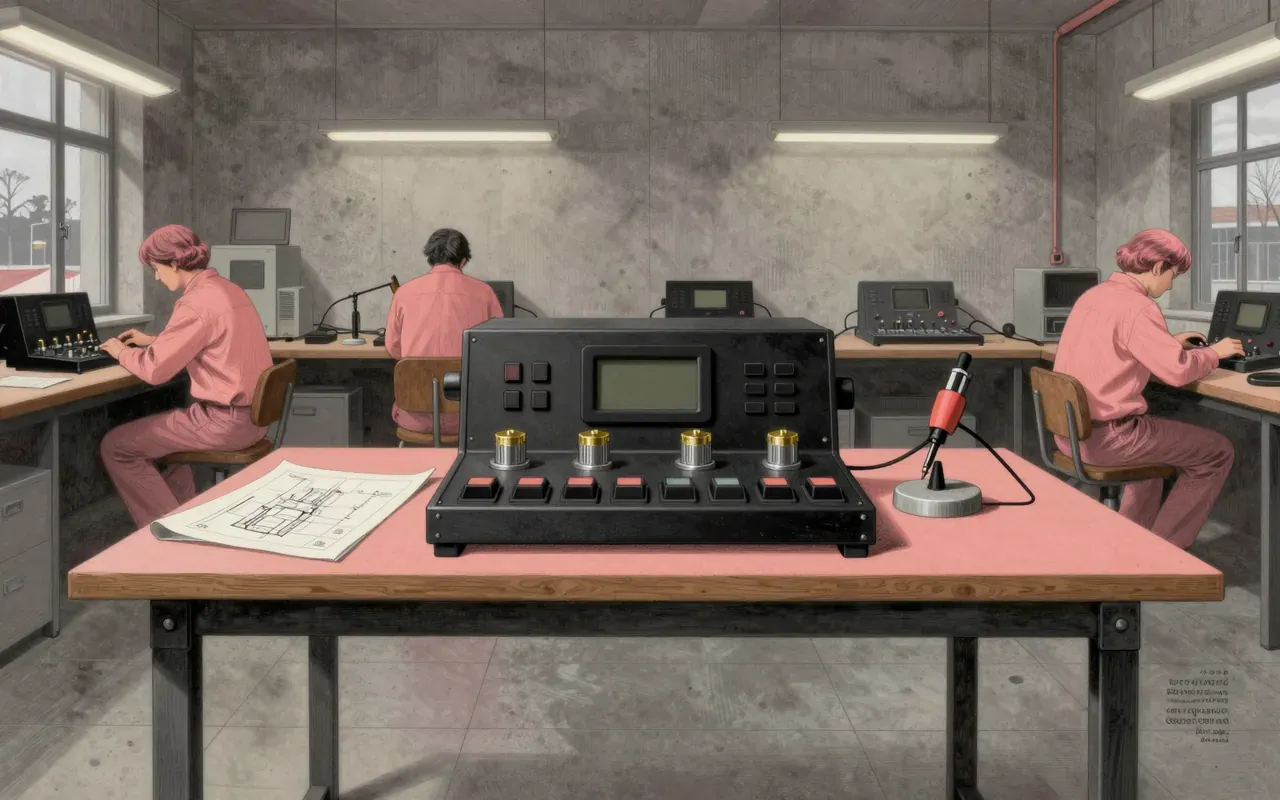
The OB-Xa is a pragmatic evolution: layering and splitting built in, filter envelope replacing cross modulation, Curtis ICs for stability, and Serial Buss for closed-system integration. It delivers thick, reliable polyphony — but sacrifices the OB-X’s discrete-circuit idiosyncrasy and FM flexibility.

11:48

Ibanez JEM777

Ibanez

The Ibanez JEM777 is a made-in-Japan STC-shaped guitar built from 1987 to 1996 for Steve Vai’s technical demands. It features a basswood body, maple or rosewood fretboard, 24 frets (some scalloped), HSH pickups, passive volume/tone/five-way switching, and either an Edge or Lo Pro Edge tremolo. It delivers exceptional upper-fret access and stable tremolo performance — but offers no coil-splitting, no active circuitry, and no tolerance for neglected tremolo maintenance.

11:48

Boss RE-20 Space Echo

Boss

The Boss RE-20 Space Echo is a digital emulation of the Roland RE-201 Space Echo. It is a twin-pedal stomp box with stereo inputs and outputs, an expression pedal input, and a 12-mode selector. Eight front-panel knobs control Bass, Treble, Reverb Volume, Repeat Rate, Intensity, and Echo Volume. One pedal toggles delay on/off. The other handles tap tempo. It operates in Normal (up to 3s) and Long (up to 6s) delay modes. It supports a 'warp' function via footswitch hold.

12:26

Yamaha RX-5

Yamaha

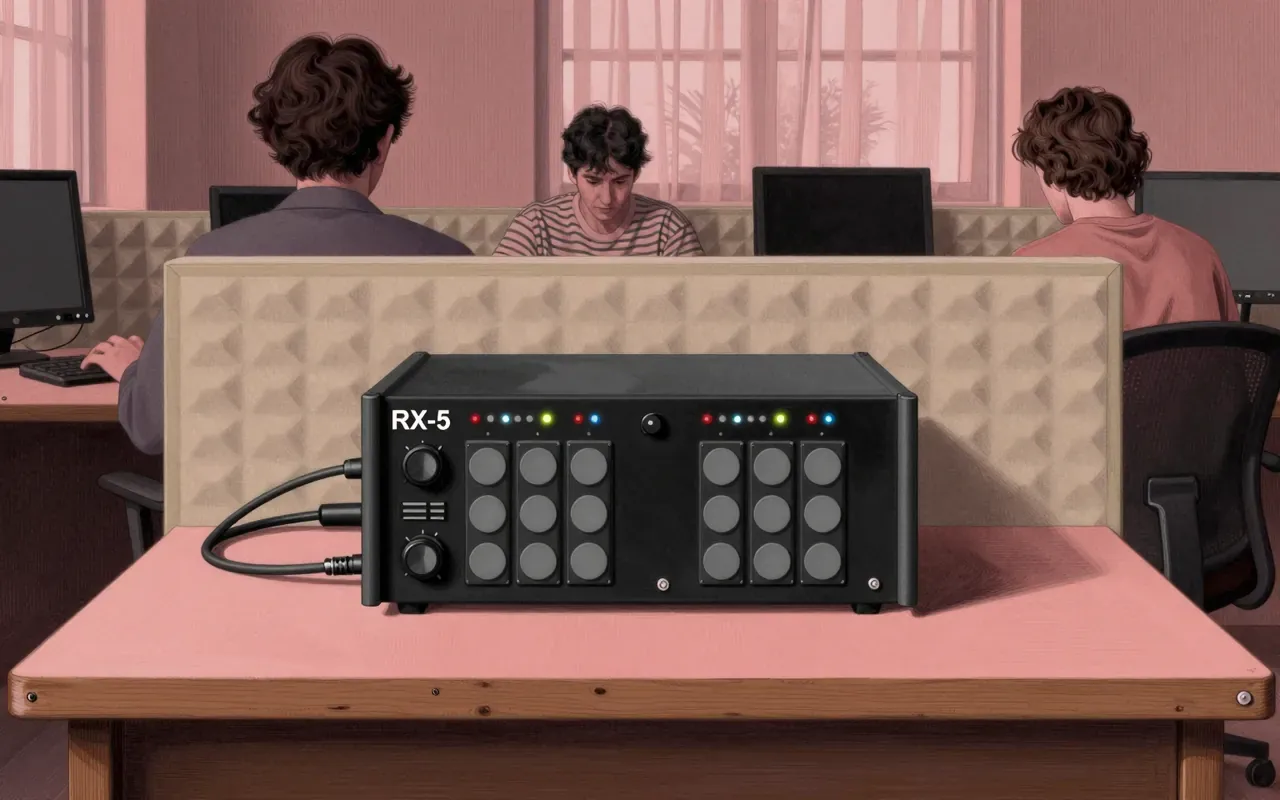
The Yamaha RX-5 is a 1986 programmable digital sample-based drum machine. It delivers 24 built-in and 28 cartridge-based digitally sampled sounds. It has 12 individual outputs—one per vertical drum pad pair. It supports sound editing including chromatic pitch, envelope, reverse, and damp. Its sequencer records up to 100 patterns in Real Time or Step Time, with lengths up to 99 bars.

12:28

Shin-ei Fuzz-Wah

Shin-ei

The Shin-ei Fuzz-Wah is a 1968 analog pedal that merges wah and fuzz into one foot-controlled unit. Rocking controls wah. Sliding left-right controls fuzz gain. Two switches activate effects independently. A third switch sets order. A knob adjusts fuzz volume. Powered by 9V battery or adapter. It remained in production, in some form, until 1984. Fender reissued it in 2008.

12:36

Roland RS-202

Roland

The Roland RS-202 is a 1976 string synthesizer that uses sawtooth oscillators and frequency division for full polyphony. Its paraphonic architecture routes all notes through one envelope shaper—but assigns per-note articulation to prevent attack re-triggering. Split-keyboard controls allow independent top/bottom sounds. An analog chorus with LFO-modulated delay lines creates ensemble realism. It does not offer true polyphonic envelopes, per-voice filters, or digital memory.

13:06

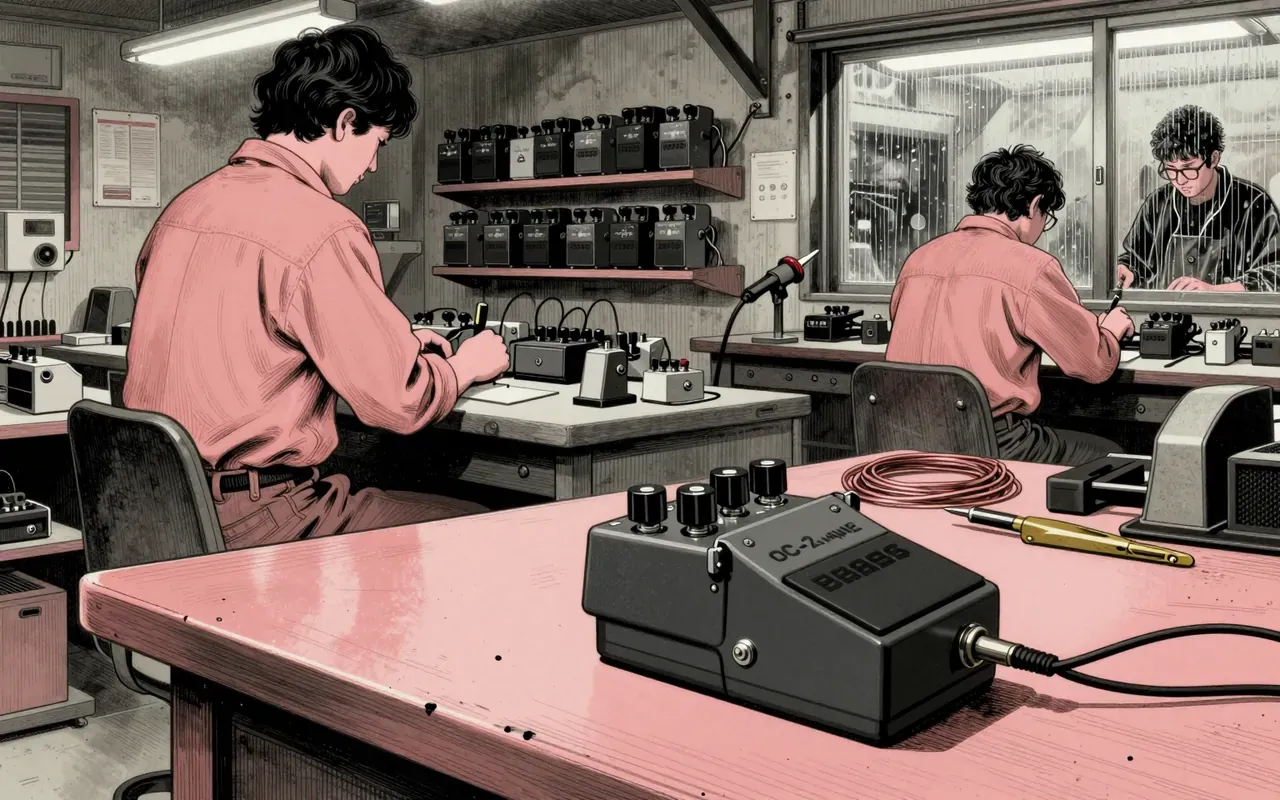
Boss OC-2 Octave

Boss

The Boss OC-2 Octave is a stompbox that adds one or two sub-octaves to a guitar signal. Its three knobs control each layer. It runs on 9V DC or battery. Higher notes track smoothly — without digital harshness. But notes below the 12th fret on the low E string mis-track badly: wobbly, out-of-tune, uncorrectable. It is unfit for conventional use. Only noise or experimental players gain anything from its failure.

13:34

Neumann U 87

Neumann · 1967

The Neumann U 87 is a large-diaphragm condenser microphone introduced in 1967 as the solid-state successor to the U 67. It features a 25.4 mm diaphragm and three selectable polar patterns — cardioid, omnidirectional, and figure-8. It can be powered by 48V phantom power or two internal 22.5V batteries. The original used the K 87 capsule, a modified version of the K 67. The 1986 U 87A reverted to the standard K 67 capsule and eliminated the dual-battery requirement.

13:36

Mesa/Boogie Mark II

Mesa/Boogie

The Mesa Boogie Mark II is a series of ten tube guitar amplifiers — all combos or heads — designed for high-gain responsiveness and channel-switching control. It delivers saturated lead tones with tight low-end and immediate touch dynamics. It does not offer clean headroom at low volume, built-in effects, or silent operation. It remains in production, with the Mark IIC+ 1x12 Combo released in 2024.

34:32

Fender Twin

Fender

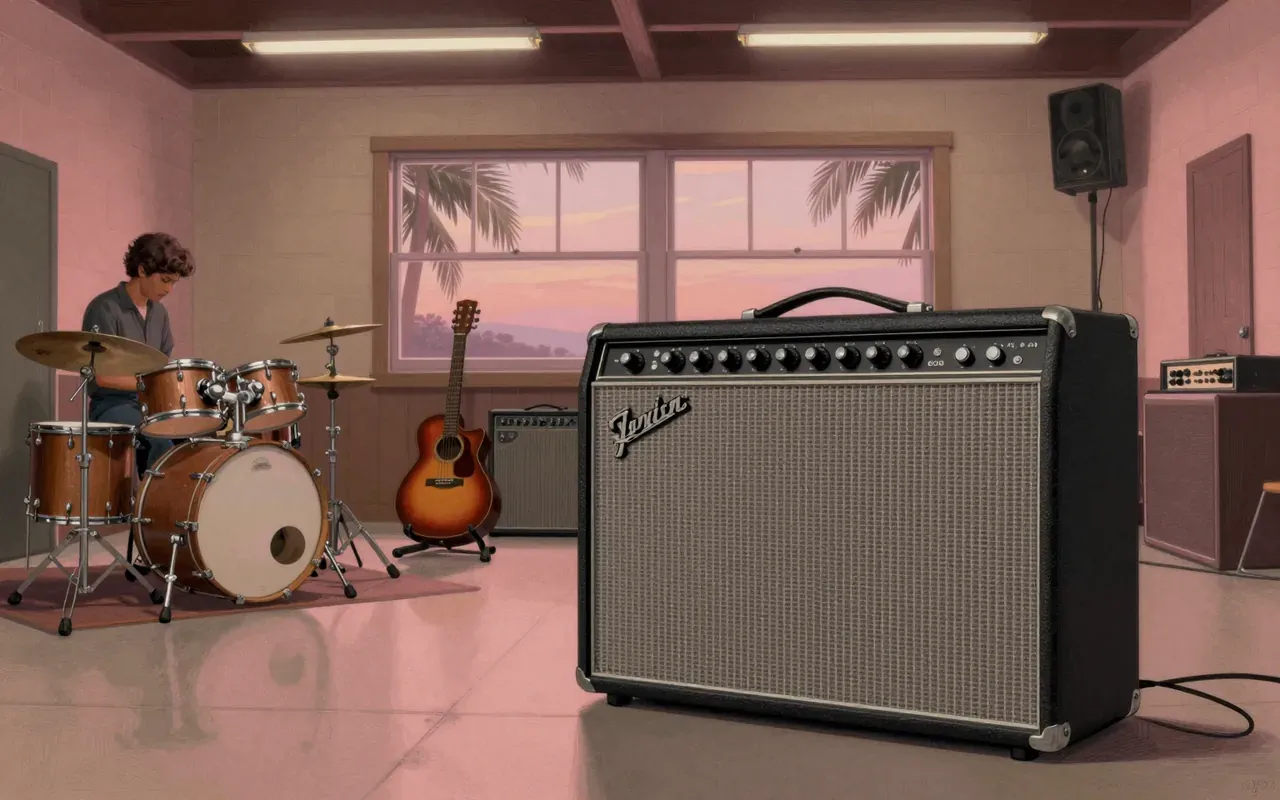
The Fender Twin is a clean-headroom amplifier built for volume and clarity — not saturation or convenience.