audiobriefs
Newest

All briefs

747 briefs · 6840 min · 289–384 on page 4 of 8
8:30

Waldorf Microwave XT

Waldorf

The Waldorf Microwave XT is a 1998 rackmount synthesizer using digital wavetable and FM synthesis, featuring 44 real-time control knobs, 20-bit DSP functions, and 10-voice polyphony expandable to 30; it shares its engine with the Microwave II and Wave synths, excels at emulating PPG sounds and generating acid or Moog-style bass, and includes onboard arpeggiator, digital effects, and MIDI-transmitting knobs.
6:22

Ampex MM-1000

Ampex

The Gemini DJ MM-1000 is a 3-channel analogue mixer. It offers no EQ, no effects, no headphone output, no crossfader, and no cueing. It exists only to sum three line-level signals and send them to one output. Its value lies entirely in its simplicity and reliability — not in versatility or sonic character.

6:54

Ampex MM-1200

Ampex

The Ampex MM-1200 is an analog multitrack recorder. No technical specifications exist for it. That absence defines its limits.
8:16

Make Noise Morphagene

Make Noise

The Morphagene is an effects module for modular synthesizers made by Make Noise. It belongs in the 'Effects modules for modular synthesizer' category. It does not function as a sampler, sequencer, or DAW plugin — it transforms audio live using tape-style operations. Its design gives immediate, irreversible, hands-on manipulation. It withholds saving, syncing, and visual feedback.
8:19

Rane MP2016

Rane

The Rane MP2016 is a 3U rack-mount DJ mixer with six inputs — four phono/line, two mic/line — each with bass/mid/treble and gain. Master/House and Booth outputs each have a 3-band EQ. It delivers crystal-clear sound with no noise or bleed. It has no built-in effects.

10:56

Akai MPC1000

Akai

The MPC1000 delivers the MPC workflow in a smaller, cheaper, more portable form. It adds six outputs, built-in effects, and memory expansion over the MPC2000 — while storing samples as WAV and sequences as MIDI on CompactFlash. Build quality is reduced, but sound quality is preserved. It is a sampling and sequencing instrument — not a synth, not a DAW, not a controller.

10:25

Akai MPC2500

Akai

The MPC2500 upgrades the MPC2000 with 16-bit/44.1 kHz sampling, individually adjustable pad sensitivity, and the Grid editor — but keeps 64-track sequencing, 32-voice polyphony, and no automated effects sends.

10:05

Akai MPC4000

Akai

The Akai MPC4000 is a 2002 hardware sampler sequencer built to lead the hardware sampler category. It has 16 velocity- and pressure-sensitive pads. It performs 96 kHz 24-bit sampling. It has 16 MB of sampling memory, upgradeable to 512 MB. It includes IDE bays for installing an internal hard disk drive and CD-ROM drive. It supports optional plug-in boards including Effects, ADAT, S/P-DIF & wordclock, and 8 analogue outputs boards. It has 2 MIDI inputs and 4 MIDI outputs. It was released in 2002 with the intent to lead hardware samplers.

9:39

Akai MPC500

Akai

The MPC500 is Akai’s entry-level sampling sequencer—a portable, self-contained beat-making station built for quick capture, arrangement, and performance.

8:50

Korg MS-50

Korg

The Korg MS-50 is a 1978 keyboard-less analog expander module. It has one VCO, two VCFs (highpass and lowpass), two ADSRs, an LFO, pink and white noise, ring modulator, voltmeter, and sample & hold. It uses Hz/V CV/Gate control and was designed to complement the SQ-10 sequencer.

7:30

Roland MSQ-100

Roland

The Roland MSQ-100 is a sequencer with no documented technical specifications. It exists only as a named object with alternate spellings. Nothing is verified about its function, capacity, interface behaviour, or sonic role.

9:00

Roland MSQ-700

Roland

The Roland MSQ-700 is an 8-track MIDI sequencer with lithium battery-backed memory, step-time and real-time recording, punch-in, merge, quantization, chaining, and analog tape sync. It stores 6500 notes per track. It has no screen, no file export, no velocity editing, and no USB.

8:20

Otari MTR-10

Otari

The Otari MTR-10 is an analog multitrack recorder. No technical specifications are available. It is also referred to as 'mtr 10' or 'mtr10'.

10:16

Otari MTR-12

Otari

The Otari MTR12 is an analog multitrack recorder. No technical specifications exist for it. That absence defines its utility — or lack thereof.

6:52

Otari MTR-90

Otari

The Otari MTR-90 is listed as an analog multitrack recorder. No technical specifications are available. Nothing else is confirmed.

9:01

Buchla Music Easel

Buchla

The Buchla Music Easel is an analog synth with no technical specifications. That is all that is verified.

9:10

Roland MV-8000

Roland

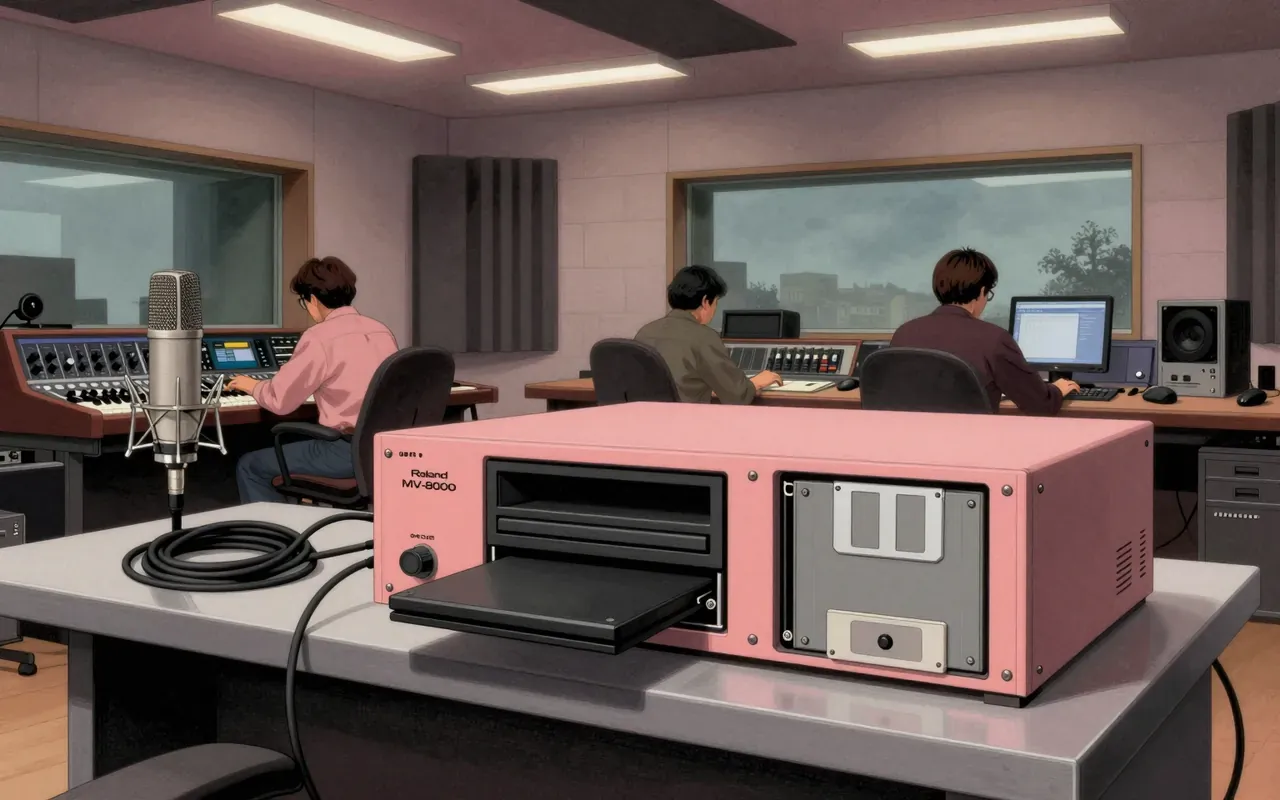
The Roland MV-8000 is a 2004 sampling sequencer built for producers who want to record, edit, sequence, and master full tracks without a computer.

10:47

Roland MV-8800

Roland

The Roland MV-8800 is a sampling sequencer. It hosts VSTs internally. It requires external video monitoring. It accepts a USB mouse. It is complex. Its hard drive is slow. Its manual is poor. One user tested it for three hours in a retail store and found it capable of handling many music production tasks.

10:14

Otari MX-5050

Otari

The Otari MX-5050 is an 8-track analog multitrack cassette recorder introduced in 1987. It records at 3.75 ips. Its recording head is superior to that of the Otari 488 and 488 mkII. dbx Type II noise reduction applies separately to tracks 1–4 and 5–8. A pitch/speed wheel allows ±15% variation. Its digitally controlled transport enables automated punch-in between memory points. It uses direct-drive mechanics — no capstan belt required. It records all eight tracks simultaneously, unlike the 488 models.

8:28

GenoQs Nemo

GenoQs

The GenoQs Nemo is a hardware sequencer. That is all that is verified.

8:59

TC Electronic Nova Delay

TC Electronic

The TC Electronic ND-1 Nova Delay is a digital guitar effects pedal offering six studio-quality delay types—including Delay line, Dynamic, Reverse, Ping-pong, Pan, and Slap-back—with up to 2290 ms delay time, audio-generated tap tempo, delay spillover, true stereo I/O, true bypass, and nine user-programmable presets; it operates in manual or preset mode and includes analog-tone emulation via a tone knob.

9:14

Yamaha NS-10M

Yamaha

The Yamaha NS-10M is a two-way passive near-field monitor. It delivers clear mid and high frequencies but lacks deep low-end extension. Engineers use it to verify mix translation and to A/B compare with other speakers. Its non-neutral response demands experience. It is not a full-range solution.

13:06

Boss OC-2 Octave

Boss

The Boss OC-2 Octave is a stompbox that adds one or two sub-octaves to a guitar signal. Its three knobs control each layer. It runs on 9V DC or battery. Higher notes track smoothly — without digital harshness. But notes below the 12th fret on the low E string mis-track badly: wobbly, out-of-tune, uncorrectable. It is unfit for conventional use. Only noise or experimental players gain anything from its failure.

8:29

Fulltone OCD

Fulltone

The Fulltone OCD V1.1 is an analog overdrive pedal. It has volume, drive, and tone controls. It has a high-pass/low-pass switch. It uses true bypass. It is white with black knobs and a red LED.

8:20

Eventide Omnipressor 2830

Eventide

The Eventide Omnipressor 2830 Au is a studio compressor. No technical specifications are available. It belongs to the studio compressors category.

10:52

Orange OR120

Orange

The Orange OR120 is a 120-watt tube guitar amp head built around four EL34 tubes. It has high and low inputs, echo send/return, handles, and controls for master, gain, presence, treble, bass and FAC — but no middle control or standby switch. It delivers rich overdrive and vibrant clean tones at volume, but cannot be used quietly without compromising tone or risking tube stress.

8:43

Vestax PDX-2000

Vestax

The Vestax PDX-2000 is a DJ turntable built for scratching and mixing. It delivers high torque and stable tracking. Its straight tone arm, pop-up light, and adjustable brake serve functional roles in performance. Pitch control is imprecise. The start button and pitch fader are fragile. Road cases are hard to find due to its length.

9:18

Thermionic Culture Phoenix

Thermionic Culture

The Aerial7 Phoenix is a HiFi/audiophile headphone. It belongs to the Street series. It is made by Aerial7. It has an alternate name: phoenixchino. Nothing else is verified.

7:58

Vestax PMC-05 Pro

Vestax

The Vestax PMC-05 Pro III VCA is a 2-channel DJ mixer with RCA inputs and outputs, a headphone output jack, post-fader effect send with level control, and a 2-band EQ. It delivers a warm and generous low-end sound. Users find it super easy to use and effective. Its EQ limitation makes it unsuitable for genres like DnB and Dubstep.

8:30

Vestax PMC-07 Pro

Vestax

The Vestax PMC-07 Pro is a 2-channel scratch mixer. It prioritises precision, durability, and clarity over features. Its crossfader is adjustable and preferred for scratching over competitors including the PMC-05, Numark, Ecler, Rane, and PMC-07 PSI. It sounds clear and unsaturated. It has no digital functions, no headphone cueing beyond basic monitoring, and no more than two channels.

9:14

Vestax PMC-25

Vestax

The Vestax PMC-25 is a 2-channel DJ mixer designed for house music. It is 3U tall and rack mountable. It features PGM vs. Master LED VU metering, split cue, a third cueable aux input, and EQ kill switches implemented as mini faders to avoid clicks and achieve -85 dB attenuation. The crossfader has a fixed curve. Faders and crossfader are replaceable. Sound quality is perceived as superior to a cheap Numark mixer.

9:54

Boss PN-2 Tremolo/Pan

Boss

The Boss PN-2 Tremolo/Pan is an analog stomp box released in May 1990 and discontinued in March 1995. It delivers tremolo and stereo panning via rate, depth, and a 4-way mode switch. It needs two amps for panning and runs on 9V DC. It was replaced by the mono TR-2.

8:18

Electro-Harmonix Polychorus

Electro-Harmonix

The Electro-Harmonix Polychorus Mk2 is a stereo analog stomp-box modulation pedal for guitar. It offers chorus, flanger, double track, and filter matrix modes via toggle switches. It has one input and two outputs. It requires 24V power. It has no preset memory.

8:51

Tascam Portastudio 144

Tascam

The Tascam Portastudio 144 is a four-track analog cassette recorder. It was used by adolescents for home multitrack recording in 1981. It lacked dBX noise reduction but functioned effectively. It enabled users to record and mix music at home, creating a personal musical environment.

8:43

Tascam Portastudio 244

Tascam

The Tascam Portastudio 244 is a 1984 four-track cassette recorder. It gives immediate, portable multitrack recording with EQ, gain, and switchable input impedance per track. DBX noise reduction works. Analog saturation stays musical. But signal degrades horribly at each bounce. Cassette transport is fragile. Preamps sound thin and harsh. No phantom power. Unbalanced inputs only. It was bought in Paris in 1984 for nearly 5,000 francs.

7:10

Tascam Portastudio 246

Tascam

The Tascam Portastudio 246 is an analog multitrack-studio. No technical specifications exist for it. It belongs to the category of Analog Multitrack-studios.

8:01

Tascam Portastudio 424

Tascam

The Tascam Portastudio 424 is a cassette-based four-track recorder and mixer. It uses type II (CrO2) tape. It has two inputs — XLR and 1/4 inch — and supports tape speeds of 9.5, 4.75, and 2375 cm/s. dbx type II noise reduction is permanent. Each input has gain, three-band EQ, and panning. It has main stereo outputs and a headphone jack.

8:54

Rupert Neve Designs Portico 5012

Rupert Neve Designs

The Portico 5012 is a solid-state mic preamp with intuitive gain staging and a subjective Silk function that transforms its clean base tone into something euphoric — but unpredictable.

9:08

Rupert Neve Designs Portico 5033

Rupert Neve Designs

The Portico 5033 is a parametric EQ in Rupert Neve Designs’ Portico series. No technical specifications are published. It offers hands-on control but no documented performance metrics.

8:46

Rupert Neve Designs Portico 5043

Rupert Neve Designs

The Portico 5043 is a studio compressor in Rupert Neve Designs’ Portico series. It delivers consistent, source-agnostic compression with optional harmonic colouration. Its physical format undermines its rack-ready promise. It does not replace a dedicated clean limiter or a compact multi-channel solution — but it rarely needs replacing on a track once engaged.

8:05

Roland PR-100

Roland

The Epiphone PR-100 is a Chinese-made, US-designed dreadnought acoustic guitar with 22 frets, a mahogany neck, rosewood fretboard, and plastic bridge. It has no electronics or controls. It is built for unamplified play only.

8:26

Revox PR99

Revox

The Revox PR99 is an analog multitrack recorder with no published technical specifications. Its function is limited to basic tape-based multitrack recording and playback — but without documented parameters, alignment, or service history, it resists reliable use or evaluation.

8:07

Digidesign Pro Tools 24 MIX

Digidesign

The Digidesign Pro Tools|24 Mix + is a discontinued PCI DSP board for Pro Tools|24 systems. It requires Pro Tools 6.4.1 and Mac OS 10.3.8. Installation is difficult. Setup is simple. Once running, it performs reliably and professionally.

9:36

Sequential Circuits Prophet-10

Sequential Circuits

The Prophet-10 is two Prophet-5s stacked into one instrument. It delivers ten-voice analog thickness no other 1980 synth matches. But it overheats, detunes, and demands physical and technical concessions. Version 3 fixes stability with CEM chips — at the cost of low-end weight.

8:44

Sequential Circuits Prophet-600

Sequential Circuits

The Prophet-600 is a 1982 6-voice analogue synth. It introduced MIDI to commercial instruments. It gives players two oscillators per voice with sync, variable pulse, and triangle/saw waveforms. Its VCF, VCA, and Poly-Mod come from the Prophet-5. It includes an arpeggiator and 2-track sequencer. It glides. It modulates flexibly. It does not track reliably over time. It has no velocity or aftertouch. It is not expandable. It belongs in rooms where history and immediacy matter more than precision.

8:16

Sequential Circuits Prophet-T8

Sequential Circuits

The Prophet-T8 is an 8-voice analog polysynth released by Sequential Circuits in 1983. It features digital control of analog sound, a 76-key weighted keyboard with velocity and aftertouch, full MIDI implementation, split/layer/double/unison modes, and a real-time sequencer. Its tone resembles the Prophet-5. It was Sequential’s finest analog synthesizer—but faced commercial pressure from the Yamaha DX7.

8:40

Korg PS-3100

Korg

The Korg PS-3100 is a rare (600 units), 30kg, 48-voice analog synthesizer from 1977. It uses 12 divide-down VCOs to drive 48 independent voice circuits — one VCO, VCF, VCA and EG per key. Its warm LPF and 3-band resonator enable rich formant and phase effects. LFO1 reaches audio rate and delivers AM up to ring modulation. One EG is polyphonic; the other is universal and paraphonic. Twelve intonation scaling controls allow non-equal-tempered tuning. It has no patch memory.

9:48

Korg PS-3200

Korg

The Korg PS-3200 is the final model in Korg's PS series. It integrates two PS-3100 units into a single chassis. It provides 16 memory locations that can be individually addressed and recalled. It was regarded as remarkable in its era due to having two oscillators per key and 48-note polyphony. Each voltage-controlled oscillator module includes a dedicated voltage-controlled filter and low-frequency oscillator. Its patching and signal routing capabilities were comparatively restricted versus other modular systems. Its envelope generator design was constrained. It was considered sonically rich for its era, and its 16-patch memory was highly valued.

8:12

Make Noise QMMG

Make Noise

The QMMG is a filter module for modular synthesizers. That is all the sources confirm. It is made by Make Noise. It belongs in the category 'Filter modules for modular synthesizers'. Nothing else is verified.

8:23

Alesis Quadraverb

Alesis

The Alesis Quadraverb is a rack-mount digital multi-effects processor introduced in the early 1990s. It focuses on reverb and delay but also offers pitch, EQ, and 'Change' effects. It runs up to four effects simultaneously in stereo or mono, covers 20 Hz–20 kHz, and connects via 1/4" stereo I/O and MIDI. Users value its lo-fi character—not its fidelity—for feedback loops and textural layering.

8:27

Yamaha QY70

Yamaha

The Yamaha QY70 is a 16-track MIDI sequencer with AWM2 synthesis, 519 voices, 20 drum kits, and XG editing for ADSR, cutoff, and resonance. It runs two hours on batteries. Its screen is Game Boy–sized. It is portable, self-contained, and limited to MIDI — no audio I/O, no extended runtime, no large interface.

8:33

Royer R-121

Royer

The Royer R-121 is a studio-only ribbon microphone. It delivers fast, flat, high-SPL capture — but offers zero user controls, zero ruggedness, and zero tolerance for phantom power. It belongs where the environment is controlled and the source is loud.

9:55

Roland R-70

Roland

The Roland R-70 is a 1992 full-sized, sample-playback drum machine from Roland’s R series. It offers up to 210 drum sounds across Rock, Jazz, Electronic, and Ethnic kits. It stores 100 programmable patterns and chains them into 20 songs. Its positional pad changes sound by strike location. It includes reverb, flanger, delay, chorus, and humanization. Sound editing is limited to attack, sustain, and pan. Its built-in sequencer is complex—users prefer external sequencing. Kick and cymbal sounds emulate the TR-808. It is a popular, all-purpose drum machine.

10:35

Gibson RD Artist

Gibson

The Gibson RD Artist is a 1978 solid-body electric guitar with active Moog electronics, all-maple construction, a 25.5-inch scale, two humbuckers, and no vibrato. Its controls enable compressor (bridge), expander (neck), bright mode, or neutral, plus bass/treble boost/cut. Stock humbuckers are weak for rock. It was built for precise, processed tone — not vintage warmth or expressive pitch play.

11:48

Boss RE-20 Space Echo

Boss

The Boss RE-20 Space Echo is a digital emulation of the Roland RE-201 Space Echo. It is a twin-pedal stomp box with stereo inputs and outputs, an expression pedal input, and a 12-mode selector. Eight front-panel knobs control Bass, Treble, Reverb Volume, Repeat Rate, Intensity, and Echo Volume. One pedal toggles delay on/off. The other handles tap tempo. It operates in Normal (up to 3s) and Long (up to 6s) delay modes. It supports a 'warp' function via footswitch hold.

10:00

Mesa/Boogie Rectifier Recording Preamp

Mesa/Boogie

The Mesa Boogie Rectifier Recording Preamp is a 2U rack-mount tube preamp with two channels and six voicings. It prioritises high-output direct recording but includes I/O for live use. Its six 12AX7 tubes deliver raw gain capable of overdriving mixers. It lacks speaker emulation and falls short when compared to miked cabinet tone.

8:52

Way Huge Red Llama

Way Huge

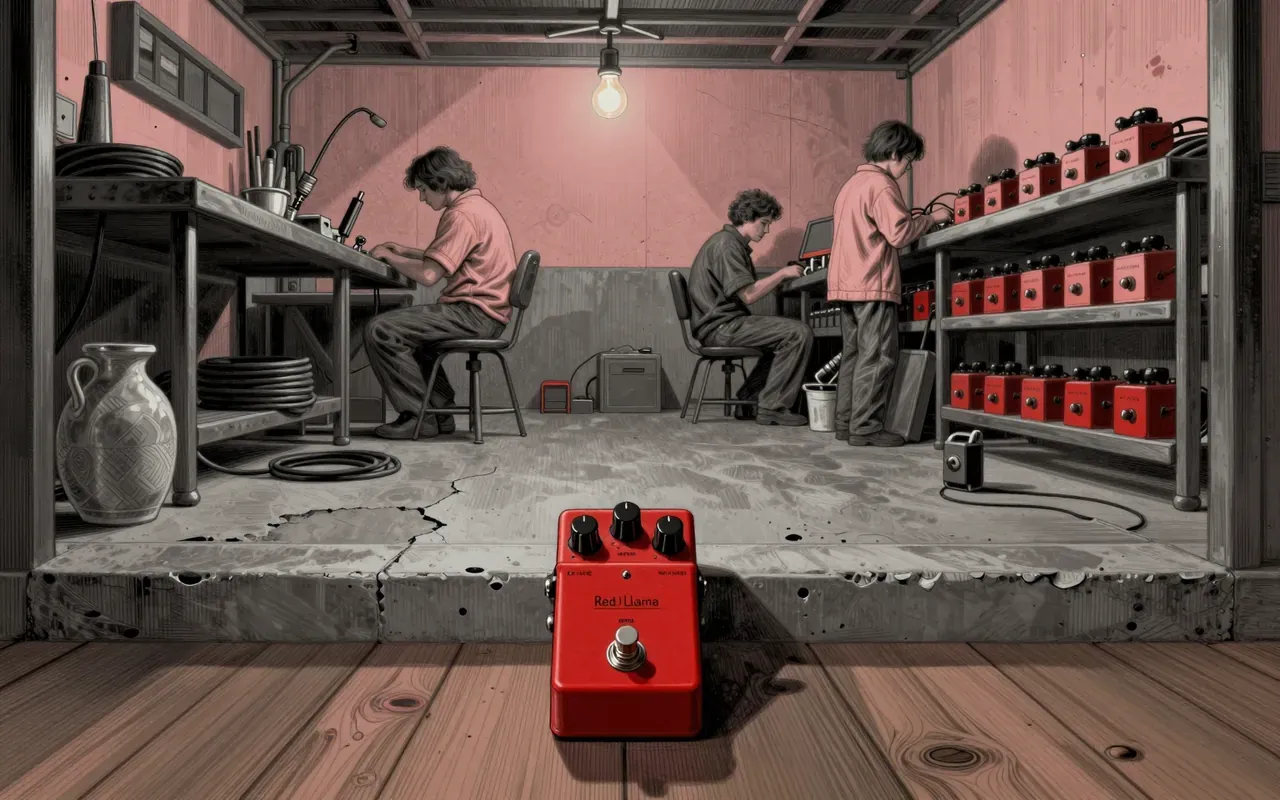
The WM23 Smalls Red Llama Overdrive MKIII is an overdrive pedal made by Way Huge Electronics. It costs $150 including VAT. That is all that is verified.

9:41

Yamaha REV1

Yamaha

The Yamaha REV1 is a two-part digital reverb: a rack unit and a separate remote. It runs at 16-bit/44.1 kHz. It has one XLR input, two XLR outputs, external clock sync, and RS232 remote connectivity. Its sound is clear, clean, soft, and distinct from other Yamaha gear. Only the Lexicon 224 XL surpassed it in finesse among contemporaneous units.

9:59

Yamaha REV7

Yamaha

The Yamaha REV7 is a fixed-architecture digital reverb unit from 1985. It occupies two rack spaces. It offers four reverb types — hall, room, flat, and voice — plus chorus, flanger, phaser, tremolo, and delay. All effects layer over reverb. It has XLR and 1/4-inch audio connections and 5-pin DIN MIDI ports. It has no patch memory, no real-time MIDI parameter control, and no stereo-in/stereo-out routing.

8:54

Tannoy Reveal

Tannoy

The Tannoy Reveal is a discontinued passive monitor. It delivers dynamic, clear sound with surprising output for its size — but trades neutrality for listenability. Its low end fades before 65 Hz. Its stereo image depends on precise tweeter alignment. Magnetic shielding works flawlessly near screens. Users call it hi-fi, not monitoring — loudness-coloured, not flat.

8:31

Ibanez RG550

Ibanez

The Ibanez RG550 is an STC-shaped electric guitar from the RG Standard series, manufactured from 1987 to 1994. It features a Floyd Rose locking tremolo, H-S-H pickups, a 5-way switch, and a thin maple neck. It is discontinued. Users praise its playability and tuning stability but note its weight and fragile finish.

9:01

Rhodes Rhodes Mark II

Rhodes

The Rhodes Mark II Stage Piano is a Fender-built electric piano in the Rhodes series. No technical specifications are available. Its value is $900. That is all that is known.

9:34

Rhodes piano

Fender Rhodes

The Rhodes piano is an electromechanical electric piano invented by Harold Rhodes. It uses hammers to strike metal tines whose vibrations are captured by electromagnetic pickups. It outputs an electrical signal requiring external amplification for full fidelity. It makes audible sound unplugged — quieter and thinner — and features a vocal-range frequency gap that supports singing without masking.

8:27

Korg Rhythm 55 KR-55

Korg

The KR-55 is a fixed-rhythm drum machine from 1979. It plays 48 preset patterns across genres including Waltz, Samba, Rhumba, Bossa Nova, Tango, Slow Rock, Swing, and Rock. It uses sample-based synthesis for 12 drum tones. It has individual level controls per drum sound per pattern. A dedicated swing knob alters groove feel. A footswitch jack enables external Start/Stop and Intro/Fill control. It has no keyboard, no pattern editing, no MIDI, no sync outputs beyond footswitch, and no individual drum outputs.

10:39

Lovetone Ring Stinger

Lovetone

The Lovetone Ring Stinger is an all-analog octave and ring modulator pedal with switchable LFO modulation. It delivers distinctive Hendrix- and Jeff Beck–style tones but requires its manual for calibration and stable power for consistent operation.

8:51

Mutable Instruments Rings

Mutable Instruments

Rings is an 'other module for modular synthesizer' made by Mutable Instruments. That is all the source confirms. It is not described as a resonator, a physical modeller, or a filter. It is not assigned a year, format, or synthesis method. Its role is defined solely by its category and manufacturer.

8:37

Orange Rockerverb 50

Orange

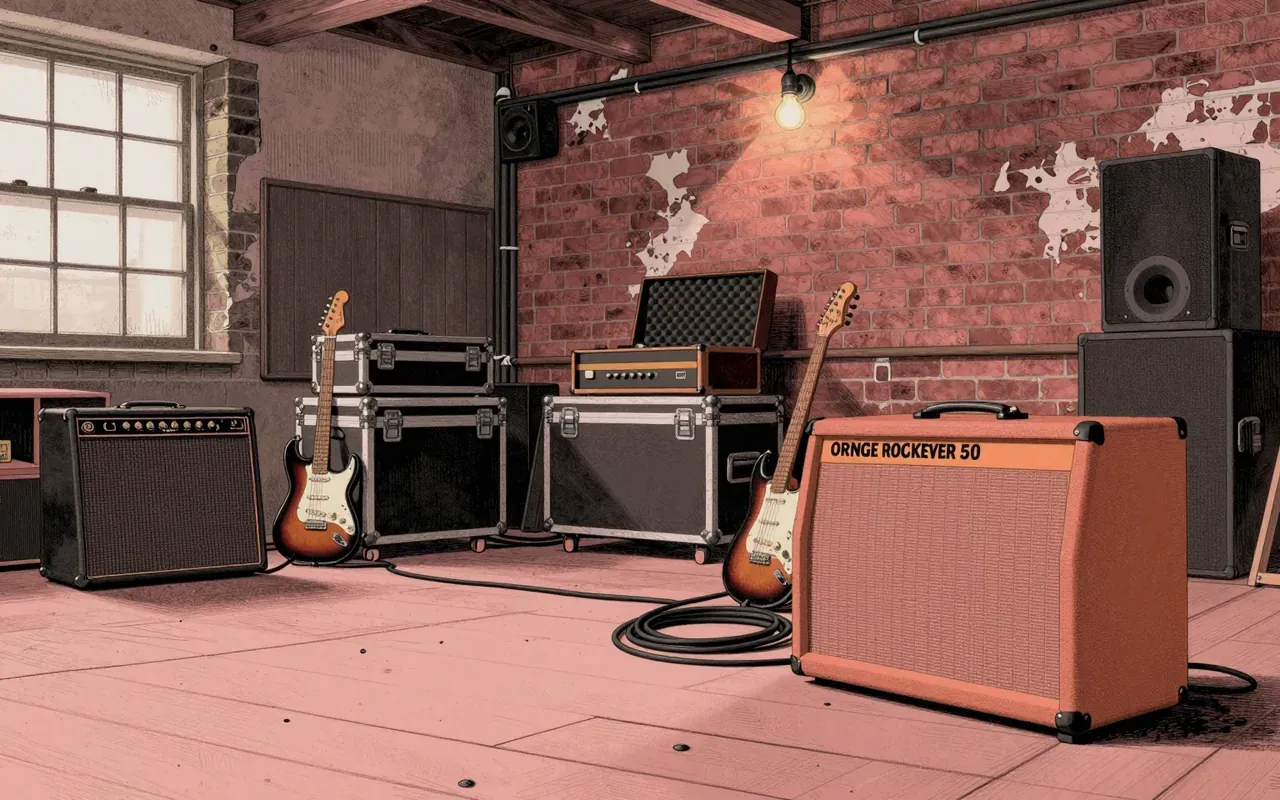
The Orange Rockerverb 50 is a discontinued dual-channel tube head built around four 6V6 power tubes. It delivers 50 watts of British rock tone — immediate, mid-forward, compressed — with minimal controls and shared EQ. It was succeeded by the MKIII. It does not offer channel-specific EQ, master volume, or tight high-gain definition.

7:49

Apogee Rosetta 800

Apogee

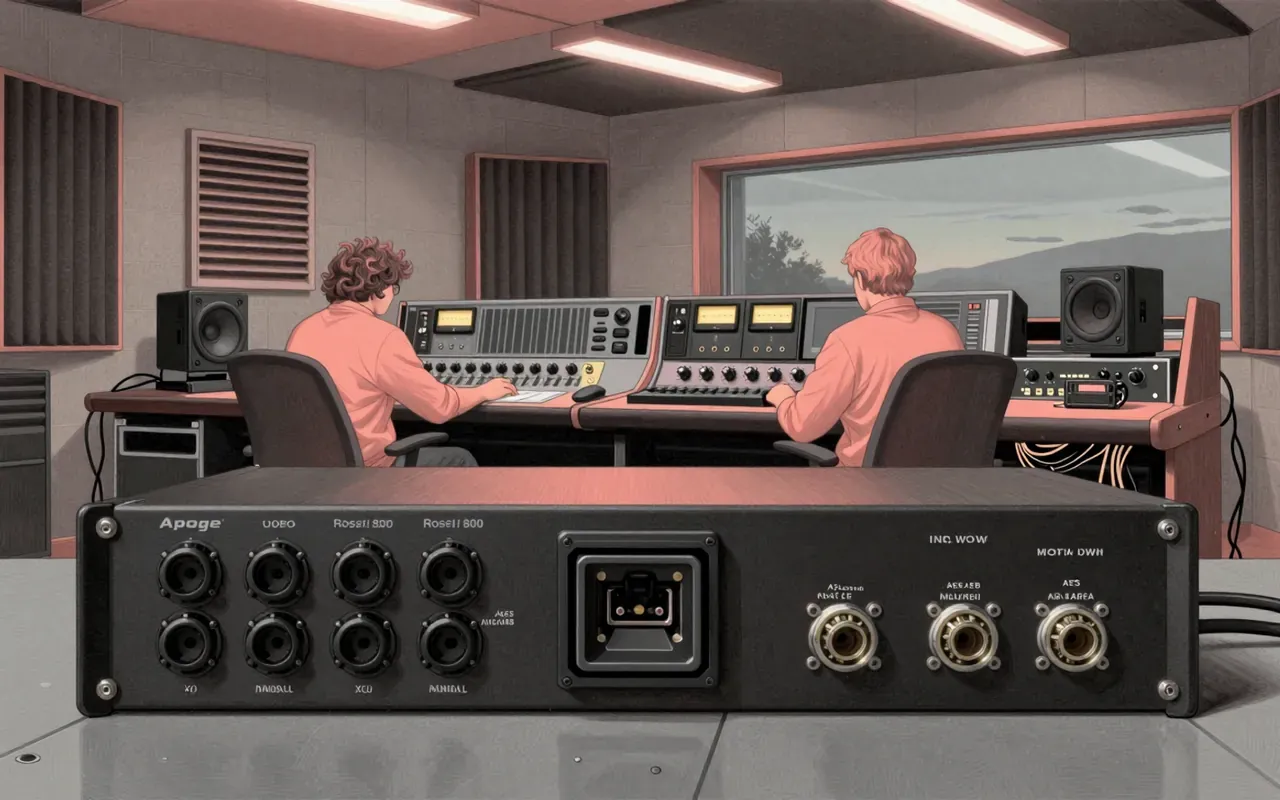
The Apogee Rosetta 800-192k is a rack-mountable analog-to-digital converter. It connects via rear-panel analog, ADAT, and AES. It serves Pro Tools HD systems. It runs at 48 kHz, 96 kHz, or 192 kHz. It produces a clean, transparent, smooth signal. It does not do D/A, preamp, or processing.

10:40

Yamaha RS7000

Yamaha

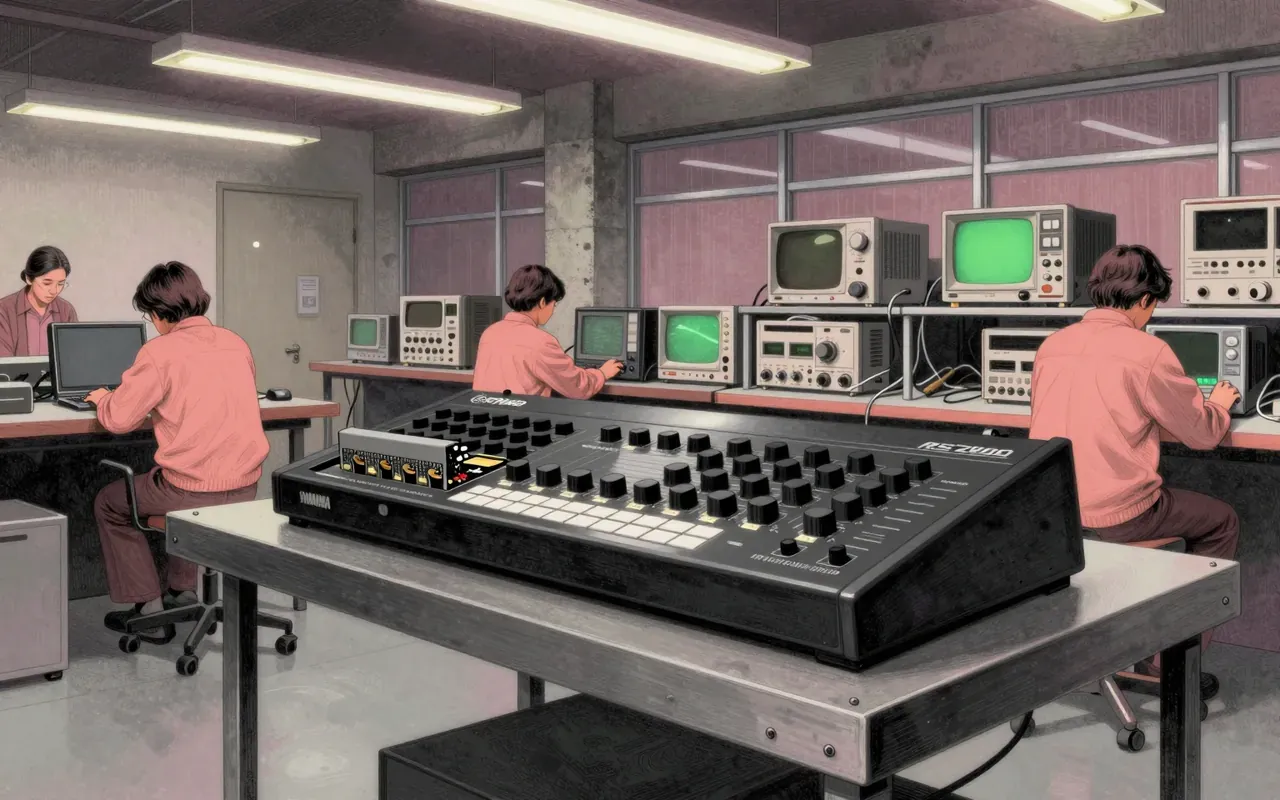
The Yamaha RS7000 is a 2001 groove production workstation. It combines sampling, sequencing, and AWM2 synthesis. It embeds sound and sample edits into patterns. It supports auto-beat slicing, pattern- and linear-based sequencing, and ROM-based sounds only.

9:55

Yamaha RX11

Yamaha

The Yamaha RX11 is a 1984 digital drum machine using 29 fixed 8-bit PCM samples. It was built to accompany the DX7. Each sound has independent volume, pan, and a dedicated audio output. Its interface is laborious. Its sound is synthetic and dated — yet valued in electro and downtempo for its unvarnished 1980s character.

8:35

Yamaha RX21

Yamaha

The Yamaha RX21 is a fixed-function drum machine. It plays 100 preset patterns and 5 song sequences. It has stereo and headset outputs, plus a footswitch input. Its operation is intuitive and manual-free. Its sound is basic, loop-based, and dynamically flat—characteristic of early 1980s beatboxes.

7:59

Yamaha RX7

Yamaha

The Yamaha RX7 is a sample-based drum machine built for live trigger-based rhythm programming and studio sketching in the mid-1980s.

7:25

Casio RZ-1

Casio

The Casio RZ-1 is a 1986 drum machine built for fast, physical beat-making — not pristine sound. It gives you twelve basic PCM drums, four lo-fi sample slots (0.2 seconds each at 20kHz), tone-only editing, 100 patterns, 20 songs, and ten discrete outputs with volume sliders. It does not do fidelity, flexibility, or effects. It does do immediacy, separation, and constraint-as-creative-tool.

9:36

Roland S-750

Roland

The Roland S-750 is a 1992 hardware sampler built for deep, routed, real-time sampling work—not convenience or compatibility.

8:09

Roland S-760

Roland

The Roland S-760 is a 1990 rackmount sampler. It samples at 44.1 kHz or 48 kHz with 16-bit stereo resolution. It supports 24-voice polyphony across 32 multitimbral parts. It uses no synthesis method beyond sampling. It has built-in filters but no effects.

9:50

Akai S1100

Akai

The Akai S1100 is a sampler. Its name appears in alternate forms: 's1100' and 's 1100'. No technical specifications are available. Nothing else is confirmed.

8:53

Akai S6000

Akai

The Akai S6000 is a 1999 rack sampler. It supports up to 256 MB RAM, optional SCSI hard drives, virtual hard disk sampling, and remote operation via detachable RS-232 screen. Its 26 filter types and extensive modulation routing enable synthesis from single-cycle waveforms. OS 2.14 resolved major bugs in OS 1.0. It includes a large built-in sound library.

10:28

Akai S700

Akai

The Akai S700 is a 1987 rack-mount 12-bit sampler derived from the X7000 keyboard model. It samples mono at 4–32 kHz, holds up to 8 seconds, but at 16 kHz allows only six 0.8-second samples. It offers 6-voice polyphony, non-resonant low-pass filtering, and QuickDisk storage. It is user-friendly but rigid: no stereo, no resonance, no modern file support, no workarounds.

10:53

TC Electronic SCF Stereo Chorus Flanger

TC Electronic

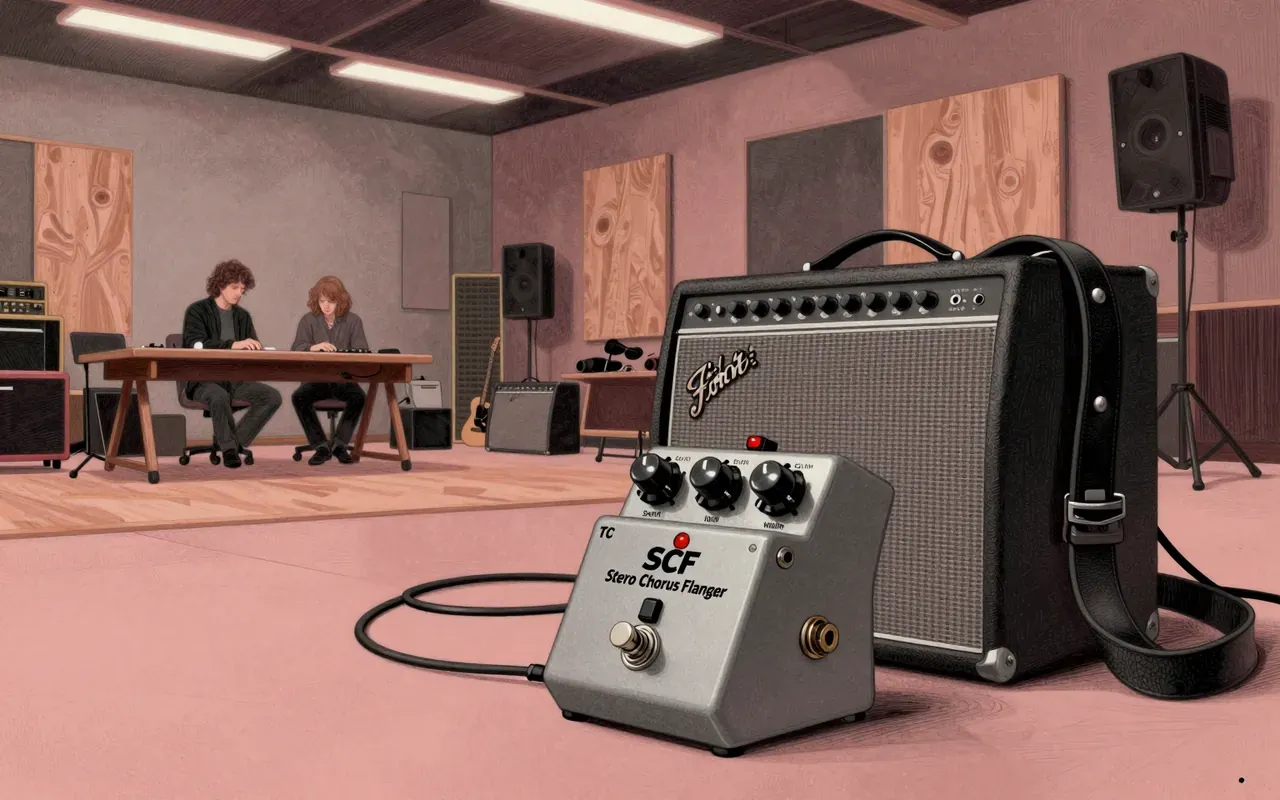
The TC Electronic SCF Stereo Chorus Flanger is an analog guitar pedal introduced in the mid-1980s. It offers Chorus, Pitch Mod, and Flanger modes via a 3-way switch. Controls include Speed, Width, and Intensity knobs, independent input gain, and a momentary footswitch. It has mono/stereo outputs, an overload LED, an external bypass jack, and draws power directly from AC mains. Its chorus mode is widely praised for its clean, studio-grade sound — but its flanger and pitch mod modes are less consistent. It is discontinued, replaced by the SCF Gold.

6:57

Manikin Electronic Schrittmacher

Manikin Electronic

The Schrittmacher is a sequencer made by Manikin Electronic. No technical specifications are available. That is all that is known.

7:19

ATC SCM100

ATC

The ATC SCM100ASL Pro is an active studio monitor. No technical specifications are available. It requires no external amplifier. Its performance boundaries are undocumented.

7:53

ATC SCM50

ATC

The ATC SCM50 ASL is an active monitor with no published technical specifications. Nothing about its sound, construction, or performance is documented in the source material.

9:28

Roland SDE-1000

Roland

The Roland SDE-1000 is one of the first digital delay rack units. It delivers up to 1.5 seconds of breathless, crystal-clear delay. Four front-panel keys store delay time and on/off state. Modulation knobs do not memorise—but their activation does. A footswitch controls global on/off. It was bought in 1983 or 1984.

9:12

Roland SDE-3000

Roland

The Roland SDE-3000 is a mono digital delay unit introduced in 1984. It delivers up to 4500 ms of delay with 10 Hz–17 kHz frequency response and low distortion. It has wet/dry outputs, time loop, and TRS footswitch support. It is built for reliability, not versatility.

9:46

Yamaha SG2000

Yamaha

The Yamaha SG2000 is an SG-shaped solid-body electric guitar produced from 1976 to 1988. It features two splittable humbuckers, a three-position pickup selector, push/pull volume controls for coil-splitting, and 22 frets. It is no longer sold and was succeeded by a 2007 reissue.

8:37

Roland SH-2

Roland

The Roland SH-2 is a monophonic analog synthesizer introduced in 1978. It has two detunable VCOs, a resonant self-oscillating 24dB lowpass filter, one envelope, one LFO, and a 3-octave keyboard. Its one-button-one-function interface is simple and effective. It produces fat, aggressive, authentic vintage analog tones—especially when the oscillators are detuned. It shares sonic traits with the SH-101 but adds detunability and thickness. It is flexible enough for punchy basses, leads and squelchy sounds. Every sound—including drums—has been made on it in at least one documented case. It is simple, programmable, and sonically aligned with Roland’s high-end SH series.

8:16

Roland SH-2000

Roland

The SH-2000 is a 1973 monophonic analog preset synthesizer. It is Roland’s second synth and a simplified version of the SH-1000. It was built for home organists needing expressive, portable tone colour without synthesis theory.

8:42

Roland SH-5

Roland

The Roland SH-5 is a monophonic analog synthesizer introduced in 1976. It has two VCOs, two LFOs, two multi-mode filters, two VCAs, a 5-source mixer, stereo panning, portamento and ring modulation. It is no longer manufactured. No technical specifications are available.

10:54

Roland SH-7

Roland

The Roland SH-7 is a 1978 duophonic analog synthesizer built to expand on the SH series with greater flexibility and sonic aggression.

8:56

Marshall Silver Jubilee 2555

Marshall

The Marshall Silver Jubilee 2555 is a software amp simulator by Softube. It belongs to the Amp Room series. It has no published technical specifications. It is not hardware. It is not a standalone application. It is a plugin for digital audio workstations that host Amp Room.

9:26

Danelectro Silvertone 1448

Danelectro

The Danelectro Silvertone 1448 is a 1963 masonite-bodied guitar built by Danelectro, designed by Nat Daniels, and sold by Sears as part of an 'Amp in Case' set. It has a rosewood fretboard, shorter scale, six-in-line tuners, wooden-saddle bridge, and typically one neck-position lipstick pickup. It does not intonate or stay in tune for very long.

9:04

Technics SL-1100

Technics

The Technics SL-1100 is an 88-key MIDI controller keyboard built for studio and stage use by performers who need precise, multi-channel keyboard zoning without onboard synthesis.

8:03

Technics SL-1300

Technics

The Technics SL-1300 is a Hi-Fi turntable made by Technics. It has no stated technical specifications, no DJ features, and no digital functionality. Its design prioritises mechanical stability over versatility.

8:34

Manley SLAM!

Manley

The Manley SLAM! is a stereo microphone preamp and limiter. It uses lamp-based preamplification and two analog limiting circuits — optical (ELOP) and FET — in a fixed signal path. It mounts in 2U of rack space. It does not offer variable routing, metering, or sidechain control.

9:54

Technics SP-10

Technics

The Squier SP-10 is a 10W solid-state guitar amp for beginners. It delivers clean and gain channels through a single volume knob, bass and treble tone controls, and a gain switch. It has no midrange control, no effects loop, and no channel-specific volume. Input and headphone jacks are separate. Its design prioritises simplicity and portability over tonal range or headroom.