audiobriefs
Newest

All briefs

747 briefs · 6840 min · 577–672 on page 7 of 8
9:56

Gibson ES-335

Gibson · 1958

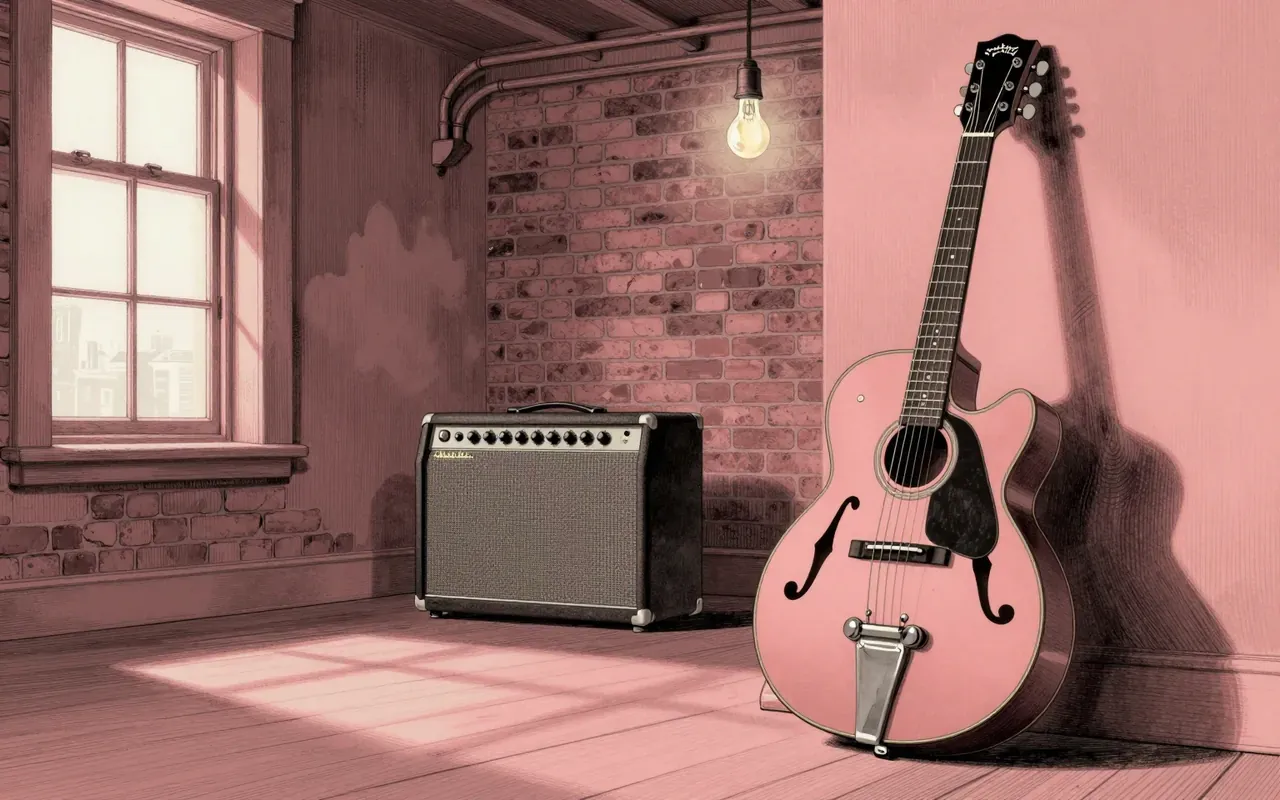
The ES-335 is a semi-hollow body semi-acoustic guitar introduced in 1958 as a compromise between hollow-body warmth and solid-body feedback resistance, featuring a solid maple center block with hollow upper bouts and f-holes. It achieved commercial success and continuous production due to its tonal flexibility across blues, jazz, and rock.

9:19

Ensoniq ESQ-1

Ensoniq

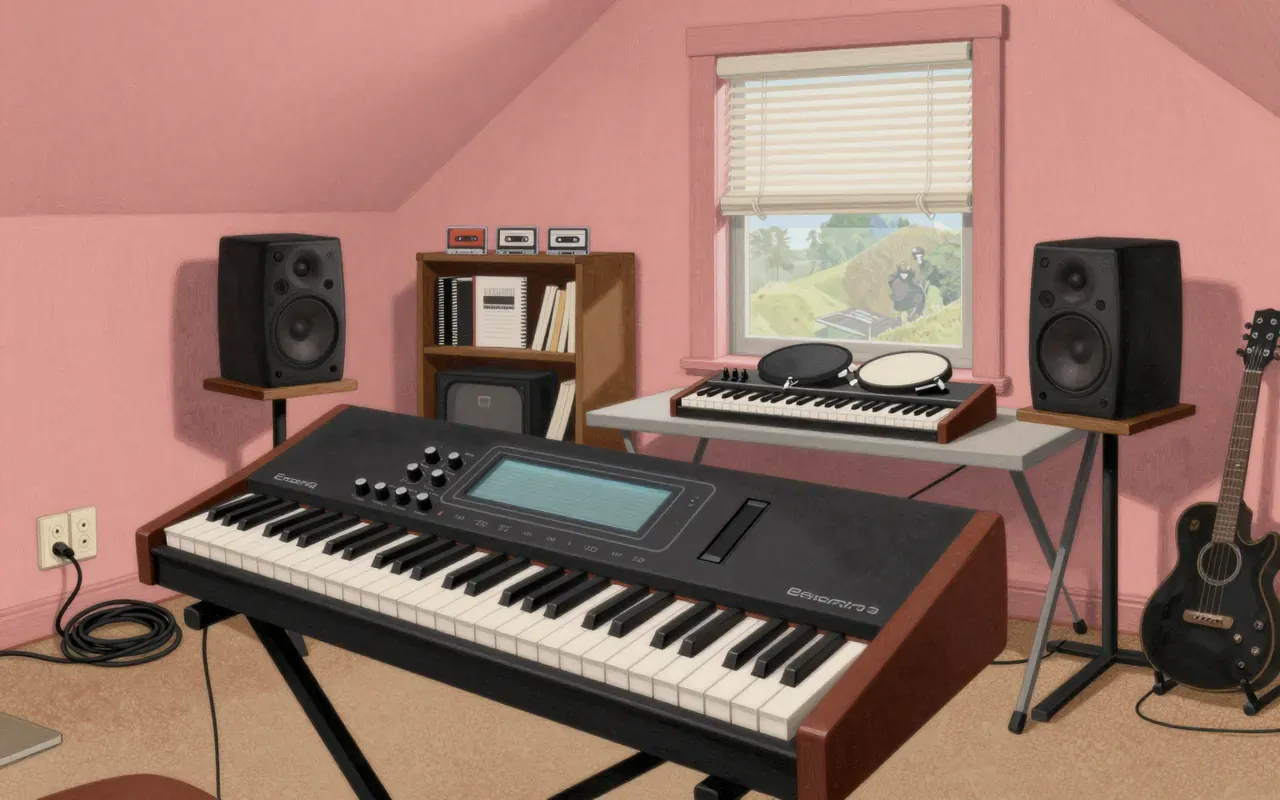
The ESQ-1 is a hybrid digital-analog workstation that prioritises immediacy and integration over depth or durability.

9:31

Gibson Explorer

Gibson

The Gibson Explorer is a solid-body electric guitar released by Gibson in 1958. It features a radical, futuristic body design derived from the 1957 Futura prototype. Only 19 were produced in 1958 and 3 in 1959. Early models had a 'split'-shaped headstock with 3+3 tuners; later models used a long drooping 'hockey-stick' headstock with tuners in a straight line on one side.

8:11

Synton Fenix

Synton

The Synton Fenix is a rare, handbuilt modular synthesizer from 1997 — 75 units total — designed by Marc Paping and Bert Vermeulen to include only the vintage-analogue features they personally valued, and nothing more.

9:05

Final Scratch

Stanton/Native Instruments

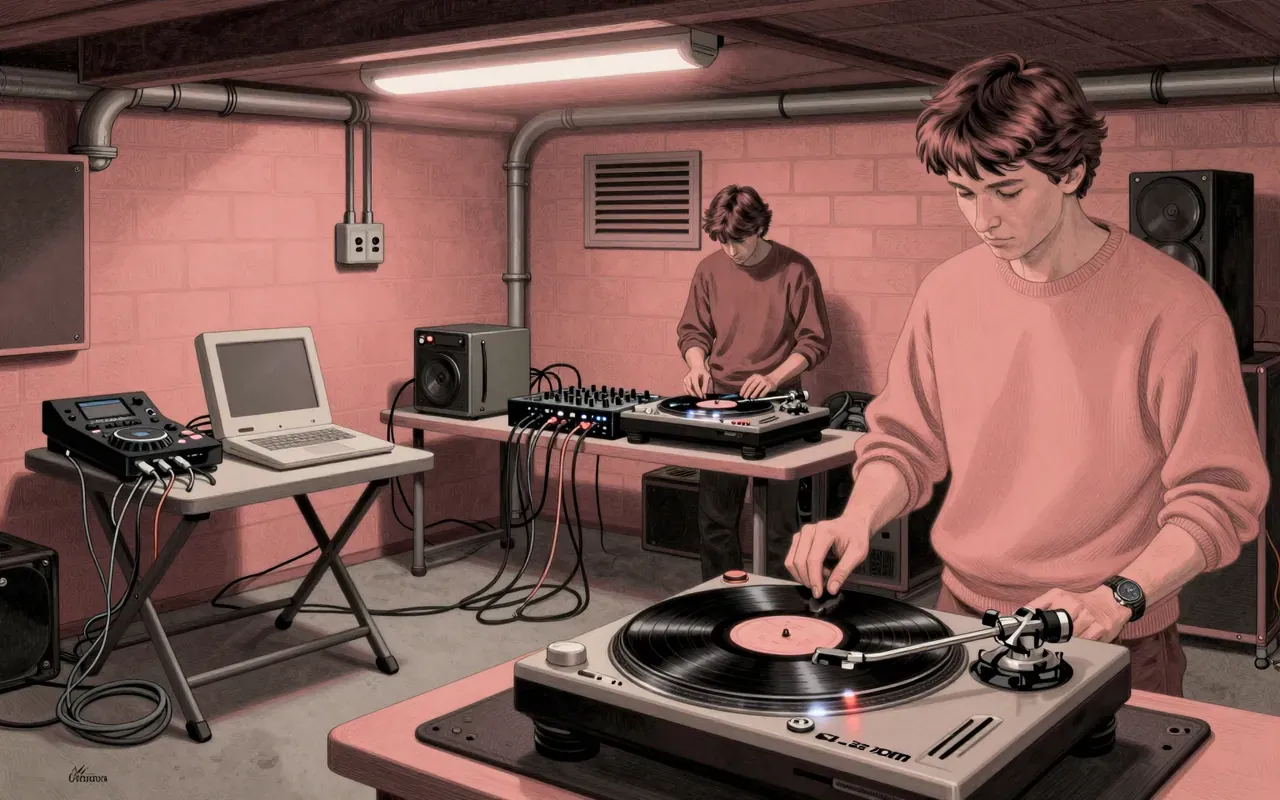
Final Scratch was the first widely adopted vinyl emulation system. It required timecoded records, a ScratchAmp interface, and dedicated software. It gave DJs precise, tactile control over digital audio — but introduced latency, calibration drift, and hardware dependency. It shaped DJ practice before Serato and Traktor matured.

9:11

Gibson Firebird

Gibson

The Gibson Firebird is a solid-body electric guitar introduced in 1963. It features neck-through-body construction—the first Gibson solid-body to do so—with a stepped neck, reverse headstock, treble-side banjo-style planetary geared tuners, and fully covered mini-humbucking pickups with metal surrounds. The neck is built from five plies of mahogany and four narrow strips of walnut.

9:09

Ensoniq Fizmo

Ensoniq

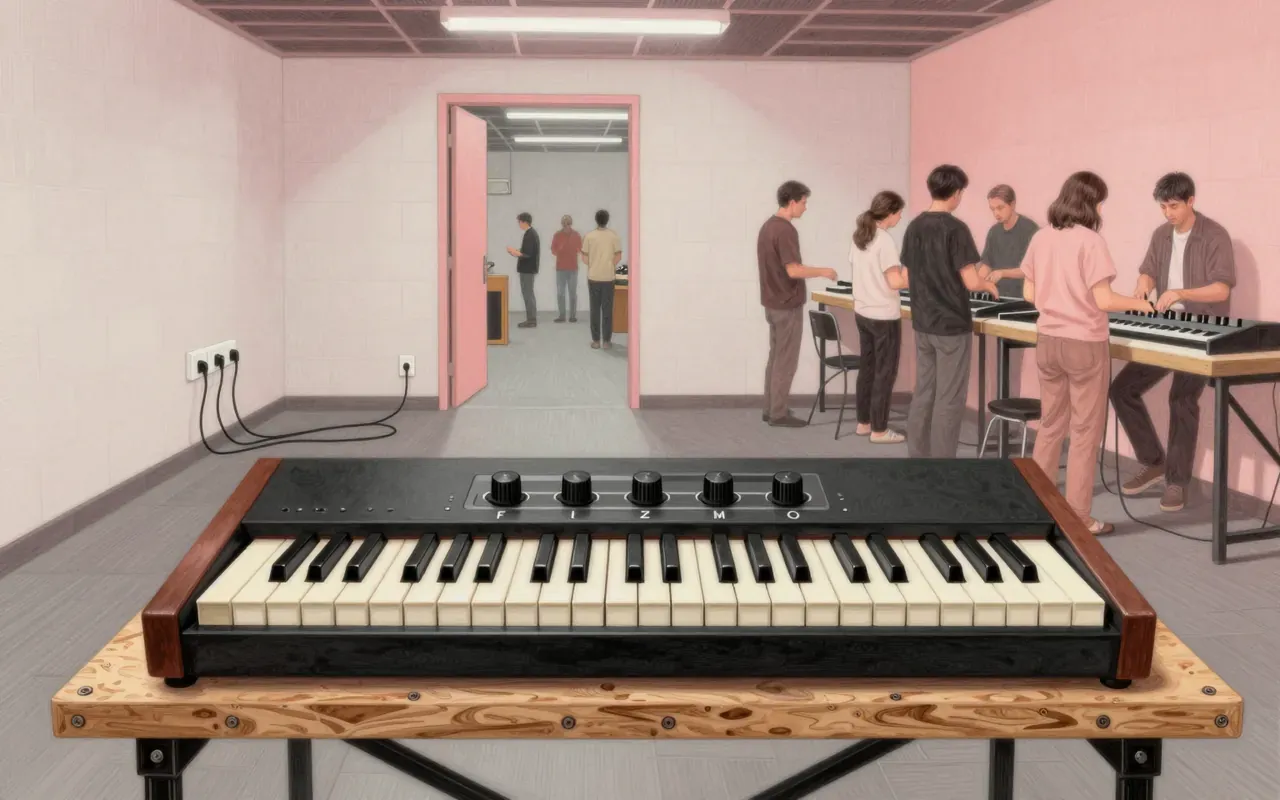
The Ensoniq Fizmo is a 1998 digital synthesizer using Transwave synthesis, capable of 48-voice polyphony, featuring real-time F-I-Z-M-O knob modulation, multi-segment envelopes, and a focus on evolving pads and arpeggiation — though hampered by hardware and UI limitations.

9:32

Gibson Flying V

Gibson · 1958

The Gibson Flying V is an electric guitar introduced in 1958 with a radical futuristic body design, initially made from korina (limba) wood, with only 98 units produced in its first run due to poor sales. It was reissued in 1967 using mahogany and design updates including a new bridge and larger pickguard. Its physical design — including 17-degree headstock angle and central pickup placement — was intended to enhance sustain.

10:52

Yamaha FS1R

Yamaha

The FS1R is a rare hybrid: a formant-driven FM module that expanded what FM synthesis could model — but collapsed under its own complexity. It delivered new waveforms, deeper operator mapping, and vocal resonance no DX7 could match. Yet its interface, manual, and lack of tactile feedback made it a lab tool, not a stage instrument. Its legacy lives in Montage — but not its formants.

8:56

Gibson Grabber

Gibson

The Gibson Grabber is a bass guitar introduced in 1973. It features a bolt-on 34½-inch neck, an adjustable pickup that slides to simulate neck or bridge positions, brighter output than traditional Gibson humbuckers, simple controls (one volume, one tone), and a removable bridge cover. Its body changed from maple to alder in 1975 — the year it peaked in sales at 2,637 units, largely due to Gene Simmons’s use with Kiss. It was discontinued in 1982, with limited production until 1984.

8:48

Gretsch 6120

Gretsch

The Gretsch 6120 is a hollow body electric guitar introduced in 1955, developed with Chet Atkins, featuring design evolution including prototype testing, introduction of neoclassic fret markers in 1958, replacement of DeArmond pickups with Filter'Tron humbuckers, cessation of production in the late 1970s, and subsequent revival.

9:45

Boss HM-2

Boss · 1983

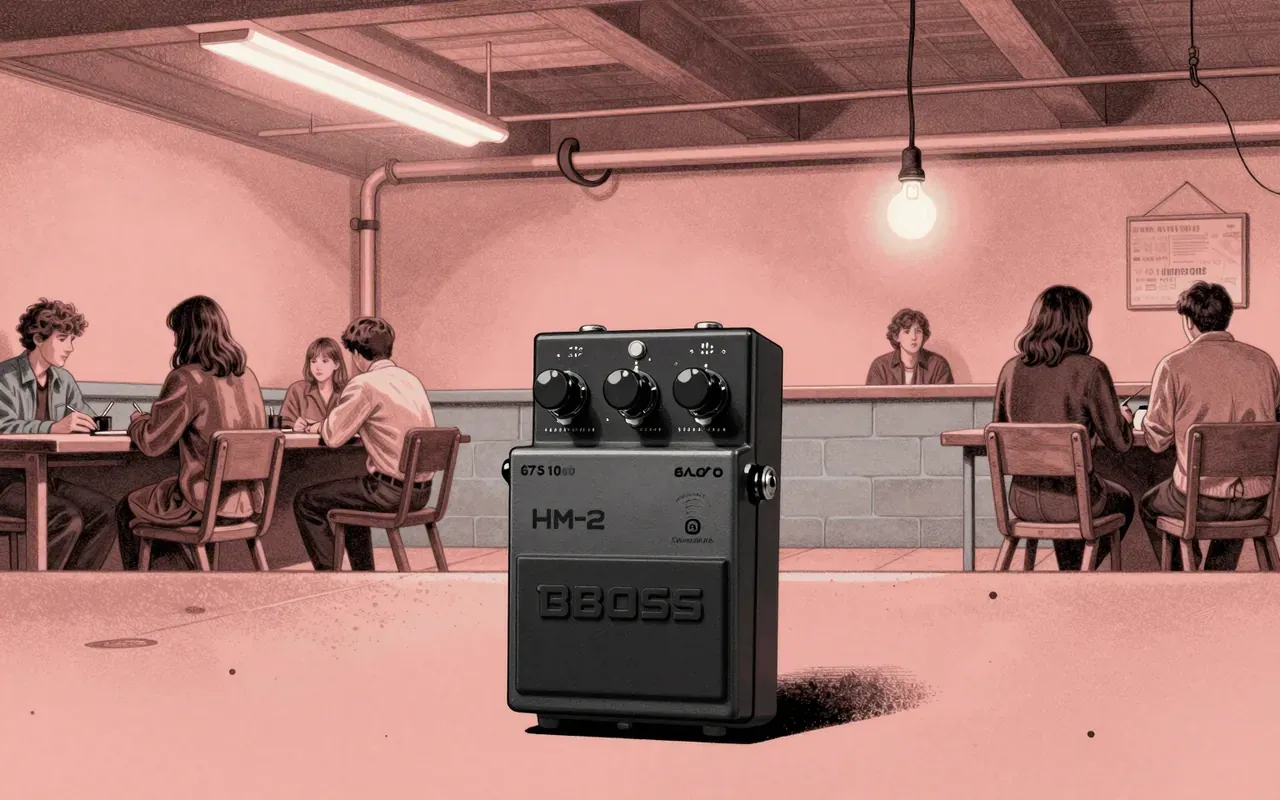
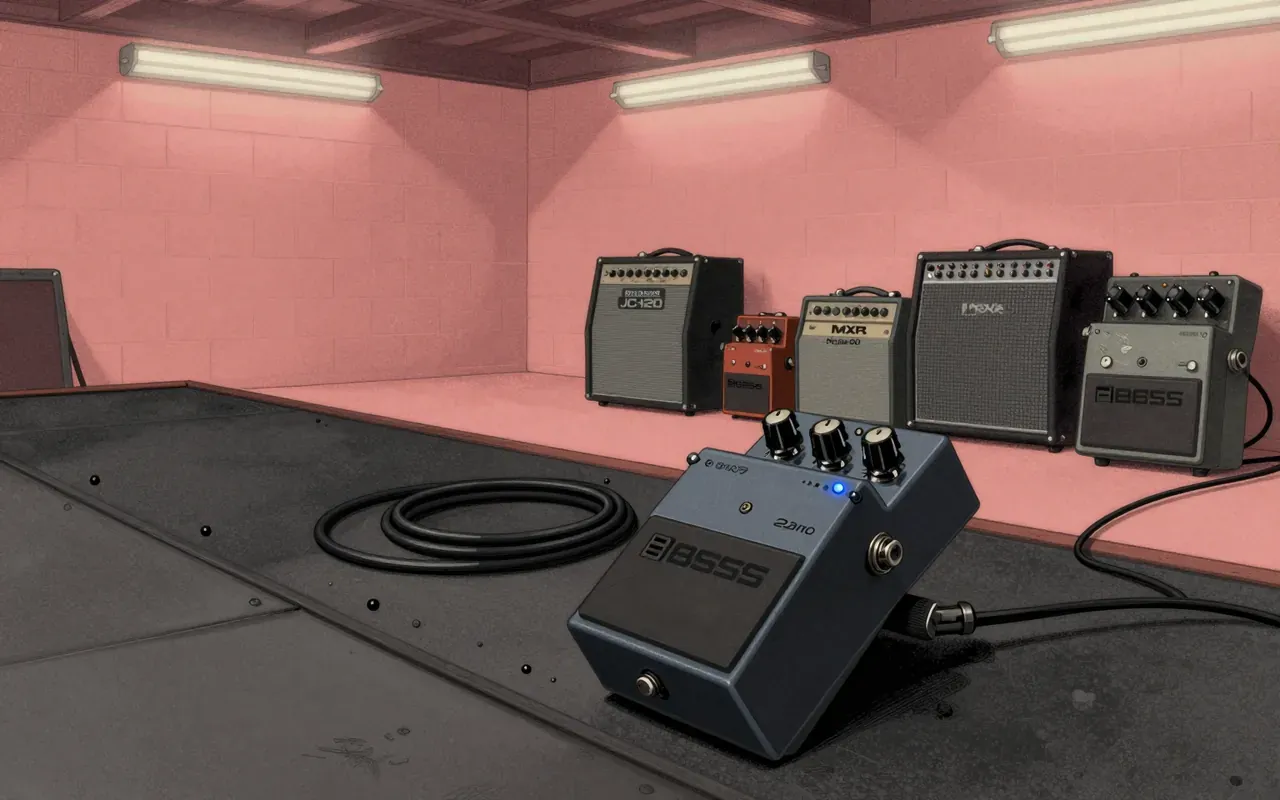
The Boss HM-2 is a distortion pedal introduced in October 1983. It was designed to emulate the mid-range response of a Marshall stack and is based on the Boss DS-1. Its defining feature is the radically versatile Low and High ‘Color Mix’ EQ controls, each offering 20 dB of boost or cut.

8:57

Fender Jaguar

Fender · 1962

The Fender Jaguar is a 1962 electric guitar with an offset-waist body, 24-inch scale, 22-fret neck, dual-circuit switching (lead/rhythm), smaller single-coil pickups with notched side plates for improved RF shielding, a spring-loaded string mute, and design lineage from the Jazzmaster.

9:34

Fender Jazz Bass

Fender

The Jazz Bass is a purpose-built alternative to the Precision Bass—brighter, faster, less fundamental, less quiet. It does not replace the P-Bass. It displaces it.

9:05

Roland JD-990

Roland

The Roland JD-990 is a 1993 module-based, PCM sample synthesizer. It expands on the JD-800 with more ROM, multitimbrality, front-panel programming, and expansion support. It generates both vintage-analogue-remnant and modern-digital textures—but only from its fixed 6 MB of PCM waveforms, and only via menu navigation.

8:50

Gretsch G6131

Gretsch

The Gretsch G6131 is a double-cutaway electric guitar with gold hardware, two Filtertron humbuckers, and a Burns vibrato — built for clarity, cut, and expressive tremolo. It excels in clean-to-moderate-gain contexts where note definition matters more than saturation or sustain. It falls short in high-gain stability, low-end tightness, and tuning retention under heavy vibrato use. Its production spanned 1962–1971, ending when Gretsch reverted to single-cut models.

8:51

Marshall JTM45

Marshall

The Marshall JTM45 is Marshall's first guitar amplifier, prototyped in 1962 and produced from 1963. It was developed as a British alternative to Fender amplifiers, using a modified Fender Bassman circuit with a 12AX7 preamp valve, Celestion speakers in a closed cabinet, and a modified negative feedback circuit that altered harmonic content. Its name reflects Jim and Terry Marshall and its 45-watt RMS rating.

9:03

Roland JV-1080

Roland

The Roland JV-1080 is a sample-based 2U rack sound module with 64-voice polyphony and 16-part multi-timbrality, introduced in 1995.

8:23

Roland JV-2080

Roland

The Roland JV-2080 is a rack-mount, sample-based MIDI sound module released in early 1997. It supports 768 internal patches and can be stacked up to eight units for 512-voice polyphony.

8:52

Kurzweil K2000

Kurzweil

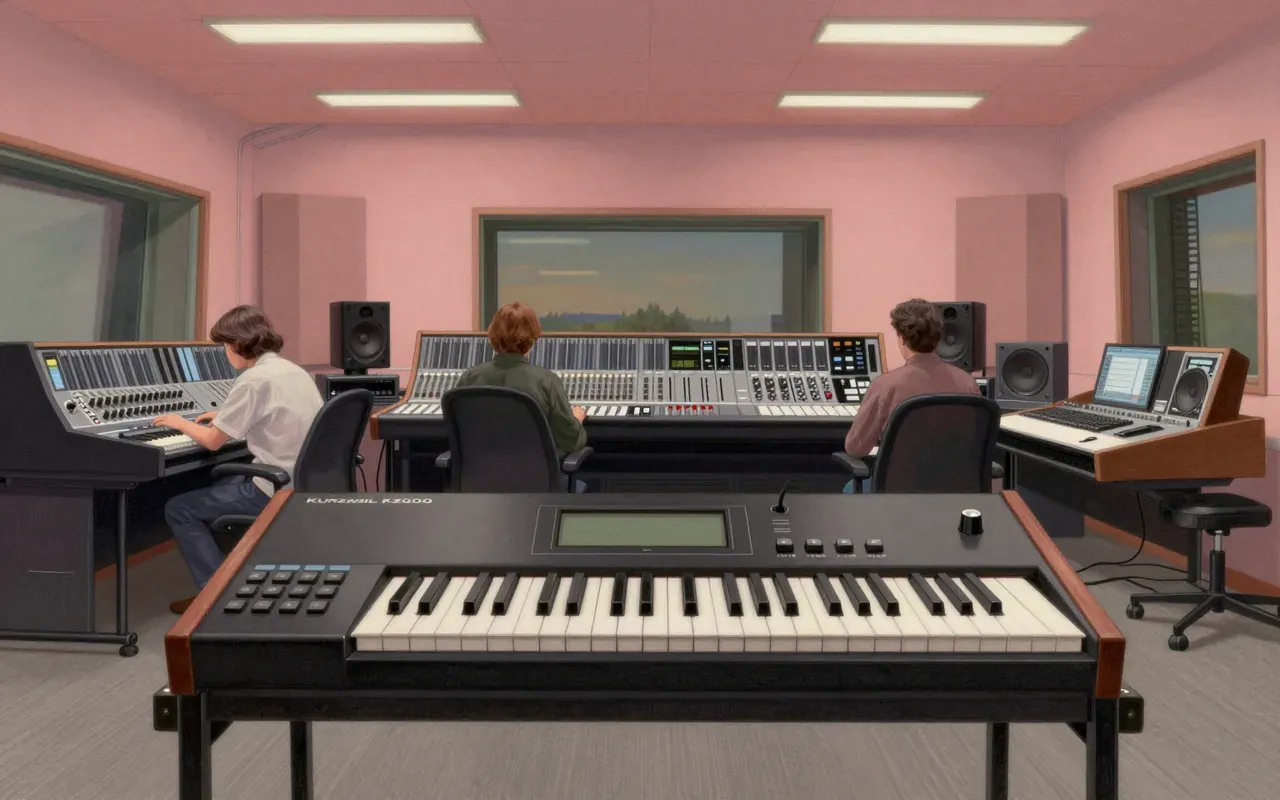
The Kurzweil K2000 is a digital synthesizer and music workstation introduced in 1991, built around the V.A.S.T. digital signal processing architecture. V.A.S.T. allows users to select different signal paths containing different DSP functions for sound creation and shaping. It includes an extensive modulation system where modulation sources can be assigned to parameters and combined. The instrument was available in keyboard and rack-mountable formats and included 16-bit user sampling.

9:17

Kurzweil K250

Kurzweil

The Kurzweil K250 was an 88-key, ROM-based sampling keyboard introduced in 1984. It used proprietary 'contoured modelling' compression to store acoustic instrument and oscillator waveform samples. Twelve separate DACs converted the data to analog. CEM 3335 analog envelopes restored dynamics lost in compression. It delivered 12-note polyphony and was the first electronic instrument to faithfully reproduce an acoustic grand piano.

9:30

Klon Centaur

Klon · 1994

The Klon Centaur is an overdrive pedal introduced in 1994. It was designed to emulate high-volume amplifier distortion while preserving tone. Its circuit uses a JFET-based TL072 op amp and hard-clipping 1N34A diodes. After internal voltage doubling, the signal splits into three paths. It adds slight midrange emphasis. It was built as a standalone pedal in a custom-cast enclosure.

9:41

Gibson L-5

Gibson

The Gibson L-5 is a hollow body guitar introduced in 1923. It was one of the first guitars with F-holes. Its construction uses carving, bracing, and tap-tuning like a cello. It amplifies string vibration through carved and tuned woods using F-holes as projection points. The lower bout width increased from 16" to 17" in 1934 and has remained 17" since. It was originally offered as an acoustic instrument. In 1951, the 17" L-5 was outfitted with a pair of P-90 pickups. Starting in 1958, the P-90 pickups were replaced by humbuckers.

10:29

Gibson Les Paul

Gibson · 1952

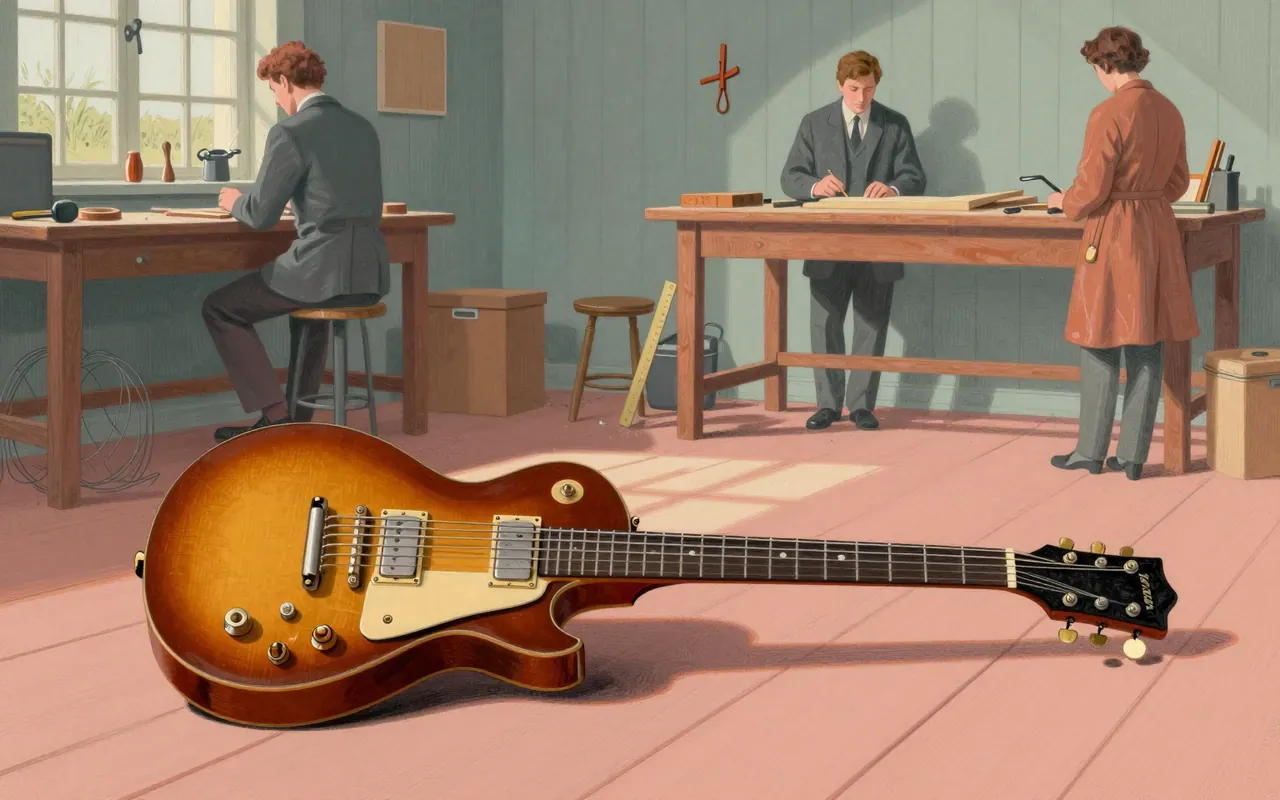
A physically dense, sonically authoritative solid-body guitar built for sustain and midrange focus — not speed or lightness.

10:14

Gibson Les Paul Special

Gibson

The Les Paul Special is a 1955 Gibson variation designed as an intermediate instrument between the Junior and Standard Les Paul. It launched in TV Yellow for black-and-white television visibility. In 1958, it shifted from singlecut to doublecut. In 1961, it became the SG after Les Paul’s contract expired; original models returned in 1968 upon renewal.

9:36

Linn 9000

Linn Electronics

The Linn 9000 was the first integrated digital drum machine and MIDI sequencer. It introduced 18 velocity- and pressure-sensitive rubber pads. Its Forth-based OS crashed repeatedly, causing data loss and lock-ups. Those flaws affected the LinnSequencer and prevented release of the LinnDrum Midistudio. They contributed to Linn Electronics’ demise in 1986. It appears on Michael Jackson’s 1987 album Bad.

9:43

Beyerdynamic M 160

Beyerdynamic · 1957

The Beyerdynamic M 160 is a hypercardioid ribbon microphone introduced in 1957. It uses dual 15-mm aluminum ribbons suspended between alnico magnets, rotated 90° to achieve end-address directionality. It softens strident sound sources without dulling transients. It was used by Eddie Kramer on Jimi Hendrix’s vocals and amplifier and by Andy Johns on John Bonham’s drums for 'When the Levee Breaks.' It remains in production after over six decades.

10:19

Marshall Major

Marshall

The Marshall Major is a 200-watt guitar amplifier built from 1967 to 1974. It was designed to produce more volume and clean headroom than Marshall's other amplifiers like the Super Lead. The 200 had only three controls on the front panel and used a preamplifier circuit that was closer in design to a hi-fi amplifier rather than a guitar amp. In 1968, Marshall updated the 200 with a typical EQ compliment of treble, middle, bass, and presence controls, and it was now named the Major. This tone stack—which was passive compared to the 200's active controls—was placed between the second and third gain stages created using ECC83 (12AX7) preamp tubes. Ritchie Blackmore of Deep Purple and Mick Ronson of David Bowie's band are frequently associated with the Major.

8:42

Gibson Marauder

Gibson

The Gibson Marauder is a 1975–1979 bolt-on electric guitar designed to compete with Fender’s single-coil models. It features a custom Bill Lawrence humbucker in the neck and an angled blade-style single coil at the bridge — both sealed in clear epoxy. Its construction includes a Les Paul–shaped contoured single-cutaway body and bolt-on maple neck. Only 7,111 units were made before discontinuation in 1979 (though some were made until 1982). Endorsed by Ace Frehley and Paul Stanley, it failed to gain traction against Fender due to its compromised playability and lack of tonal flexibility.

9:28

Mesa/Boogie Mark IIC+

Mesa/Boogie

The Mark IIC+ is a purpose-built, hand-assembled high-gain amplifier defined by its aggressive midrange, tight low end, and footswitched Rhythm/Lead duality. It sacrifices clean headroom, feature depth, and production consistency for saturated, compressed tone that cuts and sustains. Its value lies entirely in what it delivers to the player’s hands and ears—not in rarity, pedigree, or resale.

8:32

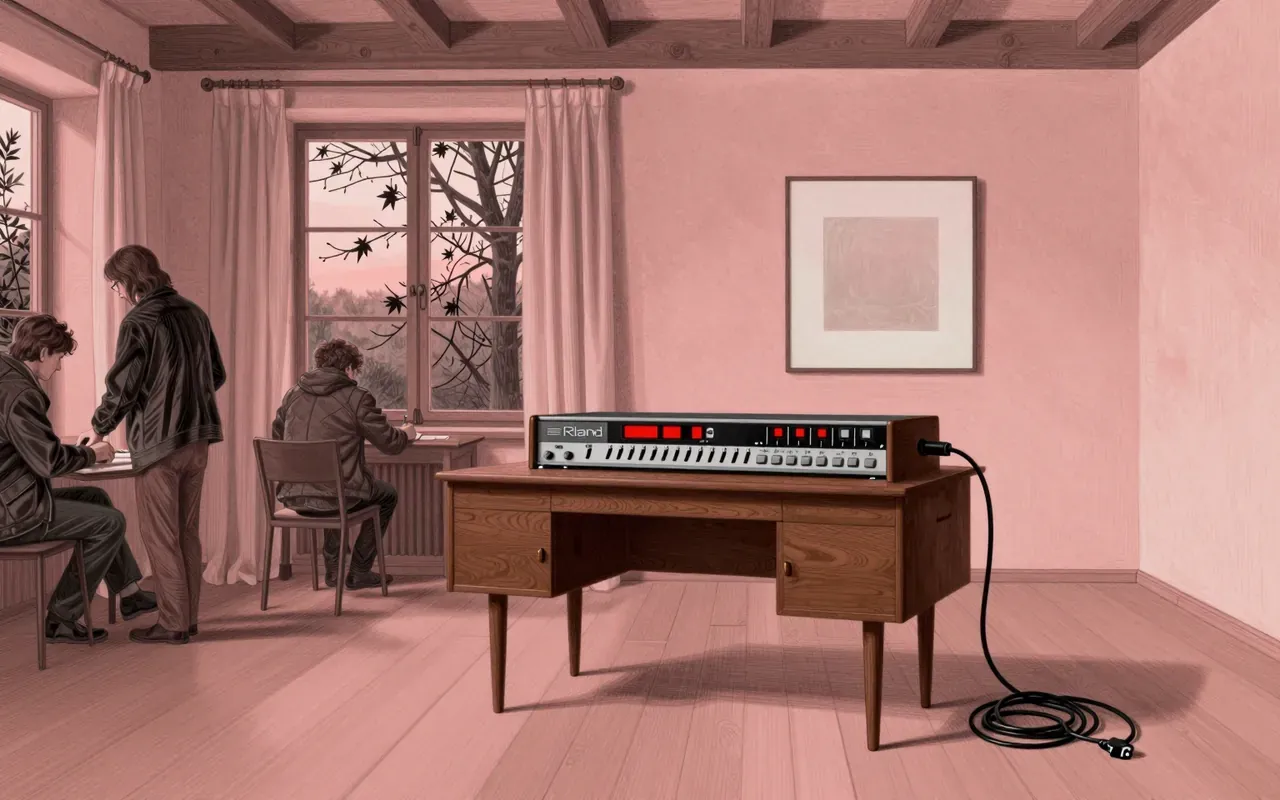
Roland MC-202

Roland

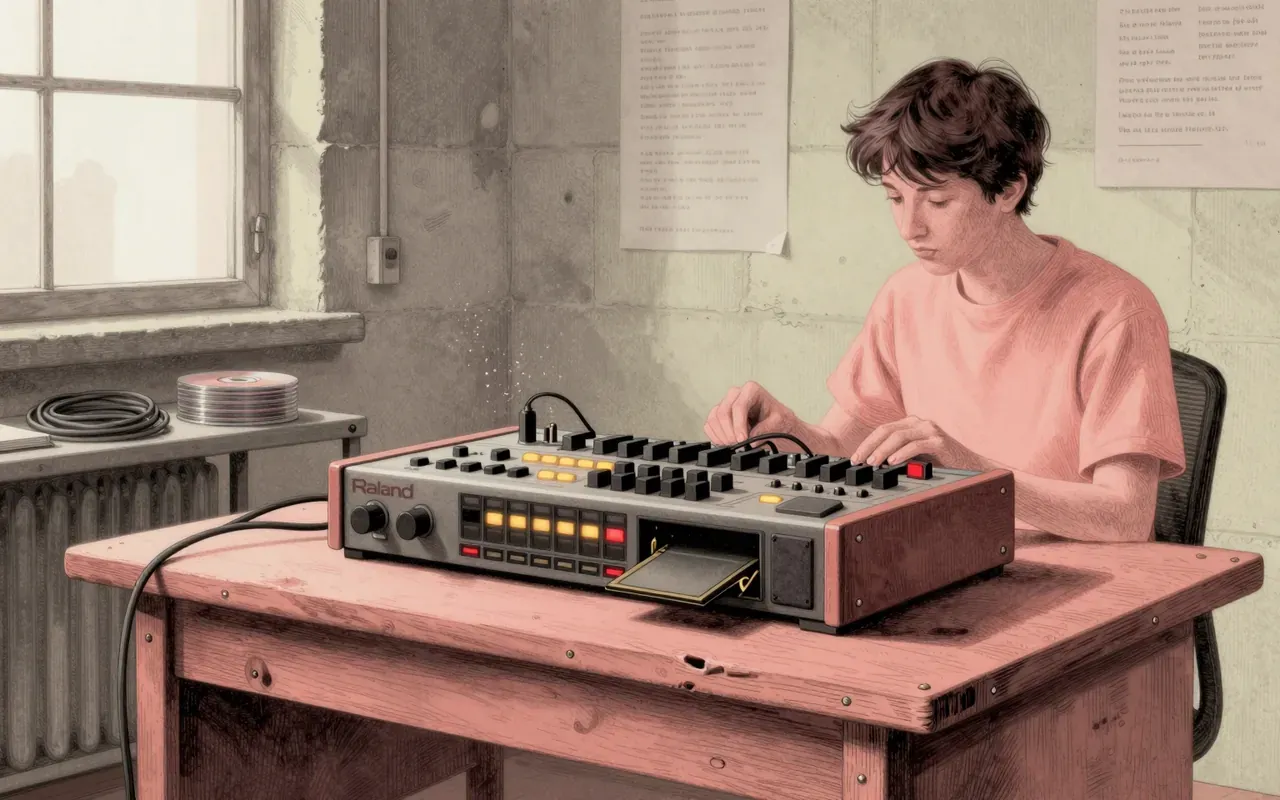
The Roland MC-202 is a monophonic analog synthesizer and music sequencer released by Roland in 1983. It was the first groovebox. Its synth is similar to the TB-303 bass synth and the SH-101 synthesizer, featuring one voltage-controlled oscillator with simultaneous saw and square/pulse-width waveforms. The internal synthesizer features one voltage-controlled oscillator with simultaneous saw, square/pulse-width and sub-octave square waveforms. Additionally there is a 24dB Low Pass filter, an LFO and a single ADSR envelope generator. In terms of circuitry, it is nearly identical to the earlier SH-101 synthesizers but lacks the noise generator, choice of LFO shapes and modulation/pitch bend controls. However, unlike the SH-101, it does include a delay on the LFO. The MC-202 includes a sequencer that can play back two separate sequences simultaneously.

10:22

Roland MC-4 Microcomposer

Roland

The Roland MC-4 Microcomposer is a 1981 microprocessor-based CV/Gate sequencer with four output channels, programmable via numeric keypad or live monophonic keyboard input, using numeric pitch values (Middle C = 24), step time values, and gate time values; it features volatile memory requiring cassette storage, supports syncing to other MC-4s or Roland gear, and predates MIDI.

9:19

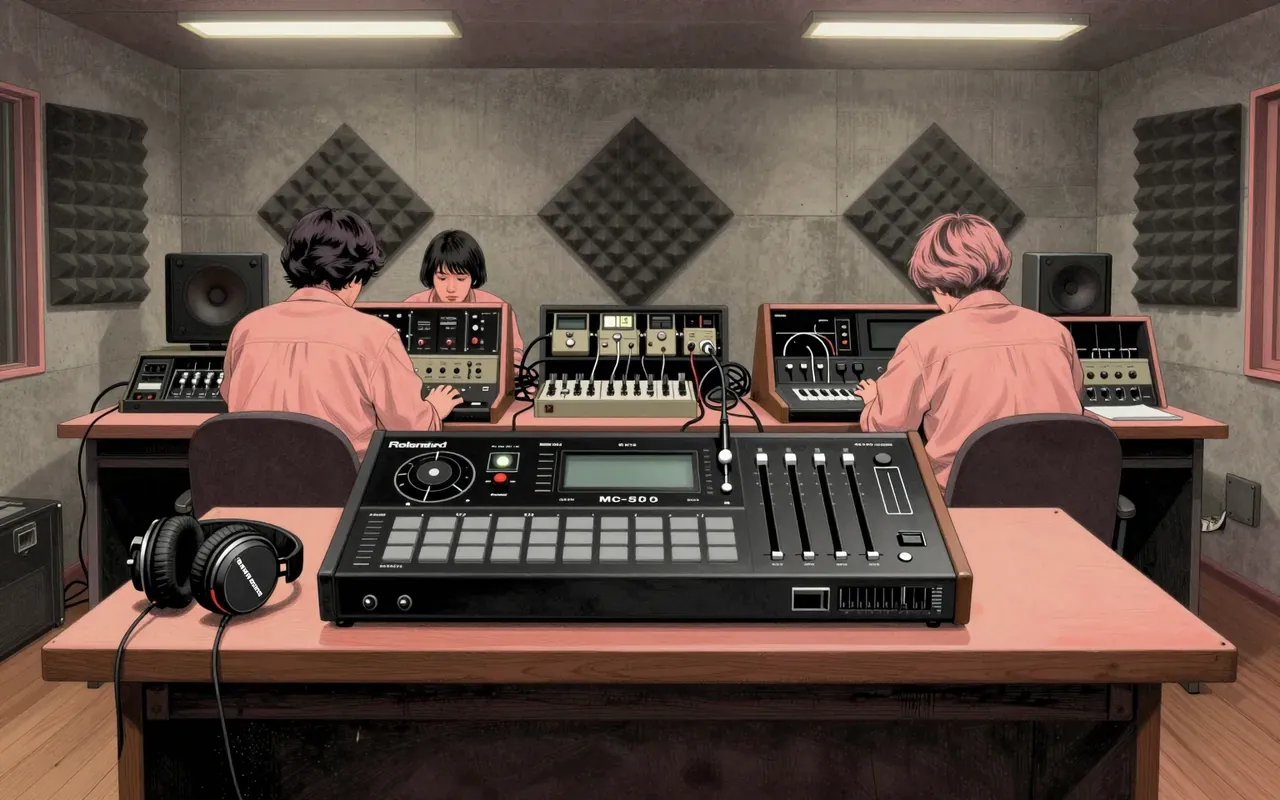
Roland MC-505

Roland

A 1998 groovebox that prioritises immediacy over depth. It bundles sequencing, synthesis, and classic Roland drums—but locks you into its architecture.

8:02

Roland MC-8 Microcomposer

Roland

The Roland MC-8 Microcomposer is a pioneering CV/Gate sequencer from early 1977. It uses an Intel 8080A CPU and 16 KB RAM to store up to 5,300 notes. It enables polyphonic sequencing via CV/Gate allocation and precise, rapid control of VCOs, VCFs, and lighting. It was designed for large modular systems like the System 700 and System-100M. It does not support real-time recording well and lacks modern interface conveniences.

9:41

Roland MC-909

Roland

The Roland MC-909 is a 2002 groovebox built for live pattern performance. It merges ROM-based synthesis, sampling, and 16-track sequencing into one hardware unit. Its strength is immediacy: hands-on control, fast patch loading, and real-time pattern switching. Its limits are hard-coded: buggy OS, shallow sample editing, rigid pattern flow, and no true synthesis — only tone layering from fixed PCM waves. It belongs on stage, not in a modern production chain.

9:18

Sennheiser MD 421

Sennheiser · 1960

The MD 421 is a 1960 cardioid dynamic mic with a 27 mm diaphragm, 30–17,000 Hz ± 3 dB response, portless closed housing, and hum-compensation coil. Still in production. Over 500,000 units sold.

9:39

Sennheiser MD 441

Sennheiser

A purpose-built dynamic mic from 1971 that prioritises rejection, bass control, and electromagnetic immunity over sonic versatility or modern convenience.

9:53

Sony MDR-V6

Sony

The Sony MDR-V6 is a folding, closed-back, circumaural headphone introduced in 1985 and discontinued in 2020. It was designed for professional monitoring in live and studio settings. Its closed, sealed-ear construction provides isolation and portability. Consumer Reports measured it as the most accurate headphone they had tested in 1989. Dave Rat confirmed its near-neutral response—though slightly rolled off at both extremes. It was part of Sony’s Studio Monitor line, produced by Sony/Taiyo Corporation in Ōita Prefecture, Japan. Its durability and consistency made it a staple for sound engineers and DJs for thirty-five years.

8:46

MicroKORG

Korg

The MicroKORG is a compact, DSP-based synthesizer/vocoder released in 2002. It uses analog modelling to deliver immediate, expressive sounds — especially through its built-in vocoder and key transpose function. Its four-voice polyphony limits chordal playing and layering, but its hands-on interface and portability made it a staple for live vocalists and electronic performers. Still in production as of 2022, it prioritises utility over expandability.

8:55

Micromoog

Moog · 1975

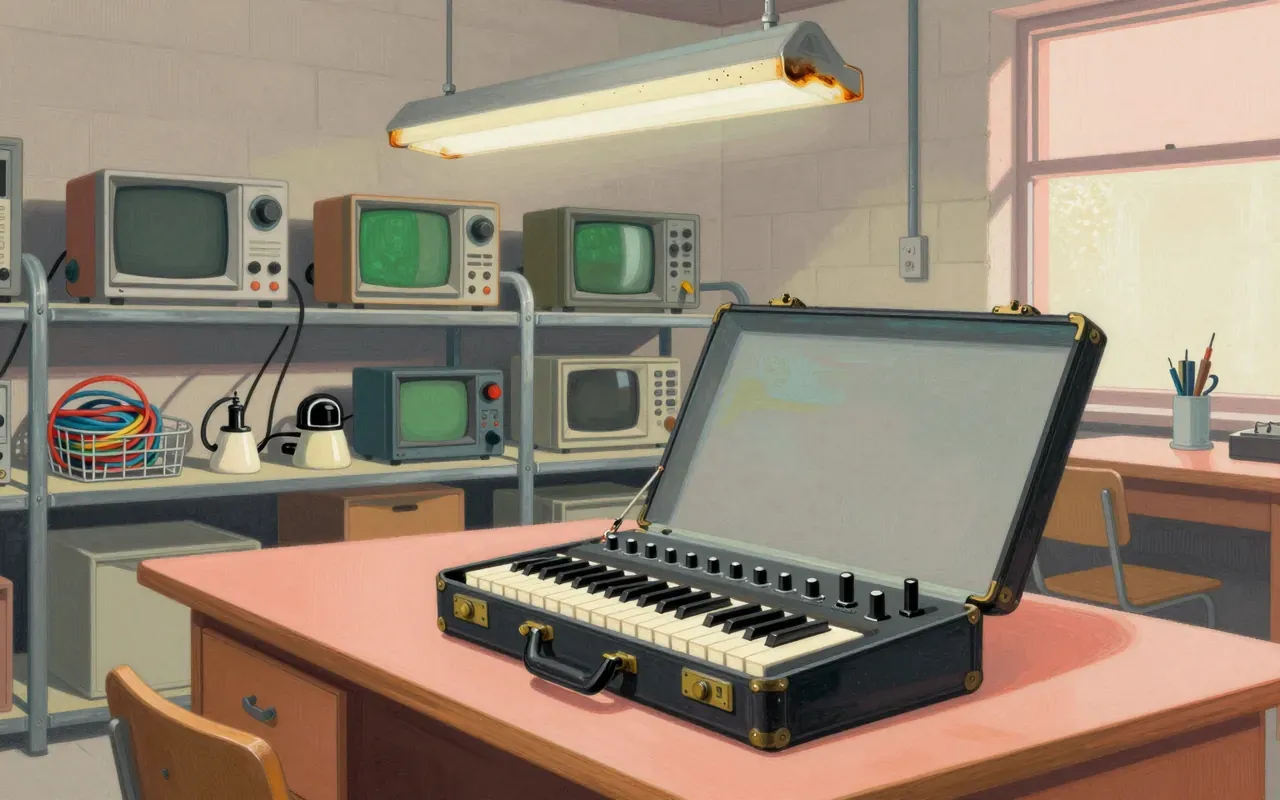
The Micromoog is a monophonic analog synthesizer produced by Moog Music from 1975 to 1979. Designed as a scaled-down, lower-priced alternative to the Minimoog, it was intended for musicians new to synthesis who could not afford the $1,500 Minimoog. Priced at $650–$800, it features a single VCO with variable waveshape from sawtooth to pulse, sub-octave generation one or two octaves below the fundamental, a −24dB per octave low-pass filter with its own envelope generator and VCO frequency modulation capability, a voltage-controlled amplifier with its own envelope generator, and two A(S)R envelope generators with switchable sustain — a design choice that distinguishes it from most budget synths of the era which used a single ADSR. It includes Moog Open System control inputs, an audio input for external signal processing, and uses 0.95V/oct CV scaling. It was designed by Moog engineer Jim Scott in consultation with Tom Rhea, with electronic refinement input from David Luce and Robert Moog.

8:52

Korg miniKORG 700

Korg

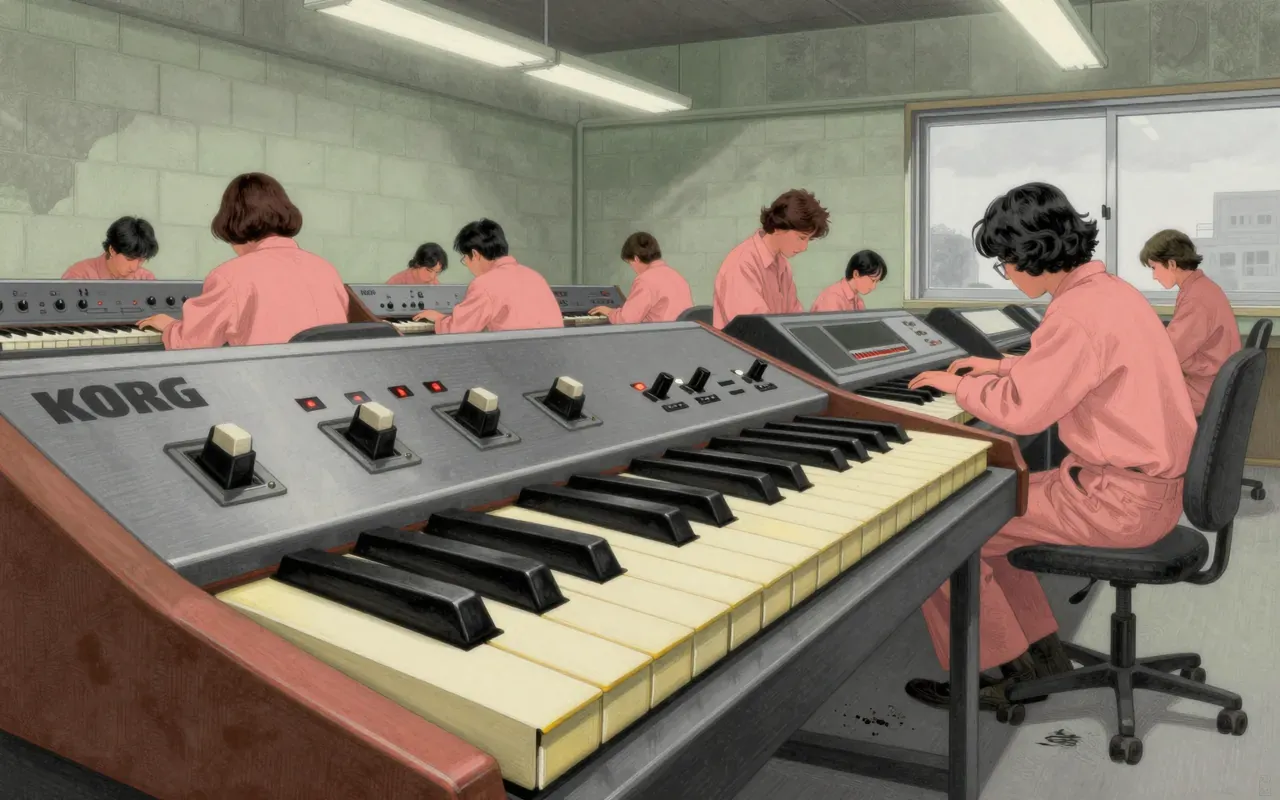
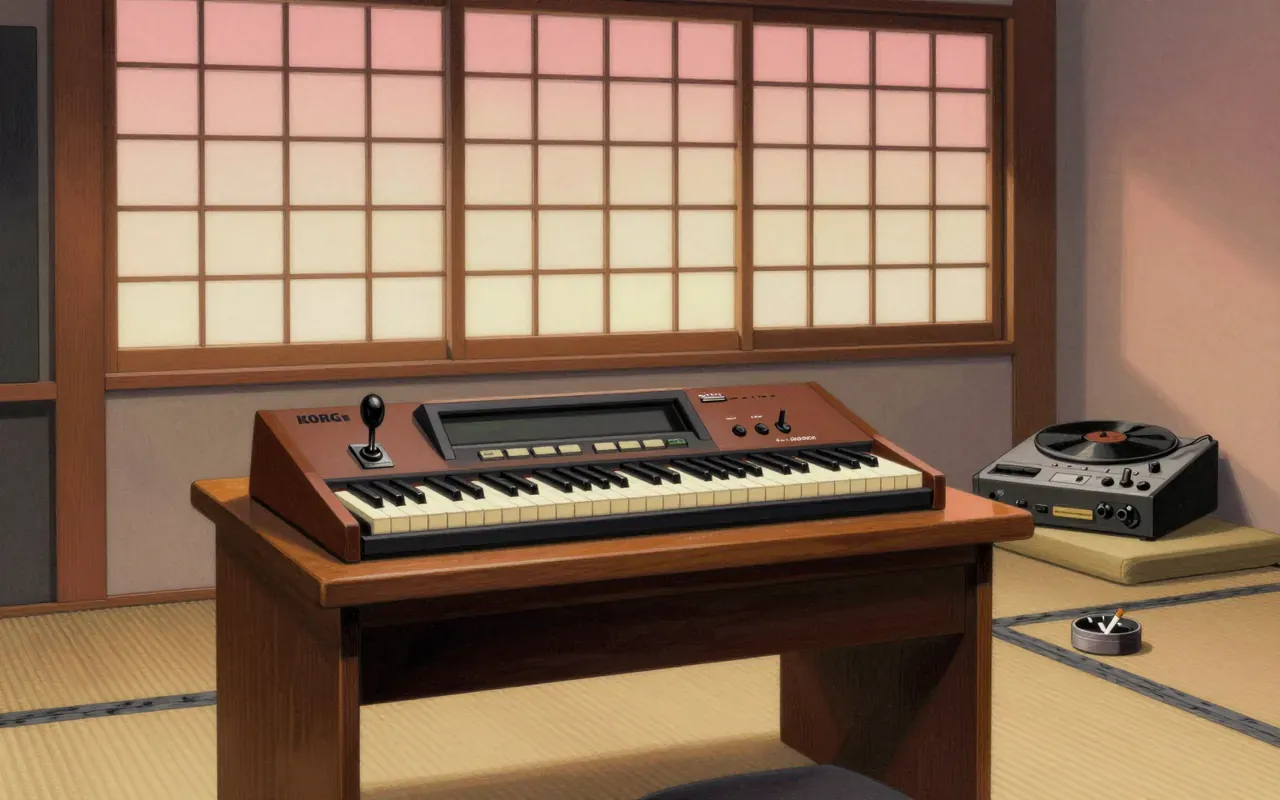
The miniKORG 700 is Korg’s first monophonic analog synthesizer, released in 1973. Designed for organists, it sits atop an organ with controls facing upward. It features five oscillator waveforms including two pulse-width modulation variants, an envelope with attack and 'singing' (decay/release), a 'sustain' toggle that functions only as release, and a dual-filter 'Traveler' system with a safety constraint preventing silence. Its filters produce vocal-like sounds.

10:58

Korg Mono/Poly

Korg

The Mono/Poly is a 1981 analog synthesizer with four VCOs, a 4-pole resonant lowpass filter, dual LFOs, and flexible key assignment modes. It operates either as a monophonic synth using all four oscillators or as a four-voice paraphonic synth. It was the only monophonic synthesizer with an integrated quad-VCO design at launch. Each VCO offers triangle, sawtooth, pulse, and pulse width modulation waveforms. Every VCO can be individually adjusted for octave, volume, and detuning relative to VCO 1, which has Master Tuning. Only the fixed pulse width and the amount of pulse width modulation are shared across all VCOs. The Mono/Poly features a 4-pole resonant lowpass filter with ADSR envelopes modulating both the VCF and VCA. It has two LFOs: one with four waveforms targeting multiple parameters via the modulation wheel, and a second triangle-wave LFO dedicated to pulse width modulation and arpeggiator tempo.

8:49

Moog Sonic Six

Moog · 1972

The Moog Sonic Six is a duophonic analog synthesizer introduced in 1972. It was built for portability and education after Bill Waytena acquired R.A. Moog Inc. and rebranded the Sonic V as the Sonic Six. Its folding control panel is unique in Moog’s history. It was widely used for lectures and educational purposes, often by Bob Moog himself. It delivers weak sound compared to the MiniMoog and suffers from reliability issues. Its single contour generator is shared between VCA and VCF, limiting independent envelope shaping. It is worth your time only if you need a portable, self-contained analog synth for live lecture demos or classroom use — not for studio depth, reliability, or sonic authority.

9:11

Boss MT-2

Boss · 1991

The Boss MT-2 Metal Zone is a 1991 distortion pedal designed for heavy metal guitarists. It features high-gain capabilities, a thick and tight tone, and powerful semi-parametric EQ controls. Boss developed it as a more versatile successor to the HM-2, using a dual-stage gain circuit and seven pre- and post-distortion filters.

8:47

Nagra

Kudelski · 1951

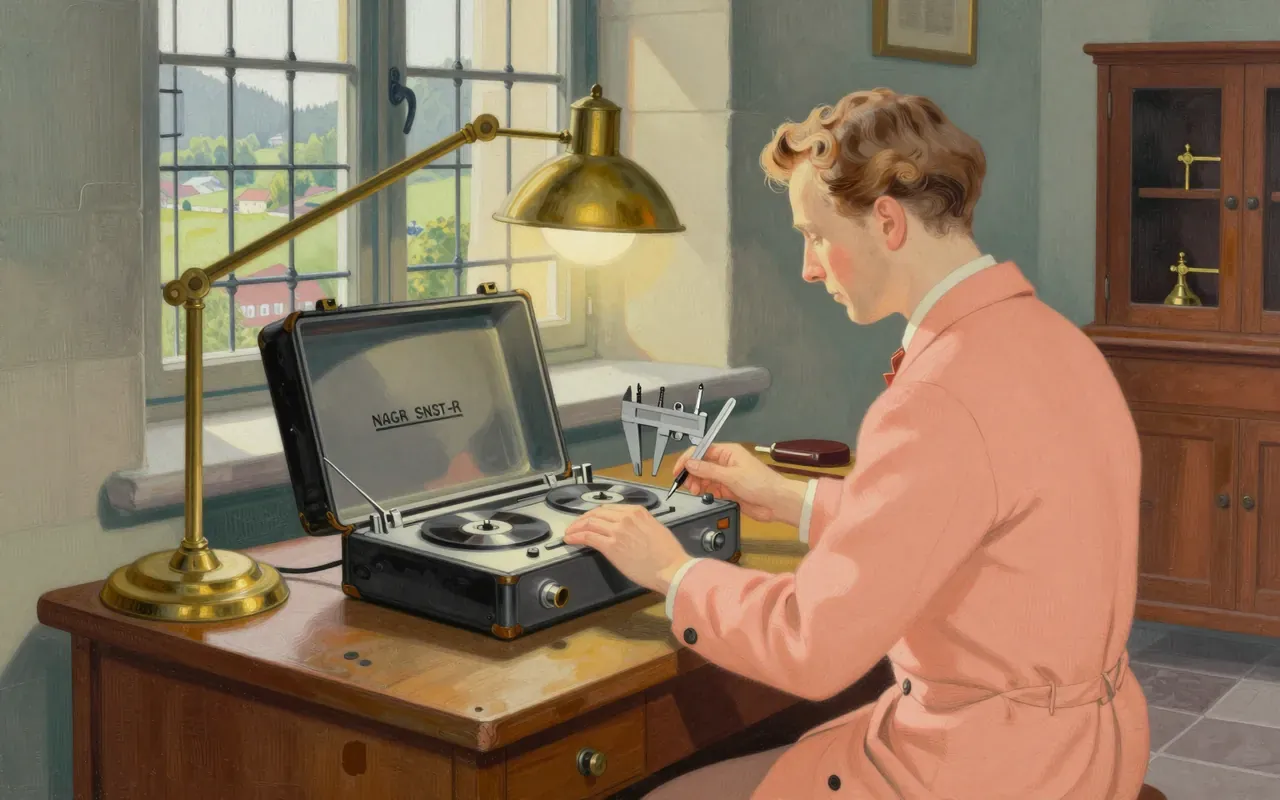
Nagra recorders were Swiss-engineered portable analog tape machines built for professional film and broadcast sound capture from 1951 onward. They prioritised mechanical reliability, sync accuracy, and tactile control over flexibility or convenience. Their dominance lasted until digital alternatives offered file-based workflows, multitrack capability, and lighter weight.

9:22

Nord Modular

Clavia

The Nord Modular is a 1997 software-based semi-modular synthesizer that uses DSP to emulate analogue circuitry and supports multiple synthesis methods including subtractive, additive, FM, and physical modelling. Patch editing is performed on a PC using graphical editor software, while sound generation occurs independently on the hardware. Patch complexity is constrained by available DSP resources, and polyphony varies from 4 to 32 voices depending on patch complexity. It was upgraded in 2004 as the Nord Modular G2 with endless rotary knobs and a larger keyboard with aftertouch.

9:32

Oberheim OB-1

Oberheim

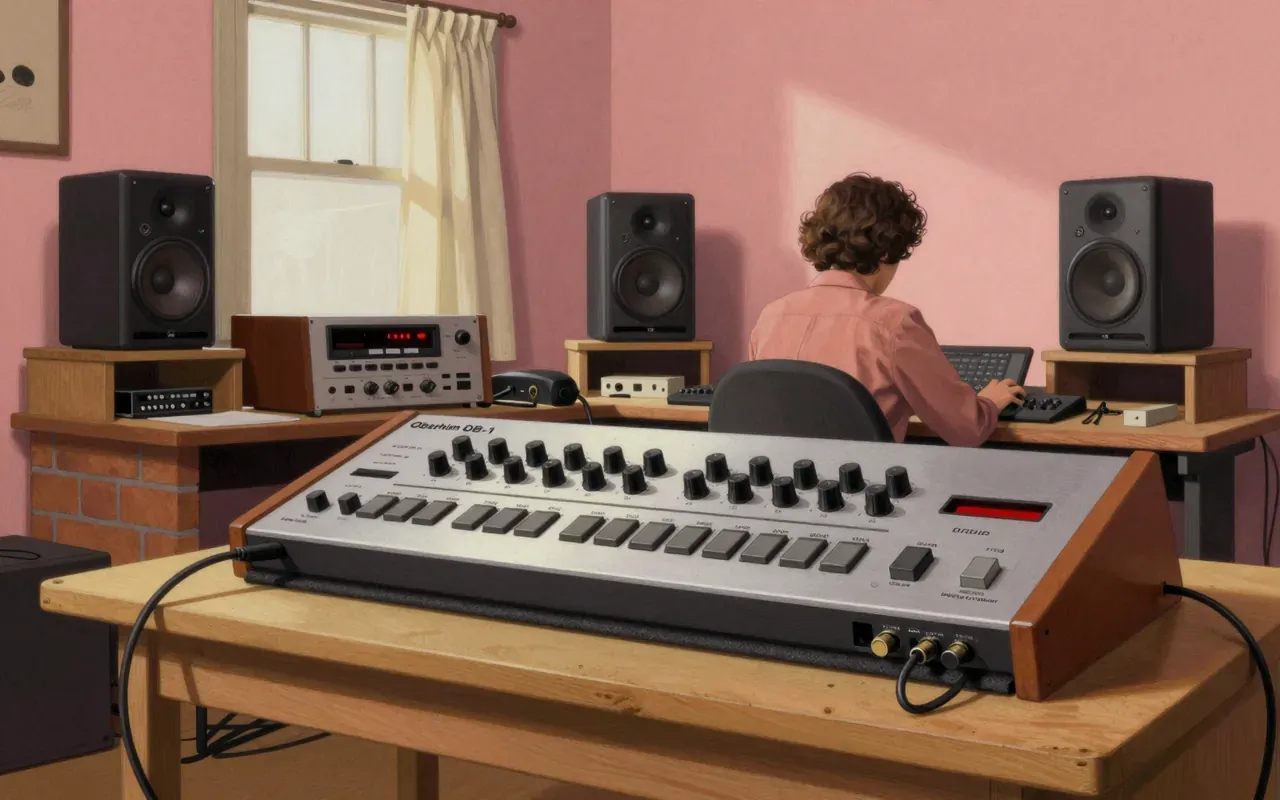
The Oberheim OB-1 is a monophonic analog synthesizer introduced in late 1977. It was the world's first completely programmable synthesizer, offering eight preset memories. It features two VCOs with selectable and continuously-variable waveforms, a switchable 2- or 4-pole VCF, and two ADSR envelopes—one for the filter and one for the VCA. Its design built upon technology from the Polyphonic Synthesizer Programmer.

10:27

Parker Fly

Parker

The Parker Fly rethinks the electric guitar as a lightweight, resonant, hybrid-voice platform — built around a carbon-fibre exoskeleton and dual-pickup architecture. It succeeds where mass and material convention fail. It falters where tradition, repairability, and passive tone control matter.

8:50

Fender Precision Bass

Fender · 1951

The Fender Precision Bass is a solid-body, four-string electric bass introduced in 1951. It has a 34-inch scale length, a 20-fret maple neck bolted on with four screws, and a single pickup. It produces a deep and full-bodied sound. Leo Fender designed the prototype in 1950 for big band bass players. The 34-inch scale was chosen after trial and error to balance resonance and fret spacing. Pre-1957 models used a Telecaster-style headstock; later models adopted the Stratocaster's styling.

8:02

Fender amplifier

Fender

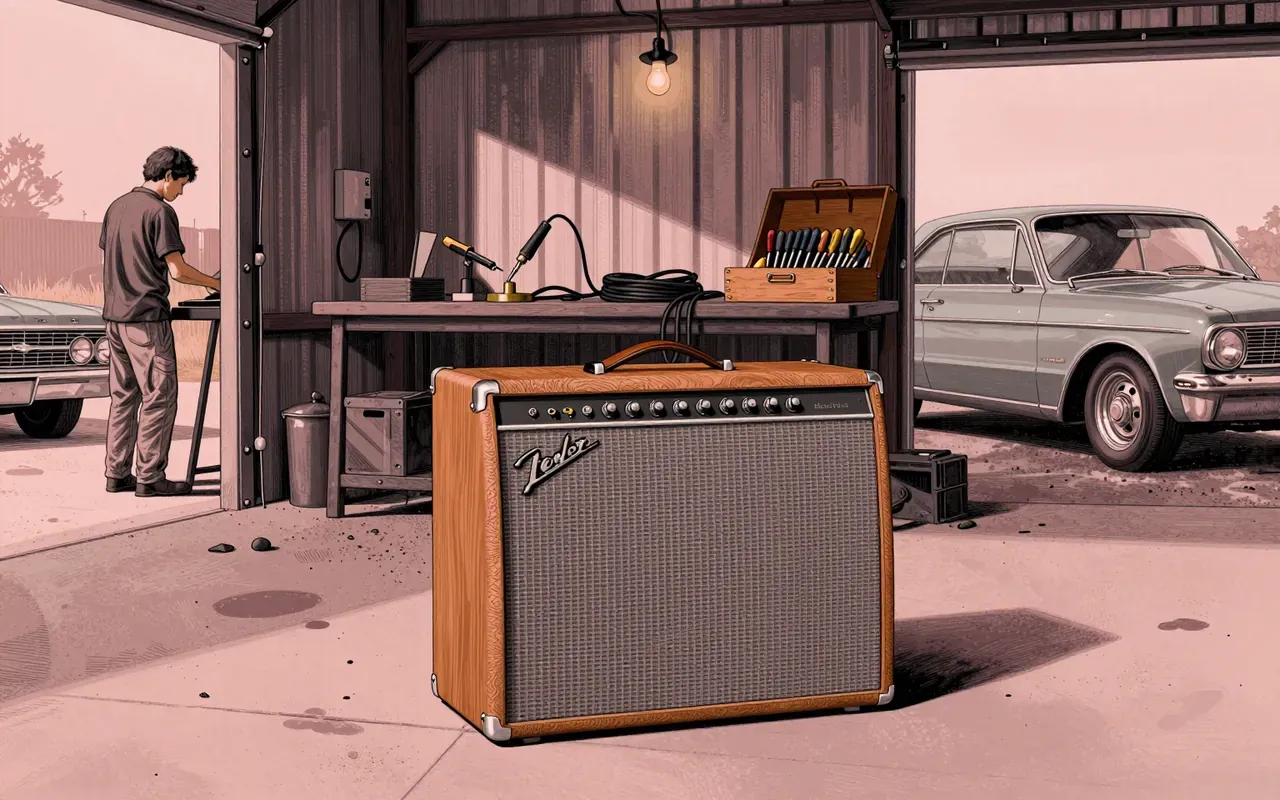
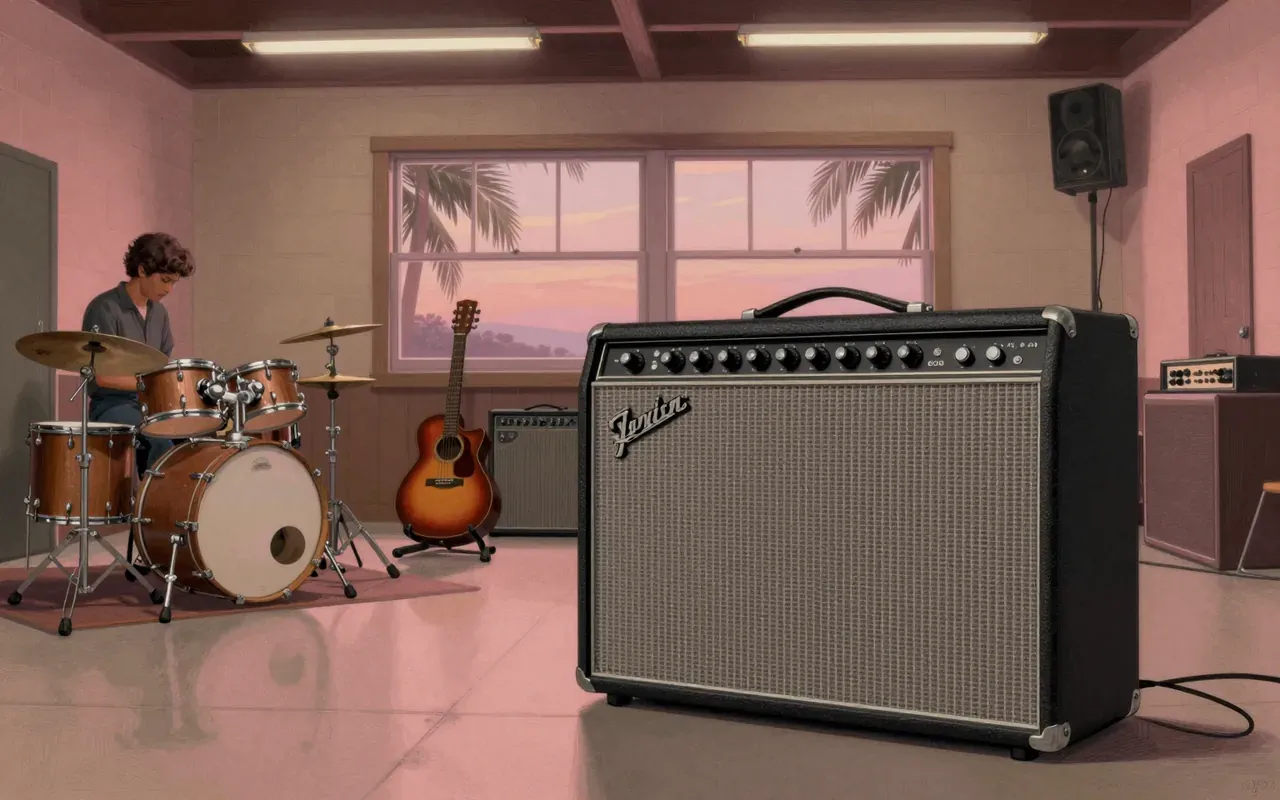
Fender amplifiers are electric instrument amplifiers produced by the Fender Musical Instruments Corporation. The first guitar amplifiers attributed to Leo Fender were manufactured by the K&F Manufacturing Corporation (K&F) in 1945. Later, Fender began building its own line of electric guitars. Fender amplifiers would become favorites of guitarists like Jimi Hendrix, Eric Clapton, and Stevie Ray Vaughan, also known in these cases for playing Fender guitars. Fender amps have come in many configurations and styles. The early K&F and Fender amplifiers relied upon vacuum tube circuitry, with solid-state models appearing in the late 1960s. Fender frequently updated the internal circuitry of its amps, and changed their appearance throughout its history.

10:12

Pro Tools

Digidesign · 1989

Pro Tools is a digital audio workstation used for music creation, sound for picture, and audio recording, editing, and mastering. It operates as standalone software and with external analog-to-digital converters and PCIe cards with on-board DSP, which provides additional processing power for real-time effects and lower latency. It performs multitrack tape recorder and mixing console functions plus digital-only features including non-linear and non-destructive editing, track compositing, time compression and expansion, pitch shifting, and faster-than-real-time mixdown. Audio, MIDI, and video tracks are graphically represented on a timeline. Audio effects, virtual instruments, and hardware emulators can be added, adjusted, and processed in real-time in a virtual mixer. It supports 16-bit, 24-bit, and 32-bit float audio bit depths at sample rates up to 192 kHz.
8:40

Prophet 2000

Sequential Circuits

The Prophet 2000 is Sequential Circuits’ first sampler — released in 1985. It uses 12-bit sampling at up to 41.667 kHz, with 256 kilowords of memory. It offers 8-voice polyphony and early multitimbral operation via MIDI channels. Its analog VCFs and VCAs give it warmth absent in later samplers. It was relatively affordable at £2,000.

10:17

Yamaha QY10

Yamaha

The QY10 is a fixed-function sketchpad—not a flexible instrument. It trades control for immediacy. It works only in C major. It rescales, but never reveals how. It stores patterns internally, but exports only via MIDI. It is portable, self-contained, and stubbornly simple.

9:32

Electro-Voice RE20

Electro-Voice

The Electro-Voice RE20 is a professional cardioid dynamic microphone introduced in 1968 for broadcasting applications. It employs Variable-D technology—a single transducer element with internal porting—to eliminate proximity effect and maintain stable frequency response regardless of source distance. It features a switch to attenuate frequencies below 400 Hz, a humbucking coil for EMI rejection, and a deeply mounted element to handle high SPLs. It delivers excellent fidelity despite its large size and weight. It continues to be used in recording studios and on the concert stage.

8:48

Red Special

Brian May / John Birch

The Red Special is a functional anomaly: a self-contained solution to feedback and sustain, built before those problems had names. Its value lies in what it withheld — standardisation, mass production, modularity — not what it delivered.

9:52

Rickenbacker 360/12

Rickenbacker

The Rickenbacker 360/12 is a narrowly optimised instrument: its reversed string courses, angled headstock, semi-hollow body and thru-neck combine to produce a bright, cutting, fast-decaying jangle. It excels in one role—rhythmic texture in mid-60s pop—and falls short everywhere else: tuning stability, ergonomic playability, tonal range. It was developed in 1963, prototyped with Dick Burke’s headstock, entered production in 1964, and became essential to the Beatles’ A Hard Day's Night sound. It is not a general-purpose guitar. It is a specialist tool.

8:54

Gibson Ripper

Gibson

The Gibson Ripper is a purpose-built electric bass: set-neck, two Bill Lawrence Super Humbuckers, and a Q System circuit that prioritises midrange control over flexibility. It delivers punch and presence but withholds neck-pickup isolation and tonal versatility.

9:33

Yamaha RM1x

Yamaha

The RM1x is a fixed-architecture groovebox that prioritises fast, style-based arrangement over flexible sound design or real-time control.

10:14

Akai S3000XL

Akai · 1995

The Akai S3000XL is a 1995 sampling instrument with 32-voice polyphony and 2 MB of RAM. It features a large screen and intuitive interface for fast sample editing. It loads sounds via a 3.5" floppy drive and SCSI port, and plays back MIDI files for live triggering. Akai discontinued it in 1995. It belongs to the S3000 series, which succeeded the S1000 series and offered optional CD-ROM.

8:55

S612

Akai · 1985

The S612 was Akai’s first rack-format digital sampler — 12-bit, single-sample, one-second max at 32 kHz, loaded via external Quick Disk drive. It defined the form factor and affordability threshold for what followed, but offered no polyphony, no internal storage, and no upgrade path.

8:53

Serge Modular

Serge

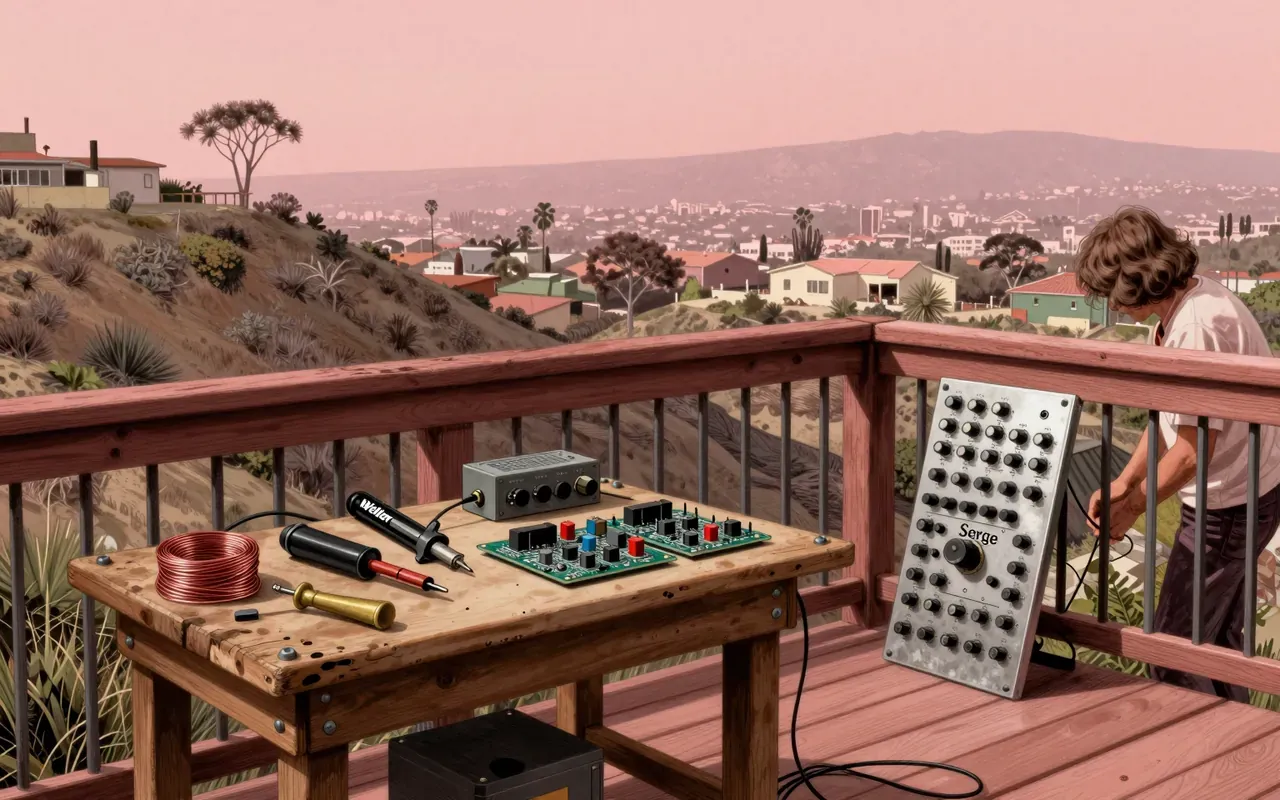
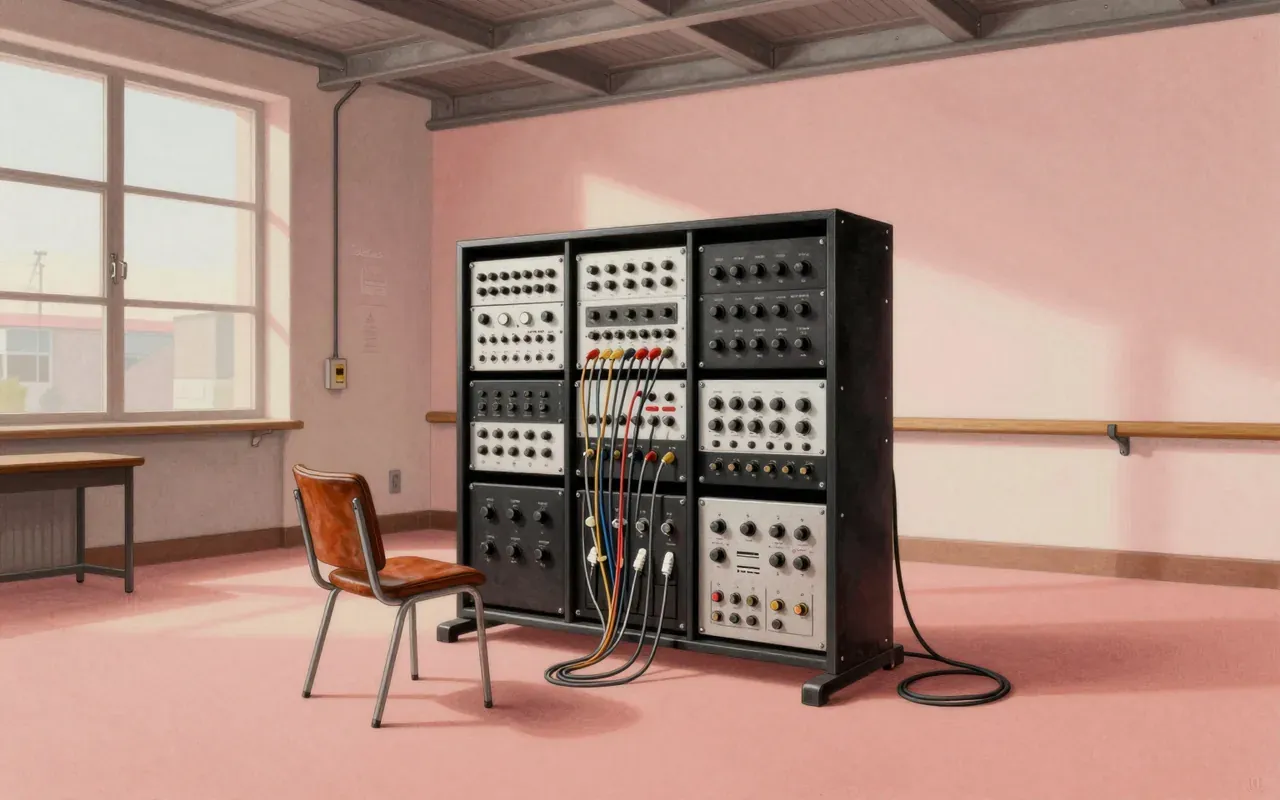
The Serge synthesizer is an analogue modular system developed at CalArts in late 1972. It was built to be inexpensive and powerful, a democratic alternative to Buchla systems. It shipped as DIY kits assembled unofficially on a CalArts balcony. Modules expose circuit aspects on the front panel for unconventional patching. All signals use banana jacks—no separation between audio and control voltage. Stackable banana plugs reduce the need for mults. One unit was used on the 1975 Greenpeace anti-whaling expedition to approximate and broadcast whale sounds.

10:34

Gibson SG

Gibson

The Gibson SG is a 1961 solid-body electric guitar built to deliver upper-fret access and playing speed at the expense of body mass and low-end sustain. Its design choices — double cutaway, thinner contoured body, outward-shifted neck joint, slender mahogany neck — are all functional responses to physical limits players hit on earlier Gibsons. It does not try to be a Les Paul. It tries to be faster, lighter, and more direct — and succeeds on those terms alone.

8:29

Technics SL-1200

Technics · 1972

The Technics SL-1200 is a tool for physical intervention — not passive playback. Its engineering serves one demand: keep spinning, exactly, while being handled.

9:19

Shure SM57

Shure · 1965

The Shure SM57 is a low-impedance cardioid dynamic microphone introduced in 1965. It uses the Unidyne III capsule, shares design DNA with the SM58, and features impedance balancing via XLR. Its frequency response runs from 40 Hz to 15 kHz. Its cardioid pattern reduces background noise and feedback. It was built for TV studios — non-reflective, no on-off switch — and tested under torture. It has been used for every U.S. presidential speech since 1965 and remains one of the world’s two bestselling microphones since the late 1960s.
8:46

Shure SM58

Shure · 1966

The Shure SM58 is a professional cardioid dynamic microphone introduced in 1966. It is commonly used in live vocal applications. It has been produced since 1966 and is still the industry standard for live vocal performance microphones. It is the most popular live vocal microphone in the world. Like all directional microphones, it is subject to proximity effect, a low-frequency boost when used close to the source. Its cardioid response reduces pickup from the side and rear, helping to avoid feedback onstage. The SM58 uses an internal shock mount to reduce handling noise. A distinctive feature of the SM58 is its pneumatic suspension system for the microphone capsule. The SM58 was introduced in 1966 as part of the SM series. The SM58 was originally developed for the TV studio market with a non-reflective finish and no on-off switch. The SM58 has been one of the two bestselling microphones in the world since the late 1960s. The SM58 shares nearly identical features with the SM57, differing mainly in grille design.

8:32

E-mu SP-1200

E-mu Systems

The E-mu SP-1200 is a sampling drum machine introduced in August 1987 by E-mu Systems. It uses 12-bit linear sampling at 26.04 kHz, drop-sample pitch-shifting, analog SSM2044 lowpass filters on channels 1 and 2, volatile RAM loaded from 3.5" disk, and offers 10 seconds of total sampling time—with a 2.5-second limit per sound. It succeeded the SP-12 and offered integrated sequencing and sample looping in a single unit.

10:00

Roland SP-404

Roland

The SP-404 is a dedicated, tactile sampler built for speed and texture — not precision or polish.

8:44

Roland SP-808

Roland

The SP-808 is a self-contained sampling workstation built for immediacy—not convenience. Its limits are absolute: four stereo voices, Zip-only storage, no modern connectivity. Its strength is integration: sampler, synth, and sequencer in one tactile unit, holding over 1,000 samples internally while demanding physical media discipline.

9:57

Fender Stratocaster

Fender · 1954

The Stratocaster is a solid-body electric guitar introduced in 1954. Designed between 1952 and 1954 by Leo Fender, Bill Carson, George Fullerton, and Freddie Tavares. Continuously manufactured since 1954. Its distinctive body shape was revolutionary when introduced in the mid-1950s. The heavily contoured back was designed for better comfort while playing. The elongated top horn changes the balance when played standing up with a strap compared to the Fender Telecaster. While the original release of the Stratocaster included a vibrato system, Stratocasters without it ("hardtails") were added to the portfolio in March 1955. The modular nature of the guitar, with its easily removable components, enabled players and luthiers to perform numerous modifications to their own guitars, changing out pickups or necks to fit the needs of the player. All of these design elements were popularized and later became industry standards due to the success of the Stratocaster.

10:03

Yamaha SY77

Yamaha

The Yamaha SY77 is a 1989 16-voice multitimbral workstation combining AFM (expanded 6-operator FM), AWM2 PCM sampling, and their real-time hybrid RCM. It features a 61-key keyboard with velocity and aftertouch, two modulation wheels, pitch wheel, backlit LCD, floppy drive, expansion slots, on-board effects, and a 16,000-note sequencer. AWM2 waveforms can be used standalone, layered with FM Elements, or — uniquely in the SY/TG series — as modulators for FM operators. Its AFM is a superset of the DX7’s FM, adding waveforms, algorithms, feedback routing, and filter integration.

7:42

Steiner-Parker Synthacon

Steiner-Parker

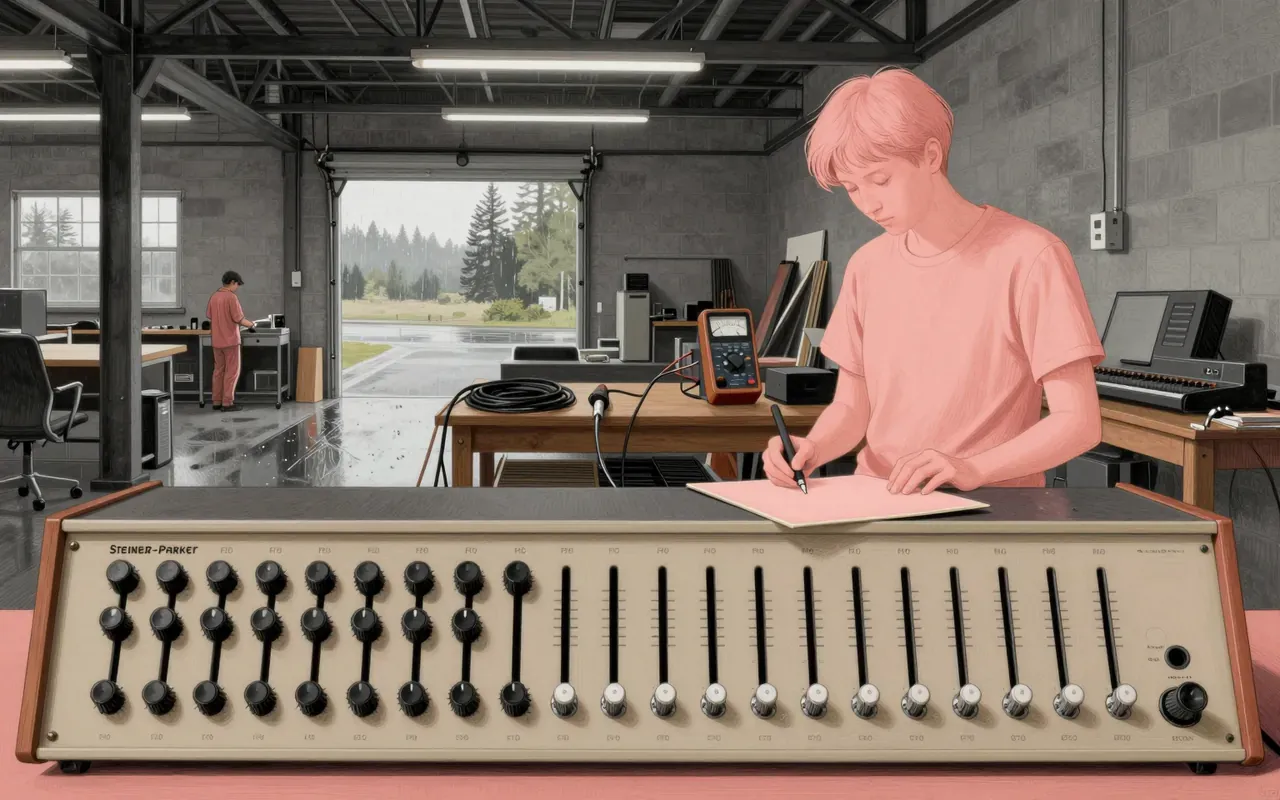
The Steiner-Parker Synthacon is a monophonic analog synthesizer released in 1975. Its defining feature is Nyle Steiner’s 12dB/octave multimode filter, which self-oscillates and sustains full amplitude at all resonance settings—a deliberate departure from the Minimoog and ARP Odyssey. Several hundred units were made. It has no polyphony, no LFO, no patch memory, and tuning stability is not documented. Its value lies in its singular filter behaviour, not versatility or convenience.

8:42

Elka Synthex

Elka

The Elka Synthex is an 8-voice analog keyboard synthesizer produced by Italian music instrument manufacturer Elka from 1981 to 1985.

9:12

EMS Synthi 100

EMS

The EMS Synthi 100 is a large analogue/digital hybrid synthesizer commissioned by Radio Belgrade, designed by David Cockerell and documented in 1971. It developed from a concept of three VCS3 systems but contains analogue modules equivalent to six VCS3s. It features 12 voltage-controlled oscillators and eight voltage-controlled filters. Two monophonic keyboards produce four control voltages and two triggers. Its digital sequencer has three duophonic layers and 256 duophonic note events. Two 60×60 matrices connect modules via patch pins. Keyboard spread adjusts for equal temperament or microtonal tunings up to 61 divisions per semitone.

10:43

EMS Synthi AKS

EMS · 1972

The EMS Synthi AKS is a portable modular analog synthesiser introduced in March 1972. It features a built-in keyboard and sequencer, a patch pin matrix, and shares design DNA with the VCS 3. Its sequencer creates eight-note repeating patterns. Users have described it as a 'noise machine'. One full album—Music from the SYNTHI—was made using only this instrument.

9:00

Roland System 700

Roland · 1976

The Roland System 700 is a professional monophonic modular synthesizer released in 1976 by Roland Corporation.

8:07

Moog Taurus

Moog

The Moog Taurus is a foot-operated analog synthesizer introduced in 1975. It uses an organ-style pedal board. It is monophonic, with a single voice generated by two oscillators and one VCA. Taurus I and III offer only a distorted sawtooth wave. Taurus II introduced a pulse wave. All models use a 24dB/octave resonant low-pass filter with key tracking. Early models lack an LFO; Taurus III includes one routable to oscillator pitch or filter frequency.

9:16

Fender Telecaster Bass

Fender

A no-compromise bass that sacrifices versatility for presence. It does one thing well — deliver tight, articulate low end with zero detours — and refuses to do anything else.

11:04

Epiphone Texan

Epiphone

The Epiphone Texan is a jumbo acoustic flattop guitar introduced in 1961 as a continuation of the FT-79. It was built for songwriting and studio use — not for high-volume amplification or tonal experimentation. Its defining features are its jumbo body, midrange-forward voice, and (from 1962) an adjustable bridge. Later reissues added a lightweight internal pickup, but the original was acoustic-only. Paul McCartney used a 1964 model to write 'Yesterday'. It is generally equivalent to the Gibson J-45, differing only in scale-length. Production shifted from the US to Japan and back; discontinuations and reissues reflect corporate ownership changes, not design evolution.

8:30

Roland TR-505

Roland

The TR-505 delivers rigid, punchy sequencing with integrated Latin percussion — but its 8-voice limit forces trade-offs no modern sequencer accepts.

10:08

Korg Trident

Korg · 1980

The Korg Trident is a 1980 subtractive synthesizer with eight-note polyphony, integrating three independent sections — polyphonic, string, and brass — into one keyboard. It allows assignment to two keyboard zones, includes a flanger effect and joystick for pitch and modulation. The 1982 MkII revision added memory, improved stability via better heat-sinking and power supply, and separate ADSR envelopes for filter and VCA — unlike the MkI’s shared envelope. It does not use effects or sample+synthesis, despite KORG pioneering both elsewhere.

9:45

Korg Triton

Korg

The Korg Triton is a 1999 music workstation synthesizer with digital sampling and sequencing. It introduced 62-note polyphony, dual polyphonic arpeggiators, RPPR phrase recording, onboard sampling with expandable RAM, five insert effects per Program, dual filters per oscillator (24dB/octave low-pass or parallel 12dB/octave HP/LP), faster touchscreen response, category search UI, and expanded memory and outputs. It was available in 61-, 76-, and 88-key Classic versions and as a rackmount Triton-Rack with optional ADAT/Word Clock via EXB-DI.

34:32

Fender Twin

Fender

The Fender Twin is a clean-headroom amplifier built for volume and clarity — not saturation or convenience.

9:22

Yamaha TX81Z

Yamaha

The TX81Z is a stripped-down, rack-only FM synth that trades expressive controls for affordability and waveform novelty. Its non-sine oscillators opened new sonic doors — but its single-chip architecture left out pitch envelopes, velocity sensitivity, and operator depth. It belongs in a modern studio only as a character voice, not a workhorse.

7:34

Roland U-20

Roland

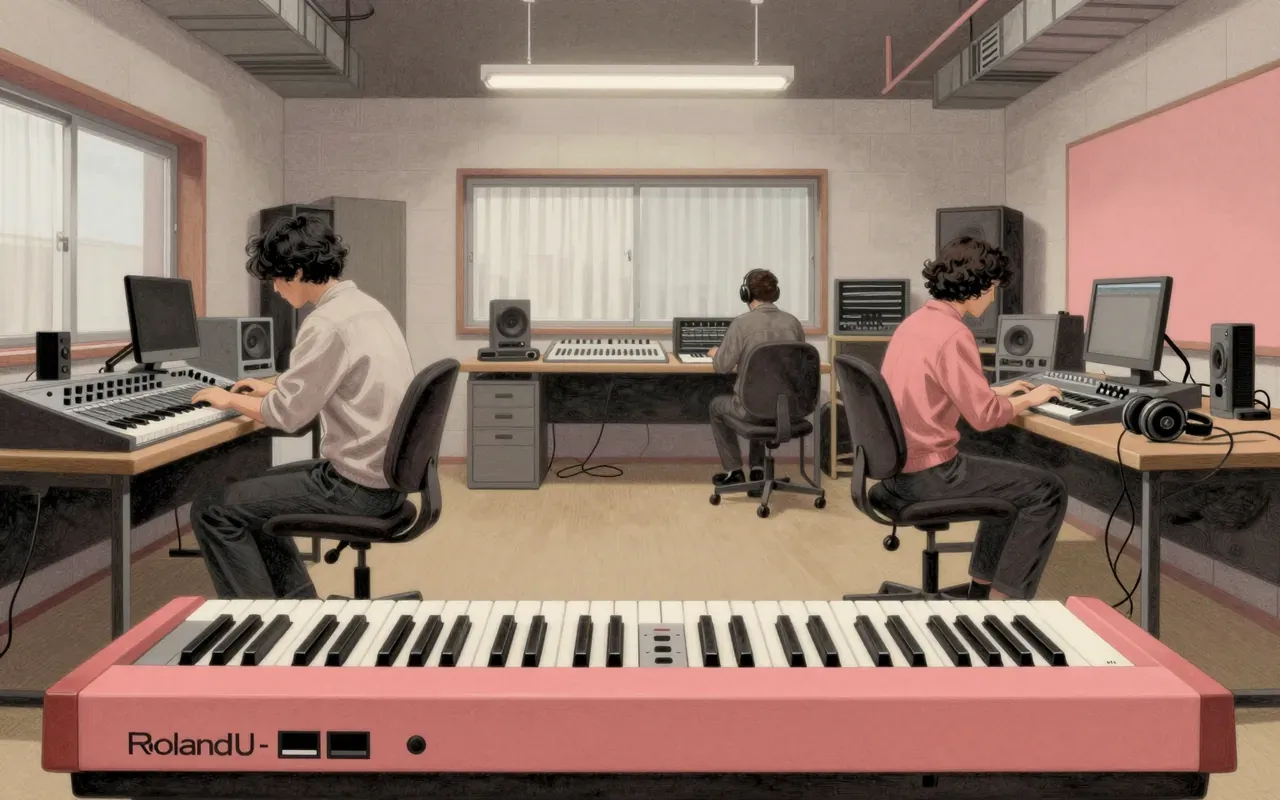
The Roland U-20 is a 1989 PCM-sample keyboard that plays back stored sounds with no filtering. It uses ADSR envelopes and DSP effects like reverb and chorus for limited modification. It supports expansion via the M-256E RAM card and two ROM PCM-card slots. Its lack of filters and impractical aftertouch are documented drawbacks.

13:34

Neumann U 87

Neumann · 1967

The Neumann U 87 is a large-diaphragm condenser microphone introduced in 1967 as the solid-state successor to the U 67. It features a 25.4 mm diaphragm and three selectable polar patterns — cardioid, omnidirectional, and figure-8. It can be powered by 48V phantom power or two internal 22.5V batteries. The original used the K 87 capsule, a modified version of the K 67. The 1986 U 87A reverted to the standard K 67 capsule and eliminated the dual-battery requirement.

9:53

EMS VCS 3

EMS · 1969

The EMS VCS 3 is a portable analogue synthesizer introduced in 1969 by Electronic Music Studios. Designed largely by David Cockerell and styled by Tristram Cary, it uses a pin-based patchboard matrix instead of cables. It lacks a built-in keyboard, making it better suited for sound effects generation and external signal processing than melodic playing. Its tuning instability stems from exponential voltage-to-frequency conversion. It was one of the first portable commercially available synthesizers, housed entirely in a small wooden case.

7:58

Wasp

Electronic Dream Plant

The Wasp is a 1978 monosynth defined by its copper-plate keyboard, black-and-yellow casing, internal speaker, and proprietary interconnection. It was EDP’s best-received product but flawed in execution: unreliable live, prone to autonomous triggering, and technologically isolated. Its sound is inseparable from its limitations.

8:56

PPG Wave

PPG

PPG Wave pioneered real-time interpolated wavetable scanning—making timbre itself a sequenced parameter. Its hybrid digital-analog signal path (digital oscillators, analog filters and VCAs) delivered spectral animation impossible on analog synths of the era. But it demands peripheral hardware for editing, sampling, or expressive control—and offers no direct waveform manipulation or polyphonic sequencing. It belongs in a studio built for sound design, not stage performance.

8:51

Korg Wavestation

Korg

The Korg Wavestation is a vector and wavetable synthesizer introduced in 1990. It uses Wave Sequencing — a method of multi-timbral sound generation using successively played PCM waveforms — combined with Advanced Vector Synthesis, allowing dynamic mixing and morphing between up to four oscillators. It enables crossfading up to 255 waveforms, jumping to any PCM wave in ROM, and generating complex, evolving timbres and rhythmic sequences from a single keypress. Unlike contemporaries, it lacks an onboard sequencer and is designed as a 'pure' synthesizer.

9:10

Roland XP-80

Roland

The Roland XP-80 is a 1996 76-key workstation using digital PCM subtractive synthesis, delivering 64-voice polyphony and 16-part multi-timbrality via a semi-weighted keyboard. It merges the JV-1080 engine with the MRC-Pro sequencer for tight internal composition—but offers no aftertouch, limited real-time sound control, and no modern connectivity.

9:06

Oberheim Xpander

Oberheim

A keyboardless, six-voice analog synthesizer launched in 1984 and discontinued in 1988. Rack-mounted. Uses Matrix Modulation to route digital control to analog VCOs, multi-mode VCF, and two sequential VCAs. Each voice is independently configurable — including FM via VCO-to-VCO modulation — via multi-patch mode.

8:38

Korg Z1

Korg

The Korg Z1 is a 1997 digital synthesizer using physical modelling synthesis with 12-voice polyphony. It extends Korg's MOSS system—first introduced in the 1995 Prophecy—into a polyphonic, multitimbral format, incorporating OASYS-based physical modelling engines, two physically modelled oscillators per voice plus sub-oscillator and noise generator, and performance features including a 61-note keyboard with aftertouch and an XY touchpad.

9:28

Rickenbacker 330

Rickenbacker

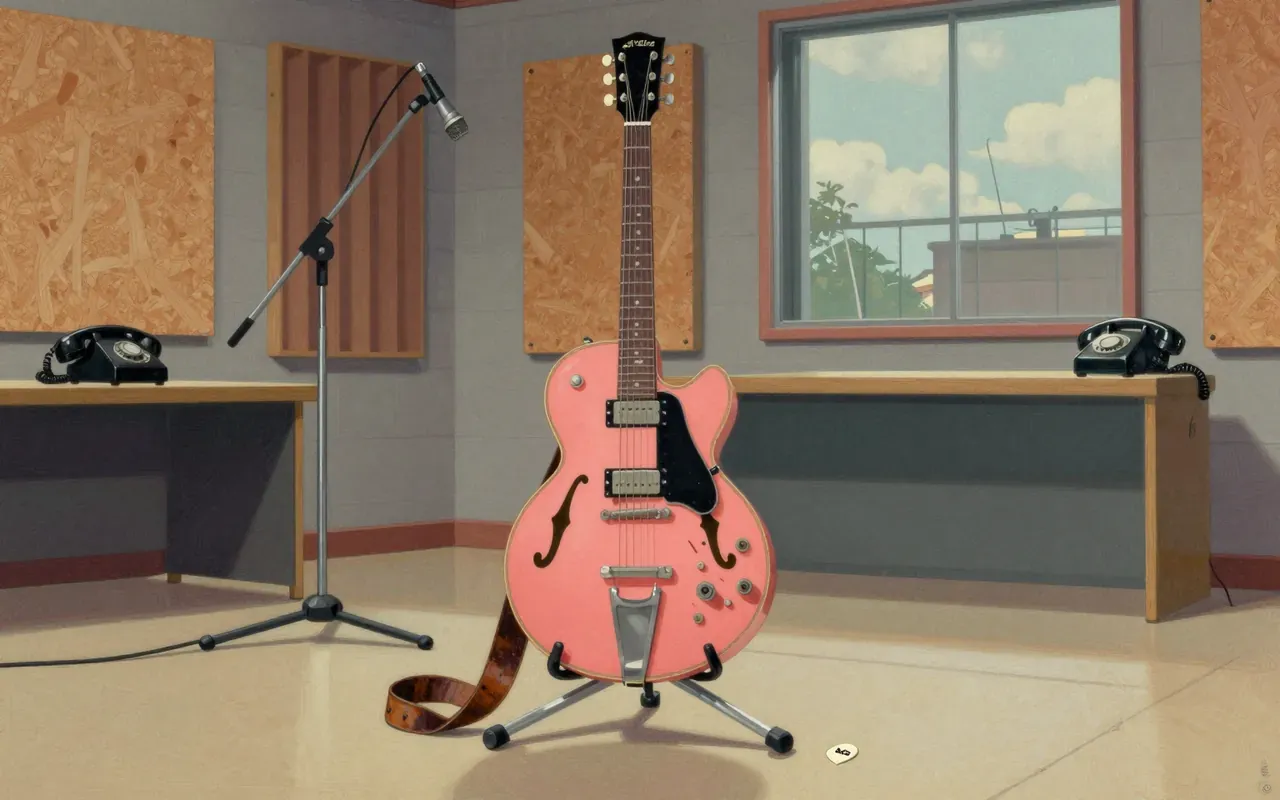
A semi-acoustic twelve-string electric guitar in the Capri series, introduced in 1958 and designed by Roger Rossmeisl. Built for clarity, projection, and rhythmic definition in ensemble playing.

8:48

Fairchild 660

Fairchild

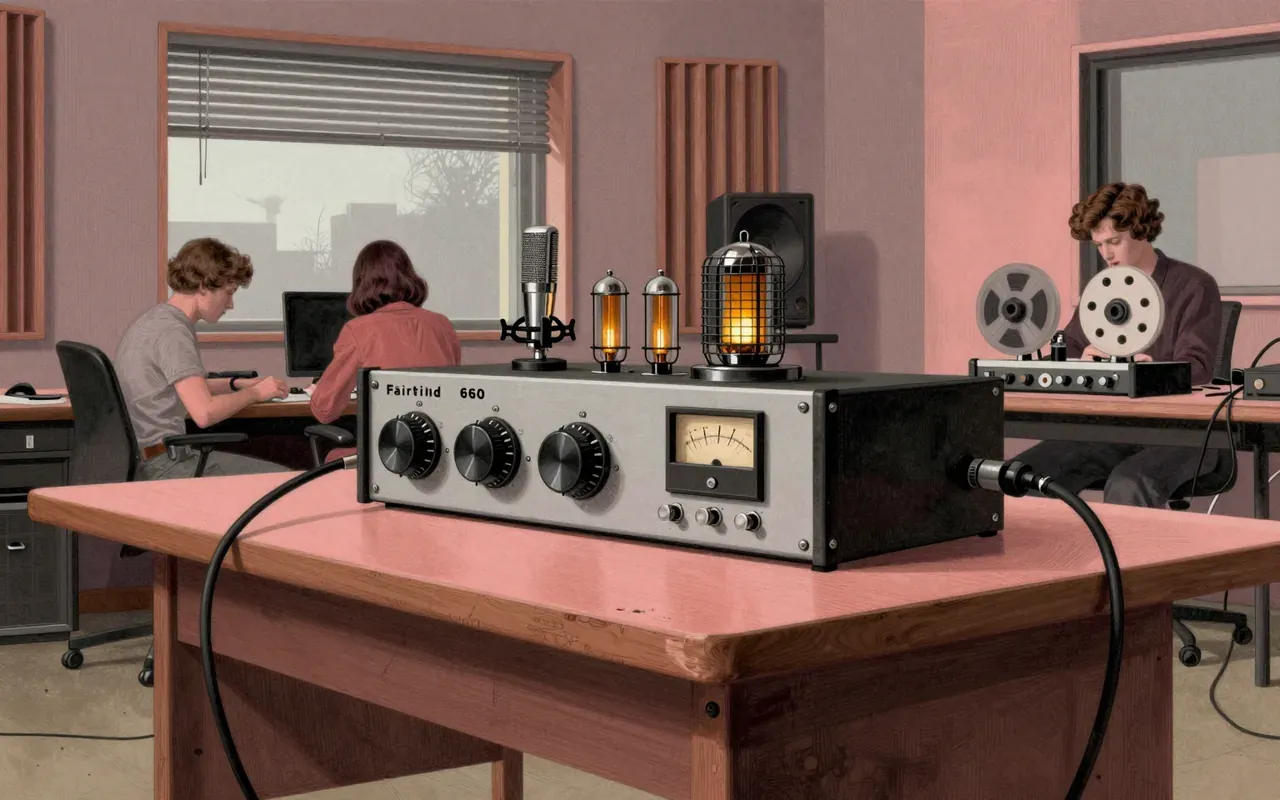
The Fairchild 660 is a mono tube compressor introduced in 1959. It was the first intelligent automatic volume control limiter. Designed by Rein Narma, the first ten units were built by him. The first unit went to Rudy Van Gelder, who used it to cut lacquer masters for Blue Note Records and Vox Records. It functions as a compressor (2:1, threshold 5 dB below normal) or peak limiter (30:1, threshold 10 dB above normal), with fixed 1/10,000-second attack and variable release. Its push-pull amplification and high control voltage yield low distortion, low noise, and no audible thumps.

9:00

Neve 80 Series

Neve

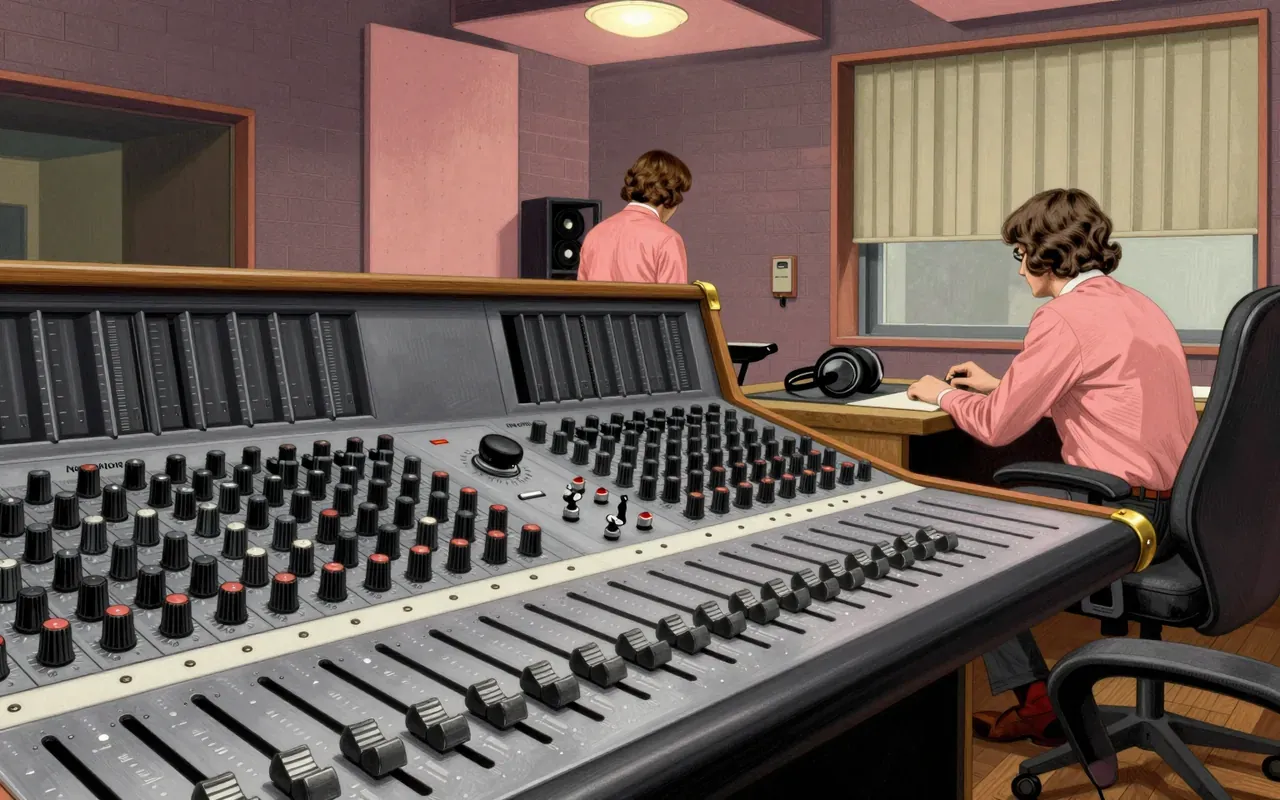
The Neve 80 Series is a hand-wired analogue mixing console built from 1968 to 1979. It uses custom preamps, line amps, and compressor/limiters wired point-to-point by hand. The 8048 model features the 1081 preamp and 4-band EQ across 24 or 32 channels. In 1976, Neve launched the in-line-monitor 8058 and 8068. Late-’70s units offered NECAM, the world’s first successful moving-fader automation system. Production was limited; manufacturing ceased in 1979.